
Journalist

Bae In-sun
baeinsun@ajunews.com
-
 Why China Invited Lei Jun to Trump's State Dinner "It is extremely rare for a single company to receive such intense attention," stated Chinese state media on May 19, highlighting Xiaomi's technological innovation, international openness, and entrepreneurial spirit. The New Tanqin account, part of the state-run Xinhua News Agency, noted that this year, several foreign leaders, including Spanish Prime Minister Pedro Sánchez, Abu Dhabi Crown Prince Khalid bin Mohammed Al Nahyan, German Chancellor Friedrich Merz, Singapore's Senior Minister Tharman Shanmugaratnam, and Taiwan's Kuomintang Chairman Eric Chu, have visited Xiaomi's factories in Beijing. Notably, during the state dinner held on May 13-15, which coincided with President Trump's visit to China, Lei Jun attended and interacted with prominent figures from the U.S. political and business sectors. On May 18, Chinese Premier Li Qiang also visited Xiaomi's factory, emphasizing the importance of technological innovation. He mentioned the need to foster future industries through the integration of artificial intelligence and manufacturing, interpreting this as a recognition of Xiaomi as a leading example of China's technological innovation. The New Tanqin account remarked, "Focusing on Xiaomi is essentially focusing on China's technological innovation," asserting that Xiaomi is no longer just a mobile phone manufacturer but a technology company rapidly joining the ranks of China's key tech firms, developing chips, operating systems, AI large language models, smart manufacturing, smart vehicles, and smart device ecosystems. The report highlighted that the state dinner included leaders from companies such as Fuyao Glass, Industrial and Commercial Bank of China, China National Chemical Corporation, Air China, and Xiaomi, representing key industries like finance, manufacturing, aviation, and technology, showcasing China's capabilities in global cooperation and competition. The media emphasized that the invitation of business leaders to the state dinner symbolically demonstrates China's continued emphasis on openness and cooperation, positioning Xiaomi as a representative case of Chinese tech companies expanding globally. It further noted that the visits by high-ranking foreign officials and Xiaomi's invitations to major diplomatic events reflect the company's technological prowess, global market influence, and mature internationalization capabilities. The New Tanqin also stated, "Whether Xiaomi can become a century-old enterprise depends on the accumulation of technological innovation, development strategies, and the perseverance and challenges faced by its entrepreneurs," indicating that the interest of domestic and foreign dignitaries in studying Xiaomi underscores recognition and encouragement for the company's entrepreneurial spirit focused on research and development. Particularly regarding Lei Jun, the report praised his diligence, self-discipline, and long-term vision, noting that despite already achieving business success, he continues to challenge himself in new industrial areas such as software, smartphones, electric vehicles, and semiconductors. The New Tanqin concluded, "The world is witnessing a more confident China and a societal atmosphere that values innovation. Pursuing both self-reliance and openness, like Xiaomi, is a common challenge faced by today's Chinese tech companies." Given the nature of state media in reflecting government positions, this report suggests that the Chinese government views Xiaomi as a 'national representative technology company' with technological innovation and global competitiveness. This is not the first time Chinese state media has praised Xiaomi. The People's Daily, the official newspaper of the Chinese Communist Party, described it in a front-page article last December as a representative case showcasing the achievements of China's manufacturing upgrade. Earlier this year, China Central Television also referred to Xiaomi as "a microcosm of China's smart manufacturing," emphasizing its alignment with the government's core industrial strategies in AI, semiconductors, and smart manufacturing.* This article has been translated by AI. 2026-05-19 12:34:01
 -
![[ASIA BIZ] Pop Marts Revenue Doubles in China Amid Art Toy Market Growth](https://image.ajunews.com//content/image/2026/05/16/20260516224426931000_518_323.jpg) [[ASIA BIZ]] Pop Mart's Revenue Doubles in China Amid Art Toy Market Growth The Chinese art toy market has shown robust growth, with related companies reporting generally positive performance in the first quarter of this year. Pop Mart, a leading Chinese art toy brand, estimated its first-quarter revenue increased by 75% to 80% compared to the same period last year. Notably, sales in the mainland Chinese market more than doubled year-on-year, demonstrating strong consumer demand despite sluggish domestic conditions. However, growth in overseas markets has shown signs of slowing. Sales in the Asia-Pacific region rose by 25% to 30%, while the Americas saw an increase of 55% to 60%, and Europe and other regions grew by 60% to 65%. Compared to last year's explosive overseas growth, these figures indicate a significant decline, raising concerns about the sustainability of future growth. In response, Pop Mart stated, "We will further enhance the commercial value of the Labubu intellectual property (IP) through high-quality products and rich content." The company plans to expand its business beyond product sales to create a comprehensive IP ecosystem that includes Labubu film production and the development of a Labubu theme park. Miniso also continued its solid performance. As the second-largest art toy brand in China, owning Top Toy, Miniso reported first-quarter sales of up to 5.73 billion yuan, marking an increase of approximately 28% to 29% year-on-year, with net profits expected to surge by as much as 200%. The rapid growth of Top Toy appears to be driving this improvement. Consequently, Miniso is pursuing plans to spin off Top Toy and list it separately. The company submitted a listing application to the Hong Kong Stock Exchange last month. Unlike Pop Mart, Top Toy adopts a strategy of sourcing 70% of its products from external IP characters. This approach contrasts with Pop Mart's focus on its own characters, allowing Top Toy to quickly introduce various popular IPs and expand its market share. Sun Yuanwen, the founder of Top Toy, remarked, "If Pop Mart is the iOS of the art toy industry, then Top Toy is Android." Additionally, 52 Toys, which has received investment from the Chinese video platform Bilibili, has been rumored to be preparing for a listing on the Hong Kong stock market since last year.* This article has been translated by AI. 2026-05-19 04:04:28
[[ASIA BIZ]] Pop Mart's Revenue Doubles in China Amid Art Toy Market Growth The Chinese art toy market has shown robust growth, with related companies reporting generally positive performance in the first quarter of this year. Pop Mart, a leading Chinese art toy brand, estimated its first-quarter revenue increased by 75% to 80% compared to the same period last year. Notably, sales in the mainland Chinese market more than doubled year-on-year, demonstrating strong consumer demand despite sluggish domestic conditions. However, growth in overseas markets has shown signs of slowing. Sales in the Asia-Pacific region rose by 25% to 30%, while the Americas saw an increase of 55% to 60%, and Europe and other regions grew by 60% to 65%. Compared to last year's explosive overseas growth, these figures indicate a significant decline, raising concerns about the sustainability of future growth. In response, Pop Mart stated, "We will further enhance the commercial value of the Labubu intellectual property (IP) through high-quality products and rich content." The company plans to expand its business beyond product sales to create a comprehensive IP ecosystem that includes Labubu film production and the development of a Labubu theme park. Miniso also continued its solid performance. As the second-largest art toy brand in China, owning Top Toy, Miniso reported first-quarter sales of up to 5.73 billion yuan, marking an increase of approximately 28% to 29% year-on-year, with net profits expected to surge by as much as 200%. The rapid growth of Top Toy appears to be driving this improvement. Consequently, Miniso is pursuing plans to spin off Top Toy and list it separately. The company submitted a listing application to the Hong Kong Stock Exchange last month. Unlike Pop Mart, Top Toy adopts a strategy of sourcing 70% of its products from external IP characters. This approach contrasts with Pop Mart's focus on its own characters, allowing Top Toy to quickly introduce various popular IPs and expand its market share. Sun Yuanwen, the founder of Top Toy, remarked, "If Pop Mart is the iOS of the art toy industry, then Top Toy is Android." Additionally, 52 Toys, which has received investment from the Chinese video platform Bilibili, has been rumored to be preparing for a listing on the Hong Kong stock market since last year.* This article has been translated by AI. 2026-05-19 04:04:28 -
 China's Art Toy Economy Thrives with Emotional Consumerism A massive 6-meter tall Molly figure with blue eyes and a crown, themed merchandise from the Chinese blockbuster game "Black Myth: Wukong," traditional flower crown refrigerator magnets from the National Museum of China, quirky duck plush toys from the Beijing roast duck restaurant Quanjude, and advanced AI figures capable of conversation were among the diverse cultural goods showcased at the event. Beijing Chaoyang Park Transformed into a 'Goods Paradise' The First National Cultural Goods and Art Toy Festival took place on May 15 at Beijing's Chaoyang Park. Covering an area of approximately 20,000 square meters, equivalent to ten soccer fields, the festival featured trendy toys from major Chinese art toy IP companies like Labubu and Wakuku, as well as themed merchandise from national institutions such as the Beijing Palace Museum and the Dunhuang Three Thousand Retreat Museum. Over 10,000 art toys from various regions, including cultural goods selected by 31 provinces and autonomous regions, were on display. Despite being a Friday afternoon, crowds continuously flocked to the venue to explore the cultural goods and art toys, highlighting the current state of China's expanding art toy and merchandise market. This event, the first national-level exhibition of cultural goods and art toys in China, was organized by the Ministry of Culture and Tourism and the Beijing Municipal Government. Huozijing, deputy director of the Beijing Municipal Bureau of Culture and Tourism, stated at a press conference on May 9 that the event represents an important attempt for Beijing to establish itself as a hub for national cultural creative industries and to lead new consumer trends. China's Art Toy Market Set to Reach 20 Trillion Yuan In recent years, the market for art toys and related merchandise in China has experienced rapid growth. Known as "chaowan" (潮玩) in China, which translates to "trendy toys," the art toy industry is projected to surpass 110.1 billion yuan (approximately $24 billion) in sales by 2026, growing at an annual rate of 20%. This marks a more than 15-fold increase from 6.3 billion yuan in 2015. The art toy industry in China has successfully combined a robust manufacturing supply chain with mobile platform-based fandom culture, enabling rapid commercialization of intellectual property (IP). Notable brands include Pop Mart, which has grown into a global art toy brand with its whimsical monster character Labubu, as well as Top Toy under the Chinese version of Daiso, Miniso, and 52 Toys, which has received investment from the Chinese video platform Bilibili, among others. The growth of the art toy market is driven by the increasing emotional consumption among younger consumers. Art toys and merchandise fulfill the collecting preferences and emotional expression desires of young people, providing them with a sense of psychological comfort. According to the market research firm iMedia Research, China's so-called "emotional economy" is expected to reach approximately 2.3 trillion yuan by 2025 and exceed 4.5 trillion yuan by 2029. Chinese Goods Industry Evolving with 'Emotional Consumption' The Chinese government is also viewing the cultural goods and art toy market as a new growth engine for domestic consumption amid sluggish economic conditions. In a consumer promotion plan announced last November, character and figure art toys were identified as one of ten sectors to be developed into a 100 billion yuan industry. In China, art toys and merchandise consumption is perceived not merely as purchasing products but as engaging in cultural activities that involve emotional, aesthetic, and experiential consumption. The integration of pop-up stores, exhibitions, random draws, and social media culture has transformed art toys into an offline experiential consumption industry. The Chinese government plans to categorize this as an "IP economy" centered on characters and content, fostering it as a type of service consumption linked to culture, tourism, and entertainment. Labubu Leads Chinese IP Expansion Globally Moreover, art toys are rapidly emerging as a new soft power for promoting Chinese culture. Moving away from the image of being a "paradise for counterfeit toys," China is evolving into a powerhouse of intellectual property. Pop Mart, which originated in China, is capturing the attention of young people in Southeast Asia, Europe, and the United States with Labubu, positioning itself as a leader in global toy industry trends. Nearly half of Pop Mart's revenue now comes from overseas. A spokesperson for the Chinese Foreign Ministry noted that "more and more foreigners are understanding China and gaining emotional resonance," referencing Labubu's popularity. The Hong Kong South China Morning Post analyzed that China is at a turning point, similar to the growth phases of American brands like Disney and Marvel, and Japanese brands like Pokémon and Hello Kitty. In particular, art toys are actively targeting the South Korean market, which has been described as an "IP desert." Following Pop Mart's success, Top Toy and 52 Toys have already entered Korea, and recently, Haiyuan opened a flagship store in Seoul's Seongsu-dong, seeking to expand into the Korean market. This indicates that local art toy IPs with global influence are lacking in Korea, allowing Chinese toy companies to gain a foothold in the market.* This article has been translated by AI. 2026-05-19 04:03:00
 -
 China's Economy Faces Triple Slowdown Amid Middle East Crisis China's economy has shown signs of significant deterioration in consumption, production, and investment due to a surge in energy prices and raw materials stemming from the crisis in the Middle East. April retail sales growth hits lowest level since zero-COVID policy ended Retail sales, a key indicator of domestic economic activity, recorded a mere 0.2% increase in April, reaching 3.7247 trillion yuan. This figure is the lowest since the end of China's strict zero-COVID policy in December 2022, when retail sales fell by 1.8%. The growth rate fell short of March's 1.7% increase and the market expectation of 2%. After a decline that began in May of last year, retail sales growth had shown signs of recovery earlier this year but has now slowed again due to the Middle East crisis. Production and investment indicators also showed a uniform decline. Industrial production increased by 4.1% year-on-year, significantly lower than March's 5.7% growth and below the 5.5% forecast by Trading Economics. Fixed asset investment, another key driver of China's growth alongside exports and consumption, fell by 1.6% year-on-year for the January to April period, marking a return to negative growth for the first time in four months since December. Notably, investment in real estate development dropped by 13.7% compared to the same period last year, worsening from an 11.2% decline in the first quarter. However, the urban unemployment rate improved slightly to 5.2% in April, down from 5.4% in March. The National Bureau of Statistics of China stated, "The external environment remains complex and volatile, while domestic supply is relatively strong but demand is weak, causing operational difficulties for some businesses. We must further solidify a stable and positive foundation for economic recovery." Middle East energy shock tests domestic stimulus strategy Following the release of the April economic indicators, Bloomberg reported that none of the economists surveyed had anticipated such pessimistic data on consumption, production, and investment. Zhang Zhiwei, chief economist at Pinpoint Asset Management, noted, "Economic activity in April was weaker than market expectations. While strong performance from exporters somewhat mitigated domestic weakness, it was not enough to fully offset it." The shadow of the Middle East crisis was also evident in April's inflation data. The producer price index (PPI) rose to its highest level in 45 months due to energy price shocks, raising concerns about increased cost burdens for businesses that could lead to declining profitability in manufacturing and further contraction in domestic demand. Conversely, China's exports in April significantly exceeded market expectations despite the Middle East crisis. A surge in global demand for artificial intelligence-related products and stockpiling orders in response to rising costs due to the war contributed to this rebound. Furthermore, with U.S. President Donald Trump's upcoming visit to China this month, stable trade relations between the two countries are anticipated, suggesting that China's exports may continue to perform well this year. While China's strong export performance has partially offset the direct impact of the war in Iran, the pressure on manufacturing costs due to rising oil prices is becoming increasingly significant. As a result, the Chinese leadership's strategy to shift from an export-driven growth model to one focused on domestic consumption is now being tested in light of these Middle Eastern developments.* This article has been translated by AI. 2026-05-18 14:00:06
 -
 Putin to Visit China Days After Trump, Highlighting China's Growing Diplomatic Role Russian President Vladimir Putin will make a state visit to China from May 19 to 20, just four days after U.S. President Donald Trump’s visit. The Chinese state media outlet Global Times reported that it is highly unusual for a country to host both the U.S. and Russian leaders within a week, emphasizing China's rise as a center of global diplomacy. It is not just the U.S. and Russia. Following French President Emmanuel Macron's visit last December, British Prime Minister Keir Starmer also traveled to China earlier this year. Leaders of permanent members of the UN Security Council have increasingly visited Beijing in recent months. Global Times anticipates that China's influence in global governance will become more pronounced during the Asia-Pacific Economic Cooperation (APEC) summit scheduled for this fall. Li Haidong, a professor at the China Foreign Affairs University, noted that both the U.S. and Russia, which have been in prolonged conflict over issues like the Ukraine crisis and European security, are treating China as a 'must-visit' destination. He described it as symbolically significant for a single country to emerge as a key diplomatic platform for two major powers. Li added that the simultaneous engagement of leaders from four permanent UN Security Council members with China reflects a shared recognition of China's international standing. He stated that advancing major international agendas on key issues such as economic recovery, climate governance, nuclear non-proliferation, and regional security is challenging without China's involvement. This recognition also indicates that major powers view China as a stabilizing factor amid increasingly unstable global circumstances. In this context, Ray Dalio, founder of Bridgewater Associates, remarked on May 16 through Bloomberg that there is a growing belief among U.S. allies that the U.S. may not fully protect them in times of crisis. He interpreted the increasing number of leaders seeking relations with China as a form of 'tribute system,' acknowledging China's regional influence and power. Ahead of Putin's visit, Chinese state media mobilized to create a positive atmosphere. The People's Daily, the official newspaper of the Communist Party of China, stated on May 18 that "China-Russia relations are at their best in history," highlighting a model of great power relations characterized by enduring friendship, comprehensive strategic cooperation, and mutual benefits. The state-run Xinhua News Agency also emphasized in a commentary that "practical cooperation is the intrinsic driving force behind the stable development of China-Russia relations," noting that both countries have consistently collaborated across various fields despite a complex and rapidly changing international environment. During his two-day state visit, President Putin is expected to hold talks with President Xi Jinping, issue a joint statement, and sign multiple agreements between government departments and enterprises. There are expectations that the two countries will once again showcase their close strategic cooperation, contrasting with the lack of clear agreements reached by President Trump during his recent summit with Xi on key issues such as Iran, Taiwan, and trade disputes. Since taking office, President Putin has visited China more than 20 times and has met with Xi over 40 times, maintaining a close relationship. The last direct meeting between the two leaders occurred during the 80th anniversary military parade in Beijing last September, where they were joined by North Korean leader Kim Jong Un, showcasing their close ties at Tiananmen Square. On May 17, the day before Putin's visit, the 10th China-Russia Expo opened in Harbin, Heilongjiang Province. In a congratulatory message, Xi expressed hope that the deepening and practical cooperation between China and Russia would yield fruitful results, and he encouraged both countries to leverage their geographical proximity and complementary strengths to expand comprehensive practical cooperation. He emphasized the expectation that this would provide new momentum for the long-term development of the comprehensive strategic partnership between China and Russia, enhancing economic and social development and improving the welfare of their peoples.* This article has been translated by AI. 2026-05-18 12:55:33
 -
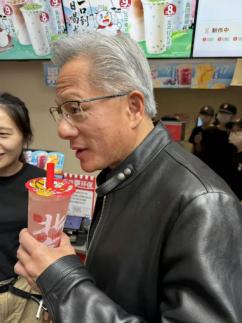 NVIDIA CEO Jensen Huang Enjoys Street Food in Beijing, Eric Trump Visits Great Wall Jensen Huang, CEO of NVIDIA, accompanied President Donald Trump on his recent trip to China and took the opportunity to explore local street food in Beijing. On May 15, videos and photos surfaced on Chinese social media platforms, including Weibo, showing Huang interacting with residents in the historic hutong area of Nanluoguxiang. Despite the sweltering heat, with temperatures nearing 30 degrees Celsius, he donned his signature black leather jacket while sampling traditional fermented soybean drink, Douzhi (豆汁). He also visited the renowned Beijing restaurant, Fangzhuang 69, known for its authentic zhajiangmian (noodles with soybean paste), and purchased a peach drink from the budget beverage brand, Mishi Bingcheng, priced at 8 yuan (approximately $1.20). Local media reported that the drink is being heavily promoted by Mishi Bingcheng under the slogan "Pick of the Big Shots," leading to high sales. Huang has consistently made headlines for his interactions with locals during his visits to China. This year alone, he has traveled to China more than four times, previously dining on hot pot in a restaurant in Shenzhen and taking photos with staff, as well as visiting a traditional market in Shanghai to enjoy street food. Meanwhile, on the same day, Eric Trump, the son of President Donald Trump, and his wife Lara gained attention online for a commemorative photo taken at the Great Wall of China. After completing their itinerary in China, Lara shared a photo on her social media, expressing, "It was an honor to share such an unforgettable trip together." 2026-05-17 00:04:39
 -
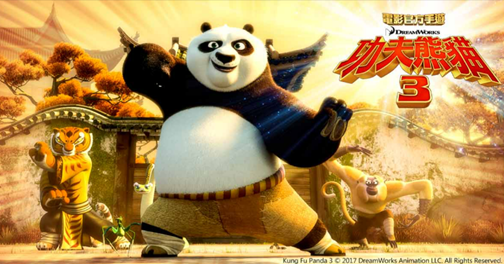 Chinese State Media Uses 'Kung Fu Panda' to Highlight US-China Relations In conjunction with President Donald Trump's visit to China, state-run media aired the animated film series "Kung Fu Panda" to promote a cooperative atmosphere in US-China relations. According to China's state broadcaster CCTV, the CCTV movie channel (CCTV6) aired "Kung Fu Panda" and "Kung Fu Panda 3" back-to-back on the afternoon of the 14th, from 2:42 PM to 6 PM, coinciding with the US-China summit. Notably, "Kung Fu Panda 3," released in 2016, was produced during a time of active US-China film collaboration and is the only co-produced film in the series. It involved contributions from the China Film Group, the US-China joint venture Oriental DreamWorks, and DreamWorks Animation. Approximately one-third of the production took place in China, and it was regarded as a symbolic project of US-China cultural cooperation at the time. The film begins with Po, now a dragon warrior, reuniting with his long-lost father, Li. Together, they journey to a secret panda village, where they face unexpected challenges against the villain Kai. Chinese cultural elements are seamlessly integrated throughout the film. The panda village is inspired by Qingcheng Mountain in Sichuan Province, known as the birthplace of Taoism and a habitat for pandas. Chinese cuisine, including dumplings, steamed buns, and noodles, frequently appears in the film. The production team noted in local interviews that they replaced a scene featuring cookies, originally suggested by the American team, with traditional Chinese foods. Released during the Lunar New Year season, the film also features scenes reminiscent of Chinese festivals, such as red lanterns and fireworks. At the time, the state-run Global Times reported that the Chinese production team played a role akin to a "cultural committee," ensuring cultural accuracy through research on Chinese culture, traditional clothing, and panda conservation areas. The film also garnered attention for its voice cast, which included prominent Chinese actors such as Jackie Chan, Stephen Chow, Huang Lei, Yang Mi, Wang Zhiwen, and Zhang Guoli. The box office performance was impressive, with "Kung Fu Panda 3" earning approximately 380 million yuan within three days of its release in China. CCTV6 is known for reflecting international affairs and diplomatic atmospheres through its film programming. Chinese internet users often refer to it as "Liugongzhu" (Six Princess). CCTV stated on its official Weibo account, "We respond to the times through the art form of film." In fact, during the heightened US-China trade tensions in 2019, the channel aired films related to the Korean War, such as "The Battle at Lake Changjin" and "Heroes of the East," showcasing a strong stance. Conversely, shortly after a phone call between the US and Chinese leaders in June of the same year, it abruptly canceled its scheduled programming to air "The Yellow River's Love Story," which depicts cooperation between Chinese and American soldiers against the Japanese, suggesting a potential shift in relations. Additionally, just after China and the US announced significant progress during high-level talks in Geneva last May, CCTV6 scheduled the American film "New York, I Love You," only to cancel it amid controversy.* This article has been translated by AI. 2026-05-16 06:05:11
 -
 Chinese 'Table Diplomacy' Message Through Kung Pao Chicken and Jajangmyeon In international diplomacy, state dinners are often referred to as "food diplomacy" because each dish served carries a message and consideration for the other country. This is why food is called the oldest language of diplomacy. The menu presented by China during President Donald Trump's visit naturally conveyed such messages. The highlight of the working lunch on May 15 at Zhongnanhai, where President Xi Jinping and Trump met for the last time, was Kung Pao Chicken, a classic Sichuan dish. China had also featured this dish during Trump's first visit in 2017. Kung Pao Chicken, made with chicken stir-fried with peanuts and chili peppers, is a representative dish from the Sichuan region. Some interpretations suggest that the choice was a nod to the connection between Trump's Chinese name, "Chuanfu," and Sichuan cuisine, or "Chuan Cai." Kung Pao Chicken also resonates with the history of U.S.-China exchanges. It was one of the favorite dishes of Chinese immigrant laborers who worked on railroads, in mines, and on farms in the U.S., symbolizing the integration of Chinese culinary culture into American society. The theme of food diplomacy continued at the welcome state dinner for Trump on May 14 at the Great Hall of the People in Beijing. The menu was carefully crafted to reflect traditional Chinese cuisine while considering Trump's tastes and Western preferences. The dinner included Peking Duck, a dish known for its crispy skin and tender meat, frequently served at state banquets for foreign leaders. Other dishes included Cantonese lobster soup, crispy beef, and slow-cooked salmon with mustard sauce. The meal also featured Chinese-style crispy dumplings, conch-shaped pastries, and Italian tiramisu. The combination of Eastern and Western flavors in the meal was seen as a representation of the mutual respect and compromise emphasized in U.S.-China relations. The music played during the dinner also reflected careful consideration, mixing American and Chinese songs. Notably, "YMCA," a song frequently used by Trump during his campaign rallies, was played, interpreted as a gesture of respect from the Chinese side. China's approach to food diplomacy was also highlighted earlier this year during South Korean President Lee Jae-myung's visit. During a state dinner, President Xi served Beijing-style Jajangmyeon and encouraged President Lee to taste the differences from Korean Jajangmyeon, fostering a warm atmosphere for conversation on a shared topic. In diplomatic relations with culturally vibrant France, a more refined "cultural diplomacy" is emphasized. During French President Emmanuel Macron's visit last year, Xi highlighted the cultural connections between French wine and Chinese tea. Additionally, at dinners with Russian President Vladimir Putin, known for his fondness for alcohol, the table always features China's representative liquor, Maotai, alongside Russian vodka. This reflects the friendship between the two leaders, who have met over 40 times since taking office, symbolizing the bond between China and Russia. The upcoming welcome dinner for President Putin during his state visit to China on May 19-20 is expected to showcase similar elements of food diplomacy, symbolizing the close relationship between the two countries. 2026-05-16 00:45:30
 -
 Trump Warned by Xi on Taiwan Issue During Beijing Meeting Chinese President Xi Jinping issued a strong warning regarding Taiwan during a meeting with U.S. President Donald Trump, stating that mishandling the issue could lead to conflict between the two nations. This meeting marked their first encounter in seven months since the summit in Busan last October. According to China Central Television (CCTV) on May 14, Xi emphasized that the Taiwan issue is the most critical matter in U.S.-China relations during their talks at the Great Hall of the People in Beijing. He noted, "If the Taiwan issue is handled well, U.S.-China relations can maintain overall stability. However, if mishandled, the two countries could collide and even enter a state of conflict, pushing U.S.-China relations into a very dangerous situation." He added, "'Taiwan independence' and peace in the Taiwan Strait cannot coexist like water and fire," underscoring that safeguarding peace and stability in the Taiwan Strait is the greatest common interest of both nations. Xi's remarks on Taiwan were highlighted in a breaking news format by CCTV even before the conclusion of the summit, indicating the importance China places on the Taiwan issue. Analysts suggest that Xi's comments represented a heightened level of concern compared to previous statements. Prior to Trump's visit, China had already defined the Taiwan issue as "the core of China's core interests" and "the first red line in U.S.-China relations," reiterating its sensitivity. An article by Chinese Ambassador to the U.S. Xie Feng, published in the People's Daily, also listed the Taiwan issue first among four red lines, which included democracy, human rights, development paths, and China's right to develop. On the first day of Trump's visit on May 13, the Taiwan Affairs Office of the State Council reiterated its opposition to arms sales between the U.S. and Taiwan, further pressuring the U.S. Shiu Yuren, a senior researcher at the Hudson Institute, interpreted through the Singapore United Daily News that Trump might be testing whether he intends to use the Taiwan issue as a bargaining chip. Trump had previously indicated that he would discuss the Taiwan issue and U.S. arms sales to Taiwan during his meeting with Xi. Given that U.S. arms sales to Taiwan have long been a source of tension in U.S.-China relations, it is expected to be a key agenda item in this summit. Observers are particularly interested in whether Trump will maintain the previous U.S. government's stance of "not supporting" Taiwan independence or adopt the Chinese-preferred phrasing of "opposing it" during his visit. However, after the summit, Trump did not respond to reporters' questions about whether the Taiwan issue was discussed. Experts believe that the likelihood of changes in U.S. policy toward Taiwan, solely based on China's purchases of U.S. soybeans or Boeing aircraft, remains low.* This article has been translated by AI. 2026-05-14 19:03:35
 -
 Trump and Xi Hold 135-Minute Summit in Beijing Amid Tensions "Can the U.S. and China overcome the 'Thucydides Trap'?" <Chinese President Xi Jinping>"It is an honor to meet you again and be friends." <U.S. President Donald Trump>On May 14, Chinese President Xi Jinping and U.S. President Donald Trump met at the Great Hall of the People in Beijing for the first time in six months. Their opening remarks revealed a stark contrast in tone. While Xi emphasized the importance of managing U.S.-China tensions and preventing conflict, Trump focused on praising Xi and highlighting their personal friendship.Xi Calls for Constructive, Strategic, and Stable RelationsDuring the approximately 135-minute summit, both leaders agreed on the need to manage U.S.-China relations in a stable manner and to establish a framework for future cooperation.According to China's state-run Xinhua News Agency, Xi stated, "We have agreed with President Trump to establish 'constructive, strategic, and stable relations' as a new guiding principle for our bilateral ties," adding that this would provide a strategic direction for U.S.-China relations for the next three years.However, U.S. media noted the subtle tension reflected in the leaders' remarks. The Associated Press reported, "While President Trump continued to offer conventional praise, President Xi warned of the potential for conflict." This highlighted the differences in their positions on sensitive issues such as the Iran conflict, trade disputes, and U.S.-Taiwan relations, suggesting that the summit may have prioritized symbolism and protocol over substantive breakthroughs.Xi remarked, "Can the U.S. and China overcome the 'Thucydides Trap,' which refers to the potential for conflict between a rising power and an established one?" He emphasized the need for both leaders to work together to prevent hegemonic competition from leading to conflict. He also stated, "The U.S. and China must maintain a partnership rather than an adversarial relationship, achieving mutual success and common prosperity while paving the right path for great power relations in the new era."Xi has repeatedly referenced the term 'Thucydides Trap' since 2014 to describe U.S.-China relations. The AP noted that Xi's use of this expression at a time when Trump was starting his visit with an optimistic tone was noteworthy.Additionally, Xi warned that the Taiwan issue is the most critical matter in U.S.-China relations, stating that mishandling it could lead to conflict between the two nations.In contrast, Trump's opening remarks were filled with praise for Xi and China. He called Xi a "great leader" and said, "People may dislike me saying this, but I say it because it is true." He added, "It is a great honor to meet you again as friends," and emphasized that U.S.-China relations could reach the best level in history.Xi Meets U.S. Business Leaders, Promises Market OpennessWhile economic and trade issues were significantly addressed during the summit, no immediate outcomes were announced. However, the meeting featured an unusual scene where top officials from both countries were joined by prominent American business leaders. During the summit, Xi met with over ten U.S. business leaders, including Elon Musk, CEO of Tesla; Tim Cook, CEO of Apple; and Jensen Huang, CEO of Nvidia.Trump remarked, "This delegation is made up of great American business leaders who all respect China and look forward to expanding cooperation."Xi also stated, "China's door will open even wider in the future," emphasizing that American companies have deeply participated in China's reform and opening process. He added, "China welcomes U.S. companies to strengthen mutually beneficial cooperation with China."Xinhua reported that American business leaders also expressed high regard for the importance of the Chinese market and their willingness to expand business and strengthen cooperation in China.According to the Wall Street Journal, after the summit, Musk said, "It was excellent. Many good things are happening." Jensen Huang described the meeting as "very well conducted," stating that both Xi and Trump were "incredible." Tim Cook responded to reporters' questions with a thumbs-up.Limited Concrete Outcomes Raise Questions About Summit's EffectivenessHowever, following the summit, no specific agreements were disclosed regarding the previously mentioned establishment of a U.S.-China trade committee and investment committee, the expansion of China's purchases of U.S. agricultural products, aircraft, and energy, or the extension of the trade truce and tariff reductions.Regarding major security issues such as the Iran conflict and North Korea's nuclear program, the Chinese side only briefly stated that "the two leaders exchanged views on international and regional issues, including the situation in the Middle East, the Ukraine crisis, and the Korean Peninsula."While the first day of the summit was filled with grand events and symbolic moments, evaluations suggest that the concrete outcomes were limited.After the meeting, Trump and Xi took a walk together in Beijing's Temple of Heaven, a site where emperors once offered sacrifices to heaven. The two leaders walked for about 30 minutes starting around 1 p.m., accompanied only by interpreters.Later that evening, a state banquet was held at the Great Hall of the People, attended by Xi, Premier Li Qiang, Zhao Leji, Chairman of the Standing Committee of the National People's Congress, Wang Huning, Chairman of the Chinese People's Political Consultative Conference, Cai Qi, a member of the Politburo Standing Committee, Li Shi, Secretary of the Central Commission for Discipline Inspection, and Ding Xuexiang, Vice Premier, among other top-ranking officials from the Chinese Communist Party.On May 15, Xi is expected to invite Trump to Zhongnanhai, the heart of Chinese power, for tea and lunch. 2026-05-14 18:45:16