


Latest by
-
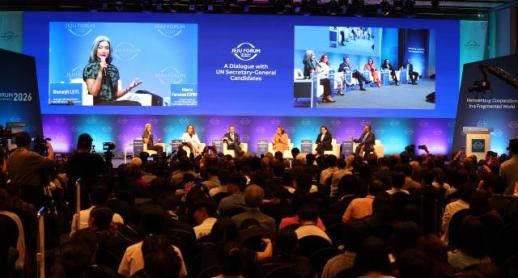 UN Secretary-General Candidates Emphasize Reform and Multilateralism at Jeju Forum Candidates for the next UN Secretary-General outlined their visions for UN reform and the restoration of multilateralism during the Jeju Forum on June 25. Five candidates participated in the "UN Secretary-General Candidates Discussion" at the Haevichi Hotel in Jeju: Rafael Grossi, Director General of the International Atomic Energy Agency (IAEA); Rebecca Greenspan, former Vice President of Costa Rica (Secretary-General of the UN Conference on Trade and Development); Macky Sall, former President of Senegal; María Espinosa, former Foreign Minister of Ecuador; and Carolyn Rodriguez-Burket, Ambassador of Guyana to the UN. Former Chilean President Michelle Bachelet attended via video link. Ban Ki-moon, former UN Secretary-General, opened the session by stating, "The person who takes office on January 1 will inherit a UN facing unprecedented challenges. This is a rare opportunity to restore trust in multilateralism and demonstrate that we can change the lives of ordinary people around the world." Espinosa emphasized the importance of being perceived as a "fair mediator" to restore trust in the UN. She stated, "The UN must act much earlier in addressing conflicts. The Secretary-General's responsibility is to act promptly, persistently, and to be present on the ground." Grossi highlighted the unique role of the UN, saying, "While there are various forums like the G7, G20, and BRICS, the UN is the only truly global platform." Greenspan called for a change in the UN's organizational culture, noting, "There is a tendency to think that everything must happen solely within the UN. However, the capacities of governments, regional organizations, the private sector, and civil society have expanded more than ever before," emphasizing the need for increased collaboration with the private sector. Sall remarked on UN reform, stating, "The UN is the institution that brings the world together to decide the future of the globe. Member states must participate in the reform, and the Security Council needs to be more open." Rodriguez-Burket expressed that while UN reform is a decision for member states, "reform and adjustment should not be a one-time event but should be ongoing." Bachelet, in her video address, asserted, "Multilateralism must be effective in changing people's lives. We need a multilateralism that prevents crises before they explode, reflects the voices of all UN member states more prominently, and is based on the principles and values of the UN Charter." * This article has been translated by AI. 2026-06-25 18:56:00
 -
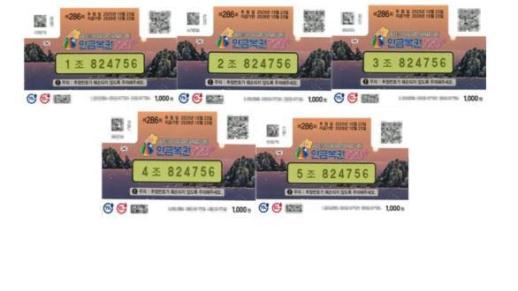 Lottery Winner Shares Dream of Stock Market Surge Amid Upcoming Draw "I experienced a scene in a dream where something like a chart surged dramatically, and at that moment, I felt a strange excitement and thought, 'Should I start investing in stocks?'" As interest builds for the winning numbers of the 321st round of Pension Lottery 720+ on June 25, the story of a winner from the 286th round, who won first prize (one ticket) and second prize (four tickets), is drawing attention. In a post on the Donghaeng Lottery winners' board last October, the winner shared, "I regularly buy lotto tickets every week and occasionally purchase the pension lottery. One day, on my way home from work, I felt a strange urge to buy a lottery ticket, so I bought both the lotto and the pension lottery together." He continued, "A few days later, after the pension lottery drawing, I checked my winning status via QR code, but it said 'Before the drawing.' I realized I had skipped a round when I purchased the tickets. Then, a week later, I checked again in the early morning, and to my surprise, I had won both the first and second prizes simultaneously." He expressed, "I couldn't believe I had won, and I couldn't sleep that night. I still can't grasp it. I have faced financial difficulties and debt repayment over the past three years, but I have tried to fulfill my personal and financial responsibilities. Therefore, this win feels like a tremendous comfort and luck to me." When asked about a memorable dream, the winner, who purchased the lottery ticket at a store in Gwangjin-gu, Seoul, replied, "I experienced a scene in a dream where something like a chart surged dramatically, and at that moment, I felt a strange excitement and thought, 'Should I start investing in stocks?'" He also mentioned, when asked about his usual lottery purchases, "I mainly buy lotto tickets and occasionally purchase the pension lottery." Regarding his plans for the winnings, he stated, "I plan to pay off my loans and seek professional treatment for psychological stability." Meanwhile, the winning numbers for the 321st round of Pension Lottery 720+ will be available after 7:05 PM today.* This article has been translated by AI. 2026-06-25 18:56:00
 -
 SK Hynix Pursues $45 Billion ADR Listing Amid AI Investment Strategy SK Hynix is planning to list American Depositary Receipts (ADRs) worth approximately $45 billion. This move is part of the company's strategy to secure funding for investments in the artificial intelligence (AI) era. To maintain its leadership in the high-bandwidth memory (HBM) market, significant upfront investments are necessary for building the Yongin semiconductor cluster, expanding the Cheongju packaging plant, and acquiring next-generation production equipment. On June 25, SK Hynix announced that the funds raised from the ADR listing will be allocated to the Yongin semiconductor cluster phase one fab, the Cheongju P&T7 advanced packaging fab, and the acquisition of extreme ultraviolet (EUV) lithography equipment. The Yongin phase one fab is expected to begin operations next year, while the Cheongju P&T7 is targeted for completion in 2028. The required investment for each facility is estimated at $23 billion and $14 billion, respectively, with an additional $8.8 billion earmarked for EUV equipment. However, cash availability poses a challenge. Although SK Hynix has emerged as a major beneficiary in the AI semiconductor sector as a key supplier to Nvidia, its financial strength is comparatively weaker than that of Samsung Electronics. As of the first quarter, Samsung's cash and cash equivalents stood at approximately $110 billion, while SK Hynix reported only $40 billion. After accounting for debt, the net cash is around $26 billion. While an improvement in the memory market is expected to significantly increase assets this year, the total investment required for the construction of the Yongin cluster's phases one to four is projected to be around $500 billion, indicating clear limitations on relying solely on internal cash. The ADR listing is interpreted as a move to attract direct funding from global capital markets to actively respond to the competitive landscape of AI investments. Listing on the U.S. stock market will not only enhance its symbolic status as a key player in Nvidia's supply chain but also offers the potential for a reassessment of its undervalued corporate value compared to U.S. semiconductor firms like Micron. Given that the U.S. is the center for AI semiconductor investments, this could significantly broaden SK Hynix's engagement with local investors. There is also speculation about potential investments in semiconductor factories in the Honam region. While the company has stated that it will use the raised funds for investments in Yongin and Cheongju facilities, the overall increase in investment capacity could positively impact new production sites in Gwangju and Jeonnam. Recently, it has been reported that Samsung Electronics and SK Hynix are in final negotiations with the government regarding the establishment of new fabs in the Honam region. However, the ADR listing does not come without concerns. Existing shareholders are likely to face dilution of their equity value due to the issuance of new shares. Additionally, the company's operational performance improvement relies heavily on increased demand for high-performance memory driven by expanded AI infrastructure investments. If there is a slowdown in AI infrastructure investments by major tech companies or adjustments in orders, the burden of large-scale facility investments could weigh heavily on the company. SK Hynix has also identified the slowdown in AI investments, order cancellations from clients, and volatility in the memory market as key risk factors in its securities registration statement. Concerns have also been raised about the potential for the company to become a 'ghost stock' due to liquidity issues. This will be the first ADR listing by a domestic company in the U.S. in 22 years since LG Display. Many domestic companies that previously listed ADRs in the U.S. have struggled with low trading volumes, resulting in diminished presence. Market analysts suggest that for the listing to have substantial meaning, the number of shares issued should exceed 10% of the total shares. SK Hynix plans to issue a maximum of 17.79 million new shares, which is about 2.5% of the total shares issued.* This article has been translated by AI. 2026-06-25 18:52:00
 -
 Reperi to Showcase K-Beauty at 2026 Busan One Asia Festival Reperi announced on June 25 that it will operate a Select Store at the 2026 Busan One Asia Festival (BOF) with NOL, Asia's largest global music festival. The Busan One Asia Festival, which began in 2016, is celebrating its 10th anniversary this year. Hosted by the city of Busan and organized by the Busan Tourism Organization and SM Culture & Contents (SM C&C), the festival will feature a Big Concert on June 27-28 at the Busan Asiad Main Stadium. Performers include Akdong Musician, Eight Turn, TREASURE, RISE, Lee Young-ji, Hearts to Hearts, and Kim So-hee, who will meet K-pop fans from around the world. Reperi's Select Store will showcase leading K-beauty brands in the festival's Sky Road area. The store will feature five beauty brands: Dewytree, La Ciel, Celadix, A.O.Y.U, and Fleurbois. Various beauty creators are also expected to attend the event. In the Ground area, the 'Coupang Mega Beauty Show' booth will feature 18 participating brands. Ahead of next month's Mega Beauty Show, Coupang, in collaboration with Reperi, will provide attendees with a chance to experience the participating brands in advance. A Reperi representative stated, "We expect that K-beauty and K-culture will create synergy centered around K-pop performances that attract global tourists."* This article has been translated by AI. 2026-06-25 18:52:00
 -
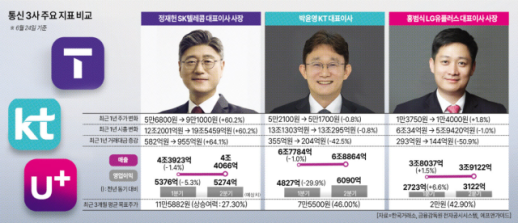 SK Telecom Leads Stock Gains Among South Korea's Telecom Companies The heated first half of 2026 is coming to an end. The stock market has surged, and the market is celebrating. However, success and failure are divided. Behind the smiles of those benefiting from massive investment profits are those shedding tears over misguided bets. The same goes for listed companies. Stock prices reflect how companies are perceived in the market. Even within the same industry, fortunes fluctuate. Who are the winners and losers? We evaluate the performance of sectors in the first half based on stock market metrics. The telecom market has struggled with stagnant growth in recent years, as the number of wireless subscribers has not increased as it once did. Last year, a hacking incident further worsened the situation. SK Telecom, KT, and LG Uplus are seeking new opportunities through AI transformation. Perhaps due to this, despite the recent stock market boom, the stock price increases for the three telecom companies have been relatively modest. Nonetheless, there are winners and losers. Over the past year, SK Telecom emerged as the winner in the telecom sector based on stock price growth, while LG Uplus remained stagnant and KT experienced a decline. SK Telecom Dominates Stock Prices and Market Capitalization According to the Korea Exchange and the Financial Supervisory Service's electronic disclosure system, as of June 24, SK Telecom's stock price rose 60.2% over the past year, from 56,800 won to 91,000 won. In contrast, KT's stock price fell 0.8%, from 52,100 won to 51,700 won, while LG Uplus saw a modest increase of 1.8%, from 13,750 won to 14,000 won. SK Telecom also leads in market capitalization, valued at 19.5459 trillion won, significantly larger than KT's 13.3029 trillion won and more than three times LG Uplus's 5.942 trillion won. Investor interest has centered on SK Telecom, with trading volume increasing by 64.1% to 95.5 billion won, while KT and LG Uplus saw declines of 42.5% and 50.9%, respectively. Supply and demand varied among the stocks. From June 24 of last year to June 24 of this year, institutional investors actively purchased SK Telecom shares, with a net buy of 198.6 billion won. Foreign investors showed a preference for LG Uplus, with a net buy of 222.5 billion won, marking the only net buying advantage. KT experienced a relatively stable supply and demand situation, with institutional buying balanced by foreign and individual selling. LG Uplus Reports Strongest Earnings Performance In terms of earnings, the rankings among the three companies differ. In the first quarter of this year, LG Uplus demonstrated the most stability, with operating profit increasing by 6.6% from 255.4 billion won to 272.3 billion won, and revenue rising by 1.5% from 3.7481 trillion won to 3.8037 trillion won, making it the only company among the three to see growth in both revenue and operating profit. This growth is partly attributed to the influx of subscribers following last year's hacking incident at SK Telecom. Conversely, SK Telecom reported a decrease in operating profit of 5.3% and a 1.4% drop in revenue. KT also saw a decline, with operating profit down 29.9% and revenue down 1.0%. However, the outlook for the second quarter is mixed. According to FnGuide, KT's operating profit is expected to rise by 26.2% to 609 billion won compared to the first quarter. LG Uplus is projected to see its operating profit increase by 14.7% to 312.2 billion won. In contrast, SK Telecom's consensus for second-quarter operating profit is estimated at 527.4 billion won, a 1.9% decrease from the first quarter. AI and Shareholder Returns Expected to Drive Second Half Analysts maintain a positive outlook for the telecom sector. The average target stock prices over the past three months are 115,882 won for SK Telecom, 75,500 won for KT, and 20,000 won for LG Uplus. In terms of potential for stock price increases, KT leads with 46.0%, followed by LG Uplus at 42.9% and SK Telecom at 27.3%. Kim Hong-seok, a researcher at Hana Securities, stated, "Overall, we expect there will not be much negative news, and investor interest will likely focus on increased shareholder returns due to improved earnings and the impact of AI radio access network (AI RAN) implementation on tariff restructuring." 2026-06-25 18:44:00
 -
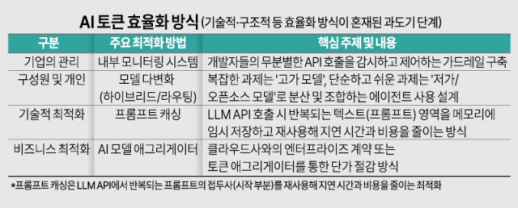 Rising Costs of AI Tokens Prompt New Management Strategies Managing the costs of artificial intelligence (AI) tokens has become a new challenge for companies. Unlike the previous rush to adopt high-performance AI models, businesses are now focusing on how to optimize AI expenses for similar tasks, establishing a new competitive edge. According to the IT industry on June 25, major companies are actively implementing AI FinOps (Financial Operations) systems to visualize and control cloud and AI costs at the departmental and service levels. These systems allow for real-time monitoring of internal AI application programming interface (API) calls and adjustments to agent usage limits and priorities based on departmental consumption and contributions to AI tasks. This shift reflects the understanding that managing AI token usage at the individual level is insufficient to address rising costs. It has become crucial to manage the phenomenon of 'token maxing,' where employees repeatedly perform meaningless tasks on internal AI, as well as unexpected expenses arising during collaboration. Nexon is examining the efficiency of AI token usage at the group level and is developing cost prediction models for both enterprise and project units based on historical usage data to estimate the token scale and budget needed for new projects. Krafton announced on June 18 during the Nexon Developers Conference (NDC) that it has built a dashboard to manage the organization's AI cost status. The company is also considering varying AI usage methods based on the maturity of AI utilization within different departments. The approach to using AI models at the operational level is also changing. In development settings, a 'hybrid model (routing) approach' is emerging as a cost-saving measure, allowing teams to select or automatically distribute appropriate models based on the difficulty and importance of requests. Complex planning and inference tasks are assigned to premium models, while simpler repetitive tasks or basic coding are handled by relatively cheaper models. For instance, the input cost for 1 million tokens is $2.50 for OpenAI's GPT-5, while DeepSeek V3.2 is priced at approximately $0.14, representing a nearly 94% reduction. The gap widens further for output costs, underscoring the growing importance of model allocation as the use of AI agents increases. A representative from a domestic software company using both Claude and Gemini models stated, "It was common to use expensive inference models for all tasks, but due to cost issues, we have recently started using different AI models based on task difficulty." The structure of purchasing AI model APIs is also identified as a method for cost management. Instead of contracting and managing multiple generative AI models separately, integrated services that allow the use of various models through a single API have emerged. For companies with significant AI usage, the impact of contract structures and operational methods on costs is becoming as critical as model selection. Services utilizing a model-as-a-service (MaaS) approach enable companies to access multiple generative AI models through a single API. Another technical cost-saving measure is prompt caching. When companies repeatedly input the same instructions, codebase descriptions, data paths, or document structures, input token costs can accumulate unnecessarily. By temporarily storing and reusing recurring contexts and prompt patterns, unnecessary computations can be reduced. The industry views AI cost management as an extension of operational capabilities for companies. As competition to adopt high-performance models intensifies, the ability to manage AI agent usage has emerged as a key issue for AI utilization. An industry insider remarked, "As companies increasingly adopt AI, considerations of model performance, operational costs, and management convenience will become critical decision-making factors."* This article has been translated by AI. 2026-06-25 18:40:00
 -
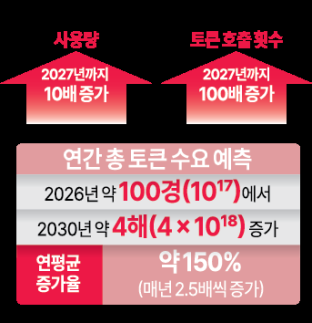 AI Token Costs Skyrocket, Approaching Labor Expenses The software industry is grappling with soaring costs associated with artificial intelligence (AI) tokens. Major AI service providers have released high-performance models, leading some companies to spend nearly 100 million won per month on tokens. As of June 25, the IT sector reports that businesses are rapidly increasing their token expenditures as they integrate AI agents into both development and non-development tasks. Company A, a software development firm, revealed that its monthly AI usage costs exceed its initial budget by 30%. Although the budget was set conservatively, a surge in exchange rates and higher-than-expected token usage have contributed to the increase. On June 24, the exchange rate for the won to the dollar was 1,546 won, up about 7% from the mid-1,400s six months ago. This means companies must spend an additional 7% for the same tasks. Furthermore, developers are required to read, infer, modify, and repeatedly validate extensive codebases, leading to a significant rise in token consumption. A representative from Company A stated, "Despite not setting a conservative monthly budget, we are using more tokens than anticipated. The rapid pace of AI agent version updates complicates budgeting. We plan to review methods to minimize and optimize token usage, starting with prompt strategies, and will issue a company-wide notice afterward." Game developer Company B reported daily token costs ranging from $150 to $400 per developer. While this amount currently falls short of individual labor costs, there is a possibility that it could soon exceed them, prompting the company to seek solutions. Discussions are underway to distribute guidelines aimed at reducing token usage and to implement departmental limits on token consumption. However, the varying AI models and performance levels used for different tasks make it challenging to predict costs accurately, complicating the creation of specific guidelines. Market research firm IDC forecasts that by 2027, the usage of AI agents will increase tenfold, with token call volumes expected to rise by 100 times. The total annual demand for tokens is projected to grow from approximately 100 quintillion this year to about 4 quattuordecillion by 2030, reflecting an average annual growth rate of around 150%. This translates to a yearly increase in token costs by a factor of 2.5. The surge in per-person token usage is becoming a significant concern for companies. Users accustomed to conversational AI are now entering longer and more complex prompts than before, leading to explosive increases in token consumption. Additionally, as tasks such as complex reasoning, collaboration, and coding are delegated to AI, per-person token usage continues to rise. The ICT sector observes that corporate interest in AI has shifted to the stage of 'cost management.' A representative from Company B remarked, "While AI undoubtedly enhances development productivity, the cost structure does not allow for unlimited usage. We are now considering feasible cost-saving measures at the corporate level." 2026-06-25 18:40:00
 -
 Rising Costs of AI Tokens Concern Game Developers As generative artificial intelligence (AI) becomes more prevalent in the gaming industry, the expectation that AI will replace entry-level developers is proving to be misguided. While replacing developers with AI is challenging, the rising costs of token usage are prompting a reevaluation of cost-effectiveness. On June 24, the Chief Technology Officer (CTO) of a gaming company stated, "While the introduction of AI has indeed improved work efficiency, it is not yet at a level where it can replace human workers. It is difficult to compare costs directly with personnel." In the game development field, the role of skilled developers remains crucial. Although generative AI can assist with coding, debugging, and documentation, complex problem-solving during game engine design and large-scale service operations heavily relies on developers' experience and judgment. The industry currently views AI more as a productivity-enhancing tool rather than a means of workforce replacement. It is seen as a way to help developers reduce repetitive tasks and focus on more critical responsibilities. Recently, game companies have expanded their support for AI tools, including ChatGPT and Gemini, with the addition of Claude, which is favored by developers. A major domestic gaming company has implemented Claude and Gemini Enterprise across the organization this year. Claude Enterprise is reported to cost a minimum of $250 per person per month. At the current exchange rate, this amounts to approximately 380,000 won. The company supports all employees, regardless of their roles, in utilizing AI, allowing them to apply for over 18 different AI services based on their job functions. Considering the company has around 9,500 employees, the associated costs are significant. Other game developers are also providing enterprise-wide support for Claude. They operate a system where development teams can apply for the specific AI tools they need. Currently, the productivity gains are offsetting the increased costs, but as AI usage rises, questions about efficiency are emerging. An industry insider noted, "While token costs are still cheaper than labor costs, if the current trend continues, we will face a situation where token costs exceed labor costs." Another Chief AI Officer (CAIO) in the IT sector pointed out that major AI service providers are shifting from flat-rate to usage-based pricing models. He explained, "In the past, many contracts were subscription-based with fixed costs for a certain period, but recent enterprise agreements increasingly involve additional charges based on usage. The more AI is used, the higher the costs." He added, "Companies with previous contracts could predict costs over a set period, but recent contracts link increased usage directly to cost increases. Large corporations are increasingly grappling with finding a balance between expanding AI usage and controlling expenses."* This article has been translated by AI. 2026-06-25 18:40:00
 -
 Ruling Party Pressures Opposition Amid Ongoing National Assembly Leadership Dispute Rival parties are locked in a tug-of-war over the position of chair of the Legislation and Judiciary Committee as negotiations for the formation of the 22nd National Assembly continue. The Democratic Party has pressured the People Power Party to submit its list of committee members by noon on June 26, threatening to elect 18 committee chairs if they fail to comply. In response, the People Power Party has called for an end to what they describe as "intimidation politics" and urged the Democrats to relinquish their claim to the committee chair.On June 25, Han Byung-do, the Democratic Party's floor leader, urged National Assembly Speaker Chung Sye-kyun to convene a plenary session and assign the 18 committee chairs if the People Power Party does not submit its list by the deadline. Earlier, Speaker Chung had requested both parties to submit their lists by noon on June 24, but after the People Power Party failed to do so, he extended the deadline to June 26. According to Article 48, Paragraph 1 of the National Assembly Act, the representative of a negotiating group must request the appointment of committee members to the Speaker at least three days before the expiration of their term. If no request is made by that deadline, the Speaker can appoint members at their discretion.During a policy coordination meeting held on the same day, Han criticized the People Power Party for refusing to submit their list, claiming they were using the excuse that the regulations were merely advisory. He stated, "If they cannot take the Legislation and Judiciary Committee, they seem to think it is acceptable for the National Assembly to come to a standstill." He added, "We can no longer tolerate the paralysis of the National Assembly, as the People Power Party's relentless obstinacy is pushing the livelihoods of the people to a critical crisis." He insisted that the plenary session must be held this week to complete the election of committee chairs, stating, "This is the fastest and clearest way to get the stalled National Assembly moving again."Conversely, the People Power Party has accused the Democratic Party of pressuring them to monopolize the committee chairs. Floor leader Jeong Jeom-sik raised concerns during a Supreme Council meeting, asking, "Are we negotiating, or are we being threatened? Do they think the People Power Party will give up the Legislation and Judiciary Committee out of fear from their threats, or are they building up to monopolize all 18 committees?"Jeong pointed out that the Democratic Party has not presented any negotiation proposals to their party, merely repeating that they cannot concede the Legislation and Judiciary Committee without offering any alternatives. He criticized their lack of sincerity in negotiations, stating, "The party that holds the initiative should present a proposal first, but the Democratic Party has not offered anything. How can we submit a list when the distribution of committees has not been determined?"As both parties remain at an impasse over the distribution of the Legislation and Judiciary Committee chair, it appears likely that the second negotiation deadline set for June 26 will also be missed. While the ruling party has indicated it may proceed with the formation of committees unilaterally if the People Power Party does not submit its list, this could provoke backlash against what might be seen as a "majority party's unilateralism." This is particularly concerning given the recent decline in presidential approval ratings and party support following the June 3 local elections.However, within the Democratic Party, there are discussions about potentially unilaterally handling the election of key committee chairs, such as the Legislation and Judiciary Committee, in the plenary session while negotiating the distribution of other committees, a strategy referred to as "salami tactics." In the past, the Democratic Party successfully secured all 18 committee chairs during the first half of the 21st National Assembly after negotiations broke down in 2020.* This article has been translated by AI. 2026-06-25 18:24:00
 -
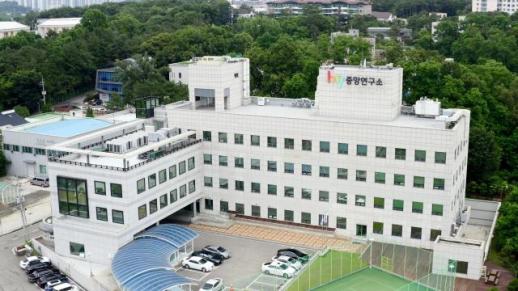 HY to Host International Symposium Celebrating 50 Years of Research Institute HY will hold an international symposium to mark the 50th anniversary of its research institute, the first such event in 13 years. On July 1, HY will host the 19th International Symposium at the Daejeon Convention Center, the first international academic exchange event since 2013. Since 1979, HY has organized international symposiums focused on probiotics and health, fostering academic exchanges to advance domestic probiotics research and industry. This year's symposium will be held in conjunction with the Korean Society of Food Science and Technology's conference, aiming to share the latest trends and future directions in probiotics research. The theme for this year is "Probiotics Beyond the Gut: Advancements Through Integrated Science and Technology." It will highlight the expanding research on probiotics and microbiome technology beyond gut health. Professor Kim Ji-yeon from Seoul University of Science and Technology will chair the sessions. Presenters include Professor Elad Tako from Cornell University, Professor Heo Jun-ryul from Harvard University, Professor Lim Shin-hyuk from Pohang University of Science and Technology, and Choi Il-dong, head of HY's New Growth Team. Topics will cover the effects of specific strains on gut function and the microbiome, immune enhancement through clinical trials and microbiome analysis, and AI-based personalized probiotics technology. The symposium will particularly focus on the paradigm shift in probiotics research centered around the "Gut-Axis" theory and share the latest research findings. The event will conclude with a vision declaration ceremony for the "Leap to a Specialized Microbiome Research Institute" as part of the 50th anniversary celebration of the HY Research Institute. Lee Jae-hwan, director of the HY Research Institute, stated, "For the past half-century, the HY Research Institute has focused on probiotics research and has led the development of related industries. We aim to enhance our competitiveness in microbiome research and continue contributing to public health through this symposium." Established in 1976, the HY Research Institute is the first corporate research institute in the food industry. It began research with the goal of domesticating lactic acid bacteria and led the development and commercialization of Korea's first lactic acid bacteria in 1995. Currently, it holds a library of approximately 5,100 strains and about 250 natural product strains, and is advancing the development and industrialization of functional materials such as probiotics, natural products, and microbiomes, supported by nine individually recognized ingredients by the Ministry of Food and Drug Safety, 124 registered patents, and 150 domestic and international research papers.* This article has been translated by AI. 2026-06-25 18:24:00