
Journalist

Kim Seong-se
biblekim@ajunews.com
-
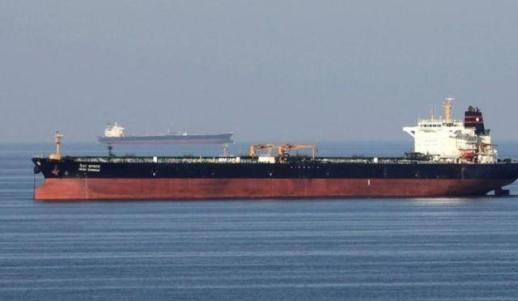 South Korea Says Kuwait Force Majeure to Have Limited Impact; Russian Oil Imports Unlikely The government said Kuwait’s declaration of force majeure on crude oil and petroleum product exports is unlikely to have a major impact on South Korea, and it sees little chance of bringing in additional Russian crude or petrochemical products despite a temporary easing of U.S. sanctions. Yang Gi-uk, director general for industrial resources and security at the Ministry of Trade, Industry and Energy, said at a Middle East war response task force briefing on the 21st that some domestic refiners under contract had been notified of Kuwait’s move. “With the Strait of Hormuz blocked since the Middle East war, force majeure will not affect us,” Yang said. Kuwait Petroleum Corp., the state-run oil company, sent letters to counterparties on the 16th notifying them it was invoking a force majeure clause. The company said the blockade of the Strait of Hormuz has prevented tankers from entering and leaving the Persian Gulf, making it difficult to meet scheduled deliveries on time. Yang said the declaration appeared tied to contract procedures as April loading dates were ending, rather than damage to refining facilities. He added that if the strait remains blocked, Kuwait could declare force majeure again for subsequent volumes. Officials also played down the likelihood of additional imports of Russian crude and petrochemical products following U.S. sanctions relief. The United States on the 17th (local time) extended a further one-month easing of sanctions related to exports of Russian crude and petroleum products. While any related transactions must be completed within a month, refiners and others have secured 70 million barrels of alternative supplies through the end of May. Yang said some risk had been reduced by the U.S. move, but “EU risk remains.” He said interest is low because domestic vessels often rely on EU insurers, creating additional exposure. On additional naphtha imports, Yang said companies are reviewing volumes based on experience from last month’s sanctions easing, but are also seeking alternative supplies. “We do not see companies rushing in as if their survival depends on it,” he said. Regarding the fourth round of the oil products price cap set to take effect at midnight on the 24th, Yang said it was an emergency measure chosen amid unstable global oil prices. He said the government is preparing to make decisions by weighing household economic conditions, the fiscal burden, demand reduction and consumption patterns by fuel type. The ministry said Japan’s gasoline prices are 23.8% lower than South Korea’s and diesel prices are 28.3% lower. In the United States, gasoline prices are 20.8% lower, but diesel prices are 8.7% higher. Yang said Japan is believed to be deploying subsidies on a massive scale, while the United States has seen larger price increases than South Korea. He said South Korea should assess whether other countries are suppressing prices through caps by reviewing overseas cases. Asked about speculation that gasoline prices could rise more sharply to manage demand, Yang said gasoline and diesel consumption are moving differently and it is difficult to discuss price increases or cuts now. He said a decision would be made after considering various views. On a Malta-flagged tanker that recently exited the Strait of Hormuz and is heading to South Korea, Yang said it was not among the seven tankers in the Persian Gulf previously announced by the ministry. He said it had been excluded because the government judged the likelihood of receiving the cargo to be low, calling it “a highly exceptional situation.” 2026-04-21 11:33:19
 -
 Nearly 3 million barrels delivered to refiners in first week of oil swap program SEOUL, April 7 (AJP) - About 2.8 million barrels of crude oil have been supplied to refiners just a week after the launch of an "oil swap" program, which lends government-owned stockpiles to help them secure alternative supplies, the Ministry of Trade, Industry and Energy said on Tuesday. At a daily briefing at the government complex in the administrative city of Sejong, Yang Gi-uk, a ministry official, said the country's four major refiners had applied to swap more than 30 million barrels of crude oil, with two deals completed under which about 2.8 million barrels have already been delivered. "With at least four additional contracts scheduled for this week, total swapped volumes are expected to reach about 8 million barrels by the end of the week," Yang added. The program was launched on March 31 to ease supply disruptions by lending government oil reserves to refiners, who will be required to replenish them once they have secured their own supplies. Under the program, refiners who have faced difficulties importing Middle Eastern crude due to the closure of the Strait of Hormuz is able to secure substitute supplies. The program was launched on March 31 to ease supply disruptions by lending government oil reserves to refiners, which are required to replenish them once they secure their own supplies. Under the program, refiners facing difficulties importing Middle Eastern crude due to the closure of the Strait of Hormuz can secure alternative supplies. Meanwhile, the government has secured about 50 million barrels of alternative oil supplies for April and about 60 million barrels for May, equivalent to roughly 60 percent and 70 percent of typical levels, with supplies sourced from countries including Australia, Brazil, Saudi Arabia, the United Arab Emirates and the U.S. Naphtha supplies are also at about 70 percent of normal levels. "Imports of light naphtha stood at roughly 1.16 million tons last year, while expected imports for April are about 770,000 tons. Factoring in approximately 1.1 million tons produced domestically, overall supply is at more than 80 percent of typical levels," Yang said. Stressing the need to ensure a steady naphtha supply, he said the ministry will seek additional sources through measures financed by a supplementary budget. The ministry, however, said that key raw materials are being supplied stably despite surging petroleum prices and shortages of some packaging materials, pledging to keep monitoring high-demand items such as packaging for instant noodles and powdered milk, as well as trash bags. 2026-04-07 14:45:30
 -
 More companies voluntarily join efforts to save energy amid skyrocketing oil prices SEOUL, April 7 (AJP) - More companies are voluntarily joining energy-saving efforts including alternating vehicle use as part of measures to cope with energy shortages amid the prolonged conflict in the Middle East, the Ministry of Climate, Energy and Environment said on Tuesday. Major conglomerates such as CJ, GS, Hanwha, HD Hyundai, Hyundai Motor, Lotte, Samsung, SK, and POSCO are requiring employees to leave their cars at home once a week depending on the last digit of their license plates. The country's five major banks - Hana, KB Kookmin, NH NongHyup, Shinhan, and Woori - are also implementing similar measures. Business lobbies such as the Korea Chamber of Commerce and Industry, the Korea Employers Federation, and the Korea International Trade Association have also followed suit. According to the ministry, about 50 large and mid-sized companies including universities and other private institutions are taking part in these energy-saving efforts, just about a week after state-run agencies and public institutions took the lead late last month. Civil servants and staff at public institutions, previously mandated to leave their cars at home one day per week since March 25, are now required to commute by public transportation every other day starting from Wednesday. About 50 refiners, petrochemical companies, and others heavily reliant on petroleum have also pledged to reduce energy consumption, with plans to cut usage this year by 3.3 percent or 130,000 tons of oil equivalent from last year's 3.93 million toe. The 130,000 toe is equivalent to about 610 gigawatt-hours of energy, roughly the amount of electricity generated by a nuclear power plant operating for about a month. The ministry also plans to support companies that meet their reduction targets by subsidizing the installation of energy-saving facilities. Many workers are also participating by turning off lights during lunch breaks, using stairs instead of elevators, carpooling, or riding bicycles. "It is encouraging to see many companies and organizations voluntarily join despite difficulties caused by high oil prices," said Park Deok-yeol, a ministry official, vowing to further expand energy-saving efforts. 2026-04-07 09:14:00
 -
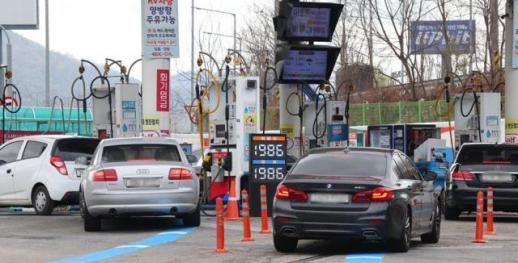 South Korea launches oil swap program for refiners amid Middle East supply disruptions SEOUL, March 31 (AJP) - South Korea is implementing an "oil swap" program that lends government-owned stockpiles to refiners to help them secure alternative oil supplies, the Ministry of Trade, Industry and Resources said Tuesday. At a daily briefing at the government complex in the administrative city of Sejong, Yang Gi-uk, a ministry official, said the government is "releasing stockpiles" for refiners. Yang said Middle Eastern crude makes up the largest share of the government's stockpiles, and that South Korea holds more than 20 million barrels, which he said should be sufficient. The program aims to ease supply disruptions by lending government oil reserves to refiners, who will be required to replenish them once they have secured their own supplies. Under the program, which runs for two months and could be extended if necessary with the ministry's approval, refiners, who have faced difficulties importing Middle Eastern crude due to the closure of the Strait of Hormuz, will be able to secure substitute supplies. Monthly settlements will be calculated based on price differences between government stockpiles and refiners' secured supplies. Amid supply disruptions from the Middle East, most refiners have turned to Africa, Australia, Central Asia, and the Americas for oil , with shipments taking 14 to 50 days. According to the ministry, the country's four major refiners have applied for the program, with a decision to be made after the Korea National Oil Corporation verifies their applications and assesses feasibility before releasing stockpiles. 2026-03-31 15:14:51
 -
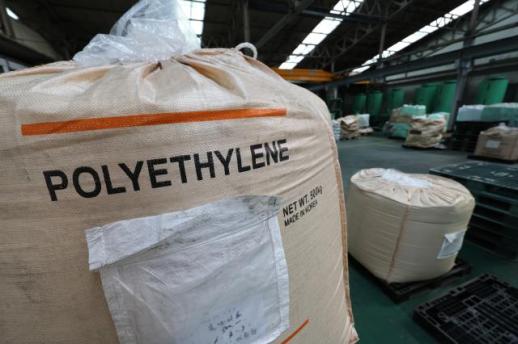 Seoul enforces ban on naphtha exports for 5 months amid supply crunch SEOUL, March 27 (AJP) -South Korea will keep domestic naphtha at home after its shortage from the widened conflicts in the Middle East has crippled a cracking facility, sending downstream ripples across factory floors to plastic delivery bags and cartons. The Ministry of Trade, Industry and Energy on midnight Friday issued a gazette enforcing ban on naphtha exports immediately for five months as a part of a package of "wartime" measures that included deeper and longer cuts to fuel tax and supplementary budget. Naphtha is an essential feedstock for producing petrochemical materials used by industries including semiconductors and autos. South Korea relies on imports for 45 percent of domestic demand, and supplies from the Middle East — which account for 77 percent of imports — have been disrupted by the war, the ministry said. The government previously supported efforts to secure alternative import sources, including those from Russia after Washington lifted some sanctions, and designated naphtha as an economic security item, making it eligible for low-interest financing through a supply chain fund. As the situation dragged on, it moved to stronger steps, including shifting restricted export volumes to the domestic market and banning hoarding. Under the notice, exports of all naphtha are restricted in principle, with exceptions allowed only with approval from the industry minister. Naphtha businesses (refiners) and users (petrochemical companies) must report daily to the ministry on production, imports, use, sales and inventories. Hoarding is prohibited. If a naphtha business’ weekly shipment ratio drops by more than 20 percent from 2025 without a reasonable explanation, the minister can order steps such as adjusting sales and inventories. The government can also order refiners to produce naphtha and take supply-adjustment measures to ensure naphtha produced domestically or brought in from overseas is supplied to specific petrochemical companies. According to industry minister Kim Jung-kwan, “Because naphtha is a basic raw material that supports South Korea’s industry, the government will secure as much volume as possible through support for overseas procurement.” He urged cooperation so that naphtha and related petrochemical products are distributed and managed in line with the purpose of the new notice. “The government will supply naphtha as a top priority so there is no impact on health care, key industries and the production of essential goods,” Kim added. The emergency step comes as supply disruptions have already begun to hit production lines. One of the country’s largest naphtha cracking centers has been forced to halt operations due to feedstock shortages, according to industry sources, amplifying concerns over a broader shutdown across the petrochemical chain. The shock is cascading into everyday goods. Plastic processors and packaging firms are reporting delays in securing raw materials, while distributors warn of tightening supplies of garbage bags and industrial films, echoing early signs of hoarding in retail channels. Seoul is also weighing more controversial options to plug the supply gap. Officials said the government is in talks with industry players over the possibility of resuming imports of Russian crude oil and naphtha, a move that would require easing sanctions imposed after Moscow’s invasion of Ukraine. South Korea halted Russian crude imports in December 2022, though the country previously relied on Russia for about 5.6 percent of its crude supply. Since then, dependence on the Middle East has deepened, leaving the economy more exposed to disruptions around the Strait of Hormuz — a chokepoint through which roughly 70 percent of the country’s crude and about half of its naphtha imports pass. Finance Minister Koo Yun-cheol earlier signaled the shift toward more interventionist policy, describing the export curb and stockpiling controls as necessary to stabilize supply chains under what the government views as wartime conditions. Whether the measures can fully contain the fallout remains uncertain. Without a de-escalation in the Middle East, industry officials warn that shortages could persist, raising the risk of prolonged disruptions not only in petrochemicals but across manufacturing sectors that rely on plastic and synthetic materials as foundational inputs. 2026-03-27 07:29:30
 -
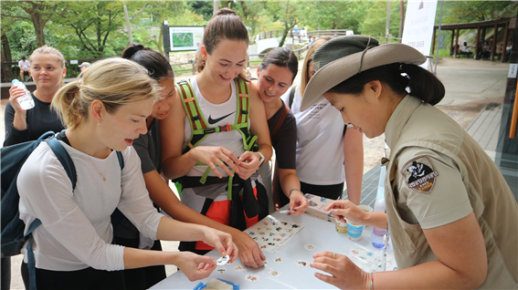 Natural scenery lures over 2 million foreigners to South Korea's national parks SEOUL, March 25 (AJP) - Over 2 million foreigners visited national parks in South Korea last year, with Mt. Hallasan on the southern resort island of Jeju attracting the most visitors, according to an analysis released by the Korea National Park Service (KNPS) on Wednesday. Among them, an estimated 1.13 million were overseas tourists and 920,000 were foreign residents living in here. The ballpark figures were based on mobile roaming data from foreign visitors, which the KNPS analyzed to track their itineraries in national parks across the country. Mt. Hallasan drew the most foreign visitors with 270,000, followed by Dadohaehaesang National Park, a sprawling park along the southwestern coast with 140,000, and Taeanhaean National Park in South Chungcheong Province and Hallyeohaesang National Park in southern coastal areas with 130,000 each. The NPS attributed the parks' popularity to their scenic beauty, with picturesque beaches and rock formations. By nationality, Chinese visitors made up the largest group with 250,000 or 21.9 percent, followed by Taiwanese with 130,000, Filipinos with 90,000, Indonesians with 80,000 and Americans with 60,000. To respond to a growing number of foreign visitors to national parks, the KNPA said it plans to provide more promotional videos, English-language programs, and other services tailored to foreigners, including rentals of backpacks, hiking shoes, and other safety gear. "The influx of foreign visitors to national parks reflects that natural scenery is a key draw for travelers, which would also enhance South Korea's competitiveness in tourism," KNPS chairman Joo Dae-young said. 2026-03-25 10:39:51
 -
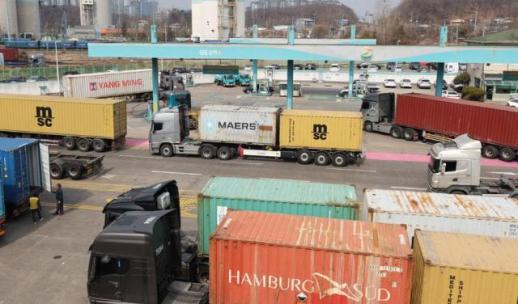 South Korea hit hard by rising costs as Middle East conflict drags on, think tank warns SEOUL, March 16 (AJP) - A prolonged conflict between the U.S. and Iran could drive up energy and logistics costs for South Korea, with a 10-percent rise in global oil prices projected to push domestic manufacturing production costs up by an average of 0.71 percent, a report released by a state-run think tank on Monday suggests. The Korea Institute for Industrial Economics and Trade (KIET) warned that ongoing tensions around the Strait of Hormuz, a critical chokepoint for roughly one-fifth of the world's oil supply, have already pushed oil prices higher, and further escalation there could intensify supply disruptions and inflationary pressures on South Korea's energy‑intensive industries. Oil prices have jumped sharply since U.S.‑led airstrikes on Iran late last month, as the conflict has escalated into a broader regional war with the U.S. vowing further strikes and Iran responding with retaliatory attacks. Dubai crude oil has risen more than 40 percent, to about US$103 a barrel from around $72 before the fresh conflict began in the already volatile region. With Middle Eastern crude accounting for about 70 percent of South Korea's oil imports, and most shipments passing through the strategically important Strait of Hormuz, cost pressures on the country are intensifying further. Exporters also face uncertainty. South Korea's shipments to the Middle East have grown steadily since 2020, though the region accounts for just about three percent of total exports. Even so, the institute warned that shipping disruptions could hit exporters directly or indirectly through higher freight costs, delivery delays, and broader supply chain disruptions. The institute called for steps to stabilize energy supply chains through various measures including diversifying import sources and tapping strategic oil reserves, given South Korea's heavy reliance on Middle Eastern crude and liquefied petroleum gas. "If the rise in global oil prices is prolonged, higher manufacturing costs and mounting price pressures could fuel inflation and raise the possibility of stagflation," said Hong Seong‑uk, the KIET's head. 2026-03-16 16:35:13
 -
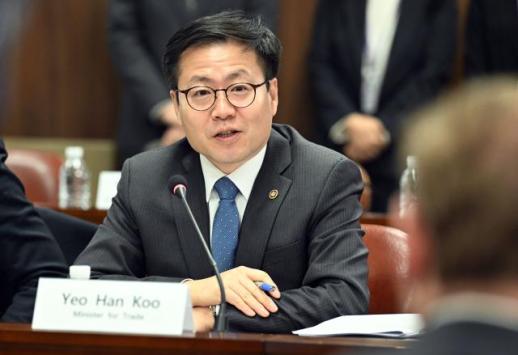 Trade chief seeks stronger ties with Mercosur countries amid global uncertainty SEOUL, March 5 (AJP) - Trade Minister Yeo Han-koo on Thursday met with ambassadors from four Mercosur countries to discuss ways to enhance cooperation. Formed in 1991, Mercosur is a South American trade bloc comprising Argentina, Brazil, Paraguay and Uruguay. Thursday's talks follow President Lee Jae Myung's summit with Brazilian President Luiz Inácio Lula da Silva in Seoul late last month, as South Korea looks to expand economic and trade ties with the bloc. Citing Mercosur's abundant critical minerals such as lithium and nickel, Yeo called the bloc a "very important partner" as global trade faces "unprecedented" shifts amid rising protectionism and the strategic use of resources. Yeo said that strengthening trade ties with South America's largest economic bloc, home to about 270 million people with a combined gross domestic product of US$2.9 trillion, is essential for boosting investment and exchanges, as well as for providing companies with a stable, forward-looking business environment. He also warned that overreliance on specific regions for trade exposes the global economy to significant risks, stressing the need to diversify supply chains. With the four Mercosur countries also facing growing pressure to navigate challenges including U.S. tariff measures, he added that closer cooperation with South Korea would be needed. He also called for support for South Korean companies operating in Mercosur including steelmaker POSCO's lithium plant in Argentina. 2026-03-05 13:58:39
 -
 South Korea targets $740 billion in exports this year SEOUL, February 25 (AJP) - South Korea is aiming to boost exports by diversifying markets, extending its growth streak into a second consecutive year. At a meeting in Seoul on Wednesday, Minister of Trade, Industry and Energy Kim Jeong-gwan unveiled plans to reach an export target of $740 billion this year. The goal follows last year's record $709.7 billion, which was driven by a historic surge in semiconductor exports. Citing growing uncertainty in the global trade environment following a U.S. Supreme Court ruling that found the International Emergency Economic Powers Act (IEEPA) unlawful, the ministry said it will respond by aggressively diversifying exports as it aims to become one of the world's five largest exporting countries. The ministry aims to nurture eight key export sectors such as consumer goods, power equipment, bio health, defense, nuclear power, automobiles, ships, and steel by hosting expos and other activities. The ministry will also expand cooperation among relevant agencies to secure Canada's submarine project, while pursuing new orders for nuclear power plants. Among a range of measures, a record 275 trillion won will be allocated to help exporters secure liquidity and to support roughly 500 firms with overseas shipments exceeding $10 million, along with additional support for those in strategic and advanced industries including artificial intelligence (AI)-related technologies. Kim said, "Amid unprecedented global uncertainty, we will turn this crisis into an opportunity through a proactive strategy to diversify our export markets." 2026-02-25 16:44:26
 -
 Seoul ready to push economic ties with New Delhi to new level - trade minister SEOUL, February 20 (AJP) -A deeper economic cooperation with India has become more important than ever for South Korea as the global trade environment undergoes rapid change, Seoul's Trade Minister Yeo Han-koo said Thursday. Speaking at the Korea-India Economic Cooperation Conference at Lotte Hotel Seoul, Yeo described India as “a central country” in South Korea’s New Southern Policy and “a leader of the Global South.” He said there is significant room for growth in bilateral trade, noting that South Korea’s annual trade with 11 ASEAN countries — whose combined gross domestic product is similar to India’s — totals about $200 billion, while Korea-India trade currently stands at around $25 billion. The event, held under the theme “The Future of Korea-India Economic Cooperation for Shared Prosperity,” focused on future directions for bilateral cooperation. India, the world’s most populous country, is drawing attention as a next-generation manufacturing base and supply-chain hub, backed by a large domestic market and annual economic growth of 6 to 7 percent. The congress drew around 200 figues, including Indian Ambassador to South Korea Gourangalal Das and Rajat Kumar Saini, CEO of the National Industrial Corridor Development Corporation, along with government officials and representatives from companies and institutions from the two countries. The Indian envoy in an interview with AJP last month said New Delhi was in talks with Seoul to arrange a state visit by South Korean President Lee Jae Myung to elevate strategic partnership between the two countries to encompass new-growth area. In a presentation session, the Korea Institute for International Economic Policy said India is sustaining rapid growth based on its young and abundant population, financial stability and active industrial strategy. The institute called for stronger cooperation in advanced industries and supply chains to deepen bilateral ties. South Korean companies operating in India in areas such as advanced manufacturing, consumer goods and content shared their local experiences and business results. Indian government officials outlined the country’s investment environment, incentives and policies to promote shipbuilding and marine industries, pointing to new opportunities for cooperation. A panel discussion involving participants from the Korea Trade-Investment Promotion Agency, the Korea Institute for Advancement of Technology and the POSCO Research Institute also explored ways to maximize synergies through strategic cooperation among government, industry and research. Panelists said South Korea and India should work together in areas where their strengths are complementary, including artificial intelligence, advanced manufacturing, and space and aviation. Yeo said Seoul will expand partnerships with India in AI, digital technology, supply chains, green energy and manufacturing to meet the demands of a new trade era. He added that South Korea will work closely with New Delhi to swiftly conclude key pending issues, including negotiations to upgrade the Korea-India Comprehensive Economic Partnership Agreement, to create the best possible environment for cooperation. 2026-02-20 07:48:32