
Journalist

Kim Seong-seo
biblekim@ajunews.com
-
 Korea Fair Trade Commission: 116 Multilevel Marketing Firms Registered in Q1; 2 New, 1 Closed In the first quarter of this year, two multilevel marketing companies newly registered and one shut down, according to the Fair Trade Commission. The commission said it released key information changes for multilevel marketing operators for the first quarter of 2026. It publishes quarterly updates to help prevent consumer harm linked to multilevel sales. As of the end of March, 116 multilevel marketing firms were registered. The commission reported 10 changes in total: two new registrations, one closure and seven changes of company name or address. Ibeotboda Korea signed a mutual-aid contract with the Direct Selling Mutual Aid Association, and SD Rang signed one with the Korea Special Sales Mutual Aid Association, then completed new registrations with their local provincial or metropolitan governments. SD Platform closed its business. As of the end of the quarter, two companies — Aora Partners and Goldtree Global — had changed their name or address at least five times over the past three years. Aora Partners changed its name three times and its address twice during that period. Goldtree Global changed its name twice and its address three times. The commission urged consumers and prospective sales representatives to check key information such as whether a company is properly registered and whether it has suspended operations or closed, to reduce the risk of losses during transactions. It warned that firms that frequently change their name or main business address may pose unexpected risks, including difficulty obtaining refunds. It also said multilevel marketing operators cannot conduct normal business if their consumer compensation insurance — such as mutual-aid contracts or debt payment guarantees — has been terminated, and called for extra caution. In the first quarter, Goldtree Global terminated its mutual-aid contract with the Korea Special Sales Mutual Aid Association, but had not yet suspended operations or closed, the commission said.* This article has been translated by AI. 2026-04-24 10:04:59
 -
 Labor Minister Kim Young-hoon says flexible work can jump-start shift in how Koreans work Kim Young-hoon, South Korea’s minister of employment and labor, said April 24 that as technology, demographic and climate changes accelerate at the same time, changing how people live and work is “not a choice but a necessity,” adding that flexible work “can be the starting point.” Kim made the remarks at a corporate roundtable on expanding flexible work, hosted by the Labor Ministry and the Metropolitan Transport Commission under the Ministry of Land, Infrastructure and Transport. He said the government is supporting the entire process of adopting and operating flexible work — including incentives, system support, consulting and manuals — to reduce companies’ burdens. With oil prices rising amid the Middle East crisis, companies have faced higher costs, prompting moves to expand flexible arrangements such as staggered commuting hours and working from home, and to join energy-saving campaigns. Small and midsize firms, however, have struggled to introduce and use flexible work because of staffing constraints, system-building costs and security concerns. The government said it will provide tailored support based on company conditions. Firms that adopt flexible work can receive incentives to ease initial costs, as well as subsidies for installation fees or usage charges for systems used to manage commuting and strengthen information and security. Companies with limited experience operating flexible work can also receive manuals and linked consulting, covering everything from program design to day-to-day operation. The government has also introduced the “10 a.m. start for parents” program, which supports small and midsize employers that allow workers with young children to cut their workday by one hour without a pay reduction. It has removed the requirement that workers must have been employed for six months and eased paperwork burdens by changing the submission of rules such as employment and HR regulations from mandatory to recommended. At the meeting, Kim and Kim Yong-seok, chair of the Metropolitan Transport Commission, joined representatives from six companies recognized as 2025 South Korea work-life balance best workplaces, which have high rates of flexible work use. Officials also explained government support programs for flexible work. Kim said he hopes the roundtable will help reflect workplace feedback, improve policies to better match reality and broaden voluntary participation by the private sector. He said the government will strengthen practical, tangible support so companies can join changes in work practices through greater use of flexible work. Kim Yong-seok said the commission is implementing the “Everyone’s Card” policy, which sets time windows for commuting and provides additional incentives. He added that an interagency task force is being formed to prepare measures to ease public transit congestion during commuting hours, including steps to promote flexible work.* This article has been translated by AI. 2026-04-24 10:04:08
 -
 KEPCO Signs MOU With Petrovietnam to Review Nuclear Power Cooperation Kim Dong-cheol, president of Korea Electric Power Corp., visited Vietnam from April 21-24 to discuss cooperation with key Vietnamese government and state-run company officials as part of a push to expand into the local power market. KEPCO said April 24 that it signed a memorandum of understanding with Vietnam National Industry-Energy Group (Petrovietnam) on April 22 at the Vietnamese presidential palace, with the two countries’ leaders present, to review the feasibility of cooperation on nuclear power plant development. KEPCO also signed a four-party MOU with the Export-Import Bank of Korea and Korea Trade Insurance Corp. to review potential financial cooperation for a nuclear power project, strengthening the basis for funding. KEPCO said the agreement, along with an MOU signed in August last year on cooperation in training nuclear-sector personnel, is expected to help accelerate cooperation on new nuclear plant construction projects. On April 23, Kim attended the Korea-Vietnam Business Forum and expressed KEPCO’s intent to take an active role in Vietnam’s new nuclear power and electricity infrastructure projects. “Based on KEPCO’s capabilities in nuclear power and new energy technologies, we will be Vietnam’s most reliable partner for a 100-year journey together,” he said. At the forum, KEPCO also signed an MOU with Vietnam Electricity (EVN) on power infrastructure cooperation, aimed at expanding practical collaboration across the power grid, new energy technologies and battery energy storage systems (BESS). Kim said the agreements would be “an important milestone” as KEPCO pursues broad cooperation with Vietnam across the power industry, including nuclear energy, and pledged to strengthen partnerships with Vietnamese power companies to deliver visible results.* This article has been translated by AI. 2026-04-24 09:48:06
 -
 South Korea to Host UN Climate Convention High-Level Ceremony in Yeosu The Ministry of Climate, Energy and Environment will hold a high-level commemorative ceremony Thursday morning at the Yeosu Expo site as part of the third UN Framework Convention on Climate Change Climate Week. The event is part of the five-day Climate Week program being held in Yeosu from April 21. Officials said it is expected to help turn climate action tasks agreed by the international community at UN climate talks into practical investments and projects. At the ceremony, Second Vice Minister Lee Ho-hyeon is set to present South Korea’s vision of positioning renewable energy at the core of its future energy system as a leading actor in climate action. He is expected to reaffirm a plan to expand renewable energy generation capacity to 100 gigawatts by 2030, about triple the current level. Lee will also outline plans to build an “energy highway” to ease bottlenecks in the power grid and accelerate progress toward carbon neutrality. He is expected to say South Korea hopes its experience and technology can offer practical inspiration for other countries’ climate efforts. High-level figures involved in climate policy are also scheduled to deliver recommendations and messages of solidarity. Simon Stiell, executive secretary of the UN climate convention, is expected to describe the energy transition as a sweeping change and opportunity comparable to an industrial revolution. He plans to stress that the shift is irreversible and that the Paris Agreement is producing tangible results. Noura Hamladji, deputy executive secretary of the UN climate convention, is expected to emphasize that climate action must move beyond declarations and produce concrete outcomes in local communities. Fatma Varank, a deputy minister from Turkiye, the chair country for the 31st Conference of the Parties, will share ways for the international community to cooperate on strengthening climate resilience. Jung Eun-hae, the ministry’s director general for international cooperation, said, “Responding to the climate crisis has now moved beyond simple declarations to a stage where how we put it into practice is key,” adding, “It will be a true forum for communication where government, business and civil society put their heads together to spread the economic benefits of climate action worldwide.”* This article has been translated by AI. 2026-04-24 09:04:08
 -
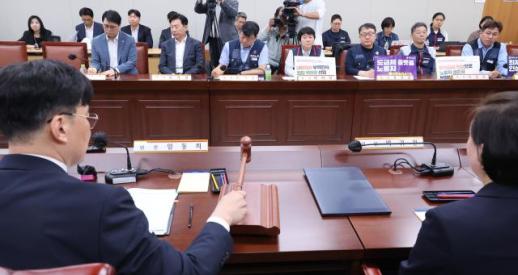 Minimum Wage Talks Begin in South Korea, With Debate Over Piecework and Differentiated Rates Deliberations have begun at South Korea’s Minimum Wage Commission on next year’s minimum wage. This year’s talks are expected to feature sharp labor-management clashes not only over the size of any increase but also over who is covered and how the system is applied. Key issues include whether to extend minimum-wage protections to piecework-based workers and whether to set different rates by industry or region. ◆Will platform and nonstandard workers be covered? Labor minister asks for review On the 21st, the Ministry of Employment and Labor said the commission held its first plenary meeting at the Government Complex Sejong. The 27 members representing labor, management and the public interest began full-scale discussions on the minimum wage’s coverage and level. An early flashpoint is the structure of the system itself, particularly whether the minimum wage should apply to piecework workers. The term refers to workers paid based on performance, such as delivery riders and parcel couriers. Labor groups raised the same issue at the commission in 2024, arguing that platform workers and other nonstandard workers should be included. No conclusion was reached then because of disagreements between labor and management and a lack of data. At the request of public-interest members, the government later conducted a fact-finding survey on items such as the target group, scale and income. The issue is expected to move forward this year. Employment and Labor Minister Kim Young-hoon, in a formal request for deliberation, asked the commission to consider “whether to set a separate minimum wage for piecework (or similar) workers for whom it may not be appropriate to set a minimum wage on an hourly, daily, weekly or monthly basis.” Labor argues that as work arrangements diversify, minimum-wage protections should expand. It says the issue can no longer be delayed, particularly because the government’s research was reflected in the minister’s request. Business groups are cautious about expanding coverage. They argue many piecework workers should be viewed as independent business operators rather than employees, and warn that broader coverage could sharply raise labor costs. They also say uniform standards are difficult given varied contract structures. ◆Labor-management fight intensifies over differentiated rates Whether to apply different minimum wages by industry is also emerging as a major issue. Industry-based differentiation was tried once in 1988, the first year the system was implemented, but a single nationwide minimum wage has been maintained since the following year. A vote was held last year as well, but the proposal failed amid strong opposition. Business groups say minimum wages should be differentiated for vulnerable sectors such as food and lodging and transportation, arguing many employers in those industries have limited ability to pay. In 2024, the share of workers paid below the minimum wage in sectors including food and lodging was found to exceed 30%. Labor counters that differentiated rates would undermine the purpose of the system and could lead to structural discrimination. It warns that wages in certain industries could become entrenched, effectively creating a “low-wage benchmark.” Labor also cites concerns about stigmatizing vulnerable sectors and the possibility that differentiation could expand to more industries. Debate is also continuing over regional differentiation. Business groups argue it is unreasonable to apply the same minimum wage nationwide given differences in prices and business conditions between Seoul and other areas. Labor says paying different wages by region is clear discrimination. Some countries, including Japan, apply regional minimum wages, setting higher rates in major cities with higher productivity and prices than in rural areas. Critics, however, say such systems can widen regional gaps and accelerate the decline of provincial areas.* This article has been translated by AI. 2026-04-21 17:53:51
 -
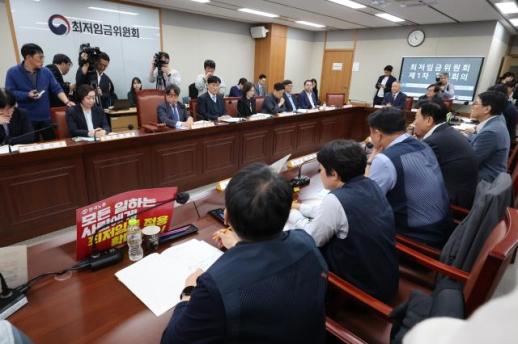 South Korea Minimum Wage Talks Begin as Labor, Business Clash Over 2027 Raise Labor and business in South Korea began formal negotiations over next year’s minimum wage, setting the stage for a sharp clash over how much it should rise. Labor groups say a sizable increase is needed after three years of raises below 3%. Business groups argue that growing uncertainty at home and abroad calls for a slower pace. The Ministry of Employment and Labor said the Minimum Wage Commission held its first plenary meeting Monday at the Government Complex Sejong. The commission selected Sookmyung Women’s University professor Kwon Soon-won as its new chair, received a wage-review request sent by Employment and Labor Minister Kim Young-hoon on March 31, and discussed the review schedule. During the meeting, members affiliated with the Korean Confederation of Trade Unions walked out in protest of Kwon’s appointment. The minimum wage system, introduced in 1988, has generally trended upward. The minimum wage for 2026, set last year, rose 2.9% (290 won) from the previous year to 10,320 won an hour, up 59.5% from 2017’s 6,479 won. Labor groups say the latest increase was the lowest for a first year under any administration, and they cite a decline in real wages. Over the past three years, the minimum wage rose an average of 2.4%, while consumer prices increased 2.7% over the same period, they said. Ryu Gi-seop, secretary-general of the Federation of Korean Trade Unions, said the minimum wage is failing to perform its basic role of income protection and redistribution. He also said the number of low-wage workers in the labor market has been growing each year, underscoring the need for an increase. Business groups pushed back, saying the burden on small merchants is heavy as domestic demand recovery remains delayed and uncertainty has intensified, including due to the war in the Middle East. They also pointed to severe debt levels among the self-employed and called for moderation. Ryu Gi-jeong, executive director of the Korea Employers Federation, said self-employed people already carry debt equal to 3.4 times their annual income as of the third quarter of last year. He said the economic shock from the Middle East war is spreading broadly and that the wage decision should reflect employers’ ability to pay. By law, the commission is supposed to finish deliberations within 90 days of the minister’s request, meaning by June 29. However, the deadline is advisory and is often missed, raising expectations that talks could run into early July this year as well. Kwon urged labor, management and the public interest members to keep talking through their differences. He called for intensive deliberations so the minimum wage can be set at a reasonable level despite sharply divided views.* This article has been translated by AI. 2026-04-21 17:52:34
 -
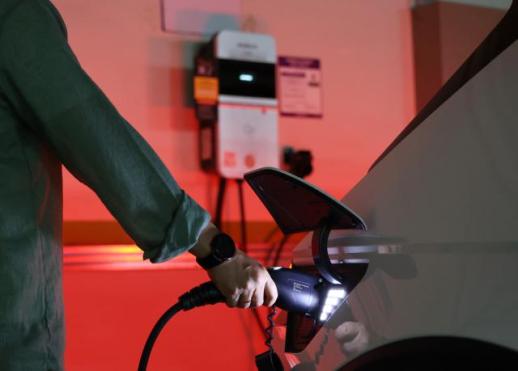 Number of EVs tops 1 million in cumulative registrations SEOUL, April 21 (AJP) - The number of registered electric vehicles this year has surpassed 100,000 as of last week, bringing cumulative registrations to more than 1 million, the Ministry of Climate, Energy and Environment said on Tuesday. The milestone is coming faster than in previous years, as it took until early July to hit 100,000 registrations last year, and until mid-September a year earlier. Until March, EVs accounted for about 20 percent of new vehicle registrations, or 83,533 units out of 415,746, much higher than 13 percent in 2025 and 8.9 percent in 2024. The ministry attributed the increase to a wave of new models, fiercer price competition among automakers, expanded government subsidies, and incentives for those switching from internal combustion vehicles. Some market watchers also pointed to surging fuel prices due to supply disruptions caused by the prolonged conflict in the Middle East. The trend is likely to continue, as the government's supplementary budget will extend subsidies to an additional 20,000 passenger cars and 9,000 trucks, bringing this year's estimated total to 280,000 passenger cars, 45,000 trucks, and 3,800 buses. "This year will be recorded as a historic year that opens the era of 1 million electric vehicles," said Minister Kim Sung-hwan, vowing that the government will take steps to ensure EV users face no inconvenience. 2026-04-21 15:59:30
 -
South Korea EV Registrations Top 1 Million as 2026 New Sales Pass 100,000 South Korea’s new electric-vehicle registrations have topped 100,000 this year, pushing cumulative EV registrations above 1 million. The Ministry of Climate, Energy and Environment said Tuesday that new EV registrations surpassed 100,000 on April 14. The pace is faster than in previous years. In 2025, when EV adoption was highest for the year at 220,919 vehicles, new registrations crossed 100,000 in the second week of July. In 2024, with 146,902 vehicles, the milestone came in the second week of September. Cumulative EV registrations exceeded 1 million on April 15. As of April 17, the total stood at 1,004,727. Through March, EVs accounted for 83,533 of 415,746 new vehicles, or 20.1%. The EV share slipped slightly from 9.2% in 2023 to 8.9% in 2024, but rose to 13.0% in 2025. The ministry attributed the increase to a wider range of new models, price discount competition among automakers, expanded subsidies including government support for switching from internal-combustion vehicles, and early implementation of rollout programs. Some observers also cited higher oil prices linked to the recent Middle East situation. The government recently secured additional supplementary-budget funding for EV purchase subsidies covering 20,000 passenger cars and 9,000 trucks. That brings this year’s planned subsidy volumes to 280,000 passenger cars, 45,000 trucks and 3,800 buses. With a growing number of local governments running out of first-half subsidy allocations, the government plans to urge municipalities with remaining second-half volumes to move up their public notices. The municipalities planning to do so number 81 for passenger cars and 75 for trucks. The government also said it will allow local governments that need additional budget allocations to pay subsidies first using national funds. Minister Kim Seong-hwan said, “This year will be recorded as a historic year that opens the era of 1 million electric vehicles,” adding that the government will pursue “effective and swift measures” so the public does not face inconvenience in using EVs. 2026-04-21 14:06:06
-
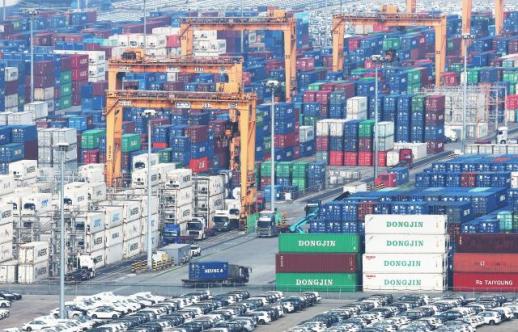 South Korea’s Exports Jump 49.4% in Early April on Chip Surge; Crude Imports Rise for Third Month Semiconductor strength pushed South Korea’s exports through mid-April to the highest level ever recorded for that point in the month, while crude oil imports rose for a third straight month amid the war in the Middle East. The Korea Customs Service said Monday that exports for April 1-20 totaled $50.4 billion on a customs-clearance basis, up 49.4% from a year earlier. With the same 15.5 working days as last year, average daily exports came to $3.25 billion. Semiconductors led the gains. Chip exports rose 182.5% to $18.3 billion, lifting their share of total exports to 36.3%, up 17.1 percentage points from a year earlier. Exports of petroleum products climbed 48.4%, and computer peripherals surged 399.0%. Passenger car exports fell 14.1%, and auto parts declined 8.8%. By destination, exports increased to China (up 70.9%), the United States (51.7%), Vietnam (79.2%), the European Union (10.5%) and Taiwan (77.1%). Imports for the period totaled $39.9 billion, up 17.7%. Imports rose for semiconductors (58.3%), crude oil (13.1%) and semiconductor manufacturing equipment (63.3%), while machinery slipped 0.6%. Energy imports — crude oil, gas and coal — increased 6.8%. Crude oil imports for April 1-20 rose to $4.8 billion, extending gains from February ($4.4 billion) and March ($4.6 billion). With exports exceeding imports, South Korea posted a $10.4 billion trade surplus for the period. 2026-04-21 13:46:25
 -
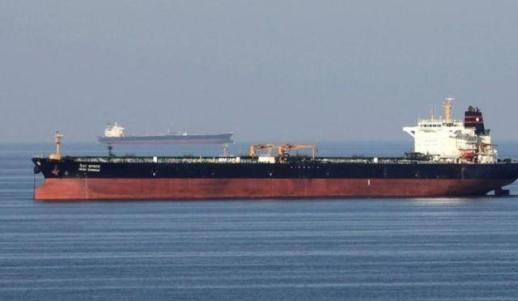 South Korea Says Kuwait Force Majeure to Have Limited Impact; Russian Oil Imports Unlikely The government said Kuwait’s declaration of force majeure on crude oil and petroleum product exports is unlikely to have a major impact on South Korea, and it sees little chance of bringing in additional Russian crude or petrochemical products despite a temporary easing of U.S. sanctions. Yang Gi-uk, director general for industrial resources and security at the Ministry of Trade, Industry and Energy, said at a Middle East war response task force briefing on the 21st that some domestic refiners under contract had been notified of Kuwait’s move. “With the Strait of Hormuz blocked since the Middle East war, force majeure will not affect us,” Yang said. Kuwait Petroleum Corp., the state-run oil company, sent letters to counterparties on the 16th notifying them it was invoking a force majeure clause. The company said the blockade of the Strait of Hormuz has prevented tankers from entering and leaving the Persian Gulf, making it difficult to meet scheduled deliveries on time. Yang said the declaration appeared tied to contract procedures as April loading dates were ending, rather than damage to refining facilities. He added that if the strait remains blocked, Kuwait could declare force majeure again for subsequent volumes. Officials also played down the likelihood of additional imports of Russian crude and petrochemical products following U.S. sanctions relief. The United States on the 17th (local time) extended a further one-month easing of sanctions related to exports of Russian crude and petroleum products. While any related transactions must be completed within a month, refiners and others have secured 70 million barrels of alternative supplies through the end of May. Yang said some risk had been reduced by the U.S. move, but “EU risk remains.” He said interest is low because domestic vessels often rely on EU insurers, creating additional exposure. On additional naphtha imports, Yang said companies are reviewing volumes based on experience from last month’s sanctions easing, but are also seeking alternative supplies. “We do not see companies rushing in as if their survival depends on it,” he said. Regarding the fourth round of the oil products price cap set to take effect at midnight on the 24th, Yang said it was an emergency measure chosen amid unstable global oil prices. He said the government is preparing to make decisions by weighing household economic conditions, the fiscal burden, demand reduction and consumption patterns by fuel type. The ministry said Japan’s gasoline prices are 23.8% lower than South Korea’s and diesel prices are 28.3% lower. In the United States, gasoline prices are 20.8% lower, but diesel prices are 8.7% higher. Yang said Japan is believed to be deploying subsidies on a massive scale, while the United States has seen larger price increases than South Korea. He said South Korea should assess whether other countries are suppressing prices through caps by reviewing overseas cases. Asked about speculation that gasoline prices could rise more sharply to manage demand, Yang said gasoline and diesel consumption are moving differently and it is difficult to discuss price increases or cuts now. He said a decision would be made after considering various views. On a Malta-flagged tanker that recently exited the Strait of Hormuz and is heading to South Korea, Yang said it was not among the seven tankers in the Persian Gulf previously announced by the ministry. He said it had been excluded because the government judged the likelihood of receiving the cargo to be low, calling it “a highly exceptional situation.” 2026-04-21 11:33:19