

Journalist

Kim Seong-soo
biblekim@ajunews.com
-
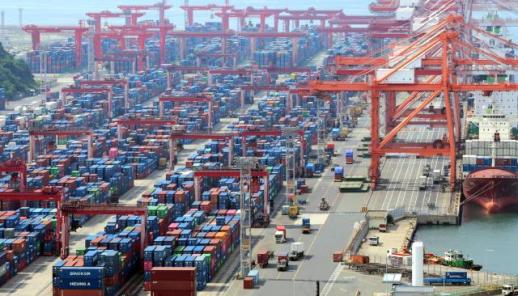 Strong Semiconductor Demand Drives Record May Exports, $1 Trillion Goal Possible Last month, South Korea's exports surged more than 50% year-on-year, setting a new record. The significant increase in semiconductor exports, along with steady growth in non-semiconductor items, has fueled this rise. Observers suggest that this year could see exports exceed $900 billion for the first time, with the possibility of reaching the ambitious $1 trillion mark. According to the Ministry of Trade, Industry and Energy and the Korea Customs Service, exports in May totaled $87.7 billion, a 53.2% increase from the previous year. This marks the highest monthly export figure on record, with exports surpassing $80 billion for three consecutive months. The average daily export amount, adjusted for working days, reached $4.28 billion, exceeding $4 billion for the first time, surpassing the previous record set in March at $3.79 billion. The robust performance of semiconductor exports played a significant role in this growth. In May, semiconductor exports soared to $37.16 billion, a staggering 169.4% increase compared to last year, marking an all-time high. This growth is attributed to a steady increase in volume and rising fixed memory prices driven by increased capital investment from major U.S. tech companies. Exports of non-semiconductor items also saw a 16% increase. Computer exports surged by 290.7% to $4.18 billion, driven by demand for SSDs for artificial intelligence servers, while wireless communication device exports rose by 12.6% to $1.46 billion, buoyed by strong sales of new products. Consumer goods exports also showed solid growth. Cosmetic exports reached $1.18 billion, a 24.2% increase from last year, setting a record for May. Agricultural and fishery product exports rose by 4.7% to $1.07 billion. The export value of petroleum products surged by 46.6% to $5.25 billion, driven by high export prices due to rising oil prices. Petrochemical product exports increased by 11.1% to $3.7 billion. Kang Gam-chan, head of the Trade and Investment Promotion Division at the Ministry of Trade, stated, "While semiconductor exports are leading the current export situation, other items are also performing well. Even excluding semiconductors and computers, we see a 9.5% increase, which is a significant figure in itself, despite the high growth rate of semiconductors." Imports rose by 20.8% to $60.8 billion, with energy imports increasing by 15.9% to $11.75 billion. Notably, crude oil imports rose by 25.0% to $8.5 billion, despite a decrease in volume due to conflicts in the Middle East, driven by higher import prices. Non-energy imports increased by 22.0% to $49.05 billion. With exports exceeding imports, the trade surplus for May reached $26.95 billion, an increase of $20.03 billion from the previous year. This marks the 16th consecutive month of trade surpluses. The cumulative trade surplus from January to May stands at $101.91 billion, surpassing the annual record of $95.2 billion set in 2017. As South Korea's exports remain strong, optimistic projections for this year's trade continue. The Bank of Korea recently forecasted that exports could reach $952 billion this year. The Korea Institute for Industrial Economics and Trade also raised its export forecast to $924.4 billion, representing increases of 34.2% and 30.3% respectively from last year. Some analysts predict that buoyant semiconductor exports could push South Korea's exports beyond the $1 trillion mark this year. Meritz Securities recently estimated that exports could reach $1.02 trillion, a 44.2% increase from last year. If exports exceed $1 trillion, South Korea could move from being among the world's top five exporters to potentially challenging the top four. Last year, only China, the United States, and Germany surpassed the $1 trillion export threshold. Kang noted, "If the current trend continues, we could approach or even exceed the forecasts provided by the Bank of Korea and the Korea Institute for Industrial Economics and Trade. With an optimistic outlook, achieving $1 trillion in annual exports is not an impossible target. Factors such as potential further increases in semiconductor prices, the sustainability of high oil prices, and protectionist measures from the U.S. and the European Union will be crucial for achieving this goal."* This article has been translated by AI. 2026-06-01 14:51:00
 -
 Labor Minister Kim Young-hoon Orders Swift Response to Hanwha Aerospace Explosion An explosion and fire of unknown origin occurred at Hanwha Aerospace in Daejeon, prompting Labor Minister Kim Young-hoon to dispatch Ryu Hyun-cheol, head of the Occupational Safety and Health Agency, to the scene and issue an urgent directive for a swift response. In response to Minister Kim's instructions, the Ministry of Labor established both a Central Industrial Accident Response Headquarters and a Regional Industrial Accident Response Headquarters at the Daejeon Regional Employment and Labor Office on June 1. Ryu will support a rapid and systematic response to the incident. Immediately following the explosion, the head of the Regional Industrial Accident Response Headquarters, along with labor inspectors, arrived at the site to implement a work stoppage for the affected operations. The ministry plans to thoroughly investigate the structural causes of the incident and conduct prompt and strict supervision and investigation of the accident. Minister Kim expressed condolences to the workers who lost their lives in the accident, stating, "We will do our utmost for a swift and rigorous response to the incident and to prevent secondary accidents." The explosion occurred at 10:59 a.m. in a cleaning room within the Hanwha Aerospace weapons manufacturing facility. Fire authorities issued a Level 1 response at 11:17 a.m. and managed to control the blaze within 32 minutes, declaring it fully extinguished by 1:07 p.m. As of 1:30 p.m., five people had died, one was seriously injured, and another sustained minor injuries. 2026-06-01 13:42:00
 -
 South Korea's exports hit record high in May on strong AI chip demand SEOUL, June 1 (AJP) - South Korea's exports surged more than 50 percent from a year earlier to a record high last month, fueled by robust semiconductor shipments, even as uncertainty persisted amid the prolonged war in the Middle East, according to data released by the Ministry of Trade, Industry and Resources on Monday. Exports in May totaled US$87.75 billion, up 53.2 percent from a year earlier, the highest monthly figure on record and the third straight month above $80 billion. Exports have risen for 12 consecutive months since June last year. The growth was led by semiconductor exports, which soared 169.4 percent from a year earlier to a record US$37.16 billion, supported by rising memory chip contract prices amid increased artificial intelligence (AI)-related investment by major U.S. technology companies. Chip exports have now exceeded US$30 billion for three consecutive months. Exports excluding chips also rose, while average daily exports surpassed US$4 billion for the first time, breaking the previous record of US$3.79 billion set in March. Computer exports also rose to $4.18 billion, up 290.7 percent, on stronger demand for AI server SSDs, while wireless communications devices increased 12.6 percent to $1.46 billion on solid new-product sales. Display exports rose 9.4 percent to $1.47 billion. Among consumer goods, cosmetics exports increased 24.2 percent to $1.18 billion, the highest for any May. Agricultural and fisheries food exports rose 4.7 percent to $1.07 billion as processed farm products such as noodles and bread increased, offsetting declines in items such as coffee and seaweed. Exports of petroleum products surged 46.6 percent from a year earlier to $5.25 billion as higher oil prices boosted export unit values, although shipment volumes fell 23.8 percent. Gasoline exports fell 31.1 percent, while diesel and kerosene shipments declined 24.3 percent and 99.9 percent, respectively. Petrochemical exports rose 11.1 percent to $3.7 billion, although export volumes dropped 25.5 percent as producers prioritized domestic supply. Auto shipments declined 5.9 percent to $5.83 billion, hurt by fewer working days and logistics disruptions caused by the conflict in the Middle East. By destination, exports to China rose 80.9 percent to $18.9 billion, led by a 243-percent jump in semiconductor shipments and steady growth in consumer goods. Exports to the U.S. increased 59.1 percent to $15.97 billion. Exports to ASEAN rose 58.4 percent to $15.85 billion, and exports to the EU increased 2.4 percent to $6.19 billion. Exports to the Middle East fell 7.7 percent to $1.27 billion. Meanwhile, imports rose 20.8 percent from a year earlier to US$60.8 billion. Energy imports increased 15.9 percent to US$11.75 billion, led by a 25 percent rise in crude oil imports to US$8.5 billion as import prices climbed. With exports exceeding imports, the trade surplus for May widened to $26.95 billion, up $20.03 billion from a year earlier, extending the surplus streak to 16 months. The January to May cumulative surplus reached $101.91 billion, surpassing the previous annual record of $95.2 billion set in 2017. If this trend continues, exports are likely to surpass the government's annual target of US$740 billion, with officials saying that rising chip volumes and prices could push the total even higher. However, the outlook remains uncertain, with the Middle East conflict and U.S. tariffs still unresolved. "The uncertainty in the trade environment remains," Trade Minister Kim Jung-kwan said, adding that the government will work closely with major trading partners to reduce risks and stabilize export conditions. He also vowed to secure stable imports of key raw materials and strengthen supply chain monitoring. 2026-06-01 11:07:55
 -
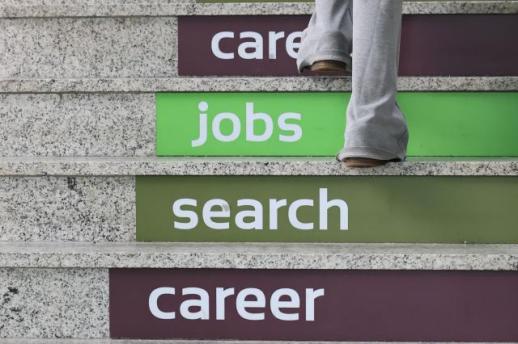 Global Talent Fair Expands Job Opportunities for Youth in Foreign Investment Firms The government is hosting a job fair to expand employment opportunities for young job seekers at foreign investment and overseas companies. The Ministry of Trade, Industry and Energy and the Ministry of Employment and Labor announced on June 1 that they will jointly hold the "2026 Global Talent Fair" at COEX until June 2. The fair aims to provide quality job opportunities for young job seekers while allowing foreign investment and overseas companies to recruit talented individuals. This year, approximately 360 companies are expected to participate. Recently, youth employment rates have been on a downward trend. According to data from the National Statistical Office, the employment rate for young people aged 15 to 29 was 43.7% in April, a decrease of 1.6 percentage points compared to the same month last year. This marks the largest decline since August 2024, continuing a 24-month streak of decreases. The number of employed individuals also fell by 194,000. In response, the government is organizing this fair to support youth employment. During the event, around 18,000 job seekers are expected to participate. Starting this year, support for companies returning from overseas and young job seekers will also be strengthened. Korea Kolmar, the first domestic company to return from outside the capital region this year, will seek young talent at the fair and has set up a separate consulting booth to assist global talent with overseas experience in finding reemployment in Korea. To help young people navigate the AI era, the fair will invite industry representatives to share insights on corporate trends and employment strategies. An "AI Employment Assistant" booth will also be established to analyze job seekers' skills and job fit using AI technology, matching and recommending them to visiting booths. The foreign investment company recruitment section will feature around 140 companies, including Amkor Technology Korea and Hitachi Energy Korea. The overseas employment section will host 121 companies, providing both in-person and virtual consultations for young people interested in overseas job opportunities. Minister of Trade, Industry and Energy Kim Jeong-kwan stated, "As investment in securing outstanding talent is essential in the AI era, I hope this fair provides young people with opportunities to expand into a broader world. The government will continue to create favorable conditions for investment and support youth growth." Minister of Employment and Labor Kim Young-hoon remarked, "This is a meaningful occasion for our youth to meet global companies, and the government will provide various support to help them build global careers and grow. I urge companies to open up broad opportunities for young talent to grow alongside them."* This article has been translated by AI. 2026-06-01 11:03:00
 -
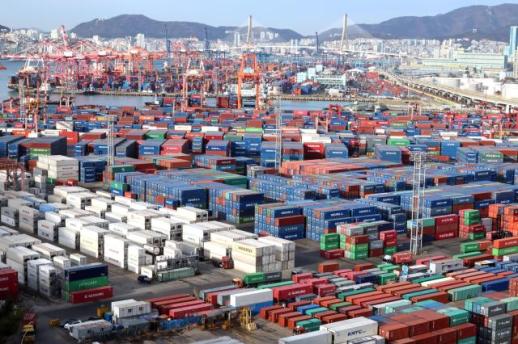 Semiconductor Demand Drives Record $87.7 Billion in May Exports, Surplus Reaches $101.9 Billion South Korea's exports surged over 50% year-on-year in May, reaching a record high. Despite uncertainties stemming from the Middle East conflict, semiconductor exports more than doubled, significantly contributing to the overall increase. The average daily export value also surpassed $4 billion for the first time, with the surplus from January to May exceeding annual records. According to the Ministry of Trade, Industry and Energy and the Korea Customs Service, May's export value totaled $87.747 billion, marking a 53.2% increase compared to the previous year. This achievement represents the highest monthly figure on record, with exports exceeding $80 billion for three consecutive months. South Korea has maintained a positive export trend for 12 consecutive months since June of last year. The average daily export value, adjusted for working days, reached $4.28 billion, the highest ever recorded, surpassing the previous peak of $3.79 billion in March. The robust performance of semiconductor exports played a crucial role in this growth. In May, semiconductor exports soared to $37.16 billion, a staggering 169.4% increase from the previous year, setting a new record. This surge is attributed to rising fixed prices for memory chips, driven by increased investments in artificial intelligence (AI) by major U.S. tech companies, with exports exceeding $30 billion for three consecutive months. Exports of computers and wireless communication devices also saw significant increases, rising to $4.18 billion (up 290.7%) and $1.46 billion (up 12.6%), respectively, due to heightened demand for SSDs used in AI servers and strong sales of new products. Display exports increased by 9.4% to $1.47 billion, influenced by the launch of new mobile products. Consumer goods exports also showed solid growth. Cosmetic exports reached $1.18 billion, a 24.2% increase from last year, marking the highest figure for May. Although agricultural and fishery product exports declined due to reduced shipments of items like coffee and seaweed, processed agricultural products such as noodles and bread increased, resulting in a 4.7% rise to $1.07 billion. Oil product exports surged by 46.6% year-on-year to $5.25 billion, driven by high export prices amid rising oil prices. However, the implementation of maximum price regulations led to a 23.8% decrease in volume, with gasoline, diesel, and kerosene exports dropping by 31.1%, 24.3%, and 99.9%, respectively. Petrochemical product exports rose by 11.1% to $3.7 billion, although volume decreased by 25.5% due to prioritizing domestic supply. In contrast, automobile exports fell by 5.9% to $5.83 billion, impacted by reduced working days, supply shortages due to safety incidents, and logistics disruptions from the Middle East conflict. Steel exports declined by 2.1% to $2.04 billion, reflecting a continued decrease in key products like hot-rolled and thick plates. General machinery exports also dropped by 6.3% to $3.82 billion due to increased logistics costs from the Middle East conflict and U.S. tariffs. Conversely, non-ferrous metal exports rose by 41.5% to $1.67 billion, driven by increased demand for copper and aluminum related to AI data centers. Regionally, exports to China surged by 80.9% to $18.9 billion, driven by a 243% increase in semiconductor exports and solid growth in consumer goods. Exports to the United States also rose by 59.1% to $15.97 billion, primarily due to increased shipments of semiconductors, computers, and electronic devices related to AI investment, despite weak automobile sales. Exports to ASEAN countries reached $15.85 billion (up 58.4%), while exports to the European Union increased by 2.4% to $6.19 billion. However, exports to the Middle East, severely impacted by the conflict, fell by 7.7% to $1.27 billion, largely due to decreased shipments of automobiles and auto parts. Imports rose by 20.8% to $60.8 billion, with energy imports increasing by 15.9% to $11.75 billion. Notably, crude oil imports rose by 25.0% to $8.5 billion, despite a decrease in volume due to the Middle East conflict. Non-energy imports increased by 22.0% to $49.05 billion, significantly influenced by a 71.0% rise in oil product imports to $2.55 billion and a 25.6% increase in semiconductor equipment imports to $2.56 billion. With exports exceeding imports, May's trade surplus reached $26.95 billion, an increase of $20.03 billion from the previous year. This marks the 16th consecutive month of surplus. The cumulative surplus from January to May stands at $101.91 billion, surpassing the previous record of $95.2 billion set in 2017. As exports continue to perform well, the likelihood of surpassing the government's annual export target has increased. The Ministry of Trade set the export target at $740 billion for this year. However, with both the volume and prices of semiconductor exports on the rise, projections indicate a significant expansion in annual export value. From January to May, exports totaled $394.226 billion, comparable to last year's exports of $395.389 billion for the same period. The Korea Institute for Industrial Economics and Trade recently forecasted that this year's exports could increase by 30.3% to $924.4 billion, with a trade surplus of $219 billion. Potential variables include the ongoing Middle East conflict and U.S. tariff policies. Minister of Trade, Industry and Energy Kim Jeong-kwan stated, "Uncertainties in the trade environment, including the resolution of the Middle East conflict, U.S. tariffs, and EU steel TRQ, remain. The government will work closely with major countries to mitigate trade risks for our companies and create a stable export environment." He added, "We will actively support companies' production and export activities by ensuring a stable supply of key raw materials and monitoring supply chains." 2026-06-01 09:45:00
 -
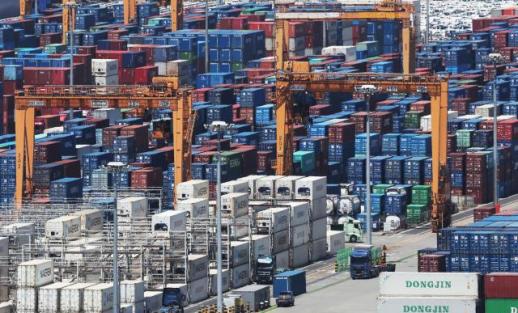 South Korea's Export Growth Surges Amid Successful US Tariff Negotiations The administration of President Lee Jae-myung has experienced significant ups and downs over the past year, particularly in trade relations with the United States, where it faced the tariff policies of President Donald Trump. However, the government has successfully concluded tariff negotiations and is witnessing record-breaking export figures. Leading the charge, semiconductor exports reached an unprecedented $700 billion last year, with the $900 billion mark now within reach. Nonetheless, the heavy reliance on semiconductors for exports has been identified as a concern. Finalization of tariff negotiations minimizes uncertainty amid US protectionism. According to relevant ministries, the Lee administration appointed Yeo Han-goo as head of the Trade Negotiation Headquarters in the Ministry of Trade, Industry and Energy last year, marking the first vice-ministerial appointment. Yeo had previously served in the same role during the Moon Jae-in administration. At that time, the Trump administration had announced plans to impose a 25% reciprocal tariff on South Korea, in addition to a global 10% tariff. With Trump’s push for a revival of American manufacturing, the potential implementation of high tariffs posed a significant threat to South Korea's export-dependent economy. In response, the government devised a strategy to navigate the tariff challenges, led by Yeo, who had overseen trade policy during Trump’s first term. Following his confirmation, Minister of Trade, Industry and Energy Kim Jeong-kwan and his team focused on tariff negotiations with the United States. After intense negotiations, South Korea and the U.S. reached a final agreement on October 29 last year. A memorandum of understanding (MOU) on strategic investment was signed in November, which included commitments to reduce reciprocal tariffs and automotive parts tariffs from 25% to 15%, along with assurances of “most favored nation” status for semiconductors, a key export item. A $350 billion investment fund for the U.S. market is set to be managed based on commercial viability. The conclusion of the Korea-U.S. tariff negotiations is considered a major achievement for the trade authorities, as it minimized uncertainties with the U.S., a key export market, amid rising protectionist trends. With favorable conditions secured compared to major competitors, the upcoming launch of the Korea-U.S. Strategic Investment Corporation next month is expected to serve as a foothold for advancing strategic industries in the U.S. Exports surpass $700 billion for the first time, but diversification remains a challenge. Exports have shown an upward trend after overcoming significant challenges. According to the Ministry of Trade, Industry and Energy, last year’s exports totaled $709.3 billion, marking a 3.8% increase from the previous year and the first time annual exports exceeded $700 billion since the establishment of the government in 1948. Despite a slowdown in exports during the first half of the year due to U.S. tariffs, a rapid recovery in the second half significantly contributed to the overall growth. The expansion of data center investments driven by artificial intelligence (AI) has also propelled semiconductor exports. As a result, the government set an export target of $740 billion for this year, aiming for two consecutive years of exports exceeding $700 billion. Despite global uncertainties, including the Middle East conflict, exports from January to April this year reached $306.5 billion, a 40.9% increase compared to the same period last year. Forecasts for export targets are evolving. The Korea Institute for Industrial Economics and Trade predicts that this year’s exports could surge by 30.3% to $924.4 billion. If this projection materializes, South Korea could surpass Japan and secure a position among the top five exporting nations. Minister Kim Jeong-kwan recently stated, "While there are other variables to consider, I expect this year’s exports to exceed $900 billion and believe we have a chance to enter the top five in exports." He noted that semiconductor demand is expected to remain strong through the first half of next year, indicating the potential for record-breaking performance. However, the reliance on semiconductors has created a 'K-shaped' export structure, raising uncertainties for future projections. Export fluctuations are significant due to the cyclical nature of the semiconductor market. If semiconductor exports falter, overall exports could also decline. The Korea Institute for Industrial Economics and Trade forecasts that exports excluding semiconductors will only grow by 1.7% this year. In light of these achievements and challenges, the Ministry of Trade, Industry and Energy is intensifying efforts to diversify exports. The government aims to expand exports of K-consumer goods based on the Korean Wave and increase trade financing for small and medium-sized enterprises to achieve a goal of 'inclusive exports.' Additionally, it plans to secure future competitiveness through the transition to manufacturing AI. Minister Kim emphasized, "Industries excluding semiconductors are showing solid growth rates of 14-15%, and small and medium-sized enterprise exports have increased by 10%. We will adopt the mindset that 'the world is vast, and there are many places to export.' Please look forward to the second half of the year."* This article has been translated by AI. 2026-05-31 17:48:00
 -
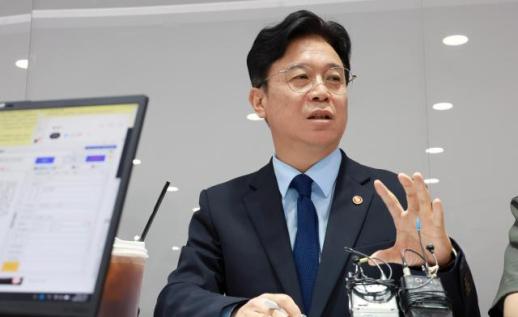 Labor and Industry Ministers Clash Over Excess Profits Ministers Kim Young-hoon of the Ministry of Employment and Labor and Kim Jung-kwan of the Ministry of Trade, Industry and Energy are at odds over the issue of excess profits generated by large corporations. Kim Young-hoon advocates for using these excess profits to address social polarization through co-prosperity, while Kim Jung-kwan emphasizes the need for reinvestment. On May 29, Kim Jung-kwan stated on his social media that "the world is currently in a race to secure leadership in artificial intelligence (AI) investments," adding that competing nations are preparing for victory in the AI era with unprecedented large-scale investments. He stressed, "Now is a critical time to connect the profits generated by the semiconductor industry to 'productive reinvestment' for the future," and urged the strategic use of the AI boom to secure a growth engine for South Korea's industrial leap. He warned that even a single missed investment could collapse the industrial ecosystem. Kim Jung-kwan further noted, "What is needed now is not hesitation but determination, and not dispersion but concentration." Kim Jung-kwan's remarks are interpreted as a response from the Ministry of Trade, Industry and Energy to the recent debate on the distribution of excess profits raised by Kim Young-hoon. During a meeting with reporters on May 27, Kim Young-hoon stated, "The only solution to how to socially distribute the excess profits of large corporations is social dialogue," and announced plans to hold a discussion forum soon. However, members of the ruling People Power Party reacted by saying it was like "rolling up sleeves to cut open a goose's belly." This reflects concerns that the concept of excess profits is unclear and that government intervention should be minimized. In response, Kim Young-hoon addressed speculation on his social media the previous day, stating, "There are misconceptions that the government intends to take away and redistribute the profits of large corporations. This misinterprets the government's concerns and the essence of social dialogue. The government has no authority to forcibly intervene in the legitimate profits of companies, nor does it intend to do so." He added on social media, "Someone must be a fence and clean up the mess so that the goose can safely continue to lay eggs. That egg growing into another goose is sustainable growth for all. A company may be small, but its dreams cannot be small." As differences in the ministers' positions on the handling of excess profits emerge within the government, the Blue House sees a need for public discourse. Chief Spokesperson Kang Yu-jung remarked the previous day, "The Labor Minister's comments highlight the necessity of performance distribution from his perspective. If it were the Industry Minister, he would be discussing excess operating profits or profits from the industry's standpoint." She added, "The Blue House also hopes for various opportunities for public discourse through future forums."* This article has been translated by AI. 2026-05-29 15:33:00
 -
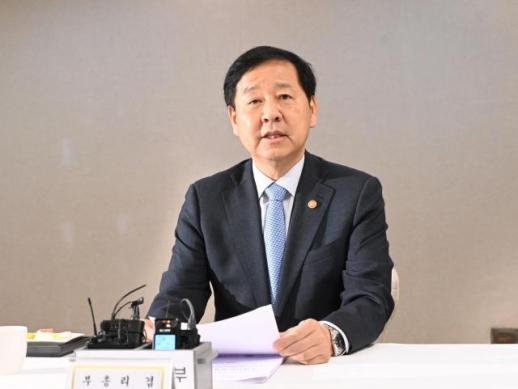 Seongnam New Housing Project Construction Accelerated by One Year Koo Yun-cheol, Deputy Prime Minister and Minister of Finance and Economy, announced on May 29 that the construction schedule for the new housing project in Seongnam, which includes 6,300 units, will be accelerated by integrating planning procedures, moving the start date from 2030 to 2029. He also stated that plans for the 2,800-unit sites in Dongdaemun and Eunpyeong districts will be expedited with early establishment of relocation plans this year. During a meeting of real estate ministers and housing supply promotion ministers at the Government Seoul Building, Koo noted that while the rate of increase in apartment prices in Seoul has slowed, the government will continue to monitor the market closely until a clear stabilization is observed, maintaining a strict policy response. He emphasized that the top priority of government policy is to expand housing supply and accelerate construction, stating, "We are thoroughly managing the entire process to ensure that the supply plan announced on January 29 leads swiftly to actual construction." Koo pledged to eliminate obstacles in housing projects to facilitate rapid construction, expressing concern that approximately 100,000 housing units in the metropolitan area are facing delays of over a year due to issues with project financing, material supply, and rising construction costs. To address these delays, he mentioned that the government will closely inspect the causes of construction delays and provide comprehensive support to resolve issues. He announced the launch of a "Government-wide Housing Supply Field Support Center" today, which will involve the Ministry of Land, Infrastructure and Transport and other relevant agencies and local governments. Regarding public sector housing supply, Koo stated that the management of public housing project procedures will be strengthened. He pointed out that uncertainties in compensation and site development have led to delays in housing permits, resulting in increased project timelines and costs. The government will shift its housing supply targets to be based on construction starts and will also manage construction costs based on the start date. Koo assured that the causes of delays in projects such as Namyangju Wangsil, Goyang Changneung, and Seongnam Bokjeong Second District will be thoroughly examined to prevent disruptions. Emphasizing the need to combat illegal real estate activities, he stated that the Ministry of Land is intensively investigating suspected speculative transactions near new housing supply sites included in the January 29 supply plan. Additionally, a comprehensive investigation and verification of suspicious cases of fraudulent applications involving 25,000 units across 43 complexes in regulated areas of the metropolitan area is underway. Koo concluded by stating that spreading false information related to development data and real estate prices is a serious illegal act, and the government will enhance the effectiveness of responses to misinformation through revised real estate transaction reporting laws.* This article has been translated by AI. 2026-05-29 14:50:00
 -
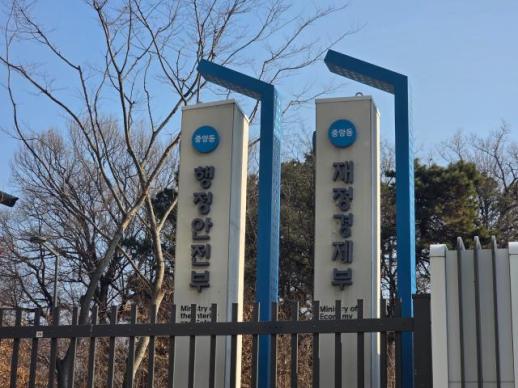 Foreign Investors Purchase 22.7 Trillion Won in Korean Government Bonds Post WGBI Inclusion Foreign investors have purchased a net total of 22.7 trillion won in Korean government bonds based on transaction standards and 18 trillion won based on settlement standards since the country's inclusion in the World Government Bond Index (WGBI). On May 29, the Ministry of Economy and Finance held the seventh meeting of the "WGBI Regular Monitoring and Investment Promotion Task Force" at the Government Seoul Complex, chaired by Hwang Soon-kwan, head of the National Treasury. The task force, which includes representatives from the Ministry of Finance, Financial Services Commission, Bank of Korea, Financial Supervisory Service, and Korea Securities Depository, discussed trends in foreign capital inflows since the WGBI inclusion began. The WGBI is a major index for advanced bonds managed by the UK-based Financial Times Stock Exchange (FTSE) Russell. It is considered the largest bond index globally due to its stringent criteria, which include government bond issuance balance, credit ratings, and market accessibility. South Korea was confirmed for WGBI inclusion in April of last year, with the process starting last month and set to continue in phases until November. According to the Ministry of Finance, net foreign purchases of Korean government bonds since the WGBI inclusion began are 22.7 trillion won based on transaction standards (from March 30 to May 27) and 18 trillion won based on settlement standards (from April 1 to May 27). Despite increased market volatility due to external factors such as the recent Middle East conflict and tightening monetary policies in major economies, foreign net purchases have continued in both April and May. Notably, the inclusion in the WGBI has attracted new investors, including Japanese investors, who accounted for 6 trillion won based on settlement standards. Consequently, net foreign purchases of Korean government bonds from January to May reached 36.3 trillion won, an increase from 32.8 trillion won during the same period last year. Additionally, investments from pension funds and central banks, which tend to hold assets long-term, have made up a significant portion of this total. The government plans to regularly monitor the inflow of foreign capital through the task force and continue holding investment briefings for foreign investors. Hwang Soon-kwan, head of the National Treasury, stated, "In April and May, foreign capital has flowed in at a significant scale. The influx of new investors, including those from Japan, will contribute to expanding the investor base and stabilizing the market in the medium to long term." He added, "Given the recent volatility in government bond rates, we must remain vigilant in June and closely monitor foreign capital inflow trends. Despite the challenging market conditions, we should strive to enhance foreign investment in our bond market through various efforts."* This article has been translated by AI. 2026-05-29 14:02:00
 -
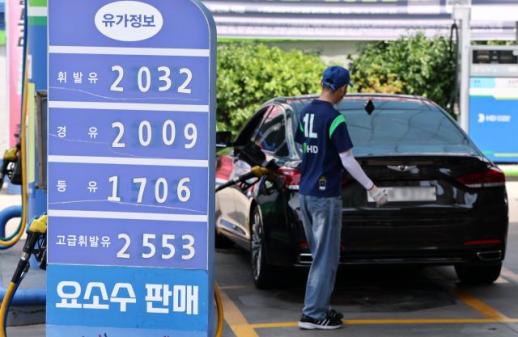 Industrial Activity Declines Amid Middle East Conflict Fallout Last month, overall industrial activity, including production, consumption, and investment, experienced a decline, marking the first instance of a "triple decrease" since August of last year. Concerns have been raised that the fallout from the Middle East conflict, which began in late February, is now taking a toll, although some analysts suggest this may be a temporary adjustment. Oil Refining Plummets, Fuel Sales Drop, Investment Weakens According to the "April 2025 Industrial Activity Trends" report released by the National Data Agency on May 29, the index for total industrial production (seasonally adjusted, excluding agriculture and fisheries) fell by 0.6% from the previous month to 117.8 (2020=100). This marks the first decline in total industrial production since January, when it dropped by 0.8%. The significant decrease in mining and manufacturing, which fell by 0.7% from the previous month, was largely influenced by a 19.4% drop in oil refining production. This is the largest decline since May 1988, when it fell by 22.1%, contributing to a 0.6 percentage point reduction in overall mining production. The unprecedented blockage of the Strait of Hormuz has had a major impact, as Iran declared a blockade in response to the ongoing conflict, leaving very large crude carriers (VLCCs) stranded in the Persian Gulf. The disruption in the supply of crude oil and naphtha has also led to a 2.1% decrease in chemical product production, as the petrochemical industry hastened maintenance and repairs due to supply challenges. Domestic indicators are also showing weakness. The retail sales index dropped by 3.6% compared to the previous month, marking the largest decline since February 2024, when it fell by 3.7%. This decline is also attributed to the effects of the Middle East conflict. Sales of vehicle fuel decreased by 8.3% from a month earlier, following the implementation of a rationing policy by public institutions due to heightened concerns over oil supply. The Ministry of Climate, Energy, and Environment had implemented a vehicle rationing policy for public institutions starting March 25. As concerns over oil supply intensified, a two-day vehicle rationing policy for public institution cars and a five-day rationing policy for public parking lots were introduced on May 8. Additionally, the ongoing high prices of oil products have contributed to the decline in retail sales. Investment has also not escaped the downward trend. Facility investment fell by 3.6% from the previous month. While investment in machinery, including semiconductor manufacturing equipment, increased by 0.5%, investment in transportation equipment, such as other transport vehicles, dropped by 11.5%. The data agency noted that a decrease in aircraft import investments significantly impacted this decline. Construction output fell by 1.4% compared to March, with both building (-1.5%) and civil engineering (-1.1%) projects experiencing reduced activity. Coincident and Leading Composite Indices Rise Together; Government Notes Base Effect Despite the decline in domestic industrial activity indicators, the government views this as a temporary adjustment. The coincident composite index, which reflects the current economic situation, rose by 0.2 points to 100.2, remaining above the baseline of 100 for two consecutive months. The leading composite index, which predicts future economic conditions, increased by 0.6 points to 104.1. The consumer sentiment index, which fell below the baseline of 100 last month, rebounded to 106.1 this month. The business sentiment index also reached its highest level in 43 months at 98.9. These positive signals for consumption and investment suggest a continuation of economic recovery. The oil supply, which had previously shocked the South Korean economy, is also showing signs of recovery. According to the Ministry of Trade, Industry, and Energy, the volume of crude oil imports for May to July is expected to be around 22,000 barrels, approximately 85% of the usual level. The government anticipates that there will be no significant issues with oil supply in August. Although the blockade of the Strait of Hormuz has created challenges for Middle Eastern oil supply, the proportion of non-Middle Eastern oil has increased significantly. The share of Middle Eastern oil, which rose to 69.1% last year, is projected to decrease to 48.5% (provisional) for the May to July period this year. During this time, the share of oil from the Americas (35.6%), Africa (8.3%), Asia (7.4%), and Europe (0.3%) has expanded to 51.5%. Additionally, the release of strategic reserves in accordance with the International Energy Agency (IEA) joint resolution is expected to conclude without government intervention. The Ministry of Industry has announced a regulation to reduce the mandatory days for private reserves from 40 to 20. The government is taking policy measures, such as utilizing the strategic oil swap system, to alleviate overall oil supply burdens, viewing the release of strategic reserves as a last resort. Deputy Prime Minister and Minister of Economy and Finance Koo Yun-cheol chaired an emergency economic meeting and a meeting of ministers related to economic and industrial competitiveness, stating, "As the Middle East conflict continues for an extended period, major institutions are adjusting their growth forecasts for our economy upward. The industrial production in April experienced a temporary adjustment due to base effects from previous high increases, but we expect a recovery trend to resume in May." 2026-05-29 12:46:00