

Journalist

Candice Kim, Lim Jaeho
candicekim1121@ajupress.com, ajupresswogh@ajupress.com
-
 Samsung Live: Union to launch 18-day strike as planned after marathon talks collapse SEJONG, May 20 (AJP) -Samsung Electronics faces an unprecedented 18-day strike from Thursday after the union walked out of government-mediated marathon talks over revisions to the employee reward system at the tech giant whose market valuation has swelled to nearly $1 trillion amid the AI boom. Management and the Korean tech giant’s largest union held three days of talks at a government complex in Sejong under the mediation of the National Labor Relations Commission (NLRC), seeking to avert a general strike involving some 50,000 workers, mostly from semiconductor production lines. The planned 18-day walkout is feared to inflict billions of dollars in losses not only on the chipmaker but also on the broader South Korean economy, which heavily depends on chip exports. Shares of the No. 1 stock fell 2.5 percent to 269,500 won ($178.7) following the news. The final round of talks collapsed late Wednesday morning after management held off on signing a compromise proposal put forward by government arbitrators, despite the union's official endorsement. In a statement to reporters, the union blamed management's indecisiveness for the breakdown. "The union agreed to the mediation proposal presented by the NLRC on Tuesday night," said Choi Seung-ho, chief of the Samsung labor union. "However, management repeatedly stated on Wednesday morning that a decision had not been made, delaying the process until the mediation was officially terminated." Choi confirmed the strike would proceed as planned on Thursday but noted the union remains open to dialogue during the walkout. Samsung Electronics immediately issued a fierce counter-statement, shifting the blame to the union’s "excessive demands" and defending its core business principles. "The failure to reach an agreement at the final moment was because accepting the union's excessive demands would shake the basic principles of corporate management," Samsung said in its official statement. "In particular, even though the company accepted most of the bonus scale and details, the union refused to back down on its demand for socially unacceptable levels of compensation for deficit-making business divisions." The world's largest memory chipmaker emphasized that giving in to such demands would directly violate its core principle of "rewarding where there is performance," warning of negative ripple effects across other industries. NLRC Chairman Park Soo-keun confirmed that the labor side had made significant concessions, but the two parties ultimately failed to narrow differences on a few critical clauses, leading management to "reserve" its signature. "The employer requested to hold off on signing, leaving the proposal unfulfilled," Park told reporters in Sejong. "However, because a resolution must eventually be reached, the commission stands ready to respond to any joint request for arbitration at any time, whether it be at night or over the weekend." 2026-05-20 11:48:18
 -
 Samsung Live: Samsung faces 'D-Day' as last-ditch labor talks spilled over into execution eve SEOUL, May 20 (AJP) - Samsung Electronics and its largest labor union will head back to the negotiating table on Wednesday morning after grueling, marathon talks failed to reach a breakthrough overnight, leaving the tech giant just hours away from a historic full-scale strike. The closed-door session is scheduled to reconvene at 10 a.m. at the National Labor Relations Commission (NLRC) in Sejong, marking the third round of post-mediation talks. The immediate eve-of-strike meeting comes after Tuesday's session stretched for over 14 hours, spilling past midnight before arbitrators called a recess at 12:30 a.m. on Wednesday. The fate of the dispute now hinges heavily on management's next move. NLRC Chairman Park Soo-keun revealed early Wednesday that while multiple bones of contention exist, the two sides failed to agree on the single most critical issue. Park noted that Samsung management is expected to present its finalized, comprehensive stance when the meeting resumes. The final scenario is clear-cut: if Samsung accepts the NLRC's ultimate compromise proposal, a tentative agreement will be reached, which the union will then put to a member vote. However, if management rejects the proposal, or if the union membership subsequently votes it down, the unprecedented 18-day walkout involving up to 50,000 workers will officially commence on Thursday, May 21. Due to the ticking clock and the need for subsequent voting procedures, Wednesday's session is expected to wrap up swiftly by late morning or early afternoon. The South Korean government remains on high alert, having previously hinted at the potential invocation of its rare "emergency adjustment powers" to legally freeze the strike should the final talks collapse and threaten the national economy. 2026-05-20 07:06:26
 -
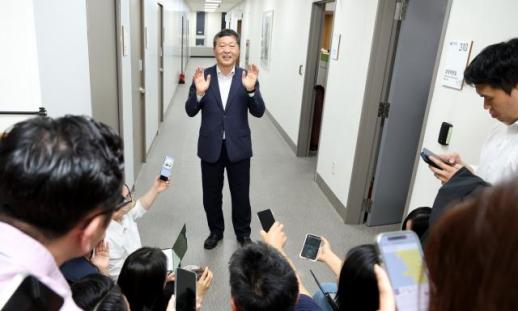 Samsung Live: Govt to mediate if talks fail in settlement by 10 p.m. SEOUL, May 19 (AJP) -The South Korean government is ready to put up its mediation version if Samsung Electronics Co. and its largest labor union fail to reach a wage agreement by 10 p.m. as it endeavors to stop a potentially disruptive strike at the world’s largest memory chipmaker planned for Thursday. "We will see if the management and union come to a settlement by around 10 p.m., and it will be decided whether an agreement is reached or whether a mediation is necessary,” Park Soo-keun, chairman of the National Labor Relations Commission (NLRC), told reporters during the second round of post-mediation talks. Park said that if management accepts a compromise proposal after internal review, the union must still put the deal to a membership vote. “If the proposal is rejected in the vote, the union would proceed with a strike,” he said. Park also signaled that the commission itself would step in with a formal mediation proposal should management refuse to accept a negotiated compromise. Under South Korea’s post-mediation process, the NLRC may present a compromise proposal combining elements from both sides if direct negotiations fail. But if either labor or management rejects the proposal, talks collapse — a scenario that could sharply raise the likelihood of a strike. Samsung Electronics Co. and its largest labor union resumed government-led wage mediation Tuesday, with the looming possibility of reaching a last-minute deal to avert an 18-day strike scheduled to begin Thursday. The renewed negotiations came days after the first round of mediation ended without an agreement, as the two sides remained divided over performance-based bonuses tied to booming artificial intelligence-related semiconductor earnings. “Both labor and management are making concessions,” Park said earlier in the day, adding that one or two key issues remained unresolved. Labor and management remain sharply split over how to structure bonuses during the ongoing global memory chip supercycle. Samsung has proposed maintaining the current excess profit incentive system while allowing the bonus pool to be calculated based on 10 percent of operating profit. The company also proposed introducing a separate special compensation framework to create a more flexible incentive structure. The union, meanwhile, is demanding fixed performance bonuses equivalent to 15 percent of the semiconductor division’s operating profit and the removal of payout caps. The two sides have reportedly narrowed differences on eliminating the current bonus ceiling set at 50 percent of annual salary, according to industry sources. However, disagreements remain over whether bonuses should also be distributed to loss-making business units and whether any revised framework should be formally institutionalized. The union has reportedly proposed allocating 70 percent of the semiconductor bonus pool across the entire division, while distributing the remaining 30 percent based on individual business unit performance. Management, however, argues that such a structure could reward loss-making divisions and weaken the company’s performance-based compensation principles. 2026-05-19 20:27:26
 -
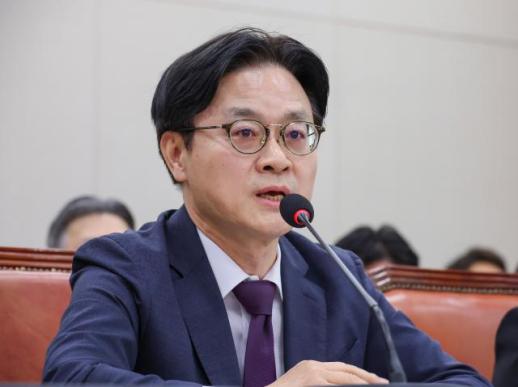 Samsung Live: Industry Minister urges 'dramatic settlement' on final day of Samsung talks SEOUL, May 19 (AJP) - As Samsung Electronics and its union entered the crucial final hours of government-mediated talks on Tuesday, South Korea's Industry Minister Kim Jung-kwan made an urgent public plea for a resolution to avert a massive strike. Speaking at a parliamentary committee meeting, Kim expressed a "desperate need" to prevent the 18-day walkout scheduled to begin Thursday. "If we cannot resolve this when everyone knows the negative impacts of a strike, what can our society achieve going forward?" Kim stated, urging both sides to reach a dramatic last-minute settlement. The minister attributed the current deadlock partly to Samsung's relatively short history of labor-management dialogue compared to other legacy manufacturers. However, he carefully refrained from commenting on specific negotiation terms to avoid interfering with the ongoing, closed-door National Labor Relations Commission (NLRC) mediation in Sejong. The remarks come as the high-stakes arbitration enters its final stretch. The National Labor Relations Commission is expected to announce the outcome of the mediation later this evening, which will determine whether the historic walkout proceeds as planned. 2026-05-19 16:12:54
 -
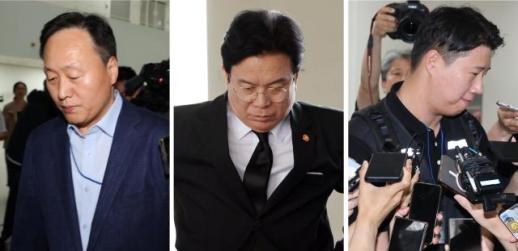 Samsung Live: Another last-ditch round of talks underway as strike deadline looms SEOUL, May 19 (AJP) - Samsung Electronics and its largest labor union returned to the negotiating table on Tuesday for a second day of government-mediated talks, with a planned full-scale strike just two days away. Negotiators from both sides are working to reach a deal over disputes involving wages and performance bonuses following massive profits fueled by an unprecedented artificial intelligence (AI)-driven semiconductor supercycle. According to Samsung insiders, the closed-door session is underway at the National Labor Relations Commission (NLRC) in the administrative city of Sejong, in a last-ditch effort to avert the union's planned 18-day walkout scheduled to begin Thursday unless a deal is reached in time. The main focus of Tuesday's talks is whether the NLRC can put forward a final proposal acceptable to both sides. If accepted by management and union leaders, the mediated proposal will carry the same legal binding force as a collective bargaining agreement. Both sides reportedly tried to narrow their differences over profit-sharing for employees as well as caps on salary increases in their talks the previous day. Park Jung-bum, an NLRC official, was cautiously optimistic, saying both sides engaged constructively and are "finding common ground." Although talks are scheduled to end by 7 p.m., industry watchers expect the tug-of-war bargaining to continue late into the night or even into the next day, given the urgency of averting a strike that could have widespread economic repercussions across the country. Government authorities are also on high alert, having previously warned they could step in to halt the walkout if it poses a serious threat to the national economy. 2026-05-19 10:25:15
 -
 Samsung takes aim at OLED dominance with ultra-bright micro RGB TV SEOUL, May 18 (AJP) - Samsung Electronics is intensifying its assault on the ultra-premium television market, leveraging next-generation display technology and generative artificial intelligence to challenge the dominance of OLED panels. The South Korean tech giant's 2026 Micro RGB TV (Model: R95H) is garnering strong endorsements from major tech reviewers in the U.S. and U.K., signaling a potential shift in the high-end display landscape. The strategy heavily targets the traditional weakness of OLED TVs—peak brightness. According to U.S.-based tech outlet Tech Aeris, the new Micro RGB lineup presents a compelling alternative for consumers demanding "OLED-level colors with higher brightness," naming it a 2026 Editor's Choice. At the core of Samsung's push is the "Micro RGB AI Pro" processor , which not only handles real-time scene analysis and color tuning but also marks a significant step in transforming the TV into a comprehensive AI hub. Moving beyond mere picture optimization, Samsung has integrated broad AI services, including Copilot and Perplexity, directly into the viewing experience. The technical specifications also underscore Samsung's aggressive market positioning. The new model has secured the 'Micro RGB Precision Color 100' certification from the German testing institute VDE, achieving 100 percent of the BT.2020 color gamut standard established by the International Telecommunication Union (ITU). By combining uncompromising brightness with deep AI integration, Samsung aims to set a new standard for home theaters, actively courting tech-savvy consumers who prioritize both color accuracy and high-performance gaming capabilities. 2026-05-18 17:40:12
 -
 Court partly sides with Samsung ahead of looming labor strike SEOUL, May 18 (AJP) - A local court on Monday ordered labor unions at Samsung Electronics to maintain normal staffing levels at critical semiconductor facilities even if they go ahead with a planned walkout later this week over wages and performance bonuses. Otherwise, they could face massive fines, dealing a major blow to the unions' plans just days before a deadline for their unprecedented level of strike. The Suwon District Court partially granted an injunction sought by management at Samsung Electronics. While the court did not block the strike itself, it ordered that operations essential to disaster prevention, exhaust and drainage systems, and the prevention of semiconductor wafer damage must continue at normal capacity. To enforce compliance, the court set steep penalties: the two major unions could face fines of 100 million won (US$74,000) per day, while union leaders could be fined 10 million won per day, if they disrupt these essential operations through physical force, threats, or internal directives. Following the ruling, the electronics giant issued an internal notice to employees, warning them not to be misled by the union's efforts to downplay the court's order. It also strongly criticized the union's claim that only minimum weekend-level staffing would be required during the strike, saying the court clearly ordered normal staffing levels at key facilities. "The court's ruling clearly requires regular staffing levels, whether on weekdays, weekends or holidays," the company said. "Safety and security operations must be fully maintained." It added that employees in affected departments would be individually notified of their work requirements during the strike, in accordance with the court's order. Now that it has secured key legal protections to ensure uninterrupted semiconductor production, the company said it still prefers to resolve the wage-related dispute through negotiations. "We will continue our efforts to ensure employees' safety and minimize disruptions at production sites," it said. "Regardless of the court's ruling, we will continue working toward an amicable settlement in wage negotiations." Monday's ruling is likely to give the company the upper hand as both sides remain locked in weeks of stalled talks including government-mediated negotiations, just days before the May 21 strike deadline, and may help avert a full factory shutdown. 2026-05-18 16:42:01
 -
 Samsung braces for 'make-or-break' labor talks as strike deadline looms SEOUL, May 18 (AJP) - While the catastrophic risk of a full-scale chip strike looms larger than ever over South Korea's tech industry, Samsung Electronics' management and its largest labor union locked horns in a critical, last-ditch round of government-mediated talks on Monday to avert a historic shutdown. The high-stakes showdown comes just three days before a planned 18-day walkout by up to 50,000 workers, a disruption that industry insiders warn could inflict a staggering 100 trillion won (US$74 billion) blow to the global semiconductor supply chain. The two sides convened for a second round of post-mediation talks at the National Labor Relations Commission in Sejong at 10 a.m. Following the collapse of the first round of talks last week, the emergency weekend intervention by Labor Minister Kim Young-hoon and direct appeals from Samsung Electronics chairman Lee Jae-yong managed to bring both parties back to the negotiating table. The stakes are unprecedentedly high, as the National Labor Relations Commission Chairman Park Soo-keun stepped in to directly arbitrate the session rather than acting as a mere observer. While union leaders expressed their commitment to negotiating in good faith, the atmosphere remained highly charged following preliminary weekend meetings where the union fiercely reacted to government hints of potential executive intervention. The dispute centers primarily on the company's profit-sharing bonus (OPI) system. The National Samsung Electronics Union, representing nearly 50,000 workers, is demanding the abolition of the current 50 percent salary cap on bonuses and seeking a formalized commitment to allocate 15 percent of the company's operating profit toward employee incentives. Samsung management, while promising top-tier compensation tied to market leadership, has maintained that institutionalizing the removal of the bonus cap infringes on corporate governance and poses long-term financial risks. Adding to the pressure, President Lee Jae Myung issued a calculated warning on Monday morning, stating on social media that corporate management rights must be respected just as much as labor rights. While acknowledging the historical context of workers' rights to corporate profits, the president noted that constitutional basic rights can be legally restricted for the public good, signaling that the administration remains prepared to invoke "emergency adjustment powers" to halt the strike if negotiations fail. An invocation of emergency powers would legally force the union to suspend any strike action for a 30-day cooling-off period, though such a move risks triggering a wider and more aggressive standoff between the government and major national labor umbrella groups. The stakes are immensely high, with industry analysts warning that a total walkout could inflict up to 100 trillion won ($74 billion) in damages to the national economy. The National Labor Relations Commission is is expected to announce the outcome of the negotiations later in the day. 2026-05-18 11:29:27
 -
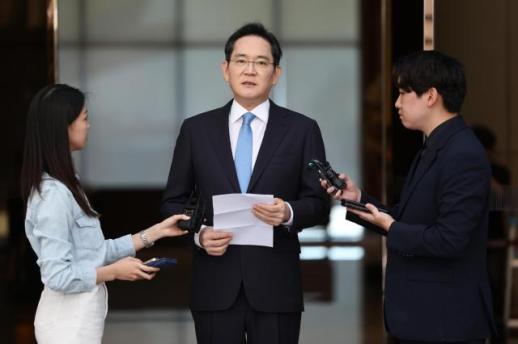 Samsung Chairman apologizes for labor standoff as tech giant agrees to resume talks SEOUL, May 16 (AJP) - Samsung Electronics Chairman Lee Jae-yong issued a rare public apology on Saturday regarding the ongoing labor dispute that has threatened a major disruption at the world’s largest memory chipmaker, just as management and labor groups agreed to return to the negotiating table. Returning to South Korea via Gimpo Business Aviation Center from an overseas business trip, Lee directly addressed the escalating tensions that have brought the company to the brink of a historic work stoppage. "I sincerely apologize to our customers worldwide and to the public for causing concern over our internal company matters," Lee told reporters, bowing deeply. "To our labor union and the members of the Samsung family: we are one body, one family. Now is the time to wisely gather our strength and move forward in the same direction." Lee’s intervention appeared to act as a catalyst for a sudden diplomatic breakthrough, coming less than 24 hours after an unprecedented but inconclusive face-to-face meeting between the union and semiconductor division chief Jun Young-hyun. Following the chairman's remarks, both Samsung management and the union accepted a proposal from the National Labor Relations Commission to resume physical negotiations on Monday, May 18. In a major concession aimed at breaking the deadlock, management also agreed to a union demand to replace its chief negotiator with the top human resources executive of the Device Solutions (DS) semiconductor division. Despite the agreement to resume talks, the dispute remains highly volatile as the May 21 strike deadline looms. While the overarching joint labor coalition has threatened an 18-day general strike if its demands for transparent profit-sharing incentives are not met, the labor front itself is showing unprecedented internal cracks. Over the past week, thousands of workers have reportedly resigned from the main unions, fueled by sharp internal criticism from the company's finished-goods divisions that the current negotiations are disproportionately favoring the semiconductor sector. With direct financial and indirect supply chain risks estimated by industry analysts to reach as high as 100 trillion won ($74 billion) in the event of a prolonged shutdown, the war of nerves between Samsung's leadership and its workforce is expected to intensify over the weekend. Observers note that the newly restructured management team and union leaders will likely engage in frantic, behind-the-scenes maneuvering to draft a viable compromise before Monday's formal session begins. 2026-05-16 23:11:06
 -
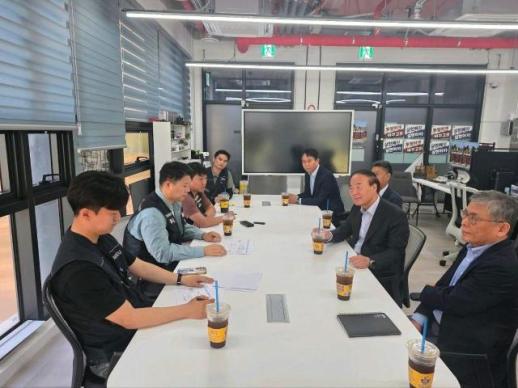 No breakthrough for Samsung Elec despite 11th-hour C-suite visit to union SEOUL, May 15 (AJP) - Top executives of Samsung Electronics failed Friday in an eleventh-hour attempt to avert a looming general strike after visiting the labor union office of the world’s largest memory chipmaker, whose exports alone account for roughly one-fifth of South Korea’s total outbound shipments. Mindful of the government’s determination to prevent a strike at a company whose production disruption could cost billions of dollars in economic losses and tax revenues, Samsung’s C-suite moved directly to engage union leaders after government-mediated wage talks collapsed earlier this week. The delegation, led by Vice Chairman and Device Solutions (DS) chief Jun Young-hyun, arrived at the office of the National Samsung Electronics Union (NSEU) at the company’s Pyeongtaek campus Friday afternoon. The executive team also included Foundry Business head Han Jin-man and System LSI chief Park Yong-in. Shares of Samsung Electronics plunged 7.8 percent Friday to close at 270,700 won after nearing the 300,000-won milestone in the previous session, as investor sentiment deteriorated on disappointment over the labor impasse. The visit followed a rare public apology issued by Samsung’s board of presidents earlier in the day, expressing “heavy responsibility” for the burden the prolonged labor dispute has placed on shareholders and the public. Management said it remained willing to engage the union with an “unconditional” and “open” mindset and urged labor representatives to return to negotiations as soon as possible, raising hopes for a potential breakthrough. Samsung emphasized that semiconductor manufacturing operates on a continuous 24-hour production cycle, warning that any work stoppage could inflict lasting damage on the company’s credibility and “trust assets” with global customers. Despite the conciliatory tone and unusual high-level visit, the meeting ended on a negative note as both sides remained firmly entrenched ahead of the union’s planned strike beginning May 21. Union leader Choi Seung-ho reportedly maintained a hard-line stance even after the government signaled it could consider invoking rarely used emergency mediation authority to prevent a strike viewed as harmful to the national economy. “Employees have lost trust in management,” Choi reportedly told executives during the meeting, adding that the union would only consider returning to formal negotiations if Samsung presents a concrete agenda addressing its core demands regarding compensation and performance bonuses. Choi also suggested that renegotiation could only resume after June 7, signaling the union’s determination to proceed with its planned 18-day strike beginning May 21. The union estimates that as many as 50,000 workers could participate. The standoff comes at a sensitive moment for Samsung as the company attempts to regain momentum in the intensifying global AI semiconductor race. Industry analysts warned that prolonged disruptions could carry risks extending beyond short-term production losses. “Samsung Electronics is at a vital moment where it still has the opportunity to solidify its position as a top global leader,” a semiconductor industry analyst said. “With global tech companies such as Apple, Tesla and NVIDIA among its key customers, failing to meet orders because of an internal strike could become a lost opportunity that permanently damages its competitive standing.” The government has also increased pressure on both sides to reach a compromise, warning that a large-scale disruption at Samsung could ripple through South Korea’s export-dependent economy at a time of heightened market volatility and geopolitical uncertainty. With the union’s strike deadline approaching and no compromise in sight, the standoff between Samsung management and labor is expected to continue through the weekend as both sides weigh the economic and strategic consequences of a full-scale production disruption. 2026-05-15 17:30:08