


Latest by
-
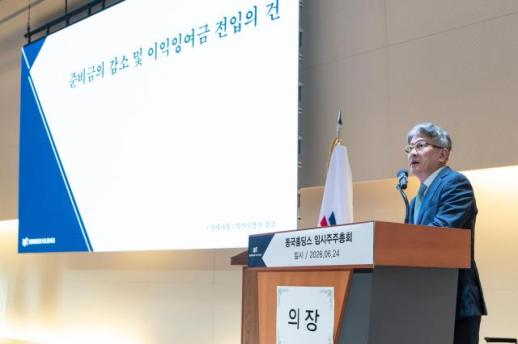 Dongkuk Holdings Secures 581.1 Billion Won for Dividends, Initiates M&A and New Ventures Dongkuk Holdings is accelerating its efforts to enhance shareholder value and secure future growth drivers. The holding company of the Dongkuk Steel Group held an extraordinary general meeting on June 24 at its headquarters in Ferum Tower, Jung-gu, Seoul, where it approved the agenda item regarding the reduction of reserves and the transfer of retained earnings as originally proposed. Through this meeting, Dongkuk Holdings completed a five-month capital restructuring process, ensuring sustainable dividend funds from a long-term perspective. Despite the downturn in the steel industry, the company expressed a firm commitment to enhancing shareholder value. Shareholders will also benefit from tax advantages related to the reduced dividends. The key aspect of this restructuring is the conversion of previously non-distributable reserves into distributable funds. With the approval of the agenda, Dongkuk Holdings converted 480.8 billion won in non-distributable capital reserves and 100.3 billion won in profit reserves, totaling 581.1 billion won, into retained earnings, making these funds available for future shareholder returns. This amount is the maximum allowed under the Commercial Act. Dongkuk Holdings converted the entire excess amount into funds with shareholder consent, in accordance with Article 461-2 of the Commercial Act, which allows for the reduction of reserves exceeding 1.5 times the capital stock. The company also secured tax benefits related to the reduced dividends. With the approval of this agenda, Dongkuk Holdings has completed its four-phase capital restructuring initiated in February. The phases included share buybacks (Phase 1), par value reduction (Phase 2), stock splits (Phase 3) to enhance liquidity and accessibility for shareholders, and finally, the transfer of the entire excess amount to retained earnings (Phase 4), preserving shareholder value without altering total capital. Future dividends are expected to increase. The enhanced minimum dividend criteria established in February will be applied. Additionally, Dongkuk Holdings plans to continuously review further shareholder return measures, including dividend increases, in line with improved performance and cash generation. Having completed its capital restructuring, Dongkuk Holdings will also focus on its primary role of discovering new growth drivers for the group. Earlier, during the regular shareholders' meeting in March, the company indicated it was considering establishing joint ventures, pursuing mergers and acquisitions, and forming strategic alliances in promising sectors this year.* This article has been translated by AI. 2026-06-24 10:16:00
 -
 Bohai Brewery Shares Surge Despite Investment Warning Amid Semiconductor Hopes Bohai Brewery is experiencing a strong performance, hitting its upper price limit early in the trading session. According to the Korea Exchange, as of 10:03 a.m. on June 24, Bohai Brewery shares rose by 910 won (29.93%) to 3,950 won. The stock price surged to the maximum limit shortly after the market opened and has maintained that level. Recent market discussions have highlighted the potential for semiconductor industry investments in the Gwangju and Jeonnam regions. Observers suggest that Samsung Electronics and SK Hynix are considering investments in semiconductor production facilities in the Jangseong Advanced 3 District, drawing attention to related stocks. Bohai Brewery's ownership of real estate assets in the Gwangju and Jeonnam areas has attracted investor interest. There is growing optimism that if large-scale industrial complexes are developed, the value of these assets could increase, leading to a surge in buying activity. However, the rapid rise in stock prices has raised caution in the market. The Korea Exchange designated Bohai Brewery as an investment warning stock following the previous day's market close. Despite this, investor sentiment remains strong, with the stock showing gains for five consecutive trading days from June 18 to today. It is important to note that the discussions regarding semiconductor factory investments have not yet been officially confirmed. Analysts suggest that the volatility of the stock price may increase depending on the specifics of any investment plans that may be announced.* This article has been translated by AI. 2026-06-24 10:16:00
 -
 Samsung C&T Shares Surge Over 12% as Investors Buy the Dip Samsung C&T is experiencing a strong rebound in early trading as investors take advantage of the recent drop of over 12% in its stock price. As of 9:28 a.m. on June 24, the company’s shares were trading at 511,000 won, up 56,000 won (12.31%) from the previous trading day. The stock opened at 477,000 won and briefly surged to 514,000 won before giving back some of its gains. Analysts attribute the rise to bargain hunting and renewed interest in the value of Samsung Electronics shares. Market analysts are optimistic about the outlook. Mirae Asset Securities has raised its target price for Samsung C&T from 370,000 won to 680,000 won, maintaining a 'buy' rating. Kim Gi-ryong, a researcher at Mirae Asset Securities, stated, "The increase in share value due to Samsung Electronics' surge and expectations for enhanced shareholder returns are driving this upward trend. The indirect benefits from Samsung Life Insurance's stake in Samsung Electronics are also significant." Additionally, the diversification of the company's business portfolio is seen as a long-term factor contributing to its increased corporate value. Kim noted, "This year, the construction sector is expected to benefit from a rise in orders and performance driven by high-tech projects, along with increased visibility in nuclear power momentum. The high-tech sector is likely to see growth in performance and orders, particularly with Samsung Electronics' capital expenditure expansion and developments at the Pyeongtaek P4-P6 site and the potential start of construction at the Taylor 2 plant in the U.S." He added, "In the overseas nuclear power sector, large-scale projects are being pursued to hedge risks through Team Korea (in Vietnam, etc.), and collaborations with various technology firms, including GF Burnova and Hitachi (GVH), are underway to enter the European small modular reactor (SMR) market."* This article has been translated by AI. 2026-06-24 10:16:00
 -
 South Africa's Coach Hugo Broos Prepares for World Cup Match Against South Korea Hugo Broos, the coach of South Africa, stated that there is "no answer but to win" as his team prepares for their final group stage match against South Korea in the 2026 North Central America World Cup. In a press conference held at the Estadio Monterrey in Guadalupe, Mexico, on June 24, Broos noted that not having to consider various scenarios makes the situation easier. He emphasized that the players will give their best effort to secure a victory. "South Korea is a well-disciplined team with good physical attributes. They can perform well for 90 minutes," Broos said, adding that it is crucial to figure out how to counter South Korea's strengths and exploit their weaknesses. Broos acknowledged the difficulty in deciding on tactics, whether to be more aggressive or to wait, especially since South Korea also has a stake in the match with a record of one win and one loss. "One thing is clear: we must win," he stated. He also mentioned that just a month ago, he was not familiar with South Korea, but now recognizes that they have advanced technology and equipment for analyzing technical and tactical aspects. "We are well prepared for tomorrow's match," he said. Broos expressed concern about player fatigue, noting the challenges of time zone differences and exhaustion. "It's not ideal, but that's the concept of the World Cup. We have to adapt," he explained. The final group stage match between South Korea and South Africa is scheduled for June 25 at 10 a.m. at Estadio Monterrey.* This article has been translated by AI. 2026-06-24 10:12:00
 -
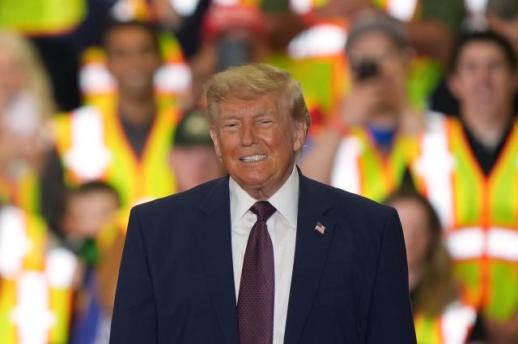 76% of Respondents Distrust Trump in Global Poll, U.S. Credibility Shaken Recent polling indicates a significant level of distrust towards President Donald Trump among the international community. On June 23, Axios reported on a survey conducted by the Pew Research Center, which found that from February 8 to May 13, over 40,000 adults across 36 countries, including the UK, Germany, France, South Korea, and Japan, revealed that 76% do not trust President Trump. Only 23% expressed trust in him. Perceptions of the United States itself were also negative. Fifty-seven percent of respondents viewed the U.S. unfavorably, while 37% had a positive view. Although 47% considered the U.S. a reliable partner, a higher percentage, 50%, found it difficult to trust. Only 32% believed that the U.S. takes other countries' interests into account, while 66% felt it does not. Axios noted that these findings reflect the impact of President Trump's second-term foreign policy on America's international image. There is a growing perception among allies and partners that Washington is difficult to trust and prioritizes its own interests, raising doubts about the U.S.'s willingness to engage in international cooperation. The decline in trust towards the U.S. was particularly pronounced among key allies. In 2022, during the Biden administration, 83% of Canadians viewed the U.S. as a trustworthy partner, but that number has plummeted to 35% in the latest survey. Trust levels also dropped by over 40 percentage points in Sweden, the Netherlands, and Germany. In the UK, Italy, France, and Spain, the perception of the U.S. as a reliable partner fell by more than 30 percentage points. In Japan, the percentage of respondents who consider the U.S. trustworthy decreased from 76% in 2022 to 59% in the current survey. South Korea saw a similar decline, dropping from 83% to 57%. Evaluations of President Trump's handling of international issues were also low. Among the 36 countries surveyed, no nation supported his responses to major global issues such as Iran, Gaza, the Ukraine war, immigration, tariffs, and humanitarian aid. The White House disputed the survey results. Olivia Wales, a White House spokesperson, stated in a release to Axios that while the Biden administration has weakened America, President Trump restored U.S. strength both domestically and internationally. She added that Trump’s "peace through strength" foreign policy is a proven approach that will keep America safe and deter global threats in the coming years.* This article has been translated by AI. 2026-06-24 10:12:00
 -
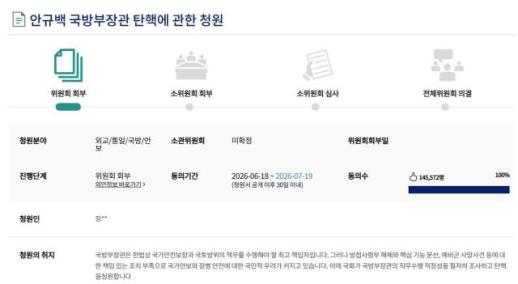 Public Outcry Grows for the Impeachment of Defense Minister An Gyu-baek More than 145,000 people have signed a petition demanding the impeachment of Defense Minister An Gyu-baek. According to Yonhap News on June 24, as of that day, 145,572 individuals had supported the petition titled "Call for the Impeachment of Defense Minister An Gyu-baek," which was posted on the National Assembly's public petition website on June 18. The petitioners expressed concerns over national security and the safety of military personnel, citing issues such as the restructuring of the Defense Security Command and the response to a recent incident involving the death of a reservist during training. They urged the National Assembly to investigate An's performance and initiate impeachment proceedings. The main opposition People Power Party has called for An's dismissal, pointing to the surge in petition signatories as evidence of public discontent. Floor Leader Jeong Jeom-sik stated on Facebook, "Policies that undermine the foundation of national defense, such as the disbandment of the Army's Defense Security Command, the consolidation and relocation of military academies, and the outsourcing of rear unit security duties, are being pursued without adequate review." He criticized the lack of accountability regarding the death of a reservist during training last month, asserting, "President Lee Jae-myung must take this public petition seriously and not dismiss it lightly." Additionally, Chief Spokesperson Choi Soo-jin commented that the ongoing calls for An's impeachment reflect not just a failure in personnel management but also the consequences of the government's distorted security perspective. She demanded An's removal and a reshuffling of the diplomatic and security teams. Meanwhile, Floor Leader Jeong also noted that a public petition regarding the upcoming amendment to the Information and Communications Network Act has surpassed 100,000 signatures, urging the Democratic Party to halt the law's implementation and engage in discussions for its revision. He argued that the criteria for identifying false and manipulated information in the law are ambiguous, raising concerns about potential infringements on freedom of expression.* This article has been translated by AI. 2026-06-24 10:08:00
 -
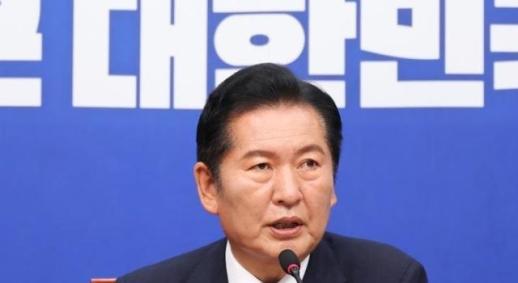 Democratic Party Urges Election Commission Officials to Cooperate with Investigation The Democratic Party on June 24 urged officials from the Election Commission, who did not attend a national investigation related to the shortage of ballots during the June 3 local elections, to "stop avoiding responsibility and cooperate." The party emphasized that there are no exceptions when it comes to protecting citizens' voting rights. During a Supreme Council meeting at the National Assembly, Jung Cheong-rae, the party leader, stated, "This investigation must be conducted with a sense of heavy responsibility like never before." He added, "What the public wants to see is not excuses or avoidance, but an honest acknowledgment and a commitment to rectify the situation responsibly." Jung also noted, "Since the President has called for a thorough investigation into various allegations against the Election Commission, the National Assembly will fulfill its duties as well. Independence does not mean exemption from responsibility. There are no exceptions in protecting citizens' voting rights." Han Byeong-do, the floor leader, remarked, "Attempts to uncover the truth in this national investigation have faced obstacles from the start," expressing surprise that those responsible for infringing on citizens' voting rights did not show their faces to the public. He further pointed out that issues have arisen not only regarding ballot management but also concerning inappropriate business trips and excessive meeting allowances, highlighting a lack of accountability in light of the significant authority held by the Election Commission. He urged Election Commission officials to remember that sincere cooperation is the quickest way to calm public anger. Meanwhile, during the first national investigation held the previous day, 16 individuals, including seven members of the Central Election Commission, were absent. Lawmakers from both ruling and opposition parties criticized this as a "collective defiance."* This article has been translated by AI. 2026-06-24 10:08:00
 -
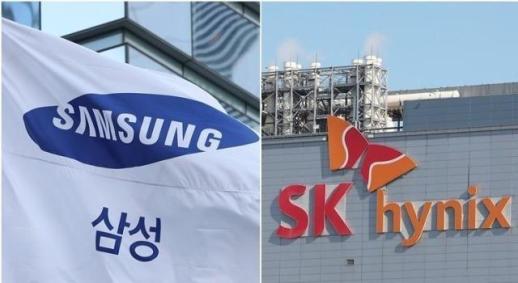 Samsung Electronics Surges 7%, Reclaims Top Market Capitalization; SK Hynix Rises 3% On June 24, Samsung Electronics experienced a significant surge, reclaiming its position as the top company by market capitalization in the stock market. SK Hynix also saw an upward trend, indicating a rebound in the sector. According to the Korea Exchange, as of 10:01 AM, Samsung Electronics shares rose by 24,000 won (7.74%) to 334,000 won. At the same time, SK Hynix shares increased by 9,000 won (3.52%) to 2,646,000 won. This surge brought Samsung's market capitalization to 1,958 trillion 503.3 billion won, surpassing SK Hynix's 1,885 trillion 810.5 billion won. The previous day's news that Samsung Electronics and SK Hynix are considering plans for a large-scale semiconductor cluster in the Honam and Chungcheong regions is believed to have contributed to the rise in stock prices. According to Yonhap News and industry sources, the two companies are discussing the possibility of unveiling local investment plans at a public-private joint meeting on 'National Spatial Transformation (Balanced National Development)' hosted by President Lee Jae-myung at the end of this month. The proposal includes establishing semiconductor production and packaging facilities in the Honam region, including Gwangju and Jeonnam. Initially, investments were expected to focus on post-processing, such as packaging, but discussions have expanded to include core production processes like wafer manufacturing, raising the potential scale of investment significantly. Positive forecasts continue from the securities industry. Kim Dong-won, a researcher at KB Securities, stated, "With the launch of NVIDIA's next-generation AI platform 'Vera Rubin,' demand for high-bandwidth memory (HBM)4 and next-generation memory is expected to grow, benefiting SK Hynix the most. In particular, the anticipated U.S. ADR listing in August is likely to narrow the valuation gap with Micron, serving as a catalyst for SK Hynix's stock price increase in the future." Earlier, BNK Investment & Securities adjusted its operating profit forecasts for Samsung Electronics upward for this year and next, despite accounting for special performance bonuses in the DS division. 2026-06-24 10:08:00
 -
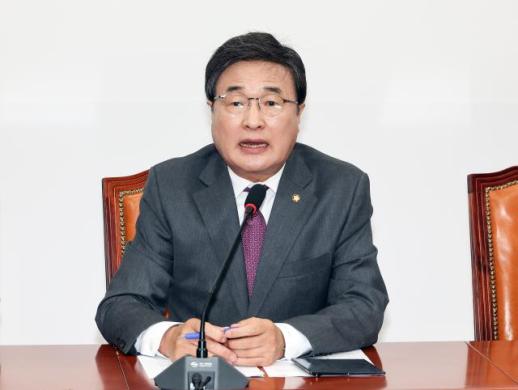 Kim Dae-sik Calls for Discussion on Jang Dong-hyuk's Future On June 24, Kim Dae-sik, a member of the People Power Party, stated that discussions should be held regarding the future of Jang Dong-hyuk, emphasizing that it is not too late to evaluate the results of the June 3 local elections and hold him accountable. He said, "We need to gather consensus and discuss the party leader's future." Kim made these remarks during an appearance on YTN Radio's "Jang Sung-cheol's News Myungdang," where he noted the importance of timing in addressing the issue, saying, "We need to consider whether to act now or wait until after analyzing the election results." In response to calls within the party for Jang's resignation, he acknowledged that while some argue the leader should take responsibility and step down, there are also those who remain silent. He questioned, "What options do we have unless he decides on his own or the four elected supreme committee members resign?" Kim believes that the decision should come after thorough analysis of the election results and listening to various opinions, stressing the need to consider the public's disappointment with the government and ruling party, which has led them to support the People Power Party as an alternative. He highlighted the burden of prolonged internal conflict within the party. He also mentioned a recent dinner with independent lawmaker Han Dong-hoon and other lawmakers from the Busan region, stating, "The Nakdong River belt collapsed in this local election, prompting discussions among the regional lawmakers. We talked about how to negotiate with the newly elected Busan Mayor Jeon Jae-soo regarding various projects in western Busan." Regarding Han's potential return to the People Power Party, Kim suggested that they should take their time to reach a consensus. He remarked, "The party has not yet reached a consensus on this matter, but since Han is a key figure in conservatism, it might be wise to observe the situation with the major projects coming up in 2028 and 2030 (general and presidential elections)." 2026-06-24 10:08:00
 -
 LG Electronics Strengthens Premium 'LG Signature' OLED TV Lineup LG Electronics is enhancing its premium 'LG Signature' OLED TV lineup with the introduction of new products, aiming to solidify its leadership in the OLED TV market, where it has maintained the top position for 13 consecutive years.On June 24, LG Electronics announced that it will sequentially launch its next-generation Wallpaper TV, the 'LG Signature OLED W' (model W6), starting in South Korea and expanding to global markets.The new model boasts a thickness of just 0.9 cm, allowing for close wall installation as a 2026 wireless Wallpaper TV. The design incorporates ultra-slim technology across all components, including the panel, power board, main board, and speakers, achieving an all-in-one ultra-slim design.A key competitive advantage of this product is its wireless transmission technology. LG Electronics has received the world's first certification for 'true wireless low-latency vision' from the global certification body TÜV Rheinland. This technology enables real-time transmission of high-quality 4K resolution video at a 165Hz refresh rate without degradation or delay. The absence of complicated cable connections around the TV enhances both space utilization and interior aesthetics.The 'Zero Connect Box,' which connects set-top boxes and gaming consoles, has also been reduced in size by approximately 35% compared to previous models. Users can enjoy wired TV-quality video while placing external devices in separate spaces.Picture quality performance has significantly improved. The 2026 OLED TV is equipped with the '3rd Generation Alpha 11' AI processor, which enhances NPU performance by 5.6 times compared to the previous generation. Graphics processing performance has also improved by 70%, delivering clear and natural images even during fast transitions. The 'Dual Super Upscaling' feature enhances low-resolution content to 4K quality.Display technology differentiation is also notable. The new product has received the industry's first 'Reflection Free Premium' certification from the global certification body Intertek. Unlike conventional anti-glare methods that disperse light, this technology reduces reflective light itself, maintaining the OLED's signature perfect blacks and color representation even in brightly lit environments.AI capabilities have been significantly enhanced. The TV includes six major AI features: AI Concierge, AI Search, AI Chatbot, AI Personalized Screen, AI Sound Wizard, and Voice ID, which support personalized content recommendations and optimization of picture and sound quality. The dedicated AI Magic Remote allows for easy voice commands and pointing functionality.LG Electronics is also launching a new model of the world's first wireless and transparent TV, the 'LG Signature OLED T' (model T6). This product allows users to switch between black screen and transparent screen modes, providing a unique viewing experience based on augmented reality (AR) as well as traditional TV viewing. The T6 also incorporates the latest wireless transmission technology and the 3rd Generation Alpha 11 AI processor.Through the expansion of its ultra-premium lineup, LG Electronics aims to reinforce its position as the leader in the OLED TV market. According to market research firm Omdia, LG Electronics maintained a 50.5% share in global OLED TV shipments and a 47.7% share in revenue in the first quarter of this year. The company continues to lead in major regions, including North America, Europe, Asia-Pacific, Latin America, and the Middle East and Africa.Park Hyung-se, head of LG Electronics' MS Business Division, stated, "The LG Signature OLED W and OLED T are innovative products that showcase LG's TV technology. We will further solidify our leadership in the premium TV market based on differentiated technological innovation."* This article has been translated by AI. 2026-06-24 10:04:00