
Journalist

Lee Jung-woo
cannes2030@ajpress.com
-
 Asian stocks close higher amid cautious optimism over possible fresh US-Iran talks SEOUL, April 20 (AJP) - Asian stock markets closed higher on Monday as investors bet on optimism ahead of another round of ceasefire negotiations between the U.S. and Iran, lifting overall market sentiment despite lingering tensions in the Middle East. Despite conflicting reports of impending talks in Islamabad, Pakistan, with Iran denying any plans to negotiate, the benchmark KOSPI in Seoul gained 0.44 percent to close at 6,219.09, while the tech-heavy KOSDAQ rose 0.41 percent to finish at 1,174.85. Samsung Electronics fell 0.69 percent to close at 214,500 won, while SK Hynix jumped 3.37 percent to 1,166,000 won. LG Energy Solution climbed 2.63 percent to 429,000 won, and Doosan Enerbility rose 2.30 percent to 111,000 won. HD Hyundai Heavy Industries added 1.95 percent to 524,000 won. Samsung SDI surged 4.87 percent to 538,000 won after signing a multi-year agreement with Mercedes-Benz to supply batteries for next-generation electric vehicles. But auto-related shares declined, with Hyundai Motor falling 2.04 percent to 527,000 won and Kia dropping 1.13 percent to 157,400 won. Entertainment stocks all moved lower. HYBE fell 2.86 percent to 255,000 won, JYP Entertainment declined 1.42 percent to 62,300 won, SM Entertainment slipped 1.80 percent to 93,000 won, and YG Entertainment dropped 2.68 percent to 54,400 won. In Tokyo, the Nikkei 225 rose 0.60 percent to close at 58,824.89, while China's Shanghai Composite gained 0.76 percent to end at 4,082.13. 2026-04-20 17:26:34
 -
 S. Korea hits the accelerator on nuclear pivot after Hormuz lesson SEOUL, April 20 (AJP) - Nuclear energy has become hot. It already was due to the exponential demand for electricity to power hyperscalers to train and deploy artificial intelligence. But it has got even hotter due to the Gulf war crisis. South Korea is the world’s fifth-largest energy importer by value and one of the four largest importers of LNG globally, regularly purchasing around 40 million tonnes per year. With virtually no domestic fossil fuel reserves, the country imports nearly 95% of its primary energy needs — a structural vulnerability that has driven decades of debate about energy security. Electricity demand has grown relentlessly to around 600 terawatt-hours annually, powered by energy-intensive industries from semiconductors to shipbuilding, making decarbonization both urgent and structurally difficult. Fuel self-sufficiency has become national priority after the Gulf war that disrupted the core waterway along the Iran coast responsible for one fifth of the world's oil and gas shipments, accelerating U-turn in states that chose phase-out over safety issue since the Fukushima meltdown from Germany to South Korea and Japan. For South Korea, heavily exposed to Gulf supply routes and entirely dependent on energy imports, the takeaway has been immediate: energy security cannot be left to geography. Under President Lee Jae Myung, that realization is translating into policy. The administration is moving toward renewed nuclear expansion as the phase-out trajectory of the Moon Jae-in era is effectively being overruled by necessity. “Nuclear, SMRs, and next-generation technologies must be accelerated alongside energy diversification and industrial transformation,” Lee said in an April 7 senior secretariat meeting, signaling that nuclear is no longer a transitional option but a core pillar of future growth. Nuclear currently supplies roughly one-third of South Korea’s electricity, anchoring an economy built on semiconductors, petrochemicals and advanced manufacturing, while demand is accelerating beyond legacy assumptions, powered by AI infrastructure and electrification. Renewables, contributing just over 10 percent, remain constrained by intermittency and land use, while LNG — accounting for roughly a quarter of supply — is increasingly vulnerable to shipping disruptions. In that equation, nuclear stands out as the only large-scale, low-carbon baseload energy source that can be generated domestically. In March 2026, Korea Hydro & Nuclear Power confirmed that four local governments — Ulju, Yeongdeok, Gyeongju and Gijang — submitted bids to host new nuclear facilities, including both large-scale reactors and the country’s first small modular reactor (SMR), with timelines extending into the late 2030s. A global reversal, not a local exception South Korea’s pivot is part of a broader, if understated, global reversal. In the aftermath of Fukushima, countries across Europe and Asia embraced nuclear phase-out policies. Today, many are retracing their steps. In Germany, debate has reopened over restarting recently shuttered reactors as energy costs rise. Italy is preparing for reintroduction after decades without nuclear power, while Switzerland has moved to lift restrictions on new construction. In Asia, Taiwan—once committed to a nuclear-free future—has begun steps toward restarting reactors to support its semiconductor-driven economy. Even the European Commission has acknowledged that sidelining nuclear may have been a strategic miscalculation, reflecting a broader recognition that decarbonization without baseload stability is incomplete. The driver is no longer just climate policy. It is geopolitics. The Gulf crisis has underscored how concentrated global energy risk has become. A handful of chokepoints — led by the Strait of Hormuz — can disrupt supply chains on which entire economies depend. Nuclear power offers insulation from that volatility. Once fueled, reactors can operate for extended periods without continuous imports. But that insulation comes with a paradox. South Korea imports 100 percent of its uranium and remains constrained under its nuclear cooperation framework with the United States, limiting enrichment and reprocessing. This creates a new layer of dependency—less visible than oil tankers, but equally strategic. As next-generation reactors such as SMRs move toward commercialization, that constraint is becoming more binding. Advanced designs increasingly rely on fuels such as high-assay low-enriched uranium (HALEU), requiring more complex enrichment capabilities and tighter supply chains. Seoul is now pushing to expand its role within that fuel cycle, with Washington signaling conditional openness under the existing bilateral framework, often referred to as the “123 Agreement.” What is emerging is not just a reactor buildout, but a negotiation over nuclear sovereignty. A key feature of South Korea’s strategy is its emphasis on SMRs. Smaller, modular and faster to deploy, they offer flexibility in siting and scalability for a grid increasingly shaped by decentralized, high-density demand such as data centers. More importantly, they represent an industrial opportunity. The United States, the United Kingdom, Canada and Japan are all investing heavily in next-generation reactors. South Korea, with its established reactor fleet and export track record, is positioning itself not only to deploy but to compete. Nuclear, in this sense, is becoming industrial policy. 2026-04-20 16:48:06
 -
 South Korea's prosecutorial overhaul enters uncharted territory SEOUL, April 17 (AJP) - The fall of prosecutor-turned-president Yoon Suk Yeol did not end an epic downfall for a leader, but also the institution he had once represented. The prosecution has already lost much of its once-mighty power to the police and the Corruption Investigation for High-ranking Officials, with another agency pending, leaving it a near-defunct institution. The dramatic downsizing is creating a severe bottleneck, turning what was once a sought-after post into a grind. At the Cheonan branch of the Daejeon District Prosecutors’ Office, the numbers tell the story. Each prosecutor is now responsible for more than 500 unresolved cases. "It's not something you can control with long hours anymore," one prosecutor said. "At 400 or 500 cases, the system is essentially in a state of panic." Nationwide, the average caseload per prosecutor rose from 73.4 at the end of 2024 to 135.7 by late 2025. Unresolved cases — defined as those not processed within three months — have surged. In Namyangju, caseload per prosecutor jumped from 169.6 to 295.2 within a year, with similar spikes in Jinju and elsewhere. As workloads mount, prosecutors are increasingly unable to process cases before statutes of limitations expire, forcing closures without prosecution — directly affecting victims and undermining confidence in the system. The Supreme Prosecutors' Office has urged prioritization of long-pending cases. Exodus of experience Driving the surge is a sharp reduction in manpower. Between last year and March, 233 prosecutors — more than 10 percent of the total — left the service, including 151 with more than 15 years of experience. A record number have taken leave, while dozens have been seconded to special investigations. At Cheonan, only 17 prosecutors remain out of an authorized 35, with roughly half in their second or third year. "Work overload is pushing people to their limits," said Cho Bae-sook, a lawmaker on the National Assembly's Legislation and Judiciary Committee. She warned that delays are leading to more expired prosecutions, calling the situation "a judicial bankruptcy" in which the state's ability to impose criminal punishment is eroding. The reform that changes everything In March, the National Assembly passed landmark legislation that will effectively dismantle the traditional prosecution service. A new entity — the Serious Crimes Investigation Agency — is to take over core functions, while prosecutors will, in principle, no longer conduct investigations. That authority will shift primarily to the police and the new agency. The reforms also eliminate prosecutors' authority to direct and supervise certain investigative bodies, marking a decisive break from past practice. The changes are scheduled to take effect later this year. Efforts to curb prosecutorial power are not new. Since the early 1990s, critics have questioned political neutrality and the concentration of authority. "Prosecutors' ability to both investigate and decide whether to indict creates efficiency," a senior incumbent prosecutor said. "But it also carries risk." Supporters argue separating investigative and prosecutorial functions is essential. "The belief that prosecutors investigate better than police is an illusion," said Kim Kee-Chang, a professor at Korea University Law School. "What prosecutors are good at is not investigation, but planning, building narratives and shaping cases." He also criticized pretrial disclosures. "In a system where prosecutors publicly declare someone guilty before trial, one has to ask what role remains for the judiciary," he said. Opponents argue the reforms are moving too quickly. Shin Dong-wook, a lawmaker on the same committee, described the overhaul as a "rough and ideological dismantling" of the prosecution service. He warned that without safeguards such as supplementary investigative authority, enforcement capacity could weaken. "If these systems are not properly designed," he said, "the result could be a country where criminals operate with greater impunity." At the heart of the reform is whether the police can absorb expanded investigative responsibilities. "That police conduct investigations is the standard model in modern states," Kim said, while acknowledging the need for stronger oversight and institutional safeguards. Inside the prosecution service, the mood is subdued. "People feel they have little room to speak," a senior prosecutor said. The system is now undergoing simultaneous shifts in structure, staffing and workload, placing it in a transitional phase where capacity and institutional design are being tested in parallel. 2026-04-17 17:50:57
 -
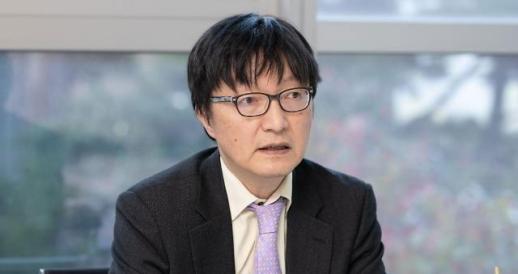 Seasoned economic expert tapped as South Korea's new ambassador to UK SEOUL, April 17 (AJP) - Kim Heung-chong, the former head of a state-run think tank was tapped as South Korea's new ambassador to the U.K., the Ministry of Foreign Affairs said on Friday. Kim, who headed the Korea Institute for International Economic Policy (KIEP) from 2020 to 2023, also served as an adviser in South Korea's negotiations on a free trade agreement with the European Union (EU) and sat on committees under various ministries including the Ministry of Trade, Industry and Energy. The veteran economist is seen as a suitable fit to support President Lee Jae Myung's "pragmatic" diplomacy and economic policies focused on pursuing national interests, given his long career advising the government on trade and economic policy. His appointment also appears to reflect his close involvement with the Lee administration, as he assisted the then presidential candidate of the Democratic Party (DP) during his campaign last year. Kim also co-authored Lee's book on "inclusive innovative growth" with a group of economic experts, published in March last year, just months ahead of a snap election following the ouster of disgraced former President Yoon Suk Yeol over his botched declaration of martial law the previous year. 2026-04-17 11:23:46
 -
 Sewol families still trapped in that day 12 years ago as closure never arrives SEOUL, April 16 (AJP) - The familiar ache — the rage, the self-hate, the gut-wrenching grief, and finally the emptiness — returns every April. It is, for Choi Soon-hwa, the cruelest month. Each night in the days leading up to April 16, she returns to that day, now twelve years ago. “Why did so many people have to die? Why weren’t they saved? Why didn’t anyone tell them to come out, to jump, to escape?” For twelve years, these questions have never left her. In mental health, closure is not a luxury. Without it, the mind circles back — replaying the past in endless variations of what if. The questions remain unanswered, and the past does not settle into memory. It continues to intrude, reshaping the present. For Choi, and for many of the families, closure has remained out of reach. She is the mother of Lee Chang-hyun, a second-year student at Danwon High School in Ansan, one of the 250 students and 14 teachers who never returned from what was meant to be a long-awaited school trip to Jeju Island. The night before, her son left for the trip. For once, there was no struggle to wake him, no need to rush him out the door. She turned off her phone and went to bed, expecting something rare — rest. Then came the call. A pastor asking for her husband. A ferry was sinking. At first, it did not feel real. It was daytime. The waters off Jindo were not distant. The ship was large, visible, close to shore. There were hundreds on board. “I thought they would be saved,” she recalls. Inside the ferry, Chang-hyun tried to call his mother. The call never connected. Only later, through phone forensics, did she learn he had reached out. Instead, a message remained — sent to a friend. “Hey, the ship is sinking right now. If I die, will you come to my funeral?” “If the call had gone through… if anyone had answered… if someone could have comforted those children, even a little, when they must have been so afraid and alone…” Her voice fades. It is a regret that does not disappear with time. It changes shape, but it remains. Chang-hyun was, as she describes him, a boy who loved his friends more than anything. He chose his high school simply to stay with them. He spent his days with classmates, drifting between school, internet cafés, and the familiar rhythms of adolescence. More often than not, she let him be. Then something began to change. A teacher, Lee Hae-bong, entered his life in his second year. Chang-hyun began to think about studying, about his future, about the shape of his life. He wrote it down — his twenties, thirties, forties — a quiet plan stretching forward. His dream was simple - to run a bean sprout soup restaurant, a place like the one he frequented with friends, where meals were inexpensive and portions generous. After he was gone, his mother found that note in his room. The room remained as it was. His belongings stayed in place. Only later, when she returned home after the funeral, did the silence settle in. The absence became real. A never-ending replay For hours after the ferry began to sink, part of it remained visible above the water — a tilted silhouette. There were rumors of air pockets. Reports suggested that survivors might still be inside. Hope lingered, even as time passed.Then the ship slipped beneath the surface. Chang-hyun’s body was found the next night, about 100 meters from the ferry. There were no proper procedures. Bodies were placed in black bags and delivered without ceremony. The funeral passed in a blur. People came from across the country. The scale of the tragedy overwhelmed the intimacy of grief. The question that took root that day has never left her. Why was nothing done? Why were they not told to escape? Why were they not saved? Twelve years have passed. Investigations have come and gone. Committees have issued findings that satisfied no one. Accountability remains contested. For the families, the sense that the truth has not been fully uncovered persists. Families fractured under the weight of grief. Siblings, often overlooked, carried their own burdens. Many withdrew from public attention, wary of scrutiny and hostility. “After 2014, my children didn’t want us to speak publicly,” Choi says. “There was too much criticism directed at Sewol families.” Her children are still in therapy. “For siblings and surviving students, trauma can deepen over time,” she says. “And the parents — we’ve spent twelve years out on the streets, fighting. We haven’t taken care of our own bodies.” Support systems exist, but they remain limited — bound by timelines that do not reflect the enduring nature of loss. Under current law, medical support is set to expire in April 2029. Choi points to the United States, where victims of the September 11 attacks have been tracked through long-term studies for decades. She is also calling for the passage of a comprehensive life safety law — one that would establish a permanent support system and train professional responders. At present, support depends on individual special laws. After several years, assistance fades. And then, another disaster follows. Jecheon. Itaewon. Osong. Hwaseong. Muan. After Itaewon, she says, the realization was devastating. “It was exactly the same. Nothing had changed.” Memory, too, has become uncertain ground. Temporary memorials have been moved. Permanent spaces remain incomplete. Even remembrance has, at times, felt provisional. And yet, some continue. Some write poems for each child’s birthday. Some return to classrooms where desks remain as they were. The Sewol tragedy did not end that day. For the families, it continues — in unanswered questions, in unresolved responsibility, in the absence of closure. Closure is not about forgetting. It is not about moving on. It is about being able to hold the past in a form that can be endured. What the families want is not something large: answers to their questions, a process of understanding, a way to live with what happened. So that one day, they might remember their children without being pulled back into that day. So that grief, finally, can come to rest. 2026-04-16 17:59:06
 -
 S. Korea claims North Korean economy on recovery SEOUL, April 15 (AJP) - South Korea’s Unification Ministry said Wednesday that North Korea’s economy is entering a gradual recovery phase in line with closer ties and trade activities with Russia and China. The ministry cited deepening “alliance-level” ties between Pyongyang and Moscow — including cooperation in advanced weapons and technology — alongside increased exchange with China, as key drivers supporting the country’s economic stabilization. The assessment was included in a report submitted to the National Assembly’s Foreign Affairs and Unification Committee as part of a new 2026–2030 inter-Korean relations plan that signals a shift in Seoul’s policy and departure from the former and impeached president President Yoon Suk Yeol. The new pivot under the Lee Jae Myung administration focused on peaceful coexistence, economic cooperation, and a denuclearized Korean Peninsula, while rejecting absorption-based unification and hostile actions. The report delivers a pointed critique of Yoon’s North Korea policy, which offered large-scale economic aid in exchange for denuclearization, as impractical for requiring Pyongyang to act first. The Unification Ministry said past hardline policy increased security instability, weakened the foundation for inter-Korean cooperation, and entrenched confrontational dynamics. It added that detailed annual implementation plans will be developed under the new framework. 2026-04-15 17:56:05
 -
 Seoul-born, 1955: two women set to anchor U.S.-Korea diplomacy SEOUL, April 14 (AJP) - Two women born in the same year, in the same city — Seoul in 1955 — are poised to represent Washington and Seoul in each other’s capitals, an unlikely symmetry that underscores the increasingly transnational nature of modern diplomacy. The White House on Monday (local time) nominated Michelle Steel, a former California congresswoman, as ambassador to South Korea, formally requesting Senate confirmation. If confirmed, Steel would return to her birthplace as Washington’s top envoy. Her counterpart, Kang Kyung-wha, has been serving as South Korea’s ambassador to the United States since December. Kang is President Lee Jae Myung’s first envoy to Washington, while Steel is Donald Trump’s first pick for Seoul in his second term after leaving the post vacant for more than a year. The overlap is more than anecdotal. Both women were born into a Korea emerging from the devastation of the 1950–53 war. Decades later, they return to the same alliance — now as its diplomatic stewards — armed with careers built across borders rather than within the confines of traditional state bureaucracies. Neither followed the conventional path of elite foreign service grooming. Steel, a Korean American politician whose Korean name is Park Eun-joo, emigrated to the United States in her 20s and climbed through local and state politics in California before serving two terms in Congress from 2021 to 2025. Kang began in English-language broadcasting in Seoul before moving into international organizations and later the foreign ministry, rising to become South Korea’s first female chief in 2017. Their appointments also mark a milestone for gender representation. Kang broke ground as South Korea’s first female foreign minister and later its first female ambassador to Washington. Steel, pending confirmation, would become the second Korean American to serve as U.S. ambassador to South Korea, following Sung Kim. Both embody transnational identities — but in different ways. Steel’s trajectory reflects the Korean diaspora experience. Having spent her youth in Korea and Japan, she built her political base within immigrant and Asian American communities in the United States. The 1992 Los Angeles riots served as a turning point, shaping her political awakening and eventual entry into public service. Kang’s path, while rooted in South Korea, is no less global. She spent decades within the United Nations system, including as deputy high commissioner for human rights, operating at the intersection of global governance, diplomacy and humanitarian affairs. Both bring bicultural fluency — linguistic, cultural and political — to the alliance. Steel speaks Korean, English and Japanese, while Kang is widely recognized for her command of English and her experience navigating multilateral diplomacy. That is where the symmetry ends. Steel is a political appointee shaped by partisan U.S. politics. A Republican aligned with former President Trump, she has taken conservative positions on security, trade and China, advocating a tougher stance on North Korea and human rights. Her nomination reflects not only her heritage and language skills, but also her political network and access to Trump’s inner circle. Kang, by contrast, represents a hybrid model — a career diplomat with political experience at the highest level. As foreign minister from 2017 to 2021 under President Moon Jae-in, she was at the center of a volatile period of summit diplomacy involving North Korea and the United States. Her approach has been defined less by ideology than by multilateral engagement, particularly in human rights and international cooperation. The contrast is not merely biographical. It could shape how each side approaches core issues — from North Korea policy to alliance burden-sharing and the broader Indo-Pacific strategy. Steel’s nomination also comes at a delicate moment. The U.S. ambassadorial post in Seoul has remained vacant for more than a year following the departure of Philip Goldberg, raising concerns about gaps in alliance coordination at a time of mounting geopolitical strain. Acting envoys have cycled through the role as tensions surrounding North Korea’s nuclear program and regional security architecture continue to intensify. Steel’s confirmation, once secured, is expected to restore a measure of stability to diplomatic channels and reinforce coordination with Seoul. South Korea’s presidential office struck a cautious but positive tone, expressing expectations that Steel would help strengthen bilateral ties and deepen people-to-people exchanges. Steel must pass a Senate confirmation hearing and secure approval — a procedure that typically takes several months — before formally assuming her post. 2026-04-14 17:38:42
 -
 Moral stance, strategic risk: Lee's remarks test Korea's diplomatic balance SEOUL, April 13 (AJP) - South Korea’s entry into the widening global debate over the Middle East conflict has exposed the delicate balance between values-based diplomacy and strategic restraint, after President Lee Jae Myung’s remarks on civilian casualties triggered an unusually sharp backlash from Israel. Over 1,700 civilians, including 254 children, were reported killed in Iran before the ceasefire, while more than 600 were killed in Israeli air raids in Lebanon, according to local authorities and media reports. Lee’s decision to join international condemnation of civilian casualties — framed in universal human rights terms — appeared to have strained ties with Israel, a country with which South Korea has maintained historically close relations. The episode comes at a time of intensifying global scrutiny over Israel’s military campaign and rising instability across the Middle East, complicating the diplomatic calculus for middle powers like South Korea. Israel’s role in the evolving regional dynamics has added further complexity. While a ceasefire between the United States and Iran was reached over the weekend, Israel was not directly involved in the negotiations. Prime Minister Benjamin Netanyahu made no reference to the agreement in a public address, even as he faces growing domestic criticism over his handling of the situation. Despite the ceasefire, Israeli forces have continued military operations in southern Lebanon, according to Lebanese state media, drawing accusations from Iran that Israel is undermining de-escalation efforts. The developments have prompted diplomatic pressure from Washington, with U.S. officials urging Israel to exercise restraint. In a sign of cautious engagement, Israeli and Lebanese ambassadors to the United States are expected to hold rare direct talks in Washington. The human toll of the broader conflict has continued to mount. In Lebanon, more than 2,000 people have been killed in recent fighting between Israel and Hezbollah, while casualties have also been reported in Gulf states and Israel itself. The United States has confirmed the deaths of 13 service members in the course of the conflict. European leaders have stepped up criticism of Israel’s military actions as the conflict has widened. Spanish Prime Minister Pedro Sánchez has been among the most outspoken, describing the situation in Gaza as a “catastrophic situation of genocide” and urging the European Union to suspend its cooperation agreement with Israel. He also warned against what he called reckless escalation, saying global leaders must not be “playing Russian roulette with the destiny of millions.” Other European leaders have echoed similar concerns, warning that a major ground offensive could have devastating humanitarian consequences and urging immediate de-escalation and renewed diplomatic engagement. Discussions within the European Union have also expanded to potential reviews of arms exports and trade relations, signaling a gradual shift from previously unified political support. Tensions have further intensified following the escalation between Israel and Iran earlier this year. Coordinated U.S. and Israeli strikes on Iranian nuclear and military facilities prompted retaliatory missile and drone attacks by Iran, raising fears of a broader regional war. Although a tentative ceasefire between Washington and Tehran was reached in April, clashes involving Israel and Iran-backed groups, including Hezbollah, have continued, underscoring the fragility of the situation. Against this backdrop, Lee posted a message on X (formerly Twitter) on Friday, writing: “National sovereignty and universal human rights must be respected, and wars of aggression must be denied — this is both the spirit of our Constitution and international common sense.” “Just as my life and property are precious, so are those of others. Respect is reciprocated,” he added. While Lee did not explicitly reference a specific incident, his remarks were widely interpreted as a response to controversy surrounding a video he had shared earlier, which allegedly showed Israeli Defense Forces mishandling bodies in a war context. The video, later clarified to have been filmed in September 2024, triggered accusations of misinformation and a diplomatic backlash from Israel. What might have remained a minor misstep quickly escalated into a broader diplomatic dispute, touching on domestic political divisions, diplomatic protocol, and questions about South Korea’s role on the global stage. A diplomatic breach — or a new normal? Israel’s Foreign Ministry responded unusually sharply, publicly condemning Lee’s remarks and accusing him of trivializing the Holocaust — a move that broke with conventional diplomatic practice, where such disputes are typically handled through private channels. South Korean lawmakers from the ruling Democratic Party of Korea pushed back. Rep. Hong Ki-won, a former diplomat, said dissatisfaction with a foreign leader should be conveyed privately, adding that public condemnation by a foreign ministry was “highly inappropriate.” Rep. Kim Young-bae also defended Lee, saying his remarks were not directed at any specific country but reflected universal principles of human rights embedded in international law. He criticized Israel for escalating the issue through a formal statement. Opposition lawmakers offered a starkly different view. Members of the conservative People Power Party accused Lee of undermining national interests through “impulsive remarks” that complicate diplomacy. “Even after facts emerged, the president escalated tensions rather than resolving them,” said Foreign Affairs Committee Chair Kim Seok-ki. The risks of moral diplomacy For some observers, Lee’s comments reflect an attempt to position South Korea as a principled middle power willing to speak out on global issues. Cho Kuk, leader of the Rebuilding Korea Party, defended the president’s stance as both morally justified and strategically meaningful. “It is valid from the perspective of international human rights law and meaningful in terms of national interest within cold geopolitical realities,” he said. Yet critics argue such moral positioning carries strategic costs. Yossi Shain, an Israeli politician and former member of the Knesset, framed the issue in security terms, noting parallels between Israel’s threats from Hezbollah and Iran and South Korea’s confrontation with North Korea. “Telling Israel not to defend itself is like telling Korea not to defend itself against North Korea,” he said. Another layer of the controversy highlights the role of misinformation in shaping political discourse. Paul Franks, a professor at Yale University, criticized the president’s reliance on what he described as misleading online content. “This exemplifies the trend of public figures failing to do their homework and being taken in by internet misinformation,” he said. “If they are fooled, what chance does the ordinary person have?” Franks also took issue with Lee’s invocation of the Holocaust, stressing that it was not merely a war crime but “the industrialization of genocide.” Edieal Pinker, another Yale professor, suggested political incentives may also be at play. “There is no short-term cost to governments from criticizing Israel,” he said, noting that such positions can be politically expedient despite potential long-term diplomatic consequences. Beyond the immediate fallout, the episode reflects broader global trends of polarization and fragmentation. Elad Segev, a communication scholar at Tel Aviv University, pointed to the destabilizing effects of rapid technological, social and political change, arguing that such conditions create fertile ground for polarization and misinformation, amplified by social media. For South Korea, the controversy raises fundamental questions about its role on the global stage: whether to remain a cautious actor focused on regional stability and alliance management, or to adopt a more vocal stance on global values despite the risk of diplomatic friction. Even European powers are grappling with similar dilemmas, balancing human rights concerns with strategic and security interests. The Embassy of the Islamic Republic of Iran in Seoul said human rights violations by Israel, particularly against Palestinians, have become “systematic and ongoing,” calling for an immediate end to such practices and greater international accountability. The Israeli Embassy in Seoul said it had no specific comment regarding Lee’s remarks. 2026-04-13 18:04:31
 -
 A Korean love story, made in Nigeria: The new face of Korea–Africa relations SEOUL, April 10 (AJP) - A poor but spirited girl, who by chance ends up attending a private high school for elite students, falls in love with a wealthy fellow student. It sounds like the plot of a Korean drama, but this is in fact the storyline of the Nigerian film My Sunshine – Korean Naija. Directed by Nigerian rapper and television producer JJC Skillz, it was written by actress Kemi Ikuseedun who also plays the protagonist Charis. The setting is the Korean-language school that Charis attends. On her first day, the principal praises Korean as "the best language in the world." Korean phrases such as ajik hangug-eo jalhaeyo (I’m still good at Korean) and jinjja jalsaenggyeosseo, eotteokhae (He is so cute—oh my God) appear continuously throughout the film's 1-hour-15-minute runtime. The film drew 609,000 views within nine days of its release on YouTube in late 2024 and has since surpassed 1.4 million views as of Friday. Such interest would have been difficult to imagine even a decade ago. The numbers point to South Korea's presence in Africa as no longer defined solely by trade or diplomacy, but increasingly by culture. "K-content should be seen not merely as a cultural phenomenon, but also as a form of soft infrastructure that lowers barriers to market entry," said Choi Doo-young, a professor at the Graduate School of International and Area Studies at Hankuk University of Foreign Studies. The Cultural Entry Point The rise of My Sunshine – Korean Naija illustrates how Korean narratives have become locally adaptable. In Nigeria, one of the world's largest film industries, Korean storytelling conventions have been absorbed, reinterpreted, and re-exported in a distinctly African context. This is not simply imitation. It reflects a deeper cultural alignment. Across parts of Africa, K-pop and K-dramas have built a following among younger audiences, creating familiarity with Korean language, aesthetics, and social norms. That familiarity carries economic implications. Cultural affinity often translates into consumer behavior: demand for Korean cosmetics, electronics, food, and digital services. In this sense, culture is not an accessory to economic engagement—it is a precursor. Kim Sung-soo, director of the Institute for Euro-African Studies (IEAS) at Hanyang University, argues that Korea's cultural reach gives it a unique advantage over competitors. "In Africa, people see Korea as a country that was once colonized and poor but has achieved remarkable success. That creates emotional resonance," Kim said. A Different Model from China For years, Africa's external partnerships have been dominated by China, whose influence is visible in large-scale infrastructure projects across the continent. But that model has increasingly come under scrutiny. "Most Chinese assistance is effectively tied aid," Kim said. "It often comes in the form of loans, with Chinese companies, materials, and labor brought in. As a result, local markets do not develop." The critique is not that infrastructure is unnecessary. The concern is that such projects can leave behind debt without fostering sustainable local industries. Korea's approach, by contrast, is emerging as more integrated and potentially more sustainable. Rather than focusing narrowly on construction, Korean engagement increasingly combines industrial development, technology transfer, and human capital formation. "Korea's economic engagement with Africa is now evolving beyond the simple securing of raw materials," Choi said. "It is increasingly taking the form of a more integrated model that brings together industry, technology, and institutions." Digital Leapfrogging One of the clearest areas of alignment between Korea and Africa is digital transformation. Unlike industrialized economies, many African countries are not constrained by legacy systems. This allows them to leapfrog directly into digital governance, mobile finance, and platform-based economies. "Africa is actively pursuing digital innovation," Kim noted. "In this area, Korean technology remains more advanced than China's." Korea's experience in building e-government systems, customs platforms, and digital infrastructure makes it a natural partner. These systems not only improve administrative efficiency but also create the institutional foundation for private-sector growth. Companies like Samsung and LG are already participating in the development of smart cities and digital communities across the continent, embedding Korean technology into everyday life. Green Growth and Shared Challenges Climate change represents another area of convergence. Africa contributes less than 4 percent of global carbon emissions but bears a disproportionate share of the consequences, from droughts to floods and displacement. This has pushed many governments toward green growth strategies, emphasizing renewable energy, sustainable agriculture, and climate resilience. Korea, with its strong base in green technology and renewable energy firms, is well positioned to contribute. According to Kim, the country has more than 80,000 companies in environmentally related sectors. Initiatives such as the K-Ricebelt Project, introducing improved rice varieties and smart farming techniques, demonstrate how this cooperation can address both food security and environmental sustainability. From Resources to Value Chains As global supply chains shift, Africa's importance to Korea is also growing. The continent holds significant reserves of critical minerals such as cobalt, lithium, nickel, and graphite, which are essential for batteries, semiconductors, and renewable energy systems. Securing access to these resources is becoming a strategic priority for Korea. But the Korean model, Choi argues, is not limited to extraction. "The strength lies in building cooperation across the value chain, including refining, processing, and technology transfer," he said. This approach aligns with Africa's own development goals, which increasingly emphasize industrialization and local value addition rather than raw material exports. The Role of Startups Beyond large corporations, startups are emerging as a critical bridge between Korea and Africa. Africa's startup ecosystems, from fintech in Nigeria and Kenya to climate tech across the continent, are expanding rapidly. At the same time, Korean startups face barriers in entering mature markets such as the United States and Europe. "Africa is a land of opportunity for Korean startups," Kim said, pointing to the growing number of startup conventions across the continent. Collaboration in areas such as digital platforms, smart agriculture, and renewable energy could create mutually beneficial ecosystems, linking Korean innovation with African demand. Culture as Strategy The success of My Sunshine – Korean Naija ultimately reveals something fundamental: culture is no longer peripheral to geopolitics. It is central to it. Korea's engagement with Africa is not built on overwhelming financial power. As Kim acknowledged, "We cannot compete with China's capital." Instead, it rests on a different set of assets: cultural familiarity, shared historical experiences, technological capability, and a development model that many African countries find relatable. In a global landscape shaped by competition among major powers, this combination may offer Africa a distinct alternative. "Economic cooperation between Korea and Africa should not be viewed as an extension of aid, but rather as a partnership for joint industrialization," Choi said. And if a Nigerian high school romance conducted partly in Korean can capture the imagination of so many, it suggests that this partnership is already taking root, not in conference rooms, but in culture. 2026-04-10 17:27:56
 -
 Seoul seeks clarity on Hormuz terms as fee risks grow SEOUL, April 09 (AJP) - Seoul is bracing for the inevitability — payments to transit the Strait of Hormuz — expected to push up fuel prices by about 0.5 percent, as it seeks clarity from Tehran while exploring alternative routes to secure Middle East energy supplies. The Ministry of Foreign Affairs said Thursday that a call between Foreign Minister Cho Hyun and Abbas Araghchi is being arranged and could take place as early as later in the day. The talks are expected to focus on the terms for navigating the Strait of Hormuz, where Iran has indicated that traffic during the two-week ceasefire will be overseen by its armed forces. According to foreign reports and data from S&P Global Market Intelligence, only four vessels were allowed to pass through the waterway on Wednesday, sharply down from more than 100 per day before the conflict. Iran is said to be requiring ships to pre-arrange transit terms and settle fees in cryptocurrency or Chinese yuan, though such conditions have not been officially confirmed. Cho is expected to seek clarification on reported requirements, including coordination with Iranian forces and unspecified “technical limitations.” Seoul is also expected to inquire whether potential measures such as transit fees or joint collection mechanisms mentioned by the United States have any concrete basis. Despite a ceasefire between Washington and Tehran, vessels remain stranded in the strategic waterway, including 26 South Korean ships. Officials say clearer conditions are needed before plans can be finalized to ensure safe passage. “We are prioritizing the safety of our vessels and crew while consulting with relevant countries,” a ministry spokesperson said, reiterating Seoul’s position that freedom of navigation must be guaranteed. The uncertainty comes amid broader questions over the U.S.-Iran ceasefire. U.S. President Donald Trump described the truce as a “total and complete victory” and suggested that most elements of a broader agreement had already been settled. However, key details remain unclear, including the handling of Iran’s enriched uranium and the exact terms for reopening the strait. Trump also indicated that China may have played a role in bringing Iran to the negotiating table, highlighting Beijing’s influence as a major buyer of Iranian oil. South Korea’s Ministry of Trade, Industry and Energy estimated that if a transit fee of around $1 per barrel is introduced, global oil prices could rise by about 1 percent. Given that roughly half of domestic fuel prices consist of taxes, this would translate into an estimated 0.5 percent increase in consumer fuel costs. Officials cautioned that multiple variables remain, including whether Iran will impose such fees and how the international community would respond. There have been no confirmed requests for payment, and reports of alternative settlement methods such as cryptocurrency remain unverified. In the meantime, Seoul is exploring alternative supply routes and sources. Presidential Chief of Staff Kang Hoon-sik has arrived in Kazakhstan as part of an energy diplomacy mission and is scheduled to visit Oman and Saudi Arabia. 2026-04-09 17:38:43