
Journalist

Lee Jung-woo, Kim Yeon-jae
cannes2030@ajupress.com, duswogmlwo77@ajupress.com,
-
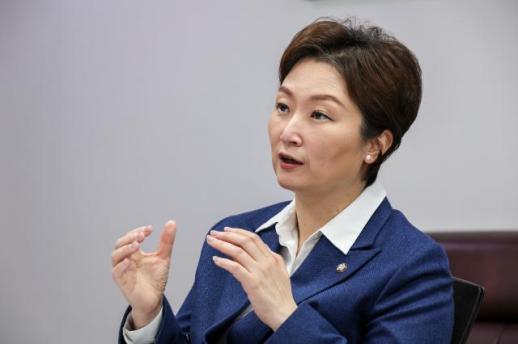 Oil shock a sober reckoning to diversify away from Middle East crude: Rep. Lee Un-ju SEOUL, March 10 (AJP) - The turbulence triggered by the Middle East conflict raises a sober reckoning over South Korea’s energy vulnerabilities and the urgency to correct its energy sourcing structure, which is heavily dependent on imports of Middle Eastern fossil fuels, a three-term ruling party lawmaker said. “The spike in oil prices since the war reminds us how important energy security is and how poor South Korea stands in energy sufficiency,” Rep. Lee Un-ju, a First Member of the Supreme Council of the Democratic Party of Korea, told AJP in a recent interview. The country must raise the share of clean energy through nuclear reactors or renewables and diversify away from heavy imports of fossil fuels, she said. South Korea relies on the Middle East for 70.7 percent of its oil imports and 20.4 percent of its liquefied natural gas supplies, of which roughly 15 percent comes from Qatar — a structure that explains the havoc caused in Korean capital markets when oil prices surged above $100 per barrel on Monday. To “kill two birds with one stone” — reducing reliance on the Middle East while facilitating tariff negotiations with the United States — Korea should more actively consider participating in oil and gas production in the United States and expanding purchases of U.S.-produced energy, Lee said. Unlike the previous liberal government under President Moon Jae-in, which pursued a phase-out of nuclear power, the Lee Jae Myung administration is “thoroughly practical on energy policy,” she said. President Lee understands the crucial role of energy in the transition toward an AI-driven economy, she said, noting that energy reliability ultimately determines the quality and cost of AI services. To ensure competitiveness in AI technologies, the government recognizes the essential role of nuclear reactors, she said. “Renewables alone cannot guarantee power demand in the AI transition. We have the world’s most advanced nuclear reactor technology,” Lee said, highlighting the broad range of industries supported by the country’s reactor ecosystem. Lee said, "I hope that Korea Hydro & Nuclear Power's participation in U.S. nuclear plant construction becomes the first project in our investment in the United States." “Some may see it as a loss for our side,” she said. “But once a reactor starts operating with our help, it will require Korean parts and maintenance for decades, creating enormous revenue and profits for Korean companies.” Lee also pointed to the sharp depreciation of the Korean won, which recently revisited levels last seen in the aftermath of the global financial crisis 17 years ago. The weakness reflects market jitters over oil supply disruptions and potential U.S. tariffs, she said. The government is working closely with domestic refiners to respond to supply instability, and the exchange rate is expected to stabilize once supply concerns ease, she added. Trade concerns with Washington could also be addressed through the passage of a special bill on U.S. investment through a vote on Thursday and a high-level government delegation visit to Washington, Lee said. “All the relevant ministerial-level officials will go,” she said, expressing determination to resolve the tariff issue within the month. Legislators will also support the effort through parliamentary diplomacy. A bipartisan Korea-U.S. Parliamentarians’ League delegation will depart on March 23 for a five-day visit, where members will meet U.S. senators serving on foreign affairs, defense and energy committees, as well as executives from major technology companies. The delegation will include Reps. Lee Un-ju, Cho Kyung-tae and Min Hong-chul. “We must speak on behalf of the government when our national interest comes under challenge,” Lee said. The geopolitical environment has become increasingly tense and unpredictable, she added, describing the current era as one defined by “survival ideology.” “It doesn’t matter whether you are left or right. We are all striving to survive,” she said. The upcoming local elections in June — widely viewed as a midterm test of the administration — will focus on competence rather than negative campaigning, she said. “We won’t resort to negative or black propaganda,” Lee said. “Instead, we will present candidates who will work hard for the people and the country.” About the lawmaker: Rep. Lee Un-ju graduated from Seoul National University with a degree in French Language and Literature. After passing the National Bar Examination in 1997, she worked as a lawyer before becoming an executive director at S-Oil, a South Korean oil refining company, in 2008. She was elected to the National Assembly in Gwangmyeong, Gyeonggi Province, in both the 19th and 20th general elections, and won again in the 22nd general election from the Yongin Jung constituency, becoming a three-term lawmaker. 2026-03-10 10:25:00
 -
 Seoul braces for worst-case scenario as oil shock rattles markets SEOUL, March 09 (AJP) - President Lee Jae Myung on Monday ordered the government to prepare for a “worst-case scenario” as the widening Middle East conflict threatens to deliver a triple shock to South Korea’s economy from high oil prices, dollar, and interest rates. Chairing an emergency cabinet meeting, Lee warned that the trajectory of the crisis remains highly uncertain. “It is difficult to predict how the situation will unfold,” Lee said. “The government must be ready for the worst-case scenario with an extraordinary sense of urgency.” Senior officials from key ministries — including finance, foreign affairs, trade and industry, environment and agriculture — attended the meeting alongside heads of economic agencies such as the Fair Trade Commission and the National Tax Service. Lee instructed authorities to prepare additional market-stabilization measures beyond the existing 100 trillion won ($75 billion) financial safety program, saying the government and the Bank of Korea should be ready to expand interventionist actions if needed. The emergency meeting came after the surge in global oil prices rattled financial markets earlier Monday. The benchmark KOSPI plunged nearly 8 percent, while the Korean won weakened toward levels last seen during the aftermath of the global financial crisis. Government bond yields also jumped about 25 basis points, climbing to their highest levels since September 2022. Lee also warned against profiteering as energy prices rise. “We must strictly crack down on those seeking unfair profits from market turmoil,” he said, adding that the crisis should also serve as a catalyst to “push forward structural reforms to strengthen the resilience of Korea’s capital markets.” With domestic fuel prices approaching 1,900 won per liter, Lee ordered officials to prepare the swift implementation of a price ceiling system for gasoline and diesel. Under the proposed mechanism, the government would cap retail prices and compensate fuel distributors for losses incurred from the policy. He also instructed ministries to work with strategic partner countries to secure alternative supply routes that bypass the Strait of Hormuz, a critical oil chokepoint now facing disruption amid the conflict. Emphasizing the social impact of rising energy costs, Lee vowed to crack down on price collusion, hoarding and speculation by refiners and gas stations. “Violators should face penalties several times greater than the profits they earn from such illegal acts,” he said. “Crisis always carries opportunity,” Lee added. “Everyone is suffering from the same global shock, but how we prepare and respond will determine what comes next.” 2026-03-09 12:19:26
 -
 Seoul tells Koreans to leave seven Middle East countries "immediately" SEOUL, March 09 (AJP) - South Korea has raised its travel alert for parts of the Middle East to Level 3 — “leave immediately” — as the U.S.–Israel war with Iran widens across the Gulf region and threatens key energy infrastructure. The Foreign Ministry said Sunday it upgraded a special travel advisory for Bahrain, the United Arab Emirates, Oman, Qatar, Kuwait, Saudi Arabia and Jordan, urging South Korean citizens to leave areas where the new alert applies. Under the revision, Level 3 warnings now cover the entirety of Bahrain, the UAE, Oman, Qatar and Kuwait, replacing the previous special travel advisory. In Saudi Arabia, the warning applies to the Ras Tanura area, home to major Saudi Aramco refining facilities, as well as a 20-kilometer radius around the Shaybah oil field and Prince Sultan Air Base. In Jordan, the Level 3 alert was adjusted to cover the eastern region along the boundary of Zarqa city. The ministry urged South Koreans planning to travel to the affected areas to cancel or postpone visits, while those already there were advised to leave unless their stay is essential. The warning reflects rapidly escalating regional tensions nine days after U.S. and Israeli airstrikes killed Iran’s Supreme Leader Ali Khamenei and other senior figures, triggering a widening military confrontation across the Middle East. The war’s targets have increasingly expanded beyond military facilities. Israeli strikes hit fuel storage depots near Tehran, sending large fires across the skyline, while Bahrain reported damage to a desalination plant following a drone strike blamed on Iran. Desalination facilities are critical infrastructure for Gulf states, which rely heavily on processed seawater for drinking supplies. Iran has also launched missiles and drones toward Kuwait, Qatar, Saudi Arabia and the United Arab Emirates, though several attacks were intercepted by regional air defenses. Saudi Arabia reported its first civilian deaths, saying a projectile struck a residential area and killed two foreign workers while injuring several others. Traffic through the Strait of Hormuz — the key shipping lane carrying roughly one-fifth of global oil supplies — has effectively halted, with shipping companies avoiding the route amid military threats. Iraq said its crude production has plunged to about 1.3 million barrels per day, less than one-third of its normal output, after Baghdad cut production amid storage constraints following the disruption of tanker traffic. Oil prices have surged sharply, with Brent crude jumping about 27 percent in the first week of the war, marking the fastest weekly gain since the pandemic shock in 2020. State media reported that Mojtaba Khamenei, son of the slain leader, has been selected as the country’s next supreme leader — a move that appears to contradict U.S. President Donald Trump’s public insistence that Washington should have a say in Iran’s postwar leadership. Trump has vowed to continue the military campaign, describing it as going “unbelievably good,” while warning that Iran’s new leadership “is not going to last long” without U.S. approval. The White House has indicated the war could last four to six weeks, while U.S. Defense Secretary Pete Hegseth warned Tehran that attacks on Americans would trigger direct retaliation. The conflict has already expanded beyond Iran. In Lebanon, Israeli airstrikes on Beirut targeted commanders linked to Iran’s Quds Force while fighting resumed with Hezbollah in the south. In Israel, air raid sirens sounded across southern regions after new Iranian missile launches, while the Israeli military reported its first combat deaths since the war began. The conflict has so far killed more than 1,300 people in Iran, nearly 400 in Lebanon and at least 11 in Israel, according to official tallies. U.S. casualties have also risen, with the Pentagon confirming seven American service members killed in attacks on U.S. forces in the region. The widening war has also triggered diplomatic backlash across the Arab world. The Arab League condemned Iran’s strikes on neighboring countries as “reckless,” while the Gulf Cooperation Council warned that attacks on member states threaten regional stability. Iranian President Masoud Pezeshkian apologized for some cross-border attacks but other senior officials signaled the strikes could continue as long as Gulf countries host U.S. military bases. With missiles and drones already striking across the Gulf, Seoul’s decision to raise its travel warning underscores concerns that the conflict — now entering its second week — could spill further across the region. 2026-03-09 08:32:40
 -
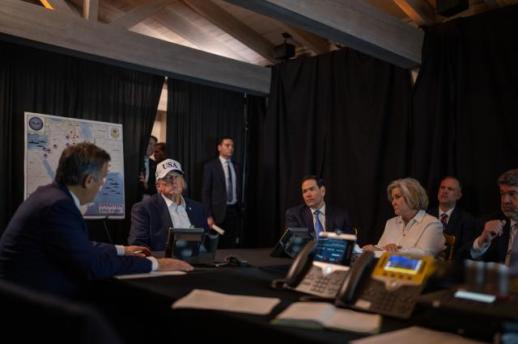 Day 7 Middle East War: Trump's Iran war exposes fractured alliances and global ripples SEOUL, March 06 (AJP) - The U.S.-Israeli strikes on Iran under Operation Epic Fury have done more than cripple Tehran’s leadership and military infrastructure. They have also exposed deep fractures in the Western alliance system and revived questions about the future of the post–World War II international order. The campaign began with the assassination of Iranian Supreme Leader Ayatollah Ali Khamenei on Feb. 28 — a dramatic opening move that President Donald Trump framed as a decisive effort to dismantle Iran’s military and nuclear capabilities. Yet the manner in which the operation unfolded — executed without meaningful consultation with traditional allies — has underscored a striking shift in Washington’s approach to global security: rapid unilateral action first, alliance management later. As Iranian missiles and drones struck Gulf targets, including near Dubai’s airport, the war quickly illustrated the unpredictable consequences of that approach. Italy’s defense minister Guido Crosetto, who happened to be vacationing in Dubai when retaliation hit the United Arab Emirates, later acknowledged that even analysts had not expected Iranian strikes on Gulf commercial hubs. Allies left in the dark Europe’s major powers — long pillars of the transatlantic alliance — were largely excluded from pre-strike deliberations, forcing governments into awkward post-facto positioning. French President Emmanuel Macron publicly acknowledged Paris had been “neither informed nor involved,” a rare and pointed rebuke that echoed across Europe. The European Union eventually convened an emergency security meeting more than two days after the strikes began, highlighting the continent’s discomfort with a war initiated outside its consultation structures. Even Britain, traditionally Washington’s closest military partner, found itself politically divided. Prime Minister Keir Starmer had earlier denied U.S. access to the British-controlled Diego Garcia base in the Indian Ocean. His subsequent cautious endorsement of the strikes drew criticism from both Labour’s anti-war wing and Conservative hawks demanding stronger support for Washington. The diplomatic confusion extended across the Middle East as well. Gulf states condemned violations of their airspace while simultaneously bracing for Iranian retaliation across the region. Saudi Arabia, the United Arab Emirates and other Gulf monarchies have since faced waves of drone and missile attacks on civilian and energy infrastructure. Russia, meanwhile, has limited its response largely to rhetoric. Foreign Minister Sergei Lavrov condemned the strikes as aggression following talks with Iranian officials, but Moscow has offered little tangible assistance. The muted response reflects Russia’s weakened position after years of geopolitical setbacks, including heavy losses in Ukraine and the collapse of allied governments in parts of the Middle East. No coalition for ground war Security experts say the structure of the operation itself suggests Washington is not seeking a multinational ground campaign similar to those in Iraq or Afghanistan. Andrew Gordon of Harvard University said Trump’s decision to launch the war without building an international coalition will likely deter allied participation in any potential invasion. “No one expects multiple countries to join a U.S. intervention sending troops into Iran,” he said. Instead, analysts say the operation appears designed as an air- and cyber-heavy campaign aimed at weakening the Iranian state without occupying the country. Chiara Redaelli of the University of Geneva described the strategy as a shift toward coercive regime pressure conducted largely from the air. “The operation signals a move from limited strikes toward sustained military pressure without the political burden of occupation,” she said. Several analysts also expect the conflict to remain relatively short. Muhamed H. Almaliky of Harvard argues Iran’s missile and drone stockpiles could be depleted within several weeks if the country receives no outside assistance. He added regarding Iran: "Iran does not have partners or allies of the type willing to endure the risk and consequences of joining it. Apart from the proxies in Lebanon, Iraq and Yemen who are not expected to have a substantial impact on the course of the war." European participation is likely to remain limited to defensive naval deployments protecting shipping lanes, according to historian Jeremy Friedman of Harvard. A short war — but lasting disruption Even if the fighting ends quickly, analysts warn the geopolitical and economic disruptions could persist far longer. Christian Bueger of the University of Copenhagen notes that insurance premiums, shipping routes and global energy markets often remain unstable well after military operations subside. “The conflict itself may last weeks, but disruptions to trade and maritime security can last much longer,” he said. Bueger added, "U.S. leadership continues to be unpredictable. For Korea, stable regional and international partnerships become ever more important. That includes the relationship to Japan, but also ASEAN and the EU." Kenneth Rogoff, the Harvard economist, adds that the war’s strategic lessons will be closely watched by other states. He said regarding the possibility of other countries joining the war: "the US will almost certainly get some other countries to join in, though probably it will require exerting considerable leverage to do so." North Korea, already armed with nuclear weapons, may draw the conclusion that nuclear deterrence remains the ultimate protection against external intervention. Strains on the rules-based order Operation Epic Fury also raises broader questions about the future of the international system built around U.S. alliances and multilateral institutions. Jeffrey Frankel of Harvard Kennedy School said the unilateral nature of the intervention represents another blow to the post-war global framework Washington helped build. “It’s another blow to the 80-year structure of alliances and multilateral rules that the United States itself created,” he said. Redaelli similarly warned that the growing gap between Western rhetoric about a “rules-based order” and the willingness to use unilateral force risks weakening the credibility of international law. For South Korea, the war’s most immediate impact is economic rather than military. The country relies heavily on Middle Eastern energy supplies, with much of its oil passing through the Strait of Hormuz, a strategic chokepoint now under heightened risk. South Korean lawmakers have warned that even a short disruption could ripple through domestic industries ranging from petrochemicals and shipping to aviation and semiconductors. “If the Strait of Hormuz issue is not resolved promptly, Korea will inevitably be affected across all industries,” said Democratic Party lawmaker Maeng Seong-gyu, chairman of the National Assembly’s transport committee. Others see a deeper shift in the global security environment. People Power Party lawmaker Kim Ki-woong, a former vice minister of unification, argued the conflict reflects a broader transformation in international politics. “The era of norms, order and morality has ended,” he said. “We have entered an era where power is openly displayed.” As Operation Epic Fury enters its second week, its military trajectory remains uncertain. But the geopolitical implications are already clear. Trump’s strategy of decisive, alliance-light military action may weaken adversaries quickly. Yet it also risks reshaping alliances, challenging global norms and deepening geopolitical fault lines far beyond the Middle East. For countries like South Korea — deeply tied to global energy flows and U.S. security guarantees — the conflict is a stark reminder that wars fought thousands of miles away can still reshape the strategic landscape at home. 2026-03-06 17:03:18
 -
 AI meets Realpolitik: How the U.S.–Anthropic rift turned a drone strike into a tech crisis SEOUL, March 05 (AJP) - In the latest contradiction from Washington, President Donald Trump last Friday ordered federal agencies to “immediately” stop using what he called the “radical-left” artificial intelligence systems developed by Anthropic, while the U.S. defense secretary labeled the company a risk to “national security.” Only hours later, the president authorized Operation Epic Fury. Within days, the very system Washington had just denounced proved instrumental in the operation — and in Operation Roaring Lion, the parallel Israeli campaign. The same AI platform that helped track and capture the Venezuelan president in February was again deployed to process intelligence and coordinate battlefield decisions. The paradox reveals how deeply generative AI has become embedded in modern warfare — and how dependent even the world’s most powerful military has grown on privately developed algorithms. The U.S. Central Command (CENTCOM), which oversees military operations across the Middle East, relied extensively on Anthropic’s Claude AI to process vast volumes of imaging and signal intelligence, identify potential targets, and simulate strike scenarios. The tool remained in active use even after Trump publicly ordered a government-wide phaseout of Anthropic software. The administration cited the company’s refusal to allow its models to be deployed in “all lawful scenarios,” including intelligence operations that could involve U.S. citizens or autonomous weapons. The Iran strike therefore ignited not only a new debate over AI ethics and civilian oversight but also an unexpected reshuffling of the global AI market. A clash of ethics and wartime pragmatism At the heart of the dispute lies a philosophical and contractual standoff between Anthropic — one of the United States’ leading AI research firms — and the Trump administration. Founded by former OpenAI engineers with a reputation for cautious, human-centered design, Anthropic has placed explicit limits on how its systems may be used. Its internal policies prohibit deployment in large-scale domestic surveillance, autonomous weapons, or operations lacking human oversight. Those guardrails collided directly with the Pentagon’s wartime requirements. In late January, defense officials argued that generative AI operating within classified networks must be unrestricted — usable for “all lawful purposes.” Anthropic’s refusal effectively froze the renewal of its defense contract. The White House responded by designating the company a “supply chain risk entity” and began shifting intelligence infrastructure toward competing models developed by OpenAI and Elon Musk’s xAI. Yet disentangling Claude from U.S. military systems is far from simple. For more than a year, the model had been integrated across critical elements of CENTCOM’s operational environment, from communications filtering to satellite imagery analysis. Its ability to transform raw surveillance data into actionable intelligence made it indispensable to analysts and commanders. Defense experts say replacing the system will take months — an eternity in conflicts defined by real-time decision-making and algorithmic speed. The battlefield paradox The February strike against Iran illustrated the contradiction with unusual clarity. Even as Trump publicly branded Anthropic a national security threat, CENTCOM units continued using Claude-enabled analytics to coordinate drone and mortar operations, identify high-value targets, and estimate potential civilian casualties before strikes. According to intelligence officials, no commercially available AI currently matches the system’s ability to adapt rapidly to dynamic battlefield data without creating internal network vulnerabilities. The episode exposes a deeper strategic dilemma. As militaries integrate generative AI into operational planning, the line between ethical constraint and strategic disadvantage becomes increasingly blurred. Anthropic’s position — that democratic societies should restrict AI use in surveillance and autonomous warfare — resonates with digital rights advocates. For defense planners, however, such restrictions risk slowing decision cycles in conflicts where milliseconds matter. The result is a distinctly twenty-first century paradox: moral restraint may now carry logistical costs. Silicon Valley solidarity The political fallout spread quickly through Silicon Valley. In the days following the Iran strikes, traffic to Anthropic’s Claude platform surged to record levels, briefly causing service outages, according to Bloomberg. The spike reflected growing demand among developers and businesses seeking what many describe as “ethically aligned AI.” OpenAI, whose models underpin several major U.S. government systems, found itself in the opposite position. Recent defense contracts — combined with reports that company executives donated to a pro-Trump political action committee — sparked a social media backlash dubbed the “QuitGPT” movement, as critics warned that AI leadership was becoming politically entangled. Meanwhile, Google’s Gemini platform seized the moment to close the competitive gap. Internal teams reportedly accelerated security certification processes for defense-related deployments, hoping to capture government contracts displaced by the Trump–Anthropic dispute. Industry analysts now describe an emerging “tripolar” race for AI dominance, where corporate ethics, geopolitical alignment, and national security priorities are increasingly intertwined. The confrontation also triggered an unusual display of solidarity across Silicon Valley. Hundreds of employees from Google, Anthropic, and even OpenAI signed an open letter titled “We Will Not Be Divided.” The statement condemned the Trump administration’s designation of Anthropic as a security risk and warned against “state interference in scientific research ecosystems.” Academics and civil society leaders echoed the concern, arguing that the dispute reflects a broader struggle over political control of technological innovation. The rhetoric recalled earlier moments in American tech history — the encryption wars of the 1990s, the Snowden revelations, and the pandemic-era battles over online speech. But the stakes are now significantly higher. Never before has a militarized AI system become a central geopolitical controversy while an active conflict was unfolding. Global ripple effects The repercussions are already spreading beyond the United States. European policymakers, wary of unregulated military AI, have cited the dispute as evidence supporting stricter oversight under the forthcoming EU AI Act. In Israel — a key participant in the Iran operation — defense officials have privately expressed concern about the reliability of U.S. technology partnerships. Chinese state media, meanwhile, portrayed the episode as proof of what it called “chaotic dependence” within American digital infrastructure. Financial markets have reflected the uncertainty. Venture capital has begun flowing toward smaller “responsible AI” startups in Canada and the United Kingdom, as investors bet that ethical compliance could become a competitive advantage. At the same time, U.S. defense technology firms such as Palantir and Anduril rallied on expectations that the Pentagon will accelerate investment in AI-driven battlefield systems. The end of the civilian–military divide The deeper shift, analysts say, is structural. Military strategy, software governance, and domestic politics are rapidly converging into a single ecosystem. AI systems that once belonged in academic laboratories now sit at the center of global power projection. Every algorithm carries geopolitical consequences. The Trump administration’s confrontation with Anthropic has forced the technology sector to confront a fundamental question: whether “civilian AI” can still exist separately from military applications. For decades, defense-funded research produced technologies that later became civilian infrastructure — the internet, GPS, and the neural networks underpinning today’s AI models. Generative AI, however, is different. Its adaptability and general-purpose nature make strict boundaries almost impossible to enforce. For companies like Anthropic, ethical safeguards are core to their identity. For governments operating in crisis, those limits increasingly appear impractical. The Iran operation exposed that divide in stark terms: a president eager to project power, a company defending its principles, and a military choosing performance over politics. That tension may define the next stage of the AI revolution. 2026-03-05 08:35:13
 -
 Middle East crisis: Korea pulled into war axis with 70% oil exposure SEOUL, March 03 (AJP) - South Korea sources roughly 70 percent of its crude oil from the Middle East — and about 95 percent of that volume passes through the narrow Strait of Hormuz off Iran’s coast. Tankers bound for Korea and other Asian destinations must transit the strategic waterway, navigating under the shadow of Iran’s Islamic Revolutionary Guard Corps (IRGC), which has threatened to “set fire” to vessels and “not let a single drop of oil leave the region.” The warning sent immediate tremors through Seoul’s financial markets, contributing to a 6.6 percent plunge in the benchmark KOSPI on Tuesday. According to the Korea Petroleum Association, 69.1 percent of the 1.028 billion barrels of crude oil South Korea imported last year came from the Middle East. Separately, 20.4 percent of liquefied natural gas imports were sourced from the region. The Strait of Hormuz is one of the world’s most critical energy chokepoints. About 15 million barrels per day — roughly 27 percent of global seaborne crude oil trade — transit the strait. The world’s largest tankers shuttle oil and gas from the Middle East to Asia through the 21-mile-wide, 100-mile-long passage, bordered by Iran to the north and Oman and the United Arab Emirates to the south. Given that 65.65 percent of South Korea’s imported crude passed through Hormuz last year, a prolonged disruption would severely complicate the country’s energy procurement. Seoul is preparing contingency measures should the oil shock intensify. First Vice Minister of Economy and Finance Lee Hyoung-il said Tuesday that if “any signs of abnormality” emerge from the U.S.–Iran conflict, authorities would swiftly deploy the government’s 100 trillion won-plus market stabilization program in coordination with relevant agencies. The government has held daily emergency meetings since the Feb. 28 strikes. Officials stress that South Korea currently faces no immediate supply disruption, although traffic through the strait has slowed to a crawl since hostilities flared up over the weekend. The last Korean-flagged vessel to transit the passage was an HMM container ship that exited the Strait of Hormuz safely on Sunday without incident. Authorities say strategic reserves provide a significant buffer. The International Energy Agency (IEA) recommends member states maintain emergency oil stocks equivalent to at least 90 days of net imports. South Korea’s government-held crude reserves stand at about 100 million barrels — enough for 117 days of consumption. Including private-sector inventories, officials estimate the country has secured more than 200 days’ worth of supply. Still, Lee said Seoul is exploring alternative sourcing outside the Middle East should the conflict drag on. Jane Boulden, professor at the Royal Military College of Canada, said the immediate impact on countries such as South Korea would likely be economic. “The first effect would be sustained increases in oil prices and disruptions to global supply chains if shipping restrictions persist,” she said. Christian Lequesne, professor at Sciences Po, predicted short-term oil price spikes but noted that if Iran were to attack multiple Gulf states, stronger regional coordination could help contain price pressures. “It would take time for the United States to reopen the Strait of Hormuz if Iran actively obstructs it,” Lequesne said, adding that such an operation would be difficult but “not impossible for the U.S. Navy.” The New York Times reported Monday that South Korea and Japan are among the Asian economies most vulnerable to a Hormuz blockade due to their heavy reliance on Middle Eastern energy and limited domestic production. Japan imports about 90 percent of its crude oil from the Middle East and has stockpiled reserves equivalent to 254 days of supply as of the end of last year. Japan’s three major shipping companies — Mitsui O.S.K. Lines, Nippon Yusen and Kawasaki Kisen — have suspended navigation through the Strait of Hormuz, ordering vessels to remain in safer waters, according to the Nikkei newspaper. Like South Korea, Japan sources crude oil and LNG from the Middle East via Hormuz, underscoring the broader Asian exposure to any sustained blockade. South Korea’s National Intelligence Service (NIS) announced Wednesday that it has formed a “Middle East Situation Response Task Force” and is holding daily emergency review meetings chaired by its director. Established on Feb. 28, the task force is monitoring supply-chain risks and providing real-time intelligence to relevant agencies. The NIS is conducting on-site inspections across the energy, logistics, defense and shipbuilding sectors in preparation for a potential Hormuz disruption. The agency also warned that terrorist groups could exploit regional instability to stage attacks and said it is intensifying domestic and international terrorism risk assessments and preventive measures. For now, South Korea remains shielded by its reserves and stable tanker operations. But with roughly two-thirds of its crude flowing through a single narrow corridor flanked by Iranian waters, the country remains tightly tethered to the trajectory of a widening Gulf conflict. 2026-03-03 16:43:28
 -
 Asian Culture Calendar SEOUL, February 27 (AJP) - Dec. 5 - Mar. 15 Garden of Morning Calm Winter Lights Festival 2026 Mar. 15 Seoul Marathon 2026 Mar. 14 - 16 Jeju Fire Festival Mar. 29 - Apr. 6 Jinhae Gunhangje Festival Japan Mar. 1 Konomiya Naked Festival Mar. 6 Umekoji Handicrafts Market Feb.1 - May 24 Kyoto Nippon Festival 2026 Mar. 9 - 22 Grand Sumo Tournament 2026 Hong Kong Mar. 21 Complex Live! Mar. 27 - 29 Art Basel Hong Kong Feb. 27 - Mar. 30 The 54th Hong Kong Arts Festival Mar. 25 - 29 Art Central 2026 Singapore Mar. 21 Hari Raya Puasa 2026-02-27 16:11:37
 -
 Coupang keeps up sales, but Q4 data shock exposes cash and trust risks SEOUL, February 27 (AJP) - Coupang Inc.’s fourth-quarter numbers told a stark story: revenue rose 11 percent year-on-year to $8.84 billion, yet operating income collapsed 97 percent to just $8 million, and net income swung from a $156 million profit a year earlier to a $26 million loss. The sharp deterioration, driven largely by a massive data breach disclosed in November, undercut profitability, disrupted cash conversion and triggered regulatory scrutiny on both sides of the Pacific — even as the company posted record annual revenue for 2025. According to its filing with the U.S. Securities and Exchange Commission, the South Korean e-commerce giant, headquartered in the United States, generated $34.53 billion in net revenue in 2025, up 14 percent year-on-year and 18 percent on a constant-currency basis. Net income attributable to shareholders reached $208 million, while adjusted EBITDA increased to $1.49 billion from $1.38 billion a year earlier. Gross profit climbed 15 percent to $10.14 billion, with margin improving modestly to 29.4 percent. On the surface, scale and operating leverage appear intact. But free cash flow tells a different story. Free cash flow fell to $527 million in 2025 from $1.02 billion in 2024 — a 48 percent decline, representing $489 million less in cash generation. Management explicitly attributed the drop primarily to “the impact the data incident had on working capital in Q4 2025,” alongside elevated capital expenditures. Operating cash flow slipped to $1.773 billion from $1.886 billion a year earlier. Meanwhile, equipment-related capital expenditures surged to $1.015 billion from $634 million. The working capital shock is particularly revealing. Coupang’s business model depends on rapid cash cycles — collecting from customers quickly while managing payables efficiently. In the fourth quarter, however, cash lingered in refunds, credits, remediation costs and legal provisions rather than converting cleanly into free cash flow. Demand did not collapse. Cash efficiency did. Fourth-quarter profitability cratered The October–December quarter marked a sharp inflection. Revenue rose 11 percent year-on-year to $8.84 billion. However, operating income plunged to $8 million — a 97 percent decline — while net income swung to a $26 million loss. Adjusted EBITDA fell to $267 million from $421 million, with margin compressing from 5.3 percent to 3.0 percent. Sequentially, revenue declined from $9.27 billion in the third quarter to $8.84 billion in the fourth, marking a rare quarter-on-quarter contraction since Coupang’s 2021 New York listing. Gross margin deteriorated by 248 basis points in Q4, underscoring the cost of remediation, security upgrades and customer-related expenses following the breach. The episode illustrates a classic platform dynamic: transaction volumes can remain resilient, but profitability can deteriorate quickly when trust is impaired. Bom Kim: Trust remains central On the earnings conference call, founder and board chairman Bom Kim acknowledged the setback. “Everything Coupang has achieved has been driven by our single goal of delivering a Wow experience to our customers,” he said. “We are doing our utmost to earn customers' trust, as nothing is more serious for us than failing to meet their expectations.” He added, “While we faced challenges this quarter, particularly with the data incident, we remain committed to strengthening our operations and expanding our offerings. Our strong cash position allows us to invest in long-term growth opportunities.” The remarks reflect management’s effort to frame the incident as a temporary disruption rather than a structural impairment. The key question for investors, however, is whether the working capital shock was truly one-off — or whether heightened cybersecurity spending, compliance costs and customer incentives will structurally weigh on margins. Core resilient, expansions magnify volatility Coupang’s Product Commerce segment — including Rocket Delivery and Fresh — generated $29.59 billion in annual revenue, up 11 percent. Adjusted EBITDA improved to $2.5 billion, with margin expanding to 8.4 percent. Active customers rose 8 percent year-on-year to 24.6 million in Q4, suggesting the core ecosystem remains broadly intact despite the breach. By contrast, Developing Offerings — including Coupang Eats, Taiwan operations and newer initiatives — posted revenue growth of 38 percent to $4.94 billion, but adjusted EBITDA losses widened to $995 million. This imbalance amplifies consolidated volatility: while the core produces steady cash flow, expansion businesses increase sensitivity to shocks. The fourth-quarter incident exposed how quickly margin compression in emerging segments can compound pressure from unexpected events. "While its convenience once defined its brand, the recent data breach has shifted consumer perception from a local champion to a detached U.S. corporation, a sentiment now mirrored by similar challenges in Taiwan. Rebuilding this fractured consumer trust will be the defining hurdle for Coupang’s long-term sustainability in 2026," said Lee Hong-joo, professor of Business Administration at Catholic University. Regulatory scrutiny intensifies The breach involved unauthorized access to roughly 34 million customer accounts, exposing names, phone numbers and shipping addresses, though not payment details or login credentials. South Korea’s Personal Information Protection Commission has launched an investigation into whether Coupang’s internal access controls met legal standards. In the United States, members of Congress have sought briefings on the scope of the breach, reflecting the company’s status as a New York–listed firm subject to global governance scrutiny. While management says no secondary misuse has been detected, the scale of the breach presents a significant reputational risk in a subscription-driven model built on loyalty and trust. Coupang shares closed Thursday at $18.71 on the Nasdaq, up 1.91 percent in regular trading. Following the earnings release, the stock fell roughly 3.6–3.7 percent in after-hours trading. 2026-02-27 11:59:46
 -
 How 60-second micro-dramas are redefining screen culture SEOUL, February 26 (AJP) - Over the past two decades, researchers have found that the average time people remain focused on a single task has fallen from roughly 2.5 minutes to about 40 seconds. For a generation raised on scrolling rather than scheduled programming, sitting through a two-hour film can feel like a commitment. A drama told in one or two minutes, however, fits neatly into the rhythm of daily life. Micro-dramas — serialized stories delivered in 60 to 120 seconds — are rapidly becoming one of the most consumed forms of visual entertainment worldwide. In South Korea, the surge has been particularly pronounced. According to Seoul-based short drama platform Beegloo, four of the five most-watched series this month are micro-dramas. While many titles initially targeted women in their 20s to 40s, the audience is broadening. Data show the core demographic is older than expected: women aged 35 and above now account for more than half of Beegloo’s global users. The rise of micro-dramas signals a structural shift within the already booming short-form content market. For years, web dramas with 10- to 15-minute episodes dominated digital storytelling. Now the attention economy favors speed, compression and emotional intensity. Micro-dramas are not confined to South Korea. Data from British research firm Omdia show the global market was valued at $11 billion last year and is projected to reach $14 billion this year. Nearly half of the $3 billion generated outside China comes from the United States alone. Regional breakdowns underscore the genre’s breadth. Latin America accounted for 27 percent of all short-form drama app downloads in the first quarter of last year — nearly 100 million downloads, up 69 percent year-on-year. Southeast Asia followed with 24 percent, a 61 percent annual increase. India, Europe and the U.S. each now hold between 7 and 11 percent of the global share. China remains a major growth engine, powered by domestic apps such as ReelShort and DramaBox. Both reported in-app purchase revenue growth exceeding 30 percent over the past year. According to Omdia’s analysis based on SensorTower data, ReelShort users in the U.S. average 35.7 minutes of daily viewing time — surpassing Netflix (24.8 minutes), Amazon Prime Video (26.9 minutes) and Disney+ (23 minutes). “I’m looking at Korean ones now through Vigloo and can compare them to shorts I often see on TikTok, YouTube and Instagram. The sheer volume of short sequences is striking,” said Patrick Parra Pennefather, a professor at the University of British Columbia. “Chinese and Korean micro-dramas are more developed,” he added. “With tools like Seedance 2, we may see new micro formats emerge — perhaps even original content built around generative AI. I’ve seen good, bad and a lot of slop.” A Battle for Attention Despite high daily viewing times, micro-drama platforms still trail major streaming services in monthly active users. Netflix counts roughly 12 million active users in the United States — about ten times more than ReelShort. Yet the disparity reveals something more nuanced: even with fewer users, micro-drama apps generate longer engagement per viewer. Their addictive brevity and algorithmic targeting reward repetition. “Micro-dramas aren’t just replacing television — they’re reprogramming how we consume stories,” said David Oh, professor of global media at Syracuse University. “Their power lies in how seamlessly they fit our digital habits.” Micro-dramas first gained traction in China’s mobile video ecosystem before spreading across Asia and onto global platforms such as TikTok, YouTube Shorts and Instagram Reels. Their narrative DNA blends soap opera melodrama with mobile-first design. Episodes often open mid-crisis — an affair exposed, a slap delivered, a betrayal revealed — pulling viewers instantly into the next clip. Earlier theories linked the popularity of webtoons and web dramas to commuting culture — watching or reading while riding the subway. But that explanation no longer suffices. “This isn’t just about mobility,” Oh said. “It’s about how deeply the mobile phone has become the center of everyday life.” Shortened attention spans, constant multitasking and algorithm-driven “instant payoff” loops form the psychological foundation of this viewing culture. Even pop songs are getting shorter. Time compression has seeped into storytelling, music and cognition itself. Micro-dramas embrace melodrama unapologetically. Betrayal, revenge and infidelity are recycled at high speed, echoing the “makjang” dramas once dominant in Korean prime time — but now compressed to 10x tempo. Emotional clarity replaces narrative complexity. In Southeast Asia and Latin America in particular, micro-dramas have become accessible entertainment for lower-income smartphone users with limited data plans or time. Light bandwidth, brief runtimes and emotional directness make them globally adaptable in ways prestige streaming often is not. As micro-dramas reshape storytelling grammar, traditional television faces recalibration. High-concept series such as Breaking Bad or Game of Thrones are likely to retain loyal audiences. But mid-tier shows may increasingly borrow from micro-drama logic. “We’re seeing split attention — people scrolling while watching TV,” Oh noted. “That means hour-long shows will pack in more frequent payoffs: twists, fights, shocks. It’s not a revolution, but an intensification of television’s existing strategies.” Long-form storytelling may begin to mirror short-form rhythms — faster cuts, sharper escalation and denser emotional triggers. Film faces a more uncertain path. On streaming platforms, the social discipline of the theater — no phones, no distractions — has weakened. To hold attention, films may simplify narratives and amplify spectacle. But the opposite scenario is plausible. As everything else shrinks, cinema could double down on scale: immersive sound, collective viewing and emotional grandeur. “Survival for film,” Oh suggested, “may depend on reminding audiences what ‘big’ really feels like.” In Seoul, telecom companies are already exploring micro-dramas as a subscription driver. Bundling short-drama platforms into mobile plans mirrors earlier streaming strategies: the more users watch, the longer they remain within an ecosystem. Production houses are investing heavily. Some operate industrial-scale studios churning out serialized one-minute episodes. Others experiment with generative AI tools to script dialogue and edit footage to algorithmic pacing. 2026-02-26 17:38:32
 -
 China's Seedance unleashes dispute on how far AI can go in fiction SEOUL, February 25 (AJP) - The release of Seedance 2.0, an AI-powered video generator developed by ByteDance, has triggered a fresh wave of copyright disputes between technology firms and the global entertainment industry amid blurry border in the fictional realm. After users began circulating AI-generated clips featuring characters resembling Spider-Man and Deadpool, major studios including Disney and Paramount Pictures issued cease-and-desist letters, accusing the platform of enabling large-scale copyright infringement. To assess the legal and regulatory implications, AJP spoke with leading legal scholars in Asia, Europe, Australia, and the United States. Their views suggest that the controversy sits at the intersection of unsettled law, rapid technological change, and growing pressure for industry self-regulation. Training Data vs. Copyrighted Expression Park Kyung Sin, a professor of law at Korea University, draws a crucial distinction between learning from copyrighted material and reproducing it. “Whether AI can claim authorship is a separate question from whether it should be allowed to train on copyrighted works,” Park said. “Copyright protects expressions, not ideas.” In his view, most AI training resembles human learning. “AI does not retain books, films, or images as such. It retains statistical relationships between tokens. Just as a human can read a book and absorb its ideas without infringing copyright, a machine should be able to do the same.” However, Park cautions that the technical process itself may pose legal problems. “The tokenization process involves copying copyrighted works. Technically, that can constitute infringement. Courts are now debating whether this copying qualifies as fair use.” U.S. courts have reached mixed conclusions, while some European rulings have taken a more restrictive stance. More troubling, Park argues, is Seedance’s apparent ability to reproduce recognizable characters. “If Seedance retains and reproduces complete images of Spider-Man on demand, that is clearly infringement,” he said. “ByteDance can and should install filters to block outputs that replicate training material.” He added that while parody and satire can sometimes justify reuse, mass automated reproduction does not. Who Owns AI-Created Works? Ilanah Fhima, professor of intellectual property law at University College London, points to deep international uncertainty over authorship. “There is no global consensus on whether copyright should exist in AI-generated works,” she said. “Most copyright laws were written before this technology existed.” Copyright traditionally rests on human originality. That assumption is now under strain. “The U.S. has refused to recognize AI as an author,” Fhima noted. “The UK, however, has long recognized ‘computer-generated works,’ although this has not yet been tested in modern AI cases.” China has issued rulings suggesting limited protection for AI-generated content, while other jurisdictions remain undecided. Another unresolved question concerns users. “There is an ongoing debate about whether the person who designs the prompt should receive copyright, based on their creative input,” Fhima said. These differences mean that cases against platforms like ByteDance could set precedents far beyond any single country. Fair Use and Platform Responsibility David Super, a professor at Georgetown University, sees multiple legal vulnerabilities in AI video tools. “First, training often involves physical copying,” he said. “That likely counts as copying under copyright law.” Whether such copying qualifies as fair use remains unclear. “Fair use usually requires that the copying not undermine the market for the original work,” Super explained. “If AI-generated videos substitute for movies or licensed clips, that argument weakens.” Beyond training data, Super highlighted the issue of secondary liability. “Selling technology that enables illegal copying can itself create liability,” he said, citing landmark U.S. cases involving video recorders and file-sharing software. While earlier rulings protected technologies with legitimate uses, later decisions imposed liability when companies encouraged infringement. “Many AI tools advertise themselves as ‘uncensored,’” Super said. “Courts may see that as encouraging copyright violations.” If so, manufacturers could be held responsible for how users deploy their products. Cultural Change and Platform Regulation Akshaya Kamalnath, professor at the Australian National University College of Law, argues that the debate extends beyond courtroom doctrine. “This is also a cultural shift,” she said. “AI clips often function more like memes than traditional films.” That distinction, she suggests, may push regulators toward platform-based solutions rather than relying solely on copyright lawsuits. Actors and performers, meanwhile, face separate risks. “Individuals can object to the unauthorized use of their likeness,” Kamalnath noted. “This overlaps with deepfake regulation.” In India, platforms must remove deepfakes within hours of receiving notices. Similar rules are emerging elsewhere. She also points to competitive pressures. “Companies are racing to release products first and fix problems later. This reflects competition not only between firms, but between countries.” The Rise of Industry Guardrails James Grimmelmann, professor of digital and information law at Cornell University, observes that many AI firms are now moving toward self-regulation. “There are still no definitive court rulings,” he said. “But most companies are building copyright guardrails into their systems.” These systems aim to block outputs involving identifiable characters, celebrities, or copyrighted scenes. “Seedance launched without strong safeguards,” Grimmelmann said. “ByteDance quickly realized that was risky and began adding them.” He believes such measures are now becoming standard. “Companies understand that without guardrails, they face serious legal exposure.” A Test Case for AI and Entertainment Taken together, experts agree that the most immediate legal danger for platforms like Seedance lies not in training data, but in output. Reproducing recognizable characters, enabling large-scale imitation, and marketing tools in ways that encourage infringement all carry significant risk. ByteDance has promised new safeguards, but has not paused the rollout of Seedance 2.0. At the same time, lawsuits against other AI firms signal that the conflict is far from isolated. The coming years are likely to determine whether courts accept the idea that AI “learns like humans,” or conclude that mass automated generation fundamentally alters creative markets. For now, the Seedance controversy stands as an early test of how law, culture, and technology will negotiate the boundaries of creativity in the age of machines. 2026-02-25 17:25:35