

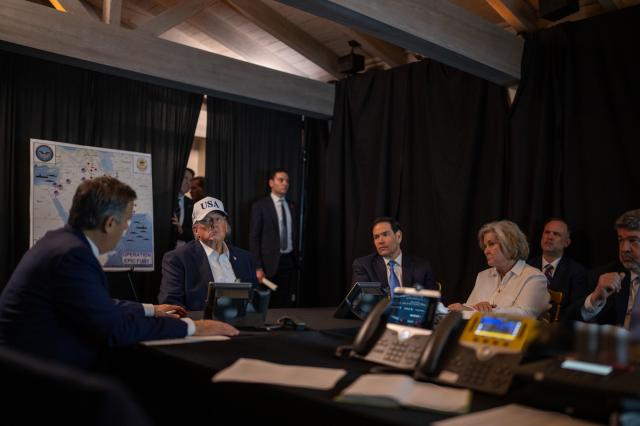
The campaign began with the assassination of Iranian Supreme Leader Ayatollah Ali Khamenei on Feb. 28 — a dramatic opening move that President Donald Trump framed as a decisive effort to dismantle Iran’s military and nuclear capabilities.
Yet the manner in which the operation unfolded — executed without meaningful consultation with traditional allies — has underscored a striking shift in Washington’s approach to global security: rapid unilateral action first, alliance management later.
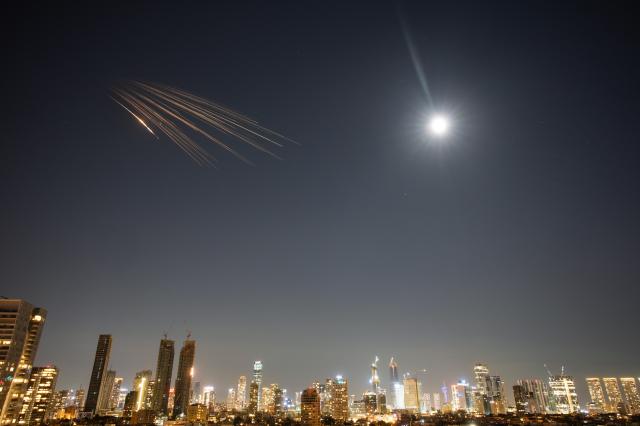
As Iranian missiles and drones struck Gulf targets, including near Dubai’s airport, the war quickly illustrated the unpredictable consequences of that approach. Italy’s defense minister Guido Crosetto, who happened to be vacationing in Dubai when retaliation hit the United Arab Emirates, later acknowledged that even analysts had not expected Iranian strikes on Gulf commercial hubs.
Allies left in the dark
Europe’s major powers — long pillars of the transatlantic alliance — were largely excluded from pre-strike deliberations, forcing governments into awkward post-facto positioning.
French President Emmanuel Macron publicly acknowledged Paris had been “neither informed nor involved,” a rare and pointed rebuke that echoed across Europe.
The European Union eventually convened an emergency security meeting more than two days after the strikes began, highlighting the continent’s discomfort with a war initiated outside its consultation structures.
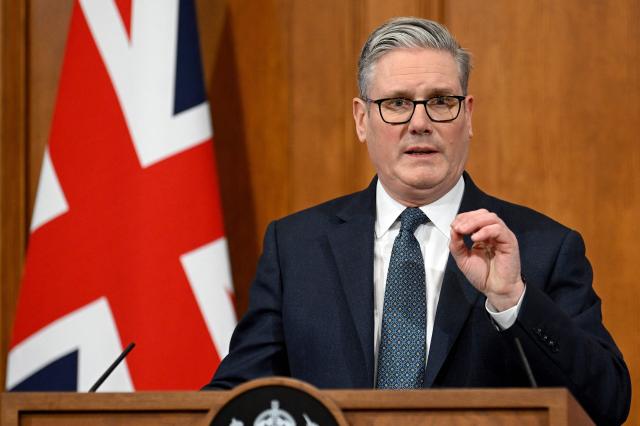
Even Britain, traditionally Washington’s closest military partner, found itself politically divided. Prime Minister Keir Starmer had earlier denied U.S. access to the British-controlled Diego Garcia base in the Indian Ocean. His subsequent cautious endorsement of the strikes drew criticism from both Labour’s anti-war wing and Conservative hawks demanding stronger support for Washington.
Russia, meanwhile, has limited its response largely to rhetoric. Foreign Minister Sergei Lavrov condemned the strikes as aggression following talks with Iranian officials, but Moscow has offered little tangible assistance.
The muted response reflects Russia’s weakened position after years of geopolitical setbacks, including heavy losses in Ukraine and the collapse of allied governments in parts of the Middle East.
No coalition for ground war
Security experts say the structure of the operation itself suggests Washington is not seeking a multinational ground campaign similar to those in Iraq or Afghanistan.
Andrew Gordon of Harvard University said Trump’s decision to launch the war without building an international coalition will likely deter allied participation in any potential invasion.
“No one expects multiple countries to join a U.S. intervention sending troops into Iran,” he said.
Instead, analysts say the operation appears designed as an air- and cyber-heavy campaign aimed at weakening the Iranian state without occupying the country.
Chiara Redaelli of the University of Geneva described the strategy as a shift toward coercive regime pressure conducted largely from the air.

Several analysts also expect the conflict to remain relatively short.
Muhamed H. Almaliky of Harvard argues Iran’s missile and drone stockpiles could be depleted within several weeks if the country receives no outside assistance.
He added regarding Iran: "Iran does not have partners or allies of the type willing to endure the risk and consequences of joining it. Apart from the proxies in Lebanon, Iraq and Yemen who are not expected to have a substantial impact on the course of the war."
European participation is likely to remain limited to defensive naval deployments protecting shipping lanes, according to historian Jeremy Friedman of Harvard.
A short war — but lasting disruption
Even if the fighting ends quickly, analysts warn the geopolitical and economic disruptions could persist far longer.
Christian Bueger of the University of Copenhagen notes that insurance premiums, shipping routes and global energy markets often remain unstable well after military operations subside.
“The conflict itself may last weeks, but disruptions to trade and maritime security can last much longer,” he said.
Bueger added, "U.S. leadership continues to be unpredictable. For Korea, stable regional and international partnerships become ever more important. That includes the relationship to Japan, but also ASEAN and the EU."
Kenneth Rogoff, the Harvard economist, adds that the war’s strategic lessons will be closely watched by other states.
He said regarding the possibility of other countries joining the war: "the US will almost certainly get some other countries to join in, though probably it will require exerting considerable leverage to do so."
North Korea, already armed with nuclear weapons, may draw the conclusion that nuclear deterrence remains the ultimate protection against external intervention.
Strains on the rules-based order
Operation Epic Fury also raises broader questions about the future of the international system built around U.S. alliances and multilateral institutions.
Jeffrey Frankel of Harvard Kennedy School said the unilateral nature of the intervention represents another blow to the post-war global framework Washington helped build.
“It’s another blow to the 80-year structure of alliances and multilateral rules that the United States itself created,” he said.
Redaelli similarly warned that the growing gap between Western rhetoric about a “rules-based order” and the willingness to use unilateral force risks weakening the credibility of international law.
For South Korea, the war’s most immediate impact is economic rather than military.
The country relies heavily on Middle Eastern energy supplies, with much of its oil passing through the Strait of Hormuz, a strategic chokepoint now under heightened risk.
South Korean lawmakers have warned that even a short disruption could ripple through domestic industries ranging from petrochemicals and shipping to aviation and semiconductors.
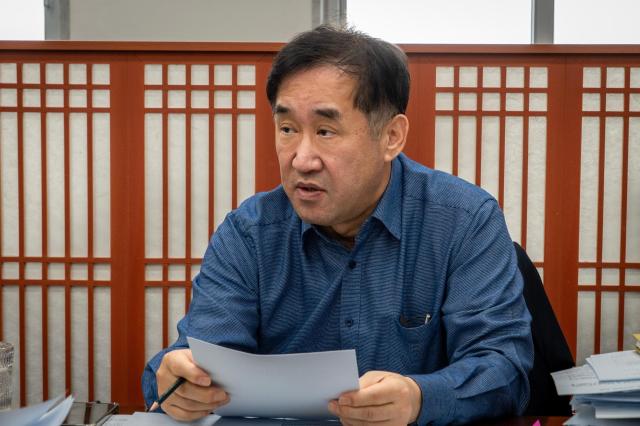
“If the Strait of Hormuz issue is not resolved promptly, Korea will inevitably be affected across all industries,” said Democratic Party lawmaker Maeng Seong-gyu, chairman of the National Assembly’s transport committee.
Others see a deeper shift in the global security environment.
People Power Party lawmaker Kim Ki-woong, a former vice minister of unification, argued the conflict reflects a broader transformation in international politics.
“The era of norms, order and morality has ended,” he said. “We have entered an era where power is openly displayed.”
As Operation Epic Fury enters its second week, its military trajectory remains uncertain. But the geopolitical implications are already clear.
Trump’s strategy of decisive, alliance-light military action may weaken adversaries quickly. Yet it also risks reshaping alliances, challenging global norms and deepening geopolitical fault lines far beyond the Middle East.
For countries like South Korea — deeply tied to global energy flows and U.S. security guarantees — the conflict is a stark reminder that wars fought thousands of miles away can still reshape the strategic landscape at home.
Copyright ⓒ Aju Press All rights reserved.
