

Journalist

Lee Jung-woo, Kim Yeon-jae
cannes2030@ajupress.com, duswogmlwo77@ajupress.com
-
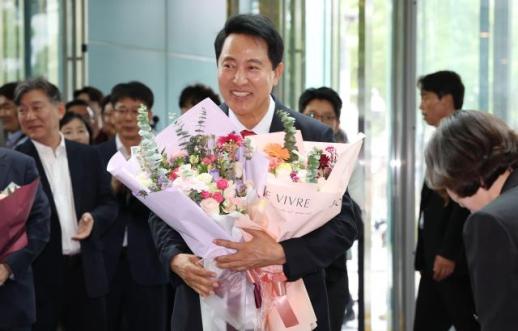 What lies ahead for DP after falling short where it mattered most despite overall win? SEOUL, June 5 (AJP) - South Korean voters handed President Lee Jae Myung's ruling Democratic Party (DP) a broad victory in this week's local elections while simultaneously delivering a warning against one-party dominance, as the conservatives retained the key Seoul mayoralty and narrowed losses in parliamentary by-elections. The DP won 12 of 16 metropolitan mayoral and gubernatorial races in the June 3 local elections, a sharp reversal from its crushing defeat in the 2022 vote, when it lost 12 governorships and mayoralties to the conservative People Power Party (PPP). But the ruling party failed to capture Seoul, the country's biggest political battleground, where conservative incumbent Oh Se-hoon won reelection over DP candidate Chong Won-o after a tight race. The result dimmed what initially appeared to be a sweeping victory for the liberals and suggested voters were seeking checks and balances rather than giving the government a free hand. The DP also faced unexpectedly close contests in several regions, including Gangwon, South Chungcheong and Ulsan, where the ruling camp had been widely expected to cruise to easy victories. Results from 14 parliamentary by-elections held alongside the local elections carried a stronger political warning for the ruling bloc. Before the vote, 13 of the 14 seats had been held by DP lawmakers. But the party won only nine seats, reducing its parliamentary strength by four seats, while the PPP captured four constituencies and an independent candidate won one. The elections were widely viewed as the first nationwide referendum on Lee’s administration since he took office a year ago following the ouster of former President Yoon Suk Yeol. Lee entered the elections with approval ratings above 60 percent, and many in the ruling camp had expected a decisive victory. Instead, the outcome indicated that voters broadly supported Lee's governing agenda while also signaling discomfort with what critics described as the DP's increasingly unilateral style of governance, backed by its legislative majority. Political observers said the results reflected growing concerns over hard-line legislative pushes led by pro-Lee lawmakers and perceptions that the ruling bloc had become complacent after consolidating control of both the executive and legislative branches. The DP's nomination process also became a source of controversy during the campaign. Critics accused party leader Jung Chung-rae and the party leadership of forcing through contentious nominations in races including the North Jeolla governorship and a parliamentary by-election in Pyeongtaek. The internal disputes diverted senior party officials from nationwide campaigning and may have contributed to Democratic losses in Seoul and several closely fought races in the country's southeastern conservative strongholds, analysts said. AJP asked lawmakers how they analyzed the reasons behind the DP’s defeats in the Seoul mayoral race and key parliamentary by-elections. PPP lawmakers pointed to the Lee Jae Myung government as the cause. Rep. Kang Seung-gyu said, "Elections are a judgment." "The biggest reason" the Democratic Party lost in key battlegrounds is that "citizens judged the Lee Jae Myung government," he added. "The public evaluated and judged the Lee government for pushing ahead with unreasonable laws with arrogance and self-righteousness and for pursuing the prosecution cancellation special counsel." Rep. Kim Gunn made similar remarks. "Seoul citizens felt it was wrong for the government and ruling party to push ahead with the prosecution cancellation special counsel and to exercise excessive public power in matters that should be morally condemned, such as the Starbucks incident," Kim said. "It was also effective that Oh clearly showed an effort to break with our party's past mistakes," he added. The "prosecution cancellation special counsel" mentioned by the two lawmakers refers to the special counsel bill on fabricated indictments proposed by the DP last month. The bill calls for a special counsel investigation into whether charges brought against President Lee before he was elected president and while he was standing trial were fabricated. The bill includes a provision allowing the special counsel to make a "decision on whether to maintain the prosecution" (Article 8, Clause 7) after receiving the cases from prosecutors. This means the special counsel could cancel the prosecution in Lee's cases. DP Rep. Kim Sung-hoi also said that Mayor Oh Se-hoon's acknowledgment that the Dec. 3 martial law declaration constituted insurrection and his apology over it were reasons he won the Seoul mayoral election. "Moderate conservative voters were highly dissatisfied with the Jang Dong-hyuk leadership system, but they went to the polls hoping that 'normal conservatives' would win," he said. "'Normal conservatives' refers to conservatives such as Mayor Oh Se-hoon and Rep. Han Dong-hoon who oppose insurrection," he explained. Three-term DP Rep. Eo Gi-gu said, "From the public's perspective, our Democratic Party appeared arrogant and conceited." "You win elections only when you are humble, desperate and earnest," he said. "I think only looking toward the president and complacently assuming we would win were also reasons for our defeats in places such as Seoul," he added. Rep. Kim Young-bae said, "In Seoul, we failed to manage the issues properly," adding that "we failed to ease public anxiety over the real estate market." He pointed to the lack of strategy from the party leadership as a cause of the defeats in Pyeongtaek and Busan's Buk district. "As seen in the Ulsan mayoral race, the central party also wavered over the issue of forming a unified candidacy with other progressive parties," he said. "Overall, the DP acted arrogantly, as if it had already won every election," he added. 2026-06-05 18:25:37
 -
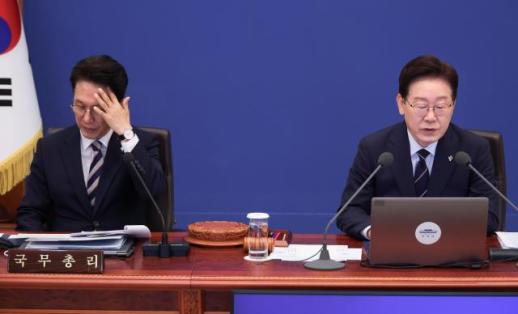 Lee 'mulls cabinet reshuffle' after DP falls short in key local election races SEOUL, June 5 (AJP) - President Lee Jae Myung is reportedly mulling a new prime minister as part of a partial cabinet reshuffle, after the ruling Democratic Party (DP) failed to win several key posts such as Seoul mayor despite its overall victory in this year's local elections, which wrapped up earlier this week. His longtime aide Justice Minister Jung Sung-ho and presidential chief of staff Kang Hoon-sik are emerging as the two possible candidates to carry out Lee's sweeping reforms and shape the future direction of his administration. According to DP lawmakers and multiple presidential officials, Lee is expected to announce his nominee as early as Sunday, as Prime Minister Kim Min-seok is widely expected to resign to run in the DP's national convention later this summer. In recent days, Lee has reportedly held separate private meetings with them, fueling such speculation A DP lawmaker said Lee discussed Kim's political future including a possible party leadership bid, during their regular weekly meeting last Monday. The following day, Lee asked Jung to remain after a Cabinet meeting at Cheong Wa Dae and held a private lunch with him without other aides present. Jung told AJP, "It was simply a gathering over a meal where we talked about old times." "There were no discussions whatsoever regarding the prime minister or a Cabinet reshuffle," he added. Then on Thursday evening, Lee separately met Kang after the chief of staff returned from Canada, where he had traveled as a special presidential envoy for strategic economic cooperation talks focused on resources and supply chains. Lee remained at his office into the evening to receive Kang personally. The two finalists represent sharply different political calculations for Lee. Jung, a five-term lawmaker and longtime ally of the president, is widely viewed as a safe and stabilizing choice. Lee and Jung have known each other for roughly four decades and trained together at South Korea's Judicial Research and Training Institute. As justice minister, Jung has overseen the Lee administration's prosecutorial reform drive and has maintained working relationships with opposition lawmakers, despite rising partisan tensions. Supporters say his moderate image and legislative experience could help Lee navigate politically sensitive reforms that would require cooperation from rival parties. Ruling party officials say Jung is seen internally as one of the few figures capable of coordinating negotiations over Lee's so-called "six major reform tasks" including changes to pensions, labor policy, finance, education, regulation and the public sector. Some officials also believe Jung could complete follow-up legislation tied to the administration's prosecutorial reforms before moving to the prime minister's office. Jung has expressed reluctance about taking the job, citing health concerns and personal reasons. A senior DP lawmaker close to Jung told AJP, "Jung says in private that he even wants to step down from his ministerial post." "Jung says he wants to return to the National Assembly as soon as possible," he added. Kang, meanwhile, represents a younger and more future-oriented option for Lee. The 52-year-old chief of staff has become one of Lee's closest aides over the past year and recently expanded his profile beyond domestic politics by handling economic diplomacy involving defense industries, energy security and supply chains. Supporters inside the ruling party argue that promoting Kang would reinforce the image of a younger Cabinet while also helping cultivate a next-generation presidential contender for the liberal camp. That debate intensified after Wednesday's local elections, which weakened several liberal figures long viewed as potential presidential hopefuls. Disgraced former Justice Minister Cho Kuk lost a parliamentary by-election race, while former Prime Minister Kim Boo-kyum failed in his bid for Daegu mayor and former South Gyeongsang governor Kim Kyoung-soo lost the gubernatorial race in South Gyeongsang Province. Conservatives, by contrast, saw several high-profile victories. Seoul Mayor Oh Se-hoon secured a fifth term, and former Justice Minister Han Dong-hoon returned to politics by winning a parliamentary seat, strengthening speculation about future conservative presidential contenders. Some ruling party officials now argue that Lee needs to elevate younger figures such as Kang to prevent the liberal bloc from falling behind in the race to cultivate future national leaders. Still, Kang's possible nomination carries risks. South Korea has not seen a presidential chief of staff move directly into the prime minister's office in 35 years, since former Prime Minister Noh Jae-bong was appointed after serving as chief of staff to former President Roh Tae-woo. The Prime Minister's Office has already begun preparations for a parliamentary confirmation hearing, forming a team of about 30 officials. Under South Korean law, a prime ministerial nominee must undergo a parliamentary confirmation hearing and receive approval in a National Assembly vote before formally taking office. The current incumbent prime minister took 29 days to complete the process after his nomination. 2026-06-05 17:49:13
 -
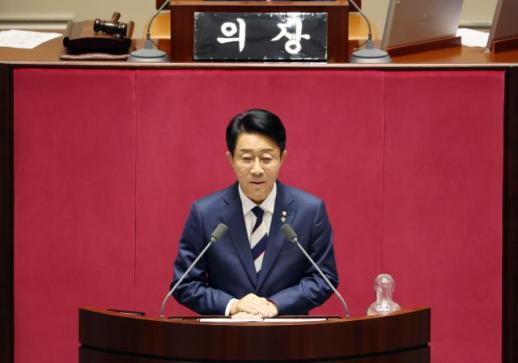 Six-term DP lawmaker Cho Jeong-sik elected National Assembly speaker SEOUL, June 5 (AJP) - Cho Jeong-sik, a six-term lawmaker of the ruling Democratic Party (DP), was elected on Friday as National Assembly speaker for the second half of the year. Cho won 267 of 276 votes cast during a parliamentary plenary session to assume the independent and impartial role. It follows his selection as the DP's candidate for the role after winning a majority in an internal party vote on May 13. His two-year term as speaker will run through May 2028. The veteran lawmaker entered parliament after winning a seat in Siheung, Gyeonggi Province, in the 2004 general elections and has since won six consecutive terms. During the first half of the 20th National Assembly, he served as chair of the Land, Infrastructure and Transport Committee. As vice speakers, Nam In-soon, a four-term DP lawmaker, and Park Deok-heum, a four-term lawmaker from the People Power Party (PPP), were also elected. Nam became the third woman in South Korean history to serve as National Assembly vice speaker. She worked as a women's labor activist for 30 years before entering parliament through proportional representation in the 19th National Assembly. She has since represented Seoul's Songpa district for three consecutive terms from the 20th to the 22nd National Assembly. She is currently the DP's only lawmaker representing one of Seoul's upscale districts of Gangnam, Seocho and Songpa. During the first half of the 20th National Assembly, she served as chair of the Gender Equality and Family Committee. Park is a former businessman who founded and served as CEO of a construction company before entering politics. He was first elected to the National Assembly in the 2012 general election and has since won four consecutive terms representing North Chungcheong Province. During the second half of the 21st National Assembly, he served as chair of the Intelligence Committee. By convention in South Korea, the largest party in parliament takes the National Assembly speakership, while the ruling and opposition parties each hold one vice speakership. Following the election of the Assembly leadership, the rival parties are expected to begin negotiations over the allocation of standing committee chairmanships and other parliamentary posts. 2026-06-05 16:46:15
 -
 South Korea sees record drug tests as narcotics use rises among young people SEOUL, June 5 (AJP) - The number of drug tests is rising as synthetic drugs spread among teenagers and cases of fatal mixed-drug use increase. According to a report released by the National Forensic Service (NFS) earlier this week, the number of drug tests conducted reached 140,775 last year, the highest on record. Drug-related busts and the amount of narcotics seized have both risen steadily year after year. The Korea Customs Service (KCS) seized 769 kilograms of drugs in 704 cases in 2023, 787 kilograms in 862 cases in 2024, and 3,381 kilograms in 1,256 cases in 2025. The tests included 26,350 urine tests, 35,993 hair analyses and 78,432 analyses of confiscated materials such as syringes and drug powders. The steady increase follows intensified anti-drug crackdowns after a massive sex scandal in 2019 involving several celebrities including Seungri, a former member of K-pop boy band BIGBANG, and expanded enforcement efforts in subsequent years. The number of cases stood at around 63,000 in 2019 and 65,000 in 2020 before rising to about 127,000 in both 2023 and 2024. While urine and hair tests declined from a year earlier, analyses of confiscated drugs rose sharply from about 54,000 cases in 2024. The NFS said the increase reflected a shift in focus from identifying drug users to targeting traffickers and supply routes. Methamphetamine accounted for 52.7 percent of all drugs detected in confiscated materials, making it the most commonly identified substance. New synthetic drugs also accounted for a significant share. Synthetic cannabis accounted for 15.1 percent of detected substances, while ketamine represented 10.6 percent, with the combined share of emerging synthetic drugs reaching 31.5 percent. The NFS cautioned that liquid synthetic cannabis products, often disguised as e-cigarette cartridges, were spreading rapidly among teenagers. It also warned of continued cases of acute poisoning and deaths linked to "mixed drug use," in which users consume multiple narcotics simultaneously. 2026-06-05 15:54:42
 -
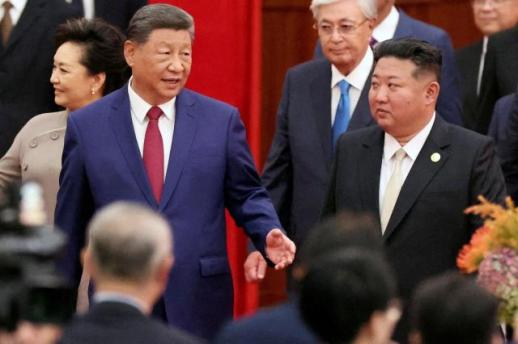 Xi to visit North Korea for summit next week SEOUL, June 5 (AJP) - Chinese President Xi Jinping will visit North Korea next week for a summit with the reclusive country's leader Kim Jong-un, state media in both countries reported on Friday. The state-run Korean Central News Agency (KCNA) said Xi will pay a state visit to North Korea from June 8 to 9 at Kim's invitation. China's International Department of the Communist Party also confirmed the visit, saying Xi would travel to North Korea at the request of Kim. It will be Xi's first trip to Pyongyang in nearly seven years, coming amid growing concerns over North Korea's nuclear program. Xi last visited Pyongyang in June 2019, when he held summit talks with Kim during his first state visit to North Korea since taking power in late 2012. The upcoming meeting between the two leaders comes about nine months after Kim visited Beijing in September last year to attend China's events marking the 80th anniversary of victory in World War II. During that trip, Kim appeared alongside Xi and Russian President Vladimir Putin at a military parade and brought his daughter Ju-ae, marking her debut on a major multilateral diplomatic stage. Kim has met Xi five times since inheriting power following the death of his father, Kim Jong-il, in December 2011. The announcement of Xi's visit came a day after KCNA reported that Kim had inspected a newly operating nuclear material production facility and reaffirmed his commitment to strengthening North Korea's nuclear forces. North Korea has publicly acknowledged uranium enrichment facilities in Yongbyon, Kangson near the western port city of Nampo, and Kusong in North Pyongan Province. South Korean experts said the facility visited by Kim was likely a newly built uranium enrichment plant in Yongbyon. The North's state media previously disclosed Kim's visits to uranium enrichment facilities in September 2024 and January this year. Some analysts said the timing of the visit appeared aimed at China ahead of Xi's trip. They said Kim may be attempting to demonstrate North Korea's nuclear capabilities in advance to discourage denuclearization from becoming a key agenda item during the summit. 2026-06-05 11:42:10
 -
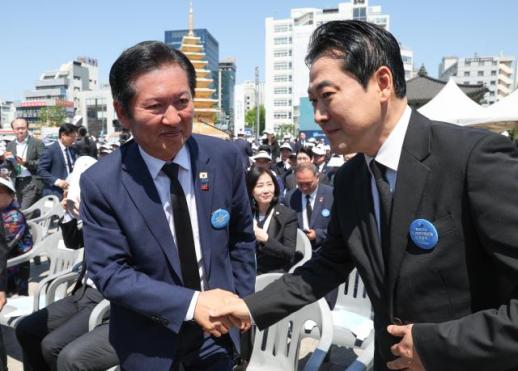 DP sweeps local elections but defeats in key races signal challenges ahead SEOUL, June 4 (AJP) - The ruling Democratic Party (DP) swept 12 of 16 metropolitan mayoral and gubernatorial races in this year's local elections on Wednesday, claiming an overall victory, but the results exposed growing vulnerabilities in Seoul and other battlegrounds that could reshape the political landscape. While the liberal party regained ground nationwide under President Lee Jae Myung, analysts said even a handful of defeats in high-profile races suggested voter dissatisfaction with the ruling camp despite its numerical advantage. The DP suffered a particularly painful loss in Seoul, widely regarded as the symbolic center of South Korean politics and a key barometer of centrist public opinion. The party also lost several closely watched parliamentary by-elections held simultaneously with the local elections including a tight race in the Buk district of the country's southern port city of Busan, where independent candidate Han Dong-hoon defeated DP candidate Ha Jung-woo in a dramatic reversal. Political observers said the mixed outcome reflected sophisticated "split-ticket voting" by the electorate, with voters backing the ruling party in many regional races while supporting conservative or independent candidates in strategically important contests. Despite losing Seoul, the DP lawmakers significantly improved their standing in the capital's district-level races. The party won 17 of Seoul's 25 district mayor posts, reversing the political map from the 2022 local elections, when conservatives held 17 districts and the Democrats controlled only eight. Still, defeats in Seoul and conservative strongholds raised concerns inside the ruling camp about waning support among moderates and voters in the capital regions. The June 3 elections also highlighted signs of changing political dynamics in the conservative stronghold of Daegu. DP candidate Kim Boo-kyum earned 45.05 percent of the vote in the Daegu mayoral race, an impressive improvement compared with the party's performance in the 2022 election. People Power Party (PPP) candidate Choo Kyung-ho won the race with 53.92 percent. In the previous local elections in 2022, PPP candidate Hong Joon-pyo won the Daegu mayoralty with 78.75 percent, while the DP candidate received only 17.97 percent. Although Kim fell short of victory, party officials viewed the result as evidence that regional political barriers in the country's southeast may be weakening. Attention is now shifting to the DP's upcoming national convention, expected as early as August, where party leader Jung Chung-rae is widely expected to seek another term. Jung is expected to argue that leading the party to victories in 12 metropolitan races justifies his reelection, while critics inside the party point to losses in Seoul and major by-elections as evidence of strategic failures. Potential challengers include Prime Minister Kim Min-seok and former party leader Song Young-gil, according to party officials. The results also intensified pressure on the PPP's leader Jang Dong-hyeok. Calls for Jang's resignation emerged within the party after conservatives failed to prevent the DP from dominating the nationwide gubernatorial races. However, Jang rejected demands to step down, saying Thursday that he would continue leading the party and seek a "new path" together with party members. Conservative lawmakers nonetheless argued that the party's overall defeat overshadowed gains in the parliamentary by-elections, where the opposition and independent conservative candidates secured several important victories. Lawmakers from the two major parties who spoke with AJP emphasized different priorities. The DP lawmaker stressed "humility," while the PPP lawmaker emphasized "unity." Rep. Kim Kyo-heung, a three-term politician from the DP, acknowledged the mixed public sentiment reflected in the election. "Even though the DP won the local elections overall, it lost the Seoul mayoral race, candidate Ha's race in Busan, the by-election in Pyeongtaek, and the mayoral elections in Ansan, Seongnam, and Yongin,” Kim said. "The DP governors, mayors, district heads, city council members, district council members and county council members elected in this election must remain humble," he added. A three-term lawmaker from the PPP said the opposition faced structural disadvantages. "In my experience, the first election held one year after a presidential election is always extremely difficult for the opposition," the lawmaker said. Yoon Sang-hyun, a five-term lawmaker from the PPP, said the local elections had been winnable for the party but that it lost because of internal divisions and a lack of vision. Yoon said the party had called for judgment against President Lee Jae Myung, but "that alone was not enough because we failed to speak about hope together." He said the only way for the PPP to win nationwide elections again was for politicians who share conservative values to unite, rather than divide into rival factions and fight each other. "If we split the party in two while fighting over who is pro-Yoon and who is anti-Yoon, we will once again forget why voters punished us yesterday," he added. 2026-06-04 18:05:54
 -
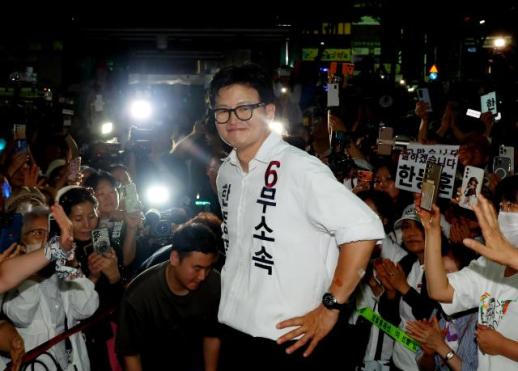 Two ex-justice ministers see contrasting fortunes in local elections' key battlegrounds SEOUL, June 4 (AJP) - Two former justice ministers, both once seen as potential presidential contenders in the liberal and conservative camps, saw sharply contrasting fortunes in Wednesday's local elections. Former leader of the main opposition People Power Party (PPP) and independent candidate Han Dong-hoon won a parliamentary by-election and is headed to the National Assembly, while Cho Kuk of the minor Rebuilding Korea Party (RKP) lost, casting doubt over his political future. Han won in the Buk district of the country's southern port city of Busan with 42.96 percent of the vote, narrowly beating Democratic Party (DP) candidate Ha Jung-woo, who received 41.26 percent, in a neck-and-neck race. PPP candidate Park Min-sik, who was expected to split the conservative vote and boost Ha's chances, trailed with a mere 15.76 percent. Han, once a close aide to disgraced former President Yoon Suk Yeol, served as justice minister under the Yoon administration before becoming PPP leader in July 2024. But he was later expelled from the conservative party late last year over dubious allegations that included hundreds of defamatory comments about Yoon and his wife posted on the party's online bulletin board. Han's overnight election victory has sparked speculation about a conservative realignment, with the PPP's internal rift over distancing itself from Yoon likely to intensify further. Han was among those who voted to lift Yoon's abrupt Dec. 3 declaration of martial law in 2024. Lawmakers aligned with Han within the PPP could push for his return to the party. The possibility of Han launching a new conservative party has also been raised. His victory is seen as laying the groundwork for him to emerge as a leading conservative contender in the next presidential election. PPP lawmakers told AJP that Han would return to the PPP and would not launch a new party. "His return to the party is a matter of timing, and there does not seem to be any discussion about launching a new party yet," PPP lawmaker Kim So-hee said. "Launching a new party would be difficult," she added. PPP four-term lawmaker Han Ki-ho said Han was unlikely to forcefully seek a return to the party and that the PPP would instead encourage him to rejoin. Dismissing speculation about a new party, he said, "Launching a new party is out of the question." "Once he enters the National Assembly, he will receive intense media attention, and if Han reflects the will of the people, the party will have no choice but to encourage him to join," Han added. "If Han maintains his soft, inclusive image, he will win public support." With 99.88 percent of the vote counted as of Thursday morning, Cho, the former fly-by-night justice minister who was released from prison after being convicted on charges of shoddy financial dealings and document forgery related to his children's school admissions, failed to secure a seat in Pyeongtaek, Gyeonggi Province, finishing third with 27.24 percent in a tight three-way race. PPP candidate Yoo Eui-dong led with 34.83 percent and was on course for victory, while Kim Yong-nam of the DP came in second with 28.77 percent. Analysts say Cho, who had been considered a potential presidential contender, suffered a major blow to his leadership after failing to enter the National Assembly, and that the result could deal a fatal hit to his political career. Cho's defeat is expected to affect not only his personal political standing but also the future of his party. With his defeat, a possible merger between the DP and the RKP is now expected to be put on hold for the time being. During the campaign, Cho launched fierce attacks against the DP candidate while also stepping up criticism of the DP leadership, further deepening the rift between the two parties. With the DP soon set to begin preparations for a national convention to elect a new party leader and Supreme Council members, discussions on a merger between the two parties are likely to be left to the next leadership. Kim Joon-hyung, a lawmaker from the RKP, said there are currently no discussions within the party about a merger with the DP. Kim said no one was talking about a merger even in the RKP lawmakers' group chat on Telegram. He expressed disappointment over the DP's attitude toward the RKP. "DP leader Jung Chung-rae also talked about 'solidarity,' but the 'solidarity' the DP referred to was violent and one-sided," he said. "Now that Cho has lost, we no longer have the leverage we once had, so the DP would become even more aggressive toward the RKP," he predicted. "Kim Boo-kyum, the party's candidate for Daegu mayor, and Kim Kyoung-soo, the party's candidate for South Gyeongsang governor, were defeated, while Seoul Mayor Oh Se-hoon and Han strengthened their standing as presidential contenders with their victories," he also said. 2026-06-04 12:40:15
 -
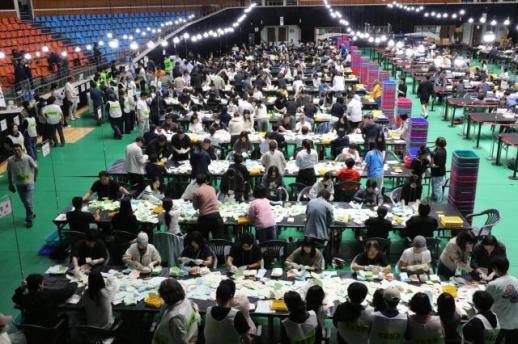 'I only made phone calls all day': Candidates share final hours before results SEOUL, June 03 (AJP) - What are candidates doing in the final hours before the results of South Korea’s June 3 local elections come in? AJP asked candidates across the country how they were spending election day as they waited for exit polls and vote counting to begin. For some, the day was spent making last-minute calls to encourage voter turnout. Others said they were thanking supporters, reflecting on the grueling campaign trail or quietly preparing for whatever political future awaits after the ballots are counted. “I desperately want to work alongside the residents of our region,” said Kim Young-bin, the Democratic Party (DP) candidate in the by-election for a parliamentary seat representing Gongju, Buyeo and Cheongyang in South Chungcheong Province. “Right now, I am calling voters one by one to encourage them to cast their ballots.” Yang Hyang-ja, the People Power Party (PPP) candidate for governor of Gyeonggi Province, said she had spent the entire day on the phone. “Today, I calmly spent the day making calls to encourage voting and to thank supporters,” she said. “I only made phone calls all day. I’m nervous. Regardless of the election result, I think of this as a new beginning for myself.” Lee Myung-soo, a candidate for South Chungcheong superintendent of education, said he would watch the exit polls and vote count “with the mindset of ‘Jininsa daechunmyeong,’” referring to the Korean expression meaning that one should do one’s best and then leave the outcome to heaven. Shim Wang-seop, the PPP candidate in the Incheon Gyeyang-gu by-election, said he was watching election coverage while reflecting on frustrations from the campaign. “I’m watching the election broadcasts and talking about what happened during the campaign period,” he said. “We should have been fighting against the Democratic Party, but instead we were competing against an independent candidate, which was utterly pathetic. Jeon Han-gil and his group were truly terrible people. They were devils wearing the mask of conservatives. I even felt sorry for the naive Kim Hyun-tae.” Park Il-ha, a former Dongjak District mayor now running for the Reform Party in the Dongjak mayoral race, said he was responding to messages from voters while waiting for results. “Residents did not turn away from the district mayor in this election,” he said. “Many people have been cheering me on and sending encouraging calls and text messages, and I’ve been responding to them while waiting for the results.” Lee Jung-hyun, the PPP candidate for mayor of Gwangju, said he spent part of the day climbing Mount Mudeung, a symbol of the southwestern city. “I encouraged election staff and then climbed Mount Mudeung in Gwangju,” he said. “Afterward, I’m having tea at the Uijae Museum of Korean Art while thinking about the direction the People Power Party should take in the future. I’m considering what the party can proactively do regarding the integration of Gwangju and South Jeolla Province, and how the party should change after the local elections.” Choi Hyun-deok, the DP candidate for mayor of Namyangju, said he was calmly awaiting the outcome. “I’ve spent the afternoon encouraging people to vote and making thank-you calls to supporters who have backed me throughout the campaign,” he said. “I’m calmly waiting for the results.” Yoo Ho-joon, the DP candidate for the Gyeonggi Provincial Council, said exhaustion from the campaign had taken a physical toll. “I’m calling people who helped with the election campaign to thank them,” he said. “I’m nervous, but at the same time excited because it feels like the end of a long campaign schedule is finally in sight. Physically, it was so demanding that I lost 10 kilograms during the campaign.” Lee Jin-hwan, the DP candidate for the Namyangju City Council, said he was already thinking about what comes next after the election. “I’m at the Namyangju campaign office waiting for the exit polls,” he said. “Starting tomorrow, after the vote count ends, I’m thinking about how we can change the region for the better.” 2026-06-03 19:35:53
 -
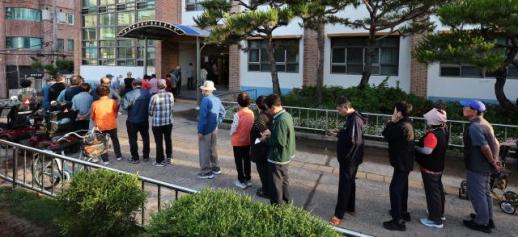
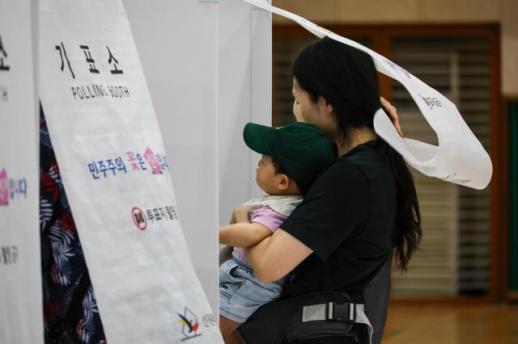 South Korea's local election turnout reaches 57.4% by 5 p.m. SEOUL, June 03 (AJP) - Voter turnout in South Korea’s June 3 local elections reached 57.4 percent as of 5 p.m. (0800 GMT) Wednesday, sharply higher than the level recorded at the same point in the previous local elections, according to the National Election Commission. The commission said 15,052,860 people had cast ballots nationwide during the 11 hours since voting began at 6 a.m. When combined with 10,564,571 early, overseas, shipboard and absentee voters, the total number of ballots cast reached 25,617,431 out of 44,649,908 eligible voters. The turnout was 9.8 percentage points higher than the 47.6 percent recorded at the same hour during the 2022 local elections. South Jeolla Province posted the highest turnout at 63.6 percent, while the southwestern city of Gwangju recorded the lowest at 51.5 percent. The election commission updates turnout figures hourly based on data collected from polling stations nationwide about 10 minutes earlier. At polling stations across the country, voters said they cast ballots despite frustration with political rhetoric and uncertainty over campaign promises. Grace Ryu, a 28-year-old resident of Seoul’s Songpa District, said she had doubts about whether candidates would follow through on their pledges. “Even after looking at the campaign promises, I couldn’t clearly tell what they were actually trying to accomplish, and seeing candidates focus on attacking each other made me question whether their policies would really be implemented,” she said, adding: “Still, I think not voting means giving up my rights voluntarily. I believe it’s important to vote based on my own judgment first and then speak about policies afterwards.” At a polling station in Maehwa-dong, Siheung, south of Seoul, 32-year-old voter Jung So-ri said that she hoped the election would lead to policies that provide tangible support for people struggling with economic difficulties. “I hope more policies come out that genuinely help ordinary people, whether in the economy or welfare sectors, so that everyone can worry a little less about their future and sleep more peacefully at night during these difficult times,” she said. She emphasized that voting was both a responsibility and a way for citizens to have a voice in politics. “I believe voting is a basic duty for citizens. Only by voting do people earn the right to speak about politics, and I think it is essential for the development of both the community where I live and the country as a whole,” Jung said. 2026-06-03 17:34:45
 -
 South Korea's June 3 local elections seen as key test for Lee government and party leaders SEOUL, June 03 (AJP) - South Korea’s June 3 local elections are shaping up as a crucial political test one year after the launch of President Lee Jae Myung’s government, with the outcome expected to affect the administration’s governing momentum as well as the futures of several major political figures. The elections, the first nationwide vote since the change in government, are widely viewed as more than a contest over local power. Political observers say the results could trigger broader changes across both liberal and conservative camps ahead of the next presidential race in 2030. The ruling Democratic Party of Korea said Tuesday it classified nine of the country’s 16 metropolitan mayoral and gubernatorial races, including the western port city of Incheon, Gyeonggi Province and Gangwon Province, as leaning in its favor. Party officials said they expect to win at least nine regions and as many as 15. The main opposition People Power Party said it held advantages in conservative regions, including the southern city of Daegu and North Gyeongsang Province, while describing nine regions, including Seoul and the southern port city of Busan as battlegrounds. The conservative party projected it could win between two and 11 races. A victory for the ruling party would likely strengthen the Lee administration as it enters its second year in office and give the government and the party greater justification to push ahead with reform legislation. A poor showing for the ruling bloc, however, could weaken the administration early in its second year and force the Democratic Party to slow its legislative drive in the National Assembly, where it currently holds a majority. The elections are also expected to have major implications for the political futures of ruling party leader Jung Chung-rae and main opposition leader Jang Dong-hyeok. Both leaders have faced criticism for relying heavily on hard-line supporters while seeking to maintain control of their parties, making them vulnerable to internal backlash if the election results disappoint. Regional strongholds are seen as particularly important. Jung could face a weakened position within the ruling party if it fails to hold North Jeolla Province, while Jang could suffer a major political setback if conservatives lose Daegu, long considered the heartland of South Korea’s conservative movement. The North Jeolla gubernatorial race has drawn attention after independent candidate Kim Kwan-young, who was expelled from the Democratic Party over a controversy involving chauffeur service payments, mounted a reelection bid. Some ruling party supporters have framed the race as a referendum on Jung’s leadership. Several heavyweight politicians running in local races and parliamentary by-elections are also seen as trying to position themselves for future presidential bids. Former Prime Minister Kim Boo-kyum, the Democratic Party’s candidate for Daegu mayor, could emerge as a major presidential contender if elected. Analysts say a victory in the conservative stronghold would bolster his image as a symbol of national unity. Meanwhile, Oh Se-hoon, the People Power Party’s candidate for Seoul mayor, is seeking a fifth term. A win could strengthen his standing as a leading conservative presidential hopeful capable of appealing to both hard-line conservatives and moderates following the political fallout from former President Yoon Suk Yeol’s martial law declaration and subsequent impeachment. Attention is also focused on parliamentary by-elections involving former Justice Minister Cho Kuk and former ruling party leader Han Dong-hoon. Cho, running for a National Assembly seat in Pyeongtaek, Gyeonggi Province, is viewed by liberal observers as a potential future presidential contender if he returns to parliament. His party, the Rebuilding Korea Party, currently holds 12 seats in the National Assembly. Han, running as an independent candidate in Busan’s Buk-gu after being expelled from the People Power Party, is also seen as a possible future presidential candidate if elected. Political analysts say his return to parliament could reignite tensions with Jang and reshape the conservative opposition bloc, particularly if Han pushes a reform agenda centered on his opposition to Yoon’s martial law declaration. Both Cho and Han have pledged to remain in their constituencies and prepare for the 2028 general elections if they lose Tuesday’s races. 2026-06-03 16:21:38