

Journalist

Lee Jung-woo, Kim Yeon-jae
cannes2030@ajupress.com, duswogmlwo77@ajupress.com
-
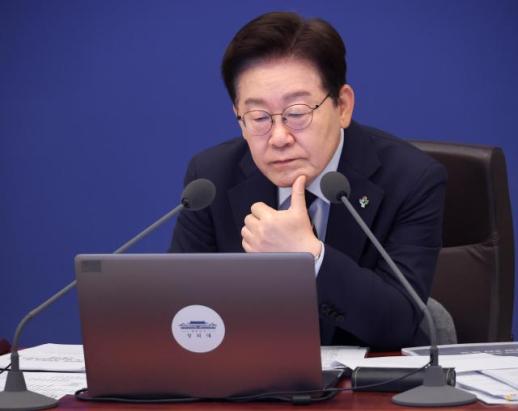 President Lee urges voters to cast ballots, cites Plato in election-day posts SEOUL, June 03 (AJP) - President Lee Jae Myung wrote in a post on X (formerly known as Twitter) at 8:55 a.m. (2355 GMT) on Wednesday, the day of South Korea’s June 3 local elections, “As Plato said, have you voted to avoid being ruled by the worst and lowest among us?” The remark referenced a quotation commonly attributed to Plato: “The heaviest penalty for declining to rule is to be ruled by someone inferior to yourself.” In another post uploaded to X at 2:03 p.m., Lee again encouraged people to vote, writing, “For the future of ourselves and our families, do not give up your right to vote. Let us find capable and loyal public servants and make sure to cast our ballots.” Lee argued in the post that urging people to vote could not be considered electioneering intended to benefit a specific candidate or political camp. He said that calls to participate in elections were “an expression emphasizing the basic principles of democracy and participation in elections,” and therefore did not constitute campaigning or a violation of political neutrality obligations. Lee also mentioned former Presidents Lee Myung-bak and Park Geun-hye. “In this regard, no one objects when former President Lee Myung-bak says, ‘I hope many citizens will vote,’ or when former President Park Geun-hye says, ‘Please make sure to participate in the election,’” Lee wrote. “That is because they are correct,” he added. 2026-06-03 14:58:23
 -
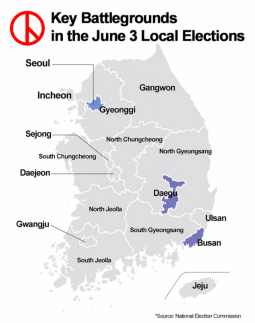 Key battlegrounds in spotlight as South Koreans prepare to go to polls SEOUL, June 2 (AJP) - South Koreans will go to the polls nationwide on Wednesday for this year's local elections to choose more than 4,200 officials including metropolitan mayors, provincial governors, local government heads and education superintendents, as well as fill other vacancies. Polling stations across the country will be open from 6 a.m. to 6 p.m. Seoul is considered the biggest battleground. As the country's political and economic center, major state institutions including presidential office Cheong Wa Dae, the National Assembly, the Supreme Court and the Constitutional Court, are all located in the capital. As of June 2025, 284 of the country's top 500 companies or 56.8 percent had their headquarters in Seoul. The Seoul Metropolitan Government's annual budget stands at around 51 trillion won (US$33.6 billion), accounting for nearly 10 percent of the national budget. In Seoul, Chong Won-o of the ruling Democratic Party (DP) faces former incumbent Seoul Mayor Oh Se-hoon of the main opposition People Power Party. According to a poll conducted by Korea Research for broadcaster MBC last week, Chong garnered 41 percent support, compared with 37 percent for Oh, putting the race within the margin of error. Compared with the previous survey conducted earlier in the week, Chong's support fell 2 percentage points while Oh's rose by 2 percentage points. Chong previously served three terms as mayor of Seongdong-gu, one of Seoul's districts. His political profile surged after President Lee Jae Myung publicly praised him on social media, saying, "He seems to work even better than I do." Oh, a four-term Seoul mayor, is seeking a fifth term. The southern port city of Busan, the country's second-largest city, is another battleground in the elections. Three former presidents — Kim Young-sam, Roh Moo-hyun and Moon Jae-in — built their political careers in the southeastern city of 3.2 million people. In Busan, DP candidate Chun Jae-soo is facing former incumbent Busan Mayor Park Heong-joon of the PPP. In multiple opinion polls commissioned by media outlets and released through May 27, the final day before the publication ban on election polls took effect under the Public Official Election Act, Chun led Park by as much as more than 10 percentage points, though the gap had been narrowing steadily. Still, the Busan mayoral race remains difficult to predict. In past elections, Democratic Party candidates who had consistently led in pre-election polls — and even won broadcasters’ exit polls — later lost after vote counting began. Chun ran for the National Assembly three times in Busan beginning in 2006 under the Democratic Party banner before finally winning a seat a decade later. He served three terms in Busan. Park previously served as a lawmaker in the 17th National Assembly and secretary-general of the National Assembly. He served as Busan mayor from the 38th through 39th terms and is seeking a third consecutive term. The Daegu mayoral election is also drawing unusual attention. No Democratic Party-affiliated candidate has ever been elected mayor of Daegu, but this year's race is unexpectedly close. Former Prime Minister Kim Boo-kyum of the DP is facing former Finance Minister Choo Kyung-ho of the PPP. According to the Korea Research's poll, Kim received 40 percent support, while Choo garnered 41 percent. Compared with another previous poll, Kim's support dropped by 3 percentage points while Choo's rose by 4 percentage points. Kim is a former four-term lawmaker who served as interior minister and later prime minister under the Moon Jae-in administration. He remains the first and only Democratic Party lawmaker ever elected from Daegu. Choo is a former three-term lawmaker who served as deputy prime minister for economic affairs and finance minister under the Yoon Suk Yeol administration. By-elections for 14 parliamentary seats are also being held alongside the local elections, prompting the media to dub them a "mini general election." South Korea's National Assembly has 300 seats in total. Among the 14 constituencies, the by-elections in Pyeongtaek in Gyeonggi Province and Buk district in Busan are attracting particular attention because major presidential hopefuls are running there. In Pyeongtaek, recent polls showed DP candidate Kim Yong-nam and Cho Kuk, candidate of the minor Rebuilding Korea Party (RKP), locked in a neck-and-neck race within the margin of error. Kim, a former prosecutor, served as a lawmaker in the 19th National Assembly under the Saenuri Party, the predecessor of the People Power Party, before leaving the conservative party and joining the Democratic Party. Cho currently leads the RKP, the third-largest party in the National Assembly, and previously served as senior presidential secretary for civil affairs and justice minister under the Moon administration. In Busan's Buk district, DP candidate Ha Jung-woo and independent candidate Han Dong-hoon are engaged in a tight race. Ha is an artificial intelligence expert who previously served as head of AI Lab and chief of the Cloud AI Innovation Center at South Korean tech company Naver. He also served as the presidential secretary for artificial intelligence (AI) policy and future planning under the Lee Jae Myung administration. Han, a former prosecutor, served as justice minister and leader of the PPP under the Yoon Suk Yeol administration. He was expelled from the party after clashing with the pro-Yoon leadership following Yoon's impeachment. 2026-06-02 17:48:50
 -
 UPDATE: Korea-Africa Business Forum highlights growing strategic partnership SEOUL, June 02 (AJP) -South Korea hosted a large-scale business forum with African countries on the sidelines of a summit conference at a time global commodity market is being reshaped from the prolonged conflicts in the Gulf. The 2026 Korea-Africa Business Forum was held Tuesday at Lotte Hotel Seoul in central Seoul, bringing together about 300 government officials, diplomats and business leaders from South Korea and African countries. The forum was hosted by the Ministry of Foreign Affairs, jointly by the Korea-Africa Foundation, the Korea Trade-Investment Promotion Agency (KOTRA) and the Korea International Trade Association (KITA), and Yonhap News Agency. In his opening remarks, Foreign Minister Cho Hyun underscored the growing strategic importance of Africa amid global energy and supply chain challenges, emphasizing the need for “mutual prosperity and shared growth” between Korea and Africa. “The Korea-Africa Foreign Ministers’ Meeting held yesterday provided a valuable opportunity to review the achievements made since the 2024 Korea-Africa Summit and discuss a future vision for cooperation,” Cho said. The forum featured keynote speeches by Sung Kim, President for Strategic Planning at Hyundai Motor Company, and Wamkele Mene, Secretary-General of the African Continental Free Trade Area. The first session, titled “Driving Synergies through Korea-Africa Economic Cooperation: From K-Content to New Markets,” explored opportunities to deepen economic ties and expand business collaboration between Korea and African countries. The session was moderated by Caitlin Nash, CEO of Golden Thread Markets in South Africa. Speakers included Kim Myung-hee, Executive Vice President of KOTRA; Jung Tawon, Head of the Sub-Saharan Africa Region at Daewoo Engineering & Construction; Caleb Maru, CEO of Tech Safari in Kenya; and Nana Aba Anamoah, a Ghanaian media personality and founder of Women of Valour. The participants discussed ways to leverage Korea’s cultural influence, technological capabilities and industrial expertise to create new opportunities in African markets, while exploring avenues for broader economic cooperation and sustainable growth. The latter half of the forum shifted focus from diplomacy to practical business cooperation, with speakers highlighting Africa’s growing potential as a strategic market for Korean industries. During a special dialogue session on the future of Korea-Africa business ties, Victor Lawrence Villacisety, chairman and CEO of Villacisety, argued that Africa should no longer be viewed solely as a source of raw materials, describing the continent instead as an emerging center for global innovation and industrial growth. The Ghanaian businessman introduced his company’s large-scale smart industrial city project near Accra and said he plans to create a “K-Tech Town” within the development to help Korean companies establish a foothold in Africa with fewer risks and greater institutional support. The forum’s third session brought together senior African officials for discussions on cooperation in critical minerals and energy — sectors expected to become increasingly important amid the global supply chain race. Foreign ministers from Gambia, Tunisia and Rwanda, along with Mozambique’s minister for planning and development, called for a more equal partnership model between Korea and African nations. Rather than limiting cooperation to resource extraction, they stressed the need for joint participation in development projects and a fairer sharing of economic gains. Beyond the conference hall, the event also served as a showcase for Korean consumer brands targeting Africa’s fast-growing markets. K-beauty and K-food exhibition booths installed at the entrance of the venue drew heavy attention from African delegates and business participants. Ten Korean companies selected through a highly competitive screening process displayed products tailored to local demand, including hair care products designed for African consumers, vegan cosmetics, premium Korean tea and health drinks. An employee of Korean cosmetics brand Life With Corporation, Sohn Luna, 30, who participated in the event, said it was “a great opportunity to promote the brand.” “Because many parts of Africa have dry climates, a lot of people showed interest in moisturizing products,” Sohn said. She added that while the company currently exports only to Tanzania, “African visitors showed much greater interest than we had expected today, so I believe demand in Africa will continue to grow in the future.” Dana Mopulunga, CEO of South African pharmaceutical company Bernika Health, said the forum made her feel that “there are a lot of opportunities” for economic cooperation between Korea and Africa. She added that she plans to visit Korea again to further discuss business cooperation with Korean partners. 2026-06-02 12:36:35
 -
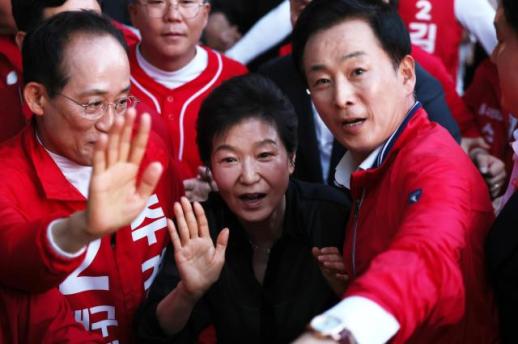 Ex-presidents return to campaign trail to rally conservatives ahead of local elections SEOUL, June 1 (AJP) - Former Presidents Lee Myung-bak and Park Geun-hye on Sunday intensified their support for conservative candidates ahead of the upcoming June 3 local elections, making high-profile campaign appearances in the traditional conservative strongholds of the southeastern cities of Busan and Daegu in a bid to rally voters amid dim prospects. The two former disgraced presidents, both of whom previously received prison sentences in separate corruption scandals before later being pardoned, have collectively joined campaign events 10 times in May alone as the main opposition People Power Party (PPP) seeks to prevent what many within the party fear could be a sweeping defeat by the ruling Democratic Party. Lee, who served from 2008 to 2013, appeared with the PPP's Busan mayoral candidate Park Heong-joon and local lawmakers in Busan. His trip marked Lee's first campaign stop outside the Seoul metropolitan area during this election season. Lee previously met Seoul mayoral candidate Oh Se-hoon in central Seoul on May 15 and separately met Gyeonggi gubernatorial candidate Yang Hyang-ja and Seoul education superintendent candidate Cho Jeon-hyuk later in the month. Park, South Korea's first female president who served from 2013 to 2017, campaigned in Daegu's famous Seomun Market alongside the PPP's Daegu mayoral candidate Choo Kyung-ho and local lawmakers. Park has been campaigning extensively across the southeastern region in recent weeks. She previously visited Seomun Market with Choo on May 23 and later traveled to multiple cities including Okcheon, Daejeon, Gongju, Jinju, Yangsan, Ulsan, Busan, Wonju and Hoengseong. PPP lawmakers defended the involvement of the two former presidents as necessary to consolidate conservative support amid concerns over declining party unity after impeached former President Yoon Suk Yeol's martial law debacle in 2024. Rep. Yoo Sang-bum of the PPP said Park was motivated by fears that conservatives could collapse politically in Daegu, long considered the "heart of conservatism." "I think former President Park Geun-hye decided to support the campaign because she felt an urgent sense that conservatism should not completely collapse while seeing a Democratic Party wave even in Daegu," Yoo said. "Various candidates who felt a sense of crisis that conservatives could collapse in this local election requested support from Park." Yoo added that conservative voters were now regrouping around Park. "There had not been a central axis for conservatives, but Park's visits to places like Daegu are helping conservative forces unite around her," he said. "Unlike a month ago, when many expected the Democratic Party to win overwhelmingly, recent local election polls show several competitive races. I believe the two former presidents played a major role in consolidating conservatives." Rep. Park Sung-min of the People Power Party also defended the strategy. "The presidency belongs to the DP, the National Assembly belongs to the DP, and the judiciary belongs to the DP," Park said. "One-party dominance inevitably becomes corrupt, so the PPP is trying to prevent one-party rule by utilizing every possible resource." Still, some ruling party lawmakers privately questioned the electoral impact of the appearances. An anonymous four-term PPP lawmaker said the former presidents' support "may help somewhat, but it is unreasonable to expect a decisive change in the election." DP candidate Kim Sang-wook, who is running for mayor of Ulsan, dismissed the campaign appearances as ineffective. "Campaigning by former presidents from the People Power Party side is increasing, but citizens are close to indifferent," Kim said. "It appears the PPP is trying to wage this election not through policies but through political camp mobilization." 2026-06-01 16:57:16
 -
 Early voting for local elections hits record high, but final turnout remains to be seen SEOUL, June 1 (AJP) - Early voting for South Korea's June 3 local elections wrapped up with a record-high turnout, fueling speculation that final turnout could surpass a previous record of 60.2 percent seen in the 2018 local elections, the highest level in nearly three decades. The National Election Commission (NEC) on Sunday said 10.49 million of the country's 44.64 million eligible voters cast ballots during the two-day early voting period held Friday and Saturday, for a turnout rate of 23.5 percent. The figure was 2.9 percentage points higher than the previous record of 20.6 percent set in the 2022 local elections. Since early voting was introduced nationwide in 2014, the highest early voting rate in any national election was 36.9 percent in the 2022 presidential election. South Jeolla Province recorded the highest early voting rate among the country's 16 major administrative regions at 39.0 percent, followed by North Jeolla Province at 35.1 percent and the southwestern city of Gwangju at 27.8 percent. The southeastern city of Daegu had the lowest turnout at 18.7 percent. Other southeastern regions, including Busan at 21.3 percent, North Gyeongsang Province at 22.4 percent and Ulsan at 22.5 percent, also fell below the national average. In the Seoul metropolitan area, Gyeonggi Province recorded 21.0 percent, Incheon 21.6 percent, and Seoul 23.8 percent. Early voting in 14 by-elections held alongside the local elections reached 24.1 percent, slightly higher than the rate for the local elections. Of the 2.26 million eligible voters, about 546,000 cast early ballots. Among the by-election districts, Buan, Gimje and Gunsan in North Jeolla Province recorded the highest early voting rate at 42.6 percent, followed by Buyeo, Cheongyang and Gongju in South Chungcheong Province at 30.2 percent. Busan Buk Gap, where candidates including the Democratic Party (DP)'s Ha Jung-woo, the conservative People Power Party (PPP)'s Park Min-sik and independent candidate Han Dong-hoon are competing, posted a relatively high early voting rate of 25.6 percent. Busan's fiercely contested Buk district, where candidates including Ha Jung-woo of the ruling Democratic Party (DP), Park Min-sik of the main opposition People Power Party (PPP) and independent candidate Han Dong-hoon are competing, saw a relatively high early voting rate of 25.6 percent. By contrast, Daegu's Dalseong district recorded the lowest early voting rate in the by-elections at 17.6 percent. Pyeongtaek in Gyeonggi Province, where candidates from five parties are running, also saw relatively low participation at 18.4 percent. Meanwhile, strong turnout has raised expectations that overall participation in this year’s local elections could rise significantly. Local elections in South Korea have traditionally seen lower turnout than presidential or general elections. Only two local elections have recorded turnout above 60 percent: the first nationwide local elections in 1995, which saw 68.4 percent turnout, and the 2018 local elections, which recorded 60.2 percent. In the 2022 local elections, final turnout was just 50.9 percent despite record early voting of 20.6 percent, suggesting that early voting mainly changed the timing of participation rather than significantly boosting overall turnout. Experts say the high early voting turnout reflects the establishment of stable early voting, as voters become more familiar with it. Ha Sang-eung, a professor of political science and international relations at Sogang University, said, "In effect, the voting period extends to three days when the two-day early voting period is counted." Ha predicted that final turnout would be higher than in the previous local elections, but not exceptionally high. "In closely contested regions, many people may still vote on election day even if early voting turnout is high. But in less competitive regions, turnout is unlikely to be high even if early voting participation is strong," he said. "Contrary to conventional wisdom, high turnout does not necessarily benefit any particular political party," he also said. "Especially in local elections, regional differences are significant, so a high overall turnout does not favor any specific party," he added. But Ha dismissed claims by some far-right conservatives linking early voting to election fraud as "the most absurd and groundless rumor imaginable." 2026-06-01 15:31:34
 -
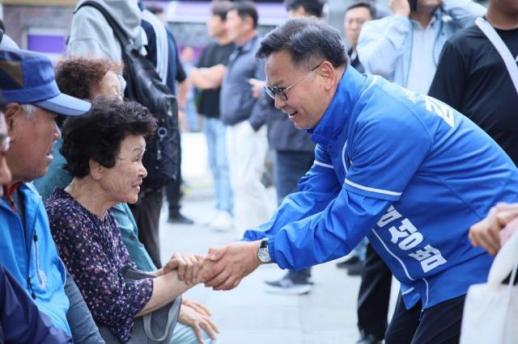 Kim Seong-beom Aims to Diversify Seogwipo's Economy with AI, Bio, and Healing Industries Kim Seong-beom, the Democratic Party candidate for the Seogwipo City National Assembly by-election, has announced plans to diversify the tourism-dependent economy of Seogwipo by focusing on AI, bio, and healing industries. He emphasized, "The Seogwipo economy must change to a sustainable structure that is not shaken by external variables," adding, "I will devote all my efforts to creating a city where young people do not leave." A native of Seogwipo, Kim graduated from Seogwipo High School and has had a 32-year career in public service after passing the civil service exam. He has served as the Vice Minister and Acting Minister of the Ministry of Oceans and Fisheries and is recognized as a prominent economic and administrative bureaucrat. The Democratic Party has described him as a "master of administration" upon his recruitment. In an interview with Aju Economy, Kim stated, "The Jeju economy has long depended on primary industries and tourism services. The COVID-19 pandemic and the restructuring of global trade have revealed that the current economic structure can be significantly affected by external factors." He further noted, "The reality that it is difficult to provide quality jobs for young people to build careers and grow has intensified youth outflow. It is urgent to reform the structure of the Jeju economy." Kim proposed fostering new industries linked to the policy direction of the Lee Jae-myung administration as a key solution. He stated, "I will cultivate future industries in Seogwipo, such as AI, bio, and healing industries, and change the economic structure of Seogwipo based on my experience of turning the promises of the Lee Jae-myung administration into actual results." He particularly emphasized the need to shift the tourism industry’s direction. Kim said, "Seogwipo tourism must transition from simple sightseeing to high-value wellness tourism centered on 'healing and stay,'" adding, "I will reduce the negative effects of over-tourism associated with quantitative growth and create a structure that genuinely benefits the local economy." He proposed the establishment of a 'marine healing and forest recreation tourism belt' utilizing Seogwipo's pristine natural environment as a key pledge. He also explained plans to normalize the long-delayed Donghong-dong healthcare town project in collaboration with the Jeju International Free City Development Center (JDC) and to attract large cruise ships and expand nighttime tourism content to ensure that tourism spending benefits local businesses. Kim expressed his commitment to enhancing transportation and medical infrastructure. He stated, "I will work closely with the government and airlines to secure stable flight seats and rationalize airfares," and added, "I will significantly strengthen the essential and emergency medical capabilities of Seogwipo Medical Center and reinforce the emergency medical network in rural and island areas." Additionally, he stated, "I will create a Seogwipo where all citizens can enjoy residential welfare without exclusion through the introduction of a national responsibility system for care, bridging the gap in public education, and establishing regional arts centers and barrier-free sports spaces." Kim identified his extensive central administrative experience and execution capabilities as his strengths. He noted, "Having worked as a senior official and vice minister in economic departments, I have collaborated with the National Assembly and central ministries during the legislative and budgetary processes," and added, "I have experience participating in cabinet meetings as Acting Minister and turning the president's key promises into actual results." He continued, "To bring Seogwipo's share and take care of citizens' lives, we must connect the central government, National Assembly, and local government organically," emphasizing that "administrative experience and policy networks are my greatest competitive advantages." During his campaign, the most frequently heard concerns from residents were about economic recession and worsening livelihoods. Kim said, "Many citizens have expressed that the Seogwipo economy is struggling and life is tough," recalling, "Especially, the words of the elderly who asked me to revive the economy and livelihoods, saying, 'I have high expectations because you are a worker trusted by President Lee Jae-myung,' remain most memorable." He added, "I feel a sense of responsibility to meet the expectations placed upon me," stating, "Just as I turned the president's promises into results as the first Vice Minister of Oceans and Fisheries in the Lee Jae-myung administration, I will surely revive the Seogwipo economy." In conclusion, Kim urged, "This election is not just about electing a single member of the National Assembly; it is a crucial choice that will determine the future direction of Seogwipo." He emphasized, "I was born and raised in Seogwipo and have always paid attention to local issues while in central government. Now is the time for action rather than words." Kim stated, "I will create new growth engines in AI, bio, and healing industries to take responsibility for the livelihoods and future of Seogwipo. Please give the prepared worker Kim Seong-beom the opportunity to work." * This article has been translated by AI. 2026-05-30 16:48:00
 -
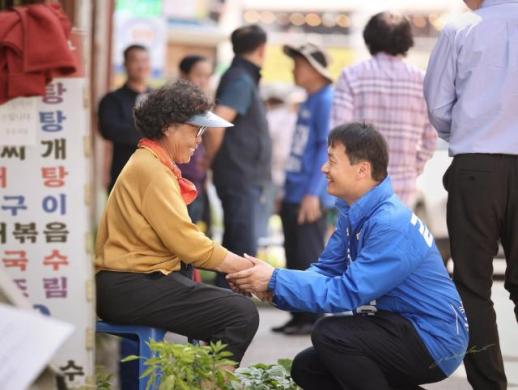 Kim Young-bin Aims to Revitalize Gongju, Buyeo, and Cheongyang for Youth Kim Young-bin, the Democratic Party candidate for the Gongju, Buyeo, and Cheongyang parliamentary by-election, has proposed expanding healthcare and welfare services and creating jobs for young people as key solutions to address the region's declining population and aging issues. He emphasized the importance of developing a sustainable tourism industry leveraging the Baekje cultural heritage, stating, "We will create a region where anyone can visit and want to stay." A native of Gongju, Kim graduated from Gyodong Elementary School, Gongju Middle School, and Gongju National University of Education. He has served as a prosecutor and a policy advisor to the Minister of Justice, gaining experience in policy and legal affairs at the central government level. He also worked as Chief Legal Officer at Dunamu, highlighting his dual experience in policy and the real economy as a strength. In a phone interview with Aju Economy on May 29, Kim stated, "Gongju, Buyeo, and Cheongyang are experiencing rapid population decline and aging, but the healthcare and welfare infrastructure remains insufficient. We must improve the reality where elderly individuals struggle to receive timely medical services when they are ill." He proposed expanding the functions of the Cheongyang County Health Center as one of his key pledges. Kim said, "We will construct new emergency and inpatient rooms and promptly establish a geriatric ward and dialysis unit, enhancing accessibility to healthcare and addressing gaps in the welfare and medical systems." He added, "As important as elderly welfare is the education and care of children. Creating a city where parents can raise their children and build families with peace of mind is a core task in responding to the population extinction crisis." Kim also stressed the need to address youth employment issues, stating, "The painful reality of young people leaving the region due to a lack of good jobs is a serious problem. Young people are leaving because there are no jobs, while companies cannot find workers, creating a vicious cycle." He outlined plans to foster tourism and cultural industries utilizing the Baekje cultural heritage. He aims to develop the Baekje cultural area into a national tourism and industry project in connection with the 'Baekje Historic Areas Special Act,' which passed the National Assembly in May, and the National Institute of Historical and Cultural Area Promotion, which is pursuing the establishment in Buyeo. Kim stated, "We can establish a national project system that goes beyond simple research and surveys to include restoration, tourism, and industrialization. We will create jobs and attract population influx through revitalizing the nighttime economy and expanding sustainable tourism." He also mentioned plans for tailored support at the National Assembly level to help young entrepreneurs sustain their businesses. Comparing himself to the People Power Party's Yoon Yong-geun, Kim highlighted his strengths in policy planning and the advantages of being a ruling party candidate. He said, "I have directly designed policies and coordinated laws while working at the Seoul Central District Prosecutor's Office and the Minister of Justice's policy advisory office. My experience in both public and private sectors makes me a versatile candidate." He emphasized the importance of close cooperation with the central government for regional development, stating, "I am a strong candidate from the ruling party who can secure budgets and address current issues in line with the Lee Jae-myung administration." Kim recalled a memorable moment during his campaign when he held a policy discussion with local youth. He said, "I was deeply impressed by the 30 or so college students and young people who presented their policy proposals with a clear sense of the issues. I realized again that resolving youth employment and housing and education issues is essential to responding to the population extinction crisis." He added, "I gain great strength when residents welcome me with 'You’ve come well.' I will continue to listen to the voices of residents directly in markets, alleys, and parks, and realize policies based on their input." Finally, Kim stated, "Gongju, Buyeo, and Cheongyang are not places for transient politicians. The person who has thought about the region from the beginning will ultimately be able to take responsibility for it until the end." He emphasized, "As someone who graduated from elementary, middle, and high school in Gongju, I will work with the Chungnam governor, mayors, and the Democratic Party to ensure tangible regional development." He concluded by stating, "I will be a worker who can create real change rather than just political slogans," appealing for support.* This article has been translated by AI. 2026-05-30 16:48:00
 -
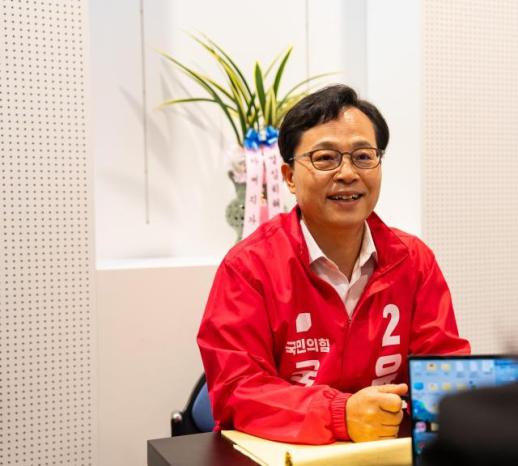 Yoon Yong-geun Proposes Cultural Tourism Belt to Revitalize Gongju, Buyeo, and Cheongyang Yoon Yong-geun, the People Power Party candidate for the Gongju, Buyeo, and Cheongyang by-election, has pledged to revitalize the declining region by focusing on sustainable tourism and expanding job opportunities for young people. Hailing from Buyeo, Yoon graduated from Buyeo Jangam Elementary School, Jangam Middle School, and Buyeo High School before earning a law degree from Chungnam National University. He passed the bar exam (48th session) and currently serves as the managing attorney at Elplus Law Firm. Recently, he gained experience in national politics as the head of the People Power Party's Seongnam Jungwon District and as the party's media spokesperson. In an interview with Aju Economy, Yoon stated, "Gongju, Buyeo, and Cheongyang are rich in historical, natural, and cultural assets, but we have failed to connect these to the local economy. We need policies that genuinely change residents' lives, not just increase the number of tourists." He proposed the 'Baekje Cultural Heritage Integrated Tourism Belt' as a key initiative. This plan aims to connect Gongju's historical and cultural resources, Buyeo's Baekje heritage, and Cheongyang's nature and wellness tourism to create a sustainable tourism city. Yoon emphasized, "Currently, tourists only stop briefly. We will create tourism routes that encourage stays of at least two nights and three days, transforming the tourism industry into one that combines accommodation, spending, and experiences." He also highlighted the need to utilize the underused Gongju KTX station. "I will turn Gongju KTX station into the 'starting point for a time travel through Baekje culture,' making the station itself a theme park where visitors can experience Baekje's history and culture from the moment they arrive," he said. Additionally, Yoon plans to connect traditional markets, alley businesses, and local agricultural product sales directly to tourism routes, ensuring that tourism spending translates into income for residents. He also aims to foster youth entrepreneurship and experiential content industries to link tourism with local job creation. Yoon stressed that he is a candidate with both central political experience and the ability to execute plans. "Having served as the head of the Seongnam Jungwon District and as the media spokesperson for the People Power Party, I have gained experience in navigating the central government and the National Assembly. Ultimately, the power to drive local development lies in securing actual budgets and policies," he said. Regarding his differences with Democratic Party candidate Kim Young-bin, Yoon asserted, "I am not a candidate representing anyone else. I was fairly selected as the People Power Party candidate through a democratic primary process." He actively refuted claims that he is using this election as a political stepping stone. "I am not someone who has temporarily stepped down for the election. I was born and raised in Buyeo, and my parents are buried here," he said. Yoon expressed his commitment to the region, stating, "Gongju, Buyeo, and Cheongyang are my hometown and ultimately my final resting place. I will become a politician who takes responsibility for the region even after the election." During his campaign, he noted that the most common concerns he hears from residents are about declining vitality and youth outmigration. "Twenty years ago, people and the economy were vibrant, but now I hear that young people are leaving for big cities, diminishing the overall liveliness of the area," he said. One resident's plea to not use the region as a means for personal political gain stood out to him. Yoon remarked, "I felt strongly that residents are looking for sincerity and accountability from politicians, rather than just words." Yoon concluded, "I am approaching this election with a sense of urgency to revive my declining hometown. I will improve job quality, transportation, culture, tourism, and living conditions to make this a region where young people return, not leave." Finally, he stated, "This election is not just about electing a single politician; it is a crucial choice that will determine the future of Gongju, Buyeo, and Cheongyang. I will prioritize residents' lives over political slogans and ask you to judge based on who will genuinely take responsibility for the region's future. I will repay you with results."* This article has been translated by AI. 2026-05-30 16:48:00
 -
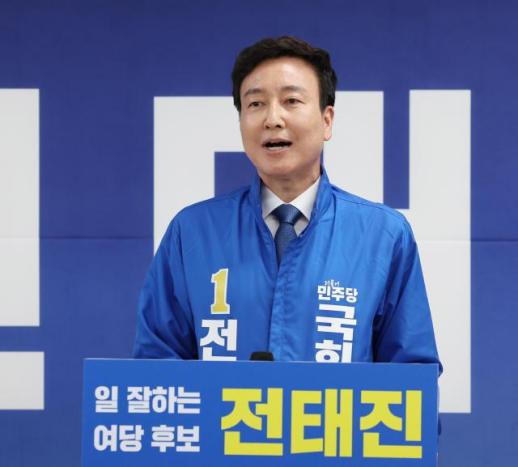 Jeon Tae-jin Promises to Create Ulsan AI Valley to Retain Young Workforce Jeon Tae-jin, the Democratic Party candidate for Ulsan's Nam-gu Gap district, has identified industrial transformation and youth employment as key issues. He stated, "I will innovate Ulsan's manufacturing competitiveness with AI and digital technology to create a city where young people can dream of the future," emphasizing, "I will engage in politics that brings budgets and results, not conflict." Jeon is the first candidate recruited by the Democratic Party ahead of the upcoming by-election. With 20 years of experience as a lawyer, he has served as an advisor to central government ministries and public institutions, earning a reputation as a practical expert in industry, administration, and law. In an interview with Aju Economy, Jeon remarked, "The aging of Ulsan's industries and the outflow of young people are urgent challenges that affect the region's future," adding, "It is essential to combine AI and digital technology with existing shipbuilding, automotive, and petrochemical industries for a smart industrial transition." He proposed the establishment of an 'Ulsan AI Valley' as a key pledge. Jeon plans to create a research and startup hub linked to UNIST and Ulsan University on the site of the Okdong military base, stating, "We will build an AI demonstration base that can be immediately applied in industrial fields to elevate Ulsan's manufacturing competitiveness." He further emphasized, "I will ensure that young people can find good jobs and new opportunities in Ulsan," vowing to transform the industrial capital of Ulsan into a future-oriented industrial structure. Jeon also presented promises to improve transportation infrastructure. He stated, "We will dramatically enhance the transportation network, including the underground expressway on Munsu Road, to improve commuting conditions and living environments," explaining, "I will create a city where young people want to stay, enjoying both job opportunities and quality of life." He highlighted his strengths in collaborating with the ruling party and his practical experience. Jeon said, "What Ulsan Nam-gu Gap needs now is not politics that fights against the Lee Jae-myung government, but politics that cooperates to secure budgets and deliver results." Addressing concerns about his lack of political experience, he countered, "Being a political newcomer is actually a strength." Jeon explained, "I can focus solely on resolving Ulsan's issues without getting caught up in existing political rhetoric or divisive conflicts," asserting, "While I will gain political experience, I am confident in my urgency and ability to drive Ulsan's development more than anyone else." He noted that the most common request from residents during his campaign is for economic recovery. Jeon said, "Citizens often express, 'We are tired of politics that just fights,' and 'Please revive Ulsan's economy.'" He emphasized, "Ultimately, what citizens want is not political slogans but politics that addresses their livelihoods." One particular comment from a small business owner resonated with him. Jeon recalled, "I heard, 'Political news comes out every day, but our store's situation isn't improving. Please revive the economy instead of fighting.'" He stated, "That one remark encapsulated the reality and urgency of the citizens." He stressed, "We now need politics that creates results for the economy, people's livelihoods, and Ulsan's future, rather than politics that fights." Finally, Jeon presented tailored pledges for different generations to garner support. He said, "For young people, I will create future jobs through the Ulsan AI Valley, and for parents raising children, I will directly bring in childcare and education infrastructure through central budgets." He added, "For middle-aged individuals enduring the industrial transition, I will advocate for job retraining and support for industrial transition, and for the elderly, I will demonstrate that only candidates from the ruling party can bring in central welfare budgets." Jeon concluded, "What Ulsan needs now is not politics that fights, but politics that brings in budgets and support," asserting, "I will create 'Ulsan Again,' not 'Yoon Again.' I will prove it through results, not words." * This article has been translated by AI. 2026-05-30 16:48:00
 -
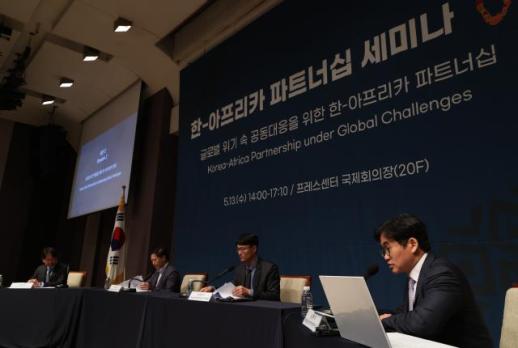 South Korea to host first Korea-Africa foreign ministers' meeting SEOUL, May 30 (AJP) - South Korea will host its first standalone Korea-Africa Foreign Ministers' Meeting next week, bringing together representatives from 54 African countries and four regional organizations as Seoul seeks to deepen economic ties, diversify supply chains and strengthen cooperation on global challenges. The three-day gathering, scheduled for May 31 to June 2 in Seoul, comes as governments worldwide race to secure critical mineral supplies and build more resilient supply chains amid growing geopolitical and trade uncertainties. The meeting will be accompanied by a Korea-Africa Business Forum involving government agencies and private-sector participants. The Ministry of Foreign Affairs said the conference will focus on expanding practical cooperation for shared prosperity and coordinating responses to challenges ranging from supply chain disruptions and climate change to development and security issues. The main ministerial session on June 1 will be co-chaired by Foreign Minister Cho Hyun and Ghanaian Foreign Minister Samuel Okudzeto Ablakwa, representing the African Union's vice chair country for 2026. Ministers will hold two plenary sessions. The first session, titled "Strengthening Economic Cooperation: Promoting Shared Prosperity and Sustainable Growth," will review cooperation in trade, investment, infrastructure, science and technology, education, food security and supply chains, while exploring ways to expand economic engagement between South Korea and African economies. The second session, "Joint Responses to Global Challenges: Korea-Africa Solidarity," will discuss practical cooperation in development assistance, climate action, public health, peace and security, and people-to-people exchanges. On the sidelines of the meeting, Cho is expected to hold a series of bilateral talks with participating foreign ministers to discuss issues including Korean business expansion in Africa, supply chain cooperation and the protection of overseas nationals. The ministry will also host the Korea-Africa Business Forum on June 2 jointly with the Korea-Africa Foundation, KOTRA, the Korea International Trade Association and Yonhap News Agency. The forum will provide a venue for businesses and institutions to explore investment opportunities and discuss practical cooperation measures related to global supply chain challenges. The meeting marks South Korea's first foreign ministers' conference dedicated exclusively to Africa and follows Seoul's broader diplomatic push to diversify its partnerships beyond traditional allies while expanding its role as what the government describes as a "globally responsible state." Separately, Hyundai Motor Group will provide transportation support for visiting delegations under an agreement with the Foreign Ministry. 2026-05-30 07:41:11