
Journalist

Ji Da Hye
dahyeji@economidaily.com
-
 BOK governor to attend BIS meeting, Singapore fintech forum SEOUL, November 05 (AJP) - Bank of Korea Governor Lee Chang-yong will travel to Basel, Switzerland, on Thursday to attend a meeting of the Bank for International Settlements (BIS) governors. During his visit, Lee will join discussions with fellow central bankers on the global economy and financial markets. As a BIS director, he will also take part in meetings of the board and the Economic Consultative Committee. In his capacity as chair of the Committee on the Global Financial System, he is expected to lead talks on international financial stability and policy coordination. Following the meetings in Basel, Lee will head to Singapore to participate in the 10th Singapore FinTech Festival, one of the world’s largest gatherings for financial technology. Scheduled to speak on a panel, he plans to present the Bank of Korea’s digital currency project, and discuss the evolving role of central bank digital currencies in the global financial landscape. The festival, to be held from Nov. 12 to 14 at the Singapore Expo, will bring together central bank governors, policymakers, and executives from leading financial and fintech companies. Lee plans to return to Seoul on Nov. 13. * This article, published by Aju Business Daily, was translated by AI and edited by AJP. 2025-11-05 15:16:02
 -
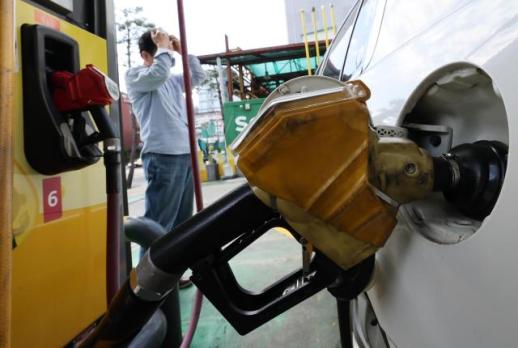 Seoul to gradually phase out fuel tax relief by year-end SEOUL, October 22 (AJP) -South Korea will begin winding down the fuel tax relief that has been in place since the post-pandemic inflation surge, the Ministry of Economy and Finance said Wednesday. The measure, which had been scheduled to expire at the end of October, will be extended through the end of the year — though at reduced rates — to “avoid overburdening consumers,” the ministry said in a statement. Starting November, the gasoline tax cut will be lowered from 10 percent to 7 percent, while the diesel and LPG butane cuts will drop from 15 percent to 10 percent. The revised rates translate into tax savings of 57 won per liter for gasoline, 58 won for diesel, and 20 won for LPG butane — meaning consumers will see price increases of roughly 25 won, 29 won, and 10 won per liter, respectively. The government has maintained the fuel tax cuts since late 2021 to mitigate inflationary pressures and support household spending amid sluggish economic recovery. * This article, published by Aju Business Daily, was translated by AI and edited by AJP. 2025-10-22 10:18:56
 -
 South Korea's finance chief urges focus on AI transition at APEC ministers' meeting SEOUL, October 21 (AJP) - South Korea’s Finance Minister, Koo Yun-cheol, called on Asia-Pacific nations on Tuesday to channel resources into artificial intelligence as a key driver of economic growth, urging policymakers to foster innovation and strengthen private-sector participation. “In the era of AI transformation, we must create an innovation-friendly environment and support the private sector,” Koo said at the opening of the Asia-Pacific Economic Cooperation (APEC) Finance and Structural Reform Ministers’ Meeting in Incheon. “South Korea prioritizes AI across all sectors to boost potential growth.” The three-day meeting, held until Oct. 23 at the Inspire Resort, brings together finance ministers and senior officials from 21 APEC economies. It marks the first time in two decades that South Korea has hosted the forum. This year’s agenda, themed “Innovation, Finance, and Fiscal Roles for Sustainable Growth,” centers on shaping a new five-year framework known as the Incheon Plan — a successor to the 2015 Cebu Action Plan. The initiative aims to strengthen innovation, fiscal resilience, and financial inclusion across the region. Discussions this week are expected to address how artificial intelligence can reshape productivity and innovation, along with policies to promote digital finance, fiscal sustainability, and access for vulnerable populations. “The Incheon Plan will be the most significant outcome of this year’s APEC finance track,” Koo said, expressing hope that the talks would help “set a clear direction for the region’s shared prosperity.” More than 2,000 participants — including representatives from the International Monetary Fund, the World Bank, and the Organization for Economic Cooperation and Development — are attending the sessions. China and Japan dispatched vice ministers, while the United States is represented by a deputy assistant secretary. The first day’s discussions focused on global and regional economic trends, digital finance, and fiscal policy. Joint sessions on innovation and digitalization are scheduled for Wednesday, followed by a meeting with the APEC Business Advisory Council. The conference will conclude Thursday with a joint press briefing outlining the group’s commitments. * This article, published by Economic Daily, was translated by AI and edited by AJP. 2025-10-21 15:13:56
 -
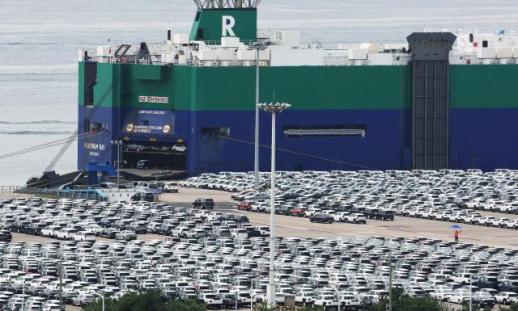 Korea's BSI eases, but outlook uneasiness persists due to U.S. uncertainty SEOUL, September 26 (AJP) - South Korean business sentiment eased for the second consecutive month thanks to robust chip exports and consumer spending spurred by government relief program, but uneasiness persisted due to trade uncertainties related to the United States. The Composite Business Survey Index (CBSI) rose 0.6 points to 91.6 from the previous month, sustaining upward movement for the second straight month, according to the Bank of Korea data released Tuesday. In the CBSI, derived from key indices in manufacturing and non-manufacturing, a reading below 100 means companies pessimistic about business conditions outnumber optimists, while a figure above the benchmark, the opposite. Manufacturing BSI edged up by 0.1 points to 93.4, led by production and new orders, while non-manufacturing CBSI gained 1.1 points to 90.5 due to improved profitability. The Korean Inc. however remains wary about business outlook as delay in a trade deal with the United States that translates into higher tariffs and barriers. The CBSI for the following month fell to 88.5. Manufacturing and non-manufacturing BSI are projected to fall to 89.4 and 87.9, respectively. Lee Hye-young, head of the Bank of Korea's Economic Sentiment Survey Team, attributed the gloom to U.S. tariff negotiations and fewer business days due to the long Chuseok holiday. Within manufacturing, electronics and telecommunications equipment improved due to strong semiconductor exports and new wireless device launches. However, chemicals and automotive parts struggled due to oversupply from China and weakened competitiveness. Non-manufacturing sectors like retail and scientific services showed improvement, with retail benefiting from Chuseok demand and consumer coupons. The Economic Sentiment Index (ESI), which combines CBSI and consumer sentiment, fell 3.3 points to 91.3, though the seasonally adjusted ESI rose 0.6 points to 92.3. The survey was conducted from Sept. 11 to 18, involving 3,524 companies, with responses from 3,298 - 1,843 in manufacturing and 1,455 in non-manufacturing. * This article, published by Aju Business Daily, was translated by AI and edited by AJP. 2025-09-26 10:07:09
 -
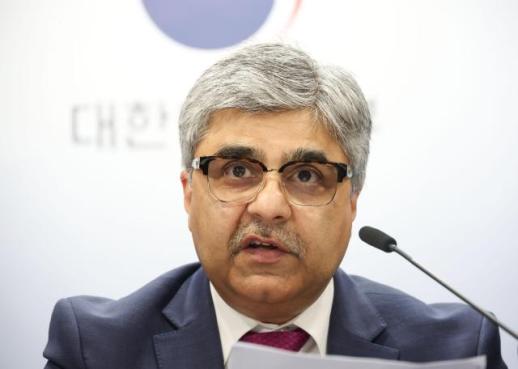 IMF raises South Korea's growth forecast but warns of structural risks SEOUL, September 24 (AJP) - The International Monetary Fund raised South Korea’s economic growth outlook for this year to 0.9 percent, up slightly from the 0.8 percent it projected in July. But the fund cautioned that the country must push ahead with structural reforms and long-term fiscal consolidation if it wants to strengthen its growth potential. The revised forecast came after the IMF's annual consultation with Seoul, conducted from Sept. 11 to 24. The fund left its projection for next year unchanged at 1.8 percent, according to South Korea’s Ministry of Economy and Finance. Inflation, which fell to 1.7 percent in August, is expected to climb back toward the central bank’s 2 percent target in 2025 and 2026. Still, the IMF warned of “high uncertainty and greater downside risks” facing the economy. “Domestic demand is gradually recovering due to eased fiscal and monetary policies, and strong semiconductor demand is offsetting declines in other exports, leading to a 0.9 percent growth this year,” Rahul Anand, the IMF's mission chief for South Korea, said in a policy briefing. “Next year, GDP is expected to grow by 1.8 percent due to reduced uncertainty, policy effects and base effects.” Anand also pointed to financial stability concerns, noting that recent measures to curb loan growth in parts of Seoul and to address troubled real estate project financing had helped reduce vulnerabilities. While endorsing South Korea’s short-term policy direction, the fund pressed for more ambitious reforms. Anand called on the government to accelerate efforts to narrow productivity gaps between small and large firms, manage risks linked to artificial intelligence while harnessing its benefits, and pursue deeper fiscal reforms. He highlighted the need for pension changes, stronger revenue measures and improved spending efficiency to deal with long-term fiscal pressures. A more credible medium-term fiscal framework, he added, would provide “fiscal anchors” to ensure sustainability. The IMF publishes its economic forecasts for member countries each April and October, with interim updates for major economies in January and July. * This article, published by Aju Business Daily, was translated by AI and edited by AJP. 2025-09-24 11:35:13