
Journalist

AJP
davekim0807@ajupress.com
-
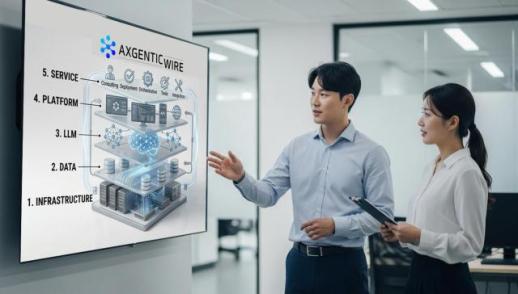 SK AX launches 'AXgenticWire' brand to drive agentic AI transformation in enterprise operations SEOUL, March 19 (AJP) - SK AX unveiled a new integrated brand called "AXgenticWire" on Thursday, signaling a push to accelerate agentic artificial intelligence adoption across corporate operations. The brand name combines "agentic AI" — systems capable of autonomous judgment and execution — with "Rewire," reflecting the company's ambition to fundamentally redesign how enterprises operate. SK AX said the platform is built to coordinate multiple AI agents across business functions, filling a gap left by piecemeal AI deployments that boost isolated task efficiency without lifting overall productivity. At its core, AXgenticWire runs on what SK AX calls "AI-readable data," a structured data format that AI models can process and learn from immediately. The platform layers in the company's accumulated AI Ops capabilities — which automate and intelligentize IT systems — to deliver a stable operating environment tailored to each enterprise's infrastructure. "The competitive edge in the agentic AI era lies not in model performance alone, but in the architecture that makes AI judgment actually function within real business operations," said Cha Ji-won, Chief AI Innovation Officer at SK AX. "We will expand our end-to-end enterprise AI full-stack execution framework — validated on the ground in real industries — to maximize corporate decision-making and operational efficiency." 2026-03-19 09:56:30
 -
 Naver, AMD sign MOU to strengthen AI GPU infrastructure cooperation SEOUL, March 18 (AJP) - South Korea's Naver and U.S. chipmaker Advanced Micro Devices (AMD) signed a memorandum of understanding to jointly develop next-generation GPU infrastructure aimed at expanding their artificial intelligence ecosystems. Under the agreement signed at Naver's 1784 headquarters Wednesday, the two companies will collaborate on building high-performance GPU computing environments optimized for Naver's proprietary large language model, HyperCLOVA X, and work to advance infrastructure technologies for stable AI model operations. The partnership also covers providing AI computing resources to academic researchers and launching joint research projects to broaden AI research outcomes across diverse infrastructure platforms. "The collaboration with AMD will serve as a meaningful opportunity to secure technological diversity and strengthen our AI infrastructure competitiveness," Naver CEO Choi Soo-yeon said. "We will continue to expand the potential of AMD platforms across Naver Cloud and our broader AI services, and pursue cooperation for next-generation technology stacks and service implementation." AMD CEO Lisa Su called Naver an optimal partner for implementing the chipmaker's next-generation AI GPU technologies, citing the Korean firm's AI capabilities and cloud platform. 2026-03-18 15:19:06
 -
 Korea's crackers edges toward shutdown as Hormuz blockade chokes naphtha supply SEOUL, March 13 (AJP) - South Korea's petrochemical plants are rapidly running out of naphtha as the closure of the Strait of Hormuz cuts off a major supply route, forcing producers to declare force majeure and slash operating rates to bare-minimum levels to avoid a full shutdown that could ripple through the country's manufacturing economy. Yeocheon NCC, LG Chem, Lotte Chemical and Hanwha Solutions have all warned customers of potential force majeure on product deliveries. GS Caltex, which shares the Yeosu industrial complex with several affected petrochemical producers, has postponed a scheduled maintenance turnaround at its Yeosu refinery from March to May in order to keep supplying naphtha to neighboring plants, industry officials said. The move underscores the urgency gripping the sector: halting refining operations now would almost certainly trigger a cascade of shutdowns downstream. About 54 percent of South Korea's naphtha imports and roughly 70 percent of its crude oil normally transit the Strait of Hormuz. Since Iran closed the waterway on Feb. 28 following joint U.S.–Israeli strikes, tanker traffic through the chokepoint has largely halted. "NCC operating rates across the region continue to decline as the Strait of Hormuz remains impassable, while prices of basic feedstocks such as butadiene and styrene monomer are surging on tighter supply and rising naphtha costs," said Kang Dong-jin, an analyst at Hyundai Motor Securities. "A recovery in NCC utilization hinges on the reopening of the strait." Naphtha prices have surged since the conflict escalated, hitting $883.40 per metric ton on Monday, up from $568.55 on Feb. 23, before easing slightly to $812.29 on Thursday, according to the S&P Global Platts Fujairah cargo assessment. Asia's steam cracker industry is overwhelmingly naphtha-based and structurally dependent on imports. Major petrochemical producers across the region — including India, Thailand, Indonesia, Malaysia, China, Japan, Singapore and South Korea — collectively imported 86.6 million tons of naphtha in 2025, according to Independent Commodity Intelligence Services (ICIS). As the supply shock spreads, petrochemical plants across Asia have begun cutting operating rates. Singapore's Petrochemical Corporation of Singapore has declared force majeure, citing disrupted naphtha deliveries, while Indonesia's PT Chandra Asri Pacific has followed with its own declaration. Korea's Yeocheon NCC has taken the same step. In China, the CNOOC and Shell Petrochemicals Company Limited has halted operations after crude supply to its integrated refinery was disrupted. Nearly 9 million tons per year of South Korean ethylene capacity is non-integrated and heavily reliant on imported naphtha, according to ICIS data. The price spike compounds an already dire situation for Korean producers, who are struggling to pass higher feedstock costs on to customers. Persistent oversupply from China has depressed ethylene and downstream product prices, compressing the ethylene spread — the margin between naphtha costs and ethylene selling prices — to about $100 per ton, far below the roughly $300 needed to break even. Korean petrochemical firms typically source about half of their naphtha from domestic refiners and import the rest. With the strait sealed off, those seaborne cargoes have stopped arriving and inventories are rapidly dwindling, leaving producers little choice but to conserve feedstock. Operating rates have been cut to what the industry calls "zombie mode." Yeocheon NCC, a 50-50 venture between Hanwha Solutions and DL Chemical, has reduced utilization to 60 percent and is reportedly considering a further cut to 50 percent, its turndown limit. Lotte Chemical has lowered utilization to 70 percent, while LG Chem has trimmed operations at its Daesan complex to about 54 percent. Once a plant falls below its turndown ratio — the minimum operating rate at which equipment can safely function — it must shut down entirely. Restarting a steam cracker typically takes up to two weeks. Domestic producers currently hold only about two weeks of naphtha inventories, according to the Ministry of Trade, Industry and Energy. A full shutdown would send shockwaves far beyond the chemical sector. Ethylene and propylene are core feedstocks for a wide range of industries, from automotive plastics and consumer electronics components to construction materials such as PVC piping and insulation, as well as synthetic fibers used in textiles. Logistics networks are already beginning to buckle. HMM, South Korea's largest shipping line, suspended new bookings on Middle East routes on Wednesday, while Korean Air has extended the suspension of its Incheon–Dubai flights through March 28. Rising freight and fuel costs are adding pressure to industries already weakened by a prolonged downturn, including steel, batteries and cement. The crisis has also complicated a government-led restructuring effort aimed at addressing structural overcapacity in the petrochemical sector. The Ministry of Trade, Industry and Energy and creditor institutions led by the Korea Development Bank had set an end-of-March deadline for companies in the Yeosu complex to submit voluntary ethylene capacity reduction plans. The war, however, has injected deep uncertainty into those negotiations. Analysts say the situation echoes the early stages of the 2022 Russia-Ukraine conflict, though the impact on Asia could prove more severe given the region's far heavier reliance on Middle Eastern feedstock. If the Hormuz blockade drags on, utilization rates at South Korea's three major petrochemical hubs — Yeosu, Daesan and Ulsan — could fall below 60 percent across the board, with ripple effects spreading through electronics, automotive, construction and consumer goods industries nationwide. 2026-03-13 14:30:45
 -
 Krafton, Hanwha Aerospace forge physical AI alliance with joint venture plans SEOUL, March 13 (AJP) - South Korean gaming giant Krafton and defense heavyweight Hanwha Aerospace signed a memorandum of understanding to jointly develop physical AI technologies and pursue the establishment of a joint venture spanning defense and other industrial applications. The partnership announced Friday marries Krafton's AI research capabilities and simulation expertise — honed through operating large-scale virtual worlds such as PUBG: Battlegrounds — with Hanwha Group's sprawling defense and manufacturing infrastructure. The two companies said they would collaborate on core physical AI research and development, field testing and application scenarios, and the buildout of shared technical and operational frameworks. The companies said they plan to set up a joint venture to fast-track the commercialization of co-developed technologies and deepen their long-term cooperation. Krafton will also invest in a fund managed by Hanwha Asset Management that targets AI, robotics and defense sectors, with a fundraising goal of about $1 billion. The fund aims to identify high-potential partners across the physical AI value chain and funnel investments toward joint development and commercialization. "We will establish a joint venture with Hanwha and grow it into a global defense technology firm on par with Anduril," said Kim Chang-han, CEO of Krafton. Hanwha Aerospace CEO Son Jae-il said AI technology is rapidly evolving beyond conventional industry applications into physical AI for the defense domain. He added that the partnership with Krafton would set a new technological benchmark in the field. 2026-03-13 10:28:38
 -
 Hanmi Pharmaceutical taps first outside CEO in 53-year history SEOUL, March 13 (AJP) - Hanmi Pharmaceutical announced it has nominated Hwang Sang-yeon, head of private equity at HB Investment, as its new chief executive, marking the first time in the South Korean drugmaker's 53-year history that an outsider has been tapped to lead the company. The board of Hanmi Science, the group's holding company, and Hanmi Pharmaceutical approved the nomination at separate meetings on Thursday. The appointment is subject to approval at the annual general meeting of shareholders scheduled for March 31. Hwang, 55, is a veteran of South Korea's capital markets and bio-pharmaceutical sector. A graduate of Seoul National University with bachelor's and master's degrees in chemistry, he previously served as head of research at Mirae Asset Securities, chief investment officer at Allianz Global Investors and CEO of Chong Kun Dang Holdings before joining HB Investment's newly established private equity division in 2025. His appointment comes amid a bitter feud between outgoing CEO Park Jae-hyun and Shin Dong-kuk, chairman of Hanyang Precision and Hanmi Science's largest shareholder, over allegations of improper management interference. Park, a 33-year company veteran, was not renominated for a new term after clashing with Shin over issues including the handling of a sexual misconduct case and attempts to substitute lower-cost pharmaceutical ingredients. Park released a statement after the board meeting, saying he did not believe he was the only person qualified to serve as a professional manager. He expressed hope that his resistance would serve as a reminder of the importance of preserving the legacy of the late founder Lim Sung-ki. The leadership change is widely seen as bringing an end to the standoff between Park and Shin at a company that posted record revenue of about 1.55 trillion won ($1.04 billion) and operating profit of 257.8 billion won in 2025. The board also nominated Kim Na-young, head of Hanmi Pharmaceutical's new product development division, as an inside director, along with former lawmaker Chae Yi-bae and Han Tae-jun, president of Ghent University Global Campus, as outside directors. Audit committee member Kim Tae-yoon was the only incumbent reappointed among five directors whose terms expire this month. All previous Hanmi Pharmaceutical CEOs — Lee Gwan-sun, Woo Jong-soo, Kwon Se-chang and Park — rose through the company's own ranks over decades, making Hwang's outside appointment a sharp departure from tradition. Shares of Hanmi Pharmaceutical closed Thursday same as the previous session at 488,000 won. 2026-03-13 08:54:37
 -
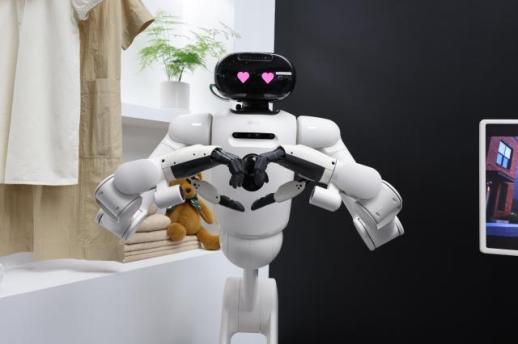 K-battery makers bet on premium to fight EV slump and China dominance SEOUL, March 12 (AJP) - South Korea's battery industry is doubling down on premium technologies — from high-nickel chemistries to all-solid-state prototypes and advanced cell engineering — as it seeks to outpace Chinese rivals and move beyond the slowing electric-vehicle market. The strategic pivot was on full display at the InterBattery 2026, the three-day exhibition that opened Wednesday at COEX in southern Seoul. The 14th edition of the show drew 667 companies from 14 countries across 2,382 booths, marking the largest turnout in the exhibition's history and underscoring how battery technology is rapidly expanding beyond automobiles into robotics, artificial intelligence and energy storage. National pavilions from Sweden, the United Kingdom, the United States, Australia, Canada and the Netherlands highlighted growing international demand for partnerships with Korean battery firms. China fielded 79 exhibitors, the largest single-country contingent. "Batteries are the heart of advanced industries," said Moon Shin-hak, vice minister of trade, industry and energy, at the opening ceremony, pledging continued government backing to help domestic manufacturers maintain their technological edge amid a slowdown in EV demand and an increasingly volatile global trade environment. On the exhibition floor, one theme was unmistakable: premium technology over low-cost chemistry. Discussion of lithium iron phosphate (LFP) — the inexpensive battery chemistry that has underpinned China's dominance in entry-level EVs and energy storage — was relatively muted. Instead, booth after booth highlighted high-nickel cathodes, all-solid-state batteries and sophisticated packaging technologies, signaling that Korean manufacturers are staking their future on the high-performance end of the market. SK On made perhaps the most vivid statement of that strategy by placing a Genesis GV60 Magma electric SUV at the center of its booth. The performance-focused vehicle carries an 84-kilowatt-hour battery pack built with SK On's high-nickel NCM pouch cells and offers a driving range of about 346 kilometers on a single charge. The company also unveiled a "Hyper Fast" battery capable of charging from 10 percent to 80 percent in just seven minutes, alongside its cell-to-pack architecture and immersion-cooling battery system. SK On further showcased its first sulfide-based all-solid-state battery, targeting mass production by 2029. Across the hall, LG Energy Solution occupied the largest exhibition space at 540 square meters. Its centerpiece was the JF2 DC LINK 5.0, a grid-scale energy storage system that won the InterBattery Awards 2026 and represents the company's first use of LFP chemistry in an ESS product. A Renault Scenic fitted with LG's mid-nickel battery — containing about 70 percent nickel — illustrated a different strategic approach. The configuration aims to balance the performance of high-nickel batteries with a cost profile that sits between premium cells and low-cost LFP alternatives. Robotics also made an appearance on the show floor, though demonstrations were limited. LG Electronics displayed its home robot CLOiD, first introduced at CES 2026, which greeted visitors with a heart-hand gesture while remaining largely static. Meanwhile, Samsung SDI drew heavy crowds with the first public unveiling of a pouch-type all-solid-state battery sample designed for robotics and other "physical AI" applications. The company aims to begin mass production in the second half of 2027. Samsung selected the pouch format for its lighter weight — a crucial advantage for robots that require high energy density and burst power in compact spaces. While the company declined to identify potential humanoid-robot clients, its booth slogan — "AI thinks, Battery enables" — left little doubt about its intended market. Samsung SDI also displayed a high-energy prismatic cell with a volumetric energy density of 700 watt-hours per liter, capable of powering an EV for roughly 800 kilometers on a single charge. Among cathode material suppliers, the emphasis on performance over cost was equally clear. POSCO Future M presented ultra-high-nickel cathodes with nickel content above 95 percent, along with newly developed steel battery cans. Rival suppliers L&F and EcoPro also attracted steady traffic. The premium-focused posture reflects a broader strategic calculation. With Chinese competitors dominating much of the mid-tier battery market, Korean manufacturers are betting that advanced chemistries, all-solid-state technology and sophisticated cell engineering will secure territory where margins remain higher and technological barriers harder to replicate. "The robot battery market is expanding very rapidly, with different technical requirements depending on the type of robot," said Jung Ji-sub, team leader at LG Energy Solution's small-size battery division on the sidelines of the exhibition. "While many robots rely on GPUs or CPUs for intelligence, their actuators and operating time create very different battery demands." Safety, however, remains the overriding concern. "One client at the vice-president level told us directly that they lose sleep over the prospect of a robot catching fire near people," Jung said. "Energy density and battery life are important, but for robots to coexist safely with humans, safety is the most critical requirement." 2026-03-12 17:02:36
 -
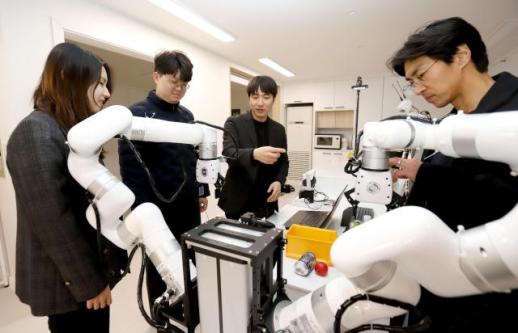 South Korean researchers develop task AI enabling robots to learn, execute everyday chores SEOUL, March 12 (AJP) - South Korean researchers have developed a robotic task artificial intelligence system capable of learning and carrying out routine household and workplace chores by observing human demonstrations, the state-run Korea Institute of Machinery & Materials (KIMM) said Thursday. The AI system, built by a team led by Kim Jeong-jung at KIMM's Department of AI Machinery, allows robots to acquire task skills from human demonstrations, replicate them in a virtual environment for training and verification, and then execute them in real-world settings through a hierarchical task-execution framework. Unlike conventional robotic task technologies that have largely been confined to single-task datasets and simulation-only validation, the new system integrates the entire pipeline — from multi-task dataset construction and real-space virtualization to hierarchical task AI and physical robot deployment, according to KIMM. The research team said it achieved a success rate exceeding 90 percent across a range of tasks by employing a layered execution structure that breaks down complex operations into sequential steps. The system was validated on an actual robotic platform operating in real-world conditions, confirming its viability for field deployment. Potential applications span household and office service tasks, retail shelf arrangement and logistics operations such as picking and sorting — areas where labor-intensive, repetitive work has long been a bottleneck for automation. "This robotic task AI learns from demonstrations and reasons hierarchically, much like a human worker," Kim said. "We have secured generalized task capabilities applicable across a wide spectrum of everyday operations." Kim added that the team verified the system's reliability by building a diverse task dataset, securing a real-world testing environment and running validation on an actual robot, confirming that robots can reliably assist with repetitive daily tasks. The team plans to broaden the range of tasks robots can perform and strengthen their adaptability to shifting environments and unfamiliar objects, with the aim of accelerating deployment in commercial service settings. 2026-03-12 09:58:12
 -
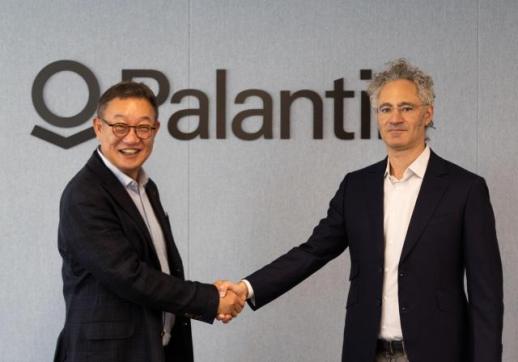 LG CNS strikes strategic partnership with Palantir to accelerate AI transformation push SEOUL, March 12 (AJP) - LG CNS, the IT services arm of South Korea's LG Group, signed a strategic partnership with U.S. artificial intelligence software firm Palantir Technologies, as the company moves to broaden its enterprise AI platform business. The agreement was signed ahead of Palantir's AIPCon event in the United States. LG CNS President and CEO Hyun Shin-gyoon and Palantir co-founder and CEO Alex Karp were among senior executives present at the signing ceremony on Wednesday (local time). Under the deal, LG CNS will offer Palantir's enterprise platforms — Foundry, which consolidates and refines fragmented corporate data, and AIP (Artificial Intelligence Platform), which integrates generative AI into that data environment to support real-time decision-making — tailored to each client's operations. To drive the initiative, LG CNS will establish a dedicated unit called FDE (Forward Deployed Engineering), which will work closely with Palantir to identify and execute high-value AI transformation projects across manufacturing, energy, electronics, and logistics. The company plans to begin its commercial expansion with LG Group affiliates before targeting broader clients. LG CNS said it has already completed a proof-of-concept deployment of Foundry and AIP in the quality management division of one LG affiliate, and has since secured a full commercial contract. The company has also validated the platforms internally, building out risk-forecasting and decision-support capabilities using its own operational data. "This partnership marks a critical turning point in expanding LG CNS's AI transformation business to a global level," Hyun said, adding that the company aims to lead enterprise innovation by combining its industry expertise with Palantir's AI platform capabilities. 2026-03-12 09:25:54
 -
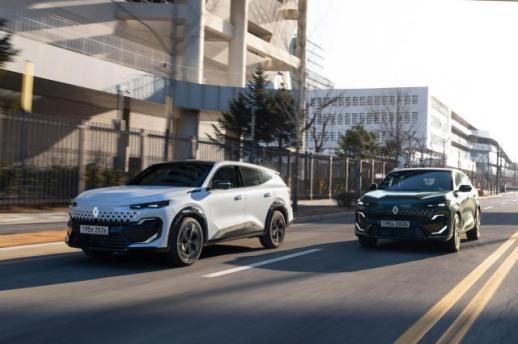 Renault unveils 'futuREady' strategy, plans 36 new models by 2030 SEOUL, March 11 (AJP) - Renault Group unveiled its new mid-to-long-term strategic plan dubbed "futuREady," charting an aggressive course to roll out 36 new models by 2030 as the French automaker seeks to cement its position as Europe's benchmark carmaker amid intensifying global competition. The plan revealed Tuesday (local time), succeeding the Renaulution turnaround strategy launched in 2021, sets a target of more than 2 million annual vehicle sales by 2030, with half generated outside Europe. The group also aims to maintain an operating margin of 5 to 7 percent of revenue and sustain annual free cash flow of about 1.5 billion euros ($1.74 billion). The Renault brand will spearhead the offensive with 12 new models in Europe and 14 for international markets, while pursuing 100 percent electrified sales across the continent and a 50 percent electrified mix outside Europe by the end of the decade. The company also confirmed that its full hybrid E-Tech powertrain would remain in the European lineup beyond 2030. At the heart of the electrification push is the new RGEV medium 2.0 platform, a modular 800-volt architecture spanning the B+ to D segments. The platform promises up to 750 kilometers of range for battery-electric models and 1,400 kilometers with a range extender, underscoring Renault's bid to close the gap with Chinese rivals on cost and technology. "At Renault Group, we know where we come from. Today, we know where we want to go, how and who with. And all of this in pursuit of one goal: to better serve our customers, ultimately delivering clean, affordable mobility tailored to their needs, based on the strength of our brands and vehicles," said Francois Provost, CEO of Renault Group. The company will lean on five international hubs — South Korea, Morocco, Turkiye, Latin America, and India — to fuel its overseas expansion. 2026-03-11 16:13:18
 -
 Korean games earn billions abroad but lose spotlight to K-pop SEOUL, March 11 (AJP) - South Korea's video game industry is quietly generating billions of dollars overseas, yet publishers say it remains overshadowed by the global success of K-pop and film while facing heavier regulatory and financial burdens at home. Once the flagship sector of the country's "K-content" boom, game developers complain they struggle to gain global attention or policy support despite remaining the largest content export industry. Games accounted for 60.4 percent of South Korea's total content exports in 2024, generating about $8.5 billion, exceeding the combined overseas sales of music, film, television and advertising, according to industry data. The 2025 export data are yet to be published. Domestic revenue reached roughly 23.8 trillion won ($16.2 billion). Yet the industry says it receives little institutional backing. Game production is notably absent from South Korea's content production tax credit framework, a gap lawmakers and trade groups have increasingly criticized. At a National Assembly forum Tuesday hosted by the Korea Association of Game Industry (K-GAMES), developers and policymakers pointed to the widening disparity with other cultural sectors. Film and television productions receive tax credits of up to 30 percent, while webtoon creators qualify for 10 to 15 percent incentives. Game developers receive no comparable support, even though 86.4 percent of Korean game companies employ fewer than 10 people, leaving most unable to meet the threshold for existing R&D tax credits. "Triple-A titles now routinely cost more than 1 trillion won to produce," said Culture Minister Chae Hwi-young. "National-level institutional support is more urgent than ever." The contrast is even sharper overseas. Britain offers a 34 percent tax credit on core game production costs, Canada reimburses up to 37.5 percent of labor expenses, and Japan allows companies to deduct 30 percent of qualifying intellectual-property income under its tax regime. Regulatory pressures are also rising. South Korea's Framework Act on Artificial Intelligence, which took effect in January, requires AI-generated content to carry disclosure labels. The game industry has opposed a proposed amendment that would introduce additional disclosure rules, warning the overlap could create regulatory confusion. Platform economics remain another sticking point. Google announced on March 4 it would lower its Google Play commission from 30 percent to a maximum of 20 percent, but the change will not take effect in Korea until December — six months after implementation in the United States and Europe. Apple continues to charge commissions of up to 30 percent through the App Store. According to K-GAMES, Korean developers paid an estimated 9 trillion won in platform commissions to the two companies between 2020 and 2023. Industry concerns come as financial pressures mount across major publishers. NCSoft reported revenue falling 5 percent last year despite launching Aion 2, while Kakao Games posted its first annual operating loss since listing. Pearl Abyss recorded a 14.8 billion won loss amid a prolonged content drought, and Krafton saw operating profit fall 10.8 percent despite record sales. Meanwhile Nexon logged roughly 4.5 trillion won in annual revenue, but operating income barely increased. A wave of project shutdowns has compounded the industry's difficulties. Extraction shooter Dungeon Stalkers will close on June 9 just seven months after launch, while NCSoft ended service for Blade & Soul Heroes in February and plans to shut down global services for Blade & Soul 2 in June. Critics say the industry's own strategy has also contributed to the slowdown. "Many game executives come to us saying 'this type of game makes money' rather than asking what makes a good game," said Im Chung-jae, professor of game software at Keimyung University. "For years the industry has focused on a narrow business model built around a small group of heavy-spending users." Despite the setbacks, major titles scheduled for release in 2026 are raising hopes for a revival. Pearl Abyss is preparing to launch the open-world blockbuster Crimson Desert, while Nexon's Arc Raiders and the globally acclaimed indie hit Dave the Diver have already demonstrated the international potential of Korean studios. Other successes — including Shift Up's Stellar Blade and Neowiz's Lies of P — suggest Korean developers can compete globally when they move beyond established formulas. Im said the industry ultimately needs broader recognition and greater creative diversity. “If companies adopt a longer-term philosophy and expand their genres, solutions will emerge,” he said. “The industry must be structured so it can ride whatever cycle comes — and right now, with such a narrow spectrum, it cannot.” 2026-03-11 15:04:56