
Journalist

Kim Dong-young, Lim Jaeho
davekim0807@ajupress.com
-
 Orion's Q1 operating profit jumps 26% on robust overseas sales SEOUL, May 15 (AJP) - South Korean confectioner Orion announced that its first-quarter operating profit climbed 26 percent from a year earlier to 165.5 billion won ($109.9 million), powered by brisk demand at its overseas subsidiaries. Consolidated revenue rose 16 percent to 930.4 billion won in the January to March period, according to a regulatory filing released Friday. Orion, the country's second-largest snack maker and the original producer of Choco Pie, said overseas units in China, Russia and Vietnam drove the gains. The Russian arm posted a 66.2 percent surge in operating profit to 14.2 billion won as revenue rose 34.7 percent to 90.5 billion won, lifted by expanded capacity for fish-shaped pastries and fresh pies. China revenue jumped 24.8 percent to 409.7 billion won on Lunar New Year demand and stronger pie and potato-snack sales, while operating profit there leapt 42.7 percent to 79.9 billion won. The Vietnam unit logged a 17.9 percent revenue rise to 151.3 billion won on Tet holiday spending and new product launches, and India sales soared 67 percent to 9.8 billion won. Domestic earnings held steady, with revenue inching up 0.4 percent to 283.4 billion won despite sluggish local consumption and rising raw material costs. Orion plans to accelerate capacity expansion in the second half, including a new production line for Poca Chips crisps at home, completion of a third plant in Hanoi, and a doubling of fish-shaped pastry output in Russia alongside construction of a new factory in Tver. "We will expand supply volumes through pre-emptive investment in production and logistics facilities at home and abroad, and further lift our growth momentum in the second half," a Orion spokesperson said. Shares of Orion traded at 139,600 won pert stock at 3:10 p.m., 2.58 percent lower than the day before. 2026-05-15 15:12:41
 -
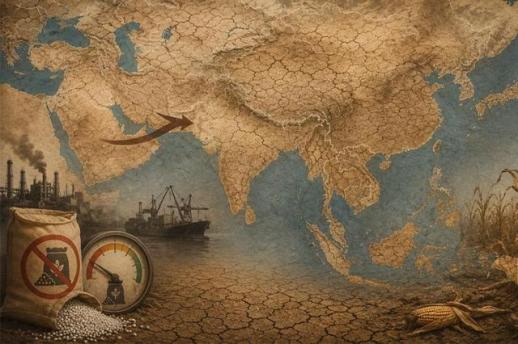 Asia's next harvest held hostage by the drawn-out Hormuz disruption SEOUL, May 15 (AJP) - The Middle East war that began with oil is now squeezing Asia's soil. Nearly three months into the closure of the Strait of Hormuz, the disruption that first hit refineries and shipping desks is migrating into rice paddies, urea silos and government budgets across a continent that feeds more than half the world's population. About one-third of global seaborne fertilizer trade and roughly 35 to 45 percent of world urea exports normally pass through the narrow Gulf corridor, according to the U.N. Food and Agriculture Organization. Daily tanker transits have collapsed by more than 90 percent since hostilities erupted on Feb. 28, effectively severing Asia's most important agricultural lifeline. The result is a slow-burning crisis with a long tail. Energy prices spiked first. The deeper damage is now reaching the inputs that determine next season's harvest — and the harvest after that. "Agriculture operates within a crop calendar that cannot be postponed," FAO Director-General Qu Dongyu said on May 7 at a ministerial meeting in Rome. "Fertilizers must be applied at specific moments in the crop cycle. If they do not arrive on time, yields are reduced, regardless of what happens later." The FAO estimates that between 1.5 million and 3 million tons of fertilizer trade per month have been delayed since the war began. Middle Eastern granular urea jumped nearly 20 percent in a single week after the initial strikes; by mid-April, urea prices had risen around 52 percent in the United States and 60 percent in Brazil. The World Bank now expects overall fertilizer prices to climb 31 percent this year, with urea potentially up 60 percent against 2025 levels. For Asia, the geography of the shock is unforgiving. The Gulf is not merely an oil supplier but the engine of the region's nitrogen fertilizer supply, with Saudi Arabia ranked as the world's largest urea exporter and Oman among the top five. India, the world's second-largest fertilizer consumer, has felt the squeeze first and hardest. Urea import bids surged from around $510 per ton in February to nearly $950 by April, while domestic production fell from a typical 2.5 million tons a month to roughly 1.5 million tons in March as LNG supplies from Qatar were rerouted, according to government and industry data. New Delhi avoided an outright shortage only by paying premium spot prices — at a cost. The country's fertilizer subsidy bill is now expected to exceed 2 trillion rupees, well above the budgeted level. Prime Minister Narendra Modi has urged farmers to reduce fertilizer use as part of a broader austerity drive to defend the rupee. Bangladesh, where roughly 53 percent of fertilizer imports originate in the Gulf, has shut four of its five domestic fertilizer plants for lack of natural gas feedstock, leaving the country dangerously exposed ahead of its monsoon planting season. The damage extends across Southeast Asia, the world's rice basket. The Philippine Department of Agriculture has warned that rice output could fall by as much as 20 to 50 percent owing to soaring fertilizer and fuel costs, compounded by looming El Niño conditions, with the country now forced to import a potentially record 6.9 million tons of rice this year. "We are currently facing an energy crisis, but we believe that this energy crisis can eventually lead to a food crisis," Senator Francis Pangilinan told a Senate hearing in Manila in April. "And therefore we have to prepare." Rice farmers in Thailand and Vietnam — the world's two largest rice exporters — are scaling back fertilizer use as costs collide with stagnant paddy prices. Indonesia, already heavily reliant on imported urea, has tendered for emergency phosphate cargoes through state-owned Pupuk Indonesia to stabilize domestic supply. The chain reaction reaches into Northeast Asia. About 40 percent of South Korea's urea and ammonia imports — critical raw materials for nitrogen fertilizer — pass through the Strait of Hormuz, according to the Korea International Trade Association. Major Gulf suppliers including Industries Qatar and Saudi Arabia's SABIC Agri-Nutrients have declared force majeure on shipments to Asia. Seoul's Ministry of Agriculture, Food and Rural Affairs convened an emergency review in March and has since extended freight and war-risk subsidies for fertilizer importers — limited relief for a country whose grain self-sufficiency hovers near 20 percent, with wheat self-sufficiency at roughly 2 percent. The second-order effects are now coming into focus. Fertilizer applied in narrow planting windows means even a delay of weeks translates directly into smaller harvests. Removing nitrogen can cut wheat yields by more than half; inadequate phosphorus can reduce rice yields by around 30 percent, the FAO has warned. What alarms agronomists most is the lag. Higher food prices grab headlines, but the structural damage accumulates quietly — thinner farmer margins, depleted soil fertility, sliding productivity and a multi-year drag on output. The FAO projects tightened global food supplies through the second half of 2026 and into 2027. The U.N. Development Programme estimates that a prolonged disruption could push 8.8 million people across Asia-Pacific into poverty and subtract between $97 billion and $299 billion from regional output. The shock spreads beyond food. Gulf shipments also carry sulfur — vital for phosphate fertilizers, mining and metallurgy — along with methanol and monoethylene glycol, key feedstocks for the plastics, textiles and packaging that anchor Asian manufacturing supply chains. China has responded by expanding export controls on nitrogen and phosphate fertilizers to protect domestic supply. Others have fewer options. For now, Asia's grain silos remain comparatively full, cushioned by last year's strong harvests and FAO food price readings that have risen only modestly. That buffer will not last if the war drags into the autumn planting season. "This is not only a geopolitical crisis," Qu said in Rome. "It is a disruption at the core of the global agri-food system." 2026-05-15 14:47:27
 -
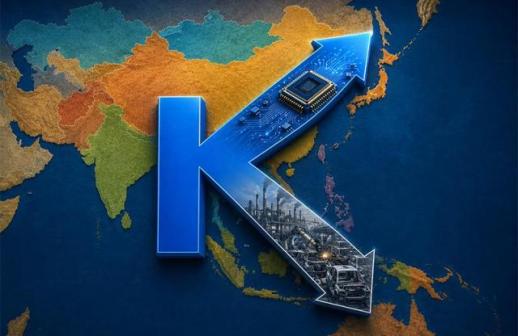 AI Boom and Hormuz Crisis Create Diverging Economic Trends in Asia The booming artificial intelligence (AI) sector and the blockade of the Hormuz Strait are sharply dividing the economic landscape in Asia. While semiconductor powerhouses South Korea and Taiwan are experiencing unprecedented growth, manufacturing-heavy countries like India, Thailand, and the Philippines are suffering from a historic oil price shock. Economists describe this phenomenon as an "Asian K-shaped recovery," where the benefits of the AI boom and the pains of fuel shortages are moving in opposite directions within the same region. The ongoing conflict between the U.S. and Israel against Iran has effectively closed the Hormuz Strait, exacerbating the widening gap between these two economic trajectories. The upper curve is dominated by semiconductor giants. Taiwan's GDP grew by 13.69% in the first quarter, marking its highest growth in 39 years. The Taiwanese stock market has risen to become the sixth largest globally, surpassing Canada. South Korea's KOSPI has surged nearly 80% this year, achieving the best performance among major global indices. South Korea has now overtaken the UK to become the seventh-largest stock market in the world, valued at $4.04 trillion. Six of the world's top ten stock markets are now in Asia, as investors begin to prioritize AI over geopolitical concerns. This shift is reflected in record operating profits for Samsung Electronics and SK Hynix in the first quarter. Samsung's market capitalization has surpassed $1 trillion, while Taiwan's TSMC accounts for over 40% of the market capitalization of the Taiwanese stock market. The United Nations Conference on Trade and Development (UNCTAD) projects that the global AI market will grow to $4.8 trillion by 2033, approximately 25 times larger than in 2023. This indicates that the semiconductor supercycle is solidifying into a new industrial paradigm. In stark contrast, the economic outlook for countries in southern and western Asia is grim. In the Philippines, where over 36% of the consumer price index (CPI) is linked to fuel, gasoline prices have exceeded 100 pesos (about $5.81) per liter. The Bangko Sentral ng Pilipinas (BSP) is caught in a dilemma over whether to raise interest rates to curb inflation or keep them steady to protect growth. The Manila government has even introduced a four-day workweek to reduce fuel demand. Thailand is facing a nationwide fuel shortage, and the Pakistani government has urged cricket fans to watch matches at home to conserve gasoline. Such administrative measures, typically unimaginable, are now being implemented. The United Nations Development Programme (UNDP) estimates that approximately 8.8 million people in the Asia-Pacific region are at risk of falling into poverty due to the war, which could reduce regional GDP by 0.3 to 0.8 percentage points. Households near the poverty line are being exposed to soaring fuel and food prices, shaking the social safety net. At the center of this divergence is the competition for heavy and medium crude oil, which is crucial for refining margins and underpins Middle Eastern exports. While the U.S. is the world's largest oil producer, most of its output is light shale oil, leading Asian refiners to engage in fierce bidding for non-Middle Eastern sour crude oil that bypasses the Hormuz Strait. The competition among South Korea, China, and Japan for the same quantities is intensifying, causing premiums to rise sharply. Jang Tae-hoon, a senior researcher at the Korea Energy Economics Institute, stated, "Unless a reasonable and effective resolution to the war is reached that can persuade shipowners and insurers, it will be extremely difficult for oil prices to return to pre-war levels in the long term." He added, "If the conflict continues, competition for crude oil outside the Middle East will become inevitable, with China and Japan also bidding for the same quantities." As of April 14, Brent crude was trading at around $106 per barrel. The number of vessels transiting the Hormuz Strait has plummeted from an average of 135 before the war to about 18. The World Bank reported that Brent crude prices surged by approximately 65% as of the end of March, marking the largest monthly increase on record. However, the benefits of the AI boom are not evenly distributed among the winning groups. The labor union representing about 30,000 members in Samsung Electronics' semiconductor division announced a strike from May 21 to June 7 after wage negotiations broke down on May 13. The union is demanding a 15% performance bonus based on operating profits and a 7% increase in base salary. JP Morgan Chase estimates that if the strike lasts 18 days, Samsung's quarterly operating profit could decline by as much as 12%. The situation in Taiwan is similarly concerning. Although the semiconductor industry accounts for only 4% of total employment, starting salaries for new hires are five times higher than in other sectors, raising concerns about polarization and economic concentration. As wealth and talent are drawn into one industry, the wage gap between traditional manufacturing and service sectors is widening. Officials and market experts warn that this growing disparity could have repercussions beyond Asia, impacting the global economy. Increasing inequality may dampen consumption, complicate monetary policy, and disrupt global trade flows. There are also concerns that fuel shortages could soon reach a critical point. Andy O'Brien, Chief Financial Officer of ConocoPhillips, stated during the first-quarter earnings call that some import-dependent countries could face severe shortages by June or July. Valero Energy, a U.S. refining company, also warned that supply chain pressures are likely to intensify. Valero CEO Lane Riggs noted, "Every day that the Hormuz Strait remains blocked adds at least three days to our inventory replenishment time," adding that it could take six to twelve months to fully restore inventory. The question remains: when will the upward curve driven by AI and the downward pressure from oil prices converge again? Market consensus suggests that this will ultimately depend on the resolution of the Hormuz Strait blockade. South Korea, benefiting from the semiconductor supercycle while grappling with the shocks to its energy and petrochemical supply chains, is particularly vulnerable to shifts in balance that could have more direct repercussions than in any other Asian country.* This article has been translated by AI. 2026-05-15 11:23:20
 -
 Samyang Foods promotes Buldak architect Kim Jung-soo to chair SEOUL, May 15 (AJP) - Samyang Foods announced that its board has elevated Vice Chair Kim Jung-soo, the executive widely credited with creating its globally popular Buldak instant noodles, to chair effective June 1, as the company tightens its grip on a fast-expanding overseas business. The promotion is Kim's first since she became vice chair in December 2021. Kim joined the noodle maker during the 1998 financial crisis and launched the Hot Chicken Flavor Ramen, or Buldak, brand in 2012, transforming a struggling domestic player into one of South Korea's most-watched export stories. Samyang said the move reflects the need for unified leadership as overseas sales now account for about 80 percent of revenue, with sales subsidiaries and plants taking shape across the United States, China and Europe. A new factory in Jiaxing, China, is under construction, and the company is reviewing additional regional liaison offices. Under Kim's watch, revenue climbed to 2.35 trillion won ($1.56 billion) in 2025 from 642 billion won in 2021, while the operating margin more than doubled to 22 percent from 10 percent. The momentum carried into this year: Samyang on Wednesday reported record first-quarter revenue of 714.4 billion won, up 35 percent on year, driven by a 215 percent surge in European sales. "The promotion of Vice Chair Kim Jung-soo is aimed at reinforcing responsible management for global expansion and corporate value," said a Samyang Foods spokesperson, adding that the company will concentrate group-wide resources on cementing its overseas competitiveness under her leadership from June. 2026-05-15 10:12:05
 -
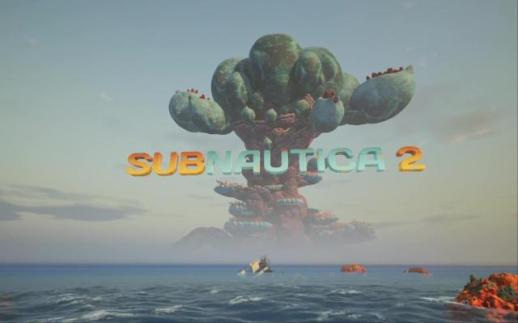 K-Game: Subnautica 2 dives into early access, lonelier than it looks SEOUL, May 14 (AJP) - Most survival games this reviewer has lived inside — Rust, Minecraft, Terraria, Core Keeper — share a comfortable rhythm: gather, build, defend, repeat. Fishing is a life-hobby for this reviewer, an in-game delicacy for such survival games as well. "Subnautica 2," which entered early access on Friday at zero a.m. KST, breaks that rhythm in two specific places. The fish want to eat you. And you cannot breathe. That combination — predators that hunt rather than wander, plus a permanent oxygen clock — is something only this series really commits to, and the sequel does not soften it. Even with a crafting-survival muscle memory built over years, the first dive produced the familiar tightening that the original game weaponized so well: a so-called thalassophobia and megalophobia inducer. Full disclosure: this reviewer never finished the 2018 original, having played it in patches and watched the rest as YouTube playthroughs. That made "Subnautica 2" one of the more anticipated titles on the personal calendar — and, after about five hours of solo play, one of the more interesting to write about. Developed by Krafton-owned Unknown Worlds Entertainment, the sequel drops players onto an unfamiliar alien ocean world aboard a doomed Alterra colony ship called the Cicada. It ditches the first game's planet 4546B entirely and, for the first time in the series, supports up to four-player co-op alongside solo. The franchise has sold more than 18.5 million copies to date, per Unknown Worlds, and the sequel topped Steam's global wishlist for nine straight months, crossing five million wishlists before launch. Story, lightly told The structural pitch differs from the first game in one key way: this is not an escape story. Players are not trying to leave. The Cicada's AI is barking objectives, the planet is hostile, and the goal is to adapt to it — to stay. Adaptation is also a mechanic. A new system called BioMod lets the player splice alien genes into their body to unlock new traits — bio-orb cave markers, faster swim speed, surfacing the planet's biology through one's own skin. The longer the player runs, the further from human baseline they drift. There is no protagonist voice-over and very little hand-holding. Skip the AI dialogue and the logs from earlier visitors, and early objectives become genuinely opaque. Several hours in, this reviewer was still freediving for blueprints like a checklist-bound pearl diver, scanner in hand, oxygen ticking. How the loop feels The loop lands somewhere between meditative and slightly panicked. Without an extra tank, the player surfaces about every 30 seconds or sprints to a bubble-emitting plant to top off. Movement, health and inventory size all expand by finding hidden biopods across the map — a soft, exploration-rewarding progression that worked on this reviewer more than the standard XP bar would. This reviewer's usual survival-game default is "fisherman and forager" — let someone else fight, let the snacks pile up. "Subnautica 2" is the rare entry where collecting fish is also collecting predators, since plenty of them bite back. Less Stardew Valley, more Jeju haenyeo (women divers) in a horror cut: the diver goes down, the diver comes up with whatever did not get her. It is a strangely compelling pitch. Hostile life is otherwise thin in the early game. Nibblers dart in for a single chomp and flee. Larger pursuers can be peeled off with a sonic resonator or a flare — though firing the resonator near a wall produced a reliable bug in which the pursuing creature simply embedded itself in the geometry. Death is gentler than it sounds. A "Reprint" mechanic revives the player from stored memory — think the recent film "Mickey 17" — at the cost of two or three items rather than the full inventory. A quiet kindness in a game that otherwise enjoys making the player suffer. Toys, bases, and the small annoyances The new flagship vehicle, the TadPole, is a glass-fronted, winged sub that can carry up to three players hanging from a top rail, with a smaller drone that detaches to thread tight caves. Base-building has loosened considerably, though the early-access blueprint pool is narrow: this reviewer spent the first stretch living in a hamster-tube of corridors before stumbling on an abandoned habitat that unlocked proper rooms. Solar panels cover the early game but tank hard at night. Inventory management is the most frustrating area. There is no stacking, no drag-to-discard, only five hotkey slots, and the hand-held field container does not auto-collect. One container this reviewer set down on the seabed re-spawned, apparently floating, in a completely different biome on the next load — the first major bug in roughly four hours of play. How it looks, how it runs The jump from Unity to Unreal Engine 5 is doing real work. Light falls through the water column with a softness the first game never had, and at about 200 meters down the sun simply gives up. On a system with an RTX 5070, 32GB of RAM and an AMD Ryzen AI 7 350, the game held up at maximum settings with motion blur off, with occasional hitches — most reliably when climbing a ladder into a vehicle pod. Krafton has said the game targets 4K at 60 fps on an RTX 5070 Ti or Radeon RX 7900 XTX, a softer ask than most UE5 releases. The early-access map is also visibly fenced in. Swim too far toward the giant central tree on the horizon and the world simply tells you it has not been built yet — usually by spawning three leviathan-class predators that kill the player on contact. An honest map border, at least. A note on how the game got here The road to launch was unusually loud. Krafton and the studio's three co-founders — Charlie Cleveland, Max McGuire and former CEO Ted Gill — spent much of 2025 in court over a $250 million earnout tied to the sequel's release. A Delaware Chancery judge in March 2026 ruled Krafton had wrongfully terminated the trio and reinstated Gill as CEO, pushing early access into this year. Co-op, in theory Four-player co-op was not testable during this review window — multiplayer did not return for press play after an earlier closed beta. The setup is straightforward enough on the menu: one player hosts in survival or creative mode (a third slot is marked "Coming Soon"), and the rest join through a Steam friends list or a short friend code. Character customization is thinner than pre-launch chatter suggested — players pick one of four pre-set survivors, and that is it for now. Lead designer Anthony Gallegos has said co-op tuning will follow player feedback after launch. The hooks are there on paper — three-seat TadPole rides, two-player lever puzzles, bio-orb breadcrumb trails. Whether they land is something this reviewer will have to come back to once there is a full team in the water. Worth diving in? After four hours, "Subnautica 2" feels recognizably Subnautica — slower, prettier, more legally complicated, and built around evolving into the planet rather than escaping from it. The horror still works in the specific way only this series does. The inventory does not. The map is small, the bugs are real, and a lot of the promised content is on a roadmap rather than in the build. For someone who came in as a fan-by-osmosis rather than a finisher of the first game, the early hours felt less like clearing a tutorial and more like learning to be a different kind of animal in a place that is actively trying to digest you. For a survival game that lets the player literally adapt into the ecosystem, that seems to be the entire point. 2026-05-15 09:00:00
 -
 'ARC Raiders,' 'MapleStory' drive Nexon to record quarter SEOUL, May 14 (AJP) - Nexon reported record quarterly earnings, with revenue, operating profit and net income all reaching all-time highs as the Tokyo-listed Korean-Japanese game publisher rode breakout demand for its 'ARC Raiders' extraction shooter and the enduring 'MapleStory' franchise. According to the firm on Thursday, first-quarter revenue rose 34 percent year-on-year to 152.2 billion yen ($963 million), while operating profit climbed 40 percent to 58.2 billion yen. Net income more than doubled, surging 118 percent to 57.2 billion yen. For the second quarter, Nexon projected revenue of between 107 billion and 119.7 billion yen, a range spanning a 10 percent decline to 1 percent growth from a year earlier. Operating profit is forecast at 16.1 billion to 25.3 billion yen, with net income seen between 16.1 billion and 23.2 billion yen. The game giant's 'MapleStory' franchise grew 42 percent from a year earlier, propelled by last year's global rollout of 'MapleStory: Idle RPG' and 'MapleStory Worlds'. The latter title jumped 79 percent on a Lunar New Year update in Taiwan, while the flagship 'MapleStory' rose 8 percent on Western momentum. 'ARC Raiders', launched in October by Nexon's Stockholm-based subsidiary Embark Studios, sold an additional 4.6 million copies in the quarter to cross 16 million in cumulative global sales just six months after release. More than half of active users have logged over 100 hours, the company said, and the title collected five major industry honors, including the multiplayer prize at the BAFTA Games Awards 2026. The combined pull of the two titles quadrupled Nexon's North American and European revenue and more than doubled sales in Southeast Asia and other markets, lifting total overseas revenue 59 percent for a quarterly record. Separately, the company renewed long-term publishing deals with Electronic Arts for 'EA Sports FC Online' in Korea and extended its agreement with Tencent for 'Dungeon & Fighter' PC in China by a decade. "The global success of the MapleStory franchise and 'ARC Raiders' allowed us to deliver outstanding first-quarter results," Lee Jung-hun, chief executive of Nexon's Japan unit, said. "We will secure mid- to long-term growth momentum through stronger strategic partnerships and a solid pipeline of new titles." 2026-05-14 16:23:32
 -
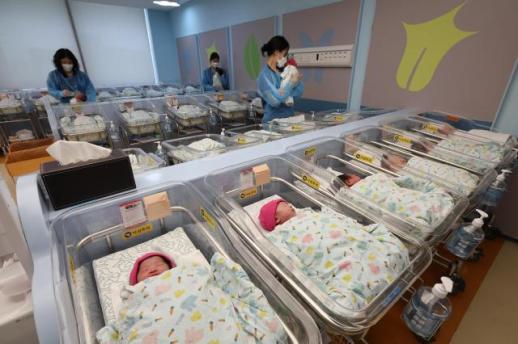 Korean firms ramp up family-friendly perks as low birth rate bites SEOUL, May 14 (AJP) - South Korean companies are widening cash payouts and parental leave benefits to lift the world's lowest birth rate, with game publisher Krafton reporting a near doubling of in-house births a year after overhauling its childbirth and childcare program. Krafton said Thursday that 46 children were born to its employees between January and April this year, about twice the 23 births recorded in the same period last year and 21 in 2024. The Seoul-based firm rolled out the expanded scheme in February 2025. The program offers up to 100 million won ($66,992) per child over a worker's career, alongside parental leave of up to two years, automated hiring of replacement staff and counseling for returning parents. The company is co-running a study with Seoul National University's Population Policy Research Center on its effectiveness. The findings suggest cash and non-cash benefits work differently. Direct subsidies signal corporate sincerity, with 83.4 percent of the staff surveyed saying they felt the company's family-friendly message was genuine. Non-cash measures such as flexible hours and childcare support more strongly shaped attitudes toward having children. "Through this research, we confirmed that real change is possible when companies actively join in solving social problems," said Choi Jae-keun, head of Krafton's General Operations Department. Krafton joins a growing roster of Korean firms tackling the demographic slump. Booyoung Group ignited the trend in 2024 with a 100 million won bonus per newborn, which lobbied the government into exempting such corporate gifts from tax. Kumho Petrochemical and HD Hyundai have since followed with cash incentives, while Samsung Electronics, LG and Hyundai Motor have expanded onsite daycare, fertility coverage and extended parental leave. The corporate push appears to align with a tentative national turnaround. South Korea's total fertility rate climbed to 0.8 in 2025, a four-year high, with 254,500 newborns marking the steepest annual increase since 2007, government data showed in February. 2026-05-14 14:03:59
 -
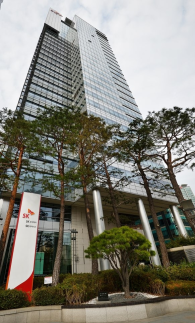 SK AX signs with OpenAI to bring ChatGPT Enterprise to Korea SEOUL, May 14 (AJP) - SK AX, the IT services arm of South Korea's SK Group, has signed a service partner agreement with OpenAI to deploy and operate ChatGPT Enterprise across Korean corporate clients, the company said on Wednesday. Under the deal, SK AX will tailor OpenAI's flagship enterprise product to each customer's workflows and security requirements, building generative artificial intelligence into back-office systems rather than bolting it on, the company said Thursday. SK AX CEO Kim Wan-jong and Anthony Russell, OpenAI's head of partnerships for Asia-Pacific, attended the signing ceremony. "We aim to help clients pursue genuine AI transformation by redesigning their internal structures, work processes and governance, not merely adopting the technology," Kim said. The agreement targets a pain point that has dogged Korean enterprises racing to embrace generative AI: the gap between pilot projects and measurable returns. SK AX flagged the rise of so-called "shadow AI," in which employees plug company data into outside chatbots without oversight, as a fresh source of security risk. SK AX will fold ChatGPT Enterprise into its existing menu of consulting, multi-agent system integration, governance design and workforce change management, drawing on AI architects, data specialists and industry domain experts. The company is positioning itself as OpenAI's preferred channel partner for the South Korean market. The tie-up adds to a string of OpenAI partnerships in South Korea, which the U.S. firm has called its largest paid-ChatGPT market outside the United States. OpenAI opened a Seoul office in September 2025 and has signed deals with Samsung SDS, SK Telecom and Kakao as it chases enterprise revenue in the country. 2026-05-14 09:56:35
 -
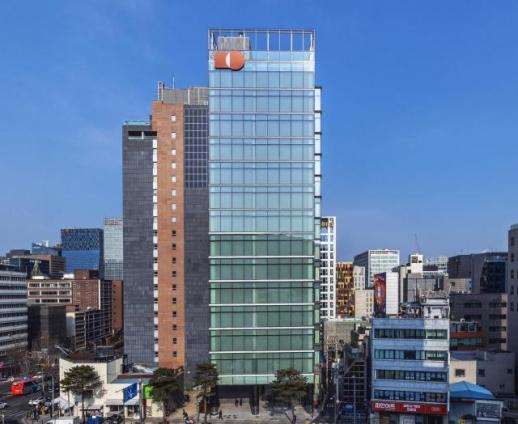 Samyang Foods hits record Q1 on Buldak demand SEOUL, May 13 (AJP) - Samyang Foods reported its highest-ever quarterly earnings for the first quarter of 2026, lifted by resilient overseas demand for its Buldak instant noodles, expanded production capacity and a favorable exchange rate. The South Korean noodle maker announced Wednesday through regulatory filings that consolidated revenue rose 35 percent from a year earlier to 714.4 billion won ($480.1 million), while operating profit climbed 32 percent to 177.1 billion won. Both figures marked all-time quarterly highs. Overseas sales, which drove the growth, surged 38 percent on year to 585 billion won as higher utilization at the company's second Miryang plant unlocked additional supply for fast-growing markets in Europe and the Americas. Europe led the charge with a 215 percent jump in revenue to 77 billion won, aided by the launch of a UK subsidiary and broader placement in mainstream retail channels in Germany, the Netherlands and other Western European markets. Sales in the United States, Samyang's largest export market, rose 37 percent to 185 billion won, and China revenue climbed 36 percent to 171 billion won. The operating margin came in at 24.8 percent, the fifth straight quarter above 20 percent, as steady offshore demand combined with a weaker won amplified profitability. The Korean currency traded near 1,486 per dollar this week amid Middle East tensions, sharpening the conversion benefit for exporters. "Despite a challenging external environment, we delivered strong results that once again validated the competitiveness of the Buldak brand and the durability of our growth," said a Samyang Food spokesperson, adding that the company will focus this year on strengthening its global operations and expanding production and sales infrastructure. Shares of Samyang Food ended at 1,359,000 won per share, 2.1 percent higher than a day before. 2026-05-13 16:18:50
 -
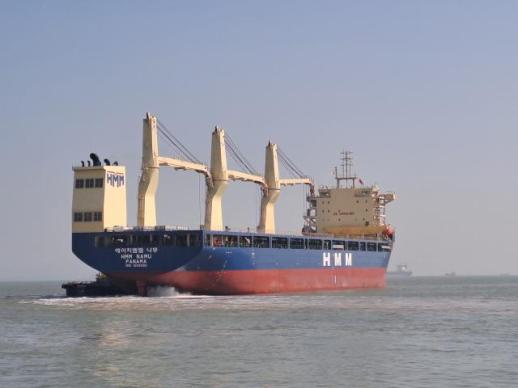 HMM Q1 profit slumps 56% on Mideast war, tariffs SEOUL, May 13 (AJP) - South Korea's largest container carrier HMM reported first-quarter operating profit tumbled 56 percent from a year earlier, hit by sliding freight rates on its core transpacific lanes, surging bunker fuel costs tied to the war in the Middle East and the lingering drag of U.S. tariffs. According to regulatory filings released Wednesday, operating profit fell to 269.1 billion won ($180.6 million) in the three months to March, from 613.9 billion won a year earlier. Revenue slipped 4.8 percent to 2.72 trillion won, while net profit dropped 52 percent to 353.6 billion won. The Shanghai Containerized Freight Index, a benchmark for global box rates, averaged 1,507 points in the quarter, down about 14 percent from a year earlier. Rates on HMM's flagship U.S. routes were hit far harder, plunging 38 percent on the West Coast and 37 percent on the East Coast as President Donald Trump's tariff regime continued to squeeze China-U.S. cargo volumes. The Iran war, which has largely shut the Strait of Hormuz since late February, has rippled through the industry by tightening bunker fuel supplies and lifting oil prices. The price of Singapore 380 CST bunker, a key fuel for large vessels, climbed about 9% to $530 per ton from $486 a year earlier. The crisis hit even closer to home on May 4, when the HMM Namu, a multipurpose carrier operated by the company, was struck by two unidentified flying objects while anchored off the United Arab Emirates, injuring one crew member. "The conflict has driven almost all global shipping lines deeper into the red," said HMM CEO Choi Won-hyok during a press conference concerning the relocation of its headquarters to Busan. The first quarter is traditionally a seasonal trough for container demand, and HMM said it still posted an operating margin of 9.9 percent, among the highest of major global carriers. The company plans to optimize fuel costs, open new African routes under a "hub-and-spoke" strategy and secure long-term bulk contracts. Shares of HMM ended at 19,830 per stock, 0.15 percent higher than the day before. 2026-05-13 15:45:10