
Journalist

Kim Dong-young and Han Jun-gu
davekim0807@ajupress.com
-
 Middle East Crisis: Korean industries grapple with renewed oil shock SEOUL, March 03 (AJP) - The widening Middle East crisis, triggered by U.S.-Israeli attacks on Iran and Tehran's closure of the Strait of Hormuz, is poised to ripple across South Korea's industrial landscape — compounding pressure on the struggling petrochemical sector while opening fresh prospects for defense exporters. The joint U.S.-Israeli airstrikes on Iran, launched on Feb. 28, killed Supreme Leader Ayatollah Ali Khamenei and triggered retaliatory Iranian missile and drone strikes against U.S. military assets across the Gulf and multiple Arab states. As of Tuesday, fighting had entered a third day with no ceasefire in sight, and U.S. President Donald Trump outlined a four- to five-week timetable for the campaign. Brent crude surged more than 6 percent in Monday trading, briefly approaching $80 a barrel, while European gas prices spiked nearly 40 percent after Qatar halted LNG output at a major facility following intercepted drone threats. Analysts warn that a sustained disruption to Hormuz traffic could push oil above $100 a barrel. The strait carries about 20 percent of the world's crude oil and one-fifth of global LNG. South Korea's exposure is acute as the country imports 70.7 percent of its crude oil and 20.4 percent of its LNG from the Middle East, according to the Korea International Trade Association. Should detour routes become necessary, maritime freight rates could climb 50 to 80 percent, with insurance premiums surging as much as sevenfold akin to the levels of past Gulf crises. The Organization of the Petroleum Exporting Countries said Sunday it would raise output by 206,000 barrels per day in April, but that increase amounts to only a fraction of the roughly 15 million to 20 million barrels per day that normally transit the strait. For now, experts say the risk of a drawn-out conflict remains limited. "Predictions of a prolonged war are not widespread, given Iran's missile-launch capacity and other constraints," said Yoon Jae-sung, an analyst at Hana Securities. "The possibility of a short-term disruption to South Korea's crude oil procurement is limited." Yoon cautioned, however, that a full Hormuz blockade would have far more severe consequences than the energy shock triggered by the Russia-Ukraine war. "Massive supply disruptions would be inevitable not only for crude oil, petroleum products, gas and fertilizer, but also for petrochemicals, and short-term price spikes would follow," Yoon said, pointing to S-Oil, SK Innovation, Unid and Lotte Fine Chemical as companies relatively better positioned to weather volatility. Petrochemicals hit at worst possible timing The conflict arrives at one of the worst possible moments for South Korea's petrochemical industry, the world's fourth-largest producer of ethylene and propylene. The sector has been mired in losses since 2021, battered by Chinese overcapacity and chronically weak margins. Spot cash margins for naphtha-fed steam crackers in Northeast Asia stood at minus $293 per metric ton as of mid-February, according to Chemical Market Analytics by OPIS. South Korea is one of the world's largest importers of naphtha, the crude oil derivative that serves as the primary feedstock for its petrochemical complexes. About 80 percent of ethylene's selling price is tied to naphtha procurement costs. When oil rises, naphtha follows — but producers cannot pass on higher costs in a global market flooded with Chinese supply. The government approved its first major restructuring project just last week. On Feb. 25, the Ministry of Trade, Industry and Energy signed off on the "Daesan No. 1" plan, merging Lotte Chemical and HD Hyundai Chemical operations with a 2.1 trillion won ($1.43 billion) support package. Lotte Chemical's 1.1-million-metric-ton-per-year ethylene cracker will be shut over three years. The deal marks the first consolidation under a broader roadmap targeting a national reduction of up to 3.7 million metric tons of cracking capacity across the Daesan, Yeosu and Ulsan complexes. The restructuring was designed for a low-price, oversupply environment — a sudden crude spike upends those calculations entirely. Freight shock amplifies cost pressure Fuel volatility has already triggered sharp spikes in charter rates for very large crude carriers (VLCCs). Following the U.S.-Israeli strikes, VLCC charter costs surpassed $400,000 per day. Rates that had hovered in the low $200,000 range nearly doubled within days as Iran escalated threats to Hormuz. Projections suggest that if a blockade materializes, charter fees could climb as high as $800,000 per day. According to freight indices for the Middle East–to–East Asia route, the Worldscale index reached 410.44 on Monday, translating into a Time Charter Equivalent of $423,736 per day. That represents more than a twofold increase from Feb. 27 — just before the conflict erupted — when the index stood at 224.72 and TCE at $218,154. Compared with January levels, when TCE averaged $78,793, tanker freight costs have surged more than fivefold in roughly a month. Defense emerges as the clear industrial upside The sole industrial upside from widening armed conflict lies in defense. Korea's defense exports to the Middle East tripled from $241 million in 2019 to $747.5 million in 2024, according to the Export-Import Bank of Korea. The broader Middle East and North Africa region accounted for 27 percent of global arms imports between 2020 and 2024, with regional defense spending projected to reach $255.8 billion by 2029. "Even if the war ends early, weapons imports in the Middle East could increase over the mid- to long term as countries hedge against follow-up Iranian attacks and lingering uncertainty," said Chae Woon-sam, an analyst at Hana Securities. "Not only U.S. defense firms, but Korean defense companies are also expected to benefit from rising regional demand." The conflict has exposed Gulf states' vulnerability to missile and drone strikes, with attacks hitting airports, military bases and residential areas across Qatar, Jordan, Kuwait and Bahrain. That exposure is likely to accelerate demand for the air defense and missile interception systems South Korean firms have been actively marketing. Hanwha Aerospace signed a $3.2 billion Cheongung-II air defense contract with Saudi Arabia in November 2023 and a $3.5 billion missile system deal with the UAE in January 2022. On Feb. 8, Defense Minister Ahn Gyu-back traveled to Riyadh for talks during the World Defense Show 2026, where 40 Korean firms showcased hardware and the two countries signed a new memorandum of understanding on joint defense research and development. Hana Securities said the recent wave of missile strikes has heightened the urgency of regional air defense stockpile replenishment, placing LIG Nex1 in a strong position. The Cheongung-II, often referred to as "Korea's Patriot," could emerge as a competitive mid-tier alternative to the U.S.-made Patriot system, which faces supply constraints and carries a higher price tag. "The Cheongung-II's cost-effectiveness and delivery timelines position it as a viable complement to the Patriot for mid-tier air defense," Chae said. "The unit cost of its interceptor missiles is less than half that of the Patriot's." Experts at the Washington Institute have noted that South Korean defense systems appeal to Middle Eastern buyers seeking to counter Iran's expanding drone and missile capabilities while diversifying beyond sole dependence on U.S. suppliers. Korean systems are designed to integrate with U.S.-supplied command-and-control networks, offering Gulf states redundancy without undermining existing alliance structures. The near-term outlook remains complicated. Iranian strikes on Gulf infrastructure have forced Korean firms to scale back on-the-ground operations. Hanwha, which employs about 123 workers at its Bismayah New City construction project in Iraq, activated emergency safety protocols. Korean Air suspended its Incheon–Dubai route, while shipping companies HMM and Pan Ocean prepared contingency detour plans. Any prolonged closure of Gulf airspace and sea lanes would delay deliveries, joint ventures and research cooperation — even as strategic demand for Korean defense systems grows. 2026-03-03 14:55:09
 -
 Hyundai Motor Group unveils autonomous robot for high-risk firefighting SEOUL, March 03 (AJP) - Hyundai Motor Group released a video showcasing a new autonomous firefighting robot designed to penetrate high-risk disaster zones where human entry is restricted. The "physical AI" solution revealed Tuesday targets environments with collapsing structures, toxic gas, or extreme heat to secure the "golden time" for fire suppression. Developed with the National Fire Agency, the robot features an advanced 6X6 in-wheel motor system that allows for 360-degree rotation on the spot. It moves at about 50 km/h—roughly twice as fast as a running human—and can scale 300mm vertical obstacles or steep warehouse ramps. To overcome blinding smoke, the unit utilizes AI-enhanced thermal imaging and infrared cameras to transmit high-definition data to operators in real-time. It also deploys a high-pressure photoluminescent hose that glows in the dark, serving as a literal lifeline for firefighters to find their way out. "The true value of this robot is not merely its heat resistance or fire suppression power, but its role as a ‘Physical AI’ that operates in actual disaster sites," said Kim Seung-ryong, acting commissioner of the National Fire Agency. He added that the technology marks a "great transition" toward a hybrid era where humans and robots overcome their respective limits. The robot saw its first combat deployment during a factory fire in Eumseong, North Chungcheong Province, on Jan. 30. Beyond active suppression, the platform functions as a mobile data hub, capturing smoke density and temperature levels to refine its machine-learning algorithms. Hyundai Motor Group plans to evolve the system into a fully autonomous "firefighting response platform" capable of analyzing fire origins and calculating the most efficient suppression methods independently. The group said it remains committed to developing technologies that support "uniformed heroes" and ensure public safety. 2026-03-03 13:31:30
 -
 South Korea's February exports surge 29% to record high on semiconductor boom SEOUL, March 01 (AJP) - South Korea's exports jumped 29.0 percent in February from a year earlier to $67.45 billion, marking the highest tally for the month on record, the Ministry of Trade, Industry and Energy said Sunday. The result was especially striking given that the Seollal, or Lunar New Year, cut working days by three compared with the same month last year, a factor that typically weighs on shipment volumes. On a daily average basis, exports soared 49.3 percent to $3.55 billion, breaching the $3 billion threshold for the first time. Semiconductors powered the rally. Chip exports rocketed 160.8 percent to $25.16 billion, an all-time monthly record fueled by surging demand for artificial intelligence infrastructure and a sharp run-up in memory prices. The benchmark price for 8GB DDR4, a standard PC memory chip, leapt to $13.00 from $1.35 a year ago, while 16GB DDR5 climbed to $30.00 from $3.79. 128GB NAND flash memory prices jumped to $12.67 from $2.29. Semiconductor shipments have now topped $20 billion for three consecutive months, climbing from $15.7 billion in October through $20.8 billion in December to $25.2 billion in February, extending a streak of nine straight months of record exports stretching back to June last year. Computer exports rose 221.6 percent to $2.56 billion on robust solid-state drive demand, while wireless communication devices gained 12.7 percent to $1.47 billion, buoyed by new handset launches. Shipbuilding exports advanced 41.2 percent to $2.2 billion and bio-health shipments edged up 7.1 percent to $1.31 billion. However, the holiday drag hit manufacturing-heavy sectors. Automobile exports fell 20.8 percent to $4.81 billion and auto parts declined 22.4 percent to $1.45 billion as production volumes shrank. General machinery slid 16.3 percent, petrochemicals dropped 15.4 percent amid a global supply glut, and petroleum products dipped 3.9 percent as weak crude prices offset higher shipment volumes. By destination, exports to the United States climbed 29.9 percent to a February record of $12.85 billion, led by chips and computers. Shipments to China rose 34.1 percent to $12.75 billion, driven by a 141 percent spike in semiconductor exports. Exports to the Association of Southeast Asian Nations surged 30.4 percent to $12.47 billion, also a February record, while European Union-bound shipments gained 10.3 percent to $5.6 billion. Imports rose 7.5 percent to $51.94 billion, producing a trade surplus of $15.51 billion — the largest monthly surplus on record and an increase of $11.55 billion from a year earlier. The trade balance has now stayed in the black for 13 consecutive months. The ministry cautioned that external uncertainties remain elevated, citing heightened geopolitical tensions in the Middle East and U.S. tariff policies as persistent risks. Minister of Trade, Industry and Resources Kim Jung-kwan said the government would "closely monitor export and import trends to minimize the impact of geopolitical risks originating from the Middle East" and maintain close communication with Washington to safeguard the conditions secured under a bilateral tariff agreement. Kim added that Seoul would push for swift parliamentary passage of a special law on U.S.-bound investment and pursue a cross-ministry export expansion plan unveiled last month, aiming to propel South Korea into the ranks of the world's top five exporters this year. 2026-03-01 14:43:54
 -
 Blackpink's Rosé becomes first K-pop artist to win at Brit Awards with 'APT.' SEOUL, March 01 (AJP) - Rosé of K-pop group BLACKPINK made history on Sunday, becoming the first K-pop artist to claim a trophy at the Brit Awards, one of Britain's most prestigious music ceremonies. The New Zealand-born South Korean singer took home the International Song of the Year award for "APT.," her chart-topping collaboration with Bruno Mars, at the 46th Brit Awards held at Co-op Live Arena in Manchester. "Give a shoutout to BLACKPINK. Jennie, Jisoo and Lisa; I love you guys so much. Thank you for always inspiring me," said Rosé after receiving the trophy in Manchester, naming her fellow group members. She also expressed gratitude to Bruno Mars, calling him her "greatest mentor and closest friend." "APT.," a pre-release single from Rosé's debut studio album "rosie," became a global sensation after its October 2024 release. Inspired by a popular Korean drinking game, the track logged a 45-week run on the Billboard Hot 100 — the longest ever for a K-pop song — peaking at No. 3. The win adds to a remarkable awards streak for Rose. In September 2025, the track earned her two trophies at the MTV Video Music Awards, including Song of the Year. It was also nominated in three categories at this year's Grammy Awards, though it did not secure a win there. Rosé is also the only K-pop artist to have been nominated at the Brit Awards twice — once as a member of Blackpink and once as a solo act. K-pop's presence at the ceremony extended beyond Rosé's win, as performers EJae, Audrey Nuna and Rei Ami took the stage to perform "Golden," the theme song from the Netflix original series "KPop Demon Hunters." 2026-03-01 11:08:12
 -
 S. Korea's Lee calls for peace, reconciliation on March 1st Independence Movement anniversary SEOUL, March 01 (AJP) - South Korean President Lee Jae Myung on Sunday called for peace and coexistence on the Korean Peninsula and beyond, as he marked the 107th anniversary of the March 1st Independence Movement at a ceremony held at the COEX convention center in southern Seoul. Lee personally presented awards to independence movement meritorious persons at the ceremony before delivering his address. The following is the full text of President Lee's commemorative address: Respected citizens of Korea and 7 million compatriots overseas, and independence movement meritorious persons and their families, 107 years ago today, the powerful cries of "Long live Korean independence!" rang out to the world. On that day, everyone was one. There were no differences of class or status, no differences of age or gender. Yeongnam and Honam were one, and there was no distinction between left and right. From Pyongyang, Seoul, Busan and Sinuiju — truly, from Mount Halla to Mount Baekdu, the entire country was filled with the sound of hurrah. Our forebears stood against Japanese imperial suppression through active resistance at home, and armed and diplomatic struggle abroad, carrying that spirit forward into the establishment of the Provisional Government of the Republic of Korea. Because they united as one for a greater cause beyond small differences, the March 1st Revolution was at last able to bear fruit in the joy of liberation. On the occasion of the 107th March 1st Independence Movement Day, I offer infinite respect and wholehearted tribute to the patriotic forebears who gave their lives for the independence of our nation. I also extend my deepest gratitude to the four surviving independence movement meritorious persons and their families. Had it not been for our forebears who threw everything aside for the independence of the motherland and for the hope of tomorrow in which their descendants would live, the free and prosperous Republic of Korea we enjoy today could never have existed. Therefore, honoring and paying tribute to the devotion of our forebears is a special reward for a special sacrifice, and the minimum measure necessary for the maintenance of our community. As I announced on Liberation Day, I will take special care to expand the discovery and commendation of undecorated independence movement meritorious persons, and to more substantially support their bereaved families. I will designate the area around Hyochang Park as the "National Hyochang Independence Park," and establish a broad plan for the utilization of the Shanghai provisional government building, so that the spirit of independence of our forebears may be honored for generations to come. Furthermore, in this year that marks the 150th birth anniversary of Baekbeom Kim Gu, I will carry on his noble aspirations through commemorative projects in which all citizens can participate together. I will surely build a fair nation where common sense prevails — where the self-deprecating saying "three generations are ruined if you join the independence movement" disappears, where those who devoted themselves for the nation are respected, and where acts of betrayal against the community are sternly judged. Respected citizens, The world a century ago, when the March 1st Revolution broke out, was an era of upheaval in which the strong preyed upon the weak. Korea and many other nations suffered the pain of losing their sovereignty and enduring colonial rule. Only after experiencing the devastation of the World Wars did the international community establish new norms to mediate disputes between nations and manage peace. However, a century later today, the world is once again entering a period of upheaval. The international norms established over the 80-plus years since the World War II are being seriously threatened by the logic of force. In order not to repeat the same mistakes, we must seek lessons from history. The spirit of the March 1st Revolution of our forebears offers great teachings to us and people around the world today. The March 1st Revolution was a declaration of independence and a declaration of peace, a compass that pointed to the future of peace and coexistence toward which we must advance. Through the March 1st Declaration of Independence, our forebears lamented "the loss of the opportunity to contribute to world culture with new technology and originality." Upon achieving independence, they also expressed their grand aspiration that they would "illuminate the dawning light of a new civilization in human history with the humanitarian spirit cultivated over thousands of years." They dreamed of a democratic republic in which the people would be the true masters, and they dreamed of a peaceful world of great harmony — not one that exploited other nations through force, but one in which people understood and supported each other, stood together in solidarity, and lived together in harmony. This is why, in this era of crisis in which democracy and peace are once again under threat, we must all deeply reflect on the spirit of the March 1st Revolution. In 1919, we were a powerless colonial people, but the citizens of the Republic of Korea in 2026 are becoming a people with the power to move the hearts of people around the world and with infinite potential to change the world. The Republic of Korea is the only nation among those liberated from colonialism to have simultaneously achieved industrialization and democratization. Our great citizens of the Republic of Korea achieved industrialization after liberation through the "Miracle on the Han River." Even under the oppression of dictatorship, we realized democracy through the April 19th Revolution, the May 18th Democratization Uprising, and the June 10th Democracy Uprising, and we astonished the entire world by illuminating the light of popular sovereignty through the Candlelight Revolution and the Revolution of Light. Our Republic of Korea, equipped with a top-10 global economic power "sufficient to enrich the lives" of our people and a top-5 global military strength "sufficient to repel the invasions of others," is making the dreams of our forebears into reality — expanding the breadth of understanding and empathy and spreading peace — with our "strength of high culture" that ranks 7th in world influence. What made this possible was the spirit of the March 1st Revolution that has been continuously passed down through the blood of our people. The spirit of the March 1st Revolution — which our forebears championed and our people have carried forward — is surely a bright light that will guide the people of the world living through this era of crisis, in which democracy and peace are shaking, toward a new world of hope. Respected citizens, Let us begin realizing the dream of peace and coexistence that our forebears so earnestly desired, starting here and now, on the Korean Peninsula. Building a peaceful Korean Peninsula that grows together — through coexistence and cooperation rather than hostility, on the foundation of trust rather than distrust — is the path to fully inheriting the spirit of the March 1st Revolution. Let us never turn away from the firm lesson of history that hostility and confrontation bring no benefit to either side. Let us bring an end to this era of conflict and confrontation that has continued for well over half a century, and advance boldly toward a Korean Peninsula of peace, coexistence, and shared prosperity. As I have made clear on numerous occasions, our government respects the system of the North, and will neither engage in any hostile acts nor pursue any form of absorption unification. Just as we have proactively taken various measures to reduce military tensions between the two Koreas and restore mutual trust through actions rather than words, we will consistently pursue the necessary steps for peace on the Korean Peninsula and the restoration of inter-Korean trust. The drone infiltration incident last year, which occurred entirely contrary to the intentions of this government, was a grave criminal act that threatens peace on the Korean Peninsula and something that must never happen. Any act that provokes tension and conflict on this Korean Peninsula where both Koreas live together cannot be justified by any excuse. So that such a thing never happens again, we will thoroughly investigate the truth, hold those responsible accountable, and establish institutional preventive measures. We will continue efforts to resume dialogue with the North. As a "pacemaker," we will communicate with the United States as well as neighboring countries so that North Korea-U.S. dialogue can resume at the earliest possible time. We will do everything in our power to transform the armistice regime into a peace regime through substantive reduction of inter-Korean tensions and cooperation with relevant nations. As the North is also establishing and implementing a new five-year plan, we hope it will come to the table for dialogue without delay, leave behind the dark past, and draw a new future together. We hope that the mansei cries of our forebears, who yearned for world peace, will ring out again as a shared pledge between North and South toward a Korean Peninsula of peace and shared prosperity. Relations with Japan must also be developed on the basis of the March 1st spirit, which pursued peace and shared prosperity. The two countries of Korea and Japan have shared a turbulent history. Throughout our society, painful traces of that history still remain, and there are victims and bereaved families who continue to suffer. In the past, the two nations opened the door to the normalization of diplomatic relations for the sake of a future of good neighborly friendship and cooperation, even while carrying unhealed pain and wounds. Over the past 60 years, Korea and Japan have deepened their cooperation in all areas — diplomacy, economy, society, and culture — and have developed their relationship as close neighboring countries sharing a front yard. Now, as we face a harsh international situation, is precisely the time for Korea and Japan to respond to reality and open the future together. The people's sovereignty government will make efforts through practical diplomacy to face the past squarely, resolve current challenges together, and advance toward the future together. We will continue shuttle diplomacy with Japan and actively support both nations' citizens to further feel the effects of relationship development and open new opportunities together. We expect the Japanese government to respond in kind so that the two countries can open a "new world of good relations based on genuine understanding and empathy." In order to wisely respond to an era of upheaval, harmony in Northeast Asia is more important than ever. The late patriot Ahn Jung-geun, through his "Theory of Peace in the East," argued that cooperation among Korea, China, and Japan is the path to contributing to world peace. Reflecting on the significance of peace and harmony in Northeast Asia, I have visited China and Japan in succession since early this year, emphasizing that the three nations of Korea, China, and Japan must find common ground, communicate, and cooperate. We will not stop our efforts for harmony and prosperity, as our forebears who sought to carry the peace of Northeast Asia to the peace of the world wished. Respected 52 million citizens of the Republic of Korea and 7 million compatriots overseas, Our forebears transcended small differences, united as one, achieved independence, and laid the foundations of the Republic of Korea. If our great citizens of the Republic of Korea, who have inherited that spirit, pool our strength together and fully exercise the potential we possess, there is no reason we cannot make the peaceful world our forebears dreamed of into reality. Let us together build the advanced democratic model nation, the peaceful Korean Peninsula free from the fear of war, and the Republic of Korea where culture blossoms and prosperity flourishes — the very things our martyred forebears and patriotic independence fighters gave their lives wishing for. With the spirit of the March 1st Revolution, let us together open the path of peace and democracy, mutual prosperity and shared benefit. Together with the great citizens of the Republic of Korea, I will advance toward that light — the light our forebears longed for without ceasing. Thank you. 2026-03-01 10:42:22
 -
 S. Korea enters era of 1 million foreign patients, moves to regulate medical fees SEOUL, March 01 (AJP) - South Korea's medical tourism boom shows no signs of slowing, with the number of foreign patients having surpassed the 1 million mark for the first time in 2024 and no meaningful reversal in sight — prompting the government to tighten oversight of fees charged to overseas visitors. The Ministry of Health and Welfare recently announced proposed amendments to the enforcement decree and rules of the Act on Supporting Overseas Expansion of Medical Services and Attraction of International Patients, establishing a clearer legal basis for investigating fees and medical charges at facilities catering to foreign patients. Under the existing law, the ministry is authorized to examine commission fees — payments that medical institutions make to brokers for attracting foreign patients — as well as the medical charges levied on those patients. However, the scope of duties that could be delegated to its supporting agency, the Korea Health Industry Development Institute (KHIDI), had remained ambiguous until now. Ministry officials say the law had long allowed for such investigations but that the delegation framework under the enforcement decree lacked clarity, adding that the revised rules would also require medical institutions to report commission fees and medical charges when submitting their annual performance records. The ministry noted that the amendments do not impose new mandatory obligations and that reporting systems were already in place, meaning significant changes on the ground were not expected. Authorities said they hope the clearer mandate will help generate reliable policy statistics on the foreign patient attraction market. According to a statistical report by the KHIDI, the number of unique foreign patients treated in South Korea in 2024 — excluding repeat visits — reached about 1.17 million, surging 93.2 percent from the previous year. It marked the first time the figure has crossed the 1 million threshold since the medical tourism program began in 2009, when just about 60,000 foreign patients were recorded. Among foreign visitors that year, about 919,000 patients who used overseas-issued cards spent a combined 1.4 trillion won ($972 million) on medical services, averaging about 1.5 million won per person. 2026-03-01 09:48:54
 -
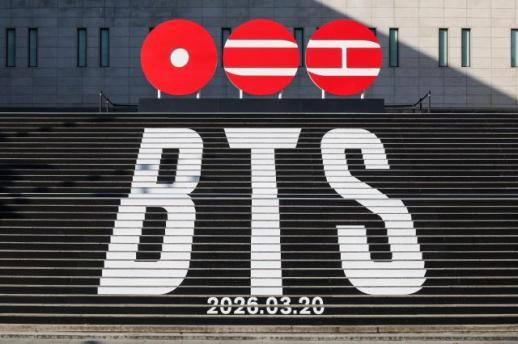 BTS Comeback D-20: Police scramble to curb mass overnight camping ahead of Gwanghwamun concert SEOUL, March 01 (AJP) - South Korean police are wrestling with how to manage the prospect of mass overnight camping by BTS fans ahead of the K-pop group's free comeback concert at Gwanghwamun Plaza on March 21, as global audiences descend on the capital with no ticket in hand. Reports say officers are in talks with the Seoul Metropolitan Government over administrative guidance measures to deter fans from seizing stretches of the plaza and surrounding pavements for extended periods before the show. Police assess that ticketless fans will queue through the night to secure vantage points offering even a partial view of the stage, a concern amplified by estimates that the crowd on the day could swell to about 260,000 people — stretching from the plaza down to Sungnyemun. The challenge, authorities said, is that overnight waiting in itself does not constitute a clear legal violation. Fans who remain on pavements or the plaza without blocking traffic cannot be cited under road traffic law or charged with obstructing public passage, nor can their presence be classified as an illegal assembly. While Seoul city ordinances permit administrative guidance and fines for unauthorized occupation of public space, police official say officers would have no choice but to appeal to fans' goodwill, urging them to move along rather than resorting to force. Police plan to deploy officers to patrol the area starting the day before the concert, and are conducting preemptive safety inspections of rooftops and ventilation structures on nearby high-rise buildings to prevent fall accidents from overcrowding. Authorities are also moving swiftly against a wave of online ticket fraud, having flagged 81 suspected scam posts — many demanding fees of 150,000 won to 1 million won for proxy ticketing services — and requesting that the Korea Communications Standards Commission remove and block them. 2026-03-01 08:51:37
 -
 The birth of humanoid robots (4): A Christmas Carol for steel and silicon Editor's Note: This is the fourth and final installment in AJP's series on humanoid robotics, examining the anatomy, technologies and economic logic behind one of the most hyped industries of the decade. SEOUL, February 27 (AJP) - A line of humanoid robots flips in unison. They lunge, pivot, brandish swords beside children in a synchronized kung fu routine. In the next sequence, they stagger theatrically, swaying through a stylized "drunken boxing" set — collapsing backward only to rebound with uncanny balance. The spectacle, staged by China's Unitree Robotics at the Spring Festival Gala, ricocheted across the globe. For many viewers it was entertainment. For roboticists elsewhere, it was a reckoning. In South Korea, some scientists watched with admiration; others, with a familiar pang. Decades of painstaking work still sit largely confined to laboratories — brilliant machines, but rarely public performers. In a lab at Hanyang University, a different drama unfolds. A humanoid named Alice 4 stands tethered to a rear frame — a metal Pinocchio awaiting animation. With a light tap on a keyboard, the machine jolts to life. It runs in place, almost straining against its restraints, optical sensors fixed straight ahead — on its creator. Han Jae-kwon, professor of robotics at Hanyang University and chief technology officer of Aei Robot, watches without theatrical flourish. "It's not about the kung fu or the backflips," he said. "The essence of a humanoid robot is what it does for work. Replace dangerous, undesirable labor. Help address the population cliff." That, he insists, is the measure that matters. The long arc of Korean humanoids South Korea's humanoid lineage stretches back more than two decades, to an era when bipedal machines were symbols of national ambition. At the Korea Institute of Science and Technology (KIST), a towering metallic figure still hangs in the institute's history hall. Known as "Centaur," it never truly walked upright. Its lower half resembled a mechanical horse — four legs instead of two. Korea's first humanoid was, in effect, a compromise between aspiration and stability. "Centaur was a small project we undertook to understand intelligent machines. Not long after Japan's Honda showcased ASIMO, we were asked to build ubiquitous robot companions capable of performing multiple tasks," recalled You Bum-jae, principal research scientist and former head of humanoid development at KIST. Japan's unveiling of ASIMO had electrified the region. In response, two Korean institutions embarked on parallel paths. At the Korea Advanced Institute of Science and Technology (KAIST), Professor Oh Jun-ho and his team introduced HUBO in late 2004 — a full-scale biped capable of walking, grasping and limited speech. "HUBO is the beginning of that history, we believe," Han said. "There was a sense of national pride — we could do what only Japan had done." In early 2005, KIST followed with MAHRU, billed as the world's first network-based humanoid. Standing 150 centimeters tall, MAHRU was designed for domestic assistance — a precursor to what today might be called "physical AI." "MAHRU was a network-based humanoid, capable of understanding vocal commands. It could walk to a microwave, open it, pick up a piece of toast, place it in the toaster, take it out and deliver it to its master," said Yoo, gently patting the robot's original plastic head. "We didn't have advanced AI back then — only recognition skills and programs to support it. But that's essentially how all humanoids aim to function even today: a body running light, a powerful computer supporting it through a network, now equipped with AI." Yet progress proved incompatible with political cycles. As Yoo noted, humanoid development was "not capable of significant results within two-year government projects." By the 2010s, funding for large-scale bipedal programs was pared back. Then disaster intervened. The Fukushima nuclear accident in 2011 prompted the U.S. Defense Advanced Research Projects Agency to launch the DARPA Robotics Challenge in 2012. The competition was designed to push robots into hazardous environments no human should enter. By the finals in June 2015, 24 teams had qualified. Three were Korean — each fielding its own platform rather than relying on Boston Dynamics' Atlas. Team KAIST, led by Professor Oh, won in 44 minutes and 28 seconds. Han's team from Robotis and a team from Seoul National University also competed — both using robots Han had helped design. For a brief moment, Korea stood at the apex of disaster-response robotics. But the aftermath told a more complicated story. In the United States, many participants flowed into emerging ventures such as Figure AI or Tesla's Optimus program. In Korea, talent dispersed. Rainbow Robotics, spun off from Team KAIST, pivoted to collaborative industrial arms and was later acquired by Samsung Electronics. Robotis listed publicly and diversified. "The people who competed back then — it's such a waste," Han said. "Many went to the U.S., others became professors but stopped working on humanoids. If all of them had stayed, the situation would be very different today." Research continued, though largely out of public view. A five-year project funded by the Ministry of Trade, Industry and Energy sustained further development at KAIST, including hydraulically actuated humanoids capable of dynamic motion. "But if the media doesn't cover much of it, the public simply doesn't notice," said Park Hae-won, who now leads KAIST's humanoid lab. The motor that changed the race Ironically, the decisive shift did not originate in humanoids at all. At the Massachusetts Institute of Technology, Professor Kim Sang-bae's MIT Cheetah project advanced quasi-direct drive (QDD) motor technology — compact, high-torque electric actuators that allowed quadruped robots to run with unprecedented speed and efficiency. Crucially, the designs were open-sourced. Hydraulics, long dominant in high-performance robots, were heavy and maintenance-intensive. Electric QDD systems offered lighter frames and lower costs — prerequisites for commercialization. Korean researchers argue that China moved quickly to absorb this architecture and adapt it to bipedal platforms. "China absorbed the QDD technology very quickly, establishing firm baseline requirements for humanoid development. That includes critical reinforcement learning for robots as well — we now believe the government distributes it to Chinese robotics firms," said Yoo. "That's how so many Chinese humanoids can run from the start, while ours begin with baby steps. We can't share reinforcement learning in Korea — institutions and private firms alike refuse to give up hard-earned data." The divergence, in this telling, is less about talent than about scale and coordination. AI as accelerant The recent resurgence of humanoid ambition in Korea owes much to artificial intelligence. When OpenAI signaled investment interest in Figure AI, the message was clear: large language models might finally supply the cognitive layer humanoids had long lacked. "Bipedal robots could perform tasks, but they required heavy engineering and years of coding. Imagine AI guiding them — robots understanding whatever their operators say and handling tasks without tedious step-by-step instructions. It was sensational," Yoo said. At KAIST, Park's team is assembling a fully domestically developed humanoid under MOTIE funding, targeting full integration by April 2026. At KIST, a joint effort with LG Electronics is producing KAPEX, described as Korea's first AI humanoid platform, with more than 70 degrees of freedom and predominantly domestic actuators. Yet laboratory elegance is not factory reliability. "What you see at trade shows is the most refined version," Park said. "If a robot falls over at the exhibition, imagine how many times it crashed in the lab." The initial commercial target, Park suggests, is not spectacle but small and medium-sized factories — cramped, uneven spaces where wheeled automation struggles. "If you visit Korean SME factories, the floors are uneven, spaces are narrow — wheels can't even get through," he said. "Humanoids could help there, if they can handle tasks without disrupting existing workflows." Han is candid about Korea's relative position. "This year's Chinese Spring Festival Gala — robots were doing gymnastics, flipping like athletes," he said. "Our spirits sink. But the essence of a humanoid is not dancing or kung fu. The real question is: what are you going to do with it?" He argues that Korea's strength lies in manufacturing depth — batteries, semiconductors, precision motors and bearings — the physical half of "physical AI." Equally important is data. "Which country has industrial complexes in every neighborhood?" Han said. "That's all data. If we digitize it quickly and feed it to our robots, ours will outperform the competition." China's scale and cost advantages loom large. The United States is reviewing robotics imports under a Section 232 national security investigation. Korea is unlikely to erect similar barriers. "The only option is to make them cheaper than China," Han said. More pressing than tariffs, however, is demonstration. Korea spends substantially on humanoid research, Han noted, but allocates only a fraction of that to large-scale deployment trials. "What's needed now is getting existing robots into factories, gathering data and proving they work," he said. "That's demonstration projects — not more lab R&D." Yoo tempers expectations. "It's going to take at least five years for robots to be genuinely useful. They can only perform simple tasks like moving items, and even that carries a 10 percent margin of error. Humanoid-tailored AI has yet to arrive — the global race is now on," he said. "We should stop comparing robots against one another and instead draw on each one's unique characteristics to work as a team, talents putting heads together. Of course, that would require a new breed of engineers — ones who understand both software AI and hardware robotics. Attention, money, time — we need all of it." Korea's humanoid story — from HUBO and MAHRU to Alice and KAPEX — is neither triumphalist nor moribund. It is incremental, intermittently brilliant, frequently underfunded. Whether it can contend with American venture capital and Chinese industrial scale will define the next chapter. Han's closing line carries neither romance nor despair. "Try running in a factory," he said. "They'll tell you to stop." Robots, he implies, must earn their keep the same way humans do — not by acrobatics, but by utility. For steel and silicon, the future will not be written on a gala stage. It will be decided on the factory floor. 2026-02-27 14:57:15
 -
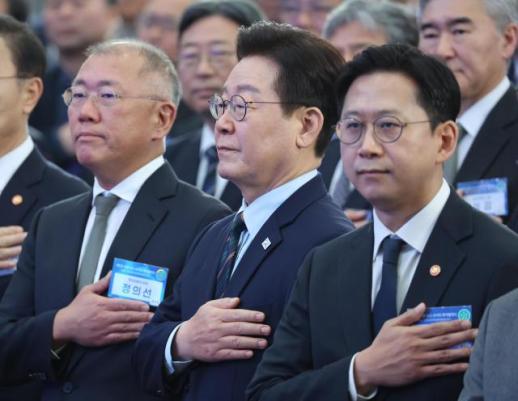 Hyundai Motor pledges $6.3 billion to build data center, robot factory in Saemangeum SEOUL, February 27 (AJP) - Hyundai Motor Group on Friday pledged around 9 trillion won ($6.28 billion) in the Saemangeum reclaimed coastal zone in North Jeolla Province, pledging to erect an AI data center, a robotics manufacturing cluster and hydrogen energy facilities on the country's western seaboard. The sprawling project under central and local government backing is set to break ground from 2027 across a 1.12 million-square-meter site in Gunsan, about 180 kilometers southwest of Seoul. The project is one of the largest private-sector commitments to the Saemangeum zone — a decades-long national land reclamation endeavor spanning 409 square kilometers. The bulk of the outlay — about 5.8 trillion won — will flow into an AI data center equipped with 50,000 graphics processing units, designed to crunch vast volumes of data for autonomous driving, software-defined vehicles and robotics development. A separate 400 billion won robotics manufacturing and parts cluster will house a factory capable of turning out 30,000 robot units per year, including wearable industrial robots and mobile platforms. Hyundai will also pour 1 trillion won into a 200-megawatt water electrolysis plant to produce green hydrogen, and channel 1.3 trillion won into gigawatt-scale solar power generation to feed the data center and hydrogen facilities. An additional 400 billion won is earmarked for a so-called "AI Hydrogen City" within the Saemangeum smart waterfront district. President Lee Jae Myung, who attended the signing ceremony alongside Hyundai Motor Group Chairman Chung Eui-sun, vowed sweeping government backing for the project. "The government will respond to the bold decisions made by businesses with even bolder support," Lee said. "We will dramatically lower regulatory and administrative barriers so that companies can fully unleash their capabilities and grow." Lee said Saemangeum would be reborn as a "city of the future" where robots become part of everyday life, predicting the hub would draw top talent from home and abroad and allow young people in the region to pursue their ambitions without migrating to the capital. Under the deal, South Korea's transport, industry, science and climate ministries will streamline permitting, furnish policy backing for robotics, AI and hydrogen industries, and bolster transportation infrastructure in the region. The AI data center and solar facilities are slated for completion by 2029, while the water electrolysis plant will begin phased operations from 2029 with capacity to expand. The robotics cluster is expected to wrap up construction in 2029 after breaking ground in 2028. The investment forms a centerpiece of Hyundai Motor Group's 125.2 trillion won domestic spending plan for 2026 through 2030, unveiled in November after Seoul finalized a trade agreement that trimmed U.S. tariffs on South Korean automobiles to 15 percent from 25 percent. 2026-02-27 14:32:11
 -
 Hanwha Aerospace diversifies into LNG trading with landmark Venture Global contract SEOUL, February 27 (AJP) - Hanwha Aerospace has secured a 20-year liquefied natural gas supply agreement with U.S. producer Venture Global, signaling a strategic expansion beyond its core defense and aerospace operations into global energy markets. Under the deal revealed Friday, Hanwha Aerospace will secure 1.5 million tons of LNG annually for 20 years starting in 2030, supplying the fuel to end users across Europe and Asia. The volume represents about 4.4 percent of South Korea's total annual LNG consumption, based on 2024 figures of about 34.12 million tons. The agreement is part of a broader push by the Hanwha Group to build an integrated LNG value chain, leveraging affiliates across the energy supply spectrum. Hanwha Ocean brings shipbuilding and floating LNG production capabilities, Hanwha Energy handles LNG power generation and operations, and Hanwha Shipping oversees maritime transport. Hanwha Aerospace said the move into LNG is designed to bolster its core defense and shipbuilding businesses as well as open new revenue streams. Geopolitical tensions have ushered energy supply chains to become increasingly intertwined with national security strategies, particularly in Europe, where governments are seeking to diversify away from Russian gas. The company plans to use its energy portfolio as leverage to deepen security partnerships with client nations and expand defense exports, while also driving LNG carrier orders for Hanwha Ocean. "Defense, shipbuilding and energy are closely linked as pillars of national security," a Hanwha Aerospace spokesperson said. "We will contribute to global security through eco-friendly energy solutions spanning production, distribution and utilization." Hanwha Aerospace has been steadily laying the groundwork for the venture, investing about 180 billion won ($125 million) in U.S. LNG firm NextDecade in 2024 and signing a memorandum of understanding with Hanwha Energy and Korea South-East Power in 2025 to expand global LNG supply networks. 2026-02-27 10:33:13