

Journalist

Seo Hye-seung
davekim0807@ajupress.com
-
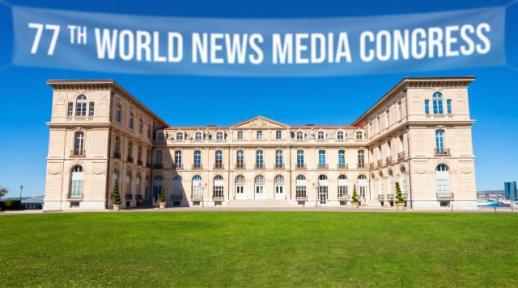 AJP joins World News Media Congress as AI takes center stage in Marseille SEOUL, May 31 (AJP) - Artificial intelligence has moved from a supporting theme to a central pillar of the global news industry's annual summit, as publishers, editors and media executives gather in southern France this week to navigate a rapidly changing information landscape. The 77th World News Media Congress, organized by the global news publishers association WAN-IFRA, opens Monday in Marseille, bringing together about 1,000 media leaders from more than 60 countries for three days of discussions on journalism, technology and business sustainability. For the first time, the Congress features a dedicated "AI in Media" track alongside its traditional Future of Journalism and Revenue and Growth programs, reflecting how generative AI has evolved from an experimental newsroom tool into a strategic priority for publishers worldwide. Aju Media, which has integrated AI across editorial production, translation, video creation and multi-platform distribution, has been invited to share its experience on newsroom transformation and audience growth in the AI era. The gathering marks WAN-IFRA's return to France for the first time in more than three decades. The event is being held at Marseille's Palais du Pharo, a 19th-century palace overlooking the Mediterranean that was built by Emperor Napoleon III. Founded around 600 BC, Marseille is France's oldest city and one of Europe's most diverse ports, linking Europe, Africa and the Middle East. WAN-IFRA said the choice reflects a deliberate effort to move beyond traditional media capitals and highlight emerging voices shaping the future of journalism. The annual Congress traces its roots to 1948, when delegates of the first FIEJ Congress — the predecessor to WAN-IFRA — gathered in Paris. Since then it has become the world's largest annual meeting of news publishing executives, rotating among cities across five continents. Previous editions have been held in Seoul, Cape Town, Taipei and Krakow. WAN-IFRA today represents more than 3,000 news publishing companies and 60 publishers' associations covering approximately 18,000 publications in 120 countries. This year's theme, "Rising Voices. Emerging Risks. Inspiring Futures," reflects the industry's struggle to adapt to disruptive technologies, shifting audience behavior, platform dependency and declining public trust. The AI emphasis marks a notable evolution from previous gatherings. The 2025 Congress in Krakow addressed artificial intelligence within the broader framework of media transformation under the banner "Mastering Media's New Playbook." The previous year's 75th anniversary edition in Copenhagen focused on "Shaping the Future of News Media in the AI Era." This year, however, AI has been elevated into a standalone strategic agenda. WAN-IFRA described AI as a "defining pillar" of its activities in its latest annual review. Its Newsroom AI Catalyst accelerator, developed in partnership with OpenAI, has involved 145 news organizations worldwide in experimenting with and deploying AI-powered newsroom tools. The Congress will also feature pre-conference workshops on technology, innovation, editorial strategy and business development, while industry-led roundtable discussions will examine media sustainability, revenue diversification, the future of print and the growing creator economy. All sessions will be conducted in English with AI-powered live translation available in more than 50 languages. The event will conclude with the presentation of WAN-IFRA's Golden Pen of Freedom Award, the organization's highest honor for press freedom, and the Digital Media Awards Worldwide, which now include categories recognizing the best use of artificial intelligence in newsroom operations and revenue generation. Following the Congress, delegates will visit leading Paris-based media organizations on a study tour scheduled for June 4 and 5. 2026-05-31 10:17:04
 -
 South Korea eyes record $900 billion in exports, aims for top-five trade power SEOUL, May 31 (AJP) - South Korea is on course to ship about $900 billion in goods this year, a surge that would vault Asia's fourth-largest economy into the world's top five trading nations, the trade ministry said. According to data from the Ministry of Trade, Industry and Resources on Sunday, exports reached $709.3 billion last year, the sixth country ever to clear the $700 billion mark and a milestone hit just seven years after crossing $600 billion in 2018. Through April this year, shipments soared 40.9% from a year earlier to a record $306.5 billion. The blistering pace has prompted the government, state researchers and brokerages alike to sharply lift their forecasts, far above the ministry's February target of $740 billion. "There are other variables, so I am cautious, but exports are expected to top $900 billion this year," Minister Kim Jung-kwan told reporters on May 27, adding that breaking into the top five was within reach. Kim stressed the boom was not propped up by chips alone. While semiconductor exports jumped about 140 percent, he said other sectors were growing a sturdy 14 percent to 15 percent, and small-business shipments climbed 10 percent. Beauty, fashion and food exports also advanced briskly, while shipments to emerging markets widened. Some experts forecast that the $1 trillion threshold may be within striking distance. Meritz Securities forecasts exports of $1.02 trillion, a 44.2 percent leap, as analyst Lee Seung-hoon projected chip and computer-component shipments would balloon 160 percent and 212 percent respectively on swelling AI infrastructure. From the second half, the ministry will mount an all-out push, channeling a record 275 trillion won in trade insurance, courting China and India, and nurturing 500 promising small exporters to cement what it called a robust, diversified trade structure. 2026-05-31 09:19:14
 -
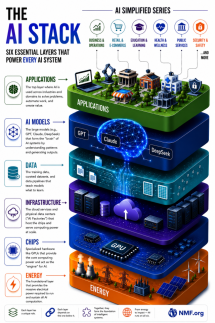 South Korea's reckoning with the AI century There is a phrase South Koreans invoke with quiet pride: bbaly bbaly — "quickly, quickly." It describes a national temperament forged in crisis, the same urgency that rebuilt a war-ravaged nation into an industrial titan within a single generation. But urgency alone, as Kwon Seok-jun, a semiconductor scholar at Sungkyunkwan University, recently warned, will not be enough for what comes next. The artificial intelligence age demands not just speed, but vision. South Korea stands at an inflection point that will look, in retrospect, as decisive as the 1960s industrialization drives that gave the world Hyundai and Samsung. The country holds world-class memory chip manufacturing — its two giants, Samsung Electronics and SK hynix, dominate the high-bandwidth memory market that powers today's AI data centers. And yet, as Professor Kwon put it, Korea remains a semiconductor power, not yet an AI power. The distinction is not semantic. It is existential. Generative AI has redrawn the map of strategic resources. Where iron ore and oil once defined national advantage, memory — the capacity of machines to store, recall, and contextualize vast knowledge — now does. GPT-class models require exponentially more memory with each generation. The country that controls that memory infrastructure wields, in effect, an indispensable key to the intelligence economy. South Korea possesses that key. The question is whether it knows what door to unlock with it. To understand the moment, consider the four powers now jostling for position in what may become the defining geopolitical contest of this century. America commands the full AI stack — frontier models from OpenAI and Google, hardware from Nvidia, capital from Silicon Valley. China presses forward with state-backed determination and the data exhaust of 1.4 billion citizens, despite the chokehold of American export controls. Taiwan's TSMC manufactures the world's most advanced chips, making it simultaneously indispensable and alarmingly vulnerable — a single strait separating civilization's nervous system from catastrophe. And Japan, once sovereign over the global semiconductor industry, now bets on its unmatched mastery of materials and precision equipment. South Korea sits in the interstices of all four. It is America's ally and China's largest trading partner. It manufactures what Taiwan designs and supplies materials Japan refines. It is, in the language of supply chains, a critical node — which is both a strategic asset and a dangerous dependency. "Korea has mastered the survival mind. The AI era demands something rarer: the great mind — the ambition not merely to endure, but to define what comes next." said according to Kwon. The architecture of computing itself is shifting beneath Korea's feet. For eighty years, the von Neumann paradigm — separating calculation from storage — governed hardware design. Today, as processors outrun memory bandwidth, a bottleneck known to engineers as the "memory wall" has become the central constraint of AI performance. High-bandwidth memory, or HBM, is the current answer. Korean companies built it. But the real prize is a comprehensive memory ecosystem spanning DRAM, NAND flash, and next-generation architectures — a prize Korea is uniquely positioned to claim. And yet hardware is not destiny. The uncomfortable truth confronting Korean policymakers is that the country has historically been stronger at manufacturing than at origination, better at refining foreign blueprints than at drawing its own. The software platforms that capture the value generated by AI — the operating systems, the foundation models, the application ecosystems — remain overwhelmingly American. Korea builds the picks and shovels of the AI gold rush. It has not yet staked a claim of its own. What could change that calculus? The answer, increasingly, lies in what technologists call physical AI: the fusion of machine intelligence with the material world. Robots, autonomous vehicles, smart factories, AI-enabled logistics — the digital made tangible. This is terrain where Korea's industrial structure offers a rare advantage. No other nation of comparable size combines deep capabilities in shipbuilding, automotive manufacturing, battery technology, telecommunications, and advanced semiconductors. Korea does not merely participate in these industries; in several, it sets the global standard. The physical AI wave, if Korea positions itself correctly, could be the country's defining contribution to the next industrial order — not merely adopting AI within its factories, but exporting the model of AI-enabled manufacturing to the world. That optimistic scenario requires confronting obstacles that are as much political as technological. Korean universities produce talented engineers, but the country's rigid corporate hierarchies and risk-averse culture have historically struggled to retain the kind of ambitious, iconoclastic talent that builds transformative platforms. Chaebol dominance, for all the efficiency it provided in the catch-up era, may now be a brake on the creative destruction that frontier AI demands. And then there is politics: Korea's democratic system, vibrant and combative, has produced policy gridlock at precisely the moment when the country needs a coherent, long-horizon national AI strategy. The window is not indefinite. The United States and China are moving fast; Korea's structural advantages will erode if they are not converted into ecosystem leadership within this decade. History is not indifferent to preparation. The industrial revolution rewarded the nations that had done the institutional groundwork — the property rights, the capital markets, the engineering education — before steam power arrived. The information revolution rewarded those that had built the network infrastructure and the legal frameworks for venture capital. The AI revolution will be no different. South Korea has pulled off three modern miracles: industrialization, democratization, and the information economy, each transforming the country within a generation. The fourth — becoming not just a supplier to the AI age but an architect of it — is harder precisely because it cannot be achieved through the survival mind alone. It requires a different kind of ambition: the willingness to define standards rather than meet them, to export ideas rather than components, to compete not at the bottom of the value chain but at its very top. Korea's time has not run out. But the clock, for perhaps the first time in its modern history, is running faster than the country's famous urgency can match. 2026-05-30 09:28:42
 -
 The world is getting thinner on a needle, and Korea wants in SEOUL, May 29 (AJP) - South Korean companies have a knack for catching up — and then overtaking. Their latest target is a class of drugs first designed to manage blood sugar that has since become the most coveted weight-loss tool on the planet, reshaping pharmacy shelves, celebrity bodies, and the business model of personal trainers everywhere. The drugs, known as GLP-1 receptor agonists, mimic a gut hormone that curbs appetite and slows digestion. Marketed by Denmark's Novo Nordisk as Wegovy and by Eli Lilly as Mounjaro and Zepbound, they have delivered double-digit weight loss in clinical trials and turned obesity treatment into one of the most lucrative frontiers in modern medicine. The numbers are staggering. Mounjaro and Zepbound together accounted for nearly 56 percent of Eli Lilly's $65.2 billion in revenue in 2025. Novo Nordisk's diabetes and obesity segment generated roughly $44 billion. Lilly's CEO has said 20 to 25 million patients are now on the two companies' drugs. What began as a medical breakthrough has long since spilled into popular culture. In Korea, interest in Wegovy surged after Bang Si-hyuk — the once-portly chairman of K-pop powerhouse HYBE — appeared markedly slimmer in public, reportedly with the drug's help. Overseas, a parade of slimmed-down celebrities has fueled a social-media frenzy that critics say glamorizes a dangerous thinness. The hype has outrun both the supply chains and, at times, the science. Studies show the drugs must be taken indefinitely to keep weight off; research published this year found that patients who quit regain weight up to four times faster than those who stop conventional dieting. Researchers are still mapping the fuller picture. Large observational analyses have linked semaglutide to sharply lower rates of Alzheimer's diagnosis — but the first major Phase III trials, reported in March, found that an oral form of the drug did not slow the disease's progression. A separate concern, that the drugs strip muscle along with fat, has driven much of the current innovation race. More recent studies temper the alarm, suggesting the apparent loss comes largely from liver and other tissue rather than skeletal muscle, and that strength is mostly preserved. The side effects, though, are real. Korean regulators have logged cases of acute pancreatitis, gallbladder disease, and kidney failure among Wegovy users, alongside prescriptions wrongly issued to children and pregnant women. Cost has divided the world into haves and have-nots. In the United States, list prices have topped $1,000 a month, pushing some patients to buy abroad. In China, Wegovy launched at around $193. Indian generics — available after patents lapsed there — have appeared for as little as $14. Korea sits somewhere in between. Wegovy is not covered by national health insurance, leaving patients to pay 400,000 to 800,000 won (roughly $290 to $580) per four-week pen, though a price war touched off by Mounjaro's arrival has since pushed some clinics lower. That gap, combined with easy access through clinics and telemedicine apps, has bred misuse: prescriptions have flowed from psychiatry, dentistry, and ophthalmology offices. On Wednesday the country's drug-safety ministry said it would tighten controls on overseas purchases and customs clearance, citing a surge in purely cosmetic use. It is into this turbulent, fast-globalizing market that Korean firms are pressing their case — not as pioneers, but as fast followers betting on better formats and lower prices. The local push rests on three ideas: pills for the needle-averse, longer-lasting injections, and drugs that spare muscle. A 2025 survey across 21 countries found 62 percent of respondents preferred oral weight-loss drugs over injectables, which drew only 16 percent. Hanmi Pharmaceutical said Wednesday it will present eight studies on two obesity candidates at the American Diabetes Association meeting in New Orleans next week, including the first disclosure of HM500197, a peptide designed to build muscle while cutting fat. Celltrion said Friday it had begun primate toxicity testing of CT-G32, a drug acting on four biological targets simultaneously, with a regulatory filing planned for the first half of next year and an oral version targeted for 2028. Samsung has joined the race too, with Samsung Bioepis striking a March deal to develop a monthly version of semaglutide and Samsung Biologics weighing U.S. manufacturing plants. Because the drugs' full range of effects remains uncharted, researchers are probing where else they might reach. At the Korea Research Institute of Bioscience and Biotechnology, scientists are studying GLP-1's potential as an anti-aging therapy. "Both Novo Nordisk and Eli Lilly spoke at an international aging conference last year about developing GLP-1 as an anti-aging treatment," said Oh Doo-byoung, head of the institute's Aging Research Institute. "Many experts believe obesity drives aging by triggering inflammation, and there is an idea that GLP-1 could counter that — and even help reverse aging, though nothing is settled yet." Oh added that his institute is exploring exercise-mimicking drugs to see how they might help older people losing muscle mass. "There are honestly so many indications that some call it a cure-all," he said. "If an anti-aging drug is developed, it too could likely be used across a wide range of conditions." 2026-05-29 16:08:57
 -
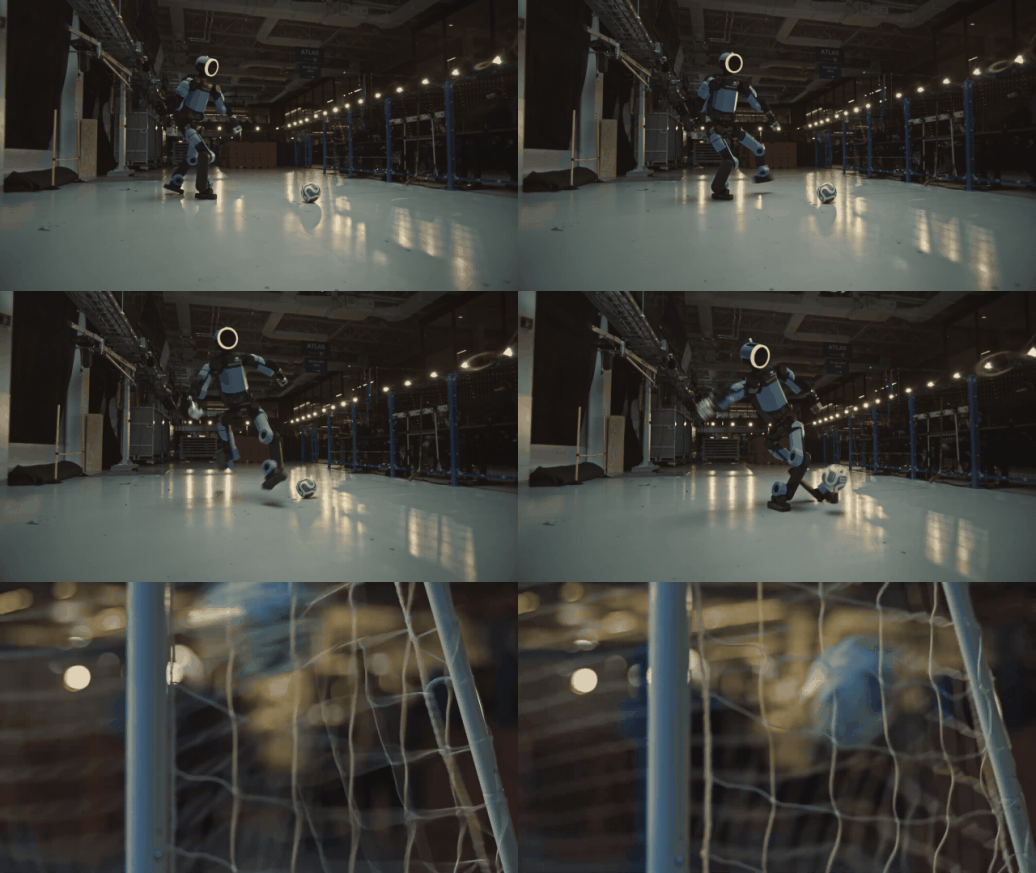 Hyundai robot Atlas masters rabona kick SEOUL, May 29 (AJP) - Hyundai Motor Group has unveiled a marketing campaign showcasing the football skills of Atlas, the humanoid robot developed by its U.S. robotics unit Boston Dynamics, in a fresh demonstration of the company's push into physical artificial intelligence. As a partner of the 2026 FIFA World Cup, to be co-hosted by the United States, Mexico and Canada, the automaker released a five-part "School of Football" series on its official YouTube channel, the company said Thursday. The films show Atlas dribbling, passing and shooting with apparent ease. In the clips, the robot pulls off a rabona — a flourish in which the kicking leg is wrapped behind the standing leg — and even lands a "ghost rabona," adding a feint to deceive a defender. To master the moves, Atlas modeled motion data from professional players and refined its technique through reinforcement learning. Hyundai said the campaign demonstrated its capabilities in AI-driven reinforcement learning, precise mimicry of human movement and hardware control. The launch film, three training videos, and its final reveal video released through Friday on the group’s YouTube channel drew a combined around 48,600 views in their first five days. "Through football, we have shown the world the future of robotics," said Jee Sung-won, head of Hyundai's brand marketing division, adding that the company plans to build varied brand experiences around mobility and robotics. The campaign comes as Hyundai Motor Group prepares to put Atlas to industrial work. The group has said it intends to deploy more than 25,000 of the robots across Hyundai and Kia plants, beginning with parts-sequencing tasks at its Metaplant America facility in Savannah, Georgia, from 2028, as part of a broader bet on humanoid automation. 2026-05-29 14:38:03
 -
 Celltrion begins primate trials for quad-target obesity drug SEOUL, May 29 (AJP) - Celltrion has kicked off primate toxicity trials for its next-generation obesity drug candidate CT-G32, moving the compound into the final stretch of preclinical development ahead of a planned investigational new drug (IND) submission in the first half of 2026. CT-G32 simultaneously targets four biological pathways, including GLP-1, making it what Celltrion describes as a potential first-in-class therapy. The company said the drug is designed to address persistent shortcomings of existing GLP-1 treatments — including inter-patient variability in weight loss, muscle loss, and durability — while maximizing fat reduction. The ongoing toxicity study covers 252 rats and 48 monkeys to assess the compound's safety profile and establish appropriate clinical dosing ranges. Celltrion said it will also evaluate CT-G32's pharmacokinetic and pharmacodynamic properties alongside the toxicity assessments. In earlier preclinical work, CT-G32 demonstrated superior weight loss compared to a reference compound at equivalent doses, while preserving lean body mass — a key differentiator in a market increasingly focused on muscle retention during treatment. "CT-G32 is being developed as a next-generation drug that addresses the limitations of existing GLP-1-based therapies and extends beyond obesity to cover metabolic diseases," said a Celltrion spokesperson. The company is also developing an oral obesity drug in parallel, targeting an IND filing in the second half of 2028. 2026-05-29 09:56:51
 -
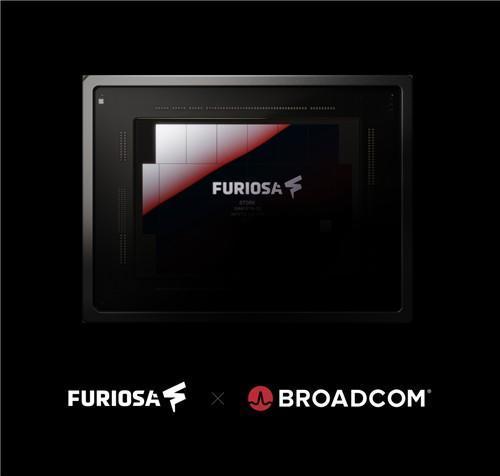 FuriosaAI taps Broadcom to build third-generation AI inference chip SEOUL, May 28 (AJP) - South Korean artificial intelligence chip designer FuriosaAI said it had forged a strategic partnership with U.S. semiconductor giant Broadcom to co-develop a next-generation AI inference platform, deepening a homegrown bid to challenge the dominance of established players in the booming market for AI silicon. According to the neural processing unit maker on Thursday, the two companies will evolve FuriosaAI's proprietary tensor contraction processor architecture into a multi-die chiplet system, building an engine tuned for the high-volume token processing that global hyperscale data centers increasingly demand. The collaboration builds on FuriosaAI's second-generation accelerator, RNGD, a 180-watt PCIe chip now in mass production. Fabricated on TSMC's 5-nanometer process and paired with SK hynix HBM3 memory, the accelerator is optimized for large language models and agentic AI workloads, and has already been validated in production at customers including Samsung SDS and LG AI Research. The third-generation accelerator will carry a 2-nanometer compute die and HBM4/4E memory, drawing on Broadcom's advanced packaging to fuse multiple silicon dies into a single high-performance chip. The two firms plan to begin sampling the chip in the first half of 2028, as surging demand for agentic AI pushes inference workloads to outpace the training tasks that first fueled the generative AI boom. 2026-05-28 15:57:59
 -
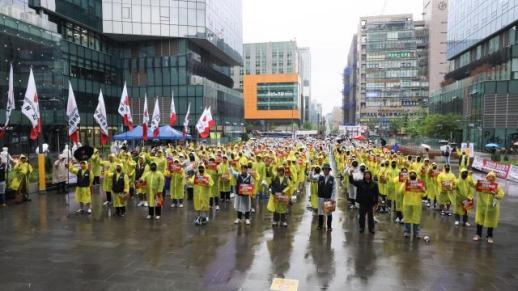 Kakao CEO apologizes to staff as union secures strike right after talks collapse SEOUL, May 28 (AJP) - Kakao CEO Chung Shin-a offered a public apology to employees as the company's union secured the legal right to strike following the collapse of a second mediation session, raising the prospect of the tech giant's first-ever headquarters walkout. Chung issued the apology through an internal notice Thursday, saying she was "sincerely sorry" for failing to quickly dispel growing uncertainty within the company. "Negotiations have dragged on, and I take seriously the fact that our crew members have had to wait this long," she said, using Kakao's in-house term for employees. The CEO struck a conciliatory tone, stressing that labor and management ultimately share the same direction and must work through their differences through dialogue. She also hinted at a partial organizational reshuffle, saying the company needed to reestablish a stable operational framework and reset its service priorities. Mediation talks at the Gyeonggi National Labor Relations Commission broke down late Wednesday after running until 11 p.m., leaving both sides without an agreement. The failure hands the union the legal standing to launch strike action, with about 1,200 union members set to march through the Pangyo Station area on June 10. The union said in a statement that it would not entirely close the door on further dialogue, but added it could "no longer resolve the matter through waiting and patience alone," and would move ahead with preparations for a June strike. The union accused management of passive bargaining, unilaterally paying out bonuses mid-negotiation and repeatedly swapping its lead representatives — moves it said had eroded trust. The central dispute centers on whether Kakao's annual 5-million-won restricted stock unit grants should count as performance pay, a classification the union firmly rejects. Kakao said it would keep communication channels open with the union even after the mediation process concluded. Shares of Kakao traded at 38,700 won per stock on 1:22 p.m., 4.44 percent lower than a day before and roughly 37 percent lower than earlier this year. 2026-05-28 13:29:26
 -
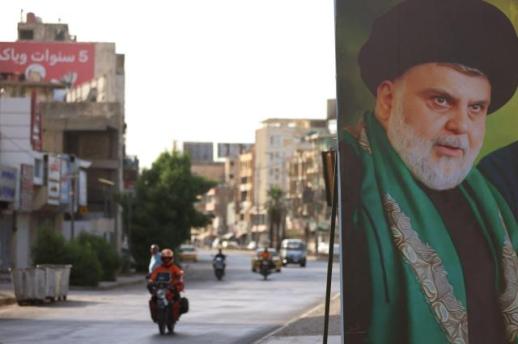 AJP DEEP INSIGHT: Hormuz's final tug-of-war — nuclear stakes, civilizational fault lines, and a new world order in the AI age SEOUL, May 28 (AJP) - In late May 2026, the world is watching the Middle East once again with unflinching attention. Explosions continue to echo across the Strait of Hormuz. The United States and Iran are simultaneously pursuing negotiations and military action. The White House signals "progress." Yet in the same breath, President Donald Trump warns that he could "finish it again" if necessary. Iran insists it intends to uphold the ceasefire, while condemning limited American airstrikes as violations of it. What the world is witnessing is a strange kind of war. Not a full-scale conflict, but not genuine peace either. Neither a ceasefire nor a true end to hostilities. Negotiations proceed even as the guns keep firing. This is the defining character of the 21st-century gray zone war. But its essence runs deeper than any conventional military clash. Beneath the surface lie nuclear ambitions and oil, the dollar system and the U.S.–China rivalry for global supremacy, the collision of Islamic and Jewish civilizations, and the contest over supply chains in the age of artificial intelligence. The Strait of Hormuz has become more than a body of water. It is the fault line of the entire world order. The most striking feature of the current crisis is that war and diplomacy are advancing in parallel. Washington and Tehran are reportedly discussing a memorandum of understanding toward an end to hostilities, and both sides have sent signals that progress is being made. The U.S. State Department and White House have indicated that negotiations have not collapsed entirely, and Iran has officially kept the door to a diplomatic resolution open. Yet simultaneously, U.S. forces launched fresh airstrikes on Iranian military installations near the Strait of Hormuz within days of the latest exchange. Washington described the strikes as defensive, citing the interception of four Iranian drones and the destruction of a ground control station preparing to launch a fifth. On the surface, it appears a limited confrontation. Yet global financial markets and the international community do not view it that way. The reason is simple: the Strait of Hormuz is the heart of the world's oil supply chain. A critical share of the world's seaborne crude passes through this narrow passage each day. It is the energy lifeline of manufacturing nations such as South Korea, China, and Japan. Any prolonged blockade or sustained instability here would send oil prices surging, fracture global logistics, and risk reigniting inflation. Washington understands this better than anyone. Trump has cultivated the image of a president who does not drag out wars. His preferred method is coercion and negotiation punctuated by limited military action — a strategy designed to bend adversaries without committing to full-scale conflict. But Iran does not operate on an American timetable. Where the United States wants speed, Iran deploys time itself as a weapon. That is an ancient Persian survival strategy. America is a young superpower, barely 250 years old. Iran is a civilization with 5,000 years of memory. It has learned, across centuries of foreign pressure and imperial domination, how to endure. And so, as American military pressure intensifies, Iran's response is not frontal confrontation but a strategy of delay and psychological attrition. In the current crisis, rather than launching immediate large-scale retaliation, Tehran has pursued managed tension. It knows the dangers of total war all too well. The Iranian economy has been hollowed out by sanctions. Youth unemployment, rising prices, and deep systemic fatigue have accumulated at home. But Washington, too, has no appetite for a full war. The American economy has not fully escaped inflationary pressure. For Trump, with domestic politics always in view, a prolonged conflict carries serious political risk. The result is a dangerously balanced standoff in which neither side can deliver a decisive blow nor easily back down. Four Fault Lines at the Heart of the Negotiations The current U.S.–Iran negotiations revolve around four core disputes. The first, and most fundamental, is the nuclear question. Trump has repeatedly and unequivocally stated that Iran acquiring a nuclear weapon is an absolute red line. Washington's most acute concern is Iran's stockpile of approximately 440 kilograms of uranium enriched to 60 percent purity. Nuclear experts generally define weapons-grade uranium as enriched to around 90 percent, but material at 60 percent is already considered a significant danger threshold — technically, further enrichment to weapons-grade levels is achievable within a short window. The United States sees no path to a post-war settlement without eliminating or placing that material under verifiable control. From Tehran's perspective, however, nuclear capability is not merely a weapon. It is an insurance policy for regime survival. The fate of Libya's Muammar Gaddafi — who dismantled his nuclear program only to see his government collapse and himself killed — remains a defining trauma for Iran's leadership. No Iranian government can lightly surrender that leverage. The second dispute concerns the handling of enriched uranium. Washington has expressed strong reluctance to allow China or Russia to take custody of Iran's highly enriched stockpile. The logic is straightforward: both are American strategic rivals. The more realistic alternative may be third-country management. Pakistan presents a particularly intriguing option. It is the Muslim world's first nuclear-armed state, maintains a strategic relationship with China, is not fully hostile to the United States, and has deep ties with Saudi Arabia. A model under which some portion of Iran's highly enriched uranium is stored temporarily in an internationally co-managed facility on Pakistani soil — under International Atomic Energy Agency supervision — could allow Washington to address its proliferation concerns while offering Tehran a face-saving exit. Diplomacy, after all, is ultimately the art of creating an off-ramp for the other side without demanding their complete humiliation. The third issue is the Strait of Hormuz itself. This is not merely a shipping lane. It is a vein of modern civilization. The global economy still runs on oil and liquefied natural gas. The AI age has arrived, but semiconductor fabrication plants and data centers consume extraordinary quantities of energy. AI is, at its core, a massive energy consumer. The data centers, chip factories, cloud server farms, and hyperscale AI computing systems that power the new economy require energy on a scale that strains the imagination. That is precisely why America's big tech companies are racing to secure nuclear power, LNG, and renewable energy sources. The AI age is less an era "after oil" than an era of energy power restructuring. The Strait of Hormuz will therefore remain a critical variable in the global economy for the foreseeable future. For China in particular, Hormuz is a lifeline. China is the world's largest manufacturing economy and one of its largest crude oil importers. Its factories, logistics networks, cities, and industrial zones run on Middle Eastern energy flows. A prolonged disruption to Hormuz would deliver a potentially crippling blow to the Chinese economy. Washington understands this clearly. The American strategy in the region therefore extends beyond pressuring Iran. It also functions as a means of exerting leverage over China's energy supply chain — linking the Middle East crisis directly to the broader U.S.–China contest for global primacy. China, in turn, has deepened its strategic ties with Iran, as has Russia. Meanwhile, the United States seeks to build a new regional order centered on Saudi Arabia, the UAE, and Israel. The Middle East is becoming the intersection of a new cold war. If the original Cold War was a clash between liberalism and communism, the present contest is far more complex. AI supremacy and semiconductor supply chains, control over energy and maritime logistics, the dollar system and digital finance, religion and civilization — all of these are simultaneously in play. The dollar question is particularly important. The United States has used dollar dominance to exert control over the global economy. The SWIFT payment system and the international financial architecture are, in practice, American-centered structures. Sanctions against Iran were ultimately a financial blockade executed through that dollar system. Yet China, Russia, and certain Middle Eastern states have been quietly expanding their use of alternative arrangements — renminbi-denominated payments, gold transactions, and energy trades settled in local currencies. None of this yet threatens dollar hegemony. But Washington senses the risk. The reason is that one of the foundational pillars of dollar primacy has always been the petrodollar system — the convention by which Middle Eastern oil is priced and settled in dollars. If the Middle East order shifts from American dominance toward a multipolar framework, the dollar system itself will face long-term structural pressure. Beyond the Abraham Accords: The Case for a 'Noah Covenant' The conflicts now tearing through the Middle East are not simply clashes of national interest. They carry within them the collision of Jewish and Islamic civilizations, the rivalry between Shia and Sunni power blocs, and the confrontation between an American-led order and a multipolar alternative. The Trump era's Abraham Accords opened a new current in the region — the emergence of a pragmatic framework for coexistence centered on Israel, the UAE, and Saudi Arabia. But Iran remains outside that framework. That absence matters enormously. The path forward must go beyond the Abraham Accords toward something that might be called a "Noah Covenant." Judaism, Christianity, and Islam ultimately share a common root. Among the descendants of Noah in the biblical tradition, the line of Shem — the Semitic lineage — connects to the spiritual origins of the Jewish, Arab, and Persian worlds. The region's genuine peace can only begin from the honest recognition that "the other side cannot be completely eliminated." Coexistence is not defeat. It is survival. Three Axes Moving Global Financial Markets Global financial markets are currently moving along three great axes. The first is the AI revolution. The second is the U.S.–China rivalry for supremacy. The third is Middle East risk. Until now, global equity markets have been driven by the AI rally. American AI semiconductor companies and big tech firms remain the dominant force. But the Middle East variable represents the single greatest risk capable of destabilizing that trajectory at any moment. If Washington and Tehran achieve a limited agreement and Hormuz stability is preserved, global markets will likely resume their AI-led advance. But if negotiations collapse entirely and the Hormuz crisis escalates in earnest, international oil prices could spike sharply and global inflation could re-emerge. The U.S. Federal Reserve would be unable to cut interest rates freely. The world economy would face the prospect of stagflation. Chinese manufacturing and European industry would absorb severe damage — and South Korea would not be spared. What This Means for South Korea South Korea is geographically distant from the Middle East, but it sits in no safe zone. The Korean economy is export-driven and heavily dependent on energy imports. Instability in the Strait of Hormuz translates directly into higher costs for Korean industry. Companies such as Samsung Electronics and SK hynix ultimately grow atop a foundation of global financial and energy stability. A surge in international oil prices and geopolitical turbulence would weigh on the entire Korean equity market. South Korea must therefore pursue three objectives simultaneously: diversification of its energy supply chain, reinforcement of its competitive industrial capabilities in AI and semiconductors, and a strategy of calibrated diplomatic balance in the Middle East. The world today does not move on military force alone. This is an era in which energy and AI, finance and supply chains, civilization and geopolitics all move together. The Strait of Hormuz is not simply a body of water. It is a microcosm of the entire 21st-century world order. And at this moment, humanity is testing that order on the surface of that sea. What is needed is not a balance of war, but an architecture of coexistence. Not the terror of nuclear weapons, but a system of trust and verifiable management. Not the transactional pragmatism of the Abraham Accords alone, but the civilizational imagination to move toward a Noah Covenant. That may be the only path through which the Middle East — and the world — survives what comes next. 2026-05-28 12:48:30
 -
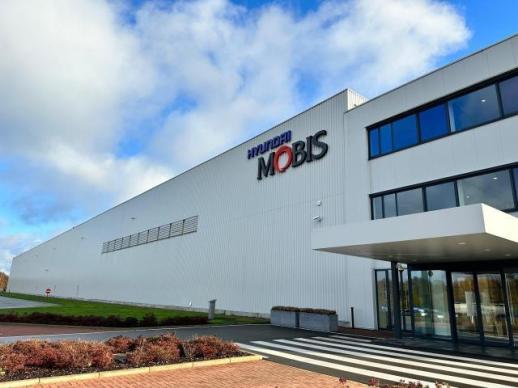 Hyundai Mobis joins Eclipse Foundation's open-source SDV project SEOUL, May 28 (AJP) - Hyundai Mobis announced it has joined the Eclipse Foundation's Software-Defined Vehicle working group and will contribute to the S-Core project, a global open-source initiative to standardize the software platforms that underpin next-generation connected vehicles. The S-Core project, launched in late 2024 by a consortium of European firms, aims to build a common middleware layer for SDV systems certified to functional safety standard ASIL-B — the first of its kind built on an open-source foundation. Thirteen companies are currently involved in the effort, pooling resources to reduce duplicated investment and accelerate development of the shared technical base that applications such as autonomous driving depend on. Hyundai Mobis said Thursday it marks the first time the company has opened its proprietary code to outside developers. The company will contribute its container solution technology, which isolates individual software processes running on Linux to prevent interference between them. Through the project, Hyundai Mobis said it expects to collaborate with a broad range of automakers, parts suppliers, and software specialists, while positioning its technologies as candidates for global industry standards. The company added that open-sourcing its code is itself a public demonstration of confidence in its software capabilities. 2026-05-28 11:21:20