
Journalist

Kim Yeon-jae
duswogmlwo77@ajunews.com
-
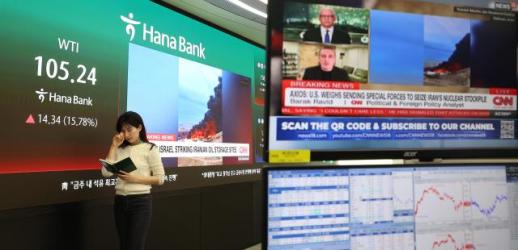 Korea's default risk premiums rise faster than others, yet below 5-year average SEOUL, Mar. 16 (AJP) - South Korea’s sovereign risk indicators are rapidly rising in line with the volatility in capital markets and exposure to oil supply disruptions, potentially further undermining foreign investor confidence in Korean securities. South Korea’s five-year credit default swap (CDS) premium surged 23.83 percent in the past month, exceeding the gain of around 10 percent in China’s CDS and Japan’s remaining largely flat at around 1 percent, even when all three depend heavily on Middle East fuels through the crippled Strait of Hormuz. Last Thursday, the price of South Korea’s CDS rose 4.52 percent to 27.9 basis points, the sharpest single-day increase among major nations, when oil prices hit $100 barrel amid jitters over the prolongment in the war in Iran. Korea's risk premium has risen steeper than emerging markets like Turkey fighting inflation above 30 percent. Among advanced economies, only Italy (30.68 percent) saw a steeper rise in swap rates. Italy’s spike was driven by its massive national debt—approaching 150 percent of GDP—and a widening spread against the German bund, the European benchmark. South Korea’s total household debt reached 2,370 trillion won ($1.62 trillion) at the end of 2025, with a debt-to-income ratio of 174.7 percent. Italy’s trigger was its sovereign debt, which reached 3.13 trillion euros ($3.41 trillion) as of October 2025, or approximately 140 percent of its GDP. Market analysts point to South Korea’s structural weaknesses. A heavy reliance on Middle Eastern crude oil, combined with high leverage, makes the economy hypersensitive to geopolitical "black swan" events. Despite the pace of rise, it is still premature to be alarmed by the CDS level itself, authorities said. "With the CDS premium still below 30 basis points, it is difficult to say it has moved outside the normal range," one Bank of Korea (BOK) official said, noting that the five-year CDS remains stable compared to the 2008 financial crisis or the 2022 shock following the invasion of Ukraine. Still, the rapid rise in CDS could destabilize the bond market. "Rising CDS premiums can increase volatility as they lead to expanded trading in government bond futures," said Kim Yong-gu, head of the Investment Strategy Team at Yuanta Securities Korea. "We are already seeing increased trading volume in three-year bonds by foreigners, and if CDS continues to rise, that volatility could spread to 10-year bonds," he said. A critical theme in common is the heavy dependence on the Strait of Hormuz. The narrow passage between the Persian Gulf and the Gulf of Oman is a strategically crucial choke point and is being impacted by the war. More than 60 percent of South Korea’s oil imports pass through the strait, while Italy relies on it for up to 40 percent of its supply. In a report explaining the KOSPI’s crash on March 5, the PRS Group highlighted South Korea’s 98 percent energy dependence and its 70 percent reliance on Middle Eastern crude. Any disruption in energy supply inevitably causes South Korea’s "risk premium" to skyrocket. Experts warn that unlike Italy, South Korea faces greater risks because it does not use a reserve currency. "Italy operates within the framework of the euro, a reserve currency, and is already included in the WGBI (World Government Bond Index)," one financial official said, speaking on condition of anonymity. "For South Korea, where there are talks of the won depreciating to 1,500, the situation could deteriorate much further." As of Monday, the won traded at 1,496.9 per dollar, standing on the precipice of the psychological 1,500 barrier. While the three-year bond yield edged down 3.3 basis points, the 10-year yield rose 0.8 basis points to 3.709 percent, heightening fears of long-term stagnation. 2026-03-16 17:04:58
 -
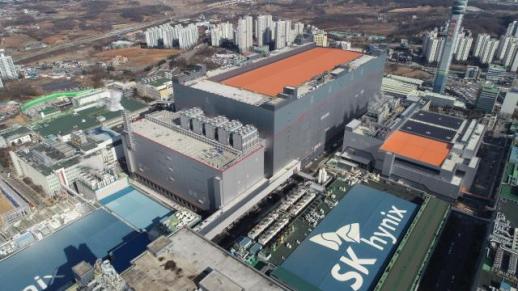 SK hynix now most favorite workplace among jobseekers, overtaking Samsung SEOUL, March 16 (AJP) - SK hynix has surpassed Samsung Electronics as the most preferred employer among job seekers in South Korea. Online job-search site Saramin said on Monday that it conducted a survey of over 2,000 job seekers and found that about 20 percent of them named SK hynix as their most sought-after employer. It marks the first time Samsung Electronics has lost the top spot since similar surveys began in 2009. The electronics giant, which had long held a dominant lead, slipped to second place with 18.9 percent. Automaker Hyundai Motor came in third at 7.9 percent, followed by Naver at 4 percent and Samsung C&T at 3 percent. Saramin attributed the shift to the chipmaker's lucrative salary packages and record-breaking performance bonuses. High salaries and other perks have recently emerged as the decisive factor for job seekers. Among respondents hoping to land jobs at major conglomerates and tech and digital companies like Naver, "high salary" was cited as the most important reason for their preference. Disparities in bonuses have become particularly stark. In 2025, SK hynix employees received bonuses equivalent to 150 percent of their annual salary. For an employee earning 100 million won ($68,212) annually, this meant an additional 150 million won in performance-related payments. In contrast, Samsung Electronics' mobile division capped bonuses at 50 percent of annual salaries, while even its semiconductor division had a 100 percent bonus ceiling, despite strong sales performance. The survey comes as both top rivals are in the midst of their first-half recruitment drives. Samsung affiliates are accepting job applications until Tuesday, while SK hynix is receiving applications for new hires next Monday. 2026-03-16 11:53:53
 -
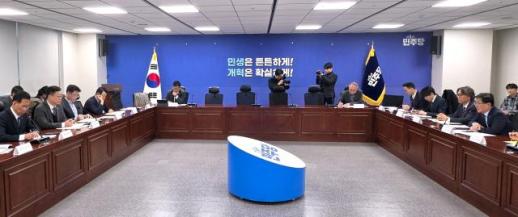 GULF CRISIS: South Korea to release 22.46 million barrels from strategic reserve SEOUL, March 16 (AJP) -South Korea will release 22.46 million barrels of crude oil from its strategic reserves over the next three months as part of coordinated international efforts to stabilize global energy markets following supply disruptions caused by Iran’s blockade of the Strait of Hormuz. The decision was announced Monday after a meeting between the government and the ruling party, which agreed to gradually release the oil stockpile in line with a collective action plan led by the International Energy Agency (IEA). According to the briefing, the release corresponds to the volume allocated to Korea under the IEA’s emergency response framework. The drawdown will be implemented in stages over the next three months to cushion the impact of surging oil prices triggered by escalating conflict in the Middle East. The IEA said member nations have agreed to release a total of 400 million barrels from strategic reserves. Of that amount, 271.7 million barrels will come from government-held stocks, while 116.6 million barrels will be supplied from obligated industry reserves and another 23.6 million barrels from other sources. The agency said about 72 percent of the planned release will consist of crude oil, with the remaining 28 percent made up of refined petroleum products. Supplies held in Asia–Oceania countries will be made available immediately, while reserves from Europe and the Americas are expected to enter the market later this month. The IEA has deployed coordinated reserve releases during previous energy crises. In 2022, member countries released about 182 million barrels after the outbreak of the Russian invasion of Ukraine triggered a surge in global oil prices. The ruling Democratic Party of Korea and government officials said the oil release forms part of a broader package aimed at stabilizing energy supply, controlling fuel prices and supporting businesses affected by the Middle East conflict. The government reported its plan of proposing a supplementary budget bill by the end of March to mitigate the economic impact of the conflict, including energy price support and assistance for affected exporters. South Korea currently holds crude reserves equivalent to about 208 days of imports, while liquefied natural gas stockpiles cover roughly nine days of consumption, according to the briefing. To secure additional crude supplies, the government is also considering bringing home oil produced overseas by the state-run Korea National Oil Corporation, with about 3.35 million barrels expected to be imported by June. Authorities said they will strengthen energy supply management by increasing electricity generation from coal and nuclear plants to offset potential shortages of liquefied natural gas. The government plans to temporarily lift the cap limiting coal-fired power plants to 80 percent of installed capacity and accelerate maintenance work on nuclear reactors currently under repair, with the goal of raising the nuclear power utilization rate from the high-60 percent range to around 80 percent by mid-May. Officials are also reviewing whether to designate the Yeosu petrochemical industrial complex as a special industrial crisis response zone as petrochemical producers face shortages of key raw materials including aluminum, sulfur and naphtha. The relief measures have helped little to alleviate oil prices flirting around $100 per barrel as the market suspects reflecting market concerns that the conflict could lead to prolonged disruption of energy flows through the Strait of Hormuz — one of the world’s most critical oil transit chokepoints. Iran has intensified attacks on commercial vessels in the region and warned it would block oil shipments benefiting the United States and its allies, raising fears that a sustained closure of the waterway could severely disrupt global energy supply. 2026-03-16 11:13:46
 -
 Korean bond yields soar as if in tightening cycle amid widening Gulf war SEOUL, Mar. 13 (AJP) — South Korean government bond yields are climbing sharply as investors demand higher risk premiums amid intensifying conflict in the Middle East and a renewed rise in global interest rates. Yields on sovereign debt have followed a steep upward trajectory since the beginning of the year, reflecting both external shocks and shifting global capital flows. According to the Korea Financial Investment Association (KOFIA) on Friday, the three-year government bond yield rose 6.7 basis points to close at 3.338 percent, while the 10-year yield gained 5.2 basis points to finish at 3.701 percent. The benchmark 10-year yield has breached the 3.7 percent threshold four times this year, including a sharp 12.3 basis point surge on March 9. The pace of the increase has been striking. From the market close on Jan. 2 to the March 9 peak, three-year and 10-year yields rose by 48.5 basis points and 35.3 basis points, respectively — a rapid adjustment even by the standards of recent global tightening cycles. The March 9 jump marked the largest single-day spike since Sept. 26, 2022, when global bond markets were roiled by the United Kingdom’s ill-fated “mini-budget.” At that time, Korean yields surged by 34.9 basis points for the three-year tenor and 22.3 basis points for the 10-year bond in a single session. Market participants say the current move is less about domestic growth optimism and more about rising geopolitical risk and inflation concerns as the Middle East conflict pushes oil prices back toward the $100-per-barrel mark. The yield spread between South Korea and the United States has also narrowed considerably. As of March 9, the gap between the U.S. 10-year Treasury yield, at 4.13 percent, and Korea’s 10-year government bond yield stood at roughly 39.5 basis points. Under normal circumstances, a narrowing differential would lend support to the Korean won by making local assets relatively more attractive. The currency’s continued weakness, however, suggests that investors are demanding additional compensation for risk rather than expressing confidence in the domestic outlook. In other words, the market is repricing geopolitical uncertainty rather than rewarding growth prospects — a dynamic that could accelerate the global shift toward traditional safe-haven assets. Foreign capital flows remain a critical variable. According to the Bank of Korea (BOK), overseas investment in South Korean government bonds recorded seven consecutive months of net inflows through February. But traders say the heightened volatility in yields and the exchange rate this month raises the risk of a reversal. The pressure is compounded by a renewed climb in U.S. Treasury yields. The U.S. 10-year benchmark has recently risen to 4.277 percent, potentially widening the yield gap again and drawing global liquidity back toward dollar assets. Even so, policymakers stress that the current market turbulence bears little resemblance to the systemic stress seen during the 1997 Asian Financial Crisis. Bank of Korea Governor Rhee Chang-yong noted that South Korea’s macroeconomic fundamentals remain significantly stronger today. The country now holds more than $400 billion in foreign exchange reserves, compared with roughly $20 billion at the height of the 1997 crisis, and has since become a net external creditor. “If you are referring to the risk of national sovereign default, I do not agree,” Rhee said during a press briefing on inflation at the Bank of Korea on Dec. 17 last year, dismissing alarmist interpretations of rising yields. Still, with oil prices surging, shipping routes through the Strait of Hormuz under strain and global bond markets resetting higher, Korean debt markets are likely to remain sensitive to external shocks in the weeks ahead. 2026-03-13 17:34:51
 -
 Korea's M2 rise picks up in Jan as stock invest and dollar savings pile up SEOUL, Mar 13 (AJP) —South Korea’s M2 money supply grew at a faster pace in January than previous months on strong stock market and U.S.-dollar-denominated savings on expectations of continued greenback strength. According to a Bank of Korea (BOK) release on Friday, the M2 money supply grew 0.7 percent month-on-month in January to reach 4,108.9 trillion won ($2.83 trillion). Under the previous M2 standard (used prior to November statistics), the figure rose 1.2 percent to 4,521.1 trillion won, indicating an even sharper upward trend. The M2 money supply grew by 4.5 percent throughout 2025 (under the new standard) and 7.4 percent (under the previous standard), a marked acceleration from the 3.3 percent and 5.6 percent growth rates recorded in 2024. Compared to January of last year, M2 increased by 4.6 percent (new) and 8.4 percent (previous). While the growth rate under the new standard—which excludes ETFs and long-term deposits—narrowed by 0.1 percentage points, the previous standard showed an expansion of 0.4 percentage points. The expansion was largely fueled by a stellar performance in the South Korean stock market in January. The benchmark KOSPI surged more than 21 percent in a single month, rising from 4,309.63 on Jan. 2 to close at 5,224.36 on Jan. 30. The tech-heavy KOSDAQ followed suit, jumping over 20 percent to finish the month at 1,149.21. KOSPI was trading down 1.3 percent at 5,510 Friday. After hitting an all-time high of 6,307.27 on Feb. 26, the index suffered a 20 percent plunge in early March, triggered by the Middle East crisis and the blockade of the Strait of Hormuz. Liquidity in other financial institutions, including asset management firms, increased by 15.2 trillion won, reflecting the January market boom. Demand deposits, which typically serve as a cash pool for equity investment, grew by 15.5 trillion won, more than doubling the 7 trillion won increase seen the previous month. The period was also marked by a significant buildup in foreign currency liquidity. Other monetary products, primarily foreign currency deposits with maturities of less than two years, surged by 21 trillion won—double the 10 trillion won increase in the prior month. The won, which stood at 1,445 per dollar on Jan. 2, weakened to 1,453 by Jan. 30, a depreciation of approximately 0.6 percent. Amid the ongoing Hormuz crisis, the currency has since plummeted to the 1,490 level as of 11:15 a.m. Friday. Bond prices also retreated. The yield on the 10-year government bond rose from 3.386 percent on Jan. 2 to close at 3.607 percent on Jan. 30, an increase of 22.1 basis points. While yields briefly dipped in February on safe-haven demand, the Hormuz shock pushed them back up, with the 10-year yield closing at 3.649 percent on Thursday, up 4.1 basis points. 2026-03-13 14:26:52
 -
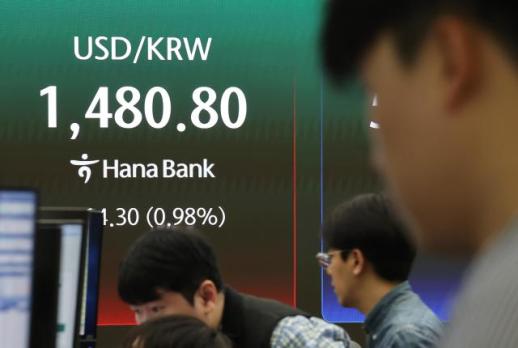 Foreign investors flee Seoul as KRW weakness persists SEOUL, Mar. 12 (AJP) — Foreign investors pivoted to a net sell-off in South Korean financial markets between February and March, marking the first net outflow in six months. The South Korean won continued its steady decline, extending a period of weakness that began last month. The value of the won has depreciated by 2 percent since February, falling from a January average of 1,439.5 per dollar to 1,469.2 as of March 10 according to a Bank of Korea (BOK) release on Thursday, marking the second consecutive month of decline, following a 1.4 percent weakening in January. While the won’s fall last month occurred even as the U.S. Dollar Index softened, the current depreciation has been exacerbated by a 1.9 percent surge in the dollar index, fueled by escalating conflict in the Middle East. Among emerging market currencies, the won’s decline was surpassed only by the Russian ruble, which fell 3.7 percent. In stark contrast, the Brazilian real emerged as the top performer, appreciating by 1.9 percent this month following a 5.7 percent surge last month, bolstered by the Brazilian central bank’s fiscal tightening and interest rate hikes. While advanced currencies also weakened—with the euro falling 2 percent, the yen 2.1 percent, and the pound 1.9 percent—the underlying drivers differed significantly from the won. The weakness in these currencies was largely driven by dovish expectations: the yen softened following Prime Minister Sanae Takaichi’s nomination of a dovish policy board member, while the euro fell as CPI dipped below the 2 percent target. The won, however, continued to slide despite the BOK ruling out the possibility of rate cuts. Volatility is also on the rise. The won’s daily fluctuation range expanded from 0.36 percent in December to 0.45 percent in January, reaching 0.58 percent in February. Foreign portfolio investment saw a net outflow of $7.76 billion, the first shift to negative territory since August. This represents the second-largest monthly net outflow on record, eclipsed only by the $8.97 billion flight during the July 2008 financial crisis. Equity markets bore the brunt of the exodus, with $13.5 billion in foreign capital exiting the KOSPI. This surpassed the previous record of $11.04 billion set during the onset of the Covid-19 pandemic in March 2020, marking the largest monthly equity outflow in South Korean history. Conversely, the bond market saw a net inflow of $5.74 billion, as investors engaged in bargain hunting amid falling Korean bond prices. This marks the fourth consecutive month of net inflows into fixed income since October. External borrowing conditions remain relatively stable. The spread on short-term external borrowing held steady at 11 basis points, while the CDS premium stood at 22 basis points, marginally up from 21 basis points last month. However, mid-to-long-term external borrowing spreads edged up from 42 basis points to 46 basis points, reflecting deteriorating external conditions, including the Middle East conflict and the blockade of the Strait of Hormuz. 2026-03-12 13:36:07
 -
 Leveraged stock bets show signs of peaking even before Gulf crisis rattled Seoul SEOUL, Mar. 11 (AJP) — South Korea’s red-hot equity rally has drawn a flood of money into stock-linked funds, swelling assets at investment managers, but leveraged investment was already showing signs of topping out even before the Middle East crisis jolted markets. According to data released Wednesday by the Bank of Korea, total deposits at financial institutions reached 93.9 trillion won ($64.05 billion) in February, up 46.4 percent from a year earlier. The surge was particularly pronounced at asset management firms, driven largely by inflows into equity-linked funds, which attracted 34.1 trillion won during the month. Following 37 trillion won in January, the two-month inflow represents a more than tenfold increase compared with the same period in 2025, when equity fund inflows totaled just 7.1 trillion won. The influx came as the benchmark KOSPI surged roughly 50 percent during the first two months of the year, fueled by optimism that South Korea would dominate next-generation memory chips critical for the artificial intelligence boom. What had looked like an unstoppable rally abruptly stalled after U.S.-led strikes on Iran on Feb. 28 and the subsequent blockade of the Strait of Hormuz rattled global markets. The KOSPI, which hit an all-time high of 6,307 on Feb. 26, plunged nearly 20 percent between March 3 and March 4, briefly falling below the 5,100 mark. As of Wednesday, the index had recovered 1.4 percent to 5,609.95, supported by hopes for a ceasefire, discussions among Group of Seven nations on releasing strategic oil reserves and announcements of treasury stock cancellations by conglomerates such as Samsung Electronics and SK Inc. following revisions to the Commercial Act. Even so, the index remains more than 10 percent below its recent peak. Leverage nearing its limits Signs of fatigue had already emerged in credit-driven investment. Money Market Funds, which serve as liquidity pools for stock trading, recorded inflows of 5.5 trillion won in February — far below the 21.7 trillion won seen a year earlier. The slowdown suggests the market was hitting record highs even as momentum behind credit-fueled trading began to fade. Outstanding margin debt reached a record 33.7 trillion won on March 5, before retreating to about 31 trillion won following the sharp market slide. Similarly, unsettled brokerage accounts fell from 2 trillion won on March 6 to 1.3 trillion won by Monday. The pullback partly reflected credit limits being exhausted at major brokerages. Korea Investment & Securities suspended margin purchases and short selling on March 5 after reaching its credit ceiling, with NH Investment & Securities taking similar steps. The scale of leverage has amplified market volatility. Forced liquidations accounted for 6.5 percent of unsettled accounts on March 5, the highest level in 31 months since the market slump in October 2023. “Since credit balances had reached their limit, they became a significant burden on the market,” said Yeom Dong-chan, a researcher at Korea Investment & Securities. Risk aversion hits KRW and bonds Meanwhile, flows into fixed-income products weakened as investors reassessed risks. Bond funds recorded a net outflow of 200 billion won, reflecting heightened volatility in the debt market. Government bond yields have swung sharply. The three-year treasury yield, which had fallen to 2.95 percent in December, climbed to 3.04 percent in February, while the 10-year yield rose from 3.39 percent to 3.45 percent as markets digested signals from the Federal Reserve under Chair Kevin Warsh. Following the Hormuz crisis, yields spiked by more than 10 basis points in early March, briefly inverting the spread on March 9 — a signal that heightened concerns about stagflation. In Wednesday morning trading, the three-year yield slipped 2.7 basis points to 3.256 percent, while the 10-year yield fell 2 basis points to 3.609 percent. Despite the easing, bond prices remain under pressure. Risk aversion also hit the currency. The Korean won, which began the year near 1,440 per dollar, briefly plunged toward 1,500 during overnight trading on March 4. As of 3:30 p.m. Wednesday, the won stood at 1,466 per dollar, down 3 won from the previous day and about 1.6 percent weaker than at the start of the year. 2026-03-11 16:41:21
 -
 Toss Bank faces FSS investigation after transaction glitch SEOUL, March 11 (AJP) — The Financial Supervisory Service (FSS) is set to conduct an on-site inspection of online banking platform Toss Bank on Wednesday. The inspection comes a day after an error in Toss's foreign exchange system that resulted in massive financial losses. At around 7:30 p.m. the previous day, a glitch in its mobile app allowed users to exchange yen at a rate of roughly 470 Korean won per 100 yen. Given that the actual market rate was approximately 934 won, the currency was traded at about half its market value. While Toss Bank immediately suspended transactions upon discovering the error, the glitch reportedly incurred losses of approximately 10 billion won. Some users who had set up automated buy orders found transactions already processed, while others rushed to purchase yen after receiving alerts of the sudden price drop. Transactions resumed at 9:00 p.m. after a suspension of around two hours. The financial watchdog seeks to investigate the cause of the system failure, the total volume of transactions, and the potential impact on users. This is not the first time Toss Bank has mismanaged exchange rate settings. In September 2022, the bank displayed the FX rate at 1,290 per dollar for nearly 30 minutes, despite the actual rate exceeding 1,400 at the time. The incident adds to a string of clerical errors across the financial sector. In February last year, Hana Bank mistakenly posted the Vietnamese dong at one-tenth of its actual value, leading to the cancellation of transactions. In January this year, cryptocurrency exchange Bithumb failed to recover approximately 13 billion won ($9.8 million) worth of assets after a clerical error led to the over-distribution of 620,000 bitcoins. 2026-03-11 10:14:40
 -
 Weak won, Middle East risks weigh on Korean economy as Taiwan pulls ahead SEOUL, Mar 10 (AJP) — South Korea’s economy is increasingly lagging behind technology-driven regional peers such as Japan and Taiwan, weighed down by a structurally weak currency and fading industrial competitiveness — pressures that could deepen if the Middle East conflict drags on. According to the Bank of Korea (BOK) on Tuesday, South Korea’s GDP per capita stood at about $35,800 in 2025, largely unchanged from recent years. Per capita gross national income (GNI) reached 52.46 million won ($36,855), rising 4.6 percent in won terms but only 0.3 percent in U.S. dollar terms, reflecting the drag from currency depreciation. By contrast, Taiwan and Japan posted stronger gains. Both countries — which had trailed South Korea in per capita income over the past three years — reported higher provisional figures for 2025, with Taiwan at $40,585 and Japan around $38,000, surpassing South Korea’s GNI range of $36,000 to $37,000. For Seoul, the reversal against Taiwan is particularly symbolic. South Korea first overtook Taiwan in 2003, when its per capita GNI reached $12,000 compared with Taiwan’s $11,000, and maintained the lead for more than two decades. That advantage has now effectively disappeared. Weak won erodes income gains The South Korean won entered 2026 on fragile footing after ending 2025 at 1,421.9 per dollar, a 2.1 percent depreciation from the previous year’s close of 1,392.5. At its weakest intraday level last year, the currency touched 1,487.6 won per dollar, surrendering nearly 6.8 percent of its value compared with the previous year. The slide has been notable because it occurred even while the U.S. Dollar Index remained below the 100 level for extended periods, suggesting the won weakened despite a relatively soft global dollar. In contrast, the New Taiwan dollar strengthened by about 2 to 3 percent against the greenback during the same period. “Assuming no exchange-rate impact, South Korea’s GDP per capita could exceed $40,000 as early as 2027,” said Kim Hwa-yong, head of the BOK’s National Income Department, underscoring how strongly currency movements influence real income levels. The downward pressure intensified earlier this year as geopolitical tensions triggered capital outflows. The won briefly touched the 1,500 level in overnight trading on March 4, following the escalation of the U.S.-Iran conflict. The currency later rebounded to below 1,470 per dollar on Tuesday as oil prices stabilized after U.S. President Donald Trump signaled that the conflict could end soon. Taiwan’s chip boom leaves Korea trailing The BOK on Tuesday confirmed that South Korea’s GDP growth slowed to 1 percent in 2025, matching the central bank’s earlier projection but falling short of 1.5–1.6 percent estimates from institutions such as the International Monetary Fund (IMF) and the Korea Development Institute (KDI). Taiwan, by contrast, posted a striking 8.63 percent growth rate, far above the roughly 7 percent consensus, while Japan recorded 1.1 percent growth, surpassing South Korea for the first time in 27 years. Taiwan’s surge reflects its dominant position in the global semiconductor supply chain. With TSMC controlling much of the world’s advanced chip manufacturing, the island has captured a disproportionate share of growth generated by the artificial intelligence boom. South Korea also benefited from strong demand for AI-related chips through Samsung Electronics and SK hynix, but the broader economy struggled to keep pace. According to BOK data, the semiconductor sector contributed 0.9 percentage points of the economy’s 1 percent growth in the fourth quarter, effectively accounting for nearly all of the expansion. Outside semiconductors, export momentum weakened. Industries that traditionally anchored Korean manufacturing — automobiles, shipbuilding and defense — lost steam in the second half of the year. Sectors facing intense competition from China, including secondary batteries, steel and petrochemicals, also recorded declining exports. Japan, meanwhile, saw improvements in both capital investment and exports. Facility investment rose 4 percent in 2025, while exports — historically a weaker pillar of the Japanese economy — also grew 4 percent. South Korea’s investment cycle told a different story. Facility investment stagnated in the second half, resulting in zero growth for the year. Automobile exports also showed no annual growth, while steel and petrochemical shipments declined, contributing to an overall 2 percent drop in exports. Hormuz disruption adds new risks The Middle East conflict is now adding a fresh layer of uncertainty to the outlook. Following the Feb. 28 strikes, Iran’s Islamic Revolutionary Guard Corps (IRGC) effectively imposed a blockade on the Strait of Hormuz, according to South Korea’s Defense Intelligence Agency (DIA). Maritime traffic through the strait — which averaged about 98 vessels per day in late February — has reportedly plunged to as few as one ship daily. South Korea is among the economies most exposed to such disruption. Data from the Korea National Oil Corporation (KNOC) show that about 70 percent of South Korea’s crude oil imports come from five Middle Eastern countries — Saudi Arabia, the UAE, Kuwait, Qatar and Iraq — all of which rely on the Hormuz passage. “Major Asian economies such as China, India, Japan and South Korea could be particularly affected, as over 80 percent of oil and LNG shipments through the strait are destined for Asia,” the Center for Strategic and International Studies (CSIS) said in a recent analysis. Oil markets have already reacted sharply. WTI crude, which closed at $67 on Feb. 27, surged to $108.5 by March 8 before retreating below $90 on Tuesday after Trump suggested the conflict could end soon and G7 nations signaled possible strategic reserve releases. Even after the pullback, prices remain roughly 30 percent above recent lows. The BOK, which had recently raised its 2026 growth forecast from 1.8 percent to 2 percent, may now face pressure to revise that outlook. A Citigroup report on March 3 estimated that if international oil prices average $82 or higher this year, South Korea’s GDP growth could fall by 0.45 percentage points to around 1.5 percent. At the same time, consumer inflation could rise by about 1.1 percentage points to 3.2 percent, raising the risk of stagflation, according to the Hyundai Research Institute (HRI). “We expect domestic growth and inflation to be negatively affected,” Kim of the BOK said during a press briefing Tuesday. “The ultimate economic impact will largely depend on whether the conflict becomes prolonged.” 2026-03-10 17:37:05
 -
 South Korea GDP confirmed contracting in Q4, 2025 growth slowest in five years SEOUL, Mar. 10 (AJP) — South Korea confirmed that its economy contracted in the fourth quarter of 2025, while full-year growth slowed to its weakest pace in five years amid a slump in construction and slowed investment activity. According to final data released by the Bank of Korea on Tuesday, real gross domestic product (GDP) fell 0.2 percent from the previous quarter in the October–December period, marking a return to contraction after earlier gains in the year. The decline reflected weakness in key sectors of the economy. Manufacturing output dropped 1.5 percent from the previous quarter, while construction shrank 4.5 percent as both building and civil engineering projects slowed. The services sector expanded 0.6 percent, supported by gains in finance, healthcare and social services. On the expenditure side, private consumption rose 0.3 percent, mostly on health care spending, while government consumption increased 1.3 percent largely due to higher health insurance payouts. Construction investment fell 3.5 percent and facility investment declined 1.7 percent, while exports slipped 1.7 percent from the previous quarter. For the full year, South Korea’s economy grew 1.0 percent in 2025, sharply slowing from 2.0 percent in 2024 and marking the weakest expansion since the pandemic-hit year of 2020. Nominal GDP reached 2,663.3 trillion won last year, up 4.2 percent from the previous year but down 0.1 percent to about $1.87 trillion when converted to U.S. dollar, as the Korean won averaged a record low of 1,439 per dollar during the year. Gross national income per capita stood at 52.4 million won, up 4.6 percent from a year earlier. In dollar terms, however, it rose only 0.3 percent to $36,855, leaving Korea’s per-capita income in the $36,000 range for a third consecutive year as currency weakness offset domestic income gains. The GDP deflator, a broad measure of price levels across the economy, rose 3.1 percent in 2025. Real gross national income (GNI) expanded 1.4 percent in the fourth quarter, reflecting improved terms of trade and higher overseas income receipts. 2026-03-10 09:04:07