
Journalist

Kim Yeon-jae
duswogmlwo77@ajupress.com
-
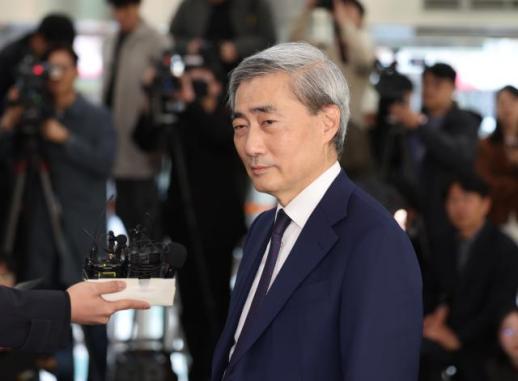 Korean won at crisis lows, but no crisis, says BOK chief nominee SEOUL, March 31 (AJP) -The South Korean won weakening past the 1,520-per-dollar mark — its lowest level since the global financial crisis in March 2009 — should not be overstated as a sign of crisis, as the country's financial system is far more resilient than in the past, Bank of Korea governor nominee Shin Hyun-song said Tuesday. “What matters more than the level itself is whether the financial system can accommodate it,” Shin told reporters as he arrived at his temporary office ahead of his confirmation hearing. “From that perspective, it should not be a concern.” Shin, a veteran economist from the Bank for International Settlements (BIS), stressed that exchange rate levels alone should not be interpreted as a trigger for financial instability. “The level itself should not be given too much meaning,” he said. “The exchange rate is one indicator of how much risk the financial system can absorb, and in that sense, there is no major concern.” He added that dollar liquidity remains ample, pushing back against fears that the sharp depreciation of the won could lead to capital flight or funding stress. “There is no need to directly link the exchange rate to financial instability,” Shin said. On external risks, Shin pointed to the ongoing Middle East conflict as the most immediate concern for the Korean economy. “In the short term, it is clearly the situation in the Middle East,” he said. “Rising oil prices will put upward pressure on inflation while posing downside risks to growth.” Still, he cautioned that the uncertainty surrounding the scale and duration of the conflict makes it difficult to draw firm conclusions at this stage. Shin also noted that South Korea’s external financial structure has improved significantly compared to past crises, particularly in terms of capital flows and dollar funding. He highlighted structural changes in the market, where foreign investors increasingly access Korea’s bond market through foreign exchange swaps — lending dollars while borrowing won — which in turn helps ensure stable dollar funding. “That structure actually supports dollar liquidity,” he said. On monetary policy stance, he also dismissed labels such as “hawk” or “dove” as overly simplistic. “I don’t think it is desirable to view policy through a binary lens,” he said. “What matters is reading the economic flow, understanding the interaction between the financial and real sectors, and responding flexibly depending on the situation.” Shin's remarks however failed to improve market confidence. The dollar was trading at 1,525 against the dollar as of 11:30 a.m. and the main KOSPI and secondary KOSDAQ both fell more than 2 percent. The bond yields rose, finding Shin less hawkish than expected. The three-year government bond yield fell 1.3 basis points to 3.529 percent, while the 10-year yield dropped 2.7 basis points to 3.864 percent. 2026-03-31 10:38:16
 -
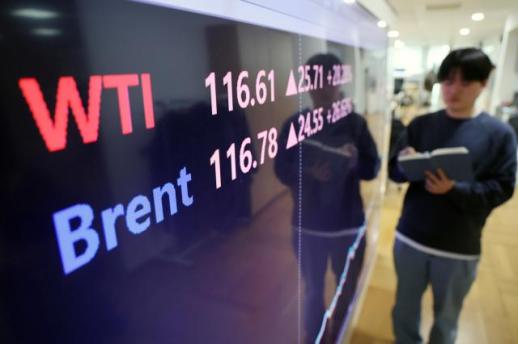 Korean banks' BIS ratio turn lower as weak won inflates FX assets SEOUL, March 31 (AJP) - South Korean banks’ capital buffers edged lower at the end of last year as the won’s sharp weakening inflated foreign-currency assets, underscoring growing pressure from exchange-rate-driven balance sheet expansion, data showed Tuesday. The common equity Tier 1 (CET1) ratio of domestic banks stood at 13.51 percent at end-2025, down 0.12 percentage point from the previous quarter, according to the Financial Supervisory Service. The decline came despite steady earnings, as a weaker won boosted the value of foreign-denominated loans and assets, increasing risk-weighted assets and diluting capital ratios. Other key capital metrics also slipped. The Tier 1 capital ratio fell 0.08 percentage point to 14.80 percent, while the total capital ratio dropped 0.09 percentage point to 15.83 percent. The leverage ratio edged down to 6.76 percent. The data highlights how currency-driven balance sheet effects — rather than credit deterioration — are emerging as a key variable for capital adequacy, particularly as Korean lenders maintain sizable foreign-currency exposure. Still, overall capital levels remained comfortably above regulatory thresholds, indicating that the banking sector retains solid loss-absorbing capacity. By bank, most major lenders maintained strong buffers, with several including KB, Woori, Citi and SC posting total capital ratios above 16 percent, reflecting ample resilience. However, the downward drift was broad-based. Thirteen banks saw their CET1 ratios decline from the previous quarter, while only a handful posted gains. Supervisors warned that risks could intensify as geopolitical tensions and a prolonged strong dollar environment lift both funding costs and credit risks. Authorities said they would step up monitoring of capital adequacy and encourage banks to bolster loss-absorbing buffers to navigate potential shocks from high oil prices and currency volatility. 2026-03-31 07:58:19
 -
 Little sign of relief for the Korean won and bonds amid capital flight SEOUL, March 30 (AJP) - South Korean stocks are holding up — still more than 20 percent above year-end — but the won and bonds are taking a far heavier hit as capital flees amid the Middle East crisis, with little relief in sight unless Gulf shipping routes reopen. Seoul markets opened the week under pressure as the war in the Persian Gulf dragged into a second month with widening fronts and no clear resolution. Both the KOSPI and KOSDAQ fell about 3 percent Monday after Yemen’s Houthi rebels joined the Iranian-led front with attacks on Israel, prolonging disruptions in the Strait of Hormuz — a critical artery for global energy flows. The KOSPI has now shed nearly 6 percent over the past week, as shipments of Korea-bound crude — accounting for roughly 70 percent of imports — remain stranded. Still, equities have fared better than other key financial assets. The Korean won has weakened to its lowest level since March 2009, during the global financial crisis. The dollar has gained about 5 percent against the won this year, compared with just 2.3 percent versus the yen. On Monday, the dollar closed at 1,515.7 won, up 5.3 percent from end-February when the U.S. military campaign in Iran began — roughly double the 2.6 percent rise in the dollar index over the same period. The average exchange rate for March approached 1,490 won per dollar, dealing as the fourth-steepest monthly depreciation on record for the won. With the top three occurring during the 1997–98 Asian financial crisis, the current slide ranks as the second-most severe in practical terms. Capital flight has been a key driver. Foreign investors sold a net 36.4 trillion won worth of local equities in March alone, bringing total outflows for the first quarter to a record 65 trillion won. Bond markets are also flashing stress signals. The three-year government bond yield rose to 3.542 percent on Monday, up 50 basis points from a month earlier and nearly 60 basis points from year-end. The 10-year yield eased slightly to 3.89 percent after breaching 3.9 percent — levels last seen during the peak of the post-pandemic tightening cycle in late 2023. Expectations that Korea’s inclusion in the World Government Bond Index (WGBI) from April would help stabilize markets have largely faded amid the twin shocks of war and supply disruptions. “WGBI inclusion is a process that unfolds over several months, not something that delivers immediate impact,” said Lee Seok-jin, a manager at Hana Bank’s FX Platform Division. “In a wartime scenario like the current one, it is difficult to expect meaningful short-term effects.” Moon Hong-cheol, a researcher at DB Financial Investment, said the benefits of WGBI inclusion had already been priced in, with external shocks now dominating market movements. Even policy efforts are struggling to shift sentiment. Brokerages have rolled out Reshoring Investment Accounts (RIA) ahead of the expected passage of the government’s “Three FX Stability Acts” on March 31, but analysts remain skeptical. “The RIA is merely a temporary incentive,” Moon said. “The instability in the Korean market and the won ultimately stems from structural fundamentals, including demographic decline and weakening confidence in the currency.” “Stopgap measures risk undermining trust rather than restoring it.” 2026-03-30 17:49:44
 -
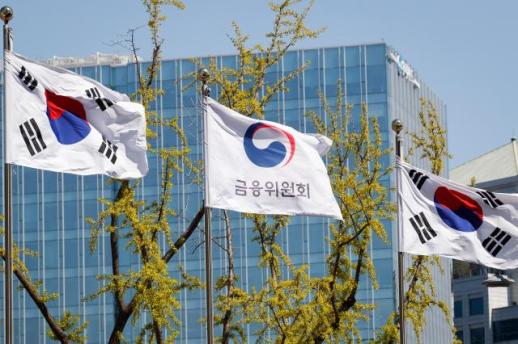 Korea to adopt a new overnight repo benchmark SEOUL, March 30 (AJP) -South Korea will overhaul its benchmark interest rate system, phasing out vulnerable quote-based rates and shifting to a transaction-based standard to prevent manipulation risks and strengthen market credibility. The Financial Services Commission (FSC) finalized the reform plan Monday at a joint meeting with the Bank of Korea (BOK) and the Financial Supervisory Service (FSS), marking one of the most comprehensive changes to the country’s rate-setting framework in decades. At the center of the reform is the transition to the Korea Overnight Financing Repo Rate (KOFR), a risk-free benchmark based on actual overnight repo transactions backed by government securities. Unlike existing quote-based rates, KOFR is calculated from real trades, making it more transparent and resistant to manipulation. The move reflects lessons from the 2012 global LIBOR scandal, when major banks were found to have manipulated benchmark rates used to price trillions of dollars in loans and derivatives. South Korean authorities see structural similarities in their own system, where the Korea Interbank Offered Rate (KORIBOR) is also based on bank-submitted quotes rather than transactions. “If we remain complacent with familiar practices, it could eventually lead to financial accidents,” FSC Vice Chairman Kwon Dae-young said, stressing that maintaining trust in benchmark rates is a core responsibility of the financial sector. Under the plan, banks will in principle stop issuing new KORIBOR-based loans starting in April 2027. Existing loans will remain valid until maturity, but borrowers will be encouraged to switch to alternative benchmarks such as COFIX or bank bond rates when renewing contracts. The CD rate, another widely used benchmark, will also be gradually phased out. Authorities plan to remove its designation as a “key benchmark” under relevant law by the end of 2030, signaling a clear shift away from legacy pricing standards. Both KORIBOR and CD rates have been criticized for relying on limited or non-transactional data, making them vulnerable to distortions and declining in relevance as market structures evolve. The government aims to establish KOFR as the core benchmark across financial markets, from derivatives to bonds and lending. To accelerate adoption, authorities raised the target share of KOFR-based transactions in the Overnight Index Swap (OIS) market to 70 percent by 2030, up from the previous 50 percent goal. In the floating-rate note (FRN) market, banks will aim to issue 50 percent of new products based on KOFR by mid-2031. Policy lenders such as Korea Development Bank and Industrial Bank of Korea will lead the transition by launching a combined 1 trillion won ($730 million) in KOFR-linked loan products in the second half of this year. Authorities also plan to provide incentives, including incorporating KOFR-based activity into central bank operations assessments, to encourage faster market adoption. Officials framed the reform as a preemptive move to strengthen financial infrastructure before risks materialize. Benchmark rates serve as the backbone of financial markets, underpinning loans, bonds and derivatives. When their credibility is compromised, the impact can spread quickly across the entire system, ultimately affecting consumers. The reform also comes amid heightened market volatility linked to geopolitical tensions, reinforcing the urgency of building a more resilient and globally aligned rate system. BOK Deputy Governor Park Jong-woo described the clear timeline for phasing out legacy benchmarks as “a significant milestone” in aligning Korea’s financial markets with global standards. While the transition is expected to take several years, authorities signaled that this marks the beginning — not the end — of broader efforts to modernize Korea’s financial infrastructure. 2026-03-30 15:40:47
 -
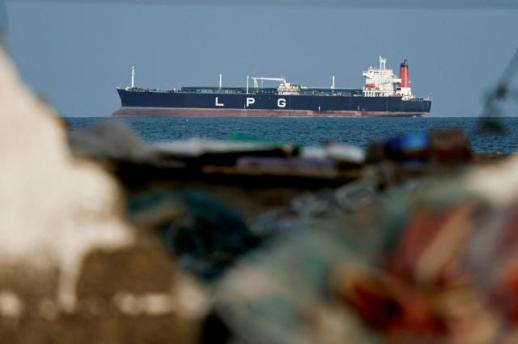 Gulf Crisis, One Month On: Seoul fending off stagnationary pressure with few options Editor's Note: One month into the Iran war, a conflict that began in the Middle East is rapidly evolving into a broader economic and strategic shock for Asia, and in this special series, AJP examines those spillovers in full — from a comprehensive overview of Asia-wide shocks to industrial realignments, the mounting risk of a third oil shock, and rising security tensions — as the central question shifts from how the war unfolds in the Middle East to how deeply its consequences will be embedded across Asia. SEOUL, March 27 (AJP) -A crisis is simmering - with the won revisiting levels seen during the global financial crisis and bond yields nearing 4 percent even as the base rate remains anchored at 2.5 percent - but Seoul authorities have few firefighting tools left. Even before the United States and Israel launched strikes on Iran in late February, Seoul authorities were struggling to defend the won, pressured by a persistent preference for dollar-denominated assets. The volatility in oil prices following the blockade of the Strait of Hormuz has since rendered much of the country’s reshoring efforts ineffective. Since the invasion began on Feb. 28, Iran’s Islamic Revolutionary Guard Corps (IRGC) has effectively maintained a near-total blockade of the strait, cutting off a critical transit route for crude oil and liquefied natural gas. The Dubai crude has surged to $130 per barrel, more than doubling from $60 at the start of the year, while Brent crude has risen over 40 percent to trade near $100. Asian economies, led by South Korea, are bearing the brunt of the shock. As of January 2026, 70 percent of South Korea’s crude oil imports originated from countries reliant on the strait — including Saudi Arabia, Qatar, the UAE, Kuwait and Iraq — far exceeding China’s dependency of 48 percent. The impact has quickly filtered through to the real economy. Retail prices for gasoline and diesel have risen sharply, while the government’s “emergency maximum price system” has struggled to contain the surge. A revised price ceiling set at 1,930 won per liter — more than 200 won higher than the initial cap — points to the limits of administrative controls and signals a de facto policy retreat. The semiconductor industry is also under strain. South Korea relies on Qatar for 65 percent of its helium supply, a critical input for chip etching processes, raising the risk of disruptions to high-tech manufacturing lines if the blockade persists. According to the Woori Finance Research Institute, if Brent crude averages $100 per barrel for a full year, South Korea’s GDP growth could fall by 0.55 percentage points while consumer prices rise by 0.76 percent. The Hyundai Research Institute warned that if prices exceed $150, growth could slow to near zero. Heightened complexity, deeper impact While South Korea has navigated geopolitical crises before, experts say the current situation is fundamentally different in both scale and structure. Unlike the COVID-19 pandemic — which reduced demand while leaving shipping lanes largely intact — the Hormuz blockade disrupts a vital artery handling more than 20 percent of global trade. The closest historical parallel is the oil shocks of the 1970s, when crude prices surged from $3 per barrel in 1973 to $39 in 1980, nearly doubling gasoline prices domestically. Yet even those shocks, analysts note, were less severe in their immediate supply impact. “What makes the current situation structurally distinct from prior oil shocks is the simultaneous disruption of liquefied natural gas,” said David Bieri, professor at Virginia Tech. “The strait carries not just oil, but also fertilizers and high-tech supply chains — compounding the shock in ways not seen in earlier crises.” Fatih Birol, executive director of the International Energy Agency, echoed that view, noting that current supply losses exceed those seen during past oil crises combined. Domestic policy responses are further constrained by structural vulnerabilities. Household debt, which surpassed 1,852 trillion won in late 2025, limits the scope for aggressive monetary tightening without risking broader financial instability. “Monetary policy must carefully consider the household debt situation to maintain mid- to long-term financial stability,” said Jang Jeong-su, deputy governor general at the Bank of Korea, acknowledging the “force majeure” constraints facing policymakers. Market interventions fueling distrust Despite the gravity of the situation, repeated government interventions — including verbal warnings, foreign exchange operations and a 5 trillion won bond buyback — have done little to stabilize market sentiment. The won has weakened sharply, falling nearly 5 percent since the start of the year and underperforming most regional peers. Bond yields have also climbed, with the 10-year Korea Treasury Bond approaching levels last seen during the peak of U.S. monetary tightening. International institutions have raised concerns over the ad-hoc nature of Seoul’s policy response. “South Korea’s aggressive market interventions risk undermining the predictability of its financial markets,” the Atlantic Council said in a recent report, warning that reliance on short-term measures could erode long-term institutional credibility. Experts have also flagged concerns over fuel subsidy policies. “When supply risks occur, demand must also be adjusted. Setting a price ceiling sends the wrong signal by encouraging continued consumption despite the crisis,” said Kim Hyung-gun, an economics professor at Kangwon National University. The Carnegie Endowment for International Peace similarly warned that expanded subsidies are crowding out social spending and delaying structural reforms that were only viable under more favorable external conditions. 2026-03-27 15:28:45
 -
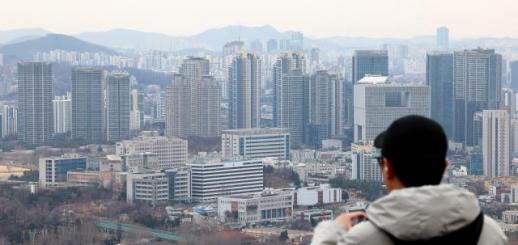 Korean Inc. gloom deepens under war-driven scourges SEOUL, March 27 (AJP) - Pessimism deepened across the Korean Inc. in March as businesses grappled with worsening trade conditions, a sharply weaker won and rising energy costs stemming from the monthlong conflict in the Middle East. According to the Bank of Korea on Friday, the all-industry composite business sentiment index (CBSI) stood at 94.1 in March, down 0.1 point from the previous month. A reading below 100 means pessimists outnumber optimists. The reading also fell far short of the BOK's February projection of 97.6, missing the forecast by 3.6 points. Manufacturing sentiment was unchanged at 97.1, but still below the expected 98.9. More worrying was the outlook for April, which fell 3 points to 95.9, the steepest monthly drop in 14 months since January 2025. The deterioration was more pronounced among small and medium-sized enterprises. While the outlook for large firms edged down 0.9 point to 98.7, sentiment among SMEs plunged 2.7 points, underscoring their greater vulnerability to rising costs and supply-chain disruptions. The BOK said gains of 0.6 point each in production and new orders were offset by a 0.6-point drop in inventory conditions and a 0.4-point decline in funding conditions. The data also showed a widening gap between exporters and domestic-oriented firms. Sentiment among exporters rose 1.2 points to 103.1, staying above 100 for a third straight month. By contrast, sentiment among import-reliant domestic businesses stood at just 94.5. "Exports of semiconductors, automobiles and steel products remained solid in the first 20 days of March, partially offsetting the initial impact of the Iran war," Lee Heung-hoo, head of the BOK's economic sentiment survey team, said. He warned, however, that the impact of the Middle East conflict is likely to become more visible in April, further darkening the manufacturing outlook. Non-manufacturing sentiment stood at 92.0, well below the February projection of 96.8, while the April outlook came in even lower at 91.2. Services were hit particularly hard, with the transportation and warehousing sector posting a CBSI of 93.4, far below the earlier projection of 99. "The blockade of the Strait of Hormuz has caused major disruptions in global logistics, dealing a severe blow to the transportation and warehousing sectors," Lee said. Among manufacturers, the most frequently cited business difficulty was "uncertain economic conditions," at 22.1 percent, up 2.8 percentage points from the previous month. Concern over rising raw material prices more than doubled to 21.0 percent, reflecting higher energy and commodity costs linked to the conflict. While weak domestic demand remained a major complaint at 19.0 percent, it lost its position as the top concern from February's 24.6 percent as geopolitical risks moved to the forefront. The broader economic sentiment index (ESI), which combines business and consumer confidence, fell 4.8 points to 94.0, wiping out all gains made in February and marking the sharpest drop since September 2023. Still, the ESI cyclical indicator — which strips out seasonal and irregular external shocks — edged up 0.4 point to 96.6, suggesting the underlying trend may have improved absent the sudden geopolitical escalation. The survey was conducted from March 12 to 19 among 3,524 companies nationwide, with responses from 3,223 firms, including 1,799 manufacturers and 1,433 non-manufacturers. 2026-03-27 10:05:45
 -
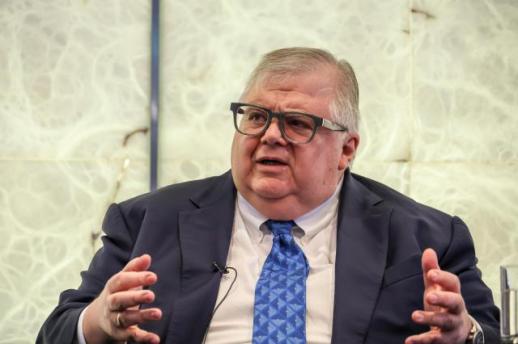 INTERVIEW: AI may turn Korea's inward finance into strategic edge: Carstens SEOUL, March 27 (AJP) - Unlike globally recognized industrial giants such as Samsung, LG and Hyundai, South Korea’s financial sector remains relatively underexposed overseas — yet its domestic orientation could become a strategic advantage in the era of artificial intelligence, a former top central banker said. Artificial intelligence is set to fundamentally reshape financial intermediation, from payments to supervision, according to Agustín Carstens, former general manager of the Bank for International Settlements. “AI will facilitate what we call ‘agentic payments,’ but, more importantly, it will significantly enhance the efficiency of transaction settlement,” Carstens said in an interview with AJP. He added that AI-enabled transparency could materially lower compliance costs by allowing regulators to monitor financial institutions in real time. “If regulators have continuous access to banks’ balance sheets and can assess them rapidly using AI, the need for heavy and costly reporting frameworks diminishes considerably,” he said. Carstens also pointed to growing momentum behind South Korea’s digital currency initiatives, particularly the Bank of Korea’s won-based stablecoin project, under incoming governor Shin Hyun-song — a former BIS colleague. Shin’s appointment comes at a critical juncture for financial innovation. Carstens underscored his expertise in tokenization, central bank digital currencies and AI-driven financial systems. “Through the BIS, we have undertaken extensive work on tokenization, central bank digital currencies and the broader impact of AI on the economy,” he said. “He is a leading expert in these areas and is well positioned to sustain the Bank of Korea’s momentum in advancing the digitalization of the financial system.” Carstens was in Seoul to speak at the 19th Asia-Pacific Financial Forum (APFF) 2026, hosted by Aju Business Daily, which this year examined why Korea’s financial sector has lagged its industrial base in global reach. However, longer-term digital ambitions remain contingent on near-term macro risks. South Korea’s energy-dependent economy is highly exposed to disruptions in the Middle East, particularly via the Strait of Hormuz, a critical artery for global oil and gas flows. “Korea depends significantly on energy supplies that transit the Strait of Hormuz,” Carstens cautioned. “Any disruption there could have immediate and material consequences for key sectors of the economy.” Such geopolitical shocks, he added, could weigh on the manufacturing and digital backbone of the economy — even as AI opens a pathway for structural upgrading in finance. 2026-03-27 08:53:57
 -
 South Korea to buy back $3bn bonds to bolster market SEOUL, March 26 (AJP) -South Korea will buy back 5 trillion won ($3.3 billion) of sovereign bonds in a rare market intervention to cap a surge in yields that have overshot the policy rate by more than 100 basis points amid the prolonged Middle East conflict. The Ministry of Economy and Finance (MOEF) said Thursday it will conduct the buyback on Friday, targeting Korea Treasury Bonds (KTBs) with maturities ranging from two to 10 years — one of the largest liquidity injections into the local bond market in recent years. The move comes as benchmark yields have spiked sharply, with the three-year KTB rising to 3.558 percent and the 10-year to 3.859 percent on Wednesday, both the highest levels since late 2023. The surge reflects a rapid sell-off in bonds as investors price in geopolitical risk, a weaker won and persistent inflation pressure. The buyback forms part of a broader emergency package that includes tax cuts, policy financing and a supplementary budget, as authorities shift into what they described as a “wartime” economic response to the monthlong Gulf conflict. “In the face of a grave wartime situation, we will mobilize all possible policy tools and the optimal mix,” Deputy Prime Minister for Economy Koo Yun-cheol said at a press briefing. The government said the intervention is aimed at preemptively containing excessive volatility and ensuring stable liquidity in the bond market, where yields have risen well above the 2.5 percent base rate. Bond prices move inversely to yields, and the sell-off has been exacerbated by currency weakness. The won has breached the key 1,500-per-dollar level and continued to slide toward 1,510, adding to upward pressure on market rates. MOEF said it will maintain round-the-clock monitoring of financial markets and coordinate closely with the Bank of Korea to deploy additional stabilizing measures if needed. Whether the intervention will help to reverse the sentiment remains uncertain, unless the war ends and removes oil price-driven inflationary scare. The buyback delivered only a mild lift to shorter-dated bonds while triggering a selloff at the long end, effectively inverting the policy’s intended signaling. The two-year government bond yield fell 2.2 basis points to 3.489 percent, with the three-year little changed at 3.552 percent. But yields further out the curve moved sharply higher: the 20-year jumped 3.9 basis points to 3.880 percent and the 30-year rose 4.6 basis points to 3.762 percent. Rather than easing overall financing conditions, the move steepened the curve — a sign that investors see the intervention as a near-term liquidity patch, not a solution to underlying inflation and supply risks. In effect, the market is pricing in more pressure ahead, demanding higher compensation for holding long-dated debt even as the government steps in. Immediate market response was lukewarm — and telling. The buyback delivered only a mild lift to shorter-dated bonds while triggering a selloff at the long end, effectively inverting the policy’s intended signaling. The two-year government bond yield fell 2.2 basis points to 3.489 percent, with the three-year little changed at 3.552 percent. But yields further out the curve moved sharply higher: the 20-year jumped 3.9 basis points to 3.880 percent and the 30-year rose 4.6 basis points to 3.762 percent. Rather than easing overall market conditions, the move steepened the curve — a sign that investors see the intervention as a near-term liquidity patch, not a solution to underlying inflation and supply risks. In effect, the market is pricing in more pressure ahead, demanding higher compensation for holding long-dated debt even as the government steps in. 2026-03-26 15:05:06
 -
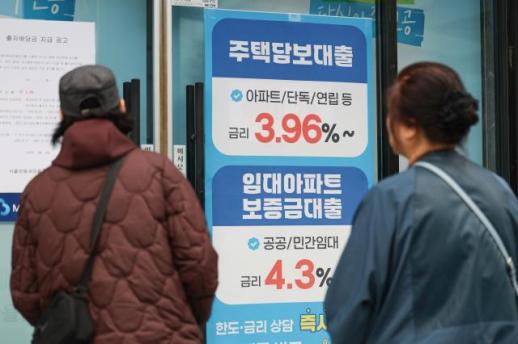 Rising subprime borrowers face delinquency risk amid fast rate rises in Korea SEOUL, March 26 (AJP) - A growing pool of overleveraged, subprime borrowers is emerging as a key financial risk in South Korea, with war-driven surge in market and dollar rates amplifying repayment stress. Data released Thursday by the Bank of Korea (BOK) showed the share of “subprime borrowers” — defined by the BOK as individuals with loans from three or more financial institutions, belonging to the bottom 30 percent income bracket and holding low credit ratings who would bear much higher borrowing terms — rose to 6.7 percent at end-2025, up from 6.4 percent in the previous quarter. The ratio had hovered near 7 percent earlier in the year before easing temporarily on the back of the government’s “bad bank” debt relief program, which targeted long-term small-scale delinquencies. The improvement, however, proved short-lived, reversing within a quarter. More concerning is the steady buildup of borrowers at risk of slipping into that category. The share of “potentially vulnerable borrowers” climbed from 17.5 percent at the start of 2025 to 18.0 percent by the fourth quarter, signaling a widening pipeline of credit-strained households. With debt spread across multiple institutions, repayment risks are compounding. Such borrowers face heightened exposure to “Ponzi-like” rollover behavior, making them particularly vulnerable to default if income fails to keep pace with rising interest costs. The BOK defines this group broadly as either middle-income borrowers with multiple loans or low-income borrowers with debt from at least two institutions. Corporate indicators point to a parallel strain, underscoring a deepening K-shaped divergence. The share of “zombie” small and medium-sized enterprises (SMEs) — firms with an interest coverage ratio (ICR) below 1.0 — jumped to 61.4 percent in the third quarter, up from 56.9 percent in the second quarter. The figure is nearly double that of large conglomerates, at 32.6 percent. SMEs’ average ICR stood at minus 0.4, indicating operating profits are insufficient to cover even interest payments, while large firms improved to 4.7, widening the corporate gap. The outlook is darkening further as external shocks intensify. The Korean won has weakened past the 1,500-per-dollar level — a threshold last seen during the global financial crisis — amid disruptions tied to the effective closure of the Strait of Hormuz. Korea’s heavy reliance on Middle Eastern energy has amplified the impact. Market rates, a key gauge of borrower stress, have also surged. As of Wednesday, the three-year government bond yield stood at 3.558 percent, up 21 percent year-to-date, while the 10-year yield climbed to 3.859 percent, more than 100 basis points above the 2.5 percent policy rate. “If holding rates steady has not eased principal and interest burdens, it suggests income weakness across households and firms has not been fully reflected,” said Jang Jeong-su, deputy governor general for financial stability and payments. “As market rates rose, delinquency rates followed, increasing the number of vulnerable borrowers and firms,” added Kim Jeong-ho, head of the BOK’s stability analysis team. Officials also flagged the policy dilemma facing incoming BOK Governor nominee Shin Hyun-song. “While a rate hike could support financial stability, it would also increase the burden on vulnerable borrowers and firms,” Jang said, noting the central bank will closely monitor both domestic conditions and external risks, including developments around the Strait of Hormuz. 2026-03-26 13:44:14
 -
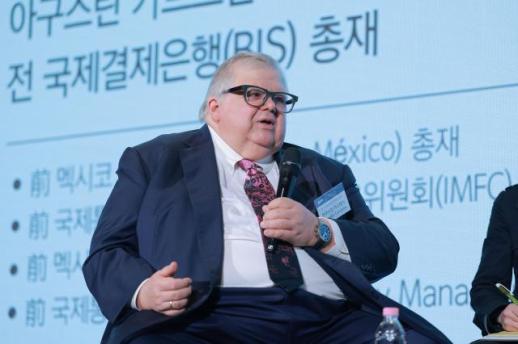 Korea's relative 'under-globalized' may underpin Korean Inc. strength SEOUL, March 25 (AJP) - South Korea’s financial sector may look under-globalized next to the country’s export-driven industrial giants, but that is not necessarily a weakness, former Bank for International Settlements (BIS) General Manager Agustín Carstens said Wednesday. Speaking at the 19th Asia-Pacific Financial Forum (APFF) 2026 in Seoul, Carstens said Korea’s financial system has played a strategically effective role by channeling resources into the country’s strongest industries rather than simply pursuing international expansion for its own sake. “The fact that it does not internationalize so much doesn’t mean that it’s a failure of the Korean banking system,” Carstens said at the forum hosted by Aju Business Daily and ABC at The Plaza Seoul. “Basically, what the financing strategy of Korea has done is concentrating on the winner sectors, and you chose very well who the winners would be — the automobile industry, the appliance industry, the shipping industry, the building industry, semiconductors, and so on.” This year’s forum, held under the theme of why Korean finance remains largely domestic while non-financial Korean companies have expanded aggressively abroad, drew banking leaders, policymakers and lawmakers, including Aju Business Daily President Lim Kwu-jin, Reform Party leader Rep. Lee Jun-seok, and People Power Party lawmakers Rep. Yoon Han-hong and Rep. Kang Myung-gu. Carstens, who previously served as governor of Mexico’s central bank before leading the BIS, said the domestic focus of Korean finance should be understood in the broader context of its economic role. “The financial system plays a tremendously important role in the economy and it basically transforms savings into investment,” he said, stressing that finance serves as the foundation for industrial growth. He also said global supply chains are no longer being shaped solely by economic efficiency. “Supply chains are being reorganized along geopolitical lines, not purely economic lines,” he said. That shift, he added, is part of a broader structural transformation in which manufacturing will gradually lose its dominance as the main engine of employment. “Manufacturing will be less important in the economy and will not be the main source of employment,” he said. In a dialogue session that followed, Carstens spoke with Kim Jun-san, senior researcher at the KB Financial Group Research Institute, on the future of Korean finance, deglobalization and digital money. On trade fragmentation, Carstens argued that deglobalization should be seen less as a breakdown than as a reshuffling of existing patterns. “Deglobalization means reorganization of trade,” he said, describing the return of protectionism as a restructuring of the global order rather than its collapse. On digital finance, Carstens reiterated his skepticism toward stablecoins, saying, “stable coins by themselves are not stable,” and instead laid out a vision centered on central bank digital currencies. He said the future financial system should enable “transactions with anybody at any time in any currency immediately,” underscoring the need for an integrated system built around central bank-backed digital infrastructure. Carstens also briefly noted that Shin Hyun-song, the former BIS Monetary and Economic Department chief and a longtime colleague, is an expert in digital finance. The forum then turned to artificial intelligence and digital assets. Kim Jun-san described AI as more than a tool for efficiency, calling it “core infrastructure reshaping entire industries.” He said finance has moved beyond simple digital transformation into what he called an era of “intelligent transformation,” in which AI fundamentally changes business models and customer experiences. Citing JPMorgan as an example, Kim said AI adoption should not be limited to automation, but should be approached as a force capable of reshaping the business itself. He argued that South Korea should focus less on competing head-on with the United States and China in foundation models and more on embedding AI quickly and deeply across existing industries. “Korea is not so much a country that makes AI best, but a country that adopts and utilizes it fastest,” he said. “In the AI era, data, organization, and usage methods determine competitiveness more than technology.” Park Jung-pil, head of the Digital Innovation Office at the Bank of Korea, echoed that view, saying the success of AI adoption at a central bank depends less on the technology itself than on data governance and institutional readiness. “Data governance is most important in the process of adopting AI,” Park said, emphasizing that data must be reorganized into a form AI systems can effectively use, rather than merely accumulated. He added that cultural and human factors remain a critical obstacle. “There is also cultural resistance from users who do not want to use AI,” he said, calling for parallel efforts to reshape organizational culture and strengthen workforce capability. Kim Min-seung, head of the Korbit Research Center, closed the session with an overview of the digital asset market, describing the current phase as a shift “from regulation-centric to institutional integration.” He said virtual assets, once viewed negatively by political and financial circles, have gained legitimacy following exchange-traded fund approvals and policy changes, particularly in the United States. “The market has continuously grown despite political and institutional pressure,” Kim said, adding that digital assets are increasingly being seen as strategic national assets. Still, he said, regulatory refinement remains essential as on-chain finance moves closer to becoming part of the broader financial system. 2026-03-25 17:29:16