

Journalist

Kim Yeon-jae
duswogmlwo77@ajupress.com
-
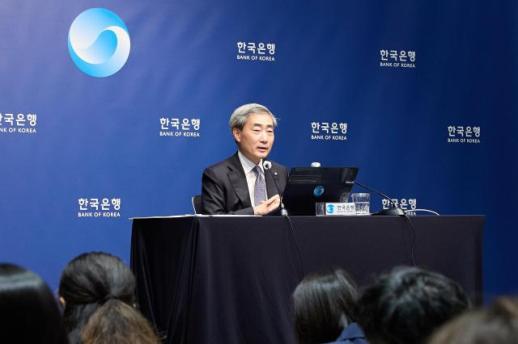 Stock leverage, not typical housing as BOK's policy headache SEOUL, May 29 (AJP) — More than 60 trillion won ($39.9 billion) of leverage tied to South Korea’s stock market frenzy is emerging as a risk factor for both equities and the foreign-exchange market after the central bank all but signaled at least one rate hike in the second half. “While demand curves typically slope downward, heavy debt-fueled investment could reverse that pattern, as forced liquidations are triggered and funds are withdrawn when prices decline,” Bank of Korea Governor Shin Hyun-song said Thursday after the central bank left its benchmark rate unchanged at 2.50 percent for a full year. For ordinary investors, the message was straightforward: excessive leverage can accelerate capital flight and magnify market losses when sentiment turns. The vicious cycle created by debt-financed investing can also hurt investors who have committed only their own funds. Shin’s remarks suggested that leveraged trading is no longer merely a retail-investor issue but a potential complication for monetary policy and financial stability. The Bank of Korea’s latest dot plot, which contains three six-month rate projections from each board member, showed 10 dots at 3.00 percent, seven at 2.75 percent and two at 3.25 percent. Only two projected the benchmark rate remaining at 2.50 percent. The distribution leaves room for as much as 75 basis points of additional tightening in the second half, a prospect that coincides with record borrowing in the domestic stock market. As of Wednesday, outstanding margin loans had surpassed 36 trillion won, setting a new record. Stock-backed loans, in which investors borrow against existing holdings, also exceeded 25 trillion won, bringing retail investors’ total stock market-linked debt exposure to roughly 61 trillion won. At the same time, borrowing costs have climbed sharply. Maximum margin-loan rates at major brokerages are already in the mid-to-high 9 percent range, with Samsung Securities charging as much as 9.6 percent and Mirae Asset Securities up to 9.5 percent. Those elevated rates could weigh on investor sentiment and erode borrowers’ ability to service interest payments even before stock prices begin falling. Early warning signs are already appearing in the short-term credit market, where forced liquidations have been rising in the three-day settlement segment. Over the past six months, the ratio of forced liquidations to unpaid balances exceeded 2 percent on 20 trading days. The figure typically hovers around 1 percent in stable market conditions, but its six-month average has risen to 1.45 percent and spiked to 7.6 percent on May 20. Market participants worry that stress in the short-term credit segment could spill over into the broader margin-loan and stock-backed lending market. If share prices fall, collateral values would decline, potentially triggering margin calls and forced selling by investors unable to meet collateral requirements. Analysts also warn that debt-fueled positions could amplify volatility. “Margin trading volumes are expanding too rapidly at a time when stock market volatility is also rising, pushing daily forced liquidations above 10 billion won,” said Lee Hyo-seop, a senior research fellow at the Korea Capital Market Institute. “We need to monitor whether forced liquidations at one brokerage could spread to other firms and further increase volatility,” Lee said, warning that retail losses could evolve into broader market selling pressure. The risk is heightened by the narrow nature of the KOSPI rally. Much of the index’s recent advance has been concentrated in a handful of semiconductor heavyweights, including Samsung Electronics and SK hynix, creating what some analysts describe as an index illusion that leaves leveraged investors more vulnerable if leadership stocks retreat. The BOK’s tightening signal also carries implications for the foreign-exchange market. In theory, higher domestic rates should support the won by narrowing interest-rate differentials with major economies. Shin separately addressed currency markets, warning against one-sided moves in the won. “We will respond firmly to excessive one-sided movements in the exchange rate,” he said. “We will not tolerate herd behavior in the currency market. We have the tools, the will and various ways to respond.” Yet if monetary tightening coincides with a sharp equity correction, the currency effect could become more complicated. Even as domestic rates rise, foreign investors may cut risk exposure, sell Korean stocks and increase demand for dollars. That dynamic was visible following the BOK’s hawkish signal on May 28. In the bond market, the three-year government bond yield rose 5.5 basis points to 3.766 percent, while the 10-year yield climbed 4.5 basis points to 4.147 percent. Stocks also came under pressure. The KOSPI tumbled more than 4 percent intraday, briefly testing the 8,000 threshold, while the won weakened to close at 1,505.80 per dollar. Despite the governor’s hawkish rhetoric, markets continued to move in the opposite direction on Friday. The won lost another 5.1 won to close at 1,507.9 per dollar as foreign investors dumped more than 1 trillion won worth of KOSPI shares amid a stronger U.S. Dollar Index fueled by expectations of a U.S.-Iran peace deal. For that reason, investors increasingly view Shin’s message as more than a warning about retail leverage. It underscored how rising stock market debt has become a policy burden for the central bank, as tighter monetary policy, narrow market leadership and exchange-rate volatility can reinforce one another during a correction. Shin signaled that the BOK would take those risks into account when determining the pace of tightening. “The timing and pace of interest rate hikes will be decided based on incoming data, as we assess the expansion of inflationary pressures, the path of economic recovery and broader financial stability conditions,” he said. 2026-05-29 17:33:37
 -
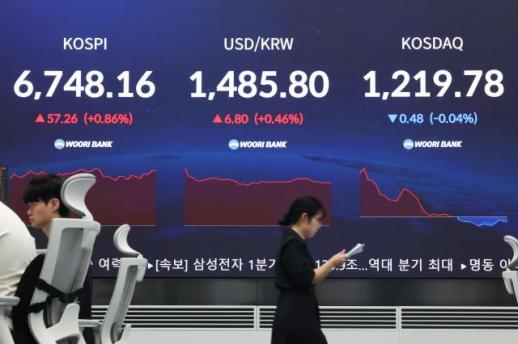 Korea's tax revenue brims from strong stock and corporate earnings SEOUL, May 29 (AJP) - South Korea’s national tax revenue expanded sharply during the first four months of this year on track for excess revenue of 25.2 trillion won ($17 billion) this year on blistering stock market rally and corporate earnings, the government said Friday. According to the Ministry of Economy and Finance on Friday, cumulative national tax revenue from January to April reached 164.1 trillion won ($109.7 billion), adding 21.9 trillion won from the same period last year. The tax collection progress rate came to 39.5 percent against budgeting, faster than 38.0 percent a year earlier. For the single month of April, national tax revenue stood at 55.2 trillion won, climbing 6.3 trillion won on year. The finance ministry cited expansions in securities transaction taxes, corporate income taxes, and personal income taxes as the primary catalysts for the monthly gain. Securities transaction tax collections jumped by 1.1 trillion won, fueled by expanding transaction turnover and higher tax rates. According to the finance ministry, the trading volume of listed shares in March soared to 1,449.4 trillion won, nearly quadrupling from the 357.1 trillion won recorded in the same month last year. Since the beginning of the year, the domestic equity market has experienced a massive influx of retail capital, with trading activity concentrating heavily around semiconductor and artificial intelligence (AI) sectors. Market observers noted that the relentless upward momentum of mega-cap tech stocks, such as Samsung Electronics and SK hynix, combined with an investment frenzy into single-stock leveraged exchange-traded funds (ETFs) and exchange-traded notes (ETNs), further amplified the trading surge. Corporate tax collections also advanced by 2.2 trillion won, reflecting a sharp turnaround in corporate profitability. The finance ministry explained that the annual operating profits of companies listed on the benchmark KOSPI rose 29.5 percent on an individual basis and 25.4 percent on a consolidated basis last year. Personal income taxes rose by 1.3 trillion won, driven by expanded corporate bonus payouts and a rise in capital gains from stock liquidations. Value-added tax (VAT) collections also ticked up by 300 billion won, supported by an expansion in import values. By item, cumulative figures for the January-April period showed that personal income taxes expanded by 5.9 trillion won year-on-year. Over the same four-month span, securities transaction taxes and corporate taxes increased by 3.1 trillion won and 3.2 trillion won each. 2026-05-29 15:16:51
 -
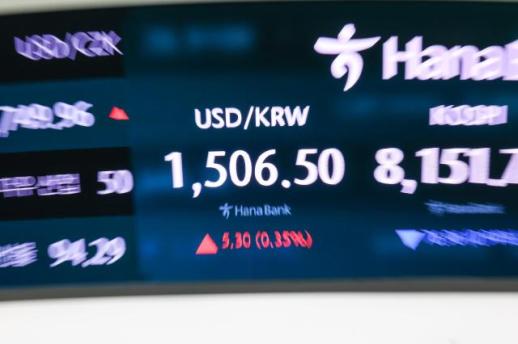 NPS delivers 4.4% return Q1 to outperform others on 22% return from Korean equities SEOUL, May 29 (AJP) — South Korea's National Pension Service (NPS) posted a solid 4.42 percent return in the first quarter thanks to stellar performance of local shares despite the outbreak of the U.S.-Iran war. NPS, one of the world's largest institutional investors with assets under management swelling to 1,526 trillion won ($1.14 trillion), said Friday its assets increased by 68 trillion won from the end of last year, with domestic stocks returning 21.67 percent and accounting for the bulk of investment gains. The performance report came less than 24 hours after the National Pension Fund Management Committee, chaired by Health and Welfare Minister Jeong Eun-kyeong, approved a new five-year asset allocation plan raising the target weighting of domestic equities to 20.8 percent from 14.9 percent. At Thursday's meeting, the Fund Management Committee also approved a temporary expansion on domestic-equity strategic asset allocation (SAA) tolerance band. The fund's local exposure is said to have neared 30 percent despite the cap based on the tolerance band. Although the upper and lower limits are not publicly disclosed, the hike of the official ceiling would ease the rebalancing pressure while the stock market remains on bullish run. At recent market highs, analysts estimated that as much as 177 trillion won worth of domestic equities could have faced rebalancing pressure under the previous allocation framework. "Recent domestic stock markets have continued their upward momentum, with the KOSPI closing above 8,000 for the first time," Jeong said at Thursday's meeting. "We will seek to enhance the fund's long-term profitability and stability while also taking into account its impact on financial markets." According to the NPS, domestic equities generated the strongest returns among major asset classes in the January-March period, rising 21.67 percent. Overseas stocks slipped 0.11 percent, while domestic bonds lost 2.03 percent. Overseas bonds gained 4.98 percent and alternative investments returned 5.27 percent. The fund said the outbreak of the U.S.-Iran conflict on Feb. 28 weakened investor sentiment and interrupted a powerful rally in semiconductor-related shares. Nevertheless, domestic equities maintained double-digit gains and remained the primary driver of overall portfolio performance. Overseas stocks were weighed down by growing uncertainty surrounding global markets, while rising oil prices and inflation concerns pushed bond yields higher, hurting domestic fixed-income holdings. Overseas bonds benefited from gains in the won-dollar exchange rate. NPS Chairman Kim Sung-joo said first-quarter returns had retreated from 10.26 percent recorded at the end of February as the Middle East conflict rattled financial markets, but have since recovered. "The fund has regained momentum and continues to deliver solid results," Kim said. "As a long-term investor responsible for the retirement security of the Korean people, we will maintain disciplined investment principles and rigorous risk management regardless of market conditions." The stronger-than-expected performance provides fresh context for Thursday's politically sensitive decision to increase the pension fund's domestic stock allocation. Under the 2027~2031 medium-term asset allocation plan approved by the committee, domestic equities will account for 20.8 percent of the portfolio, while overseas equities will represent 34.7 percent. Domestic bonds will make up 23.1 percent, overseas bonds 7.4 percent and alternative investments 14.0 percent. As of March, local stocks accounted for just over 21 percent of assets and generated more than one-fifth in returns during the quarter. 2026-05-29 14:45:00
 -
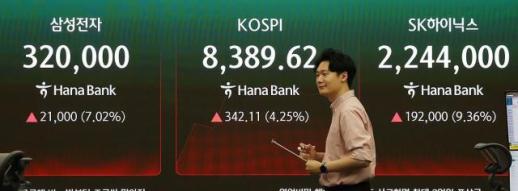
 UPDATE: Korea's April factory output and spending retreat on Gulf energy shocks *updated with additional information and market response SEOUL, May 29 (AJP) — The energy shocks from a months-long disruption of the Strait of Hormuz arising from Middle East conflicts have landed on South Korean shores, battering industrial activity, corporate investment, and consumer spending in April, official data showed Friday. Factory output fell 0.7 percent month-on-month, marking the first contraction since January, as the crucial refining sector was hit hard by the suspension of crude shipments from the Gulf, according to the Ministry of Data and Statistics. By sector, petroleum refining production collapsed by 19.4 percent, registering its sharpest drop in approximately 38 years since May 1988, when output plummeted following a massive nationwide industrial and petrochemical restructuring during the wake of Asian financial crisis. The historic contraction underscored the severe transmission of the Hormuz shock into domestic refiners. The factory floor displayed widespread friction as automaker output plunged 10.0 percent on components bottlenecks, though a 3.1 percent uptick in semiconductors capped steeper industrial losses. Mirroring the manufacturing slowdown, the manufacturing average capacity utilization rate dropped 1.2 percentage points from March to stand at 73.7 percent. Concurrently, manufacturers faced inventory overhangs, with the index rising 1.7 percent month-on-month, lifting the ratio of inventory to shipments by 5.1 percentage points to 98.2 percent. Amid the manufacturing retreat, industry-wide output stood at 117.8 in April, shedding 0.6 percent from the previous month to mark its first decline in three months. While public administration expansion offered a minor cushion, synchronized declines across services and construction dragged down the broader economy. Service sector output decreased 1.0 percent from the previous month, as spikes in domestic borrowing costs forced a 7.7 percent drop in financial and insurance services, alongside a 1.5 percent drop in wholesale and retail trade. The real-economy squeeze was equally visible in consumer markets, where retail sales tumbled 3.6 percent month-on-month—the sharpest pull-back since the beginning of the year. High price stickiness weighed down demand, leading to an 11.1 percent collapse in consumer durables like telecommunications equipment and computers, while non-durables including vehicle fuels shed 1.1 percent as motorists rationed expensive gasoline and diesel. Corporate investment lines turned equally defensive, with equipment investment retreating 3.6 percent from March, driven by an 11.5 percent drop in transport equipment such as aircraft imports. Domestic machinery orders received, a key forward-looking indicator for capital outlays, shrank 7.6 percent year-on-year. Concurrently, construction completed at constant prices dropped 1.4 percent month-on-month, registering a 5.5 percent contraction compared to the same period last year. Despite the broad-based retreat across current output and consumption, business cycle indicators continued to signal divergence due to historical lags. The cyclical component of the coincident index crawled up 0.2 points from March to 100.2, supported by previous export volumes. Meanwhile, the cyclical component of the leading index, a gauge for future economic health, advanced 0.6 points to 104.1, driven primarily by gains in the stock market and export-import price ratios before the full weight of the supply-chain shock consolidated. Despite the widespread retreat in April's macroeconomy, the benchmark KOSPI opened up 2.43 percent from the previous session at 8,384.31, catalyzed by breaking news that a peace agreement between the United States and Iran is imminent. Tech heavyweights Samsung Electronics and SK hynix continue to rewrite their historical highs, surging past 310,000 won ($207.3) and 2.3 million won, respectively. The morning rally was heavily fueled by the combination of South Korea’s robust 1.7 percent gross domestic product (GDP) growth in the first quarter—propelled by soaring semiconductor prices and resilient global demand—and Thursday's reports that a final peace accord between Washington and Tehran now awaits only the formal signature of U.S. President Donald Trump. 2026-05-29 12:44:14
 -
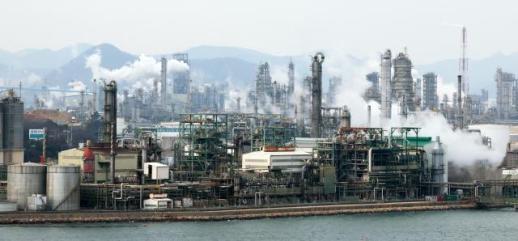 Korea's April industrial activity and spending retreat on Gulf energy shocks SEOUL, May 29 (AJP) - The energy shocks from months-long disruption of the Strait of Hormuz from the Middle East conflicts arrived on South Korean shores, battering industrial activity, corporate and consumer spending in April, data showed Friday. Factory output fell 0.7 percent from the previous month in April, the first contraction since January, as the refining sector was hit hard by the suspension of shipments from the Gulf, according to the Ministry of Statistics and Data. Industry-wide output stood at 117.8 in April, down 0.6 percent from the previous month in the first decline since January. Refining production collapsed 19.4 percent, marking its sharpest decline in roughly 38 years since 1988 in the aftermath of the Asian financial crisis and nationwide industrial restructuring, underscoring the depth of the Hormuz shock. 2026-05-29 09:19:21
 -
 Stocks, bonds tumble as BOK chief signals potential rate hikes in 2nd half SEOUL, May 28 (AJP) - South Korea's stock and bond markets were jolted on Thursday after the Bank of Korea (BOK) hinted at potential rate hikes in the second half of the year. While the benchmark KOSPI recovered most of its intraday losses near the close on institutional interpretations of a "healthy" rate hike, government bond prices collapsed, ending sharply lower as monetary tightening was seen as almost certain. The index finished at 8,185.29, down 0.53 percent, while the tech-heavy KOSDAQ tumbled 2.54 percent to close at 1,104.36. The KOSPI plunged more than 4 percent during intraday trading, briefly breaching the psychologically critical 8,000 threshold, while the KOSDAQ widened its losses by shedding over 5.7 percent to hit an intraday low of 1,068. Market losses were sharply exacerbated after BOK governor Shin Hyun-song hinted at consecutive rate hikes during a press conference following its monetary policy meeting. Adding to the hawkish momentum, the central bank's newly released six-month dot plot revealed that the benchmark rate could peak at 3.25 percent, a significant leap from the current 2.5 percent. "The direction ahead is crystal clear," Shin said, taking a firm stance when pressed on the timeline for monetary tightening, adding, "The remaining issue now is simply when, how fast, and how far we will raise rates." The KOSPI managed to claw back much of its steeper losses near the close, driven by upbeat projections for the artificial intelligence (AI)-driven semiconductor sector, led by chip giants Samsung Electronics and SK hynix, which posted combined operating profits of over 90 trillion won (US$59.9 billion). The KOSDAQ, with less exposure to major semiconductor stocks and weaker corporate earnings, failed to mount a meaningful recovery before the close. Stock markets are highly sensitive to interest-rate expectations because higher rates raise borrowing costs for both companies and consumers, potentially slowing corporate earnings growth. Rising rates also make safer assets such as bank deposits and bonds more attractive, prompting investors to shift money out of equities and into fixed-income and foreign exchange markets. In the fixed-income market, South Korean government bond yields surged across the board. The yield on the benchmark three-year government bond advanced 5.5 basis points to close at 3.766 percent, while the ten-year note jumped 4.5 basis points to finish at 4.147 percent. Both benchmark yields touched their highest levels in approximately 15 years, reaching milestones not seen since August 2011, when the eurozone sovereign debt crisis and the credit rating downgrade of the U.S. convulsed global markets. A bond is essentially a fixed-rate contract, meaning expectations of higher interest rates make existing lower-yield bonds less attractive. As investors sell those bonds in favor of newer, higher-yielding ones, bond prices fall and yields rise. The three-year government bond yield is particularly sensitive to expectations for the BOK's policy path over the next few years. That is why even hawkish signals from the BOK can trigger sharp moves in short-term yields, as seen in the surge in the three-year note. Market observers also noted that Shin's stern warning about the country's outstanding margin trading balance, which stood at 36.7 trillion won, up a sharp 34 percent since the beginning of the year, helped cool overheated market sentiment. Margin balances track the amount of capital or shares borrowed by retail investors from brokerages for leveraged trading. "The capital losses from highly leveraged, debt-fueled trading are ultimately borne by market participants who do not carry debt," Shin said. "This behavior distorts the normal economic demand curve." 2026-05-28 17:39:52
 -
 AJP Watch: BOK's strongest-yet hike signal rattles markets SEOUL, May 28 (AJP) - After sitting on the benchmark at 2.50 percent for a full year, the Bank of Korea on Thursday issued the strongest-yet signal of a shift towards hikes of between 25 to 75 basis points, splashing cold waters on chip-blind stock frenzy. New Governor Shin Hyun-song, presiding over his first rate-setting meeting and media briefing, could hardly have been blunter about the direction ahead. "All the signs — price pressure, the growth trajectory, the exchange rate and the real estate market — point in one clear direction," Shin said, adding that the case for the rate path was so "exceptionally clear" that there could be little conflict in policymaking. Shin framed the policy debate around three questions — “when,” “how fast,” and “how far” rates may rise, pointing to the latest dot plot as guidance for the second-half policy path. "The BOK will manage all the factors feeding into prices by raising the base rate," he said. On the same day, the Bank of Korea sharply revised up both its growth and inflation forecasts for this year, reflecting stronger-than-expected chip demand and the prolonged Gulf crisis. Shin said the upgraded growth outlook reflected not only stronger semiconductor exports but also an exceptional improvement in Korea’s terms of trade, noting that first-quarter gross domestic income surged 12.3 percent from a year earlier. Policymakers, however, deemed it premature to judge the full scope of inflationary shocks. “Everyone broadly shared the same recognition about inflation, growth and financial stability risks,” Shin said. “The differences were more strategic — about timing rather than direction.” According to the central bank’s updated six-month rate outlook, or “dot plot,” released after the Monetary Policy Board meeting, 10 of the 21 projected policy-rate dots submitted by the seven board members pointed to a benchmark rate of 3.00 percent within six months. Seven projected 2.75 percent, two indicated 3.25 percent and only two suggested rates would remain at 2.50 percent. The distribution implies the board’s strongest consensus now leans toward two additional quarter-point hikes — or 50 basis points in total — over the next six months. The smaller cluster at 3.25 percent suggests some policymakers see room for a third hike should inflation and financial imbalances worsen. The latest projections marked a dramatic reversal from February, when 16 of the 21 dots pointed to rates remaining unchanged at 2.50 percent and four suggested a cut to 2.25 percent. Internally, the earnings and stock-market boom spilling over into wage and bonus increases was also adding to inflationary pressure, according to the BOK chief. Apart from inflationary risks, the won’s persistent weakness also remains a concern for authorities, Shin said, vowing to respond firmly to excessive one-sided market moves. “We will not tolerate disorderly herd behavior in the exchange rate,” he said, adding that offshore non-deliverable forward (NDF) trading could at times amplify volatility in the domestic market. The clearest signal yet of a monetary-policy shift was enough to shake capital markets that had been fixated on the chip rally. Bond yields jumped after the central bank’s hawkish guidance. The three-year government bond yield rose 4.1 basis points to 3.752 percent, while the 10-year yield climbed 2.9 basis points to 4.131 percent by midday. Stocks tumbled, with the KOSPI retreating nearly 3 percent and the KOSDAQ falling more than 4.6 percent. The won weakened 5.1 won to 1,507.10 against the U.S. dollar. 2026-05-28 12:29:49
 -
 BOK ups 2026 estimates for GDP growth to 2.6%, inflation to 2.7% SEOUL, May 28 (AJP) - The Bank of Korea (BOK) expects the economy to grow 2.6 percent this year, which would be the strongest in four years, and inflation to rise at the fastest post-pandemic pace due to energy shocks from the prolonged Gulf crisis. The central bank on Thursday hiked its annual GDP growth projection from the previous 2.0 percent to 2.6 percent, marking the second consecutive upgrade following the BOK's move in February, when it revised the growth outlook upward from 1.8 percent to 2.0 percent. The BOK projected the nation's economy to grow by 2.1 percent in 2027, indicating a normalization of growth trends after the current year's semiconductor-led spike. Its inflation forecast was also sharply upped to 2.7 percent from 2 percent for 2026, reflecting the intensifying impact of the Strait of Hormuz blockade. The upward revision is widely interpreted as a direct reflection of unexpectedly strong economic growth during the first quarter. Backed by a stellar performance in the semiconductor sector, Korea’s first-quarter GDP growth registered 1.7 percent, nearly doubling the initial market consensus of 0.9 percent. For the following year, the central bank expects inflationary pressures to cool down slightly, forecasting an annual consumer price increase of 2.3 percent as supply-chain disruptions gradually stabilize. When achieved, the growth this year would be the strongest since the post-pandemic year of 2022 and the inflation, the fastest since 3.6 percent in 2023. Although the BOK held its benchmark interest rate steady at 2.5 percent on the same day, market analysts evaluate that the latest macroeconomic projections have substantially heightened the probability of monetary tightening in the latter half of the year. 2026-05-28 10:01:38
 -
 BOK holds rate steady for year, keeps July move in play SEOUL, May 28 (AJP) — As widely expected, the Bank of Korea (BOK) on Thursday kept its benchmark interest rate unchanged at 2.5 percent for a full year, deferring a possible rate move to its next meeting in July as it judged the chip boom strong enough to offset the fallout from months-long Gulf disruptions and support stronger-than-expected economic growth. The first post-meeting briefing by new Governor Shin Hyun-song will be closely watched. The former BIS economist has long emphasized price stability and warned that a weak won could pose broader economic risks. Price pressures have re-emerged as a dominant concern, amplified by prolonged maritime disruptions in the Middle East, a crucial trade artery handling nearly 70 percent of South Korea’s crude oil imports. Consumer prices rose 2.6 percent year-on-year in April, while producer prices jumped 6.9 percent, signaling a sharp return of energy-driven inflationary momentum. Given the lagged impact of global oil benchmarks, higher input costs are expected to ripple through the domestic economy in the coming months, complicating the BOK’s inflation-targeting path. During this session, BOK Deputy Governor Ryoo Sang-dai and monetary board member Jang Yong-seong cast dissenting votes, calling for a rate hike to 2.75 percent. This marks the first time in 18 months that two or more dissenting votes were registered since the central bank cut the key rate by 25 basis points from 3.25 percent to 3.0 percent in November 2024, a meeting where both Ryoo and Jang had also notably broken consensus by voting to freeze the rate. 2026-05-28 09:50:42
 -
 KOSPI rally cuts Korea's net external assets as foreign-held stocks surge SEOUL, May 27 (AJP) - South Korea’s external financial liabilities posted their fourth-largest quarterly increase on record in the first quarter, driven mainly by a sharp rise in the value of domestic stocks held by foreign investors. External financial liabilities refer to Korean assets owned by foreign investors, including local stocks and bonds. When the domestic stock market rises, the value of those foreign-held assets also increases, mechanically expanding Korea’s external liabilities on paper. The increase reflected valuation gains from the KOSPI’s rally rather than a large inflow of new foreign investment into local stocks and bonds. According to preliminary data released Wednesday by the Bank of Korea, external liabilities stood at $2.129 trillion at the end of March, up $147.1 billion from the previous quarter. External financial assets rose by only $15 billion to $2.8826 trillion over the same period. As liabilities increased much faster than assets, net external financial assets fell by $132.1 billion to $753.6 billion, marking the second-largest quarterly decline on record. In other words, Korea’s net external position weakened largely because the value of domestic assets owned by foreigners rose faster than the value of overseas assets held by Koreans. Net external financial assets had surpassed $1 trillion for the first time at the end of 2024, reaching $1.102 trillion. They later fell to $904.2 billion at the end of last year before dropping further into the $700 billion range in the first quarter. The latest decline was driven largely by non-transaction factors, including asset price movements and exchange rate changes. Transaction factors reduced external financial liabilities by $14.3 billion in the first quarter. But non-transaction factors increased them by $161.4 billion, showing that the liability increase was mainly an accounting effect rather than fresh capital inflow. In practical terms, existing foreign investors simply saw the value of their Korean stock holdings rise sharply as the market rallied. The biggest factor was the domestic stock market rally. The KOSPI rose 19.9 percent in the first quarter, climbing from 4,214.2 to 5,052.5. As a result, foreign investors’ holdings of Korean equity securities increased by $122.1 billion from the previous quarter to $1.0325 trillion. By contrast, Korea’s overseas asset growth was limited by weaker global stock markets and higher bond yields. Outbound direct investment by Korean residents increased by $15.4 billion, but outbound securities investment fell by $15.1 billion. Overseas equity securities declined by $9.3 billion, while overseas debt securities fell by $5.8 billion. As overseas stock and bond prices fell, the market value of foreign assets held by Korean investors also declined. The decline in overseas equity assets reflected weak global stock markets. In the first quarter, the Dow Jones Industrial Average fell 3.6 percent, the Nasdaq dropped 7.1 percent and Japan’s Nikkei 225 lost 6.1 percent. Higher long-term interest rates in the United States and Japan also weighed on the valuation of overseas bonds. The U.S. 30-year Treasury yield recently rose above 5 percent, its highest level in about 19 years, while Japan’s 10-year government bond yield climbed to the 2.7 percent range, the highest since 1996. A different trend appeared in Korea’s domestic bond market. Foreign investors’ holdings of Korean debt securities fell by $13.8 billion from the previous quarter to $440.4 billion, hit by a weaker won and falling bond prices. The three-year Korean Treasury yield rose to 3.55 percent at the end of March from 2.95 percent at the end of last year. The 10-year yield climbed to 3.88 percent from 3.39 percent over the same period. The won also weakened 4.7 percent against the dollar, moving from 1,447.70 won at the end of last year to 1,515.00 won at the end of March. The weaker currency reduced the dollar value of won-denominated bonds held by foreign investors. External debt indicators also weakened slightly. Net external credit stood at $365.5 billion at the end of March, down $7.6 billion from the previous quarter. External credit fell by $3.3 billion to $1.1399 trillion, while external debt rose by $4.2 billion to $774.4 billion. Short-term external debt increased by $4.2 billion to $183.6 billion. Foreign exchange reserves fell by $4.4 billion to $423.7 billion. The ratio of short-term external debt to reserve assets rose by 1.4 percentage points to 43.3 percent. The share of short-term debt in total external debt also increased by 0.4 percentage point to 23.7 percent. However, both figures remain well below crisis levels. The short-term external debt-to-reserve ratio reached 78.4 percent in the third quarter of 2008 during the global financial crisis. 2026-05-27 17:28:50