

Journalist

Kim Yeon-jae
duswogmlwo77@ajupress.com
-
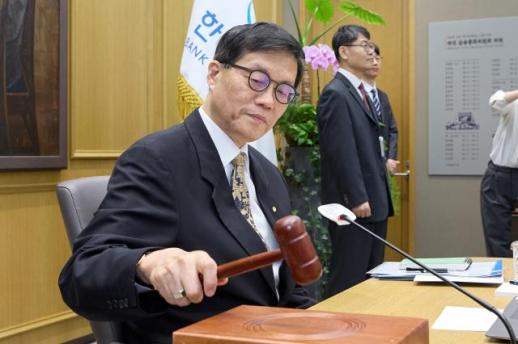 BOK holds rate at 2.5% as inflation risks clash with slowing growth SEOUL, April 10 (AJP) — The Bank of Korea on Friday kept its benchmark interest rate unchanged at 2.5 percent as widely expected, caught between rising import-driven inflation and a slowing economy amid prolonged disruptions from Middle East conflicts. The policy decision reflects a growing dilemma for the central bank, as energy supply constraints tied to the Gulf tensions continue to feed price pressures while weighing on growth. Consumer prices rose 2.2 percent in March from a year earlier, accelerating from 2.0 percent in the previous two months. While still within the central bank’s target range, the composition points to mounting underlying pressure. Energy has re-emerged as the dominant driver, amplified by a structurally weaker Korean won, with the full pass-through yet to be realized. Petroleum prices jumped 9.9 percent, contributing 0.39 percentage point to headline inflation. Diesel surged 17 percent and gasoline rose 8 percent, marking the strongest energy-driven inflation since the early phase of the Ukraine war. Given lag effects, the pass-through from higher fuel costs is expected to intensify in the coming months. Import price pressure has been further exacerbated by the weakening currency. The Korean won, which averaged 1,451.6 per dollar in February, depreciated 2.6 percent to an average of 1,493.83 in March. Since early April, it has spiked above 1,500-per-dollar — a threshold not seen since the global financial crisis. At the same time, higher input costs and prolonged weakness in domestic demand are expected to drag growth below the government’s 2 percent target this year, potentially keeping the economy in the 1 percent range for a second consecutive year. Despite the slowdown, the central bank has little room to adjust policy in either direction due to financial stability concerns. Household debt remains elevated at over 1,900 trillion won ($1.30 trillion), constraining the scope for rate cuts while also limiting the tolerance for further tightening. Market participants largely expect the central bank to remain on hold for the time being, as uncertainty persists over the outlook in the Gulf, including the timeline for a full reopening and normalization of trade through the Strait of Hormuz. Governor Rhee Chang-yong is set to explain the decision later in the day, marking his final policy meetings before his term ends on April 20 and hands over the helm to nominee Shin Hyun-song. On Friday, the won opened at 1,475.1 per dollar in the Seoul foreign exchange market. Korea's capital markets have improved this week after a truce was announced. The three-year government bond yield closed Thursday at 3.338 percent and the 10-year at 3.660 percent, sharply retreating from the level close to 4 percent last month. 2026-04-10 09:50:21
 -
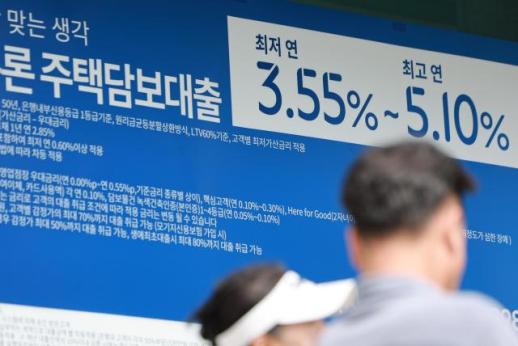 Surging non-bank lending raises PF scare in Korea SEOUL, April 9 (AJP) — South Korea’s non-bank lending is expanding again as tighter bank regulations and elevated borrowing costs push credit demand into less-regulated sectors, demanding scrutiny amid fragile market conditions. Financial authorities took notice and moved to curb subprime lending growth as rising market yields and exchange rate pressures are increasingly straining vulnerable households and businesses. According to the Financial Services Commission (FSC), total household debt across all financial sectors rose by 2.9 trillion won ($2 billion) in February and bigger 3.5 trillion won in March. The increase was driven largely by the secondary banking sector, which added 3.3 trillion won in February and 3 trillion won in March. Within this segment, the mutual finance industry accounted for 3.1 trillion won and 2.7 trillion won in the respective months, sustaining growth of around 3 trillion won for two consecutive months. Bank loans in contrast added just 500 billion won in March following a contraction in February, as stricter debt service ratio (DSR) rules and high interest rates curbed supply. The phenomenon owes to the revival of the so-called “balloon effect,” where credit demand shifts to the non-bank sector when bank lending is constrained — a pattern that authorities warn could amplify structural risks, particularly as stress from real estate project financing (PF) lingers. MG Community Credit Cooperatives led the March increase in mutual finance lending, accounting for 600 billion won. Its cumulative household loan growth reached 2.4 trillion won in the first quarter, prompting authorities to order zero growth from this week. The Financial Supervisory Service (FSS) has also warned of potential on-site inspections if excessive expansion continues. The risks are closely tied to the PF market, where loans are repaid through property sales. A cooling real estate market has delayed sales and increased unsold inventory, undermining repayment capacity. Total PF exposure stands at around 174 trillion won, with about 14.7 trillion won — more than 8 percent — classified as “at-risk” or “concerning,” indicating significant latent distress beyond official delinquency rates. While the overall PF delinquency rate has eased to 3.88 percent from a peak of 4.7 percent in mid-2024, analysts say the improvement may reflect restructuring and maturity extensions rather than a recovery in underlying cash flows. More than 30 PF projects still rely on extensions or restructuring, raising doubts about the sustainability of the apparent stabilization. “If the interest rate upward cycle returns, distress is likely to materialize, centered on vulnerable borrowers,” said Yoon Yeo-sam, a researcher at Meritz Securities. The trend mirrors broader concerns over the expansion of “shadow banking” risks, as credit increasingly flows outside the traditional banking system. Globally, the private credit market has grown to around $3 trillion, with rising borrowing costs adding pressure. The Secured Overnight Financing Rate (SOFR), a key benchmark, has climbed sharply, increasing repayment burdens. In response, some lenders have resorted to extending maturities or restructuring loans, while practices such as Payment-in-Kind (PIK) structures and covenant-lite lending have become more prevalent — allowing risks to accumulate without immediately appearing as delinquencies. Korean insurers hold about 29 trillion won in overseas private credit exposure, roughly 2 percent of their total assets, adding another layer of vulnerability. The International Monetary Fund (IMF) has warned that shifts in capital flows toward non-bank financial institutions could heighten systemic risks and require closer monitoring. FSS Governor Lee Chan-jin also cautioned that while current exposure levels remain manageable, a deterioration in global credit conditions could amplify risks, including potential misselling issues. 2026-04-09 17:06:03
 -
 Seoul unveils new measures to fend off inflation, sees stabler FX market SEOUL, April 9 (AJP) —South Korea will reimpose a cap on retail fuel prices to contain a renewed surge in gasoline costs triggered by the prolonged blockade of the Strait of Hormuz, while signaling potential upside for the battered won through parallel market-stabilization measures. Deputy Prime Minister and Finance Minister Koo Yun-cheol said Thursday the government will unveil a third round of emergency price ceilings on petroleum products at 7 p.m., with the new caps to take effect from midnight Friday. Final levels will be set after inter-agency consultations, factoring in global crude trends and the burden on households. At an emergency price meeting, Koo stressed that earlier caps had functioned as an effective “safety net,” cushioning logistics costs and easing pressure on consumers, and pledged to act decisively against renewed energy-driven inflation. On financial markets, he said volatility is showing early signs of easing, pointing to foreign inflows into Korean government bonds following the country’s inclusion in the World Government Bond Index (WGBI). Offshore investors have bought a net 6.8 trillion won ($4.6 billion) in sovereign debt, helping stabilize sentiment. Koo also highlighted structural support for the currency. More than 114,000 accounts have been opened under the Reshoring Investment Account (RIA) scheme, which offers tax incentives for repatriated funds, while the National Pension Service’s new investment framework — aimed at recalibrating currency hedging and offshore allocation — is expected to further ease pressure on the foreign exchange market. The government also flagged emerging inflation in consumer electronics, as a spike in memory chip prices — driven by the expansion of high-bandwidth memory (HBM) production — has lifted general DRAM costs. Prices of personal computers and laptops have risen by more than 10 percent over the past seven months. To cushion the impact, authorities plan to recycle used PCs from central government agencies for vulnerable groups and expand financial support for low-income students purchasing new devices, backed by 4.8 trillion won in additional local education grants from the supplementary budget. Despite elevated geopolitical risks, officials assessed that core service prices — including courier and moving costs — as well as daily necessities remain broadly stable. To guard against market distortion, the government will maintain strict bans on hoarding of petroleum products and urea solution, with contingency measures ready should price volatility intensify. 2026-04-09 10:50:07
 -
 FX intervention joins as the truce in Middle East provides relief in Korean market SEOUL, April 08 (AJP) - The relief over bombardment in the Gulf brought long-awaited relief to the South Korean won and bonds, and the truce amplified Seoul’s intervention campaign, according to traders. The won closed at 1,470.6 per dollar, returning below the 1,500 level for the first time in 12 trading days. The 33.6 won gain marked the steepest daily move in about three months, since a 33.8 won jump on Dec. 24 last year amid heavy intervention. The conditional ceasefire triggered a sell-off in the safe-haven dollar while boosting demand for the won and Korean equities. As of 4 p.m. Wednesday, the U.S. Dollar Index (DXY) fell nearly one point to 98.7, nearing its lowest level in 12 sessions. Foreign investors abruptly reversed course after offloading 36 trillion won in KOSPI shares in March alone. They net bought 2.4 trillion won ($1.63 billion) worth of stocks on Wednesday, far surpassing the previous daily record of 800 billion won set on April 3. The figure marks the second-largest daily net purchase of the year, following 2.9 trillion won on Feb. 12. The bond market also staged a sharp rally. The yield on the benchmark three-year government bond fell 13.6 basis points to 3.315 percent, while the 10-year yield dropped 12.6 basis points to 3.628 percent. Both yields fell below the 3.4 percent and 3.7 percent levels for the first time in a week, echoing the rally seen on April 1 when South Korea’s inclusion in the World Government Bond Index (WGBI) began in earnest. Analysts say the “WGBI effect,” which had been diluted by the war, is now resurfacing. “The inclusion in the WGBI is estimated to bring in about $60 billion, or up to 90 trillion won, in capital inflows,” said Yoon Yeo-sam, a researcher at Meritz Securities. “We are seeing increased international trading not only in three- and 10-year treasuries but also in long-term bonds with maturities of 20 years or more, as well as corporate bonds.” Authorities are also maintaining efforts to curb volatility. According to the Bank of Korea, the nation’s foreign exchange reserves fell by $4.4 billion from December to March as authorities deployed dollars to support the won. South Korea’s reserve ranking slipped from ninth to 12th in February and is expected to fall further in March. The Ministry of Economy and Finance held talks with major global investment banks on Tuesday to assess the impact of the Hormuz blockade and pledged continued intervention if volatility persists. Meanwhile, financial authorities are focused on maintaining confidence in the credit market. At an emergency task force meeting Wednesday, officials said South Korea’s credit spreads remain stable. The spread on AA- rated corporate bonds widened by just 6 basis points, from 59.6 at end-February to 65.6 as of April 7 — a limited increase compared with the 28 basis-point spike within a month during the 2022 “Legoland” municipal bond crisis. 2026-04-08 17:30:56
 -
 UPDATE: Korea's C/A at record high, foreign invest dip steepest in Feb *Updated with additional information SEOUL, April 8 (AJP) — South Korea's current account surplus reached a historic monthly high in February, crossing the $20 billion mark for the first time since records began and will stay largely insulated from the Middle East-driven oil and dollar spike at least through March, the central bank said Wednesday. Bank of Korea (BOK) data showed the February current account posted a record $23.19 billion surplus, surpassing the previous high of $18.7 billion in December and extending the surplus streak to 34 consecutive months — the second-longest on record. Chip-led goods account drove the outperformance, logging a $23.36 billion surplus, up more than $8 billion from a month earlier and marking another record. The streak in goods surplus extended to 35 months. Exports remained the core engine. February outbound shipments reached $70.37 billion on a balance-of-payments basis, up 29.9 percent on year — an all-time high for the month. Semiconductor exports surged 157.9 percent to $25.26 billion, accounting for 37 percent of total exports, while IT devices including mobile phones jumped 67.8 percent. Shipbuilding exports also rebounded, rising 45.5 percent and snapping a four-month contraction streak. By contrast, autos and machinery remained soft. Passenger car exports fell 22.9 percent and auto parts dropped 24.4 percent, while machinery and precision instruments declined for another month. The BOK downplayed the weakness, citing fewer working days due to the Lunar New Year, noting that daily average exports still rose at a double-digit pace. "The fact that the Lunar New Year holiday fell in February this year reduced the number of working days," said Yoo Seong-wook, head of the BOK's financial statistics department. "On a daily average basis, exports actually increased by 14.6% year-on-year and 15.2% month-on-month." The services account remained in deficit for a 45th straight month, though the gap narrowed to $1.86 billion. Imports rose 7.5 percent on year to $51.93 billion, with energy demand firm. Gas imports increased 15.6 percent, coal 20.5 percent, and mineral imports 26.7 percent, reflecting both higher volumes and steady industrial demand. Despite the trade strength, the financial account showed clear strain. Foreign investment liabilities – foreign investment in Korea - fell by $11.94 billion, the steepest drop on record, with equity outflows hitting $132.7 billion — exceeding even the COVID-era selloff. The “Sell Korea” trend reflects a mix of factors, including concerns over an AI-driven semiconductor bubble and mounting geopolitical risks tied to the Middle East conflict. While debt securities, including bonds, saw an increase of $1.33 billion, the pace of growth slowed significantly from the $4.47 billion recorded in the previous month. Meanwhile, Korean residents’ overseas investment (portfolio assets) continued to rise, increasing by $8.64 billion, though this was a sharp decline from January’s $13.46 billion. The central bank expects the current account to remain resilient through March, as oil price increases have yet to fully feed into import costs and refined product exports provide a partial offset. Still, risks are building. With roughly 70 percent of Korea’s crude imports passing through the Strait of Hormuz, prolonged disruption could sharply raise energy import costs and weigh on the trade balance. The "Sell Korea" sentiment is expected to have worsened in March as the average exchange rate weakened from 1451 to 1,493 won per dollar - the fourth-weakest on record. Foreign investors sold 32 trillion won ($21.3 billion) on the benchmark KOSPI in March alone. The bond market also reflected this weakness, with 3-year and 10-year Treasury yields rising to 3.552 percent and 3.879 percent, respectively, - up 16.8 percentage points and 12.6 percentage points from the end of February. 2026-04-08 08:19:51
 -
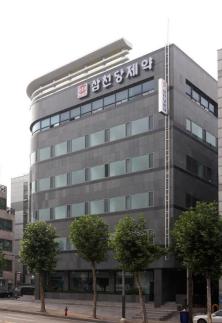 Another bio boom burst looms over KOSDAQ SEOUL, April 07 (AJP) - Boom-and-bust cycles have long defined Korea’s bio stocks, and the latest episode has unfolded around generic and specialty drugmaker Sam Chun Dang Pharm. Sam Chun Dang closed Tuesday at 519,000 won ($345), down 16.02 percent on the day. From its closing high of 1.184 million won on March 30, the stock has plunged more than 56 percent — a sharp reversal after an earlier surge of nearly 400 percent from around 270,000 won at the start of the year. At the center of the rise and fall is the company’s oral obesity treatment. Suspicions of market manipulation have intensified following reports that the majority shareholder filed to sell a significant stake, only to abruptly cancel the plan. The episode comes as the South Korean government’s ambitious “KOSDAQ 3,000” target continues to be weighed down by repeated collapses in speculative theme stocks. The surge in Sam Chun Dang’s shares began in late February, fueled by a string of announcements on exclusive licensing deals. On Feb. 26, the stock jumped nearly 30 percent to 757,000 won after the company disclosed a partnership with a European pharmaceutical firm for its GLP-1 diabetes and obesity treatment. GLP-1 drugs — such as Eli Lilly’s Mounjaro and Novo Nordisk’s Wegovy — are typically administered through weekly injections. Sam Chun Dang’s pitch was a more convenient pill-based alternative, a narrative that quickly captured market attention. But after the stock peaked on March 30, cracks began to appear. Questions emerged over the identity of its European and U.S. partners. Sentiment deteriorated further when it was revealed that the company had bypassed the official disclosure system (KIND), instead releasing earnings forecasts through press channels. At the same time, its R&D spending was found to be declining despite the high-profile project. Concerns deepened when it was disclosed that CEO Jeon In-seok had attempted to sell 250 billion won worth of shares on March 24. Jeon pushed back, threatening legal action against bloggers and analysts at iM Securities who raised doubts, and even presenting purported U.S. FDA approval documents at a press conference on Monday. The efforts, however, failed to restore investor confidence. On March 31, the Korea Exchange (KRX) designated Sam Chun Dang as a potential “unfaithful disclosure corporation.” If found to have acted intentionally in bad faith, the company could face penalty points that may ultimately trigger a delisting review. The fallout has rippled across the broader biotech sector. On March 31, as Sam Chun Dang plunged 30 percent and lost its position as the top KOSDAQ stock, Celltrion Pharm fell 3.9 percent to 54,800 won, while ABL Bio dropped 3.3 percent to 165,000 won. Both remained weak or flat in Tuesday’s morning session. The market’s sensitivity reflects a long memory. The most prominent case remains SillaJen, which soared from 10,000 won in 2016 to 160,000 won in 2018 on expectations for its liver cancer treatment Pexa-Vec, only to collapse 30 percent in a single day in August 2019 after Phase 3 trial failure and insider trading allegations. The shock dragged the entire KOSDAQ down 3.7 percent that day. Other names — including Helixmith, Kolon TissueGene and Shin Poong Pharm — have also seen sharp declines or delisting risks tied to overstated R&D claims or governance issues, leaving a lingering trust deficit in the sector. Market experts warn that such speculative swings remain a structural hurdle to President Lee Jae Myung’s goal of lifting the KOSDAQ to 3,000. “Bio stocks tend to surge on any sign of clinical success, especially with the global pharmaceutical market expected to reach $3 trillion by 2030,” said a securities researcher who requested anonymity due to concerns over potential litigation. “The success of Eli Lilly and Novo Nordisk has pushed expectations to extremes,” he added. Another industry official stressed that hitting the 3,000 mark will require more than momentum-driven rallies. “While the KOSPI is anchored by dependable heavyweights like Samsung Electronics and SK hynix, leadership on the KOSDAQ remains fluid and fragile,” he said. Indeed, the top spot on the KOSDAQ has already changed hands three times in the first quarter of 2026 alone — rotating among EcoPro, Alteogen, EcoPro BM and Sam Chun Dang Pharm. 2026-04-07 17:07:49
 -
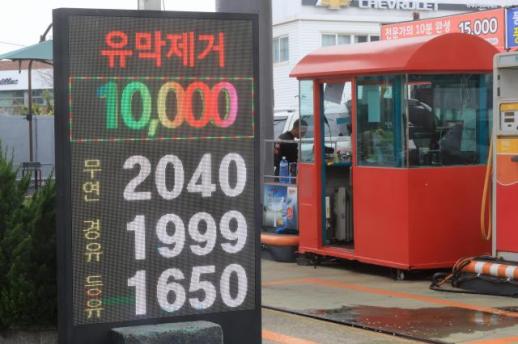 KDI warns of downside risks to economy as Gulf crisis clouds recovery SEOUL, April 7 (AJP) - South Korea's governmental Korea Development Institute think tank warned on Tuesday that the nascent economic recovery is facing increased downside risks as the conflict in the Middle East disrupts global supply chains and triggers a spike in energy prices. In the April edition of its "KDI Monthly Economic Trends," the institute said that while domestic demand and exports had been showing signs of gradual improvement, the "volatility stemming from the Middle East war, combined with surging international oil prices, is expanding downward pressure on the economy." ICT-led export boom hampered by soaring oil prices Economic indicators through February remained generally positive, KDI reported. On the production side, the service sector maintained steady growth, and the manufacturing sector expanded its gains, bolstered by a surge in semiconductor output. Exports continued a robust upward trajectory, particularly in ICT items such as semiconductors (140.5 percent) and computers (176.6 percent), driven by strong demand related to artificial intelligence (AI). Consumption also showed a moderate recovery, with average retail sales for January and February rising 2.7 percent year-on-year, excluding the seasonal distortion of the Lunar New Year holiday. Facility investment also performed well, increasing by an average of 9.3 percent in the first two months, centered on the semiconductor industry. The landscape, however, shifted abruptly in March following the outbreak of the conflict. The price of Dubai crude, South Korea’s benchmark, skyrocketed from $68.4 per barrel in February to $128.5 in March. Consequently, consumer prices in March rose 2.2 percent year-on-year – up from 2.0 percent in February – with petroleum product prices jumping 9.9 percent. Sinking sentiment and financial market volatility These escalating uncertainties are weighing heavily on economic sentiment, KDI said. The Composite Consumer Sentiment Index (CCSI) plummeted to 107.0 in March from 112.1 in February, while the Business Survey Index (BSI) also retreated across the manufacturing and non-manufacturing sectors. Financial market volatility has intensified as well. Driven by safe-haven demand and concern over the country’s reliance on Middle Eastern oil, the won-dollar exchange rate climbed into the 1,500 won range. Meanwhile, the benchmark KOSPI index dived from 6,244.1 at the end of February to 5,052.5 by the end of March. While the labor market showed some relief as the number of employed persons increased by 234,000 in February following the resumption of government job programs, employment among people in their 20s remained sluggish. "The inflationary pressure and global economic instability caused by the Middle East war could worsen export conditions and constrain investment," the report said. The think tank warned that increased costs for building materials are emerging as a significant headwind, likely delaying new projects, and hindering a rebound in construction investment. 2026-04-07 15:58:42
 -
 BOK, BdF address central bank role in tokenized environment SEOUL, April 07 (AJP) -South Korea and France’s central banks discussed stablecoins and the evolving role of banks in a tokenized financial system during a joint session in Seoul, the Bank of Korea said Tuesday. The Bank of Korea (BOK) and the Banque de France (BdF) are holding a two-day meeting from Tuesday through Wednesday as part of a regular academic exchange launched in 2024 to address shifts in the global economic landscape. This year’s session coincided with French President Emmanuel Macron’s state visit and a summit with President Lee Jae Myung, where the two leaders agreed to deepen cooperation in economic and security sectors last Friday. Talks focused on the implications of stablecoins and central bank digital currencies (CBDCs) for the international monetary system, as well as the changing roles of central and commercial banks in a tokenized environment. The Banque de France has been among Europe’s most active advocates of CBDCs, leading pilot programs on wholesale CBDCs (wCBDCs) to enhance cross-border payments and test their use as settlement assets for tokenized securities. These efforts are seen as helping shape the European Central Bank’s digital euro project. The BOK has also been advancing its own CBDC framework under “Project Han River,” launched in 2023, with real-transaction testing now entering a second phase last month. The latest discussions are expected to deepen policy coordination between the two sides. The session also examined how climate change is feeding into inflation dynamics and posing broader macroeconomic challenges for financial institutions. Participants include BOK Deputy Governor and Chief Economist Lee Jae-won and Na Seung-ho, deputy director general at its Economic Research Institute. The French delegation is led by Deputy Governor Agnès Bénassy-Quéré and Stéphane Latouche, the bank’s Asia-Pacific chief representative. 2026-04-07 14:40:21
 -
 BOK to stay on hold this week, but faces looming inflation test SEOUL, April 6 (AJP) — There is little doubt the Bank of Korea will hold its base rate at 2.5 percent at Thursday’s rate-setting meeting, but how long the pause lasts will be closely watched as Gulf-driven import inflation builds the case for at least one hike down the line. The post-meeting narrative is also unlikely to surprise, as this will be the last meeting under Governor Rhee Chang-yong before his four-year term ends on April 20. Markets are instead looking ahead to the May 28 meeting, to be chaired by incoming governor Shin Hyun-song, a U.K.-educated former Bank for International Settlements economist, when the central bank is expected to update its growth and inflation outlook to reflect the war’s impact. Government bond yields, which have risen 60 to 70 basis points this year, have eased from recent highs on expectations that Gulf tensions may stabilize. The three-year government bond yield on Monday fell 1.6 basis points to 3.451 percent, retreating from a recent peak of 3.617 percent. The 10-year yield dropped 2.2 basis points to 3.725 percent, also down from 3.915 percent. “The BOK is expected to keep the base rate unchanged at the April meeting,” said Baek Yoon-min, a senior research fellow at Kyobo Securities. “We expect the blockade of the Strait of Hormuz to ease or conclude within the second quarter.” Baek pointed to elevated U.S. inflation ahead of the November midterm elections as a key variable. Average gasoline prices have risen above $4 per gallon, the highest since August 2022. According to the Federal Reserve Bank of Cleveland, headline inflation in early April accelerated to 3.7 percent from 3.25 percent in March. Baek said U.S. inflation may paradoxically ease pressure on South Korea to tighten policy. Yoon Yeo-sam, a researcher at Meritz Securities, also expects the BOK to remain on hold for now, citing weak domestic conditions. “In 2022, core domestic indicators were robust. Now, the situation is different,” Yoon said. Economists expect rate hikes later in the year as import price pressures feed through. Consumer prices in Korea rose 2.2 percent in March from a year earlier, accelerating from 2.0 percent in the previous two months. While still within the BOK’s target range, the composition signals rising pressure. Energy has re-emerged as the dominant driver, compounded by a structurally weaker won, with the full impact only beginning to filter through. The won has extended its slide, weakening a further 6 percent this year amid capital outflows. The dollar has also sharply eased from recent peak of 1,530 won to 1,500 won Monday, but still remains at the levels of March 2009 during the global financial crisis, Petroleum prices surged 9.9 percent, contributing 0.39 percentage point to headline inflation. Diesel jumped 17 percent and gasoline 8 percent, marking the strongest energy impulse since the early phase of the Ukraine war. March likely captures only the initial shock. The key transmission channels — oil, the dollar and the exchange rate — have yet to fully feed into domestic prices. Despite his near-term hold view, Baek warned the impact of oil on inflation could be “longer and stickier” than expected, with spillovers into petrochemicals such as plastics and asphalt. He added that Shin’s appointment raises the likelihood of a shift toward tighter policy, noting the incoming governor’s preference for preemptive rate hikes. Cho Yong-gu, a research fellow at Shinyoung Securities, expects consumer inflation to approach 3 percent between May and August, with gradual tightening potentially beginning as early as July. "The central bank lacks the tools to stabilize prices quickly without a rate hike," Cho added. Some academics argue that tightening may be needed to address broader imbalances. “Given the quadruple high phenomenon of exchange rates, prices, housing costs, and interest rates, a modest rate hike is advisable,” said Kim Jung-sik, a professor emeritus at Yonsei University. “The benefits of absorbing excess liquidity to stabilize these four factors outweigh the costs.” As of Monday, the upper bound for mixed-rate mortgage loans at major banks has exceeded 7 percent. The M2 money supply rose 5.8 percent year-on-year in January, continuing to outpace the OECD average of 3 to 4 percent. 2026-04-06 17:46:38
 -
 Korea's fiscal deficit tops 100 trln won for second year despite ratio easing SEOUL, April 6 (AJP) - South Korea's managed fiscal deficit ratio to gross domestic product eased slightly to below 4 percent last year on improved tax revenue, while the deficit still exceeded 100 trillion won ($66.3 billion) for a second consecutive year, according to a government settlement report for fiscal 2025. The Ministry of Economy and Finance confirmed the managed fiscal balance at a deficit of 104.2 trillion won last year, slightly narrowing from 104.8 trillion won in 2024. The figure marks the fourth-largest deficit on record, following 117 trillion won in 2022, 112 trillion won in 2020 and 104.8 trillion won in 2024. As a share of GDP, the deficit stood at 3.9 percent, down from the 4.2 percent projected at the time of the budget, but widening from 3.7 percent a year earlier. The ratio has remained above 3 percent for six consecutive years, underscoring a prolonged period of expansionary fiscal policy. South Korea's "managed fiscal balance" - a metric that excludes social security funds such as the National Pension, private school pensions and employment insurance - is designed to better reflect the government's discretionary fiscal position. The country is the only OECD member to present its fiscal balance in such adjusted terms. Total revenue stood at 637.4 trillion won against total expenditures of 684.1 trillion won, resulting in a consolidated fiscal deficit of 46.7 trillion won. Tax revenue rebounded, rising 62 trillion won on year to 597.5 trillion won, while total expenditure increased by 61.6 trillion won to 591 trillion won. However, compared with the original budget, revenue fell short by 2.1 trillion won while spending exceeded the plan by 13.7 trillion won, pointing to looser-than-expected fiscal execution. Corporate tax revenue surged 22.1 trillion won from a year earlier, supported by strong earnings at major firms such as Samsung Electronics and SK hynix. Income tax rose 13 trillion won amid buoyant stock markets. Including 2.2 trillion won in special rural development taxes, total national tax revenue reached 373.9 trillion won, up 37.4 trillion won from the previous year. The fiscal "world surplus" - calculated by subtracting expenditures and 3.7 trillion won in carried-over budget from total revenue - stood at 3.2 trillion won, an increase of 1.1 trillion won from a year earlier. Concerns over fiscal sustainability persist. According to the Bank for International Settlements, South Korea's government debt rose 9.8 percent as of the third quarter of last year, nearly three times faster than corporate debt growth of 3.6 percent and household debt growth of 3 percent. The government defended its fiscal stance, citing overlapping domestic and external shocks. "Last year was a period when domestic and external shocks hit simultaneously, including weakened consumption following the Dec. 3 martial law incident and a rapidly changing trade environment triggered by the United States," said Hwang Soon-kwan, director general for treasury at the finance ministry. Officials said the government adopted an active fiscal approach, including two supplementary budgets, to support strategic industries such as artificial intelligence and semiconductors while stabilizing livelihoods and boosting domestic demand. Hwang also pushed back against claims that nominal GDP was overstated due to an 8 percent depreciation of the won in the second half of the year, saying underlying growth also contributed. On repeated calls from the International Monetary Fund to introduce fiscal rules, the government maintained a cautious stance. "We will actively review it once a consensus is reached in the National Assembly," Hwang said. 2026-04-06 15:42:07