
Journalist

Kim Yeon-je
duswogmlwo77@ajupress.com
-
 Japanese bond yields trigger global tantrum, South Korea most sensitive SEOUL, Jan 21 (AJP) - Major sovereign bond yields, including South Korean treasuries, jumped on Tuesday after a sharp surge in Japanese government bond yields — bringing the elephant in the room back into focus: the massive yen carry trade. The benchmark 10-year JGB yield closed up 7 basis points at 2.34 percent, its highest level in nearly three decades. The move quickly spilled over abroad, pushing the U.S. 10-year Treasury yield up 7.5 basis points to 4.295 percent and Australia’s 10-year yield up 6.9 basis points to 4.799 percent. South Korea proved particularly sensitive. The 10-year Korean government bond yield surged 8.8 basis points to 3.653 percent, marking its highest level in almost two years. Japan has long functioned as a global liquidity provider, with near-zero borrowing costs encouraging yen-funded carry trades for decades. The recent rise in JGB yields is now prompting capital repatriation, as Japanese investors pull funds back home to capture higher domestic returns. Because the yen serves as a major funding and reserve currency, this reversal has acted as a destabilizing force for global bond markets. Notably, the latest spike in yields was driven less by monetary policy than by fiscal concerns. The Bank of Japan is set to announce its interest rate decision on Friday, and the advanced trigger came from political developments surrounding Prime Minister Sanae Takaichi’s policy agenda. On Tuesday, Takaichi announced plans to dissolve parliament on Jan. 23 and call snap elections for Feb. 8. Although the ruling coalition of the Liberal Democratic Party and Nippon Ishin no Kai already controls 233 seats, she is seeking at least 240 seats to consolidate legislative dominance. Markets reacted sharply to her populist stimulus pledges, particularly proposals to cut consumption taxes on food and beverages to 8 percent — a move estimated to create a 5 trillion yen ($31.6 billion) revenue shortfall — without clear funding measures. Bond yields retreated after Takaichi later pledged that “there will be no additional debt issuance,” with the 10-year JGB yield falling about 8 basis points by Wednesday morning. However, skepticism remains, as yields continue to hover above 2.3 percent and investors question whether stimulus can be financed without new borrowing. Demand for Japanese debt has already weakened. A recent 20-year JGB auction recorded a record-low bid-to-cover ratio, underscoring investor caution. The rise in government yields has filtered through to consumer lending. As of Wednesday, 10-year fixed mortgage rates at Japan’s megabanks — Mizuho, MUFG and SMBC — were approaching 3.8 percent, nearly double the roughly 2 percent ceiling seen a year earlier. Analysts have compared the episode to the U.K.’s 2022 “Truss Shock,” when unfunded tax cuts proposed by then–Prime Minister Liz Truss sent 10-year gilt yields soaring from about 3.5 percent to 4.5 percent in less than a week. After Japanese Finance Minister Satsuki Katayama urged markets to “maintain calm,” the 10-year JGB yield slipped further, down 8.6 basis points to 2.29 percent. The recovery in Korea has lagged. The 10-year Korean yield stood at 3.619 percent on Wednesday morning, still up 3.4 basis points and failing to fully reverse the previous day’s sharp jump. Part of the drag stemmed from Korea's own fiscal stimulus agenda. On Tuesday, President Lee Jae-myung mentioned the possibility of a supplementary budget, instructing Culture Minister Choi Hwi-young to review potential increases in arts and culture spending. Although Lee later clarified at a Wednesday press conference that there would be “no reckless supplementary budget,” the initial comment had already unsettled the bond market. U.S. Treasury yields also eased slightly, with the 10-year yield ending Wednesday at 4.275 percent, down 2 basis points, but still short of a full recovery. Persistent geopolitical risks — including Washington’s threat to impose a 10 percent tariff on countries opposing its push to acquire Greenland — continued to weigh on sentiment. Caution urged over expansionary fiscal trends While analysts say fears of a systemic shock in South Korea are overstated, they warn that a broader global tilt toward fiscal expansion among major currency issuers poses ongoing risks. “Mentioning a supplementary budget in January is unusual, but South Korea is likely to exceed its tax revenue targets this year, making large-scale bond issuance unlikely,” said Kang Seung-won, a researcher at NH Securities. Kang added that a projected 30 percent increase in earnings among KOSPI and KOSDAQ-listed companies should help buffer the domestic bond market. Still, expansionary fiscal policies elsewhere remain a concern. “We are seeing a recurring pattern where fiscal concerns push up bond yields and market rates, which then weigh on currencies,” said Kwon Ah-min, another researcher at NH Securities. Kwon pointed to Japan’s record 122.3 trillion yen budget for fiscal 2026 — with 29.6 trillion yen expected to be financed through debt — as a key risk factor. “Rising bond issuance among major economies remains a volatile variable for global financial markets,” she said. 2026-01-21 17:20:01
 -
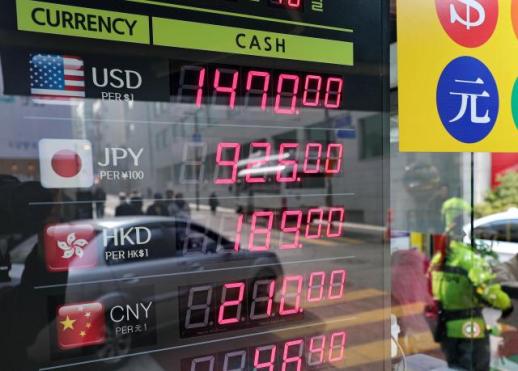 Korean won rebounds after president signals KRW–USD range SEOUL, January 21 (AJP) - The Korean won, which briefly revisited the perceived government defense line of 1,480 per dollar before markets opened Wednesday, rebounded sharply after President Lee Jae Myung publicly referred to a specific range for the exchange rate. During a televised New Year’s press conference, Lee addressed the won’s prolonged weakness, noting that the depreciation was not “a uniquely Korean phenomenon” but reflected broader geopolitical and global currency trends. Some market participants have described the won’s recent level around 1,470 per dollar as a “new normal,” Lee said. He added that if the Korean currency were strictly moving in line with the Japanese yen against the dollar, it would be trading closer to 1,600 won. Lee said authorities are continuing to explore measures to stabilize the currency, adding that officials expect the dollar-won rate to fall toward the 1,400 range within one to two months, though he did not specify the basis for the forecast. The president’s reference to a specific range had an immediate impact on the market. The dollar fell 11.1 won to 1,468.7 won in afternoon trading. “If there had been a quick fix, we would have already used it,” Lee said. “The government is implementing many useful policies that it can. But at the end of the day, the market is determined by supply and demand.” The won averaged a record-low 1,423.32 per dollar last year and has remained under pressure since the start of this year amid strong global demand for U.S. assets and lingering uncertainty over South Korea’s foreign exchange outlook. Concerns have also persisted over Seoul’s commitment to invest $350 billion in the United States under a sweeping tariff agreement with Washington. While the pledge has eased trade tensions, uncertainty over how the government will deliver the roughly $20 billion in annual funding has weighed on the local foreign-exchange market, according to a trader at SK Securities. U.S. officials are expected to visit Seoul as early as next month or in March to discuss the details of the investment framework, the trader said. 2026-01-21 14:59:53
 -
 More young Koreans abandon job searches: BOK SEOUL, January 20 (AJP) - The number of economically inactive or “idled” young people in South Korea has risen sharply, with a growing share abandoning job searches, underscoring mounting risks to the country’s long-term growth potential, the central bank said on Tuesday. According to a report from the Bank of Korea (BOK), the proportion of the idled population within the economically inactive group climbed to 15.8 percent in 2025, up from 12.8 percent in 2019. The trend is most pronounced among young people, where the idled share surged to 22.3 percent last year from 14.6 percent in 2019. The report showed that the number of idled individuals with prior work experience jumped 32.5 percent over the period, rising from 360,000 in 2019 to 477,000 in 2025. By contrast, the number of young people without any work experience who fall into the "NEET" category — not in education, employment or training — remained broadly unchanged at around 100,000. The data suggest that those who have already entered the labor market are increasingly likely to exit and fail to return. The number of so-called “resting” youth — individuals who reported having no desire to work — also rose sharply, reaching 450,000 last year, a 56.8 percent increase from 287,000 in 2019. While people with an associate degree or lower continue to account for about 60 percent of the idled youth population, the number of university graduates and those with higher education who are “just resting” has been steadily increasing, the BOK said. The central bank found a strong link between prolonged unemployment and permanent labor market exit. Each additional year of unemployment raises the probability of a young person becoming idled by an average of 4 percent, while reducing the likelihood of finding a job by 3.1 percent. “The increase in the idled youth population poses a risk of shrinking the long-term labor supply and weakening South Korea’s potential growth,” the BOK report said. “As the likelihood of labor market exit rises with the length of unemployment, it is crucial to implement measures that prevent prolonged stagnation among job seekers.” 2026-01-20 17:45:24
 -
 Korea Exchange cleans out zombie stocks as KOSPI rallies to new heights SEOUL, January 20 (AJP) - South Korea’s stock market is extending its red-hot rally into the new year while quietly pushing out near-defunct companies, using favorable market momentum to rationalize both its main and secondary bourses. According to data from the Korea Exchange (KRX) as of Tuesday, five companies — Pureunsonamu, Intromedic, Well Biotec, Kukbo and PharmAbcine — are currently undergoing delisting procedures. Of the five, Well Biotec and Kukbo are listed on the KOSPI, while the remaining three trade on the KOSDAQ. Including NKMAX, which was delisted earlier this month, and AMCG, which entered liquidation on the dormant KONEX board, the total number of exits from the Seoul bourse in January rises to seven. Such activity is highly unusual for January, traditionally considered a grace period as deadlines for annual audit reports typically fall in March. In the history of South Korea’s securities market, liquidation trading in January has occurred only twice — Seunghwa Pretech in 2016 and SL Energy in 2025. Outside of those exceptions, there have been no recorded cases of January liquidation trading. The cleanup reflects a broader government-led initiative to remove non-viable firms from the market. A year ago, the Financial Services Commission (FSC) and the KRX unveiled a sweeping reform plan covering initial public offerings and delisting procedures. The most notable change was a significant streamlining of the delisting review process. Under the revised framework, authorities eliminated the second stage of the traditional three-tier review system — which previously consisted of a Corporate Review Committee followed by two consecutive Market Committees. As a result, the maximum delisting review period has been cut in half, from four years to two. In addition, companies receiving a “disclaimer of opinion” from auditors for two consecutive years are now subject to immediate delisting without a grace period. From this year through 2028, listed companies must also meet progressively higher thresholds for market capitalization and revenue to retain their listings. KOSPI-listed firms are required to maintain a minimum market capitalization of 50 billion won ($33.8 million) and annual revenue of 20 billion won, while KOSDAQ-listed firms must meet thresholds of 30 billion won in market capitalization and 7.5 billion won in revenue to avoid delisting review. The primary driver behind the regulatory overhaul was the rapid deterioration of the tech-heavy KOSDAQ market. Data from the Bank of Korea and the KRX show that the proportion of so-called “marginal firms” — commonly referred to as zombie companies that fail to generate sufficient operating profit to cover interest expenses — on the KOSDAQ rose nearly 50 percent, from 16.5 percent in 2021 to about 24.5 percent in 2025. While the KOSPI has historically been subject to stricter oversight, the share of marginal firms on the main board also increased from 9.8 percent to an estimated 11.2 percent over the same period. The combined market average is now approaching the 20 percent threshold, a level exceeded only by U.S. markets. This trend contrasts sharply with regional peers: Japan’s Nikkei 225 maintains a marginal-firm ratio below 15 percent, while Taiwan’s TAIEX remains below 10 percent. The weak quality of listed firms has long been cited as a key driver of the so-called “Korea Discount,” discouraging foreign investor inflows and prompting the government’s more aggressive intervention. Market experts say tighter listing and delisting standards are likely to support the ongoing rally. “There is a clear expectation that stricter delisting criteria will restructure the market around healthier companies,” said Na Jeong-hwan, a researcher at NH Securities. “When the government unveiled its KOSDAQ support measures late last year, attention focused on the potential for market normalization through the exit of distressed firms.” Indeed, the KOSDAQ index rose about 10.3 percent in January last year following the initial announcement of tougher standards. After a renewed pledge on Dec. 19 to accelerate the removal of zombie firms, the index has gained more than 6 percent as of Tuesday’s close, suggesting that prolonged inaction on non-viable companies had been a major drag on investor sentiment. “Establishing clear guidelines for managing distressed firms could have a positive impact not only on the KOSDAQ but across the entire securities market, including the KOSPI,” Na added. Still, skepticism remains over whether the latest measures will translate into sustained enforcement. “The government has repeatedly announced plans to manage and clean up distressed firms, but those statements have rarely resulted in meaningful action,” said Kim Hak-kyun, head of research at Shinyoung Securities. “We need to watch closely whether this policy produces tangible results," said an official at the KRX, speaking on condition of anonymity. On Tuesday, the KOSPI closed at 4,885.75 and the KOSDAQ at 976.37. Compared with the same day a year earlier, the KOSPI has nearly doubled, posting a 94 percent gain, while the KOSDAQ has risen more than 34 percent. 2026-01-20 16:58:55
 -
 Korea's producer prices rise nearly 2% on year amid weak won, surging memory chip costs SEOUL, January 20 (AJP) -South Korea’s producer prices rose for a fourth consecutive month in December, as a weak won lifted prices across a broad range of goods and services, while sharply higher memory chip costs added further upward pressure. According to data released Tuesday by the Bank of Korea, the producer price index for December stood at 121.76 (2020 = 100), up 0.4 percent from the previous month and 1.9 percent from a year earlier. For the full year of 2025, producer prices rose a relatively modest 1.2 percent. Fresh food prices jumped 7.5 percent on month, reflecting cold-weather conditions, while energy prices fell 0.9 percent on softer international prices despite unfavorable exchange-rate conditions. Raw material prices increased 1.8 percent on month, reversing a 0.5 percent decline recorded in November. Manufactured goods rose 0.4 percent. Gains in computer, electronic and optical equipment, which climbed 2.3 percent, and primary metal products, up 1.1 percent, were partly offset by a 3.7-percent drop in coal and petroleum products. Prices for electricity, gas, water and waste services rose 0.2 percent, led by increases in industrial city gas, up 1.6 percent, and sewage treatment services, up 2.3 percent. Service prices also rose 0.2 percent, driven by restaurants and lodging, which increased 0.4 percent, and financial and insurance services, up 0.7 percent. Among key cost drivers, production costs for DRAM surged 15.1 percent from the previous month and 91.2 percent from a year earlier. Costs for assembling flash memory rose 6 percent on month and 72.4 percent on year. By contrast, naphtha cracking costs fell 3.8 percent on month and 17.4 percent on year, reflecting a prolonged downturn in the petrochemical sector and ongoing capacity reductions under industrial restructuring. Lee Moon-hee, head of the Bank of Korea’s price statistics team, said farm product prices were influenced by seasonal supply-and-demand factors and temporary supply disruptions caused by harvest delays for certain fruit items. “Farm product prices typically tend to rise from the previous month in summer and winter, so this is not unusual,” Lee said. On the potential impact on consumer inflation, Lee said the recent rise in producer prices has been driven largely by higher prices for intermediate goods such as semiconductors and primary metals, suggesting the pass-through to consumer prices may take time. He added that international oil prices remain lower than the previous month’s average and could exert downward pressure on consumer prices through petroleum products. The won weakened overnight, with the dollar briefly rising above 1,480 won—widely viewed as a government defense line—before retreating to around 1,474.5 won. 2026-01-20 09:35:03
 -
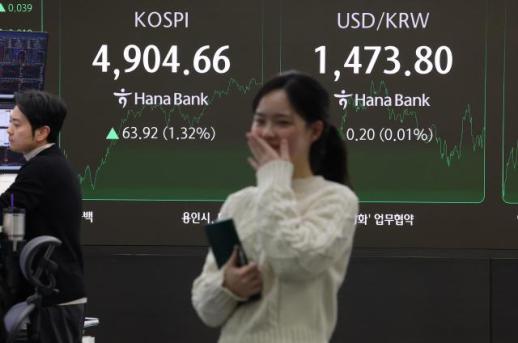 IMF flags structural FX fragility in Korea, citing shallow market and equity-heavy exposure SEOUL, January 19 (AJP) - South Korea’s foreign exchange vulnerability has drawn renewed scrutiny from the International Monetary Fund, not because of short-term external debt — the trigger during the late-1990s liquidity crisis — but due to the country’s unusually large foreign equity exposure relative to the depth of its FX market. According to an IMF assessment released Sunday, South Korea’s foreign-exposed assets amount to roughly 25 times its average monthly foreign exchange trading volume, ranking it fourth globally. While the headline figure places Korea alongside advanced economies, a closer look reveals a structural imbalance that continues to weigh on the won. Data from the Bank of Korea and the Bank for International Settlements show that South Korea’s FX turnover averaged about $2.2 trillion per month last year. By comparison, Canada records roughly $11 trillion, Norway $2.8 trillion, while in the United Kingdom, around $2.7 trillion changes hands in a single day. Liquidity matters. The deeper the market, the more easily it absorbs external shocks such as geopolitical risk or global monetary tightening. Shallow markets, by contrast, can react sharply to even modest disturbances. Korea’s vulnerability is compounded by the composition of its foreign-exposed assets. Equities account for nearly 70 percent, far higher than in Taiwan, where stocks represent closer to 30 percent despite the island ranking first globally in total foreign exposure. Japan, benefiting from the yen’s safe-haven status, adheres to a de facto “1:1 rule,” keeping equity exposure below 50 percent. Because equities are inherently more sensitive to shifts in market sentiment than debt instruments, this structural tilt leaves the won more exposed to sudden capital outflows. Norway, often cited as a peer with high equity exposure, operates under a fundamentally different framework. Its overseas investments are managed by a sovereign wealth fund with no fixed payout obligations. Korea’s exposure, by contrast, is driven largely by the National Pension Service (NPS) — a pension fund with explicit future liabilities. The NPS faces a looming outflow phase in which benefit payments will eventually exceed contributions. Although a 75 percent surge in the KOSPI last year, combined with strong U.S. equity performance, pushed back the projected depletion date to 2064, the fund remains under pressure to pursue higher-risk returns. Norway’s fund, meanwhile, mitigates domestic risk by investing 100 percent of its assets overseas, an option unavailable to the NPS. Foreign exchange reserves add another layer to the so-called “won discount.” While South Korea’s reserves stand at $428 billion, ranking ninth globally, its reserves-to-GDP ratio is below 23 percent, placing it outside the global top 30. Among its four major Asian peers, Korea holds the smallest absolute reserves and the second-lowest ratio, ahead of only China. But China’s case is not directly comparable, given the yuan’s inclusion in the IMF’s Special Drawing Rights basket and the scale of its economy. Taiwan, another top-four country in foreign exposure, maintains a reserves-to-GDP ratio above 70 percent, with holdings reaching $602.6 billion as of December. Canada’s ratio, by contrast, sits near 5 percent, a level sustained only because the Canadian dollar functions as a quasi-reserve currency. Adding to concern, South Korea’s reserves fell by $260 million in December, bucking the trend among major economies and raising the prospect of being overtaken by Hong Kong in global rankings. A roadmap for diversification The IMF argues that expanding and diversifying Korea’s FX market structure is essential to reducing the won’s vulnerability. A key priority is extending trading hours. Korea’s FX market currently operates for 17 hours, from 9 a.m. to 2 a.m., following a recent extension from a 3:30 p.m. close to better align with London. By contrast, markets in Japan, Canada, Norway and Taiwan operate on a 24-hour basis. Commercial banks have expressed support for a full transition. “Banks have been monitoring the FX market in three shifts since last February, but because dollar-related shocks often occur after 2 a.m., our ability to respond remains limited,” said an FX trader, who requested anonymity. Broadening participation by global investment banks is another priority. While Taiwan’s official trading hours are shorter, it benefits from active spot and forward trading by foreign institutions that act as shock absorbers during periods of stress. Korea’s market remains dominated by domestic banks, while foreign institutions are required to open local accounts — a barrier that limits participation. In response, the government’s 2026 Economic Growth Strategy, unveiled on January 9, includes plans to introduce 24-hour FX trading by July and allow foreign financial institutions to participate without local accounts. The goal, policymakers say, is simple: to deepen the pond, so that the won can better withstand the waves of global volatility. 2026-01-19 17:02:24
 -
 East Asian rate decoupling: A tale of four economies SEOUL, January 16 (AJP) - East Asia is no longer a monolith but a disparate economic powerhouse that accounts for roughly a quarter of global GDP and a third of world trade. For years, the combined output of its leading quartet—China, Japan, South Korea and Taiwan—has surpassed that of the euro zone, underpinned by an export engine that remains the envy of the West. Beneath this shared headline strength, however, a deep monetary divergence is taking hold. Nowhere is the split more visible than in the policy corridors of the region’s central banks. As growth models diverge, so too do interest-rate paths—revealing sharply different economic realities among neighbors once viewed as a bloc. Japan: BOJ tightening stirs domestic friction and global tremors Since his appointment in 2023, Bank of Japan Governor Kazuo Ueda has moved decisively to dismantle Japan’s decades-long zero-rate regime. Starting with a hike from -0.1 percent to 0.1 percent in March 2024, the BOJ has delivered successive increases—to 0.25 percent, 0.5 percent and, most recently, 0.75 percent in December—bringing the benchmark rate to the brink of 1 percent. The pivot is fundamentally defensive. Consumer inflation has remained above 2 percent since 2022, a sustained stretch not seen since the bubble era. After years of dismissing inflation as transitory, the BOJ has been forced to respond to a cost-of-living squeeze that is increasingly entrenched. At the core of Japan’s inflation problem lies the yen. Ultra-low rates long enabled the yen carry trade, in which investors borrowed cheaply in yen to chase higher returns overseas. While this strategy supported exports, an excessively weak currency has become a liability—raising import costs and amplifying inflation. Japan imports more than 60 percent of its food on a caloric basis and roughly 80 percent of its energy, leaving the economy acutely vulnerable to currency depreciation. Political resistance remains a constraint. Prime Minister Sanae Takaichi, a staunch defender of Abenomics, has previously dismissed rate hikes as “stupid.” During a meeting with Ueda last November, she reportedly offered little more than a noncommittal “I see,” stopping short of endorsing the tightening path. Global markets are also on edge. Higher Japanese rates threaten to unwind an estimated ¥500 trillion ($3.26 trillion) in carry-trade positions. The risks were laid bare on Aug. 5, 2024, when a sudden reversal triggered synchronized sell-offs across markets from New York to Seoul. Still, doubts persist over how far tightening can go. “Japan’s growth turned negative in the third quarter of last year, real wage gains continue to disappoint, and corporate investment remains weak,” said Jung Yong-taek, a senior researcher at IBK Securities, adding that growth projections for 2026 have slipped back below 1 percent. “With the fiscal deficit near 5 percent and Prime Minister Takaichi pressing for renewed quantitative easing, we expect at most one additional rate hike this year,” Jung said. Nomura Securities echoed that view in its Japan Macro Outlook 2026, forecasting a pause in the BOJ’s tightening cycle as policymakers wait to see whether core inflation slips below the 2 percent target. Similar caution has been expressed by global asset managers including Morgan Stanley and BlackRock. China: Aggressive easing fails to awaken a somnolent economy China stands at the opposite extreme. Beijing has slashed its loan prime rate from 3.85 percent in 2021 to a record low of 3 percent by May last year, flooding the system with liquidity in hopes of reigniting growth. The strategy has succeeded—at least on the industrial front. Output surged, reinforcing China’s position as the world’s factory. In 2025, the country posted a record $1.2 trillion trade surplus. BYD overtook Tesla in electric vehicles, while ChangXin Memory Technologies emerged as the world’s fourth-largest memory-chip maker. Yet the benefits have largely bypassed households. Ultra-low rates accelerated the implosion of a property sector that holds roughly 70 percent of household wealth. As defaults mounted, home prices fell more than 20 percent. With savings offering minimal returns, households had little buffer against the collapse—deepening the real estate downturn rather than cushioning it. Consumption remains anaemic. Consumer inflation has stayed below 1 percent, reflecting persistent deflationary pressure. Retail sales growth has slowed to around 1 percent—an abrupt drop in an economy once accustomed to 8 percent expansion—casting doubt on Beijing’s 5 percent growth target. Producer prices tell a similar story, falling 1.9 percent in December as overcapacity fuels cutthroat price wars. Excess supply continues to overwhelm domestic demand, eroding margins and confidence. Beijing is widely expected to stay dovish. “After the Communist Party designated domestic demand-driven growth as a core priority for 2026 at December’s Central Economic Work Conference, accommodative policy is likely to persist,” said Park Soo-jin, a researcher at Mirae Asset Securities. Still, Park cautioned that the limits of monetary easing are becoming clear. China’s M2 money supply continues to decelerate despite rate cuts, underscoring waning transmission. Attention is now turning to the March “Lianghui” meetings, where authorities are expected to outline structural reforms beyond liquidity injections. South Korea and Taiwan: A shared pause, divergent realities South Korea and Taiwan—key pillars of the global semiconductor supply chain—have both opted for policy stasis. The Bank of Korea has held its benchmark rate at 2.5 percent since May 2025, while Taiwan’s central bank has kept rates at 2 percent for nearly two years. The similarity ends there. In Seoul, the pause reflects constraint. The won has weakened more than 4 percent against the dollar from its 2024 average, trading near 1,474 as of Friday. With a 1.25 percentage point yield gap with the United States, further cuts risk accelerating capital outflows and currency depreciation—especially as the yen regains strength. BOK Governor Rhee Chang-yong reinforced this hawkish bias on Thursday by removing references to “possible rate cuts” from the policy statement. While ruling out further easing, he also acknowledged that hikes cannot be an option due to South Korea’s 1,800 trillion won ($1.33 trillion) household debt burden. Property-related loans alone exceed 1,000 trillion won. A rate hike, Rhee warned, could destabilize housing rather than contain it—triggering defaults and a sharper downturn. Taiwan’s inaction, by contrast, reflects confidence. The economy is projected to grow 7.4 percent in 2025, according to the Central Bank of the Republic of China—far outpacing South Korea’s 1.8 percent forecast. Taiwan’s GDP per capita has overtaken Korea’s for the first time in more than two decades, while its $138 billion trade surplus is nearly double Seoul’s. The engine is semiconductors. TSMC, the linchpin of the global AI supply chain, is expected to post record revenues of $122 billion and operating profits of $60 billion. With exports driving growth, policymakers see little reason to risk tightening. Domestic conditions are equally benign. Inflation remains near the 2 percent target, and the Taiwan dollar has been stable around 31 to the U.S. dollar. Unlike South Korea, Taiwan can afford to wait. 2026-01-16 17:03:59
 -
 BOK stays pat and signals end to rate cuts amid prolonged won weakness SEOUL, January 15 (AJP) — The Bank of Korea’s decision to hold its policy rate at 2.5 percent on Thursday came with an unusual backdrop: a rare public intervention by the U.S. Treasury secretary and a detailed defense by a deputy governor, highlighting how Korean won's fragility has become central in both fiscal and monetary policy calculus. The central bank unanimously voted to keep the benchmark rate unchanged at its first rate-setting meeting of the year, extending a pause that has been in place since May last year and signaling an effective halt to the latest easing cycle. “I can easily say yes,” Bank of Korea Governor Rhee Chang-yong said at a press briefing after the monetary policy board meeting when asked whether the exchange rate had been the primary factor behind the decision. Rhee said the won’s excessive depreciation reflects a “disparity with fundamentals,” adding that authorities are reassessing the effectiveness of various measures taken since late last year to support the currency. He attributed roughly three-quarters of the won’s weakness to external factors — including a strong U.S. dollar, a weak Japanese yen and heightened geopolitical risks in regions such as Venezuela and Iran — with domestic factors accounting for the remaining quarter. A growing bias among investors toward overseas securities has also deepened short positioning on the won, amplifying downward pressure, he said. The currency’s slide to its weakest levels since past crisis episodes — including the global financial crisis, the Asian financial crisis and the post-martial law period in late 2024 — even prompted unusually direct commentary from Washington. U.S. Treasury Secretary Scott Bessent said in a post on X following a meeting with Deputy Prime Minister and Finance Minister Koo Yun-cheol that the won’s weakness was not aligned with South Korea’s economic fundamentals, a rare interventionist remark that briefly steadied market sentiment. The markets went on their ways – the KOSPI hitting new historic high of 4,797.55 after 1.58-percent gain. The dollar added 5.40 won to 1.471.9 won. Bond prices however crashed on hawkish tone. The three-year treasury yield surged 7.4 basis points to 3.070 percent, while the 10-year yield rose 5.4 basis points to 3.472 percent by midday. Policy bind between household debt and skewed economic recovery Too steep depreciation in the won that can fan imported inflation and capital flight builds rationale for higher rates. But the scale of household debt continues to constrain the central bank’s policy options. Household debt stands at around 2,000 trillion won ($1.36 trillion), a level widely viewed as prohibitive for any rate hike. A rate cut no longer can be an option since the Bank of Japan is expected to deliver its second consecutive rate hike later this month — a move that could intensify regional currency volatility and place additional pressure on the won. Reflecting the shift in stance, the BOK removed references to “the possibility of a rate cut” from its post-meeting statement. Unlike the divided vote seen in November, Thursday’s decision was unanimous, with all six board members agreeing to hold rates steady. Rhee said housing market imbalances and rising household debt remain key constraints on future policy decisions. He also pointed to a “K-shaped recovery” concentrated in semiconductors, alongside a declining potential growth rate, as structural pressures weighing on the broader economy. “We will determine future policy by comprehensively weighing the exchange rate, the monetary paths of the United States and Japan, and the state of the domestic economy,” Rhee said. The governor pushed back strongly against claims that loose liquidity conditions and modest rate cuts since the pandemic have structurally weakened the won. “During my tenure, at the very least, M2 growth has never shown an upward trend,” Rhee said. His four-year term ends in April. Deputy Governor Park Jong-woo reinforced that view, delivering a point-by-point rebuttal during the briefing — an unusually detailed defense at a rate-setting event. “The M2 growth rate has remained at a consistently low level since 2022 and even declined in November,” Park said. Addressing arguments that the won’s weakness stems from Korea’s higher M2-to-GDP ratio compared with the U.S. Park said the ratio has remained stable for several years. He cautioned against making simple numerical comparisons between Asian economies — which rely heavily on bank-intermediated finance — and the U.S. or eurozone, where capital markets play a more dominant role. 2026-01-15 16:19:26
 -
 BOK stays pat for eighth month as weak won and high debt constrain policy SEOUL, January 15 (AJP) - The Bank of Korea (BOK) kept its benchmark interest rate unchanged at 2.5 percent on Thursday, extending its policy pause to an eighth consecutive month as policymakers remain constrained by a weak currency, elevated household debt and divergent inflation pressures. At its first rate-setting meeting of 2026, the central bank decided to hold the base rate steady, unchanged since a 25-basis-point cut in May last year. The decision reflects what officials have described as a growing policy bind in a prolonged liquidity-rich environment. While the Korean won has remained near crisis-level weakness — raising concerns about imported inflation and eroding the relative appeal of Korean assets — the scale of domestic household debt continues to limit the central bank’s room to maneuver. Household debt stands at around 2,000 trillion won ($1.36 trillion), a level seen as prohibitive for any rate hike. At the same time, the BOK has little scope to resume a rate-cutting cycle, particularly as expectations build that the Bank of Japan may deliver a second consecutive rate hike later this month — a move that could exacerbate regional currency volatility and put additional pressure on the won. The won, which had drawn temporary support overnight from rare interventionist rhetoric by the U.S. Treasury Department echoing Seoul’s concerns, remained under pressure in early Seoul trading. The dollar was quoted at 1,467.5 won, up 1 won on the day as of the morning session. U.S. Treasury Secretary Scott Bessent said in a post on X following a meeting with Deputy Prime Minister and Finance Minister Koo Yun-cheol that the won’s weakness was not aligned with South Korea’s economic fundamentals, an unusually direct comment from Washington that briefly steadied market sentiment. 2026-01-15 09:52:23
 -
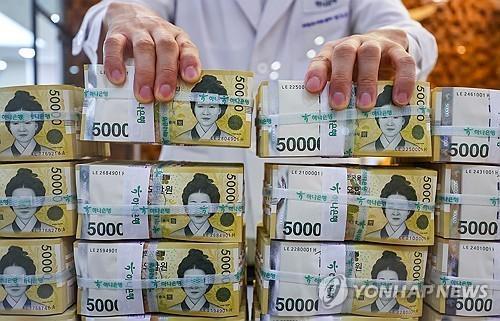 Korea's M2 growth moderates as investors favor short-term returns SEOUL, January 14 (AJP) - South Korea’s broad money growth stalled in November under a revised definition of M2, reflecting both a statistical adjustment and a deeper shift in investor behavior toward short-term, high-return assets. According to data released Wednesday by the Bank of Korea (BOK), the M2 money supply stood at 4,057.5 trillion won ($2.77 trillion) in November 2025, little changed from the previous month and marking a second consecutive month of flat growth. The figure represents a slight decline from October’s 4,059.5 trillion won. Beginning in January, the BOK revised its M2 methodology in line with International Monetary Fund (IMF) standards, excluding beneficiary certificates — including exchange-traded fund (ETF) units — from the broad money total due to their high price volatility. Under the previous definition, November M2 would have amounted to 4,498.6 trillion won, showing a modest month-on-month increase. Even after accounting for the revision, the data point to heightened liquidity volatility, driven by investor preference for fast-turnover assets such as equities and short-term bonds. On a year-on-year basis, M2 rose 4.8 percent in November, slowing from October’s 5.2 percent increase. While moderating, Korea’s monetary expansion continues to outpace that of major reserve-currency economies, exceeding the United States’ 4.3 percent growth and Japan’s 1.8 percent. Liquidity levels also remain elevated relative to economic output. Data submitted by the BOK to Rep. Park Sung-hoon of the ruling People Power Party show Korea’s M2-to-GDP ratio at 153.8 percent — more than double the 71.4 percent recorded in the United States. The composition of money holdings highlights a growing bias toward liquidity. Financial bonds with maturities of less than two years increased by 4.2 trillion won, while marketable instruments rose by 2.5 trillion won, reflecting a shift away from longer-term financial products amid a buoyant securities market and rising demand for overseas equities. The trend has carried into the new year. Recent data released Tuesday show demand deposits at the country’s five major banks fell by about 27 trillion won from end-December levels, while investor deposits climbed to a record high exceeding 90 trillion won as of Jan. 8 — signaling an accelerating flow of funds from bank accounts into equity markets. By sector, corporations increased their M2 holdings by 11 trillion won in November, while “other financial institutions,” including brokerages and asset managers, added 8.7 trillion won. In contrast, money holdings by households and non-profit organizations declined by 12.3 trillion won, underscoring the rapid shift by individual investors toward riskier assets. 2026-01-14 16:48:28