

Journalist

Seo Hye Seung, Kim Yeon-jae
duswogmlwo77@ajupress.com
-
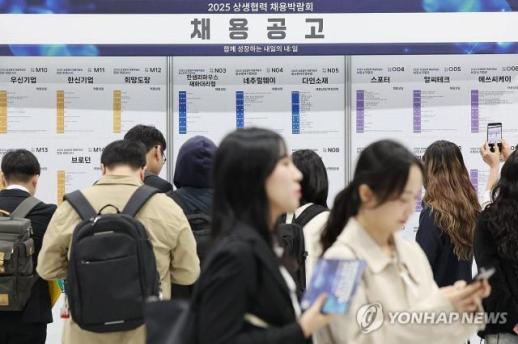 Young Korean men squeezed out as women and AI reshape labor market SEOUL, April 14 (AJP) — Young South Korean men are being squeezed out of the labor market at a notable pace amid increased competition from women and artificial intelligence, a study by the Bank of Korea showed Tuesday. According to the central bank, the economic participation rate for men aged 25 to 34 fell from 89.9 percent in 2000 to 82.3 percent in 2025, in contrast to a steady average of around 89 percent from 1995 to 2024. The downward trend is even more pronounced across generations. While Baby Boomers recorded participation rates around 90 percent and Generation X around 88 percent, the 82.3 percent rate for Millennials comes as a significant drop. The BOK attributes this largely to “shifts in the competitive structure,” coupled with the increased entry of highly educated women into the labor market. “As women's economic participation expanded, competitive pressure intensified significantly, particularly among youth with university degrees or higher,” said Yoon Jin-young. “The number of female employees in professional and office roles is now reaching levels similar to those of men.” In fact, the probability of economic participation for highly educated men born between 1991 and 1995 decreased by 15.7 percentage points compared to previous generations, while it rose by 10.1 percentage points for women. Changes in the industrial structure have also worked against young men. As middle- to low-skilled jobs in manufacturing and construction declined, the labor supply probability for men with an associate degree or less fell by 2.6 percentage points compared to 2000. “The overall labor demand for men with an associate degree or less has declined as middle- to low-skilled jobs centered on manufacturing and construction have shrunk,” Yoon explained. The entry path for youth is narrowing further as employment among the elderly expands and AI continues to proliferate. Between 2004 and 2025, the employment rate for older workers rose by 12.3 percentage points, with most of this increase concentrated in higher-education jobs. Furthermore, 98.3 percent of youth jobs lost over the past four years were concentrated in industries with high exposure to AI, indicating that automation is replacing entry-level positions. During this process, the number of “idled” individuals and those in a state of job preparation has grown, leading to a broader withdrawal from economic activity. The proportion of “idled” youth, which was 3.3 percent in 2003, reached 10.7 percent in 2025 — meaning at least one in ten young men is not even seeking a job. Evaluating the trend, Yoon said, “The decline in the economic participation rate of young men and the expansion of participation among women and the elderly represent a diversification of labor supply following demographic changes.” The central bank emphasized the need to establish institutional conditions that allow youth to enter the labor market more easily, preventing a “zero-sum game” in which competition between genders and groups intensifies while the total number of jobs remains stagnant. Yoon added that structural labor market reforms — such as reducing excessive protection for regular workers and promoting the transition of non-regular workers to regular status — must be implemented in tandem. 2026-04-14 15:51:55
 -
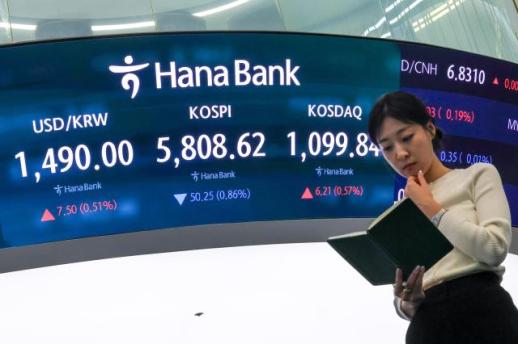 WGBI impact muted as external shocks pressure Korean bonds, won SEOUL, April 13 (AJP) - South Korean sovereigns joining the World Government Bond Index (WGBI) hardly proved to be a magic wand for both the currency and bonds in the first month. Extraordinary factors — including escalating Middle East conflicts and a shifting interest rate and inflation environment — have partly undermined the honeymoon period. Some experts say Korea’s structural challenges run too deep to rely simply on a WGBI boost. Since FTSE Russell began including Korean bonds in the WGBI on April 1, authorities have highlighted expectations of strong foreign inflows to ease pressure on the won and bond market. Finance Minister Gu Yun-cheol reiterated that stance Friday, pointing to foreign net purchases of 6.8 trillion won ($4.57 billion) in government bonds so far this month. Yet the impact on markets has been limited. Despite steady foreign buying, the won and bonds have shown little sign of relief. Entering its third week of inclusion, the Korean won closed Monday at 1,489.3 per dollar and has hovered near the 1,500 level — territory last seen in the aftermath of the 2008 global financial crisis. The bond market has shown similar strain. The three-year government bond yield rose 4.7 basis points to 3.407 percent, while the 10-year yield climbed 5.7 basis points to 3.743 percent — still 30 to 40 basis points higher than at the start of the year. Foreign participation has also underwhelmed relative to expectations. According to the Korea Financial Investment Association (KOFIA), foreign holdings of domestic bonds stood at 340.4 trillion won at the end of March, down 10.2 trillion won from a month earlier. A key driver has been the shift in the rate environment. The Hyundai Research Institute warned that if Middle East maritime disruptions persist and oil prices exceed $100 per barrel, South Korea’s consumer inflation could rise to 3.1 percent — more than one percentage point above the Bank of Korea’s 2 percent target. That outlook is pushing the central bank toward a more hawkish stance. After removing references to a rate cut in January, the Bank of Korea is now widely expected to consider rate hikes as early as July, reinforced by the policy stance of governor-nominee Shin Hyun-song. Major financial institutions, including Shinyoung Securities and Citi, say this shift is reducing the relative attractiveness of Korean bonds and diluting the impact of WGBI inclusion. Such over-optimism is not new. New Zealand, which began phased inclusion in the WGBI in November 2022, initially expected $4.5 billion in inflows. However, aggressive rate hikes by the Reserve Bank of New Zealand in response to inflation reduced actual inflows to roughly one-third of that estimate. South Africa offers a similar case. Despite high yields — with its 10-year bond yield around 8.4 percent — the rand weakened 5.9 percent as of April 7 from February levels, a steeper decline than the won’s 4.3 percent drop over the same period. Analysts attribute this to the high share of foreign ownership in South African bonds, about 40 percent compared with Korea’s 15 percent, which amplifies capital outflow risks. Broader structural factors, including social instability, have also weighed on investor sentiment. Experts stress that strengthening economic fundamentals must take priority over one-off catalysts such as index inclusion. Reflecting concerns over Korea’s heavy reliance on Middle East energy supply chains, Natixis recently cut its growth forecast for the country to 1.0 percent from 1.8 percent, well below the OECD average of 1.7 percent. “We must abandon the illusion that WGBI inclusion alone will dictate the trajectory of bonds and the exchange rate,” said Kim Chan-hee, an analyst at Shinhan Securities, pointing to the need to address structural vulnerabilities such as energy dependence. Goldman Sachs echoed that view, noting that capital flows are driven primarily by global rates and risk sentiment rather than index events, and that improving the structural appeal of the Korean market remains key to supporting both the won and government bonds. 2026-04-13 17:32:01
 -
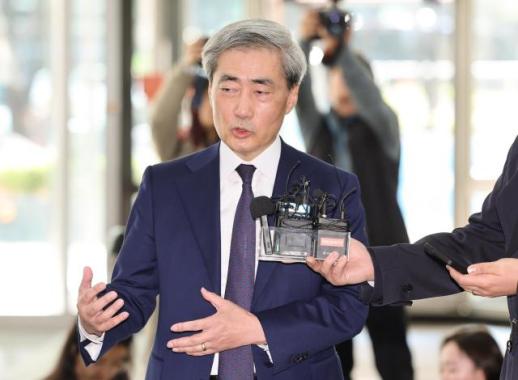 BOK nominee Shin claims he shed foreign assets ahead of hearing SEOUL, April 13 (AJP) — Shin Hyun-song, nominee for governor of the Bank of Korea, defended the central bank’s interventionist stance to curb excessive dollar strength against the won, describing the country’s foreign exchange buffers as “robust” against external shocks. In a written response released Monday ahead of his parliamentary confirmation hearing, Shin warned that a sharp rise in the dollar-won rate fuels inflationary pressure while increasing the burden on non-export firms and households. He pledged to closely monitor currency movements, noting that the won’s postwar depreciation has been steeper than that of peer currencies and remains highly volatile. The Korean won rebounded 1.8 percent to 1,482.5 per dollar last Friday from 1,505.2 a week earlier, but is still down 3.1 percent from end-2025 levels. While foreign exchange reserves have declined by $7.1 billion from since the intervention - from $430.7 billion as of November last year to $423.6 billion in March - Shin said they remain sufficient to serve as a buffer against external shocks. Shin attributed the decline to temporary factors, including measures to mitigate volatility in the spot exchange market, changes in the U.S. dollar-converted value of assets held in other currencies, fluctuations in foreign currency deposits at financial institutions, and the foreign exchange swap with the National Pension Service (NPS). Addressing concerns over his personal finances, Shin said he has already begun reducing his foreign-currency holdings, which previously made up the bulk of his portfolio, in a move aimed at easing conflict-of-interest concerns. “I have already disposed of a significant portion of my foreign-denominated financial assets,” he said in response to a query from Park Soo-young of the People Power Party. According to his asset disclosure, 4.57 billion won ($3.1 million)—or 56 percent of his family’s total wealth of 8.24 billion won—is held in foreign currencies including the U.S. dollar, British pound and Swiss franc. Within his financial assets, nearly 98 percent were denominated in foreign currencies. Critics argue such a portfolio—one that benefits from a weaker won—is inappropriate for a central bank chief expected to act as a “firefighter” in currency markets. Shin said he plans to “sequentially reduce” his foreign asset exposure, while also selling about 300 million won worth of domestic stocks and exchange-traded funds (ETFs) to avoid potential conflicts of interest. Responding to allegations that he purchased a London-listed ETF tracking the Korean market—“Franklin FTSE Korea”—shortly before his nomination, Shin said the investment was made “for portfolio management purposes.” On property-related concerns, Shin said he has put two of his three homes—including properties in Seoul’s Gangnam and Jongno districts—up for sale, as part of efforts to comply with public service standards. The move comes as the government prepares to tighten regulations on multi-homeowners from May, including raising capital gains tax rates by at least 20 percentage points for those owning two or more homes. Shin faces a confirmation hearing at the National Assembly on Wednesday. 2026-04-13 14:57:53
 -
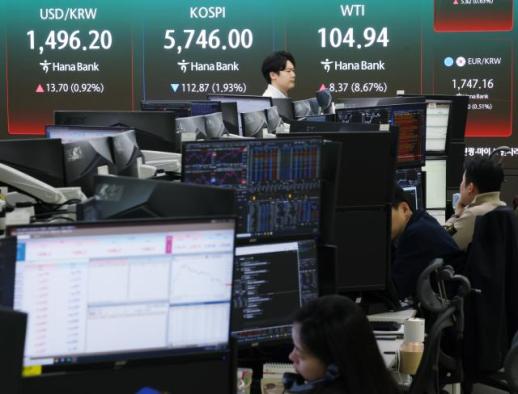 Korean stock turnover more than triples in Q1 amid heavy volatility SEOUL, April 13 (AJP) -South Korea’s stock market activity more than tripled in the first quarter, as heightened volatility following war-driven shocks disrupted the KOSPI’s red-hot rally and amplified trading momentum. According to the Korea Securities Depository Monday, the daily average value of stocks, bonds and other securities processed reached 35.8 trillion won ($26.5 billion) in the January–March period. The figure rose 31.6 percent from a year earlier and climbed 15.3 percent from the previous quarter, when the market’s record-breaking run gathered pace. Equities posted the sharpest gains. The daily average turnover of stock transactions, spanning both on- and off-exchange activity, came to 6.5 trillion won, jumping 77.9 percent from the prior quarter and more than tripling from a year earlier. On-exchange equity turnover — covering the KOSPI and KOSDAQ — averaged 2.9 trillion won per day, up 78.2 percent quarter-on-quarter. Institutional equity flows, representing transactions between brokerages and large investors, also advanced 77.6 percent to 3.6 trillion won. The increase was fueled by robust retail participation alongside sizable portfolio reshuffling by institutional investors. Bond activity continued to anchor the market, accounting for 81.8 percent of the total value processed. The daily average in the bond segment reached 29.3 trillion won, rising 7.0 percent from the previous quarter and 15.8 percent from a year earlier, sustaining a gradual upward trend. However, activity diverged across venues. On-exchange bond turnover slipped 0.1 percent from the prior quarter to 2.9 trillion won, while over-the-counter institutional bond flows expanded 7.8 percent to 26.5 trillion won, underpinning overall growth. The shift points to increased hedging demand and large-scale capital deployment by institutions amid heightened interest rate volatility. 2026-04-13 13:38:19
 -
 BOK opts "strategic patience", swan-song warning on housing SEOUL, April 10 (AJP) — The Bank of Korea (BOK) unanimously held the base rate steady at 2.5 percent, opting for what it called “strategic patience” as the Black Swan shock from the Middle East conflict exerts both upward and downward pressure. “The freeze at 2.5 percent is not a simple suspension,” Governor Rhee Chang-yong said Friday after presiding over his final monetary policy meeting before his term ends later this month. “Given the severity of the external factors, we need to examine the repercussions more thoroughly to judge our move accordingly.” Admitting the limits of monetary policy in responding to highly volatile, war-driven variables, Rhee said the central bank has little choice but to “learn” from how the conflict unfolds — its spillover effects and duration — before making its next move. The benchmark rate has remained unchanged since the last cut in May 2025. The post-meeting Monetary Board statement nonetheless tilted hawkish, signaling more room for a hike than a cut as import-driven inflationary pressure builds. The BOK expects economic growth to fall short of its 2.0 percent target this year, while inflation could “substantially” exceed the 2.2 percent forecast depending on the trajectory of the war and oil prices. While projecting inflation could approach 3 percent, the board said it would steer policy to contain price pressures “within the target range” without destabilizing financial conditions — a nod to the risks posed by elevated private-sector debt. The BOK’s stance mirrors a broader global shift. IMF Managing Director Kristalina Georgieva warned that global growth is set to slow further, with a full recovery to pre-crisis levels unlikely. The U.S. economy has already shown signs of cooling, with fourth-quarter growth revised down to 0.5 percent. With less than ten days left in Rhee’s term and his message largely unchanged, markets remained steady. The won traded at 1,482.5 per dollar, little changed from the previous session. The three-year government bond yield stood at 3.360 percent and the 10-year yield at 3.686 percent, both moving within a 3 basis-point range. Hold to verify variables, not to evade While acknowledging still-subdued domestic demand, Rhee dismissed concerns that the economy is sliding into stagflation — at least for now. “Since March consumer inflation was at a defensible level of 2.2 percent, it is difficult to speculate at this stage.” The BOK will release an updated economic outlook at its May 28 policy meeting, incorporating the evolving Middle East situation and the impact of a supplementary budget. On the foreign exchange market, Rhee said the drivers of the won’s weakness have shifted. “While the rise in the exchange rate in the second half of last year was largely due to increased overseas investment by individuals, recent trends are driven primarily by foreign equity selling.” Foreign investors sold a net $29.8 billion in March alone, bringing total outflows this year to $47.8 billion, according to the BOK. Rhee noted that Korea’s market structure — which allows quick profit-taking and capital withdrawal — remains a key source of volatility. He also pointed to a distortion in dollar funding markets, where participants prefer lending dollars but are reluctant to repay them, despite ample current account surplus and spot liquidity. On intervention, Rhee emphasized that foreign reserves should be used to smooth short-term volatility rather than influence long-term direction. “In a phase where foreigners are realizing profits, strengthening the won could result in a structure where only foreign investors profit more,” he said, adding that the BOK has grown more cautious following large external shocks such as the Hormuz blockade. He rejected structural interpretations of the won’s weakness — such as low growth or demographics — arguing that global dollar strength and liquidity conditions remain the dominant drivers. Rhee also struck an optimistic note on Korea’s inclusion in the FTSE World Government Bond Index (WGBI), saying inflows from long-term institutional investors would help stabilize markets. Since the inclusion, about $4.6 billion in active bond funds and $1.1 billion in passive funds have flowed in, with passive allocations expected to provide durable support. Swan-song warnings In a parting critique, Rhee took aim at what he described as inefficient fiscal spending, including 4.8 trillion won allocated to local education. “It is difficult to see it as efficient in the current situation,” he said, calling for more flexible execution suited to what he described as a “war-time supplementary budget.” He also warned of renewed divergence in the property market. “While high-priced housing in areas like Gangnam is in a downward phase, outlying districts in the Seoul metropolitan area are rising again,” he said. “This can hardly be called market stability. If the return on housing assets continuously exceeds other assets, polarization is bound to deepen.” Rhee concluded on a reflective note, saying he had maintained balance during his tenure despite criticism from both sides. “I received criticism for being both ‘too late’ and ‘too early’ in cutting and raising rates,” he said. “I am looking forward to my future endeavors.” 2026-04-10 16:14:32
 -
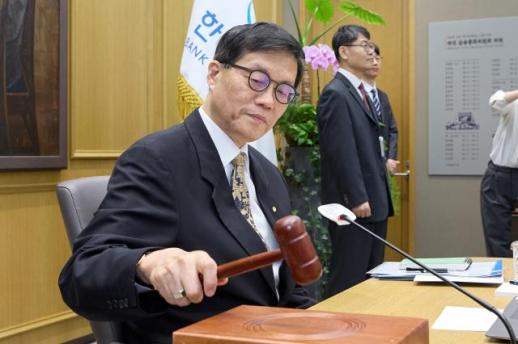 BOK holds rate at 2.5% as inflation risks clash with slowing growth SEOUL, April 10 (AJP) — The Bank of Korea on Friday kept its benchmark interest rate unchanged at 2.5 percent as widely expected, caught between rising import-driven inflation and a slowing economy amid prolonged disruptions from Middle East conflicts. The policy decision reflects a growing dilemma for the central bank, as energy supply constraints tied to the Gulf tensions continue to feed price pressures while weighing on growth. Consumer prices rose 2.2 percent in March from a year earlier, accelerating from 2.0 percent in the previous two months. While still within the central bank’s target range, the composition points to mounting underlying pressure. Energy has re-emerged as the dominant driver, amplified by a structurally weaker Korean won, with the full pass-through yet to be realized. Petroleum prices jumped 9.9 percent, contributing 0.39 percentage point to headline inflation. Diesel surged 17 percent and gasoline rose 8 percent, marking the strongest energy-driven inflation since the early phase of the Ukraine war. Given lag effects, the pass-through from higher fuel costs is expected to intensify in the coming months. Import price pressure has been further exacerbated by the weakening currency. The Korean won, which averaged 1,451.6 per dollar in February, depreciated 2.6 percent to an average of 1,493.83 in March. Since early April, it has spiked above 1,500-per-dollar — a threshold not seen since the global financial crisis. At the same time, higher input costs and prolonged weakness in domestic demand are expected to drag growth below the government’s 2 percent target this year, potentially keeping the economy in the 1 percent range for a second consecutive year. Despite the slowdown, the central bank has little room to adjust policy in either direction due to financial stability concerns. Household debt remains elevated at over 1,900 trillion won ($1.30 trillion), constraining the scope for rate cuts while also limiting the tolerance for further tightening. Market participants largely expect the central bank to remain on hold for the time being, as uncertainty persists over the outlook in the Gulf, including the timeline for a full reopening and normalization of trade through the Strait of Hormuz. Governor Rhee Chang-yong is set to explain the decision later in the day, marking his final policy meetings before his term ends on April 20 and hands over the helm to nominee Shin Hyun-song. On Friday, the won opened at 1,475.1 per dollar in the Seoul foreign exchange market. Korea's capital markets have improved this week after a truce was announced. The three-year government bond yield closed Thursday at 3.338 percent and the 10-year at 3.660 percent, sharply retreating from the level close to 4 percent last month. 2026-04-10 09:50:21
 -
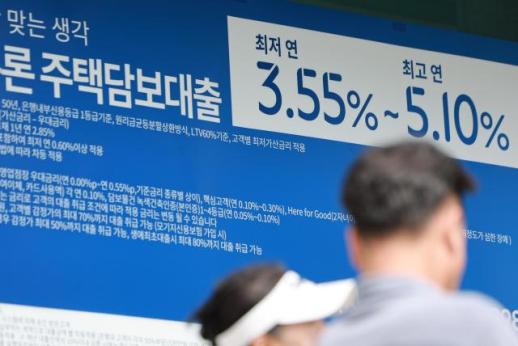 Surging non-bank lending raises PF scare in Korea SEOUL, April 9 (AJP) — South Korea’s non-bank lending is expanding again as tighter bank regulations and elevated borrowing costs push credit demand into less-regulated sectors, demanding scrutiny amid fragile market conditions. Financial authorities took notice and moved to curb subprime lending growth as rising market yields and exchange rate pressures are increasingly straining vulnerable households and businesses. According to the Financial Services Commission (FSC), total household debt across all financial sectors rose by 2.9 trillion won ($2 billion) in February and bigger 3.5 trillion won in March. The increase was driven largely by the secondary banking sector, which added 3.3 trillion won in February and 3 trillion won in March. Within this segment, the mutual finance industry accounted for 3.1 trillion won and 2.7 trillion won in the respective months, sustaining growth of around 3 trillion won for two consecutive months. Bank loans in contrast added just 500 billion won in March following a contraction in February, as stricter debt service ratio (DSR) rules and high interest rates curbed supply. The phenomenon owes to the revival of the so-called “balloon effect,” where credit demand shifts to the non-bank sector when bank lending is constrained — a pattern that authorities warn could amplify structural risks, particularly as stress from real estate project financing (PF) lingers. MG Community Credit Cooperatives led the March increase in mutual finance lending, accounting for 600 billion won. Its cumulative household loan growth reached 2.4 trillion won in the first quarter, prompting authorities to order zero growth from this week. The Financial Supervisory Service (FSS) has also warned of potential on-site inspections if excessive expansion continues. The risks are closely tied to the PF market, where loans are repaid through property sales. A cooling real estate market has delayed sales and increased unsold inventory, undermining repayment capacity. Total PF exposure stands at around 174 trillion won, with about 14.7 trillion won — more than 8 percent — classified as “at-risk” or “concerning,” indicating significant latent distress beyond official delinquency rates. While the overall PF delinquency rate has eased to 3.88 percent from a peak of 4.7 percent in mid-2024, analysts say the improvement may reflect restructuring and maturity extensions rather than a recovery in underlying cash flows. More than 30 PF projects still rely on extensions or restructuring, raising doubts about the sustainability of the apparent stabilization. “If the interest rate upward cycle returns, distress is likely to materialize, centered on vulnerable borrowers,” said Yoon Yeo-sam, a researcher at Meritz Securities. The trend mirrors broader concerns over the expansion of “shadow banking” risks, as credit increasingly flows outside the traditional banking system. Globally, the private credit market has grown to around $3 trillion, with rising borrowing costs adding pressure. The Secured Overnight Financing Rate (SOFR), a key benchmark, has climbed sharply, increasing repayment burdens. In response, some lenders have resorted to extending maturities or restructuring loans, while practices such as Payment-in-Kind (PIK) structures and covenant-lite lending have become more prevalent — allowing risks to accumulate without immediately appearing as delinquencies. Korean insurers hold about 29 trillion won in overseas private credit exposure, roughly 2 percent of their total assets, adding another layer of vulnerability. The International Monetary Fund (IMF) has warned that shifts in capital flows toward non-bank financial institutions could heighten systemic risks and require closer monitoring. FSS Governor Lee Chan-jin also cautioned that while current exposure levels remain manageable, a deterioration in global credit conditions could amplify risks, including potential misselling issues. 2026-04-09 17:06:03
 -
 Seoul unveils new measures to fend off inflation, sees stabler FX market SEOUL, April 9 (AJP) —South Korea will reimpose a cap on retail fuel prices to contain a renewed surge in gasoline costs triggered by the prolonged blockade of the Strait of Hormuz, while signaling potential upside for the battered won through parallel market-stabilization measures. Deputy Prime Minister and Finance Minister Koo Yun-cheol said Thursday the government will unveil a third round of emergency price ceilings on petroleum products at 7 p.m., with the new caps to take effect from midnight Friday. Final levels will be set after inter-agency consultations, factoring in global crude trends and the burden on households. At an emergency price meeting, Koo stressed that earlier caps had functioned as an effective “safety net,” cushioning logistics costs and easing pressure on consumers, and pledged to act decisively against renewed energy-driven inflation. On financial markets, he said volatility is showing early signs of easing, pointing to foreign inflows into Korean government bonds following the country’s inclusion in the World Government Bond Index (WGBI). Offshore investors have bought a net 6.8 trillion won ($4.6 billion) in sovereign debt, helping stabilize sentiment. Koo also highlighted structural support for the currency. More than 114,000 accounts have been opened under the Reshoring Investment Account (RIA) scheme, which offers tax incentives for repatriated funds, while the National Pension Service’s new investment framework — aimed at recalibrating currency hedging and offshore allocation — is expected to further ease pressure on the foreign exchange market. The government also flagged emerging inflation in consumer electronics, as a spike in memory chip prices — driven by the expansion of high-bandwidth memory (HBM) production — has lifted general DRAM costs. Prices of personal computers and laptops have risen by more than 10 percent over the past seven months. To cushion the impact, authorities plan to recycle used PCs from central government agencies for vulnerable groups and expand financial support for low-income students purchasing new devices, backed by 4.8 trillion won in additional local education grants from the supplementary budget. Despite elevated geopolitical risks, officials assessed that core service prices — including courier and moving costs — as well as daily necessities remain broadly stable. To guard against market distortion, the government will maintain strict bans on hoarding of petroleum products and urea solution, with contingency measures ready should price volatility intensify. 2026-04-09 10:50:07
 -
 FX intervention joins as the truce in Middle East provides relief in Korean market SEOUL, April 08 (AJP) - The relief over bombardment in the Gulf brought long-awaited relief to the South Korean won and bonds, and the truce amplified Seoul’s intervention campaign, according to traders. The won closed at 1,470.6 per dollar, returning below the 1,500 level for the first time in 12 trading days. The 33.6 won gain marked the steepest daily move in about three months, since a 33.8 won jump on Dec. 24 last year amid heavy intervention. The conditional ceasefire triggered a sell-off in the safe-haven dollar while boosting demand for the won and Korean equities. As of 4 p.m. Wednesday, the U.S. Dollar Index (DXY) fell nearly one point to 98.7, nearing its lowest level in 12 sessions. Foreign investors abruptly reversed course after offloading 36 trillion won in KOSPI shares in March alone. They net bought 2.4 trillion won ($1.63 billion) worth of stocks on Wednesday, far surpassing the previous daily record of 800 billion won set on April 3. The figure marks the second-largest daily net purchase of the year, following 2.9 trillion won on Feb. 12. The bond market also staged a sharp rally. The yield on the benchmark three-year government bond fell 13.6 basis points to 3.315 percent, while the 10-year yield dropped 12.6 basis points to 3.628 percent. Both yields fell below the 3.4 percent and 3.7 percent levels for the first time in a week, echoing the rally seen on April 1 when South Korea’s inclusion in the World Government Bond Index (WGBI) began in earnest. Analysts say the “WGBI effect,” which had been diluted by the war, is now resurfacing. “The inclusion in the WGBI is estimated to bring in about $60 billion, or up to 90 trillion won, in capital inflows,” said Yoon Yeo-sam, a researcher at Meritz Securities. “We are seeing increased international trading not only in three- and 10-year treasuries but also in long-term bonds with maturities of 20 years or more, as well as corporate bonds.” Authorities are also maintaining efforts to curb volatility. According to the Bank of Korea, the nation’s foreign exchange reserves fell by $4.4 billion from December to March as authorities deployed dollars to support the won. South Korea’s reserve ranking slipped from ninth to 12th in February and is expected to fall further in March. The Ministry of Economy and Finance held talks with major global investment banks on Tuesday to assess the impact of the Hormuz blockade and pledged continued intervention if volatility persists. Meanwhile, financial authorities are focused on maintaining confidence in the credit market. At an emergency task force meeting Wednesday, officials said South Korea’s credit spreads remain stable. The spread on AA- rated corporate bonds widened by just 6 basis points, from 59.6 at end-February to 65.6 as of April 7 — a limited increase compared with the 28 basis-point spike within a month during the 2022 “Legoland” municipal bond crisis. 2026-04-08 17:30:56
 -
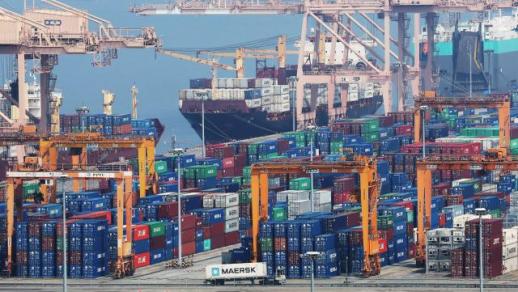 UPDATE: Korea's C/A at record high, foreign invest dip steepest in Feb *Updated with additional information SEOUL, April 8 (AJP) — South Korea's current account surplus reached a historic monthly high in February, crossing the $20 billion mark for the first time since records began and will stay largely insulated from the Middle East-driven oil and dollar spike at least through March, the central bank said Wednesday. Bank of Korea (BOK) data showed the February current account posted a record $23.19 billion surplus, surpassing the previous high of $18.7 billion in December and extending the surplus streak to 34 consecutive months — the second-longest on record. Chip-led goods account drove the outperformance, logging a $23.36 billion surplus, up more than $8 billion from a month earlier and marking another record. The streak in goods surplus extended to 35 months. Exports remained the core engine. February outbound shipments reached $70.37 billion on a balance-of-payments basis, up 29.9 percent on year — an all-time high for the month. Semiconductor exports surged 157.9 percent to $25.26 billion, accounting for 37 percent of total exports, while IT devices including mobile phones jumped 67.8 percent. Shipbuilding exports also rebounded, rising 45.5 percent and snapping a four-month contraction streak. By contrast, autos and machinery remained soft. Passenger car exports fell 22.9 percent and auto parts dropped 24.4 percent, while machinery and precision instruments declined for another month. The BOK downplayed the weakness, citing fewer working days due to the Lunar New Year, noting that daily average exports still rose at a double-digit pace. "The fact that the Lunar New Year holiday fell in February this year reduced the number of working days," said Yoo Seong-wook, head of the BOK's financial statistics department. "On a daily average basis, exports actually increased by 14.6% year-on-year and 15.2% month-on-month." The services account remained in deficit for a 45th straight month, though the gap narrowed to $1.86 billion. Imports rose 7.5 percent on year to $51.93 billion, with energy demand firm. Gas imports increased 15.6 percent, coal 20.5 percent, and mineral imports 26.7 percent, reflecting both higher volumes and steady industrial demand. Despite the trade strength, the financial account showed clear strain. Foreign investment liabilities – foreign investment in Korea - fell by $11.94 billion, the steepest drop on record, with equity outflows hitting $132.7 billion — exceeding even the COVID-era selloff. The “Sell Korea” trend reflects a mix of factors, including concerns over an AI-driven semiconductor bubble and mounting geopolitical risks tied to the Middle East conflict. While debt securities, including bonds, saw an increase of $1.33 billion, the pace of growth slowed significantly from the $4.47 billion recorded in the previous month. Meanwhile, Korean residents’ overseas investment (portfolio assets) continued to rise, increasing by $8.64 billion, though this was a sharp decline from January’s $13.46 billion. The central bank expects the current account to remain resilient through March, as oil price increases have yet to fully feed into import costs and refined product exports provide a partial offset. Still, risks are building. With roughly 70 percent of Korea’s crude imports passing through the Strait of Hormuz, prolonged disruption could sharply raise energy import costs and weigh on the trade balance. The "Sell Korea" sentiment is expected to have worsened in March as the average exchange rate weakened from 1451 to 1,493 won per dollar - the fourth-weakest on record. Foreign investors sold 32 trillion won ($21.3 billion) on the benchmark KOSPI in March alone. The bond market also reflected this weakness, with 3-year and 10-year Treasury yields rising to 3.552 percent and 3.879 percent, respectively, - up 16.8 percentage points and 12.6 percentage points from the end of February. 2026-04-08 08:19:51