

Journalist

Seo Hye Seung, Kim Yeon-jae
duswogmlwo77@ajupress.com
-
 GULF CRISIS: Price pressures and weak won deepen Korea's policy bind SEOUL, March 19 (AJP) - South Korea’s central bank is facing a growing dilemma as potential war-driven price shocks can collide with a weakening currency, tightening the room for monetary policy maneuver. Like the Federal Reserve, the Bank of Korea is widely expected to hold rates steady next month. But how long it can stay on hold will depend on the duration of the Middle East conflict and the scale of its economic fallout — from renewed inflation to rising financial risks. The disruption of the Strait of Hormuz — a vital route for energy and commodities bound for Asia — has already sent oil, shipping and raw material costs sharply higher, feeding directly into Korea’s import-dependent economy. Financial markets are reacting quickly. The dollar surged back above 1,500 won despite verbal intervention by authorities, while bond yields climbed. The 10-year government bond yield rose to 3.693 percent on Thursday, up 8.7 basis points from the previous session and nearly 25 basis points higher than before the conflict began in late February. Global energy prices have led the shock. Brent crude has jumped to above $111 per barrel, up more than 50 percent from pre-conflict levels, while Dubai crude — Korea’s key benchmark — reached $122.84 as of March 17. The surge is cascading through shipping markets. The Baltic Clean Tanker Index has nearly doubled from the start of the year, while daily charter rates for Very Large Crude Carriers have soared from about $30,000 to over $400,000, sharply raising transportation costs for fuel imports. Airlines are already passing through the burden. Asiana Airlines has nearly tripled fuel surcharges on New York routes, underscoring how quickly energy shocks are feeding into consumer costs. Industrial supply chains are also under strain. Disruptions in oil and gas imports are squeezing the production of key inputs such as naphtha and helium — both critical to refining and semiconductor manufacturing. For Korea, where exports hinge on energy-intensive industries, the implications are immediate. A report by the Korea Institute for Industrial Economics & Trade warned that even a three-week disruption in Hormuz could lift manufacturing costs by 5.4 percent. A prolonged blockade could push oil prices to $160 per barrel and drive liquefied natural gas prices up as much as 140 percent. The shock is also spreading to food and agriculture. Urea nitrogen prices — a key fertilizer component — have surged past $600 per ton from $344 at the start of the year, raising the risk of higher food prices in the coming months. “Escalating attacks in the Middle East are creating a global chokepoint for farmers,” said Alexis Maxwell, an agriculture analyst at Bloomberg Intelligence, warning of potential disruptions to fertilizer production. Korea’s vulnerability is structural. The country imports all of its crude oil and relies on Middle Eastern suppliers — particularly Saudi Arabia, the UAE, Qatar, Kuwait and Iraq — for roughly 70 percent of its supply. Until recently, inflation had remained relatively stable around the Bank of Korea’s 2 percent target, helped by softer oil prices. That dynamic is now shifting. “The simultaneous rise in oil prices and the exchange rate is expected to exert significant upward pressure on import prices,” said Lee Moon-hee, head of the BOK’s inflation statistics team. At the same time, financial risks are re-emerging. Household debt has climbed to about 1,852.7 trillion won, with mortgage-backed loans reaching 1,124 trillion won, even as the benchmark rate has remained at 2.5 percent since May last year. Rising market rates are already tightening borrowing conditions. The upper end of five-year fixed mortgage rates at major banks has exceeded 6 percent, with Suhyup Bank charging as high as 7.11 percent — the highest level in more than three years. The Bank of Korea has expressed concern over widening gaps between market rates and its policy rate. “A spread of over 0.6 percentage points between the three-year treasury yield and the benchmark rate is excessive,” Governor Rhee Chang-yong said earlier this year. That divergence is now complicating policy decisions. Cutting rates to support growth risks fueling inflation and weakening the currency further. Holding rates steady — or tightening — could deepen pressure on debt-laden households and the broader economy. If the conflict drags on, economists warn, South Korea could face a classic supply-driven stagflation shock — where slowing growth meets rising prices. The central bank, in effect, is running out of easy options. 2026-03-19 17:18:02
 -
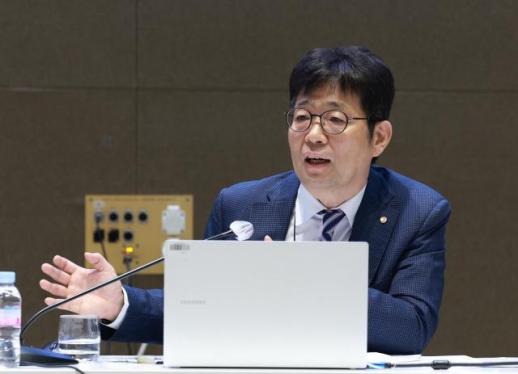 BOK hints at intervention as USD/KRW hits above 1,500 after Fed hold SEOUL, March 19 (AJP) - The Bank of Korea (BOK) vowed to take "stabilization actions" upon signs of volatility in domestic financial markets in renewed interventionist rhetoric Thursday after the local currency's spiral past its de facto defense line of 1,500 versus the U.S. dollar. "Uncertainties in the U.S. Federal Reserve's monetary policy path have escalated," said BOK senior deputy governor Ryoo Sang-dai during an emergency Task Force (TF) meeting addressing the fallouts from the Fed’s FOMC meeting and the ongoing blockade in the Strait of Hormuz. This marks the third emergency session this month since the launch of U.S.-Israel attacks on Iran in late February. The won’s weakness has intensified as hopes for a narrowing interest rate differential faded with the Fed's latest hold. The dollar has shot up to 1,505.9 in early Thursday session in Seoul, up sharply from 1,483.1 previous close. Since the rhetoric, the dollar has eased to 1,499.2 won. Market volatility has been exacerbated by the prolonged conflict in the Middle East. Crude oil prices have surged by over 40 percent in March, fueling inflationary pressures and weighing heavily on the trade-dependent South Korean economy. As of Thursday 9:40 a.m., Brent crude reached $110.6 per barrel, a surge of more than 52 percent compared to February 27, just before the conflict erupted. This comes amid escalating fears of actual disruptions in production and supply, following Israel's bombardment of South Pars, Iran’s largest gas field, and Tehran’s retaliatory strikes against facilities across the region, including in the UAE. "With external risks such as the persistent instability in the Middle East remaining high, the central bank is closely monitoring the situation" and "will take timely stabilization measures" when deemed necessary, he said. 2026-03-19 10:30:02
 -
 Seoul raises crude alert to Level 2 as Hormuz blockade bites SEOUL, March 18 (AJP) — As the Middle East conflict continues to disrupt global energy supplies, the South Korean government Wednesday raised its crude oil security alert one notch to Level 2 ("Caution"), opening the way to direct intervention, including the possible release of strategic oil reserves. The Ministry of Trade, Industry and Energy (MOTIE) announced the upgrade from Level 1 ("Interest") to Level 2 effective as of 3 p.m. local time (6am UTC) Wednesday. This marks the Level 2 alert since the enactment of the National Resource Special Act early last year. The move follows the Level 1 alert for oil and gas issued on March 5, a few days after the conflict erupted. South Korea’s resource security framework operates on a four-tier scale: Interest, Caution, Crisis, and Alert. Under the "Caution" stage, authorities can formally review and prepare for the release of national strategic stockpiles. Spiking prices and shipping paralysis MOTIE attributed the decision to heightened instability among major oil producers following the attack on Iran, the subsequent blockade of the Strait of Hormuz, and a nearly 40 percent surge in international oil prices. Crude prices, which hovered between $60 and $70 per barrel until late February, skyrocketed following the outbreak on February 28. As of 4 p.m. Wednesday, West Texas Intermediate (WTI) stood at $92 per barrel, while Brent crude reached $101. Most critically, Dubai crude—the benchmark for South Korean imports—surged to $129.9 on Monday, nearly doubling its pre-conflict levels due to its heavy reliance on the now-blocked Hormuz route. Seoul is coordinating with the International Energy Agency (IEA) to establish a plan for releasing its allocated portion of 22.46 million barrels of strategic oil reserves. However, the ministry noted the timing and scale of the release will be subject to change based on private sector inventory levels and market trends. Mandatory conservation and demand reduction The government is also moving to enforce "mandatory energy conservation measures." These include strict indoor temperature limits for public institutions—set at a maximum of 28°C (82.4°F) in summer and 18°C (64.4°F) in winter. Additional "mandatory demand reduction measures," such as a five-day rotation system for vehicles (prohibiting driving one day every five days), are also under active consideration. President Lee Jae-myung Tuesday instructed his Cabinet to "swiftly establish diversified demand reduction measures, including the five-day or ten-day vehicle rotation systems, to encourage nationwide energy conservation." Longer-term strategies involve securing oil supplies that are not delivered through the Strait of Hormuz. Currently, approximately 70 percent of the country’s oil imports—sourced from Saudi Arabia, the UAE, Kuwait, Iraq, and Qatar—must pass through the narrow waterway. MOTIE is exploring options to exercise preemptive purchase rights for international joint stockpiles as a potential contingency. Gas alert remains at Level 1 Meanwhile, the alert for Liquefied Natural Gas (LNG) remains at Level 1 ("Interest"). Officials assessed that current LNG inventories remain sufficient, exceeding the legal requirement of nine days of supply. Most South Korean LNG firms currently hold between 10 to 14 days of reserves. While the loss of imports from Qatar, South Korea’s second-largest LNG supplier, remains a concern, MOTIE emphasized that supplies from Australia—the nation's largest provider at over 30 percent—and other diverse sources can help mitigate the shortfall. 2026-03-18 17:07:45
 -
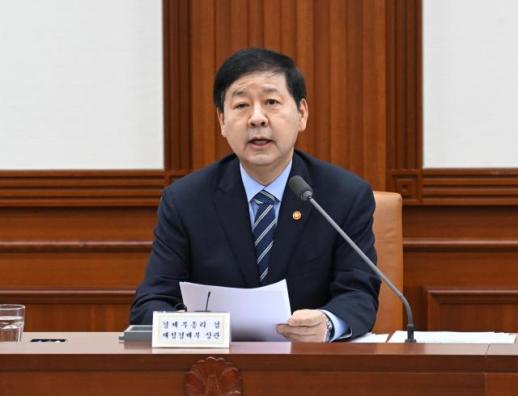 South Korea to inject over 1 billion in supplementary budget SEOUL, March 18 (AJP) - The government is coming up with a set of measures including a 1.5 trillion won (US$1.01 billion) in supplementary budget to buttress an economy hit by the escalating conflict in the Middle East, which began with U.S.‑led airstrikes on Iran late last month. In an emergency meeting chaired by Deputy Prime Minister and Minister of Economy and Finance Koo Yun-cheol in Seoul on Wednesday, he pledged the swift implementation of the supplementary budget and other immediate measures to provide fiscal relief, stressing that "timing is key" in responding to a crisis. With no end in sight to the conflict in the already volatile region as it enters its third week since U.S. and Israeli strikes on Iran on Feb. 28, the ministry decided to designate naphtha as a temporary "economic security item" to mitigate its supply. The move allows energy authorities to secure alternative import routes or restrict exports through active interventions, if necessary. To help firms heavily reliant on Middle Eastern imports, a support program with a 1.5 trillion won fund will be offered, giving them a lifeline through interest rates about 2.3 percentage points lower. Koo also warned again that the government will take a hardline stance against refiners and others seeking to profit from soaring energy prices, following the ministry's earlier measure of a price ceiling on petroleum products. "Retail gas stations must comply with the measure without delay," Koo said, vowing to intensify on-site inspections to crack down on unfair practices such as hoarding. The supplementary budget aims to ease the burden on vulnerable companies including small- and medium-sized enterprises (SMEs) directly hit by soaring logistics and fuel costs, with the ministry also weighing an additional supplementary budget. It is also tapping into International Energy Agency (IEA) emergency oil reserves and exploring alternative suppliers through diplomatic channels to ensure a stable energy supply amid disruptions to maritime routes. Meanwhile, the ministry reaffirmed its commitment to long-term industrial innovation, having already earmarked 754 billion won to develop 246 artificial intelligence (AI)-driven products over the next two years under a new project called "AX-Sprint." The project aims to accelerate AI-driven transformation across all industries by providing tailored support for them. "Despite February's employment data showing an increase of 234,000 jobs, many young jobseekers are still struggling in the job market," Koo said, emphasizing that the technological push aims to secure long-term labor market stability amid global volatility. 2026-03-18 11:13:17
 -
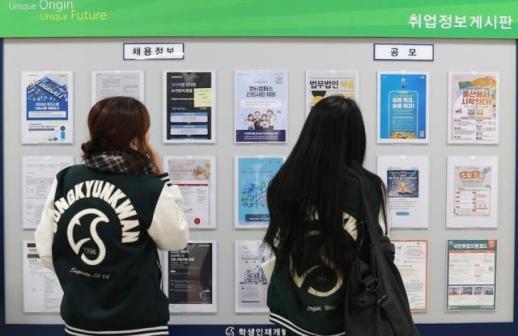 Korea's Feb job growth led by elderly and service, AI substitution hits entry jobs SEOUL, Mar. 18 (AJP) — South Korea’s labour market showed a deceptive resilience in February, with headline employment rising for the second consecutive month, but the underlying data reveals a deteriorating quality of jobs and a deepening structural crisis, as high-value industries shed workers and youth unemployment surged to its highest level in years. The number of employed people rose by 234,000 (0.8 percent) from a year earlier to 28.41 million, according to data released by the Ministry of Data and Statistics on Wednesday. While this marks a modest rebound from January's 194,000 (0.7 percent) gain, it remains significantly lower than the 300,000-plus levels seen late last year. The employment rate for those aged 15 to 64 stood at 69.2 percent, up 0.3 percentage points on-year. Youth employment hit by "hiring freeze" and automation The headline growth failed to hide a grim reality for the younger generation. The employment rate for those aged 15 to 29 plummeted by 1.0 percentage point to 43.3 percent, marking the sharpest decline in recent years. Simultaneously, the youth unemployment rate jumped 0.7 percentage points to 7.0 percent. In stark contrast, job gains were almost entirely driven by the elderly. Employment among those aged 60 and above surged by 284,000 (4.5 percent), indicating that the nation’s job growth is currently sustained by government-led welfare positions and roles for senior citizens rather than private-sector hiring for the youth. The impact of AI-driven automation is a significant factor in this shift. According to a Bank of Korea report released last October, 98.6 percent of the 211,000 youth jobs lost over the past three years were in occupations with high exposure to AI. This underscores a rapid structural displacement in the entry-level job market. High-value sectors in retreat A particularly concerning trend is the ongoing contraction in knowledge-intensive industries, a sector previously identified as a key engine for high-quality job creation. The professional, scientific, and technical services sector—which includes R&D and specialized consulting—shed 105,000 jobs (7.8 percent) in February. This marks a second consecutive month of decline following a loss of 107,000 jobs (8.0 percent) in the previous month. This follows a broader trend of weakening demand in high-value services, compounded by a decline of 42,000 jobs (3.2 percent) in the information and communications sector. The combination of high interest rates and reduced corporate investment has led to a noticeable contraction in quality employment opportunities within these knowledge-based industries. Service sector bloat and shorter hours The concentration of job growth in the service sector further underscores the fragile nature of the recovery. The health and social welfare sector added 284,000 jobs (9.9 percent), effectively accounting for more than the total increase in headline employment. Meanwhile, the agriculture, forestry, and fisheries sector saw a sharp decline of 90,000 jobs (8.2 percent), the largest drop since 2017. Furthermore, the quality of employment is shifting towards precarious, short-term roles. The number of people working less than 36 hours a week rose by 281,000 (4.6 percent), while the headcount for those working 36 hours or more fell by 94,000 (0.4 percent). Average weekly working hours dropped by 0.4 hours to 37.7 hours, signaling a softening in overall labor demand despite the increase in headcount. Rising unemployment and inactivity The total number of unemployed reached 993,000, up 54,000 (5.8 percent) on-year, with the overall jobless rate rising to 3.4 percent, up 0.2 percentage points. As inflation persists, more individuals are entering the job market, yet the economy is failing to absorb them into productive roles. While the economically inactive population decreased slightly by 39,000 (0.2 percent), the number of people who reported they were simply "taking a break"—not seeking work despite being capable—remains a persistent concern, particularly among those in their 20s and 30s. The February data confirms that while the quantity of jobs is being propped up by an aging population and welfare demand, the structural core of the labor market is facing increasing fragility. 2026-03-18 09:21:53
 -
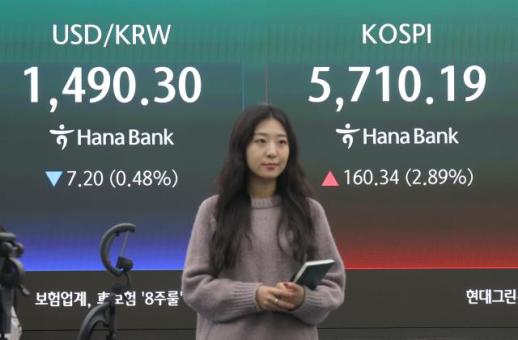 Korean legislative finally moves on FX support as won levels breach crisis levels SEOUL, Mar. 17 (AJP) - South Korea’s National Assembly is scrambling to fast-track a package of exchange-rate support bills after sitting on them for months as the won comes under renewed pressure from the widening Gulf war. The urgency reflects not just broad dollar strength but a sharper loss of confidence in the won itself. According to the Financial Supervisory Service, the won weakened 4.12 percent against the dollar as of Monday from end-February, before the war erupted, with the rate rising from 1,438.4 won to 1,497.6 won. That compares with a 2.82 percent rise in the Dollar Index over the same period and a 2.08 percent gain in the dollar against the Japanese yen — even as the two neighboring economies share similar exposure to disruptions in the Strait of Hormuz. China’s yuan, also dependent on Gulf shipping routes, moved only 0.55 percent. The scale of the move has reinforced market concerns that Korea is being punished more severely than its peers, reflecting heavier foreign outflows from local equities that had outperformed prior to the war. The won-dollar exchange rate averaged 1,476.9 won this month, the highest monthly level since the 1998 Asian financial crisis, while last week’s average climbed to 1,480.7 won. The currency briefly breached the 1,500 won threshold in daytime trading on Monday for the first time since the global financial crisis, triggering speculation authorities may have given up 1,500-won defense. "We are not 100 percent sure about intervention. But the dollar has retreated. It can be attributed to the easing in bond yields," said one trader on Tuesday. The dollar eased to 1,493.40 won as of 4:00 p.m. in Seoul. Volatility still has been topping peers. The won’s average daily swing widened to 14.24 won, the largest since the 2010 euro-area sovereign debt crisis, while intraday moves stretched to 24.82 won — the biggest since Korea introduced overnight foreign-exchange trading. Foreign investors are reacting more sensitively to Korea’s exposure to Gulf energy risks and surging oil prices. Brent crude jumped 42.3 percent from end-February to March 16, to $103.14 a barrel, while WTI surged 47.28 percent to $98.71. Compared with end-2025, Brent is up 69.5 percent and WTI 71.91 percent. Those terms-of-trade pressures are now feeding directly into Korean asset markets. Foreign investors sold a net 16.5 trillion won worth of Korean stocks in March through March 16, including 16.1 trillion won from the KOSPI alone, according to the same FSS data. Korea’s five-year sovereign CDS premium also widened to 28.9 basis points from 24.6 basis points at end-February. Only after the exchange rate broke above 1,500 won did the legislature move to advance the so-called “Triple Exchange Rate Stability Acts.” On Monday, the Tax Subcommittee of the Strategy and Finance Committee approved the package, which includes amendments to the Restriction of Special Taxation Act and the Special Tax for Rural Development Act. Having cleared the subcommittee, the bills are expected to go before the full committee on Tuesday and then to a plenary session on March 19. The measures were first proposed on Jan. 3 by Rep. Jung Tae-ho of the Democratic Party, after the finance ministry outlined the plan in December when the won slid toward crisis-era levels. They were further stalled by political wrangling over tax fairness and broader legislative disputes. The centerpiece of the package is an amendment to the Restriction of Special Taxation Act that would grant a 50 to 100 percent deduction on capital gains taxes for investments in domestic stocks made through Return to Korea Investment Accounts, or RIAs. The aim is to encourage capital repatriation and stem the outflow of won-denominated funds. The package also includes income deductions for investments in currency-hedging products and raises the exclusion rate for dividends received from overseas subsidiaries to as much as 100 percent. Lawmakers say the measures are designed to attract foreign currency holdings back onshore while promoting financial products that cushion exchange-rate volatility. Given the won’s weakening trend, economists remain skeptical about the effectiveness of the incentives. “Capital outflows from the National Pension Service and individual overseas investors exceeded $140 billion last year, surpassing the current account surplus of around $100 billion,” said Lee Seung-ho, a senior research fellow at the Korea Capital Market Institute. While acknowledging the need to attract capital back into domestic markets, he questioned whether the tax breaks would be sufficient to alter investor behavior. He noted that overseas equity investments already benefit from an annual tax exemption of up to 2.5 million won and that many retail investors operate on a relatively small scale, limiting the likely policy impact. Other KCMI researchers, including Kim Min-ki and Kang So-hyun, argue that the shift toward foreign assets reflects deeper fundamentals: stronger returns in global technology stocks, lower barriers to overseas investing and persistent expectations of further won depreciation. Until those conditions change, they say, the outflow trend is unlikely to reverse. Some in the market also warn that the legislation could send an unintended signal. “Currency-related tax support can itself be read by the market as a signal that the authorities expect the won to remain weak,” a foreign-exchange market source said on condition of anonymity. “If it is seen as defensive rather than confidence-building, it could have the opposite effect.” 2026-03-17 16:44:15
 -
 Chip boom lifts South Korea's export prices to 19-month high but outlook remains bleak SEOUL, March 17 (AJP) - South Korea's export prices climbed to a 19-month high in February, as a historic rally in semiconductor prices completely offset the impact of a stronger Korean won. This highlights the growing pricing power of South Korea's high-tech sector amid explosive artificial intelligence (AI)-driven global demand. The main driver is a massive jump in semiconductor prices, strong enough to counter the effects of a rising won, which would normally make exports cheaper. The trend signals that South Korea's tech industry is gaining pricing power as global demand for chips and AI-related technology continues to surge. The index gauging export prices rose 2.1 percent from the previous month and 10.7 percent compared with the same month last year. It is the highest since July 2024, when it stood at 13.0 percent, a significant leap from the 7.8 percent rise seen in January, according to the Bank of Korea (BOK) on Tuesday. The surge is particularly notable, given that it came despite a 0.5 percent strengthening of the won against the greenback, with the exchange rate moving from 1,456.51 in January to 1,449.32 in February. Typically, a stronger won makes South Korean exports cheaper for foreign buyers, but the strong momentum in the semiconductor market outweighed the effect. Semiconductor-led surge The electronics sector led the rally, with prices for computer, electronic, and optical devices skyrocketing 44.1 percent year-on-year. In particular, DRAM and flash memory prices soared by 123.5 percent and 139.1 percent, respectively. On a monthly basis, computer storage devices saw a staggering 32.6 percent increase. Overall industrial products rose 2.1 percent from the previous month, further supported by a 7.0 percent jump in coal and petroleum products. In contrast, transportation equipment and chemical products continued to struggle, falling 3.1 percent and 6.6 percent year-on-year, respectively. Energy prices drive up import costs The import price index also edged up 1.1 percent month-on-month, primarily due to rising crude oil prices. The average price of Dubai crude rose 10.4 percent in February to $68.40 per barrel, up from $61.97 from the previous month. Raw materials led the increase with a 3.9 percent rise during the same period. However, capital and consumer goods saw slight declines of 0.1 percent and 0.2 percent, respectively, as the strengthening won helped temper the cost of finished imports. Dramatic improvement in trade terms These February figures highlight a significant shift in South Korea's trade dynamics. The net terms of trade index - which measures the volume of imports a country can buy per unit of exports - jumped 13.0 percent year-on-year. This was the strongest growth in years, as export prices in dollar terms rose 10.3 percent while import prices fell 2.4 percent. The income terms of trade index, reflecting the total purchasing power of exports, saw an explosive 31.8 percent growth - fueled by a 16.6 percent increase in total export volume, particularly in the electronics sector where volumes skyrocketed by 50.9 percent. The unprecedented performance in the semiconductor sector has fundamentally altered the trade landscape. The rise in export prices despite the won't appreciation indicates that South Korea's tech exports are increasingly driven by market dominance and structural demand rather than simple price competition. Outlook for March remains grim However, the outlook for March is expected to be sharply different as the escalating conflict in the Middle East that began with U.S.-led airstrikes on Iran late last month has triggered extreme volatility in energy prices and exchange rates. The surge in global crude prices has raised concerns over a spike in import costs. Brent crude, which traded near $72 per barrel at the end of February, has climbed past $100 per barrel as of Monday. West Texas Intermediate (WTI) has also risen above $90 per barrel. Most critically for South Korea, which sources 70 percent of its crude from the Middle East, Dubai crude is approaching $130 per barrel as of last Friday. The won briefly broke the psychological barrier of 1,500 per dollar during intraday trading on Monday, though it closed at 1,497.5, its worst session since the 2008 global financial crisis, a more than 4 percent jump from the Feb. 27 closing price of 1,439.8. 2026-03-17 09:53:04
 -
 Korea's default risk premiums rise faster than others, yet below 5-year average SEOUL, Mar. 16 (AJP) - South Korea’s sovereign risk indicators are rapidly rising in line with the volatility in capital markets and exposure to oil supply disruptions, potentially further undermining foreign investor confidence in Korean securities. South Korea’s five-year credit default swap (CDS) premium surged 23.83 percent in the past month, exceeding the gain of around 10 percent in China’s CDS and Japan’s remaining largely flat at around 1 percent, even when all three depend heavily on Middle East fuels through the crippled Strait of Hormuz. Last Thursday, the price of South Korea’s CDS rose 4.52 percent to 27.9 basis points, the sharpest single-day increase among major nations, when oil prices hit $100 barrel amid jitters over the prolongment in the war in Iran. Korea's risk premium has risen steeper than emerging markets like Turkey fighting inflation above 30 percent. Among advanced economies, only Italy (30.68 percent) saw a steeper rise in swap rates. Italy’s spike was driven by its massive national debt—approaching 150 percent of GDP—and a widening spread against the German bund, the European benchmark. South Korea’s total household debt reached 2,370 trillion won ($1.62 trillion) at the end of 2025, with a debt-to-income ratio of 174.7 percent. Italy’s trigger was its sovereign debt, which reached 3.13 trillion euros ($3.41 trillion) as of October 2025, or approximately 140 percent of its GDP. Market analysts point to South Korea’s structural weaknesses. A heavy reliance on Middle Eastern crude oil, combined with high leverage, makes the economy hypersensitive to geopolitical "black swan" events. Despite the pace of rise, it is still premature to be alarmed by the CDS level itself, authorities said. "With the CDS premium still below 30 basis points, it is difficult to say it has moved outside the normal range," one Bank of Korea (BOK) official said, noting that the five-year CDS remains stable compared to the 2008 financial crisis or the 2022 shock following the invasion of Ukraine. Still, the rapid rise in CDS could destabilize the bond market. "Rising CDS premiums can increase volatility as they lead to expanded trading in government bond futures," said Kim Yong-gu, head of the Investment Strategy Team at Yuanta Securities Korea. "We are already seeing increased trading volume in three-year bonds by foreigners, and if CDS continues to rise, that volatility could spread to 10-year bonds," he said. A critical theme in common is the heavy dependence on the Strait of Hormuz. The narrow passage between the Persian Gulf and the Gulf of Oman is a strategically crucial choke point and is being impacted by the war. More than 60 percent of South Korea’s oil imports pass through the strait, while Italy relies on it for up to 40 percent of its supply. In a report explaining the KOSPI’s crash on March 5, the PRS Group highlighted South Korea’s 98 percent energy dependence and its 70 percent reliance on Middle Eastern crude. Any disruption in energy supply inevitably causes South Korea’s "risk premium" to skyrocket. Experts warn that unlike Italy, South Korea faces greater risks because it does not use a reserve currency. "Italy operates within the framework of the euro, a reserve currency, and is already included in the WGBI (World Government Bond Index)," one financial official said, speaking on condition of anonymity. "For South Korea, where there are talks of the won depreciating to 1,500, the situation could deteriorate much further." As of Monday, the won traded at 1,496.9 per dollar, standing on the precipice of the psychological 1,500 barrier. While the three-year bond yield edged down 3.3 basis points, the 10-year yield rose 0.8 basis points to 3.709 percent, heightening fears of long-term stagnation. 2026-03-16 17:04:58
 -
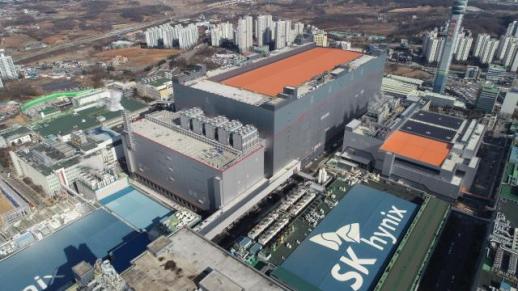 SK hynix now most favorite workplace among jobseekers, overtaking Samsung SEOUL, March 16 (AJP) - SK hynix has surpassed Samsung Electronics as the most preferred employer among job seekers in South Korea. Online job-search site Saramin said on Monday that it conducted a survey of over 2,000 job seekers and found that about 20 percent of them named SK hynix as their most sought-after employer. It marks the first time Samsung Electronics has lost the top spot since similar surveys began in 2009. The electronics giant, which had long held a dominant lead, slipped to second place with 18.9 percent. Automaker Hyundai Motor came in third at 7.9 percent, followed by Naver at 4 percent and Samsung C&T at 3 percent. Saramin attributed the shift to the chipmaker's lucrative salary packages and record-breaking performance bonuses. High salaries and other perks have recently emerged as the decisive factor for job seekers. Among respondents hoping to land jobs at major conglomerates and tech and digital companies like Naver, "high salary" was cited as the most important reason for their preference. Disparities in bonuses have become particularly stark. In 2025, SK hynix employees received bonuses equivalent to 150 percent of their annual salary. For an employee earning 100 million won ($68,212) annually, this meant an additional 150 million won in performance-related payments. In contrast, Samsung Electronics' mobile division capped bonuses at 50 percent of annual salaries, while even its semiconductor division had a 100 percent bonus ceiling, despite strong sales performance. The survey comes as both top rivals are in the midst of their first-half recruitment drives. Samsung affiliates are accepting job applications until Tuesday, while SK hynix is receiving applications for new hires next Monday. 2026-03-16 11:53:53
 -
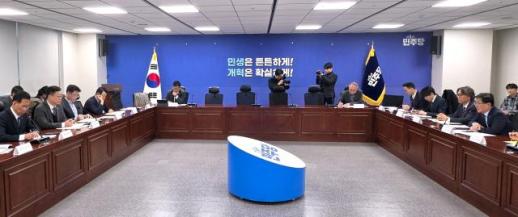 GULF CRISIS: South Korea to release 22.46 million barrels from strategic reserve SEOUL, March 16 (AJP) -South Korea will release 22.46 million barrels of crude oil from its strategic reserves over the next three months as part of coordinated international efforts to stabilize global energy markets following supply disruptions caused by Iran’s blockade of the Strait of Hormuz. The decision was announced Monday after a meeting between the government and the ruling party, which agreed to gradually release the oil stockpile in line with a collective action plan led by the International Energy Agency (IEA). According to the briefing, the release corresponds to the volume allocated to Korea under the IEA’s emergency response framework. The drawdown will be implemented in stages over the next three months to cushion the impact of surging oil prices triggered by escalating conflict in the Middle East. The IEA said member nations have agreed to release a total of 400 million barrels from strategic reserves. Of that amount, 271.7 million barrels will come from government-held stocks, while 116.6 million barrels will be supplied from obligated industry reserves and another 23.6 million barrels from other sources. The agency said about 72 percent of the planned release will consist of crude oil, with the remaining 28 percent made up of refined petroleum products. Supplies held in Asia–Oceania countries will be made available immediately, while reserves from Europe and the Americas are expected to enter the market later this month. The IEA has deployed coordinated reserve releases during previous energy crises. In 2022, member countries released about 182 million barrels after the outbreak of the Russian invasion of Ukraine triggered a surge in global oil prices. The ruling Democratic Party of Korea and government officials said the oil release forms part of a broader package aimed at stabilizing energy supply, controlling fuel prices and supporting businesses affected by the Middle East conflict. The government reported its plan of proposing a supplementary budget bill by the end of March to mitigate the economic impact of the conflict, including energy price support and assistance for affected exporters. South Korea currently holds crude reserves equivalent to about 208 days of imports, while liquefied natural gas stockpiles cover roughly nine days of consumption, according to the briefing. To secure additional crude supplies, the government is also considering bringing home oil produced overseas by the state-run Korea National Oil Corporation, with about 3.35 million barrels expected to be imported by June. Authorities said they will strengthen energy supply management by increasing electricity generation from coal and nuclear plants to offset potential shortages of liquefied natural gas. The government plans to temporarily lift the cap limiting coal-fired power plants to 80 percent of installed capacity and accelerate maintenance work on nuclear reactors currently under repair, with the goal of raising the nuclear power utilization rate from the high-60 percent range to around 80 percent by mid-May. Officials are also reviewing whether to designate the Yeosu petrochemical industrial complex as a special industrial crisis response zone as petrochemical producers face shortages of key raw materials including aluminum, sulfur and naphtha. The relief measures have helped little to alleviate oil prices flirting around $100 per barrel as the market suspects reflecting market concerns that the conflict could lead to prolonged disruption of energy flows through the Strait of Hormuz — one of the world’s most critical oil transit chokepoints. Iran has intensified attacks on commercial vessels in the region and warned it would block oil shipments benefiting the United States and its allies, raising fears that a sustained closure of the waterway could severely disrupt global energy supply. 2026-03-16 11:13:46