
Journalist

AJP
ellenshs@ajunews.com
-
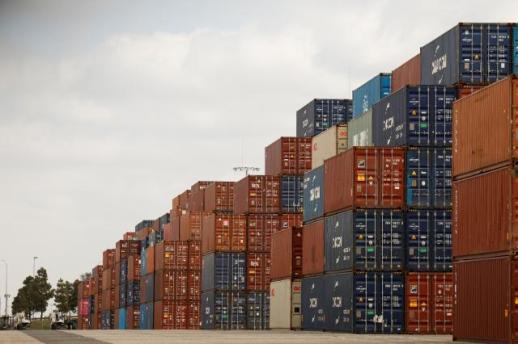 Washington slaps another Section 301 probe on South Korea SEOUL, March 13 (AJP) -South Korea has been drawn into another U.S. trade investigation as Washington launched a new probe under Section 301 of the Trade Act of 1974 targeting forced-labor imports, only a day after opening a sweeping investigation into global manufacturing overcapacity. The back-to-back actions suggest the United States is assembling multiple Section 301 cases in an effort to rebuild the legal basis for tariffs after the U.S. Supreme Court recently struck down a key foundation used to justify earlier duties imposed under the International Emergency Economic Powers Act (IEEPA). The Office of the United States Trade Representative (USTR) said Wednesday it had initiated investigations into 60 economies, including South Korea, China, the European Union, Japan, India, Mexico, Taiwan and Vietnam. The probe will examine whether governments have failed to impose or effectively enforce bans on the importation of goods produced with forced labor — a gap Washington argues allows products made under coercive labor conditions to circulate through global supply chains and gain an artificial cost advantage. “Despite the international consensus against forced labor, governments have failed to impose and effectively enforce measures banning goods produced with forced labor from entering their markets,” U.S. Trade Representative Jamieson Greer said in a statement. “For too long, American workers and firms have been forced to compete against foreign producers who may have an artificial cost advantage gained from the scourge of forced labor.” The latest investigation shifts attention away from domestic labor practices within the targeted economies and instead focuses on whether governments are adequately preventing forced-labor goods from entering their own markets. U.S. officials argue that if countries allow such products to be imported and re-exported through their supply chains, they effectively undermine international efforts to eliminate forced labor and distort global trade. The investigation will examine government policies, customs enforcement practices and regulatory frameworks governing import bans on forced-labor goods. The move builds on a broader trend in U.S. trade policy that increasingly links supply-chain transparency, labor standards and national economic security. In recent years Washington has tightened restrictions on imports tied to forced labor, most notably through the Uyghur Forced Labor Prevention Act, which blocks products linked to alleged forced labor in China’s Xinjiang region unless companies can prove otherwise. Section 301 of the Trade Act of 1974 authorizes the U.S. government to investigate foreign government practices deemed “unreasonable or discriminatory” and to impose retaliatory trade measures, including tariffs. Trade analysts say the forced-labor probe — coming only a day after a separate Section 301 investigation into structural excess capacity in global manufacturing — indicates Washington is increasingly relying on the statute to underpin its tariff policy. The strategy follows a recent Supreme Court ruling that invalidated tariffs imposed under the International Emergency Economic Powers Act, forcing the administration to explore alternative legal authorities to sustain its trade enforcement agenda. By launching multiple Section 301 investigations addressing different types of trade distortions, Washington could potentially establish new legal grounds for tariffs if the probes conclude that foreign practices are harming U.S. commerce. Under the Section 301 procedure, USTR must seek consultations with the governments under investigation before determining whether trade actions are warranted. The agency has scheduled a public hearing for April 28, while written comments and requests to testify must be submitted by April 15, according to a Federal Register notice. After reviewing submissions and consultations, the interagency Section 301 Committee will assess whether the targeted policies burden or restrict U.S. commerce and recommend potential remedies. Those remedies could include tariffs, import restrictions or negotiated commitments by the affected economies to tighten enforcement against forced-labor goods. Seoul was included a day earlier in the separate Section 301 probe examining global industrial overcapacity in manufacturing — a case widely seen as targeting government subsidies and production surpluses in major export economies. While the forced-labor probe does not specifically accuse South Korea of using forced labor, the investigation could examine whether Korean customs authorities adequately prevent imports of goods linked to forced labor from entering domestic supply chains. 2026-03-13 15:03:07
 -
 Seoul places rare price cap on gasoline prices on outlook on lengthier crisis SEOUL, March 13 (AJP) -South Korea will impose a rarely-used fuel price cap starting midnight Friday in an emergency attempt to contain surging domestic fuel costs driven by escalating tensions in the Middle East and renewed volatility in global oil markets. The Ministry of Trade, Industry and Energy said Thursday the measure will set a ceiling on the wholesale prices oil refiners charge gas stations and distributors for key petroleum products, though retail prices at individual gas stations will not be directly regulated. The initial ceiling, effective from March 13 to March 26, is set at 1,724 won ($1.16) per liter for gasoline, 1,713 won for diesel and 1,320 won for kerosene. The levels are 109 won, 218 won and 408 won lower, respectively, than the average supply prices refiners reported on March 11. Authorities said the caps will be reviewed every two weeks depending on global oil price movements. The ceiling will be calculated based on refiners’ weekly average supply prices before the Middle East crisis, adjusted by fluctuations in the Mean of Platts Singapore (MOPS) benchmark and then adding taxes. The government invoked a rarely visited clause in the Petroleum Business Act that allows authorities to designate maximum prices when oil market volatility threatens economic stability. It marks the first enforcement of the system since South Korea liberalized petroleum pricing in 1997. Industry Minister Kim Jung-kwan said the move aims to stabilize fuel costs while preventing excessive price hikes that could distort the market. “The government decided to introduce the petroleum price cap system to stabilize oil prices, respond to unreasonable price increases and ensure that the burden of rising fuel costs is shared among the government, businesses and the public,” Kim said during a ministerial task force meeting on consumer prices. Officials also warned they will closely monitor market behavior, including possible hoarding or excessive price hikes at gas stations not directly covered by the cap. Under the program, exports of petroleum products subject to the ceiling may also be restricted to prevent domestic supply shortages caused by price gaps with overseas markets. The government said any financial losses incurred by refiners will be reviewed and compensated after the program ends, subject to strict verification. The emergency measure comes as domestic fuel prices have surged sharply since the outbreak of the latest Middle East conflict on Feb. 28, when the United States and Israel launched airstrikes on Iran. According to the Korea National Oil Corp., the nationwide average retail gasoline price climbed to 1,904.3 won per liter, up from 1,692.6 won before the conflict. Diesel prices rose even faster, reaching 1,927.5 won per liter from 1,597.2 won over the same period. Global oil markets have also swung sharply higher as the war threatens shipping through the Strait of Hormuz, a chokepoint for about 20 percent of global seaborne crude flows. Brent crude surged 9.2 percent to $100.46 per barrel Thursday — its largest one-day jump since 2020 — while U.S. benchmark West Texas Intermediate (WTI) rose 9.7 percent to $95.73. The spike followed warnings from Iran’s newly appointed supreme leader Ayatollah Seyed Mojtaba Khamenei, who said Tehran would consider expanding the conflict and continue using the possibility of blocking the Strait of Hormuz as leverage against the United States and Israel. The threat of prolonged disruption to global oil shipments has heightened concerns of a sustained energy price shock, prompting governments across Asia to prepare emergency stabilization measures. Seoul said it will lift the price cap once domestic fuel markets stabilize, while continuing efforts to secure additional crude supplies outside the Middle East and prepare potential releases from strategic petroleum reserves. 2026-03-13 07:48:50
 -
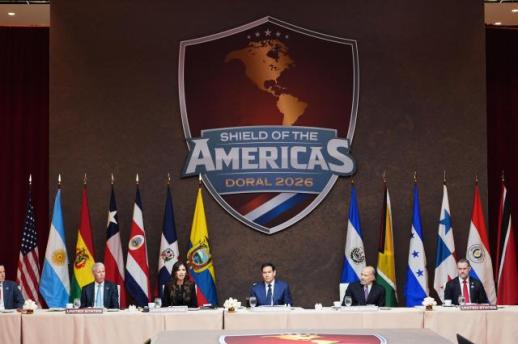 Analysis: U.S. turns to Section 301 to sustain tariff strategy, what it means for Korea SEOUL, March 12 (AJP) -The Trump administration’s decision to launch a sweeping Section 301 investigation into South Korea and 15 other economies signals that Washington’s tariff-centered trade policy remains firmly intact despite a recent Supreme Court ruling that struck down a key legal foundation for earlier duties. The Office of the United States Trade Representative (USTR) announced Wednesday that it is opening investigations into “structural excess capacity and production in manufacturing sectors” across a range of major trading partners. The list includes China, the European Union, Japan, South Korea, India, Mexico, Taiwan and Vietnam, among others. While the probe is formally framed as an inquiry into industrial overcapacity and trade distortions, it serves a broader purpose: rebuilding the Trump administration’s tariff framework after the Supreme Court invalidated the reciprocal tariffs imposed under the International Emergency Economic Powers Act (IEEPA). USTR Jamieson Greer made clear that the administration’s policy direction remains unchanged. “The policy remains the same — the tools may change depending on courts and other circumstances,” Greer said during a briefing with reporters. In practice, the move shifts the legal foundation for tariffs from emergency powers to Section 301 of the Trade Act of 1974, a longstanding trade enforcement provision that authorizes the U.S. government to investigate and retaliate against foreign practices deemed “unreasonable or discriminatory” toward U.S. commerce. How Section 301 has been used Section 301 has historically been one of Washington’s most powerful unilateral trade tools. The provision allows the USTR to investigate foreign policies or practices that harm U.S. commerce and, if necessary, impose retaliatory measures such as tariffs or the suspension of trade concessions. The tool was widely used before the establishment of the World Trade Organization (WTO) in 1995, after which the United States relied more heavily on the WTO’s dispute settlement system to resolve trade conflicts. In 2017 the administration launched a major investigation into China’s intellectual property and technology transfer policies. That probe ultimately led to tariffs ranging from 7.5 percent to 25 percent on about $370 billion worth of Chinese imports, marking one of the largest trade enforcement actions in modern history. The new investigation suggests the administration is now prepared to expand the use of Section 301 beyond China to a broader group of major trading partners. Unlike the earlier probe, which focused on intellectual property issues, the current investigation centers on what Washington describes as “structural excess capacity” in manufacturing. U.S. officials argue that some economies are producing far more industrial goods than global markets can absorb, often supported by subsidies, state-backed financing or other policy measures. Washington contends that such excess capacity can distort global markets, displace U.S. production and discourage investment in American manufacturing. The move comes after the U.S. Supreme Court struck down the administration’s reciprocal tariffs imposed under the International Emergency Economic Powers Act, ruling that the emergency powers law did not provide the authority to impose broad trade tariffs. The Section 301 investigation therefore represents a new legal pathway to maintain tariff leverage using a statute specifically designed for trade enforcement. The investigation is proceeding on an accelerated timeline. Written comments from stakeholders will be accepted beginning March 17 and must be submitted by April 15. Public hearings are scheduled to begin May 5. The schedule aligns with another temporary measure currently in place. The United States has imposed a 10 percent global tariff under Section 122 of the Trade Act, which can remain in force for only 150 days. The administration is widely expected to complete the Section 301 process before that deadline in order to establish a more durable legal basis for tariffs. If the investigation concludes that foreign practices are harming U.S. commerce, Washington could impose tariffs, introduce service-related fees or pursue negotiations aimed at changing those policies. In the Federal Register notice accompanying the investigation, the USTR identifies South Korea as an economy with significant export strength in several key industries. The filing notes that Korea’s global trade surplus is concentrated in sectors such as electronic equipment, automobiles and auto parts, machinery, steel, and ships and marine vessels. The notice also highlights Korea’s trade relationship with the United States, citing a large bilateral surplus in goods and services in recent years. U.S. officials argue that such patterns may reflect structural overcapacity that distorts global markets and undermines investment in domestic manufacturing. By framing the issue in terms of industrial capacity rather than simple trade imbalances, Washington is positioning the probe within a broader strategy aimed at reshaping supply chains and strengthening domestic production. Although the current investigation focuses on manufacturing overcapacity, USTR officials have suggested that additional Section 301 probes could address other issues affecting U.S. companies abroad. While U.S. officials say current bilateral trade arrangements remain valid, Section 301 actions could still result in new tariffs or other restrictions. Seoul highlights that it is ready and not alone in the new offensive. “The U.S. government has repeatedly explained that it would use Section 301 to restore tariffs to the level that existed before the Supreme Court ruled the IEEPA-based tariffs unconstitutional, and we have been discussing that scenario with them,” Yeo Han-koo, South Korea's trade representative, said Thursday in a briefing. "The overcapacity investigation is not aimed solely at Korea. It is a broad investigation covering 16 economies,” he said. Yeo dismissed speculation that the issue could be linked to the regulatory scrutiny surrounding Coupang, noting that the probe concerns manufacturing overcapacity rather than digital-sector policies. “The Section 301 investigation is separate from issues such as digital non-tariff barriers. It has nothing to do with Coupang,” he said. According to Yeo, the United States also appears focused on maintaining the overall structure of existing trade agreements while using alternative legal tools to restore tariff leverage. “The U.S. government’s objective is to preserve and maintain the trade deals it has already concluded as much as possible while using other legal instruments to restore tariffs to previous levels,” he said. He noted that Washington had earlier imposed a blanket 10 percent tariff under Section 122 of the Trade Act as a temporary measure because Section 301 investigations typically require months to complete. “Section 301 investigations generally take several months to a year, which is why the U.S. first imposed the across-the-board 10 percent tariff under Section 122,” Yeo said. Based on the expected timeline, he said tariff adjustments under Section 301 could begin emerging around mid-July. Trade experts say the political context in Washington may also shape how aggressively tariffs are applied. Heo Yoon, professor of international trade at the Graduate School of International Studies at Sogang University, said tariffs are a major element of economic campaign strategy for U.S. midterm elections. “Because Section 301 tariffs are item-based, their scope is narrower than the previous reciprocal tariffs and the resulting tariff revenue could be significantly lower,” he said. “That may lead the U.S. government to impose higher tariffs on specific sectors to make up the difference.” “The USTR hearings are essentially a negotiating table where the 16 economies under investigation will face the United States,” Heo said. “Both the government and the private sector must prepare detailed rebuttals to the U.S. arguments in order to minimize potential tariff damage.” *AJP's Kim Yeon-jae contributed to this article. 2026-03-12 13:49:52
 -
 U.S. targets Korea and 15 others for Section 301 trade probe after tariff setback SEOUL, March 12 (AJP) -The United States has opened a trade investigation into South Korea and 15 other economies over alleged structural overcapacity in manufacturing sectors, a move that could eventually lead to new tariffs as the Trump administration rebuilds its trade policy after a recent Supreme Court setback. The Office of the United States Trade Representative (USTR) said Wednesday it had initiated investigations under Section 301 of the Trade Act of 1974 into the “acts, policies and practices” of major trading partners that may contribute to excess production and exports that burden U.S. commerce. The probe covers South Korea, China, Japan, India, Taiwan, the European Union and several Southeast Asian economies including Vietnam, Thailand and Malaysia. “The United States will no longer sacrifice its industrial base to other countries that may be exporting their problems with excess capacity and production to us,” U.S. Trade Representative Jamieson Greer said in a statement. Greer said the investigation will determine whether government policies — including subsidies, state-backed financing, labor and environmental practices, and barriers to imports — have encouraged production levels “not aligned with market demand,” creating oversupply that harms U.S. manufacturers. Section 301 investigations allow the U.S. government to impose retaliatory measures such as tariffs, fees or other trade restrictions if it determines that foreign practices are unfair or discriminatory. The probe reflects Washington’s effort to reconstruct its tariff policy after the U.S. Supreme Court last month struck down the Trump administration’s country-specific “reciprocal tariffs” imposed under the International Emergency Economic Powers Act (IEEPA). The administration had relied on emergency powers under the law to impose sweeping tariffs on several trading partners. The court ruled that the statute did not authorize such trade actions, effectively invalidating the measures. U.S. officials have since indicated that Section 301 investigations will serve as a key legal pathway to pursue tariff actions on a country-by-country basis. By launching investigations under the 1974 trade law, Washington can formally examine foreign trade practices and impose tariffs or other restrictions if they are deemed to harm U.S. commerce. The process will include written submissions and public hearings. The USTR said comments are due by April 15 and hearings are scheduled to begin May 5. The announcement adds to layers of complicated trade issues between Washington and Seoul despite the Korea-U.S. Free Trade Agreement. South Korean officials have made a series of visits to Washington in recent weeks in an effort to ease tensions and prevent potential tariff measures. Industry Minister Kim Jung-kwan and other trade officials have met with U.S. policymakers to explain Seoul’s investment and trade policies and highlight the scale of Korean corporate investment in the United States and address concerns raised by U.S. policymakers regarding Seoul’s regulatory actions involving e-commerce platform Coupang. South Korean authorities say the antitrust investigation into the company is part of normal competition enforcement, while U.S. officials have raised questions about whether such actions could disadvantage American investors. The issue has emerged alongside broader U.S. complaints about market access, digital regulations and treatment of foreign technology companies. Major U.S. investors in Coupang — Greenoaks and Altimeter — earlier this week withdrew a petition seeking a Section 301 probe into Seoul’s treatment of the company after U.S. officials signaled Washington may pursue a broader investigation into Korean trade practices affecting American firms. 2026-03-12 09:23:57
 -
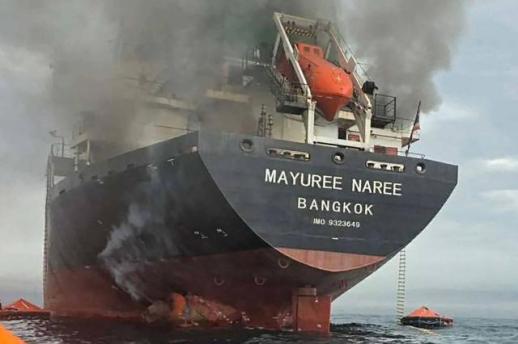 South Korea releasing 22.46 million barrels of oil reserves in IEA joint action SEOUL, March 12 (AJP) -South Korea will release 22.46 million barrels of oil from its strategic reserves as part of the International Energy Agency’s largest-ever coordinated emergency action to stabilize global energy markets shaken by the war in Iran. The Ministry of Trade, Industry and Energy said Wednesday the decision follows an emergency meeting of the International Energy Agency (IEA), where its 32 member countries agreed to release a combined 400 million barrels from emergency stockpiles. The unprecedented move aims to cushion a severe supply shock after the Strait of Hormuz — a vital artery carrying roughly one-fifth of the world’s oil trade — was effectively closed amid the escalating conflict. South Korea’s share amounts to 5.6 percent of the total release, calculated based on each member country's share of oil consumption among the IEA’s 32 members. The planned release of 22.46 million barrels marks the largest drawdown in the country’s history, surpassing the 4.94 million barrels released during the 1990 Gulf War. It is also nearly double the volume South Korea released during the coordinated IEA actions following Russia’s invasion of Ukraine in 2022, when the country contributed a total of 11.65 million barrels across two rounds. IEA Executive Director Fatih Birol said the coordinated action reflects the scale of the disruption facing global oil markets. “The oil market challenges we are facing are unprecedented in scale,” Birol said. “Oil markets are global, so the response to major disruptions must also be global.” The Paris-based agency holds roughly 1.2 billion barrels in emergency reserves among its members. The coordinated release announced Wednesday will be the sixth such intervention since the IEA was founded in 1974 and the largest on record. Seoul said the exact timing and pace of its release will be determined through consultations with the IEA secretariat, taking into account national circumstances and market conditions. A ministry official said the move is expected to help stabilize global oil markets and mitigate the economic impact of surging energy prices. “Through close cooperation with the IEA and major countries, the government will continue working to minimize the burden of high oil prices on the economy and consumer inflation,” the official said. The emergency action comes as the Iran war has sent energy markets into turmoil, with tanker traffic disrupted and Middle East producers struggling to export crude without access to shipping routes. The Thai-flagged dry bulk carrier Mayuree Naree caught fire after being struck by two projectiles while transiting the strait, its operator Precious Shipping said. Three crew members were reported missing and believed trapped in the engine room, while the remaining 20 crew members were evacuated safely to Oman. Iran’s Revolutionary Guards later said the ship had been “fired upon by Iranian fighters,” suggesting a rare direct engagement by the force. Two other vessels sustained minor damage earlier the same day. The Japan-flagged container ship ONE Majesty was hit by an unidentified projectile while anchored in the Gulf, leaving minor damage above the waterline but no injuries among the crew, according to its owner Mitsui O.S.K. Lines and charterer Ocean Network Express. A Marshall Islands-flagged bulk carrier, Star Gwyneth, was also struck about 50 miles northwest of Dubai, damaging its hull. Maritime risk firm Vanguard said the crew remained safe and the vessel was not in danger. Iran’s Revolutionary Guards have warned that ships attempting to pass through the Strait of Hormuz would be targeted, while U.S. President Donald Trump has threatened to intensify attacks on Iran if it continues to block the vital shipping lane. Despite repeated requests from shipping companies, the U.S. Navy has declined to escort civilian vessels through the strait for now, saying the risk of Iranian fire remains too high. U.S. Central Command said its current focus is destroying Iran’s missiles and drones and degrading its ability to disrupt maritime traffic. Energy analysts warn that the reserve release can ease market pressure temporarily, but a sustained stabilization ultimately depends on reopening the Strait of Hormuz and restoring normal oil flows. 2026-03-12 07:39:41
 -
 Samsung, SK to retire $14 bn worth shares to steady KOSPI after war shock SEOUL, March 10 (AJP) -South Korea’s two most influential corporate names unveiled more than 21 trillion won ($14.3 billion) worth of share retirements on Tuesday, a sweeping shareholder-return move that could help stabilize the country’s stock market after the Middle East war abruptly halted its record rally. Samsung Electronics said it will retire roughly 87 million treasury shares in the first half of this year, equivalent to about 16 trillion won based on Tuesday’s closing price. SK Inc., the holding company of SK Group, on the same day announced it will cancel about 14.69 million shares — roughly 5.16 trillion won worth — representing nearly 20 percent of its outstanding shares. Combined, the buyback retirements exceed 21 trillion won, marking one of the largest shareholder-return actions ever undertaken by Korean corporations. The move comes as Korean equities attempt to recover from a sharp selloff triggered by the outbreak of war involving Iran in late February, which sent oil prices soaring and rattled markets heavily exposed to Middle Eastern energy supply routes. Shares of Samsung Electronics, the world’s largest memory chipmaker, have fallen 13 percent to 187,900 won since Feb. 27, just before hostilities erupted. SK Corp. declined 12.5 percent over the same period to 351,000 won, while SK hynix — the world’s second-largest memory producer — slid 11.6 percent from 1,061,000 won. SK owns 32.14 percent of SK Square which is the single largest shareholder of the chipmaking unit. The declines helped drag the KOSPI lower after months of record gains as the economy relies largely on fuel imports from the Middle East. Analysts say the massive share retirements could provide a counterweight to the market turbulence by shrinking share supply and signaling stronger capital discipline among Korea’s largest companies. “Large-scale treasury share cancellations by flagship companies such as Samsung Electronics and SK could support valuations and help restore investor confidence,” a Seoul-based strategist said. The announcements also align with broader corporate governance reforms introduced under President Lee Jae Myung, whose administration has pushed policies aimed at boosting shareholder returns and narrowing Korea’s longstanding “valuation discount” relative to global peers. Under the latest revision of Korea’s Commercial Act that took effect last week, companies must cancel newly acquired treasury shares within one year and existing holdings within 18 months, except for limited purposes such as employee compensation. Market watchers expect the policy shift — combined with the actions of market bellwethers like Samsung and SK — to accelerate share retirements across corporate Korea. With the country’s two largest memory chip ecosystems taking the lead, the buyback wave could become an early test of whether shareholder-friendly reforms can help cushion Korean equities against global shocks. 2026-03-10 20:11:01
 -
 Coupang investors withdraw U.S. trade probe petition as Seoul shifts toward arbitration SEOUL, March 10 (AJP) - U.S. investment firms backing Coupang Inc. have withdrawn their request for a U.S. trade investigation into South Korea’s treatment of the e-commerce company, as the dispute shifts toward an investment arbitration case under the Korea–U.S. Free Trade Agreement. Greenoaks and Altimeter said Monday they had withdrawn a petition filed under Section 301 of the U.S. Trade Act, which had asked the Office of the United States Trade Representative (USTR) to investigate what they described as discriminatory actions by the Korean government against Coupang. The investors said the petition was dropped because Washington has signaled plans to pursue broader Section 301 investigations into unfair trade practices affecting American technology companies, making a company-specific probe potentially redundant. “Pursuing a standalone petition focused on a single company would be redundant,” the firms said in a statement, adding that the issue had already prompted discussions between the U.S. and South Korean governments and drawn attention from members of Congress. The petition, filed on Jan. 22 by the investors who claim to hold a combined $1.5 billion worth of Nasdaq-trading Coupang shares, alleged that Seoul had launched a government-wide crackdown on Coupang following a major data breach, arguing that the response amounted to unfair and discriminatory treatment of a U.S. company operating in Korea. Section 301 of the U.S. Trade Act allows Washington to investigate foreign government actions deemed unjustified or discriminatory and to impose retaliatory trade measures such as tariffs. A USTR official confirmed the withdrawal, saying several U.S. investors in Coupang had asked that the petition be removed. The official added that Washington will continue urging Seoul to ensure investigations into the data breach are conducted in a non-discriminatory manner and that U.S. digital service firms do not face unnecessary barriers in the Korean market. The issue was also raised during trade meetings in Washington last week, where Trade Minister Kim Jung-kwan and Trade Deputy Minister Yeo Han-koo met separately with U.S. Commerce Secretary Howard Lutnick and U.S. Trade Representative Jamieson Greer. According to Seoul’s Ministry of Trade, Industry and Energy, Yeo conveyed the Korean government’s position that the dispute involving Coupang’s investors should not negatively affect broader Korea–U.S. trade relations. The talks were part of a broader round of consultations following a U.S. Supreme Court ruling that struck down reciprocal tariffs imposed by the Trump administration under the International Emergency Economic Powers Act (IEEPA). Washington has since signaled it may rely more heavily on alternative trade tools, including tariffs under Section 122, national security investigations under Section 232, and actions under Section 301. The investors’ broader legal challenge against Seoul nevertheless remains active. South Korea has already begun preparing its legal defense after U.S. investors formally notified the government of their intention to pursue investor–state dispute settlement (ISDS) arbitration under the Korea–U.S. Free Trade Agreement (KORUS FTA). The Justice Ministry said it has appointed South Korean law firm Peter & Kim and U.S.-based Arnold & Porter Kaye Scholer LLP to advise the government during the initial phase of the dispute. Officials said the firms were selected for their experience in international investment arbitration, including their previous work representing South Korea in the high-profile Lone Star dispute over the sale of Korea Exchange Bank. The legal teams will assist during the 90-day consultation period that follows a notice of intent to arbitrate under the KORUS FTA, during which the parties may attempt to resolve the dispute before formal arbitration is filed. The dispute stems from a cybersecurity incident disclosed by Coupang in November 2025, involving the leak of data linked to more than 30 million customer accounts. The breach triggered regulatory probes, parliamentary hearings and public criticism from Korean officials. Coupang, founded in 2010 and often dubbed the “Amazon of Korea,” operates primarily in South Korea but is incorporated in Delaware and listed on the New York Stock Exchange, with a shareholder base dominated by U.S. investors. Additional notices of intent have since been filed by other investors, including Foxhaven Capital, Durable Capital Associates, and Abrams Capital, expanding the group of claimants considering arbitration. 2026-03-10 07:38:56
 -
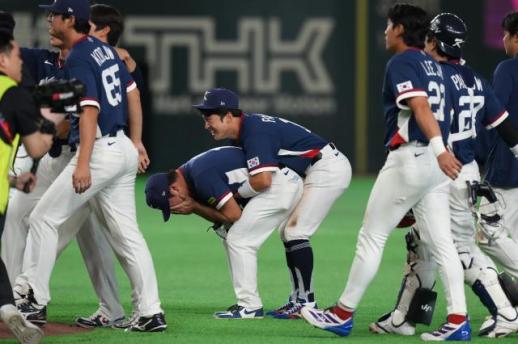 South Korea survives a dramatic tiebreaker to advance WBC quarterfinals in 17 years SEOUL, March 10 (AJP) - South Korea advanced to the quarterfinals of the World Baseball Classic for the first time in 17 years on Monday, defeating Australia 7–2 in Tokyo through a combination of disciplined execution, mathematical precision — and a measure of luck. The win at Tokyo Dome gave South Korea the exact margin it needed — a victory by at least five runs while allowing no more than two — to edge past Australia and Chinese Taipei in Pool C and secure the final ticket to the knockout stage. Designated hitter Moon Bo-gyeong delivered the decisive performance, blasting a two-run homer and finishing with four RBIs to power South Korea’s offense in the must-win finale. Still, South Korea’s path to the quarterfinals came down to the final inning and a sequence of fortunate moments. Leading 6-2 entering the ninth, South Korea still needed one more run to maintain the required five-run margin. Kim Do-yeong drew a leadoff walk, and Lee Jung-hoo’s sharp grounder deflected off Australian pitcher Jack O’Loughlin’s glove, triggering a rushed throw by shortstop Jarryd Dale that sailed into right field. The error placed runners on the corners before Ahn Hyun-min lifted a sacrifice fly to right field, restoring the crucial five-run cushion. South Korea then held firm in the bottom of the ninth to seal the victory and the long-awaited return to the WBC quarterfinals — its first since finishing runner-up in 2009. Fortune had also tilted the broader tournament math slightly in Korea’s favor. South Korea, Australia and Chinese Taipei all finished Pool C with identical 2–2 records. With head-to-head results tied, the standings were determined by the team run-prevention average in games among the tied teams. All three teams allowed seven runs in those matchups, but South Korea edged the tiebreaker by recording one more defensive inning than the others, giving it the best run-prevention ratio. Earlier in the tournament, Australia’s upset 3–0 victory over Chinese Taipei also helped keep the mathematical pathway open for South Korea, which had appeared on the brink of elimination after losing to Taipei the previous day. South Korea will now travel to Miami to face the winner of Pool D — likely Venezuela or the Dominican Republic — in the quarterfinals on March 14 (Korea time). 2026-03-10 07:26:09
 -
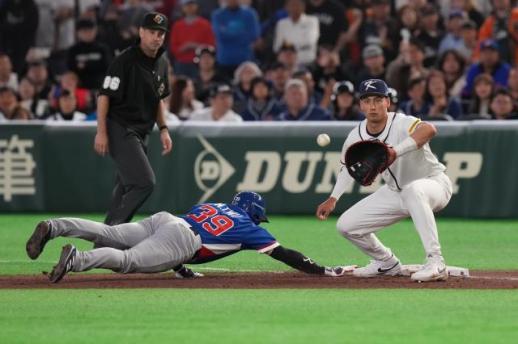 Korea's WBC hopes hang on Australia after Taipei loss SEOUL, March 08 (AJP) -South Korea’s hopes of advancing at the 2026 World Baseball Classic were left hanging by a thread Sunday after a 5–4 extra-innings loss to Chinese Taipei at Tokyo Dome, requiring the team a convincing final-game victory to stay alive. The defeat dropped South Korea to 1–2 in Pool C, while Chinese Taipei finished its schedule at 2–2. South Korea will close the opening round against Australia at 7 p.m. Monday, but its path to the quarterfinals depends first on Japan defeating Australia in Sunday night’s game. If Japan wins, South Korea could still force a three-way tie at 2–2 by beating Australia. The final standings would then be determined by tournament tiebreaker rules, beginning with fewest runs allowed, followed by earned runs allowed, batting average and drawing lots. That scenario leaves South Korea with the steepest task among the tied teams. To realistically advance, Korea would likely need a decisive victory over Australia while keeping its runs allowed low, making Monday’s game effectively a must-win by a wide margin. Sunday’s loss came despite a standout performance from Kim Do-yeong, who nearly carried South Korea to victory with a two-run homer in the sixth inning and an eighth-inning RBI double that tied the game at 4–4. Chinese Taipei broke the tie in the 10th inning under the WBC’s tiebreak rule that begins with a runner on second base. Chiang Kun-Yu’s bunt drove in the go-ahead run, and South Korea failed to capitalize on its own scoring chance in the bottom half. The loss also extended a troubling trend for South Korea, which is still trying to reach the knockout stage for the first time since 2009, when it finished runner-up. The defeat followed another narrow loss a day earlier against defending champion Japan. South Korea stunned the Tokyo Dome crowd by jumping to a 3–0 lead in the first inning and later clawed back from a 5–3 deficit, but ultimately fell short 8–6 on Saturday night. 2026-03-08 17:00:14
 -
 Samsung union vote on strike to add memory supply concerns SEOUL, March 08 (AJP) - Unionized workers at Samsung Electronics on Monday begin a 10-day vote on whether to launch a strike, raising fresh concerns over chip supply at a time of surging demand for artificial-intelligence memory. The ballot, which runs from March 9 to 18, could pave the way for a joint protest next month and a full-scale strike from May 21 to June 7 if a majority of union members approve the action. The vote follows a breakdown in wage negotiations after the National Labor Relations Commission suspended mediation between Samsung and its three major labor unions — the Samsung Electronics Labor Union (SELU), the National Samsung Electronics Union and Samsung Electronics Co. Union. Together the unions represent more than 90,000 employees, roughly 70 percent of Samsung Electronics’ 129,000 workforce, making the vote one of the most consequential labor actions in the company’s history. Union leaders say the strike authorization vote is necessary to secure legal rights for industrial action. “We aim to secure the legal right to strike by mid-March,” said Choi Seung-ho, chairman of SELU and head of the unions’ joint negotiation committee, during a livestream last week. “We expect the vote to pass and plan to take a long-term approach to negotiations.” The dispute centers on the company’s excess profit incentive (OPI) scheme, which the unions want to reform. Labor groups are demanding the removal of the current ceiling on OPI payouts — capped at 50 percent of annual salary — arguing the limit prevents workers from benefiting fully during strong profit cycles. Samsung rejected the proposal, saying removing the cap could create compensation disparities between divisions. The company instead offered to maintain the existing limit while allowing employees to choose between operating profit or economic value added as the basis for calculating incentives. Management also proposed special payouts if certain targets are met, including an additional 100 percent OPI bonus for memory-chip employees if operating profit surpasses 100 trillion won ($75 billion). Union members say the plan still falls short, pointing to rival SK hynix’s performance bonuses — reportedly reaching 2,964 percent of base salary in some cases — as evidence Samsung employees are being under-rewarded. Union leaders have also stirred controversy after warning that employees who refuse to participate in strike actions could face consequences. During a livestream announcement, union officials said they would monitor offices and keep records of workers who continue working during a strike, suggesting such employees could face disadvantages in future negotiations. If approved, the strike would mark Samsung Electronics’ second major labor stoppage, following the company’s first strike in July 2024 that lasted about a month. While production disruption during the earlier strike proved limited, analysts say the stakes may be higher this time. Union membership has expanded significantly since 2024, particularly within the semiconductor division that generates the bulk of Samsung’s profits. Industry observers warn that labor disruptions could affect the production ramp of next-generation HBM chips, a critical component for AI accelerators produced by Nvidia. Samsung recently began mass production of HBM4, intended for Nvidia’s next-generation AI platform known as Vera Rubin. The chips typically require four to five months of wafer processing followed by up to two months of packaging, meaning production will be in full swing during the proposed May strike window. “Semiconductor manufacturing is highly automated, so a strike may not immediately halt production,” an industry official said. “But even the perception of instability can worry customers and investors.” The labor dispute comes at a sensitive time for Samsung’s semiconductor business. The company has been trying to regain ground in the fast-growing HBM market after losing early momentum to SK hynix, which has secured key supply contracts with Nvidia. SK hynix controlled roughly 53 percent of the HBM market in the third quarter of 2025, compared with about 35 percent for Samsung. Any disruption to Samsung’s memory production schedule could strengthen SK hynix’s advantage in the AI chip supply chain. The possibility of a strike also adds to broader uncertainty facing Samsung Electronics as geopolitical tensions rise. The company has significant exposure to global consumer markets, including the Middle East, where escalating conflict between the United States, Israel and Iran threatens to dampen economic sentiment. Samsung remains the leading smartphone vendor in the region, with roughly 34 percent market share as of the third quarter of 2025, while the Middle East also represents a major market for its home appliance business. 2026-03-08 14:11:59