
Journalist

Abraham Kwak
ellenshs@ajunews.com
-
 Seoul fiddles with price controls as gasoline price near sensitive threshold SEOUL, March 08 (AJP) -South Korea is approaching a politically sensitive threshold as gasoline prices surge toward 2,000 won ($1.35) per liter, prompting the government to consider emergency price controls for the first time in decades amid a global oil shock triggered by the war involving Iran. President Lee Jae Myung has ordered an aggressive multi-agency response as international crude prices jump to multi-year highs and domestic fuel prices climb rapidly. According to the Korea National Oil Corporation’s Opinet system, the nationwide average gasoline price reached 1,890.87 won per liter late Friday, while prices in Seoul — traditionally the most expensive market — have already climbed to around 1,942 won, placing the psychologically important 2,000-won level within reach. The surge follows a sharp spike in global crude markets after the U.S.–Israeli strikes on Iran and the subsequent disruption to tanker traffic in the Strait of Hormuz, a shipping chokepoint that carries roughly one-fifth of global oil supply. Brent crude and U.S. benchmark West Texas Intermediate (WTI) have surged to around $90 a barrel, with some analysts warning that $100 oil is increasingly possible if the conflict persists. The rapid domestic price response has pushed the government to review a rarely used emergency measure — the designation of a maximum retail price for petroleum products under the Petroleum and Alternative Fuel Business Act. The policy would allow the industry ministry to set a ceiling on gasoline prices if extreme market volatility threatens economic stability. President Lee raised the possibility during an emergency Cabinet meeting on March 5. “There has been no serious disruption to fuel supply, yet prices at gas stations suddenly surged,” Lee said, instructing officials to examine price control measures. He later warned against what he described as “anti-social profiteering” exploiting the crisis. The government has since launched a broad enforcement campaign targeting price collusion, hoarding, illegal fuel distribution and adulterated petroleum products, while the Fair Trade Commission is reviewing possible anti-competitive behavior among gas stations. Facing growing political pressure, industry groups representing refiners, fuel distributors and gas station operators said they would cooperate with the government to slow the pace of price increases. But market forces have so far overwhelmed those efforts. Refining margins and international benchmark prices have climbed sharply as tanker movements out of the Persian Gulf slow and war-risk insurance costs surge. Energy analysts say the speed of domestic price transmission has been unusually fast during the current crisis, amplifying consumer anxiety. Implementing a price ceiling however may not be easy. The measure has not been used in practice since South Korea liberalized petroleum pricing in 1997, and economists warn that artificial price suppression could create unintended consequences. If prices are capped below market levels, refiners and retailers could cut supply or delay shipments, potentially triggering fuel shortages. The law also requires the government to compensate businesses for losses caused by price controls — a clause that could impose a substantial fiscal burden if high oil prices persist. For that reason, policymakers are also reviewing alternative options, including expanding fuel tax cuts and releasing strategic oil reserves, before deciding whether to activate the emergency mechanism. The fuel price surge in South Korea reflects a broader global shock. In the United States, the average gasoline price climbed to $3.41 per gallon, up 14 percent in a week, according to AAA data. The gains hinge on the duration of the conflict and the security of shipping routes through the Strait of Hormuz. For South Korea — which imports nearly all of its crude oil and relies heavily on Middle Eastern supply — the crisis represents one of the most direct economic spillovers from the war. 2026-03-08 07:36:34
 -
 Korea hopes to win full fleet of Canadian submarines - industry minister SEOUL, March 05 (AJP) -South Korea will push to win the full order of Canada’s next-generation submarine fleet rather than settle for a split contract with a European rival, Industry Minister Kim Jung-kwan said Thursday, as Ottawa is said to be weighting the option of dividing one of its largest-ever defense awards. Speaking to reporters at Incheon International Airport before departing for Canada, Kim said Seoul is working “with everything it has” to secure the entire fleet of 12 diesel-electric submarines under Canada’s Canadian Patrol Submarine Project (CPSP). “Without prejudging whether things are going well or not, we are doing everything we can,” Kim said. “Twelve is a symbolic number for us.” Kim cited the famous line from Joseon naval commander Admiral Yi Sun-sin — “I still have 12 ships” — a rallying cry during the 16th-century Japanese invasions of Korea, adding that South Korea would strive to achieve a similar “12-ship miracle” in the Canadian submarine competition. His comments come as Canadian media reported that the government of Prime Minister Mark Carney is considering splitting the multibillion-dollar contract between the two finalists — buying six submarines each from South Korea’s Hanwha Ocean consortium and Germany’s ThyssenKrupp Marine Systems (TKMS). The CPSP aims to acquire up to 12 diesel-electric submarines to replace Canada’s aging Victoria-class fleet, which is expected to retire by the mid-2030s. Under the reported split scenario, Germany’s Type-212CD submarines would patrol the Atlantic, while South Korea’s KSS-III Batch-II submarines would be deployed on the Pacific coast and potentially in the Indo-Pacific region. Defense experts have warned that operating two different submarine classes could complicate supply chains, training and maintenance. Carney himself previously expressed skepticism about a mixed fleet, saying a single-class fleet offers “overwhelming” efficiency advantages. Still, Ottawa is also weighing the broader economic benefits of the procurement as it seeks to diversify trade ties with Europe and Asia amid rising economic friction with the United States. Both bidders have emphasized industrial cooperation and job creation in Canada. Hanwha has projected that its proposal could generate roughly 25,000 Canadian jobs annually between 2026 and 2044, while TKMS has signaled it could build some submarines in Canada. Kim said the scale of industrial cooperation would inevitably differ depending on whether Seoul wins all 12 submarines or only part of the order. “The scale of cooperation will naturally differ between 12 and six submarines,” he said. “Ultimately, it depends entirely on the decision of the Canadian government.” Kim is visiting Windsor, Ontario, for the completion ceremony of an LG Energy Solution battery plant and plans to meet Canadian officials, including Industry Minister Mélanie Joly, to promote South Korea’s shipbuilding capabilities and industrial partnership proposals. Canada’s government is expected to review the final bids submitted this week before making a decision as early as June, with the contract targeted to be awarded before the end of the year. 2026-03-05 11:13:02
 -
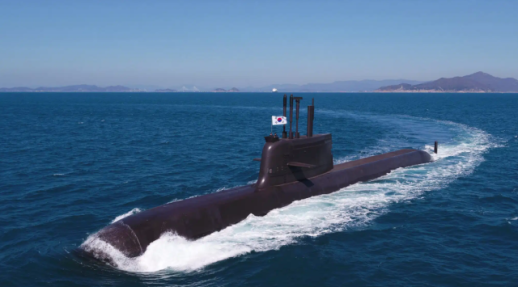 Korean industry minister flies to Canada after Team Korea submits bid for submarine deal SEOUL, March 04 (AJP) -South Korea’s industry minister will head to Canada this week to lend a final push to Team Korea’s bid for Ottawa’s multibillion-dollar submarine program, as Seoul throws its weight behind a national effort to secure one of the world’s largest naval procurement deals. Industry Minister Kim Jung-kwan is scheduled to depart Thursday for Canada to support a South Korean consortium competing for the Canadian Patrol Submarine Project (CPSP) — a program valued at up to 60 trillion won ($40 billion) to replace the Royal Canadian Navy’s aging fleet. The Korean team led by Hanwha Ocean and HD Hyundai Heavy Industries is competing against a European bid spearheaded by Germany’s Thyssenkrupp Marine Systems (TKMS), which is working with partners including Norway. Both sides submitted their final proposals to the Canadian government on Monday, moving the competition into its final phase. Kim’s trip will officially center on attending the completion ceremony for LG Energy Solution’s electric-vehicle battery plant in Ontario, but the visit is expected to double as a diplomatic push for the submarine bid. During the trip, he is expected to meet senior Canadian officials including Industry Minister Mélanie Joly to highlight Korea’s submarine construction capabilities and discuss broader industrial cooperation between the two countries. The CPSP program calls for the procurement of up to 12 conventionally powered submarines, with Canada aiming to deploy the vessels beginning in the early 2030s as its Victoria-class submarines approach retirement. Canadian officials have made clear that the winning bidder will be judged not only on capability, cost and delivery schedule but also on which proposal delivers the greatest economic and manufacturing benefits within Canada. That requirement has effectively turned the competition into a wider industrial partnership race. Hanwha Ocean has framed its proposal as the foundation for a long-term industrial partnership between South Korea and Canada, pledging investment in sectors including steel, artificial intelligence and space technologies. The company estimates the initiative could generate around 25,000 jobs annually between 2026 and 2044, while strengthening Canada’s marine manufacturing supply chain. Hanwha has also signed cooperation agreements with Canadian partners including Ontario Shipyards and Mohawk College to support workforce training and shipbuilding capability in Ontario. The plan includes establishing a shipbuilding training hub at the Hamilton shipyard aimed at addressing labor shortages in skilled trades and developing next-generation shipbuilding expertise. Hanwha Ocean is pitching its KSS-III class submarine, a platform currently operated by the Republic of Korea Navy. The design features lithium-ion batteries and an air-independent propulsion (AIP) system, allowing extended submerged endurance and a cruising range exceeding 7,000 nautical miles, along with Korean-developed sonar and combat systems. The company says it could deliver the first submarine by 2032 and four vessels by 2035, supported by what it describes as a firm delivery schedule and established supply chain. “In short, this is not just a platform pitch,” Charlie SC Eoh, president of Hanwha Ocean, said in a written response to the Canadian Press on March 2. “It is a risk-eliminated delivery plan paired with a generational industrial partnership that aligns with Canada’s defense industrial strategy.” The rival bid led by TKMS proposes a European partnership model. The German shipbuilder says it could deliver two submarines by 2034, though it has not publicly disclosed detailed cost or employment estimates. TKMS Chief Executive Oliver Burkhard described Canada’s procurement timeline — with a decision expected as early as mid-2026 — as “very ambitious,” noting that earlier plans had envisioned a decision closer to 2028 or 2029. The scale of the contract and Canada’s emphasis on domestic economic benefits have prompted a government-level lobbying push from Seoul, involving multiple ministries and defense agencies supporting the bid. South Korea’s Defense Acquisition Program Administration and other ministries have established a coordinated support framework aimed at facilitating technology transfer, training opportunities for Canadian submarine crews and broader defense-industrial cooperation. Kim’s visit follows an earlier trip to Canada in January alongside senior presidential officials to promote industrial collaboration and the submarine bid. Canada is expected to select the winning bidder as early as mid-2026, making the CPSP one of the largest defense procurement decisions in the country’s history. 2026-03-04 15:41:43
 -
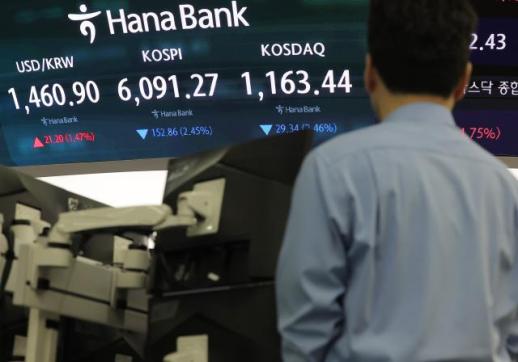 Middle East Crisis: Seoul enters emergency mode, readies contingency plan SEOUL, March 03 (AJP) -South Korea postured itself to an emergency mode Tuesday, launching round-the-clock surveillance and readying financial support for exporters as it braces for protracted conflicts in the Middle East and disruption in the fuel flow that could unsettle the economy heavily dependent on external demand and energy imports. Authorities moved swiftly as geopolitical tensions following U.S.-Israeli strikes on Iran rippled across global energy and financial markets, raising concerns over oil supply stability and capital-market volatility. Vice Finance Minister Lee Hyoung-il chaired an inter-agency emergency response meeting, reviewing developments in the Middle East and assessing spillover risks to domestic and overseas financial markets, energy logistics and the real economy. “Given the high uncertainty surrounding developments in the Middle East, all agencies must keep every possibility open and closely monitor changes,” Lee said, adding that the joint emergency response team will convene daily until tensions stabilize. The Bank of Korea (BOK) installed “Middle East Situation Monitoring Task Force” under Governor Rhee Chang-yong to assess the impact on financial and foreign-exchange markets as domestic trading resumed for the first time since the escalation. The central bank said it will maintain the task force and operate a 24-hour monitoring system in coordination with its overseas offices. “We will closely monitor market developments and respond in a timely manner if necessary,” a BOK official said. The BOK had already held an emergency videoconference on Feb. 28 — the day the strikes began — followed by additional briefings on March 2 based on reports from its overseas branches covering Asian and European markets. Global markets reflected heightened geopolitical stress. West Texas Intermediate crude rose 6.3 percent, gold gained 1.2 percent and the dollar index climbed 0.9 percent. The offshore non-deliverable forward (NDF) won rate jumped 26 won to 1,466 per dollar. Authorities warned that volatility in stock and currency markets could intensify depending on how tensions unfold. If abnormal signals emerge, officials stand ready to deploy the government’s “100 trillion won plus alpha” market stabilization program to support corporate bond and commercial paper markets and ensure a soft landing for real estate project financing (PF). Regulators also pledged a strict zero-tolerance policy against fake news, market manipulation and other unfair trading practices. The Financial Supervisory Service and the Korea Exchange will jointly monitor suspicious transactions. To cushion potential spillovers to the real economy, authorities will provide up to 20.3 trillion won in financial support for companies exposed to Middle Eastern trade. Earlier outlined as a 13.3 trillion won package, the framework was expanded to reflect growing uncertainty. Measures include liquidity support, interest rate reductions and dedicated consultation channels for affected firms. While South Korea’s overall export exposure to the Middle East is limited, officials acknowledged that certain small and mid-sized enterprises remain heavily dependent on the region. Rising tensions around the Strait of Hormuz — a critical global oil chokepoint — have prompted intensified monitoring of maritime logistics. Authorities said no abnormal safety developments involving Korean vessels in the region have been identified. Seoul on Tuesday claimed it held oil and natural gas reverses that could last at least 208 days of consumption. Including private-sector stockpiles, total reserves amount to roughly seven months — well above the International Energy Agency’s 90-day recommendation. For now, officials assess the near-term economic impact as manageable unless oil prices surge above $100 per barrel on a sustained basis. Brent crude has risen to around $77–80 per barrel in offshore trading. According to a National Assembly Budget Office estimate, oil at $100 per barrel would widen Korea’s trade deficit by $40.8 billion and lift consumer inflation by 1.3 percentage points. A 5 percent supply disruption could shave 0.6 percentage point off real GDP growth. The government and the BOK currently project 2026 growth at around 2.0 percent, while the Korea Development Institute forecasts 1.9 percent. Sustained oil above $100 could push growth into the low-1 percent range. 2026-03-03 10:27:32
 -
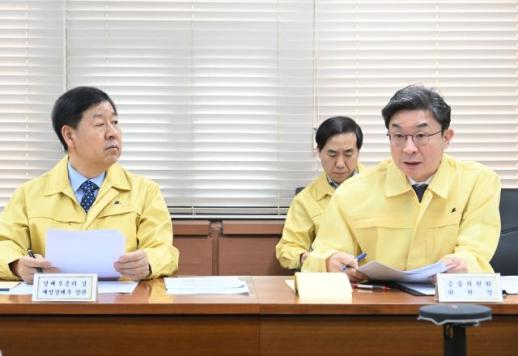 Seoul claims fuel stock enough to last more than 6 months SEOUL, March 03 (AJP) -South Korea moved to calm markets, saying it holds enough crude oil and petroleum products to last at least 208 days, as spiraling fighting in the Middle East escalated into a direct threat to global energy flows and tanker traffic through the Strait of Hormuz, a chokepoint responsible for around 70 percent of fuel imports for Asia's fourth-largest economy. With Iran declaring restrictions in the strategic waterway following U.S.-Israeli strikes and retaliatory drone and missile attacks across the Gulf, Seoul said it is maintaining an emergency posture across energy, finance and security — but stressed there is “no need for excessive concern.” The government said crude oil and petroleum product reserves stand at levels sufficient for more than six months, even if supply disruptions are prolonged. “Oil and petroleum products are stockpiled for 208 days. We are fully prepared even for a long-term disruption,” Vice Industry Minister Moon Shin-hak told reporters after a ministerial meeting on Middle East developments on Sunday. Liquefied natural gas (LNG) exposure is also seen as manageable. Qatar accounts for a portion of Korea’s LNG imports, but the Middle East share in Korea’s total LNG mix has fallen to around 20 percent. With spring approaching and seasonal gas demand easing, authorities said supply risks remain contained even if the situation drags on. The reassurance comes as shipping through the Strait of Hormuz — a chokepoint that handles roughly a fifth of global oil consumption and about 70 percent of Korea’s crude imports — has slowed sharply amid Iranian warnings to commercial vessels. Data providers reported hundreds of tankers anchored outside the strait, unable to transit. Brent crude surged more than 6 percent in Monday trading, briefly approaching $80 a barrel, while European gas prices spiked nearly 40 percent after Qatar halted LNG output at a major facility following intercepted drone threats. Analysts warn that a sustained disruption to Hormuz traffic could push oil above $100 a barrel, reigniting global inflation pressures. Wi Sung-rak, head of the presidential National Security Office, said the government remains in full emergency-response mode following the reported death of Iran’s Supreme Leader Ayatollah Seyyed Ali Khamenei and the widening regional strikes. “As the president has said, there is no need for excessive concern,” Wi told reporters in Singapore, where the president stopped for a state visit. “We are thoroughly prepared in the real economy, financial markets and military security.” The presidential office said it is operating an emergency system, with daily reviews chaired by the prime minister and cross-ministerial monitoring of energy supply, logistics and financial markets. All senior staff reported to work during the alternative holiday to assess developments, prioritizing the safety of South Korean nationals in the region. Officials declined to predict oil-price trajectories or the conflict’s duration, saying contingency measures would be adjusted after “sufficient observation.” Vice Finance Minister Lee Hyeong-il said Asian currencies weakened amid a broader flight to safety, while stock markets showed mixed performance. Safe-haven currencies such as the U.S. dollar and Swiss franc strengthened. Japan’s Nikkei index fell, Australia’s market was little changed and China’s Shanghai Composite edged higher, reflecting uneven investor sentiment. In the United States, equities initially fell but later pared losses, while Treasury yields rose on concerns that higher oil prices could rekindle inflation. The 10-year yield climbed above 4 percent. Lee said a joint emergency task force will monitor domestic financial markets and the real economy around the clock. “If abnormal signs emerge, we will respond swiftly in close coordination with relevant agencies,” he said, adding that the scale of impact will hinge on how long the conflict persists. The government has advised domestic carriers to avoid Middle Eastern waters and urged vessels entering the Strait of Hormuz to wait and take enhanced safety measures. As of Monday, no South Korean-flagged vessels were transiting the strait, officials said. One tanker that had been inside the waterway exited safely a day earlier. HMM, South Korea’s largest container carrier, said its 16,000-TEU vessel HMM Daon is currently docked at Jebel Ali Port in Dubai — the Middle East’s largest port and a key logistics hub linking Asia, Africa and Europe. The company said the vessel is not in a designated high-risk zone and is conducting routine port operations. It is monitoring the situation and will decide whether to relocate to a safer area depending on further developments. Of roughly 20 HMM container ships and tankers operating on Middle East routes, industry officials expect possible rerouting or schedule adjustments if instability persists. The conflict’s expansion to energy infrastructure — including reported drone strikes near Saudi Arabia’s Ras Tanura oil complex and threats to Qatari LNG facilities — has raised the stakes for global supply chains. Saudi Arabia, which exports more than 6 million barrels a day from Ras Tanura alone, is central to global market stability. Any sustained damage to its export capacity would weaken a critical buffer against price spikes. For South Korea, which recently saw the KOSPI break above the 6,000 milestone on strong semiconductor-driven gains, a prolonged oil shock could cloud the outlook. Economists warn that every sustained $10 rise in oil prices can shave 0.1 to 0.2 percentage point off global growth over 12 months. A move toward $100 oil could complicate monetary easing plans worldwide and strengthen the dollar further, adding pressure to emerging-market currencies. 2026-03-03 08:36:19
 -
 Boston Dynamics IPO emerges as pivotal card in Hyundai Motor governance overhaul SEOUL, March 02 (AJP) -The long-running governance overhaul of South Korea's top automobile conglomerate Hyundai Motor Group could finally gain traction as a potential initial public offering of its robotics unit Boston Dynamics moves closer to reality. The automaker officially maintains that “no plans have been set,” but industry observers say preparations for a possible Nasdaq listing are increasingly visible behind the scenes. More importantly, the IPO is widely seen not merely as a capital market event, but as a strategic lever that could unlock Executive Chair Euisun Chung’s long-delayed restructuring agenda. Boston Dynamics has undergone a dramatic revaluation since Hyundai Motor Group acquired an 80 percent stake from SoftBank in 2021, when the company was valued at roughly $1.1 billion. After years of heavy investment and mounting losses, sentiment shifted following the unveiling of the new electric humanoid Atlas platform and expanded AI collaborations during the CES show in Las Vegas in January. Analysts now estimate the company’s enterprise value in a far higher range — from 30 trillion won to over 100 trillion won — depending on commercialization assumptions. KB Securities projects that the global humanoid robot market could reach 9.6 million units annually by 2035, with Boston Dynamics capturing about 15 percent market share. On that basis, it estimates a potential valuation of 128 trillion won. Hanwha Investment & Securities has suggested an even higher figure of roughly 146 trillion won under aggressive growth scenarios. More conservative analysts place the valuation closer to 30 trillion to 40 trillion won, citing the company’s financial track record. From 2022 through the third quarter of 2025, Boston Dynamics recorded cumulative revenue of 390.7 billion won but accumulated losses of 1.38 trillion won. Hyundai Motor Group has injected 3.28 trillion won in capital to prevent impairment. Yet even at the lower end of the valuation spectrum, the IPO math materially alters Hyundai’s governance calculus. Chung holds a 21.9 percent stake in Boston Dynamics. If the company lists at 40 trillion won, his stake would be worth more than 8 trillion won. At higher valuation assumptions, liquidity from partial share sales could reach tens of trillions of won. Hyundai Motor Group remains the only top-10 Korean conglomerate that still maintains a circular shareholding structure. The core loops — Hyundai Mobis → Hyundai Motor → Kia → Hyundai Mobis, along with two additional chains involving Hyundai Steel and Hyundai Glovis — have long been criticized for opacity and systemic risk. At the apex sits Hyundai Mobis, which owns 22.4 percent of Hyundai Motor. However, Chung’s direct stake in Mobis stands at just 0.33 percent. The most straightforward restructuring scenario would involve Chung significantly increasing his stake in Hyundai Mobis, consolidating control under a simplified structure of “Chung family → Hyundai Mobis → Hyundai Motor → Kia.” Such a move requires substantial capital. If Chung inherited the 7.38 percent Hyundai Mobis stake held by Honorary Chairman Mong-koo Chung, inheritance taxes — levied at up to 60 percent — are estimated at 7 trillion to 8 trillion won. Additional funds would be needed to purchase Mobis shares from affiliates such as Hyundai Steel and Kia, depending on the restructuring blueprint. An IPO windfall from Boston Dynamics would provide the liquidity necessary to execute such transactions without excessive leverage. “A Boston Dynamics listing would be the best card Hyundai can play,” an industry official said. “It would cement the company’s valuation in the public markets while simultaneously easing capital pressure tied to governance reform.” Automotive industry sources expect Hyundai Motor Group to file preliminary listing documents in the first half of this year, select underwriters, and potentially proceed with a Nasdaq debut in early next year. The listing clause in the original acquisition agreement envisioned an IPO within four years. However, expanded R&D spending and accumulated losses delayed the plan as Hyundai sought a more favorable valuation environment. Commercial scaling remains a key variable. Hyundai aims to establish an annual production capacity of 30,000 robots in the United States by 2028, meaning full-scale revenue ramp-up is unlikely before then. Until commercialization stabilizes, an IPO remains one of the most efficient tools for securing external capital. Hyundai executives remain reserved. “Nothing has been confirmed yet,” said Lee Seung-jo, CFO and chief strategy officer of Hyundai Motor, during an earnings call in January. Vice Chairman Jae-hoon Chang likewise said discussions would be addressed “at a more concrete stage.” Beyond governance mechanics, the IPO underscores Hyundai’s broader transformation. Robotics — alongside advanced air mobility and autonomous driving — has been designated as a core future growth engine. Boston Dynamics has commercialized Spot and Stretch, and is accelerating humanoid development through partnerships with Nvidia and Toyota Research Institute. The electric Atlas platform is expected to begin factory-level proof-of-technology testing within Hyundai Motor Group facilities as early as next year. Global market forecasts reinforce the long-term bet. MarketsandMarkets projects the industrial robotics market to reach $35 billion by 2030, while the humanoid segment is expected to expand to $18 billion from just $2 billion in 2024. 2026-03-02 14:56:26
 -
 Oil shock and shipping risks loom over Korea's 2% growth and bullish stock outlook SEOUL, March 01 (AJP) -Escalating geopolitical tensions in the Middle East following U.S. and Israeli strikes on Iran are threatening to splash cold water on Korea’s stock market rally and fragile economic recovery, underpinned by stable fuel prices and exchange rates. Given the country’s heavy dependence on imported energy and maritime trade routes, even a limited disruption in the Gulf region could ripple quickly through oil markets, shipping costs and industrial production. Vice Industry Minister Moon Shin-hak convened an emergency meeting Sunday with officials from the foreign, climate, oceans and finance ministries, along with state-run energy firms and major business groups. The session reviewed vulnerabilities across energy supply, trade, logistics, financial markets and sector-specific exposures. The immediate concern is the Strait of Hormuz — the narrow artery through which roughly 27 percent of global seaborne oil trade passes. Korea imports 70.7 percent of its crude oil and 20.4 percent of its liquefied natural gas (LNG) from the Middle East. Any prolonged disruption would directly hit refining margins, petrochemical feedstock costs and electricity generation. Officials said Korea holds several months’ worth of strategic oil reserves and maintains gas inventories above mandatory levels, providing short-term cushioning capacity. If private-sector crude stocks fall below a critical threshold, the Ministry of Trade, Industry and Energy plans to release reserves stored at nine strategic bases nationwide, including Yeosu and Geoje. But contingency planning now includes more severe scenarios. Global investment banks such as JPMorgan have warned that a full-scale closure of the Strait of Hormuz, coupled with broader military escalation, could push Brent crude toward $120–130 per barrel — nearly double the $64 baseline assumed in the Bank of Korea’s latest economic outlook. The Bank of Korea last month projected 2.0 percent GDP growth and 2.2 percent inflation for 2026, premised on stable oil prices near $64 per barrel. Those forecasts did not factor in the current escalation. A sustained oil spike would quickly erode Korea’s terms of trade, raise production costs across manufacturing and compress household real incomes through higher gasoline and utility prices. Energy-intensive industries would feel the strain first. Refiners could see short-term inventory gains, but petrochemicals, steelmakers and airlines would likely face margin compression. LNG-dependent power generators would encounter higher fuel procurement costs, complicating electricity pricing and public utility finances. The Korea International Trade Association (KITA) held a separate emergency logistics meeting Sunday to review contingency routes in case of Hormuz disruption. While many container carriers have already been bypassing the Suez Canal via the Cape of Good Hope since the Red Sea disruptions in late 2023, crude and LNG tankers remain heavily exposed to Gulf transit routes. If shipping lanes are rerouted via Omani ports such as Salalah or Duqm, freight rates could surge by 50 to 80 percent, with transit times extended by three to five days. War-risk insurance premiums have historically risen as much as sevenfold during regional crises — costs that would feed directly into export prices. Direct export exposure to Gulf states remains relatively small. The seven countries bordering the Strait of Hormuz account for just 1.9 percent of Korea’s total exports, or $13.68 billion. But indirect effects through higher energy prices and freight costs are far more consequential. According to KITA estimates, a 10 percent rise in global oil prices increases Korea’s export unit prices by 2.09 percent but reduces export volumes by 2.48 percent, resulting in a net 0.39 percent decline in export value. In an economy where exports account for roughly 40 percent of GDP, that dynamic carries significant macroeconomic weight. The government has pledged liquidity support for affected exporters and expanded logistics vouchers to offset freight cost spikes. Authorities are also reviewing the possible deployment of temporary vessels should maritime congestion intensify. So far, supply-chain vulnerabilities beyond oil and gas appear limited. Only a handful of chemical inputs — including bromine used in flame retardants and ethylene glycol for synthetic fibers — rely heavily on Middle Eastern sourcing. Officials say domestic production expansion and supplier diversification are underway. Still, the broader macroeconomic risk is unmistakable. Korea’s 2 percent growth outlook rests heavily on a semiconductor rebound and export recovery. A sustained oil shock could offset that tailwind by squeezing corporate margins and dampening consumer spending simultaneously. For now, Seoul’s strategy is defensive: manage reserves, stabilize logistics and prevent excessive pass-through of oil prices into consumer inflation. Vice Minister Moon emphasized that authorities would “thoroughly manage” the transmission of global oil volatility into domestic fuel and gas prices. If escalation remains contained, the damage may prove manageable. But should tensions intensify, Korea’s 2026 growth narrative may hinge less on semiconductor momentum and more on the price of a barrel of oil — and the safety of a narrow shipping lane thousands of miles away. 2026-03-01 13:56:46
 -
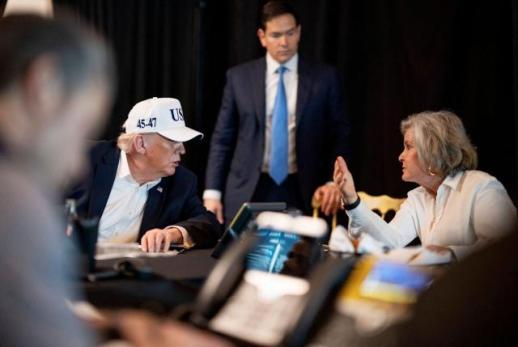 ANALYSIS: Seoul on alert in fear of Iran crisis shockwaves reaching Northeast Asia SEOUL, March 01 (AJP) -South Korea convened an emergency National Security Council working-level meeting Saturday evening as the Iran crisis escalated, underscoring how quickly a Middle East conflict can translate into strategic and economic risk in Northeast Asia. The National Security Office reviewed the situation on the ground, assessed impacts on national security and the economy, and prioritized the safety of Korean nationals in the region. President Lee Jae Myung was briefed and directed officials to place citizen protection first while closely monitoring developments and preparing for a prolonged scenario. The urgency reflects the scale of events. U.S. President Donald Trump declared on social media that Iran’s Supreme Leader Ayatollah Ali Khamenei was dead, framing it as “the single greatest chance” for Iranians to reclaim their country and signaling that joint U.S.-Israeli airstrikes would continue “as long as necessary.” Israel has indicated Khamenei was killed, though Tehran has not issued definitive confirmation. Regardless of formal verification, the claim alone marks a dramatic escalation: the potential removal of the Islamic Republic’s top authority introduces succession uncertainty, raises the likelihood of retaliatory escalation, and shifts the conflict from deterrence to regime-level confrontation. Iran has already responded with missile and drone strikes against Israel and U.S. military bases in the region. Reports of attempts to restrict shipping through the Strait of Hormuz — a chokepoint for roughly 20 to 30 percent of global seaborne crude — have injected immediate volatility into energy markets. For South Korea, heavily dependent on imported oil and global trade flows, that channel represents the most direct economic exposure. Security repercussions on the Korean Peninsula Yet beyond oil prices and currency swings, the crisis carries a deeper strategic resonance for the Korean Peninsula. The U.S. decision to escalate militarily against Iran — including the reported targeting of its supreme leader — signals that Washington is willing to employ decisive force when it judges long-term threats to outweigh immediate risks. While the Iranian case differs significantly from North Korea’s nuclear status and deterrence structure, the broader message is unmistakable: the United States retains both the capability and the political will to act preventively under certain conditions. For Pyongyang, led by nuclear-armed and nuclear-ambitious leader Kim Jong Un, the episode offers competing lessons. On one hand, it may reinforce the regime’s long-held conviction that nuclear weapons are the ultimate guarantee of survival — a shield against external intervention. On the other, it underscores that strategic isolation, internal repression, and overt missile or nuclear brinkmanship do not remove the possibility of calibrated military action by adversaries. North Korea’s deterrence posture is structurally different from Iran’s. Pyongyang already possesses an operational nuclear arsenal and tested delivery systems, creating a far more immediate retaliatory risk calculus. That mutual deterrence raises the threshold for direct military confrontation. But it does not eliminate pressure, especially if the international community judges that proliferation or escalation is crossing unacceptable lines. For Seoul, the priority is twofold. First, to ensure that alliance coordination with Washington remains tight and predictable, minimizing the risk of misinterpretation in Pyongyang. Second, to maintain robust crisis communication mechanisms that reduce the possibility of accidental escalation in a tense regional environment. South Korea’s security planners worry that events in the Middle East can shape strategic psychology in East Asia. A U.S. demonstration of force elsewhere can alter threat perceptions, alliance expectations, and the signaling environment on the Korean Peninsula. In such moments, clarity and restraint matter as much as capability. At the same time, Seoul policymakers would have to closely watch the economic dimension of the shock. Rising oil prices, shipping disruptions, and renewed currency volatility could intersect with security anxieties, amplifying uncertainty. Korea’s recent equity surge and relative currency stabilization were signs of improving sentiment; a prolonged Middle East conflict could challenge that stability. 2026-03-01 07:37:03
 -
 SK hynix okays $16 bn investment into Yongin chip facility to stay ahead in HBM race SEOUL, February 25 (AJP) - SK hynix said Wednesday it will invest more than 21 trillion won ($15.7 billion) in new semiconductor production facilities at the Yongin Semiconductor Cluster, as it moves to expand capacity and stay ahead in the high-bandwidth memory race amid the artificial intelligence boom. According to a regulatory filing with the Financial Supervisory Service, the company plans to invest 21.61 trillion won in the construction of Phases 2 through 6 of its first fabrication plant complex in Yongin, south of Seoul. The investment, classified as new facility spending, amounts to 29.23 percent of SK hynix’s equity capital based on its latest consolidated financial statements. The project will run from March 1, 2026, to Dec. 31, 2030. The board of directors approved the plan on Wednesday, with all five outside directors in attendance. SK hynix shares closed Wednesday at a record high of 1,028,000 won, up 2.29 percent on the day and nearly tenfold from early 2025 levels. The capital spending plan was disclosed after market hours. The world’s leading DRAM maker said the investment aims to build mid- to long-term production infrastructure in response to growing semiconductor demand, particularly for advanced memory chips used in artificial intelligence and data centers. “This investment is intended to strengthen our manufacturing base and ensure stable supply capacity over the long term,” the company said in its disclosure. It cautioned that the total investment amount may change depending on project progress and shifts in the business environment. The start and end dates are also provisional and could be adjusted during implementation. Expanding costs, swelling long-term outlay The latest disclosure comes amid expectations that SK hynix’s overall investment in the Yongin Semiconductor Cluster could eventually approach 600 trillion won, nearly five times its original projection, driven by facility expansion, inflation and rising equipment costs. Industry sources said Yongin City recently approved its ninth revision to the cluster’s development plan, raising the floor area ratio of SK hynix’s main site from 350 percent to 490 percent and easing height limits to 150 meters. The changes are expected to expand cleanroom space by about 50 percent, significantly increasing construction and installation costs. SK hynix initially announced in 2019 that it would invest about 120 trillion won in the Yongin project. However, prolonged delays, a surge in AI-related demand and the growing need for cutting-edge equipment have since pushed costs sharply higher. The Yongin cluster will eventually house four large fabrication plants built in stages. Industry estimates suggest each fab could require more than 120 trillion won, implying total investment of at least 480 trillion won once all facilities are completed, with further increases likely as prices rise. The overall project is planned to extend through 2050. SK hynix plans to begin initial cleanroom operations at the first Yongin fab in 2027. Market watchers expect its production capacity to exceed that of the company’s largest existing facility in Icheon. AI boom and volatility The expansion reflects the rapid transformation of the global semiconductor industry driven by artificial intelligence. Chey Tae-won, chairman of SK Group, said AI demand could push SK hynix’s operating profit beyond $100 billion in the near term, while also increasing volatility. Speaking at the Trans-Pacific Dialogue 2026 held Feb. 20–21 in Washington, Chey said artificial intelligence was fundamentally reshaping industrial structures worldwide. “AI is driving extraordinary opportunities, but also unprecedented uncertainty,” he said. He noted that earnings expectations have risen rapidly in recent months, adding that Morgan Stanley recently projected SK hynix’s operating profit could reach 179 trillion won ($123 billion) this year. Despite the upbeat outlook, Chey warned against excessive optimism. “It sounds like great news, but it could also mean a $100 billion loss,” he said. “Volatility is extremely high.” Meanwhile, rival Samsung Electronics has resumed construction of its fifth plant at the Pyeongtaek campus, targeting operations in 2028. The project is estimated at around 60 trillion won, highlighting intensifying competition among Korean chipmakers in the AI era. 2026-02-25 19:56:16
 -
 BTS Comeback D-26: Racing the clock: scramble for Gwanghwamun tickets SEOUL, February 23 (AJP)-By the time the newsroom clock hit 7:59 p.m. on Feb. 23, conversation had faded to a whisper. Laptop screens were lined up like starting blocks. Smartphones lay face-up beside keyboards, refresh buttons ready. Some reporters counted under their breath. Others stared silently, afraid even to blink. At exactly 8 p.m., everyone clicked. For half a second, nothing happened. Then the screen flickered. 45,908 ahead of you.” “98,991 waiting.” The numbers appeared without warning, floating in a gray queue window that instantly turned hope into calculation. This was the line for free tickets to BTS’s comeback concert at Gwanghwamun Square — and this was only the local queue. A separate booking section existed for overseas users. Fifteen thousand tickets. Tens of thousands of applicants. And no clear way to know where anyone really stood. Within seconds, the newsroom fell silent. Everyone was watching the same thing: a slowly ticking queue on NOL Ticket. Some reporters refreshed compulsively, only to be thrown back to the end. Others refused to touch their mouse, afraid a single mistake would erase their place. “My number dropped by 200, then froze.” “Mine went backward.” “I’m still at sixty thousand.” Whispers spread from desk to desk, half complaint, half disbelief. The system separated domestic and overseas users, and booking sections differed by seat type. No one knew how many tickets remained. The interface offered no clues — only shrinking numbers and spinning icons. Each refresh felt like a gamble. By 8:05 p.m., tension had settled over the office like humidity. A close call Suddenly, a sharp squeal broke the silence. “She got in!” One reporter had reached the payment page. Relief rippled across nearby desks. Then came the groan. She had clicked the wrong button while paying the transaction fee. The window refreshed. The screen returned to the beginning. Twenty-five minutes in, the system showed that 98 percent of tickets were already gone. One screen displayed a remaining waiting number of 7,300. Hope was thinning. By 8:40 p.m., two more reporters made it through. But the real battle had only begun. Frantic finger work followed. Finding an empty seat required relentless tapping, beating, and refreshing. The search felt endless. If a seat was not secured and paid for within minutes, it vanished. Groans and nervous laughter spread as clicking slowed and screens froze. Why the frenzy The March 21 Gwanghwamun concert marks BTS’s first full-group comeback stage in three years and nine months, tied to the release of their fifth studio album, “ARIRANG,” on March 20. Instead of launching with a traditional paid tour, the group opted for a fan-first model: a free outdoor show in central Seoul, a live global stream on Netflix, cinema broadcasts in more than 75 countries, and domestic screenings via CGV, Lotte Cinema, and Megabox. Those who made it through the queue were competing for more than a ticket. The available sections included standing areas near the main stage and reserved seats stretching toward Admiral Yi Sun-sin’s statue, with Gyeongbokgung Palace as a backdrop. Some seats had restricted views. Others required watching through giant LED screens. Each person could book only one ticket and pay a service fee. None of that mattered. In the waiting room, every option felt like a privilege. By 9 p.m., browsers were slowly closing. “I’ll watch it online,” one reporter said quietly. “At least we experienced it,” another replied. There was no bitterness — only fatigue and a sense of shared ordeal. The experience itself became part of the story. For nearly an hour, reporters were no longer observers but participants in the same digital crowd as millions of fans — refreshing, waiting, hoping. In those moments, journalism and fandom briefly overlapped. The Gwanghwamun concert is only the beginning. BTS will follow with cinema broadcasts in April and then launch their largest-ever world tour, spanning 82 shows in 34 cities. Seoul will also host the “BTS THE CITY ARIRANG SEOUL” project, turning parts of the capital into a pop-up festival. But for many at AJP, the most vivid memory will remain Feb. 23 at 8 p.m. A blinking cursor. A five-digit number. Oh, well, there's always Netflix. 2026-02-23 21:15:02