

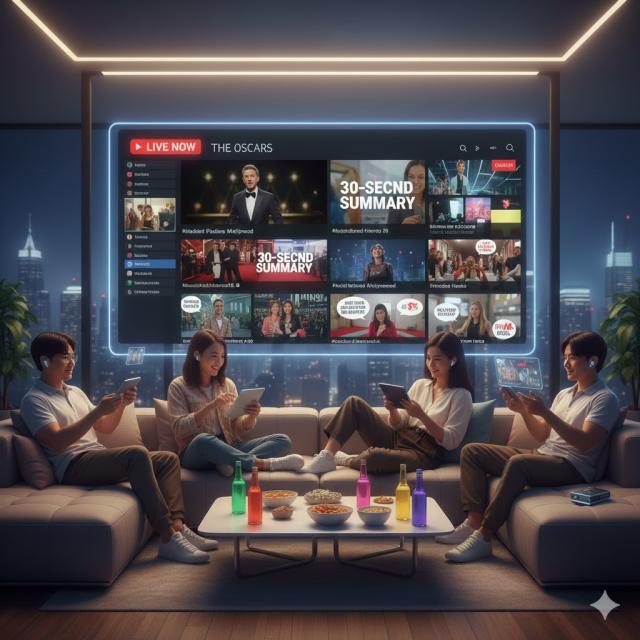
On a spring evening in 2030, few people will reach for a television remote.
They will tap the YouTube icon on the living-room screen instead. The Oscars will not appear on a numbered channel, but at the top of an algorithmic feed, marked simply: "Live now". The ceremony will begin—and almost immediately, it will splinter.
Acceptance speeches will circulate as concise summaries. The red carpet will resurface as tagged video clips. Jokes will dissolve into memes. A small audience will still watch the broadcast from beginning to end. Most will not. Yet nearly everyone will encounter the Oscars in one form or another.
The Academy of Motion Picture Arts and Sciences (AMPAS) has agreed to stream the Academy Awards exclusively on YouTube for five years starting in 2029. The partnership will bring to a close nearly half a century of broadcast exclusivity with ABC, which began in 1976 and will end after the 100th ceremony in 2028.
To frame the decision as an attempt to court younger viewers misses the larger point. The question is not age, but where attention gathers. Audiences no longer assemble around broadcast schedules. Live events migrate to platforms where people already spend their time.
YouTube has long dominated mobile screens. It has now become a default presence on television sets themselves. Measured by TV viewing time, YouTube has surpassed Netflix—an inflection point that speaks less to the triumph of streaming than to the quiet replacement of broadcasting by platforms as the central architecture of media consumption.
The more profound shift lies in what has happened to the live event itself.
The Oscars no longer exist as a single night sealed off from the rest of the year. Red-carpet arrivals, backstage exchanges, interviews and short clips circulate continuously, resurfacing through search and recommendation long after the ceremony has ended.
AMPAS’s decision to digitize its vast archive with Google reflects the same logic. The awards show is evolving from a one-off spectacle into a perpetually accessed repository of content.
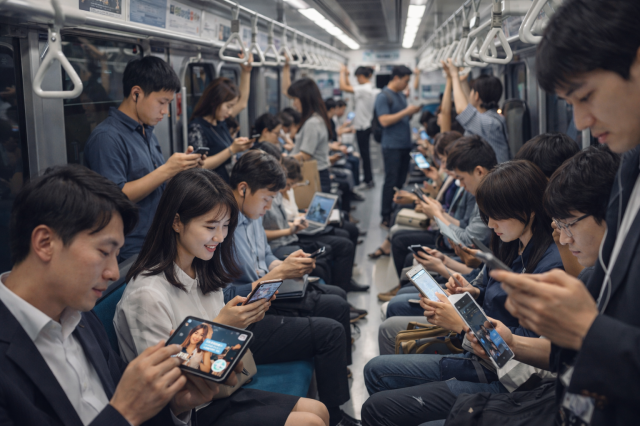
For audiences in South Korea, this transformation feels familiar.
We no longer speak of “watching television” so much as opening apps. Messaging platforms sustain relationships; video platforms absorb hours; news reaches readers increasingly through summaries, clips and recommendations rather than full articles.
As artificial intelligence settles into this environment, the contours sharpen further.
Summaries precede full viewing. Experience is completed through circulation. Advertising slips away from traditional commercial breaks into short-form video, commerce and live sales. Viewers are no longer merely audiences; they function as editors, amplifiers and distributors all at once.
The Oscars’ move to YouTube does not herald the death of broadcasting. It confirms that broadcasting as a format has already begun to dissolve.
What matters now are the questions that follow: Where does public value attach in a platform-dominated media order?
When editorial power drifts toward algorithms, who bears responsibility for diversity and balance? And who controls the record?
The Academy’s renewed emphasis on archiving acknowledges a reality that extends far beyond Hollywood: platforms are becoming not just spaces of consumption, but custodians of cultural memory.
The Oscars of 2030 will likely feel quieter. Some will watch live. Others will catch up the following morning. Many will decide that a handful of clips is sufficient. The ceremony will not vanish—but it will no longer be a moment experienced collectively, in real time.
In truth, we already inhabit that world.
The Oscars are simply arriving late.
Copyright ⓒ Aju Press All rights reserved.
