
Journalist

Sung Nak-in
ellenshs@ajunews.com
-
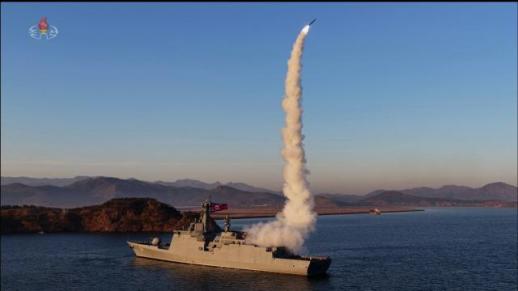 N. Korea fires ballistic missile toward East Sea, suspected as sub-linked launch *Updated with additional information SEOUL, April 19 (AJP) -North Korea fired multiple short-range ballistic missiles from its submarine hub of Sinpo early Sunday in its latest string of weapons tests over the last two months amid ongoing war in the Gulf, raising the possibility of a submarine-linked launch as Pyongyang advances its sea-based nuclear ambitions. The Joint Chiefs of Staff (JCS) said the launches were detected at around 6:10 a.m. from the Sinpo area, with the missiles flying about 140 kilometers. South Korean and U.S. intelligence authorities are conducting a detailed analysis of the missiles’ specifications and trajectory, with officials not ruling out a submarine-launched ballistic missile (SLBM) test, while noting the unusually short range. South Korea’s presidential office convened an emergency National Security Council (NSC) meeting shortly after the launch, led by National Security Adviser Kim Hyun-jong, to assess the situation and review response measures. Participants reaffirmed a firm joint defense posture with the United States and agreed to closely monitor further North Korean activity. “Our military is closely monitoring North Korea’s various movements under a robust South Korea-U.S. combined defense posture and maintains the capabilities and posture to respond to any provocation in an overwhelming manner,” the JCS said, adding that Seoul, Washington and Tokyo are sharing related intelligence. The firing comes 11 days after Pyongyang last launched ballistic missiles on April 8, when it conducted two tests in a single day. A day earlier, on April 7, the North fired another projectile that appeared to fail shortly after launch. Sunday’s launch is the seventh ballistic missile test by North Korea this year, following earlier firings on Jan. 4, Jan. 27 and March 14, according to military data. It follows a series of recent weapons developments, including claimed trials of cluster-munition warheads, electromagnetic systems and upgraded missile engines, pointing to a broad-based effort to enhance tactical and strategic capabilities. The provocations also fall in the background of heightened regional tensions and ahead of a planned visit by Donald Trump to China next month, where North Korea is expected to be a key topic in talks with Xi Jinping along with the Middle East crisis. North Korea’s submarine-based nuclear ambitions have drawn renewed scrutiny since December 2025, when leader Kim Jong Un inspected what state media described as the country’s first nuclear-powered ballistic missile submarine (SSBN). Estimated at over 8,000 tons, the platform would mark a major leap from the North’s aging, conventionally powered fleet and is believed capable of carrying multiple SLBMs, potentially from the Pukguksong-5 series. Analysts say such a system — if operational — would significantly strengthen Pyongyang’s second-strike capability by enabling more survivable, sea-based nuclear deployments. Sinpo, the site of Sunday’s launch, has long served as the hub of North Korea’s SLBM program, underscoring the strategic significance of the latest activity. 2026-04-19 07:41:24
 -
 Seoul flags supply shift as Hormuz tensions flare again after brief reopening SEOUL, April 19 (AJP) -South Korea will push ahead with diversifying its energy supply chain as renewed instability in the Strait of Hormuz underscores persistent risks to global oil flows, even after a brief reopening of the key shipping route. The Gulf chokepoint slipped back into tension over the weekend, with Iran warning it would again restrict transit unless the United States lifts its blockade on Iranian ports, while Washington rejected the demand and signaled continued enforcement at sea. The conflicting positions quickly translated into operational risk. Multiple vessels reported coming under fire or being forced to turn back while attempting to pass through the strait, according to maritime authorities, highlighting the fragility of any reopening. The Strait of Hormuz carries roughly 20 percent of global oil supply and is a critical artery for South Korea, which depends on the route for a majority of its crude and naphtha imports. The latest disruption comes despite signs of diplomatic progress. Iran is reviewing new U.S. proposals for a potential deal, with talks expected to resume through third-party mediation, while a separate ceasefire between Israel and Hezbollah has reduced fighting in Lebanon. However, Iranian officials have made clear that maritime access remains conditional, linking freedom of navigation to the removal of U.S. sanctions. Donald Trump has rejected that position, saying Iran “cannot blackmail” the United States. Analysts say the result is a shift from outright closure risk to intermittent disruption, where limited attacks or threats raise shipping costs and insurance premiums without fully halting flows. For South Korea, the episode has reinforced the need to reduce reliance on Middle Eastern supply routes. In an interview with Yonhap News Agency, Trade, Industry and Energy Minister Kim Jung-kwan made clear that South Korea will press ahead with a structural overhaul of its energy supply chain, even if hostilities in the Gulf subside. “Even if the war ends, we will not stop diversifying crude imports away from the Middle East and expanding transport routes,” he said, underscoring that supply chain resilience — not cost efficiency — has become the government’s defining economic doctrine. The policy pivot reflects a hard lesson. Despite repeated Middle East crises, South Korea remained heavily reliant on the region, with 61 percent of crude oil and 54 percent of naphtha imports routed through Hormuz as of last year. The government has also stepped up monitoring of key feedstocks such as naphtha, where supply concerns have been amplified by precautionary stockpiling across the supply chain. Authorities expect market conditions to stabilize if disruptions remain limited through April, but warned that volatility could persist as long as tensions in the Gulf remain unresolved. The latest developments suggest that even when the Strait of Hormuz is technically open, access may no longer be predictable — a shift that is likely to keep energy markets and import-dependent economies on edge. 2026-04-19 07:32:11
 -
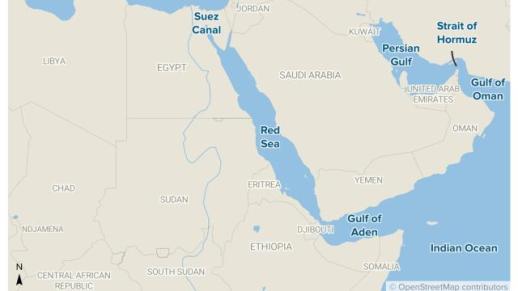 Korean tanker safely clears Red Sea in first Hormuz workaround SEOUL, April 17 (AJP) -A South Korea-linked crude carrier has safely exited the Red Sea after loading oil in Saudi Arabia despite Iranian military's threat of attacks on the corridor along the Saudi coast in protest to U.S. naval blockade of Tehran ports. The Korean sea flag carrier makes the first confirmed shipment to reach Korean-bound routes via a Hormuz bypass since the Gulf conflict disrupted one of the world’s most critical energy corridors, according to the government. The Ministry of Oceans and Fisheries on Friday said the vessel departed from Yanbu on Saudi Arabia’s Red Sea coast and navigated the high-risk waterway without incident amid ceasefire between the U.S. and Iran and separately between Israel and Lebanon. Iran has threatened to block the Red Sea trade route in retaliation to the U.S. naval blockade of the Strait of Hormuz. According to Iranian state media, the commander of Iran’s joint military command said Iran would “act with strength to defend its national sovereignty and its interests”, warning it would completely block exports and imports across the Persian Gulf region, the Sea of Oman and the Red Sea. The Red Sea — increasingly volatile since the 2023 Israel–Hamas war — has seen at least 79 reported vessel attacks linked to Yemen’s Iran-backed Houthi forces, making it a route long discouraged for commercial shipping. Yet with Hormuz partially shut and roughly a fifth of global oil flows disrupted, Seoul has been forced to test options once deemed too dangerous. The ministry said it maintained 24-hour real-time monitoring of the vessel, providing navigation intelligence and running constant communication channels with the ship and operator throughout the transit. The operation follows high-level policy coordination. At an emergency economic review meeting on April 6, the government formally discussed using the Red Sea corridor as a contingency route, pairing supply diversification with enhanced maritime safety oversight. Some 26 South Korea-linked vessels — including crude tankers, LNG carriers and bulk ships — remain stranded or delayed around the Persian Gulf, reflecting the bottleneck created by the prolonged standoff. For an economy that routes around 70 percent of its crude imports through Hormuz, the stakes remain acute. Saudi Arabia accounted for 33.6 percent of Korea’s crude imports in 2025, followed by the United States (17 percent), the United Arab Emirates (11.4 percent), Iraq (10.4 percent) and Kuwait (8.5 percent), underscoring the country’s structural dependence on Middle Eastern supply lines. “The government will continue to prioritize the safety of our vessels and crews while working with relevant agencies and industry to ensure stable crude transport from the Middle East,” Oceans Minister Hwang Jong-woo said. Tensions have showed sign of easing with U.S. President Donald Trump saying the war was "very close to over" with the second round of talks being readied to take place over the weekend in Pakistan. Separately, Washington is arranging the first high-level direct peace talks between Israel and Lebanon for the first time in decades. 2026-04-17 13:42:19
 -
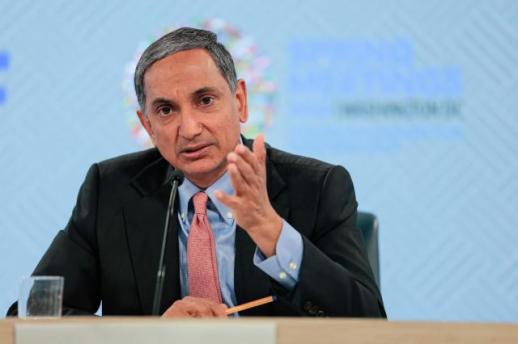 IMF keeps Korea growth view at 1.9% on 'energy buffers' despite Gulf shock SEOUL, April 17 (AJP) -The International Monetary Fund on Thursday maintained its growth outlook for South Korea at 1.9 percent for this year, holding steady from its January projection as it pointed to “sufficient buffers” to withstand energy shocks stemming from the Gulf conflict. The assessment came as the war-driven surge in oil and gas prices adds a fresh layer of uncertainty to the global economy, with Asia seen as particularly exposed due to its heavy reliance on imported energy. “Asia is significantly exposed to the energy shock,” Krishna Srinivasan, director of the IMF’s Asia and Pacific Department, said during a regional outlook briefing in Washington. “The scale and persistence of the shock remain uncertain.” The IMF expects regional growth to slow from 5.0 percent last year to 4.4 percent in 2026, while inflation is projected to rise from 1.4 percent to 2.6 percent over the same period, reflecting the pass-through of higher energy costs. The vulnerability stems from structural factors. Oil and gas consumption accounts for around 4 percent of Asia’s GDP — nearly double that of Europe — while limited domestic production leaves many economies dependent on imports. Net energy imports amount to roughly 2.5 percent of GDP across the region, rising to as high as 8 percent in some economies. Beyond direct fuel costs, the IMF warned of broader supply chain risks. Disruptions to petrochemical inputs such as helium and sulfur could amplify production bottlenecks if the conflict drags on. Despite these pressures, the Fund said Asia entered 2026 with stronger-than-expected momentum, supported by resilient exports — particularly in technology goods — and recovering consumption. That underlying strength is expected to partially offset the shock, keeping growth forecasts broadly stable under the IMF’s baseline scenario, which assumes the energy disruption remains limited in duration. For South Korea, the IMF struck a cautiously balanced tone. “Korea starts from a strong macroeconomic position,” said Thomas Helbling, deputy director of the Asia and Pacific Department. He cited the country’s solid growth momentum, supported by the tech cycle, and its proactive policy response to mitigate the impact of the shock. The IMF also highlighted Korea’s relatively strong energy buffers as a key advantage compared to other energy-importing economies in the region. Still, vulnerabilities remain. “Korea, like the rest of Asia, is an energy-importing economy,” Helbling said, noting that the outlook could deteriorate significantly under a more prolonged or severe energy shock scenario. Under the IMF’s adverse scenario, oil prices could rise as much as 60 percent above earlier forecasts this year and remain elevated into 2027, leading to broader output losses and more persistent inflation across the region. In such a case, the impact would extend beyond price increases. “This is a shock which has both a price impact and a quantity impact,” Srinivasan said, warning that prolonged disruptions could lead to shortages in energy-related inputs and amplify supply chain stress. “If you have both price shocks and shortages, the growth impact becomes much more acute,” he added. Against this backdrop, the IMF urged policymakers to avoid overreacting to short-term inflation spikes while remaining flexible. Most Asian central banks still have room to “look through” the initial surge in energy prices, as inflation expectations remain broadly anchored, the Fund said. However, it cautioned that monetary policy must remain agile if the shock proves more persistent. On the fiscal side, the IMF reiterated its long-standing stance against broad-based subsidies and price controls, calling instead for targeted and temporary support measures. “Generalized subsidies are costly, distortionary and very hard to unwind,” Srinivasan said, emphasizing the need to preserve fiscal buffers after years of repeated shocks. The Fund also framed the current crisis as a catalyst for longer-term structural adjustments. It called for greater investment in alternative energy, improved energy efficiency and stronger power infrastructure to reduce dependence on imported fuels. At the same time, it urged deeper regional trade integration to cushion external shocks and enhance resilience. “The near-term task is to absorb the shock while preserving policy credibility,” Srinivasan said. “The medium-term task is to build a more resilient, balanced and inclusive growth model.” 2026-04-17 08:33:52
 -
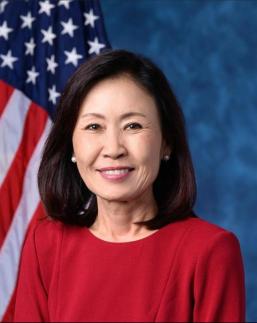 Korean-American former Rep. Michelle Steel tapped as US ambassador to South Korea SEOUL, April 14 (AJP) -Korean-American former California congresswoman Michelle Steel (Park Eunjoo in Korean) has been nominated as Ambassador Extraordinary and Plenipotentiary to South Korea, the White House said Monday as President Donald Trump finally moves to fill the post that has remained vacant throughout much of his second term. The nomination, which requires Senate confirmation, was submitted to Congress as Washington seeks to restore a formal diplomatic channel in Seoul after more than a year without a Senate-approved envoy. The ambassadorship has been vacant since the departure of Philip Goldberg, who was appointed by former President Joe Biden. Senior State Department official Kevin Kim has been serving as chargé d’affaires since October, following an earlier interim role by Joseph Yun. Steel, a Korean American Republican, served two terms in the U.S. House of Representatives, representing California districts covering Orange County from 2021 to 2025. She narrowly lost her reelection bid in 2024 to Democrat Derek Tran. Born in Seoul in 1955, Steel emigrated to the United States in her early twenties after spending part of her youth in Japan. Her political career began in California, where she served on the State Board of Equalization and later as an Orange County supervisor before entering Congress. She was also part of the House Republican leadership’s whip team under Steve Scalise. Her nomination had been widely anticipated since the early days of Trump’s second term, with Republican leaders including Mike Johnson and Kevin McCarthy reportedly backing her as a Korea-savvy figure within the party. If confirmed, Steel would become the second Korean American to serve as U.S. ambassador to South Korea after Sung Kim, and one of the few political appointees with both linguistic and cultural fluency in Korea. Her appointment is expected to restore high-level diplomatic bandwidth between Washington and Seoul, where the absence of a permanent envoy had raised concerns about Korea’s standing in U.S. foreign policy priorities. Observers say Steel’s direct political ties to Trump, combined with her Korean heritage and language skills, could position her as a more effective conduit between the two governments compared with career diplomats. The nomination also opens the possibility of a historic alignment, with both Seoul and Washington potentially represented by female ambassadors in each other’s capitals for the first time. 2026-04-14 07:41:12
 -
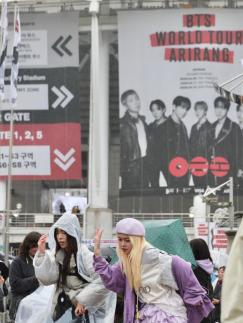 BTS draws global fans to rain-soaked Goyang as world tour kicks off GOYANG, South Korea, April 09 (AJP) — Neither unseasonable spring rain nor distance kept fans from gathering for BTS’ first full-member stadium concert in seven years, as the group kicked off its three-night home run in Goyang, just west of Seoul, on Thursday night. Thousands filled the 41,311-seat Goyang Stadium, where a 360-degree in-the-round stage allowed all seven members to face every section of the crowd. Police estimated that roughly half of those arriving from early afternoon were foreign nationals, underscoring the group’s global pull. Tickets for all three nights sold out immediately, bringing total attendance in Goyang to about 120,000. The steady rain did little to dampen the mood. Purple umbrellas — the band’s signature color — blanketed the venue in an orderly scene that drew notice from authorities on standby. Fans freely exchanged phones with strangers to take photos, bound by little more than shared trust as members of ARMY, BTS’s global fan base. Tripti, 25, from India who came from India alone just for the show, was impressed how at home she felt. "I felt as if I wasn't alone at all. Everyone offered to take picture of me. I'm grateful and proud to be an ARMY." Jessi (24), like her Indian peer, also has come to Korea just for the show, and is hardly affected by the bad weather. Cho Eun-joo (44), who introduced herself as “Ms. Hanbok,” handed out purple daenggi hair ribbons inspired by traditional Korean dress, while others reciprocated with gifts they had brought from home — a reflection of the communal, festival-like atmosphere. The concerts mark the live debut of BTS’s fifth studio album, ARIRANG, their first group release since completing mandatory military service in mid-2025. The album, released March 20, topped the Billboard 200 for two consecutive weeks — a first for a K-pop act — while lead single “SWIM” debuted at No. 1 on the Hot 100. The “BTS World Tour ‘ARIRANG’” will span 85 shows across 34 cities through 2027, setting a new benchmark for a K-pop tour. Industry estimates suggest total revenue could reach 2.7 trillion won ($1.81 billion), excluding additional spending by fans. The expanded schedule includes Latin American stops such as Lima, Santiago and Buenos Aires, marking the group’s first full-member performances in several of those markets and new milestones at major venues across the region. Demand has already translated into strong ticket sales, with multiple dates across Asia, North America and Europe sold out. Promoter Live Nation said about 2.4 million tickets have been sold for 41 shows in North America and Europe alone. Beyond touring, BTS has sustained momentum through a staggered content rollout. A Netflix documentary, BTS: THE RETURN, traces the making of ARIRANG, while a series of music and performance videos has continued to drive global engagement across platforms. The group has also sustained engagement through a staggered release strategy, spacing out new content instead of concentrating attention around a single promotional window. The music video for “SWIM,” released on March 20, has drawn more than 92.1 million views and reached No. 3 on YouTube’s trending chart. An official performance video followed on March 25, topping 22.9 million views and ranking No. 5 on the same chart. On April 2, the “BTS 2.0” video surpassed 34.1 million views and climbed to No. 2 on YouTube’s music trending chart. Most recently, the music video for “Hooligan,” released on April 8, drew more than 4.9 million views within hours. Joonha Yoo contributed to the story. 2026-04-09 21:25:22
 -
 Seoul remains cautious while more foreign vessels slip through the Strati of Hormuz SEOUL, April 05 (AJP) -A number of foreign-flagged vessels have begun slipping through the heavily militarized Strait of Hormuz, offering tentative signs of movement in a waterway that remains effectively under Iran’s control — but for South Korea, the path out is still far from clear. The latest breakthroughs have come from Europe and Japan. A French-owned container ship operated by CMA CGM successfully transited the strait this week, becoming one of the first Western-linked vessels to do so since Iran imposed its de facto blockade. The ship reportedly signaled its nationality to Iranian authorities before entering, underscoring how passage is now contingent on political signaling as much as maritime protocol. Japan has also managed limited progress. A liquefied natural gas carrier linked to Mitsui O.S.K. Lines exited the Gulf — the first Japan-related vessel to pass since the conflict began — followed by an LPG tanker that navigated through Iranian territorial waters. Tokyo has stressed that these passages were not the result of direct government negotiations, suggesting that shipping firms are cautiously testing routes under evolving Iranian conditions. These isolated crossings align with Iran’s increasingly explicit policy of selective access. Tehran has moved beyond vague assurances and begun naming “friendly nations” eligible for passage. In a televised statement, a senior Iranian military spokesperson described Iraq as a “brother country” exempt from restrictions. Iran has also indicated it will allow vessels carrying humanitarian goods — including food and livestock feed — to pass, while continuing to restrict ships linked to what it considers hostile states. Still, the practical application of these rules remains opaque. Questions persist over whether exemptions apply based on a vessel’s flag, ownership, cargo, or destination — leaving shipping companies to weigh the risks of entering one of the world’s most volatile chokepoints. Seoul is watching the situation with caution. South Korea’s Foreign Ministry said Sunday that the differing outcomes reflect a complex mix of variables, including a vessel’s nationality, ownership structure, cargo type, destination and even crew composition. “Conditions vary by ship and by country,” the ministry said, adding that the government’s priority remains the safety of vessels and crew. It emphasized that Seoul is working with international partners to ensure freedom of navigation in line with global maritime norms, rather than pursuing bilateral negotiations with Tehran. For now, Korean shipping firms appear unwilling to act unilaterally. A total of 26 South Korean vessels, carrying 173 crew members, remain stranded inside the Gulf, with operators opting to wait for clearer security guarantees rather than attempt piecemeal exits. Meanwhile, the Korean finance ministry said Sunday that ambassadors from the six Gulf Cooperation Council (GCC) countries — Saudi Arabia, the United Arab Emirates, Qatar, Kuwait, Oman and Bahrain — have pledged to prioritize energy shipments to Korea. The envoys told Deputy Prime Minister and Finance Minister Koo Yun-cheol in a meeting on April 3 that Korea remains a “top-tier partner,” vowing close coordination to ensure stable supply of crude and other key resources. The pledge came after Seoul requested uninterrupted access to critical inputs including crude oil, naphtha and urea, warning that a prolonged Middle East conflict could weigh heavily on the Korean economy. Korea sourced 69.1 percent of its crude imports from the Middle East last year, with Saudi Arabia as its largest supplier and Qatar a key LNG provider. At the same time, Korea’s advanced refining capacity — designed to process heavy, sulfur-rich Middle Eastern crude into high-value products — has made it an indispensable node in the global energy supply chain. Korean refiners supply a quarter of Australia’s imported petroleum products and nearly 70 percent of U.S. jet fuel imports. That interdependence helps explain why Korea is important to Gulf producers in fear of the country preferring alternative crude such as Brent or WTI. 2026-04-05 17:25:26
 -
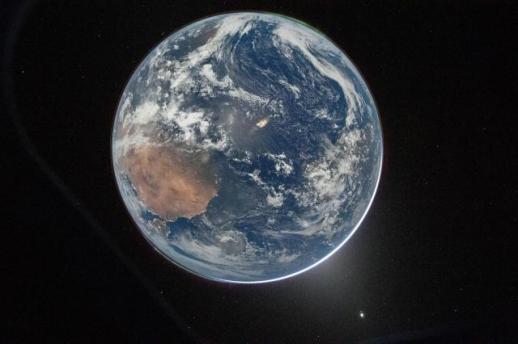 OPINION: April remains the cruelest month T.S. Eliot once called April the cruelest month, for it forces life out of dead land. There is something unsettling about renewal. Beauty, when it returns too quickly, exposes what has been lost. This April, the world stands once again before that line. War is no longer a distant headline. In Iran and across the Middle East, conflict spills beyond borders, touching countries that once stood at the periphery. In Ukraine, now in the fourth year of war, cities, power grids, hospitals and homes remain targets. War is not simply about territory. It is about the quiet dismantling of ordinary life — losing a home, losing a family member, wondering whether there will be electricity tonight or fuel to cook tomorrow. The numbers tell the story with cold precision. According to the United Nations Human Rights Monitoring Mission in Ukraine, 2,514 civilians were killed and 12,142 injured in 2025 alone — a 31 percent increase from the previous year. Long-range weapons and drone strikes have expanded the battlefield into entire cities. Civilian infrastructure is no longer collateral damage; it is the target. On April 3, another wave of Russian strikes killed civilians and destroyed residential and administrative buildings. Even a veterinary hospital near Kyiv was hit, killing dozens of animals. War does not stop at human life; it erodes the entire fabric of living systems. In the Middle East, even the numbers resist clarity. That, too, is part of the story. Reuters’ March 31 compilation shows at least 1,368 deaths in Lebanon and 19 in Israel, with additional casualties reported across Iraq, Kuwait, Bahrain, Oman, Saudi Arabia and the United Arab Emirates. Iran’s toll is more uncertain. The International Federation of Red Cross and Red Crescent Societies estimates over 1,900 dead and around 20,000 injured. A U.S.-based rights group, HRANA, places the figure closer to 3,500. When numbers diverge this widely, it does not suggest fewer deaths — it suggests a war that cannot be fully counted. South Korea, for now, remains outside the direct line of fire. There are discussions of emergency fiscal spending, vehicle rationing and energy contingency measures. Northeast Asia is not under bombardment. But distance does not equal detachment. The shock travels through other channels — oil prices, exchange rates, inflation and supply chains. The Middle East crisis is, in many ways, an Asian crisis. According to the U.S. Energy Information Administration, 84 percent of crude oil and condensate and 83 percent of liquefied natural gas passing through the Strait of Hormuz in 2024 were bound for Asia. Roughly one-fifth of global LNG trade flows through that narrow passage. When Hormuz falters, the effects do not remain at sea. They ripple outward — into fuel prices in Seoul, fertilizer costs in Southeast Asia and power shortages in South Asia. The strait is not just a geographic chokepoint. It is a lifeline. This is not merely an oil price spike. Across Southeast Asia, governments are already deploying familiar emergency measures — expanding fuel subsidies, cutting budgets, adjusting fuel standards, shifting energy sources. The sequence is recognizable. First comes the energy shock. Then inflation spreads through transportation, electricity and agriculture. Governments intervene to cushion the blow, straining public finances. Eventually, the pressure reaches food systems and social stability. This pattern has repeated itself before — in the oil shocks of the 1970s, the Asian financial crisis of 1997, the food crisis of 2007–08. There is little reason to assume this time will be different. When fuel becomes scarce, what breaks first is not strategy but routine. Bus schedules falter. Fishing boats stay docked. Refrigerated logistics grow more expensive. Fertilizer prices rise, pushing up the cost of food. What appears in headlines as an “energy crisis” manifests in daily life as skipped meals, lost wages and mounting uncertainty. War travels. It does not respect distance. And yet, in the midst of this brutal spring, there is another image. On April 3, astronauts aboard NASA’s Artemis II mission released the first images of Earth taken from beyond its orbit. The photographs show a blue sphere edged with auroras, with faint zodiacal light glowing as the Earth eclipses the Sun. Commander Reid Wiseman described seeing the planet from pole to pole. Astronaut Victor Glover offered a simple message: “You are beautiful.” From that vantage point, humanity appears as a single presence — without borders, without divisions, without the language of conflict. Seen from space, the Earth is whole. Seen from the ground, the sky is beautiful too. This weekend, cherry blossoms scatter in the spring wind, falling like pale snow. This year they bloomed early and faded quickly, not lasting even a full week at their peak. We often say that flowers are beautiful because they are fleeting. But there is something uneasy about how quickly they vanish. The brevity of the bloom mirrors a deeper fragility — of peace, of stability, of the ordinary rhythms we assume will endure. So April must be seen through two lenses. One is the distant view, from above, where humanity appears unified, where the lines we draw seem temporary and small. The other is the grounded view, from beneath the blossoms, where life is lived day by day — where a meal, a home, a night’s sleep are not abstractions but necessities. War, in the end, is not geopolitics. It is the erosion of these small certainties. April is cruel. In Iran, in Ukraine, and across parts of Asia absorbing the shock of energy and food disruption, people lose homes, families and the ability to sustain daily life. South Korea is not at the center of this destruction. But it is not outside it either. We inhabit the same planet. What this moment demands is not only awareness of beauty, nor only attention to statistics, but the capacity to hold both at once — to recognize the elegance of the Earth from afar while refusing to ignore the devastation unfolding upon it. The Earth, seen from space, is beautiful. The sky, seen beneath the blossoms, is beautiful. And still, April remains the cruelest month. *The author is the managing editor of AJP 2026-04-04 15:47:58
 -
 S. Korea to join UK-led virtual meeting on Hormuz as US shift burden on allies SEOUL, April 02 (AJP) -South Korea will join a U.K.-hosted virtual foreign ministerial meeting Thursday aimed at coordinating international efforts to secure the Strait of Hormuz, as Washington signals that responsibility for safeguarding the core oil route should fall on its primary dependents. Chung Eui-hae, deputy foreign minister for political affairs, will participate via video link in the meeting involving 35 countries that have backed a joint statement condemning attempts to block the vital shipping lane. The talks, scheduled for 8 p.m. Seoul time, come amid growing pressure on energy-importing nations after U.S. President Donald Trump urged them to take the lead despite the conflict being triggered by U.S.-Israeli military action. “Build up some delayed courage,” Trump said Wednesday, addressing countries dependent on Gulf oil. “They should have done it before, should have done it with us, as we asked. Go to the strait and just take it, protect it.” His remarks — coupled with earlier comments that securing the waterway is “not America’s job” — underscore a shift toward burden-sharing that has unsettled markets and allies alike. British Prime Minister Keir Starmer said the meeting, hosted by Foreign Secretary Yvette Cooper, will assess “all viable diplomatic and political measures” to restore freedom of navigation, ensure the safety of trapped vessels and seafarers, and resume the flow of critical commodities. “We expect there will be broad discussions regarding the current situation and the need to secure the safety of vessels and crew stranded in the strait, and freedom of navigation,” Foreign Ministry spokesperson Park Il said at a regular briefing on Thursday. Park stressed that ensuring maritime security aligns with the interests of all nations and expressed hope for a swift normalization of global logistics networks based on international law. "Safety of international sea lanes and freedom of navigation serve the interests of all countries and are protected under international law. We hope global maritime logistics will be normalized as soon as possible,” he said. The Strait of Hormuz — a chokepoint for roughly a fifth of global oil and LNG trade — remains effectively paralyzed amid more than a month of conflict involving Iran, raising concerns over prolonged supply disruptions and price volatility. Park described the situation as “extremely grave” and “highly fluid,” saying Seoul would avoid premature judgments while closely monitoring developments. “The government will continue to closely monitor developments in the Middle East and explore various measures to protect our citizens and ensure the safety of energy transport routes,” he said. Seoul has already participated in prior international efforts, including a joint statement on the Strait and a recent meeting of military chiefs hosted by France, and will continue engaging in coordinated discussions. “By taking part in today’s meeting and other international discussions, we will carefully review global trends and consider how we can contribute,” Park added. 2026-04-02 17:37:59
 -
 ANALYSIS: Korea inflation enters war-driven upcycle SEOUL, April 02 (AJP) - South Korea’s inflation is beginning to turn upward, but March’s data likely understates the scale of price pressure building beneath the surface as the Middle East war feeds through oil, exchange rates and expectations. Consumer prices rose 2.2 percent in March from a year earlier, accelerating from 2.0 percent in the previous two months, according to data released Thursday. On the surface, the increase appears modest — still within the Bank of Korea’s comfort range. But the composition tells a different story. Energy has re-emerged as the dominant driver, now compounded by a structurally weakening won, and the pressure is only just starting. The Korean currency has extended its slide from last year, losing an additional 6 percent amid capital outflows. The dollar is hovering above 1,520 won — its highest level since March 2009 during the global financial crisis — amplifying imported price pressures. Petroleum product prices surged 9.9 percent, contributing 0.39 percentage point to headline inflation. Diesel jumped 17 percent and gasoline 8 percent, marking the sharpest energy-driven impulse since the early phase of the Ukraine war. Without fuel price caps and tax measures, the headline figure would have printed significantly higher. March captures only the initial shock. The war entered its first full month, but the key macro channels — oil, the dollar and the exchange rate — have yet to fully transmit into domestic prices. That pass-through is now beginning. U.S. President Donald Trump’s prime-time address on Wednesday sharpened that trajectory. While projecting the war could end within “two to three weeks,” he simultaneously reframed the Strait of Hormuz as a responsibility for energy -dependent countries and openly promoted U.S. oil as the alternative. Markets read through the optimism. Oil prices firmed, the dollar strengthened and the won weakened — a combination that mechanically raises Korea’s import costs. For an economy that imports the bulk of its energy, this is the classic setup for imported inflation. President Lee Jae Myung on Thursday called for “emergency measures,” urging bipartisan support to fast-track a 26.2 trillion won supplementary budget framed as a wartime response. But fiscal expansion at a time of rising price pressure risks offsetting monetary tightening and entrenching inflation expectations. The bond market is already adjusting. The 10-year government bond yield, after briefly easing on expectations of index inflows tied to Korea’s inclusion in the World Government Bond Index (WGBI), has resumed its climb, reflecting rising inflation and supply concerns. The government’s supply-side response remains tactical. Officials say roughly 50 million barrels of alternative crude have been secured for April, compared with a typical monthly intake of 80 million barrels. The shortfall is being managed through demand restraint, lower refinery utilization and strategic stockpile swaps. This may stabilize flows. It does not stabilize prices. What matters for inflation is not physical availability, but the marginal cost of replacement supply — and that cost is rising structurally. Even in a best-case scenario, the Korea Institute for International Economic Policy estimates oil will settle around $90 per barrel, 43 percent above prewar levels, as damage to energy infrastructure delays normalization. A prolonged disruption of the Strait of Hormuz could push prices to $117 as global supply falls by around 10 percent. In a broader escalation, prices could reach $174 — a level consistent with a full-scale external shock. The transmission mechanism is already visible. Higher oil prices feed into producer prices, which pass through with a lag into transportation, food and services. Authorities have warned that restaurant and processed food prices will reflect the shock in the coming months, particularly as the weaker won amplifies import costs. History suggests the first-round impact is only the beginning. KIEP estimates supply-related oil shocks lift inflation by about 0.12 percentage point immediately, with larger cumulative effects as second-round pressures take hold. Policy buffers are limited. Administrative controls can delay adjustments but cannot suppress them indefinitely without distortion. Fiscal measures can cushion households but erode policy space. Monetary policy faces a dilemma: tightening into an external supply shock risks further weakening domestic demand. The Bank of Korea is widely expected to hold the base rate at 2.5 percent at its April 10 meeting — the final one under Governor Rhee Chang-yong — stretching a near year-long pause, with incoming governor Shin Hyun-song set to inherit dwindling policy firepower to rein in dollar demand and inflationary pressures. 2026-04-02 15:04:21