

Journalist

Haehun Jeong
ewigjung@ajunews.com
-
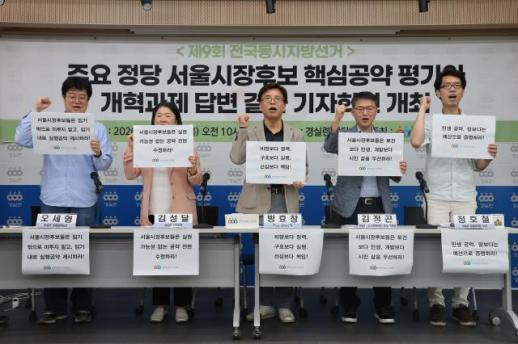 Civic Group Evaluates Seoul Mayor Candidates' Promises as Lacking Specificity In the lead-up to the local elections, a civic group has assessed the campaign promises of major party candidates for Seoul Mayor, finding them appropriate for citizens' livelihood issues but lacking in diversity and specificity regarding budget and funding.The Citizens' Coalition for Economic Justice (CCEJ) released its evaluation on May 28, based on responses from four candidates regarding their three main campaign promises.CCEJ evaluated the candidates' promises based on several criteria, including whether the policies were clearly understandable to voters, whether they reflected a desirable future for the region, whether they addressed urgent local issues, and whether candidates demonstrated a commitment to the community.Overall, CCEJ noted, "The candidates' promises lacked diversity. Aside from public care commitments, it was difficult to find meaningful promises for our society." They added that while the proposals from Jung Won-o and Oh Se-hoon were relevant, they lacked specificity and accountability in terms of budget, raising concerns about their feasibility.Jung Won-o, the candidate from the Democratic Party, proposed a vision for a global G2 Seoul, a 30-minute commuting city, and a shift in disaster management from reactive to proactive investment.CCEJ commented that while the proposal for transforming five urban centers and six metropolitan areas into growth opportunities for youth jobs was innovative, the budget for the development projects was limited to a master plan at the research level, making it unlikely to be realized during the term. They also noted that the 30-minute commuting city proposal lacked differentiation from Oh Se-hoon's plan and was vague in terms of budget and execution.Oh Se-hoon, the candidate from the People Power Party, highlighted promises to restore housing safety nets for homeless families, invest 20.8 trillion won to connect transportation arteries in northern Seoul, and expand transportation welfare through a 'Seoul Climate Companion Pass.'CCEJ criticized the proposals for serious flaws in specificity and feasibility within the term. They acknowledged the candidates' recognition of pressing issues faced by Seoul residents, such as the housing crisis, transportation disparities in northern Seoul, and rising transportation costs amid high fuel prices. However, they pointed out that the integration of the K-PASS system relied on agreements with the Lee Jae-myung administration, and concerns about wasteful spending on road undergrounding were raised. Furthermore, they noted that the housing budget proposal allocated 3.22 trillion won (83%) of the total 3.86 trillion won budget for the end of the term, effectively passing responsibility to the next mayor.Kim Jeong-cheol, the candidate from the Reform Party, proposed promises including 'AI administration and automatic welfare' for a 'welcoming Seoul,' 'affordable Seoul' through regulatory innovation, and a 'smooth Seoul' by reducing commute times by 30 minutes.CCEJ remarked that while the approach of utilizing public AI to address welfare gaps, delays in permits, and disputes in maintenance projects was innovative, it remained limited to internal administrative improvements within the Seoul City government. They expressed concerns about the lack of diversity in the promises and the potential for digital exclusion among the elderly and biases in AI algorithms, as well as fears of the city becoming a 'Big Brother' with monopolized information. Nonetheless, they praised the candidate's expertise and diligence in presenting specific proposals and expressed hope for policy competition with other candidates.Kwon Young-guk, the candidate from the Justice Party, presented key promises including public guarantees for essential goods, making all citizens stakeholders in labor rights, and establishing a public care city in Seoul.CCEJ noted that while defining housing, transportation, healthcare, food, labor, and care as public responsibilities demonstrated significant reform potential, the lack of concrete funding plans for the substantial budget of 6.34 trillion won raised concerns about the promises being mere slogans. They specifically highlighted that while Kwon's labor proposals were ambitious, they lacked feasibility regarding matters beyond the mayor's authority and acknowledged the public care promise as particularly meaningful in this election.Bang Hyo-chang, head of the promise verification team at CCEJ, emphasized, "This election should not be a competition of political slogans among major parties but a practical policy race that transforms citizens' lives through diverse promises related to housing, transportation, welfare, care, jobs, and safety."* This article has been translated by AI. 2026-05-28 17:30:00
 -
 Supreme Court Rules Tattooing by Non-Medical Professionals Is Not a Violation of Medical Law The Supreme Court has ruled that the typical tattooing practices performed by non-medical professionals do not constitute unauthorized medical practice. This marks a significant change in legal precedent after 34 years since the court's previous ruling in 1992 that deemed such actions a violation of medical law.On May 21, the Supreme Court's full bench unanimously overturned the lower court's ruling that had imposed fines on defendants A and B for violating medical law and sent the case back to the Seoul Western District Court and Suwon District Court with an acquittal recommendation.Defendant A was charged with performing scalp tattooing at a beauty salon in Yongsan, Seoul, from January to December 2020, while Defendant B was charged with providing lettering tattoos at a fashion accessory store in Seongnam, Gyeonggi Province, in May 2019. Both were fined 1.5 million won and 1 million won, respectively, in the first and second trials.The key issue in these cases was whether typical cosmetic tattooing practices fell under the unauthorized medical practices prohibited by Article 27, Section 1 of the former medical law.The Supreme Court stated, "The typical cosmetic tattooing practices performed by the non-medical defendants do not constitute unauthorized medical practices as defined by Article 27, Section 1 of the former medical law." It added that the lower court had maintained the guilty verdict from the first trial, which misinterpreted the legal principles regarding medical practices and affected the judgment.The court explained, "Since the Supreme Court's ruling in May 1992, which classified eyebrow tattooing as unauthorized medical practice, advancements in medical technology and changes in the healthcare environment have significantly improved access to medical services for consumers. Additionally, the general public's knowledge and practice of health and hygiene have markedly improved."It further noted, "Individuals seeking tattoos are in a position to freely decide whether to undergo tattooing as a means of expressing their individuality and pursuing happiness, based on information regarding the health risks and management associated with typical cosmetic tattooing practices."The court emphasized that when determining whether typical cosmetic tattooing constitutes unauthorized medical practice, various interpretations should favor the constitutional rights of individuals seeking tattoos, including their freedom of occupation, freedom of expression, and the right to pursue happiness.Moreover, the court pointed out that tattooing requires not only technical skills for safe procedures but also the ability to achieve a desired level of aesthetic quality, which is not necessarily possessed by medical professionals. It warned that a blanket prohibition against non-medical professionals could infringe upon the constitutional rights of individuals seeking cosmetic tattooing, including their general personality rights and freedom of expression derived from Article 10 of the Constitution.A Supreme Court official stated, "According to the full bench ruling, typical cosmetic tattooing practices are no longer considered unauthorized medical practices under Article 27, Section 1 of the former medical law. Comprehensive regulations regarding this matter are expected to be implemented under the Tattoo Law and related legislation, which will take effect on October 29, 2027."The official added, "However, even before the implementation of the Tattoo Law, if a tattoo artist causes injury due to negligence, it does not negate the possibility of criminal penalties or the introduction of regulations to protect public health as defined by relevant laws such as the Criminal Code or Public Health Management Act."* This article has been translated by AI. 2026-05-21 22:00:25
 -
 Supreme Court Rules HD Hyundai Heavy Industries Not Obligated to Bargain with Subcontractor Union HD Hyundai Heavy Industries has been confirmed by the Supreme Court to have no obligation to engage in collective bargaining with a subcontractor union. The court upheld existing legal principles under the labor union law prior to its amendment, which expanded the definition of employers.On May 21, the Supreme Court's full bench, led by Justice Oh Kyung-mi, upheld the lower court's ruling that dismissed a lawsuit filed by the subcontractor union of the Hyundai Heavy Industries branch of the Korean Metal Workers' Union. This decision comes 7 years and 6 months after the appeals court's ruling.The subcontractor union had requested collective bargaining with HD Hyundai Heavy Industries regarding the protection of union activities from April 11 to May 20, 2016. However, the company rejected the request, arguing that it was not the employer of the workers at the subcontractor and therefore not obligated to engage in collective bargaining. In response, the union filed a lawsuit demanding that the company fulfill its bargaining obligations.Both the first and second trials concluded that there was no explicit or implicit employment relationship between the defendant and the workers at the subcontractor, thus ruling that HD Hyundai Heavy Industries did not have a bargaining obligation toward the union.The Supreme Court's review focused on whether to maintain the previous legal principles regarding the scope of 'employers obligated to bargain' under the old labor union law, specifically Article 2.Article 2, Clause 2 of the labor union law defines an employer as a business owner, a manager responsible for business operations, or anyone acting on behalf of the business concerning its workers. The law was amended last September, often referred to as the 'Yellow Envelope Law,' to include individuals who, even if not parties to the employment contract, can substantially and concretely control or determine the working conditions of employees.The Supreme Court stated, "Since there is no explicit or implicit employment relationship between the defendant and the workers at the subcontractor, the lower court's determination that the defendant does not qualify as an employer obligated to bargain is not in violation of logical and experiential principles, nor does it misinterpret the legal principles regarding employers and collective bargaining under the old labor union law."The court emphasized that the previous legal principles regarding employers obligated to bargain under the old labor union law should be maintained as valid. The Supreme Court had previously ruled in 1986 that an employer with a bargaining obligation is one who has an explicit or implicit employment relationship with workers, directing and supervising them while providing wages in return for their labor.The court further explained that the wording of Article 2, Clause 2 of the old labor union law does not allow for the interpretation that all concepts of 'employers' defined in the labor union law include those who can substantially and concretely control or determine the working conditions of employees, even if they are not parties to the employment contract.Additionally, the court noted that Article 90 of the labor union law imposes criminal penalties of up to two years in prison or fines of up to 20 million won for unfair labor practices, and that the criteria for unfair labor practices related to refusal to bargain include the requirement of being an 'employer obligated to bargain,' necessitating a strict interpretation of this concept under the principle of legality.However, Justices Lee Heung-gu, Oh Kyung-mi, Shin Sook-hee, and Ma Yong-joo expressed dissent, arguing that previous case law should be changed. They pointed out that considering the legislative intent of the old labor union law, which guarantees workers' rights to collective bargaining and aims to improve working conditions and the economic and social status of workers, a contractor should be deemed an employer obligated to bargain with the union of subcontracted workers if they can substantially and concretely control or determine the working conditions, barring exceptional circumstances.* This article has been translated by AI. 2026-05-21 18:57:30
 -
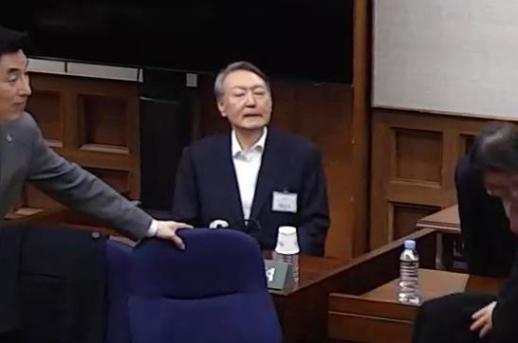 Special Prosecutor to Question Yoon Suk Yeol on Charges of Rebellion The second special prosecutor team, led by Kwon Chang-young, is set to investigate Yoon Suk Yeol on charges of rebellion under military law.The special prosecutor's office announced on May 20 that it plans to summon the former president on June 6 as a suspect in the rebellion case. Yoon has confirmed his willingness to appear before the special prosecutor.Yoon is accused of conspiring with former Defense Minister Kim Yong-hyun to deploy armed soldiers to the National Assembly and the National Election Commission to incite a riot during the declaration of martial law on December 3.Previously, the special prosecutor's office requested Yoon to appear as a suspect on April 30, but the former president's team did not comply, leading to a failed investigation. After notifying Yoon's team of a second summons on May 23, both sides have been coordinating schedules due to Yoon's team's indication of non-compliance.In addition to Yoon and former Defense Minister Kim, former Army Intelligence Command Chief Noh Sang-won and former Special Warfare Command Chief Kwak Jong-geun are also under investigation for rebellion. The special prosecutor's office first questioned Kwak on May 14 as part of the rebellion investigation.Yoon is also facing allegations of abuse of power for directing the National Security Office and the Ministry of Foreign Affairs to communicate messages to allied countries, including the United States, justifying the declaration of martial law immediately after it was announced.* This article has been translated by AI. 2026-05-20 21:36:46
 -
 South Korean Oil Tanker Passes Through Strait of Hormuz Amid Tensions One of the 26 South Korean vessels stranded in the Strait of Hormuz due to the U.S.-Iran conflict has successfully navigated through the strait for the first time. The Ministry of Foreign Affairs announced on May 20 that "one of our oil tankers has passed through the Strait of Hormuz today and is continuing its voyage," adding that approximately 10 South Korean crew members are aboard the vessel.Since the outbreak of the conflict, the South Korean government has made repeated requests for the safety and freedom of navigation for all vessels, including its own, through four phone calls between the foreign ministers of South Korea and Iran, the dispatch of special envoys over the past two weeks, and various diplomatic channels involving both countries' foreign ministries and embassies in Tehran and Seoul.A ministry official stated, "We will continue to work diligently to ensure the safety and passage of our vessels in the Strait of Hormuz."In related remarks, Minister Park Jin mentioned during a National Assembly Foreign Affairs and Unification Committee meeting that "at this moment, our oil tanker is exiting the Strait of Hormuz following negotiations with Iranian authorities."He added, "We have completed discussions with Iranian authorities, and the tanker began its voyage yesterday, navigating very cautiously with 2 million barrels of oil on board." The 2 million barrels refers to the amount of crude oil being transported by the South Korean tanker.According to Bloomberg and the ship tracking site MarineTraffic, the vessel that has exited the strait is the 'Universal Winner,' an oil tanker operated by HMM, the same company that operates the recently attacked 'Namoo.'* This article has been translated by AI. 2026-05-20 20:24:46
 -
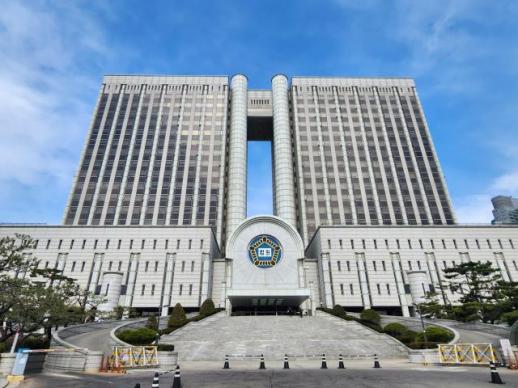 Court to Decide on Arrest of Lee Eun-woo, Former KTV Director, on Sedition Charges The arrest status of Lee Eun-woo, former director of the Korea Policy Broadcasting (KTV), who faces sedition charges related to the emergency martial law, is expected to be decided on the 21st. According to legal sources on the 19th, Judge Lee Jong-rok of the Seoul Central District Court will conduct a warrant review for Lee on the 21st. On the 18th, the Special Prosecutors' Team, led by Kwon Chang-young, filed for an arrest warrant against Lee on charges of promoting sedition. This marks the first attempt by the Special Prosecutors' Team to secure the suspect's custody since its establishment in February. Lee is accused of using his authority over public channel news broadcasts to repeatedly and intensively report on the legitimacy of the martial law and proclamations from December 3 to 13, 2024, while selectively blocking and deleting news that criticized or prevented seditious acts, thereby promoting sedition. Previously, the Special Prosecutors' Team for Sedition, led by Jo Eun-seok, had only indicted Lee without detention for abuse of authority related to the deletion of scroll news on December 4, 2024. However, the Comprehensive Special Prosecutors' Team has decided to reopen the investigation into the sedition promotion charges. The Comprehensive Special Prosecutors' Team stated, "Upon reviewing the records of the sedition promotion case against a suspect previously not indicted by the first sedition special investigation, it was confirmed that the suspect's actions supported and protected seditious forces, forgetting the media's duty to check and monitor state power, both during and after the martial law period. Therefore, the suspect's actions fall under the scope of the Comprehensive Special Prosecutors' law investigation." Meanwhile, during a sentencing hearing on the abuse of authority case against Lee held on the 15th by the 23rd Criminal Division of the Seoul Central District Court, the Sedition Special Prosecutors' Team requested a five-year prison sentence. The court plans to conduct the sentencing hearing for this case on June 26.* This article has been translated by AI. 2026-05-19 12:27:22
 -
 New Task Force Launched to Combat Illegal Medical Practices and Shorten Recovery Periods for Health Benefits The South Korean government has launched a task force to address the rising number of illegal medical institutions and improve the collection rate of health benefits that have been determined for recovery. On May 18, the Supreme Prosecutors' Office announced the formation of the "Joint Investigation Team for Illegal Medical Practices," which includes personnel from seven investigative and regulatory agencies, including the police and the Ministry of Health and Welfare.The task force comprises 30 members: four prosecutors, seven police officers, two special judicial police from the Ministry of Welfare, 12 from the National Health Insurance Service, one from the National Tax Service, three from the Health Insurance Review and Assessment Service, and one from the Financial Supervisory Service. The Seoul Western District Prosecutor's Office was designated as a specialized food and drug safety office in May 2013 and has experience operating a joint investigation team for rebates since 2014.The task force will operate under the leadership of the head of the Food and Drug Crime Investigation Division at the Seoul Western District Prosecutor's Office. It will include an investigation team (composed of police and special police from the Ministry of Welfare), a support team (from the National Health Insurance Service, Health Insurance Review and Assessment Service, National Tax Service, and Financial Supervisory Service), and a joint enforcement team (from the National Health Insurance Service and Health Insurance Review and Assessment Service).Initially, the support team will provide criminal information, allowing the enforcement team to conduct operations. Following this, the investigation team will focus on cases involving sham hospitals, excessive non-covered medical treatments, and fraudulent insurance claims. The prosecutor's office will then take over the cases for further investigation or processing.The joint investigation team aims to expedite the process of asset forfeiture and recovery through inter-agency cooperation from the outset of investigations. It will also support the recovery of assets preserved through the National Health Insurance Service. Additionally, the team plans to coordinate with the Ministry of Welfare to ensure swift administrative actions, such as business suspensions and fines, separate from criminal penalties.According to data from the National Health Insurance Service, from 2009 to 2025, 1,805 illegal medical institutions, including sham hospitals, were subject to enforcement and prosecution, resulting in a total recovery decision amounting to 29.16 trillion won. However, the actual amount recovered was only 256.3 billion won, or 8.79% of the total.The number of illegal medical institutions has been on the rise, with 28 in 2022, 50 in both 2023 and 2024, and 87 in 2025. Despite this increase, the average recovery decision amount during this period was 154.3 billion won, with a collection rate averaging only 11.27%.In response, the government has established the joint investigation team to eradicate the establishment and operation of illegal medical institutions and to confiscate the proceeds of related crimes.A spokesperson for the Supreme Prosecutors' Office stated, "We expect that the formation of this joint investigation team, which systematically combines the investigative capabilities of law enforcement with the expertise of relevant agencies in crime information collection and analysis, will shorten the time required for the entire process of recovering illegal assets after investigations."The spokesperson added, "Through thorough cooperation among agencies, we will strive to eliminate the establishment and operation of illegal medical institutions, such as sham hospitals, and to strengthen the financial health of the National Health Insurance system through prompt administrative actions."* This article has been translated by AI. 2026-05-18 22:36:00
 -
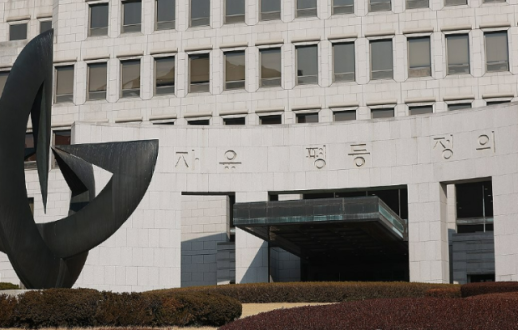 Supreme Court Rules U.S. Companies Must Pay Corporate Tax on Technology Transfer Fees to Korean Firms The Supreme Court has ruled that fees paid by U.S. companies to Korean firms for technology or know-how transfers are not exempt from corporate tax. On May 18, the Supreme Court's third division, led by Justice Oh Seok-jun, overturned a lower court ruling that favored U.S. pharmaceutical company Genosco in its lawsuit against the head of the Dongjak Tax Office regarding the denial of a tax refund for withholding tax. The case has been sent back to the Seoul High Court for further proceedings.In October 2016, Genosco entered into a contract with Yuhan Corporation to transfer technology and know-how related to a targeted treatment for liver cancer. The agreement stipulated that Genosco would receive a fixed technology fee and an annual royalty based on a percentage of net sales from the product until the expiration of the relevant patent.In November of the same year, Yuhan paid Genosco a contract fee of 500 million won and subsequently paid the withholding tax to the Dongjak Tax Office. According to corporate tax law, foreign corporations must pay corporate tax on domestic source income. While the foreign corporation is the substantive taxpayer, a Korean company can pay the tax on behalf of the foreign entity after deducting it from the payment.Genosco filed a claim for a refund of the withholding tax in July 2017, arguing that the income was not domestic source income under the Korea-U.S. tax treaty. However, the Dongjak Tax Office denied the claim in September of that year, prompting Genosco to sue for cancellation of the denial.The key issue in the appeal was whether the income was exempt from taxation under Article 16, Section 1 of the Korea-U.S. tax treaty, which states that "income derived by a resident of the United States from the sale of capital assets shall, in principle, be exempt from taxation by our country."The appellate court ruled that the know-how in question fell under the capital assets defined in the treaty, thus ruling in favor of Genosco.However, the Supreme Court found that the lower court had misinterpreted the legal definition of capital assets under Article 16, Section 1 of the tax treaty, accepting the appeal from the Dongjak Tax Office.The court noted that the term "capital assets" is not separately defined in the Korea-U.S. tax treaty, nor is it found in Korean law, and must be understood in the context of the treaty.The court stated, "The know-how in this case can be considered property used in the business of the plaintiff, which is subject to depreciation deductions. Therefore, based on the context at the time of the treaty's conclusion, it cannot be classified as capital assets under Article 16, Section 1 of the Korea-U.S. tax treaty."The Supreme Court referenced Section 1221 of the Internal Revenue Code from the time of the treaty's conclusion in 1976, which defines capital assets as all property held by the taxpayer except for certain specified properties. It further describes properties used in a business or held for income generation that are subject to depreciation under Section 167.The court explained, "Therefore, in the case of know-how used in business, it is reasonable to conclude that it is generally excluded from the definition of 'capital assets' as stipulated in Article 16, Section 1 of the Korea-U.S. tax treaty when referring to Section 1221, Subsection 2 of the Internal Revenue Code at the time of the treaty's conclusion."* This article has been translated by AI. 2026-05-18 15:48:00
 -
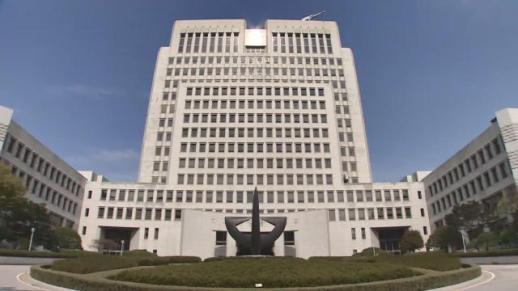 Supreme Court Rules Semiconductor Purification System Technology is Industrial Technology The Supreme Court has determined that the technology for an eco-friendly ultra-pure water system used in semiconductor manufacturing qualifies as industrial technology. Therefore, leaking related materials constitutes a violation of the Industrial Technology Protection Act.On May 14, the Supreme Court's second division, led by Justice Kwon Young-jun, overturned a lower court's three-year prison sentence for an individual identified as A, who was charged with violating the Industrial Technology Protection Act and the Unfair Competition Prevention Act, as well as breach of trust.A, who was responsible for managing the construction of the ultra-pure water system at Samsung Engineering (now Samsung E&A), was accused of leaking files containing design templates that automatically calculate optimal parameters for the ultra-pure water system, control logic for automation, operational conditions, and interlock information. This was done in preparation for his move to a Chinese semiconductor consulting firm.Despite submitting a confidentiality agreement regarding the specifications and design documents of the ultra-pure water system, A allegedly retained these documents instead of returning or destroying them, leading to charges of violating the Unfair Competition Prevention Act. He was also accused of causing financial damage to Samsung Engineering by leaking these documents for personal gain.Both the first and second trials found A guilty of all charges except for the violation of the Industrial Technology Protection Act, sentencing him to three years in prison.The court stated regarding the Industrial Technology Protection Act violation, "The evidence submitted by the prosecution does not sufficiently establish that the design and construction technology for the ultra-pure water system used by the victim company falls within the scope of advanced technology as defined by the Ministry of Trade, Industry and Energy at the time of the incident."The Ministry's guidelines categorize advanced technologies and products, and the technology in question was claimed to be part of the 'plant engineering sector' under 'water resources (major category)/desalination (middle category)/membrane separation (sub-category)/optimal design technology for high-efficiency RO systems.' The key issue in the appeal was the interpretation of the middle category 'desalination.'The second trial explained, "The meaning of 'desalination' in the middle category refers to freshwater produced from seawater desalination, thus interpreting the 'optimal design technology for high-efficiency RO systems' as detailed technology related to seawater desalination. However, the technology in this case pertains to producing ultra-pure water for semiconductors from industrial water, which is unrelated to 'optimal design technology for high-efficiency RO systems' concerning seawater desalination."However, the Supreme Court found that the lower court erred in its judgment of not guilty regarding the Industrial Technology Protection Act, stating, "The lower court misunderstood the legal principles regarding the scope of 'technologies that fall under advanced technology' as defined by the old Industrial Technology Protection Act and the Industrial Development Act."The court further elaborated, "Considering the legislative purposes of the Industrial Development Act and the old Industrial Technology Protection Act, the general meanings and usages of 'freshwater' and 'desalination,' and the potential impact of this technology on the development, production, distribution, or use of products or services related to 'optimal design technology for high-efficiency RO systems,' the meaning of 'freshwater' in the middle category includes not only cases where the treated water's purpose is 'freshwater' but also cases where the source water is freshwater."* This article has been translated by AI. 2026-05-14 20:12:16
 -
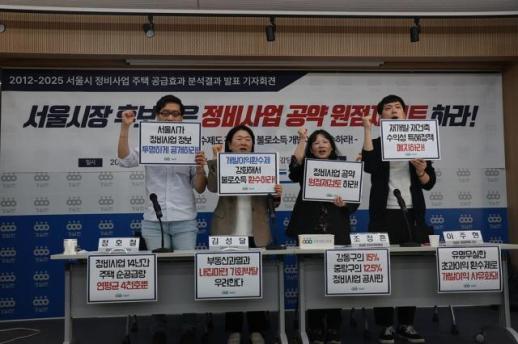 Civic Group Reports Average of 4,000 Housing Units Supplied Annually in Seoul Over 14 Years As candidates for the upcoming June 3 local elections propose promises to enhance housing supply through urban renewal projects, a recent investigation reveals that net supply has been minimal over the past decade. The analysis also confirms a significant increase in housing prices following these projects, prompting calls for a reevaluation of related campaign promises.The Citizens' Coalition for Economic Justice reported that from 2012 to 2025, during the terms of Mayors Park Won-soon and Oh Se-hoon, the net supply of housing units from urban renewal projects in Seoul totaled only 53,000, averaging just 4,000 units per year.During this period, an average of 20 project approvals and 21 management approvals were granted annually. While approximately 310,000 new housing units were constructed through urban renewal, the net supply, excluding demolished units, remained at 53,000 over 14 years, representing only 17% of the total units built.An analysis of major apartment sales revealed that properties with similar market values before reconstruction have seen significant price disparities based on whether they were redeveloped, exacerbating wealth inequality.For instance, the Sangye-jugong 8 Complex in Nowon District was redeveloped and completed as Foreena Nowon in 2020, while the nearby Sangye-jugong 9 Complex is currently undergoing planning. Previously, the price difference between these similarly sized properties was less than 100 million won, but it has now widened to approximately 300 million won. Similarly, the price gap for the Nokwon Hanshin Apartment and Dong-A Apartment in Seocho District has increased from 100-200 million won to around 2.2 billion won.The total area designated for urban renewal, including redevelopment, reconstruction, small-scale redevelopment, and self-managed housing projects, accounts for 6% of Seoul's total area (excluding green spaces). Among districts, Gangdong occupies the largest share at 14.7%, followed by Jungnang at 12.5% and Eunpyeong at 10%.In relation to urban renewal, Democratic Party candidate Jeong Won-o announced a real estate policy called 'Steady Development.' Meanwhile, People Power Party candidate Oh Se-hoon pledged to initiate construction on 310,000 units through urban renewal.In response, the Citizens' Coalition urged these candidates to reassess their urban renewal promises from scratch.The coalition stated, "Considering the negative impacts of urban renewal, if the city proceeds with initiatives like rapid integrated planning and steady development, it could adversely affect not only the lives of residents but also the real estate market on a macro level."They added, "In the current situation where the development profit recovery system is not functioning properly, the profits from urban renewal will be privatized, further deepening wealth inequality. Strengthening the recovery of excess profits from reconstruction and recovering 50% of unearned development profits are necessary measures for the development profit recovery system."* This article has been translated by AI. 2026-05-14 16:29:46