
Journalist

Jeong Hae-hun
ewigjung@ajunews.com
-
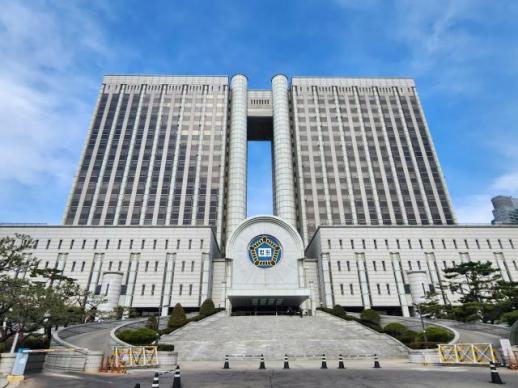 Court Grants Bail to Koo Se-hyeon in Wellbiotech Stock Manipulation Case Koo Se-hyeon, the former head of Wellbiotech accused of manipulating the company’s stock price by spreading false information, will stand trial while out of custody. According to the legal community on Tuesday, the Seoul Central District Court’s Criminal Division 32, led by Presiding Judge Ryu Kyung-jin, granted Koo’s request for bail the previous day as he faces a first-instance trial on charges of violating the Act on the Aggravated Punishment of Specific Economic Crimes (breach of trust) and the Capital Markets Act. The court’s reasons and bail conditions were not disclosed. Prosecutors allege Koo, around May 2023, misled investors and drove up the stock price by distributing information claiming participation in Ukraine reconstruction projects and entry into the secondary battery business. He was indicted in custody in November last year. In court, Koo’s side said it acknowledges the underlying facts but denied using false information to engage in unfair trading in the capital markets, arguing the information related to the Ukraine reconstruction and secondary battery businesses was not fabricated and had a real basis. * This article has been translated by AI. 2026-04-29 11:13:15
 -
 Major Crimes Investigation Agency Task Force to Start Work April 30; HQ Lease Considered A governmentwide team set up to prepare for the launch of the Major Crimes Investigation Agency, due to open in October, will begin full operations at the end of this month. The government said on April 28 that the preparatory team will open an office on April 30 at the Changseong-dong annex of the Government Complex Seoul in Jongno District and start work. The 64-member team will be built around the Ministry of the Interior and Safety and the prosecution service. Vice Interior Minister Kim Min-jae will lead it, and a sitting prosecutor will serve as deputy chief. While Kim oversees Interior Ministry work including planning, organization, AI government, local autonomy and local finance, the deputy chief is expected to manage the team’s day-to-day operations, including preparations for the new agency. Fifteen officials, including staff from the Government Buildings Management Office, will be seconded from the Interior Ministry. The prosecution service will send more than 30 people, including prosecutors and investigators, and the National Police Agency will provide seven. Officials from the Ministry of Personnel Management and the budget office will also join. Through the agency’s opening on Oct. 2, the team plans to handle broad preparations, including office space, hiring, investigative procedures and internal operating systems. Because the new agency will effectively take on the prosecution service’s investigative role, some had expected it to use existing prosecutors’ office buildings. That option is not being considered, the report said. The agency’s headquarters is said to have a policy of not using buildings now occupied by the Supreme Prosecutors' Office, the Seoul High Prosecutors' Office or the Seoul Central District Prosecutors' Office. Officials are reviewing a plan to lease a building first and later move into a newly built facility. For a temporary office, they are checking conditions at two buildings in the Euljiro area of Seoul. * This article has been translated by AI. 2026-04-28 14:49:46
 -
 Lee Jae-myung to Host Lunch Meeting With Minor Parties, Independent Lawmakers on April 29 President Lee Jae-myung will host a lunch meeting this week with five minor parties that do not hold negotiating-group status in the National Assembly, as well as independent lawmakers, the presidential office said. Senior presidential spokesperson Kang Yu-jung said in a written briefing on Saturday that the meeting is scheduled for April 29. The time and venue will be announced separately. Lee is expected to ask for cooperation on pending issues including the June 3 local elections, balanced regional development and prosecution reform. Lee previously met with leaders of parliamentary parties, including the Democratic Party, at the presidential office on Jan. 16 and urged cooperation on his policy agenda. The People Power Party leadership did not attend that meeting. * This article has been translated by AI. 2026-04-26 20:30:15
 -
 Putin Thanks North Korean Troops Who Fought in Kursk, Honors War Dead Russian President Vladimir Putin expressed gratitude to North Korean troops who took part in fighting in the Kursk region. TASS reported on April 26 (local time) that Putin issued a congratulatory message marking the opening in Pyongyang of a memorial complex for heroes of overseas military operations and a military heroes museum. Vladimir Putin said in the message, "I sincerely thank the brave Korean (North Korean) soldiers who participated in the battles in the Kursk region, and I would like to pay tribute to the heroes who died." North Korea pushed to build a memorial for those killed in the Kursk deployment, aiming to complete it for the first anniversary of the "liberation of Kursk." Russia sent a high-level delegation to the memorial’s completion ceremony. Russia said it had at one point lost Kursk during the war with Ukraine, but officially declared on April 26 last year that it had regained the territory after North Korea entered the fighting.* This article has been translated by AI. 2026-04-26 19:30:14
 -
 Netanyahu Says He Was ‘Shocked’ by Reported Attempt on Trump at Washington Dinner Israeli Prime Minister Benjamin Netanyahu said he was “shocked” after U.S. President Donald Trump was evacuated following gunfire at a dinner event. Speaking at a news conference in Jerusalem on April 26 (local time), Netanyahu said he was deeply shaken by reports of an assassination attempt targeting Trump. He said he was relieved to learn that Trump and the first lady were safe and in good condition, adding that he saluted the U.S. Secret Service for responding with “swift and decisive action.” Trump was attending a dinner at the Washington Hilton hotel in Washington, D.C., on Friday evening when shots were heard and he was rushed to safety. No attendees were reported wounded, and a suspect was arrested at the scene. The Los Angeles Times and other local media identified the suspect as Cole Thomas Allen, 31, of Torrance, California. Authorities said Allen had a shotgun, a handgun and several bladed weapons at the time. He was charged with two counts related to firearm use and one count of assaulting a federal official with a dangerous weapon.* This article has been translated by AI. 2026-04-26 19:18:17
 -
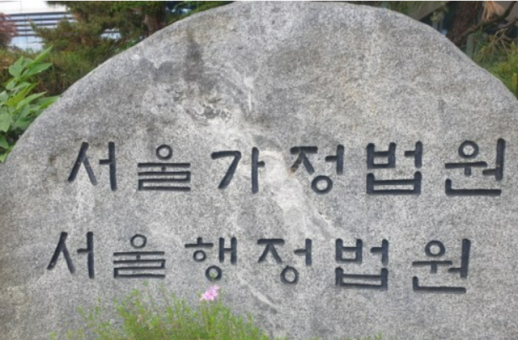 Court Upholds Tax on Ericsson Network Software Sales as Royalty Income A Seoul court has ruled that software for telecommunications network equipment bought from a foreign corporation and sold in South Korea is not a “product” but technical know-how, making it lawful to tax the payments as royalty income. According to the legal community on the 26th, the Seoul Administrative Court’s Administrative Division 6, led by Presiding Judge Na Jin-i, ruled against Ericsson Korea Partners in its lawsuit seeking to overturn a corporate tax assessment imposed by the head of the Yeoksam Tax Office. Ericsson Korea Partners, whose shareholders include Sweden-based telecom equipment maker Ericsson and LG Electronics, has purchased wireless network equipment and related software for 3G, LTE and 5G from Ericsson AB (EAB), an Ericsson Group entity, and sold them to South Korean telecom operators. Based on an audit completed in August 2021, the Seoul Regional Tax Office treated the software sales and distribution payments Ericsson Korea Partners made to EAB from 2016 through that year as “royalty income” and notified the company of tax using the 10% withholding cap. Ericsson Korea Partners sued, arguing the software should be classified as a “product” and the payments to EAB as “business income” for goods purchases. Business income paid to a foreign corporation without a permanent establishment in South Korea is not subject to domestic taxation. The court disagreed, finding the transactions amounted to introducing “know-how or technology,” not importing a general product, and said taxing the payments as royalty income was appropriate. “The software at issue is the result of accumulated technology, experience and information,” the panel said, citing the time and technical capability required to develop and supply telecom equipment, the dominance of the global market by a small number of firms, and the fact that the equipment cannot operate without the software. The court also said the software requires substantial technical expertise and training to use, and that Ericsson Korea Partners is responsible for maintenance, management and error correction, making it difficult to view the software as a widely usable, off-the-shelf product.* This article has been translated by AI. 2026-04-26 15:40:49
 -
 Study Warns Lawyer Oversupply Is Driving Fee Competition and Eroding Service Quality A study has found that a rapid increase in the number of lawyers in South Korea could intensify competition for clients, lowering the quality of legal services and weakening professional ethics. The Korean Bar Association on Thursday released its analysis of how expanding the supply of lawyers affects service quality, based on a report it recently received from the Korean Society for Quality Management titled “A Korean Model for Legal Workforce Supply and Demand in the AI Era.” The society said in the report that the quality of professional services depends on the absolute amount of time providers devote to a matter and on professional ethics, but that excessive competition damages both. It added that maintaining expertise and ethical standards requires a stable working environment. The number of registered lawyers in South Korea surged to 38,235 this year from 14,534 in 2012. Over the same period, the number of first-trial cases filed fell about 30%, to 740,000 from 1.05 million. The lawyer-retention rate is about 20%, and the rate for privately retained counsel in criminal trials is about 30%, the report said. With the median income at 30 million won under a situation in which lawyers handle an average of one case a month, the report said it is difficult to expect sustained improvements in service quality and predicted competition for clients will intensify. It said lawyers seeking to maintain income may cut the time spent on each case, leading to weaker legal services and a leveling down of courtroom advocacy. The report also cited disciplinary data from the past five years, saying most cases involved violations of advertising rules (303), conduct unbecoming (192) and breaches of the duty of diligence (89). It described the figures as warning signs that market oversaturation is threatening the profession’s ability to police itself and that improving service quality is urgent. In a comparison with major countries, the report said South Korea’s lawyer output was unusually high. From 2021 to 2024, Japan averaged 867 newly registered lawyers a year, while South Korea — with less than half Japan’s population — averaged 1,772, more than four times as many per capita, it said. Korean Bar Association President Kim Jeong-uk said the findings align with what the association is seeing on the ground, including concerns about young lawyers’ livelihoods and weakening ethical awareness. “When the number of lawyers goes beyond saturation, service quality levels down, and the costs of advertising competition are passed on to consumers,” Kim said. “In the end, it becomes a national loss as young lawyers whose minimum right to make a living is threatened are exposed to the temptation of illegal and unlawful conduct.” Kim added that fewer job postings each year and a sharp rise in disciplinary cases are negative signals of oversupply. He said South Korea produces more than twice as many lawyers each year as Japan, which has 2.5 times South Korea’s population, making the per-capita output about five times higher. Considering related legal occupations as well, he said, South Korea is in an unusually saturated state for legal personnel. The association said it will use the academic findings to press for a broad review of lawyer workforce policy, urging a shift away from simple supply expansion toward an approach based on empirical data.* This article has been translated by AI. 2026-04-23 10:51:07
 -
 Aricell CEO’s sentence cut to 4 years on appeal in fire that killed 23 A South Korean appeals court sharply reduced the prison sentence for Park Soon-kwan, CEO of Aricell, who was indicted under the Serious Accidents Punishment Act after a factory fire that killed 23 workers. The Suwon High Court’s Criminal Division 1 on Tuesday overturned a lower court ruling that had sentenced Park to 15 years in prison and instead sentenced him to four years. Park was charged with violating the Serious Accidents Punishment Act (industrial manslaughter), the Dispatch Workers Act and the Occupational Safety and Health Act. The court said the outcome of the fire was “extremely grave,” noting that 23 people died and nine were injured. But it said Park appeared to have made a management decision in delegating much of Aricell’s work to his son, and that there was insufficient basis to conclude he did so to evade responsibility under the serious-accidents law or the dispatch law. While the appeals court agreed Park qualified as a responsible manager under the Serious Accidents Punishment Act and upheld multiple safety-duty violations found at trial, it reached a different conclusion on prosecutors’ primary allegation regarding emergency exits. It said Article 17 of the safety and health rules requires emergency exits in workplaces handling hazardous materials and in the buildings themselves, but does not require exits on every floor. The court said there was no duty to install an emergency exit on the second floor of Building 3 at the factory. The appeals court also reduced the sentence for Park’s son, Park Jung-eon, Aricell’s general headquarters chief. It overturned the lower court’s sentence of 15 years in prison and a 1 million won fine, and sentenced him to seven years in prison and a 1 million won fine. He was indicted on charges including violations of the Occupational Safety and Health Act and professional negligence resulting in death and injury. After the ruling, bereaved families protested, saying, “What kind of law is this?” and “If the court had considered the families even a little, it could not have issued a four-year sentence.” A lawyer for the victims said a four-year term in a case of this scale raised doubts about whether the serious-accidents law could function going forward, calling the decision “a ruling that deeply hurt the families.” Park was indicted over the June 24, 2024, fire at Aricell’s plant in Seosin-myeon, Hwaseong, accused of failing to inspect harmful and dangerous factors and of not preparing a manual for major accidents, among other alleged breaches of safety and health obligations. His son was accused of violating duties of care in battery storage and management and in safety management to prepare for fires, leading to a large loss of life. In September last year, the trial court sentenced Park to 15 years in prison, the heaviest sentence imposed in a case prosecuted since the Serious Accidents Punishment Act took effect in 2022. His son was also sentenced to 15 years in prison and fined 1 million won.* This article has been translated by AI. 2026-04-22 17:51:39
 -
 Audit Board Official Charged Over Only Part of Alleged 1.58 Billion Won Bribery Case Amid Jurisdiction Dispute A jurisdiction dispute between the Corruption Investigation Office for High-ranking Officials and prosecutors has led to a case in which only part of an alleged 1.58 billion won bribery scheme involving a senior Board of Audit and Inspection official is being punished. The Seoul Central District Prosecutors Office’s Criminal Division 5, led by Chief Prosecutor Jeong Jae-sin, said Tuesday it indicted a man identified only as Kim on charges including bribery and embezzlement under the Act on the Aggravated Punishment of Specific Economic Crimes. He was indicted without detention. Prosecutors said Kim effectively ran an electrical construction company set up under a borrowed name and is suspected of receiving about 1.58 billion won from construction firms subject to audits, disguised as subcontract payments and other fees. Prosecutors brought to trial only the portion they said was clearly supported by evidence: about 290 million won in alleged bribes from 2018 to 2021. They said Kim received illicit payments three times from private companies in return for providing audit-related favors or introducing a public official who served as a bid evaluation committee member for a government-funded project. Three employees of private construction firms accused of paying bribes to Kim were also indicted. Prosecutors declined to indict Kim over the remaining 1.29 billion won, saying evidence was insufficient. The Board of Audit and Inspection asked the CIO in October 2021 to investigate the case. After two years of investigation, the CIO sought an arrest warrant for Kim in November 2023 on suspicion of bribery and other charges, but a court rejected it, citing insufficient substantiation of the allegations. After the warrant was denied, the CIO questioned only some alleged bribe givers, then sent the case to prosecutors while requesting indictment. Prosecutors, citing the court’s reasoning, said supplemental investigation was needed and sent the case back to the CIO. The CIO refused to accept it, saying the transfer had no legal basis, and the case returned to prosecutors. Prosecutors then sought search-and-seizure and communications warrants to pursue additional evidence, but the court rejected the requests, citing a lack of legal grounds to grant prosecutors authority to conduct further investigation in a CIO case. Prosecutors ultimately indicted only the portion they said was sufficiently proven and closed the rest with a nonindictment decision. A Seoul Central District Prosecutors Office official said institutional limits prevented prosecutors from requesting supplemental investigation by the CIO or conducting it themselves, making it difficult to quickly determine the full scope of the alleged wrongdoing. The official said it was the kind of outcome that can occur when the right to demand supplemental investigation is not supported by the system and prosecutors’ own supplemental investigative authority is not recognized.* This article has been translated by AI. 2026-04-22 15:20:09
 -
 South Korea’s Constitutional Court to Hear Yoon Challenge to Special Insurrection Trial Law The Constitutional Court will formally hear a petition filed by former President Yoon Suk Yeol’s legal team challenging the law that provides the basis for a special appellate panel in his case on charges of leading an insurrection. According to legal officials on Tuesday, the court sent Yoon’s constitutional complaint on the Act on Special Cases Concerning Criminal Procedure for crimes including insurrection, foreign aggression and rebellion to a full hearing the previous day. The court first uses a three-justice panel to determine whether a petition meets legal requirements. If it finds no procedural defects, the case is referred to the full bench of nine justices for review. Yoon’s team filed the petition on March 31. His lawyers argued that provisions such as forming a dedicated panel, live broadcasting of trials and excluding de-identification measures impose procedures that differ sharply from ordinary criminal trials and infringe on the rights to a fair trial, equality and one’s portrait rights. The law, pushed through the National Assembly by the Democratic Party in December and effective in January, requires two dedicated panels each at the Seoul Central District Court and the Seoul High Court to handle insurrection, foreign aggression and rebellion cases deemed nationally significant, as well as related matters. After a meeting of all judges, the Seoul High Court designated its Criminal Division 1 and Criminal Division 12 as the dedicated panels through a random draw. Yoon’s appeal will be heard by Criminal Division 12. In the first trial, Yoon was sentenced to life in prison. A separate constitutional complaint filed by Yoon’s side challenging provisions in a special prosecutor law, including clauses on the scope of investigations and the appointment process, also passed preliminary screening Monday and was referred for a full hearing. * This article has been translated by AI. 2026-04-22 13:42:19