

Journalist

Oh Joo-Seok
farbrother@ajunews.com
-
 Renault Group Targets 36 New Models by 2030, Pushes Electrification and Global Growth Renault Group has laid out a mid- to long-term strategy targeting 36 new vehicle launches by 2030 and annual sales of 2 million units. The plan centers on accelerating the shift to electrification, led by electric and hybrid models, while expanding in global markets. Renault Korea said March 11 that the group announced the “Future Ready Plan” on March 10 local time at its headquarters in France. Built around key brands including Renault, Dacia and Alpine, the plan calls for 36 new models from this year through 2030. The group also set targets of a 5% to 7% operating profit margin and average annual cash flow of more than 1.5 billion euros, aiming to fund new-model development and electrification investment. Renault Group has been pursuing restructuring under its “Renaulution” strategy announced in 2021. The Future Ready Plan is seen as the next phase, moving more fully into electrification and global business expansion. The Renault brand aligned its priorities with the group plan around three drivers: strengthening its position in Europe, expanding electrification across its lineup, and boosting markets outside Europe. It set a goal of launching 26 new models by 2030 and selling more than 2 million vehicles a year across Europe and other markets. In Europe, Renault plans to introduce 12 new models by 2030, expanding electric and hybrid offerings not only in its core A and B segments but also in the C and D segments. Its electrification push will be led by both battery-electric vehicles and its E-Tech hybrid lineup. Renault said it will keep its hybrid lineup in Europe even after 2030. Renault also introduced a new RGEV Medium 2.0 platform aimed at the European C and D segment EV market. The modular architecture is designed to cover B-plus through D segments and support multiple body types. The company said it features extended driving range, an 800-volt architecture for ultra-fast charging, advanced technology and optimized efficiency. Renault said it aims to sell more than 2 million vehicles annually by 2030, with half of that volume coming from outside Europe. It added that it will maximize the potential of five global hubs: South Korea, India, Morocco, Turkey and Latin America. Under its International Game Plan 2027, Renault said it will add 14 new models in markets outside Europe by 2030, following five models already introduced: Kardian, Duster, Grand Koleos, Boreal and Filante. It also said it will continue developing vehicles tailored to market conditions by actively using strategic partnerships, including with Geely Group. 2026-03-11 09:36:00
 -
 Innocean Breaks Into Ad Age’s 2026 A-List Top 10 in the U.S. Hyundai Motor Group’s advertising agency Innocean has been named one of the top 10 marketing companies in the United States, the first South Korean ad company to make the list. Innocean said Wednesday that it was selected for the top 10 of the “2026 A-List” released by marketing trade publication Ad Age. The company called it its biggest achievement since establishing its U.S. subsidiary 18 years ago. Ad Age compiles the annual list by evaluating agencies active in the U.S. market on creative performance, business results and industry influence. Innocean attributed the recognition to capabilities built steadily by its U.S. unit. Founded in 2008, Innocean USA expanded its presence with creative work and brand experiences, including producing a Super Bowl ad in 2010, a first for a South Korean advertising company. Jeon Il-soo, Innocean’s head of global business and vice president leading the Americas regional headquarters, said the company has “consistently worked to recruit talented people, strengthen teamwork and build capabilities.” He said management efforts to broaden its client base and lay a foundation for sustainable growth were recognized by the industry. Innocean, marking its 21st anniversary this year, has also built its profile globally. It ranked No. 1 in a 2016 Super Bowl ad preference survey with the Genesis campaign “First Date,” the first time a non-U.S. company topped the survey, and it won the Cannes Lions Grand Prix for two consecutive years in 2025 before being named to the 2026 A-List. The company also reported solid business growth. Innocean USA posted 2025 revenue of $460 million, up 7.7% from a year earlier, ranking second in Southern California. Its clients include Hyundai, Kia, Genesis, Hankook Tire, chicken fast-food chain El Pollo Loco, hot dog restaurant chain Wienerschnitzel and Jinro USA. CEO Kim Jeong-a said the result “goes beyond the success of a single campaign” and reflects combined strength in creativity, business and organizational competitiveness. She said Innocean will further strengthen its position as a global partner by delivering measurable business results for clients through differentiated ideas and integrated marketing capabilities.* This article has been translated by AI. 2026-03-11 09:03:56
 -
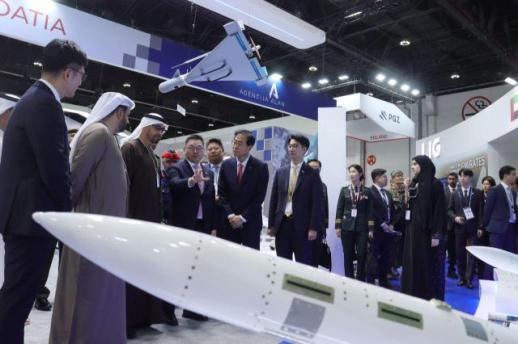 South Korea Moves L-SAM Into Mass Production as Middle East Air Defense Demand Rises Demand for air defense networks is rising in the Middle East following the war involving the United States and Israel and Iran. After the midrange Cheongung-II was deployed in combat, South Korea has moved its long-range surface-to-air missile system, L-SAM — often described domestically as a “Korean-style THAAD” — into mass production. The rollout of new Korean air defense systems is expected to speed efforts to target the Middle East arms market. According to the defense industry on Monday, L-SAM has entered the mass-production phase. Designed to intercept ballistic missiles in the upper atmosphere, L-SAM can engage targets at an interception altitude of 40 to 60 kilometers (25 to 37 miles), a capability that has led to comparisons with the U.S. THAAD system. Along with Cheongung-II, which covers altitudes of 30 to 40 kilometers (19 to 25 miles) and below, L-SAM is considered a core component of South Korea’s missile defense architecture. Deployment is approaching. The Defense Acquisition Program Administration last year reviewed and approved the final mass-production plan for L-SAM. The total project cost is about 1.7302 trillion won, with the goal of fielding the system with South Korean forces starting next year. LIG Nex1, Hanwha Aerospace and Hanwha Systems are participating in production. LIG Nex1 is responsible for overall system integration, Hanwha Aerospace for the launcher, and Hanwha Systems for the multifunction radar. Interest is also building overseas. With Cheongung-II deployed in the United Arab Emirates and credited with proving its performance, Middle Eastern countries have shown growing interest in L-SAM, the report said. In Europe, Switzerland has recently expressed interest. Swiss online outlet Watson reported Monday that South Korea’s L-SAM, under development, could play an important role in defending Swiss airspace. South Korea is also pursuing follow-on systems. Development is underway for L-SAM II, an upgraded version of the system now entering mass production. Work has also begun on Cheongung-III (M-SAM III), which aims to significantly improve interception altitude, detection range and simultaneous engagement capability compared with Cheongung-II. In the securities industry, analysts forecast LIG Nex1’s consensus operating profit this year at 435.2 billion won, up 34.8% from a year earlier. Operating profit is also expected to rise sharply at Hanwha Aerospace (43.1%) and Hanwha Systems (183.9%). Jang Won-jun a professor in the Department of Advanced Defense Industry Studies at Jeonbuk National University, said many countries built air defenses focused on mid- and low-altitude threats, making interest in an upper-tier interceptor like L-SAM likely to grow. "The Middle East and Europe are facing urgent conditions, so discussions on adoption could move faster there than in Korea," he said.* This article has been translated by AI. 2026-03-10 18:09:12
 -
 Bentley Unveils Bentayga Artenara Edition Luxury SUV 벤틀리모터스는 10일 럭셔리 스포츠유틸리티차량(SUV) ‘벤테이가 아르테나라 에디션’을 공개했다. 이 모델은 스페인 그란 카나리아 섬의 ‘아르테나라’ 마을과 ‘로케 벤테이가’ 지형에서 영감을 받아, 이를 현대적 디자인 언어로 반영했다고 벤틀리는 밝혔다. 국내에 출시된 ‘아틀리에 에디션’의 컬러 큐레이션도 계승했다. 벤테이가 아르테나라 에디션에는 벤틀리 최상위 뮬리너 라인업에 적용되던 ‘더블 다이아몬드 그릴’이 기본으로 장착된다. ‘브라이트 크롬’ 외장 트림과 함께 블랙라인 사양도 제공되며, 블랙라인 선택 시 프론트 스키드 패널, 리어 디퓨저, 더블 다이아몬드 그릴 등이 적용된다. 외장 색상은 벨루가, 그래나이트, 페일 브로드가, 글레이셔 화이트 등 8가지로 구성된다. 22인치 뮬리너 휠이 기본이며, 23인치 ‘슈퍼 럭스’ 휠은 선택 사양이다. 파워트레인은 4.0L V8 트윈터보 엔진으로, 최고출력 550PS, 최대토크 78.5kg·m를 낸다. 48V 전자식 안티롤 컨트롤 시스템 ‘벤틀리 다이내믹 라이드’와 ‘올 휠 스티어링 시스템’도 적용됐다. 벤테이가 아르테나라 에디션은 벤테이가와 벤테이가 EWB 두 가지 라인업으로 선보이며, 국내에는 올해 4분기 공식 출시될 예정이다.* This article has been translated by AI. 2026-03-10 10:21:17
 -
 Hanon Systems targets No. 1 global thermal management by 2036 Korea & Company Group said its automotive thermal energy management unit, Hanon Systems, has set out a growth vision ahead of its 40th anniversary on March 11. Hanon Systems said it aims to become the world’s No. 1 thermal management solutions company by 2036, when it marks its 50th anniversary. The company said it will accelerate expansion beyond its core automotive thermal management technology. It plans to broaden its portfolio by targeting infrastructure industries that need high-efficiency thermal management, including data center cooling systems, where demand has been rising. Hanon Systems currently supplies automotive thermal management solutions through 50 production plants worldwide and three R&D innovation centers. It is assessed as the world’s No. 2 manufacturer in automotive thermal management and one that offers a full lineup globally. The company said it plans to position itself not only as a partner to the auto industry but also as a key infrastructure partner across industries that require thermal management technology. It also plans to expand into adjacent growth areas, including the global aftermarket, to strengthen its mid- to long-term growth base. To mark its anniversary on March 11, Hanon Systems released the message “40 Years Forward.” The company said it reflects its intent to build new growth opportunities in future mobility and other industries that require thermal management, based on technology and innovation accumulated over the past 40 years. “This 40th anniversary will be more than a commemoration — it will be a new starting point to leap to the world’s No. 1 thermal management solutions company, grounded in execution and healthy fundamentals,” said Lee Soo-il, vice chairman and CEO of Hanon Systems.* This article has been translated by AI. 2026-03-10 09:52:29
 -
 Kia releases video showcasing EV safety and convenience technologies Kia said March 10 it released a video titled “Symphony of EV Technology” on the Hyundai Motor Group YouTube channel and social media, highlighting advanced driver-assistance features for its electric vehicles. The video focuses on technology designed to respond to unusual acceleration situations as reports of pedal-misapplication crashes have become more frequent, aiming to create a safer driving environment for both drivers and pedestrians. It presents the advanced safety-assistance systems fitted to Kia’s dedicated EV models — the EV3, EV4 and EV5 — as a coordinated “symphony,” explaining how each feature works over a refined classical soundtrack. The video covers four safety and convenience technologies used on Kia’s dedicated EVs: Pedal Misapplication Safety Assist, Acceleration Limiting Assist, i-Pedal 3.0 and Smart Regenerative System 3.0. Pedal Misapplication Safety Assist is designed to help prevent crashes by recognizing excessive accelerator input as a misapplication when the vehicle is stopped or moving at low speed. Kia said the latest specification applied to the EV5 strengthens safety by expanding obstacle-detection distance to up to 1.5 meters and by analyzing steering direction and collision risk for control. Acceleration Limiting Assist is intended to reduce risk by detecting excessive acceleration while driving. When it identifies a situation that differs from typical driving patterns, it warns the driver and limits acceleration. i-Pedal 3.0 enables one-pedal driving, allowing acceleration, deceleration and a complete stop using only the accelerator pedal. Smart Regenerative System 3.0 automatically adjusts regenerative braking based on traffic flow and road conditions analyzed using a front camera and navigation information. A Kia official said the video shows EV technology being implemented naturally in everyday driving and added that the company will continue advancing electrification technology that covers both safety and convenience.* This article has been translated by AI. 2026-03-10 09:33:16
 -
 Hyundai Rotem Wins Two 2026 iF Design Awards for Hydrogen Rail Vehicles Hyundai Rotem said Tuesday that its hydrogen electric locomotive and hydrogen electric multiple unit each won an iF Design Award 2026, giving the company two honors in the competition. The iF Design Award, considered one of the world’s three major design prizes, selected this year’s winners after expert judging of more than 10,000 projects submitted from 68 countries, the company said. The hydrogen electric locomotive and hydrogen electric multiple unit are hydrogen mobility models Hyundai Rotem is developing. The company said they are strategic products aimed at expanding hydrogen mobility in rail, following its hydrogen electric tram scheduled to begin operations in cities including Daejeon and Ulsan. Hyundai Rotem said the two award-winning models are the first to adopt an “H”-shaped side graphic that it expects to become a signature design element for its hydrogen mobility lineup. The company said the grid pattern spreading outward from the H motif, which it said represents both Hyundai Rotem and hydrogen, reflects its vision for broader adoption of hydrogen mobility. The company said the designs are based on three core principles: purity, simplicity and symbolism, and are intended to set a new benchmark for sustainable mobility in rail. It said the roofline and front-end form combine a soft curve flowing from the windshield with sharper, more dynamic lines lower down to express both the sustainability and strength of hydrogen energy. The linear headlight arrangement was inspired by light trails seen when moving at high speed through tunnels, it said. Hyundai Rotem said the hydrogen electric multiple unit uses a low-floor structure to improve accessibility for passengers with mobility challenges and features a smooth front-end shape meant to convey the sustainable value of hydrogen energy. In 2023, Hyundai Rotem’s hydrogen electric tram won an iF Design Award, which the company said made it the first in South Korea’s rail industry to receive a global design prize. The company said the latest awards further demonstrate the competitiveness of its hydrogen mobility products. “This award recognizes Hyundai Rotem’s efforts and design philosophy toward realizing hydrogen mobility in the rail sector,” a company official said.* This article has been translated by AI. 2026-03-10 09:09:20
 -
 South Korea’s Cheongung-II Air Defense Missile Gains Combat Credibility in UAE Modern warfare is shifting toward unmanned systems such as drones and missiles, increasing the importance of missile-based air defenses. As conflicts increasingly begin with missile launches — a so-called “button war” — competition is intensifying to counter missiles with missiles. ◆Cheongung-II said to have intercepted Iranian missiles, proving capability in the Middle East Industry officials said Monday that South Korea’s Cheongung-II, a medium-range surface-to-air missile deployed in the United Arab Emirates, has demonstrated interception capability in combat following the outbreak of war in the region. Rep. Yoo Yong-won, a member of the National Assembly Defense Committee, and others said the Cheongung-II deployed in the UAE hit Iranian missiles earlier this month with a 96% success rate. A Cheongung battery is reported to have fired about 60 interceptors at incoming targets. The reported rate is comparable to the U.S. Patriot, widely regarded as among the world’s top air defense systems. The UAE has recently asked the South Korean government for early delivery of interceptors, according to reports. Often described as a Korean version of the Patriot, the Cheongung-II is produced by LIG Nex1, Hanwha Systems and Hanwha Aerospace. It uses a cold-launch method, ejecting the missile vertically before igniting its engine in the air. The system includes a multifunction radar for tracking targets, an operations control center, launchers and vehicles, and is designed to strike targets at speeds of Mach 4 to 5. The Cheongung-II has a maximum range of 40 kilometers (25 miles) and is designed to destroy enemy missiles below 15 kilometers (9 miles) in altitude using a hit-to-kill direct-impact method. Mass production began in 2024, and two batteries are currently deployed in the UAE. LIG Nex1, the lead contractor, has secured about $9.5 billion (10.2 trillion won) in Middle East orders through contracts with the UAE (about $3.5 billion in January 2022), Saudi Arabia (about $3.5 billion in November 2023) and Iraq (about $2.5 billion in September 2024). Deliveries to Saudi Arabia and Iraq are expected soon. The system’s price — reported to be about half that of the Patriot — is also fueling expectations for additional orders. ◆Rising Middle East tensions expand the missile market As military tensions rise in the Middle East, demand for air defenses is growing quickly. Iran’s Islamic Revolutionary Guard Corps is confirmed to operate missiles including the Khorramshahr 4, with a range of more than 2,000 kilometers (1,243 miles), as well as the Shahab-3B medium-range ballistic missile and short-range ballistic missiles such as the Fateh-110 and Zolfaghar for precision strikes. The missiles can reach not only Iran’s territory but also Israel, Saudi Arabia, Turkey and southeastern Europe, making stronger air defenses a priority for neighboring countries. Last month, Israeli newspaper Yedioth Ahronoth warned that Iran continues to expand missile production and could possess at least 5,000 ballistic missiles by the end of 2027. With the Russia-Ukraine war followed by war involving the United States, Israel and Iran, missile demand is spreading beyond the Middle East and the Caucasus to parts of Europe. Hanwha Aerospace’s Chunmoo multiple rocket launcher has gained traction in those regions. The system can fire up to 12 rockets and can use guided munitions of varying ranges, offering precision-strike capability. It has signed contracts with Poland, Estonia and Norway, and is also reported to have been delivered to some Middle Eastern countries. The broader push for missile capabilities is also feeding competition to develop hypersonic missiles. The Agency for Defense Development recently said it is working with Hyundai Rotem to field a hypersonic missile by 2034 that can fly at six times the speed of sound. Hyundai Rotem began developing a hypersonic vehicle called “Hycore” in 2018 and said a 2024 test launch maintained stable propulsion at speeds above Mach 6. Russia’s Zircon is a hypersonic cruise missile with a top speed of Mach 9 and a range of about 1,000 kilometers (621 miles). The United States is developing the AGM-183 ARRW hypersonic missile, and China has entered the competition with the DF-17. Hypersonic missile development is limited to a small number of countries because it requires advanced technology. Choi Ki-il, a professor of military studies at Sangji University, said modern warfare is increasingly defined by precision strikes using unmanned systems such as missiles and drones rather than traditional wars involving large troop formations. He said the battlespace is expanding beyond land, sea and air to include digital and space domains, and demand for missile weapons is likely to keep rising.* This article has been translated by AI. 2026-03-09 16:39:24
 -
 South Korea dispatches top trade envoys to U.S. to navigate tariff uncertainties SEOUL, March 07 (AJP) - South Korea has dispatched its top trade officials to the United States to ease growing uncertainties over U.S. tariff policies following a recent court ruling against the International Emergency Economic Powers Act (IEEPA), the industry ministry said Saturday. Minister of Trade, Industry and Energy Kim Jeong-gwan and Trade Minister Yeo Han-koo held talks with key U.S. counterparts on Friday to address pending bilateral trade issues and the implementation of tariff agreements. Kim met with U.S. Commerce Secretary Howard Lutnick to share Seoul's progress in fulfilling previous tariff pacts, including discussions on enacting a special law to boost investments in the U.S. He emphasized that existing bilateral tariff agreements must be effectively guaranteed as Washington pushes forward with trade measures under Section 122 of the Trade Act and Section 232 of the Trade Expansion Act in the wake of the IEEPA ruling. Separately, Yeo met with U.S. Trade Representative (USTR) Jamieson Greer to discuss implementation plans for non-tariff sectors. The two sides agreed to convene a U.S.-Korea Free Trade Agreement (KORUS FTA) joint committee at an appropriate time to finalize these plans. Yeo also discussed developments regarding Sections 122 and 301 of the U.S. Trade Act. He reiterated Seoul's stance that a recent Section 301 probe petition filed by an investment firm involving e-commerce giant Coupang should not negatively impact broader bilateral trade relations. The ministry vowed to continue friendly consultations with Washington to maintain a stable trade environment and minimize uncertainties for South Korean businesses. 2026-03-07 17:43:45
 -
 Korea Oil Groups Pledge Cooperation to Stabilize Pump Prices After U.S. Strike on Iran The Korea Petroleum Association, the Korea Petroleum Distribution Association and the Korea Gas Station Association said March 7 they will actively cooperate to help stabilize domestic fuel prices, which have been surging since the United States attacked Iran. The three groups said they will work together so that spikes in international oil prices are not rapidly passed through to prices at South Korean gas stations. The Korea Petroleum Association said it will join the government’s preemptive response system for energy supply and demand after authorities issued a “attention” level resource security crisis alert for crude oil and gas. The association said it will cooperate to ensure stable domestic supply of petroleum products and to help keep prices steady. The association noted that Singapore gasoline prices, a key benchmark used to calculate domestic prices, have been rising sharply. It warned that if those factors are reflected all at once in domestic prices, the public could face heavier burdens, including higher inflation. It said it will do its best to spread any increases over time at the pump. Domestic refiners said they will continue efforts to stabilize prices, noting that since the Russia-Ukraine war they have absorbed losses when fuel taxes were cut and immediately reflected the reductions at company-run gas stations. They also said they plan to disclose supply prices transparently to help maintain order in the petroleum market. The Korea Petroleum Distribution Association and the Korea Gas Station Association, representing fuel distribution, said they will urge agencies and gas station operators to appropriately reflect price increases during periods of sharp rises while also cooperating to keep supplies stable.* This article has been translated by AI. 2026-03-07 11:33:16