

Journalist

Oh Joo-Seok
farbrother@ajunews.com
-
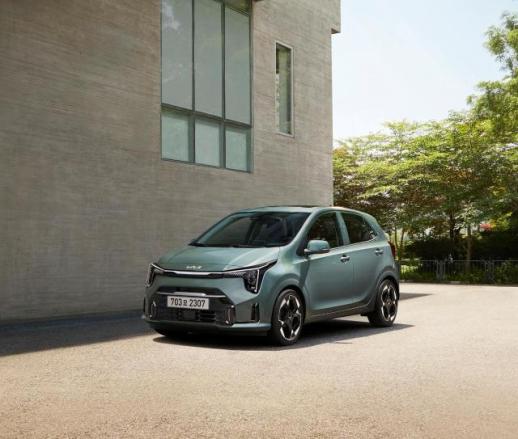 Kia Launches Updated 2027 Morning Model with Enhanced Features Kia has launched the updated 2027 Morning model, incorporating popular features such as LED map lamps as standard equipment. On May 18, Kia announced the official start of sales for the 2027 Morning, a compact car that has consistently garnered consumer popularity. Last month, Morning sales reached 3,186 units, making it one of the top two models in Kia's passenger car segment alongside the Ray, which sold 4,877 units. The 2027 Morning is characterized by its enhanced safety and convenience features, with new specifications and interior color options that improve overall product appeal. All trims, including the van model, now come standard with LED map lamps to enhance visibility inside the vehicle. Additionally, the 1.0 gasoline passenger model includes a driver's knee airbag as standard across all trims, further boosting safety. Starting from the signature trim, a new 10.25-inch cluster is now standard, and a bright green interior color option called 'Ice Green' has been added throughout the cabin, including the seats. A Kia representative stated, "The 2027 Morning is a model that enhances product appeal by focusing on features that customers prefer. It will offer a more competitive product while maintaining the economic advantages inherent in compact cars."* This article has been translated by AI. 2026-05-18 12:16:25
 -
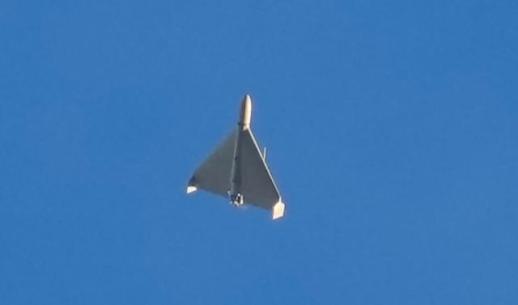 South Korea's Defense Industry Struggles in Attack Drone Market The presence of the Iranian Shahed-136 kamikaze drone is increasingly felt on the global battlefield. Recent reports suggest that this low-cost drone may have been used in a recent attack, highlighting the renewed threat posed by such drones. As drones emerge as a key element in modern warfare, South Korea's defense industry is still in the early stages of responding to the attack drone market. According to the defense industry on May 17, major companies and startups in South Korea, including Korea Aerospace Industries (KAI), are developing small attack drones. At the Drone Show Korea 2026 earlier this year, KAI unveiled its I-type small kamikaze drone designed for armored targets and II-type small kamikaze drone for personnel. LIG Defense and Aerospace showcased an AI-based swarm drone under development in collaboration with the Defense Science Research Institute. These drones represent a step forward from existing interception and anti-drone systems to more offensive capabilities. However, industry insiders cite a significant limitation in the development of attack drones: a lack of market viability and profitability. This year, the Ministry of National Defense allocated approximately 148.4 billion won ($112 million) for drone projects out of a total defense budget of 19.9653 trillion won ($15 billion). A substantial portion of this budget is earmarked for reconnaissance and surveillance, leaving limited investment for attack and expendable drones. The role of attack drones in defense projects remains minimal. One industry official stated, "We are focusing on developing unmanned systems that can be used in manned-unmanned hybrid systems, but we still face limitations in terms of mass production and price competitiveness." Smaller startups are facing similar challenges. Nears Lab, a maker of swarm AI drones, reported a revenue of 6.6 billion won ($5 million) and an operating loss of 16.6 billion won ($12.5 million) last year. The company recently secured a $10 million contract in the Middle East, seeking a turnaround, but profitability remains elusive. Another startup, Pablo Aviation, recorded a revenue of 10.9 billion won ($8 million) and an operating loss of 14.5 billion won ($11 million) last year. Moreover, South Korea's drone industry still relies heavily on Chinese components. Currently, many parts used in domestic drones, including batteries, motors, controllers, GPS, and cameras, are sourced from China, except for flight controllers. If these components were to be localized, they might lose price competitiveness compared to Chinese products. The government has secured a budget of 33 billion won ($25 million) this year to train 500,000 drone operators. The Ministry of National Defense plans to purchase 11,265 commercial small drones for training, distributing at least one to each squad in major army field units and training institutions. However, industry experts point out that the actual operational systems and regulations for battlefield use are still in their infancy. Kim Seung-yeon, president of the Korea Drone Utilization Association, remarked, "The domestic drone industry is realistically expanding primarily in the fields of information verification and surveying. For drones to be effectively utilized in combat, there needs to be an expansion of business scale and the establishment of conditions for soldiers to obtain drone operation certifications."* This article has been translated by AI. 2026-05-17 18:15:00
 -
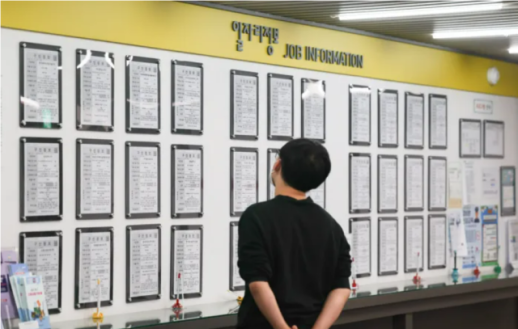 Youth Unemployment Rises Amid Job Growth in South Korea South Korea's job market is experiencing deepening K-shaped polarization, with an increasing number of young people disengaging from the labor force. Despite rising employment figures, job growth is primarily concentrated in large companies and among older workers, while opportunities for youth and small businesses are dwindling. The Korea Employers Federation (KEF) released a report on May 17, highlighting key trends in the current employment landscape. The report indicates a worsening of K-shaped employment polarization, a rise in the number of young people classified as inactive, and a slowdown in labor mobility. Particularly concerning is the growing employment insecurity among young people. Last year, the number of individuals aged 20 to 30 who were inactive reached 717,000, the highest figure since such statistics began being tracked. This indicates that over 700,000 young people have exited the labor market at the entry stage. The number of inactive individuals in this age group has surged from 644,000 in 2023 to 691,000 in 2024. KEF attributes the increase in inactivity among young people to a vulnerable job structure rather than merely a lack of available positions. There is a clear trend of young individuals leaving small businesses and temporary or seasonal jobs, contributing to the inactive population. Among those aged 20 to 30 who have been inactive in the past year, the reasons for leaving their jobs were personal reasons (36.6%), dissatisfaction with working conditions (29.9%), and the end of temporary or seasonal work (19.1%). The current job market is expanding primarily in new industries, among those aged 60 and older, and within large companies, while employment in traditional industries, among those under 60, and in small businesses and temporary jobs is contracting. According to analysis from the National Data Agency, the number of employed individuals under 60 last year was approximately 21.94 million, a decrease of 0.7% from the previous year (22.08 million). In contrast, the number of employed individuals aged 60 and older rose from 6.49 million to 6.83 million, an increase of 5.3% during the same period. Polarization by company size is becoming increasingly pronounced. Small businesses, which account for about 90% of total employment, have seen their employment growth rate stagnate at around 0% since 2023. Meanwhile, employment in companies with over 300 employees increased by 6.1% last year, reaching 3.34 million, up from 3.15 million the previous year. This growth is attributed to strong exports led by large companies, particularly in the semiconductor sector. Labor mobility is also on a downward trend. Last year, the labor mobility rate was 9.8%, continuing a steady decline. This rate measures the proportion of new hires and job changes relative to the total workforce over a specific period. Both the hiring and turnover rates fell from 5.1% in 2024 to 4.9% last year. KEF analyzed that the simultaneous strengthening of companies' hiring reductions and workers' reluctance to change jobs could further entrench the dual structure of the labor market. This trend could exacerbate income inequality and dampen consumption, weakening the overall growth foundation of the economy. Lee Sang-cheol, head of KEF's Employment and Social Policy Division, stated, "While recent employment indicators show a quantitative expansion, structural imbalances such as K-shaped polarization are actually deepening. The disengagement of young people from the labor market and the slowdown in labor mobility pose warning signs that could constrain our economy's growth potential."* This article has been translated by AI. 2026-05-17 12:10:07
 -
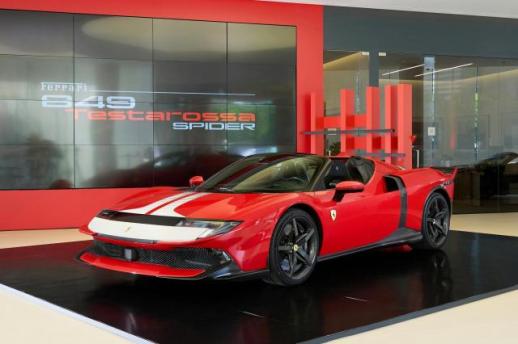 Ferrari 849 Testarossa Spider Launches in South Korea Ferrari's top-of-the-line open-top model, the 849 Testarossa Spider, has made its debut in South Korea. This high-performance supercar features a plug-in hybrid system. Ferrari Korea hosted a private viewing event for the 849 Testarossa Spider on May 13 in Banpo, Seocho-gu, Seoul. The newly unveiled model replaces the existing SF90 Spider and is designed as a super sports berlinetta spider. It showcases sharp geometric lines and details inspired by Ferrari's sports prototypes from the 1970s. The design emphasizes pure performance, targeting drivers who prioritize driving experience. When the roof is opened, it creates a more striking silhouette. The car features Ferrari's signature retractable hardtop (RHT), providing a unique sense of openness. Choi Seung-ok, manager of Ferrari Korea, stated, "The hardtop can be opened or closed in about 14 seconds at speeds below 45 km/h. This vehicle allows drivers to experience the allure of both a coupe and a spider." The powertrain includes a plug-in hybrid (PHEV) system, which combines the advantages of electric and hybrid vehicles. It features a V8 twin-turbo engine that produces up to 830 horsepower, paired with three electric motors, resulting in a combined output of 1,050 horsepower—an increase of 50 horsepower compared to the previous model. The car also boasts an aerodynamic design, generating a total downforce of 415 kg at a speed of 250 km/h, which is 25 kg more than the previous model. It features a "wind catcher" system that reduces interior turbulence by directing airflow from the upper sides to the rear shelf intake and lower exhaust outlets. Choosing the high-performance "Assetto Fiorano" package allows for a weight reduction of about 30 kg through the use of carbon fiber and titanium materials. Thibaut Dussara, CEO of Ferrari Korea, remarked, "The 849 Testarossa Spider is not just a simple GT model; it is designed for those who are passionate about Ferrari. I recommend it to drivers seeking the best performance and a unique driving experience."* This article has been translated by AI. 2026-05-14 05:04:00
 -
 South Korea reaches 76 million vehicles in 50 years of auto exports SEOUL, May 12 (AJP) - South Korea has exported more than 76 million vehicles over the past 50 years since entering overseas markets, the Korea Automobile & Mobility Association said on Tuesday. The cumulative number of exports reached 76.55 million vehicles as of last month, a milestone that comes nearly half a century after Hyundai Motor first exported its domestically made Pony passenger car to Ecuador in June 1976. The country first hit the 10 million mark in vehicle shipments in 1999, then surpassed 50 million in 2015, 60 million in 2019, and 70 million in 2023, adding roughly 10 million units every three to four years. At this pace, industry watchers say cumulative exports could cross the 80 million mark as early as next year. According to a study by a Hyundai-affiliated research institute, the global auto market is expected to continue growing this year despite overall market saturation, with sales projected at around 87.93 million units. While growth is slowing in mature markets like the U.S. and Europe, emerging markets such as India are picking up the slack. "South Korea's auto export achievements have kept pace with the country's economic growth," said KAMA chairman Jeong Dae-jin. "Staying competitive in the global market will require a strong domestic production base and greater investment in research and development for next-generation vehicles," he added. 2026-05-12 09:53:29
 -
 Korean Automakers Reach 76 Million Exports After 50 Years in Global Markets Korea's automotive industry has achieved a significant milestone, reaching a cumulative export total of 76 million vehicles after 50 years in international markets. This accomplishment reaffirms the industry's vital role in the nation's economic growth. According to the Korea Automobile Mobility Industry Association (KAMA), as of last month, a total of 76,548,569 vehicles have been exported. This record comes 50 years after Hyundai Motor Company exported its first domestic passenger car, the Pony, to Ecuador in June 1976. Korean automobile exports surpassed the 10 million mark for the first time in 1999, with 11,073,814 vehicles shipped. The rise of Hyundai and Kia as top-tier global automotive brands has significantly elevated the status of the Korean automotive industry. Since then, exports have increased by approximately 10 million units every three to four years, with figures of 51,098,839 in 2015, 61,093,781 in 2019, and 70,087,640 in 2023. Industry insiders suggest that if the current trend continues, cumulative exports could exceed 80 million next year. As competition intensifies in the global market, the automotive sector continues to expand. A recent report from HMG Strategy Institute forecasts that the global automotive market will grow by 0.2% year-on-year to approximately 87.93 million units. While growth in advanced markets like the U.S. and Western Europe is expected to slow, emerging markets such as India are anticipated to gain momentum. The domestic automotive production sector also reached a historic milestone this year. Cumulative production, which totaled 129,110,000 vehicles last year, surpassed 130 million with an additional 1,387,043 units produced from January to April this year. On the same day, KAMA and the Korea Automobile Industry Cooperative (KAICA) held the 23rd annual Automotive Day ceremony in Seocho-gu, Seoul, honoring 36 individuals for their contributions to the development of the automotive industry. The highest honor, the Gold Tower Industrial Medal, was awarded to Jae-hoon Chang, Vice Chairman of Hyundai Motor Group. The Silver Tower Industrial Medal went to Sang-sik Ham, CEO of MR Infra Auto, while the Bronze Tower Industrial Medal was awarded to Ki-young Hwang, CEO of KG Mobility. This year's awards focused on individuals who have strengthened the competitiveness of future vehicles through initiatives such as attracting domestic production of eco-friendly cars, technological development, innovations in AI, software, and autonomous driving technologies, advancements in smart manufacturing, building a future vehicle industry ecosystem, and exploring new markets through cooperative efforts. Jung Dae-jin, President of KAMA, stated, "The 50 years of automotive exports reflect the history of South Korea's economic growth. To maintain our lead in the global future vehicle competition, we need to secure domestic production bases and expand research and development and investment through public-private cooperation."* This article has been translated by AI. 2026-05-12 08:33:27
 -
 Korean Tire Companies Face EU Anti-Dumping Duties Amid Rising Costs Domestic tire manufacturers have reported solid first-quarter results despite rising global raw material costs. The increase in sales of high-inch tires has been driven by a surge in global demand for electric vehicles and sports utility vehicles (SUVs). However, the European Union's announcement of anti-dumping duties on Chinese tires could lead to increased volatility in second-quarter results. According to industry sources on May 11, the three major South Korean tire companies—Hankook Tire & Technology, Kumho Tire, and Nexen Tire—saw improvements in their financial performance for the first quarter. Hankook Tire's operating profit in its tire division reached 437.5 billion won, a 31.1% increase compared to the same period last year. Kumho Tire and Nexen Tire reported operating profits of 147 billion won and 54.2 billion won, respectively, marking increases of 0.3% and 33.1% year-on-year. The three tire manufacturers achieved relatively stable results, bolstered by increased sales of electric, high-inch, and replacement tires. Analysts attribute this improvement to a strategy focused on expanding premium product sales amid a market shift toward SUVs and electric vehicles. In fact, for the first quarter, the sales proportion of high-inch tires (18 inches and above) was 49.1% for Hankook Tire, 45.1% for Kumho Tire, and 40% for Nexen Tire. Despite the first-quarter gains, trade risks for the tire companies are escalating. The EU recently announced it would impose anti-dumping duties of up to 50% on passenger and light truck tires produced in China, effective June 16. Kumho Tire and Nexen Tire have been notified of anti-dumping duty rates of 29.9%. When combined with the existing EU import duty of 4.5%, the actual burden could reach as high as 34.4%. In contrast, Hankook Tire will face a relatively lower anti-dumping duty rate of 3.4%, resulting in a total tariff of 7.9%. Kumho Tire and Nexen Tire plan to seek a reduction in their duty rates through appeals before the tariffs take effect. An industry insider noted, "The remaining companies, excluding Hankook Tire, have been subjected to an average duty rate. We are exploring ways to mitigate tariff impacts, including increasing local production and filing appeals." Approximately 40% of the total sales for the three domestic tire companies come from the European market. Notably, about 50% of Kumho Tire's sales in Europe are produced locally in China, while Nexen Tire sources around 15% of its European tires from China. In addition to the anti-dumping duties, raw material prices for tires in China are also on the rise. According to data from the Chinese raw materials data firm Sunsear, the price of styrene-butadiene rubber reached 16,041 yuan per ton as of May 10, up 22.2% from 13,125 yuan on March 9. As a result, the three domestic tire manufacturers are considering strategies to gradually increase their domestic and European production volumes while boosting the export share of their domestic output. Industry analysts predict that the combination of tariff burdens and rising costs could lead to greater variability in corporate performance in the second quarter. According to financial information provider FnGuide, Kumho Tire's second-quarter operating profit consensus is projected at 145.6 billion won, a 16.9% decrease from 175.2 billion won in the same period last year. Conversely, Hankook Tire's operating profit is expected to rise to 549.3 billion won, a 58.5% increase year-on-year, while Nexen Tire's operating profit is projected to reach 48.3 billion won, an approximate 13% increase. 2026-05-12 05:23:19
 -
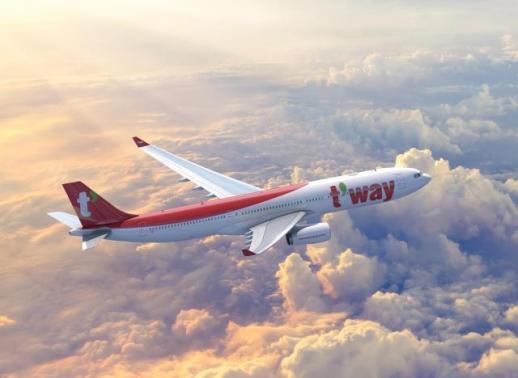 T'way Air Returns to Profit After Two Years, Boosted by Winter Travel and Cargo Business T'way Air has successfully returned to profitability for the first time in two years, driven by increased passenger numbers and a robust cargo transport business. On May 11, T'way Air announced that its operating profit for the first quarter reached 19.9 billion won, marking a return to the black after eight quarters. Revenue totaled 612.2 billion won, a 37% increase compared to the same period last year. The airline's improved performance is attributed to a surge in travel demand during the winter peak season and the stabilization of its route operations. The number of passengers in the first quarter surpassed 3.13 million, reflecting a 17% increase year-on-year. Notably, international passenger numbers rose by over 23% to 2,188,463. Analysts suggest that the airline's strategy of expanding new routes and diversifying its offerings, which began last year, is yielding positive results. Passenger load factors for both domestic and international routes exceeded 90%. T'way Air's cargo transport business is also experiencing steady growth. In the first quarter of 2026, cargo volume reached approximately 9,000 tons, a 130% increase compared to the first quarter of 2024, effectively tripling the scale of the operation. Following its acquisition by the Sonot Trinity Group, T'way Air has thoroughly reviewed its route operations structure. The airline has restructured its operations to focus on efficiency, contributing to the improved performance in the first quarter. Recently, T'way Air held a shareholders' meeting where it announced a name change to Trinity Air. Full operations under the new name will commence once approval from relevant domestic and international authorities is secured. A T'way Air official stated, "We plan to enhance operational efficiency with the introduction of new A330-900NEO aircraft in the second half of the year. We will continue to drive performance through efficient operations in passenger and cargo transport and stabilization of medium- to long-haul routes."* This article has been translated by AI. 2026-05-12 03:39:24
 -
 Hummer EV SUV Launches in South Korea with Advanced Features The Hummer EV SUV, a large electric off-road vehicle, has officially launched in South Korea. Manufactured in the United States, the Hummer EV SUV is equipped with advanced driving assistance systems, including Super Cruise, which is a hallmark of General Motors. General Motors (GM) announced on May 11 that its electric sports utility vehicle (SUV) and pickup truck brand GMC has introduced the Hummer EV SUV to the domestic market. The Hummer EV SUV, GMC's flagship electric sports utility vehicle, is designed for both urban daily use and outdoor off-road lifestyles. Built on GM's latest electric vehicle platform, this flagship model incorporates innovative technologies such as Crab Walk and Super Cruise, while maintaining the rugged identity of the traditional internal combustion engine Hummer. A key feature of the Hummer EV SUV is its electronic four-wheel steering system. This allows all four wheels to steer together, reducing the turning radius for smoother and more precise maneuvers in tight urban spaces and on off-road trails. The Crab Walk feature enables the rear wheels to turn at the same angle as the front wheels at low speeds, enhancing maneuverability on rugged terrain. The Hummer EV SUV also features GM's advanced driver assistance system, Super Cruise. Currently available on approximately 23,000 kilometers of highways and major roads in South Korea, Super Cruise allows drivers to take their hands off the steering wheel while keeping their eyes on the road (Eyes On), enabling hands-free driving. It detects traffic flow, maintains safe distances between vehicles, and can automatically change lanes, offering a new level of driving experience. Additional safety and driver assistance features are also widely implemented. The Hummer EV SUV offers five driving modes: Off-Road, Terrain, Tow & Haul, Normal, and My Mode. Drivers can select vehicle settings based on road conditions and driving purposes, enjoying an optimized driving experience for each environment. Detailed information and pre-order guidance for the Hummer EV SUV can be found on the official GMC website and at showrooms nationwide. Additionally, a 'virtual showroom' service is available on the official website, allowing customers to conveniently explore the vehicle anytime, anywhere. A representative from Korea GM stated, "Following the official launch in the country, we will begin delivering vehicles to customers starting at the end of this month after receiving pre-orders." 2026-05-11 10:21:23
 -
 Innocean Achieves Record Operating Profit in Q1 Driven by Film and World Cup Boost Innocean, the advertising affiliate of Hyundai Motor Group, reported its highest operating profit for the first quarter. Despite a contraction in the overall advertising market, the company saw growth driven by its expansion into the overseas film market and the World Cup. On May 11, Innocean announced that its first-quarter revenue reached 250.1 billion won, with an operating profit of 39.8 billion won and a net profit of 39.6 billion won. This represents increases of 7.7% in revenue, 33.3% in operating profit, and 134.5% in net profit compared to the same period last year. The company described these results as an 'earnings surprise,' significantly exceeding market expectations. This achievement was attributed to improved management of selling and administrative expenses through AI-driven process innovations and diversification of its global portfolio. The rise in first-quarter performance was largely due to the expansion of non-affiliated advertisers. Domestic revenue increased by 7.8% year-on-year to 50.3 billion won, while overseas revenue, particularly in North America and Europe, grew by 7.7% to 199.8 billion won. Innocean's U.S. media subsidiary, Canvas Worldwide, recently handled media execution for the science fiction film 'Project Hail Mary,' which was released globally. As Innocean continues to strengthen its capabilities in global sports marketing, it anticipates direct benefits from the upcoming 2026 North America World Cup marketing efforts starting in the second quarter. An Innocean representative stated, "As film and World Cup advertising commissions are fully accounted for, operating profit has significantly increased. This year, with many major events like the World Cup, we expect improved performance in the second half." In Europe, the company has maintained its growth trajectory through the expansion of digital services. Notably, it significantly increased the Genesis web service area from two countries to seven, contributing to strong performance. Innocean is also focusing on the rapidly growing emerging market of India, where the advertising market was valued at $13.8 billion (approximately 20.4 trillion won) last year. Growth is expected to continue at 8% this year and 9.7% next year. The company is successfully executing sports marketing linked to the Cricket World Cup and has recently established a new office in the Bengaluru area to enhance its local business capabilities. Shin Seung-ho, Innocean's Chief Financial Officer, stated, "The North American entertainment business and sports marketing are repeatable growth engines. We plan to continue expanding high-value businesses by region and industry to enhance profitability and corporate value."* This article has been translated by AI. 2026-05-11 09:08:18