

Journalist

Oh Joo-Seok
farbrother@ajunews.com
-
 Hyundai Motor, Catch! Teenieping to Launch Youth Adventure 2026 Nexo Exhibit Hyundai Motor Co. said Wednesday it will hold its “Youth Adventure 2026” exhibition with the children’s franchise “Catch! Teenieping” as part of its marketing program aimed at young audiences. The exhibition will run from May 1 to Aug. 2 at Hyundai Motorstudio Goyang and Hyundai Motorstudio Busan. Built around Hyundai’s Nexo hydrogen fuel-cell vehicle, the program uses a Hyundai x Teenieping storyline and hands-on activities designed to help children learn about future energy and vehicles in an accessible way. A screening room will exclusively show a roughly 10-minute spin-off film, “Hachuping’s Hair-Raising Hydrogen Car Rescue Mission,” in which a Nexo created by Hyundai researcher character Sappunping is stolen and later recovered by racer Hachuping and friends. Hyundai released a trailer for the spin-off film on April 27 ahead of the exhibition’s opening. The company will also operate a “Hyundai x Teenieping Experience Zone,” offering edutainment content that follows the Teenieping story to explain how the Nexo works and includes a camping-themed activity. A separate merchandise area will offer 11 children’s items, including toys and car accessories. Hyundai said it also plans to display award-winning works from the 10th Hyundai Kids Motor Show, with six top-prize entries to be exhibited on the third floor of Hyundai Motorstudio Goyang. For Children’s Day, Hyundai will stage a “Catch! Teenieping Sing-Along Show” at Hyundai Motorstudio Goyang on May 5, featuring Teenieping characters performing songs and dance for children and families. “We will work to strengthen brand affinity with children, who are future potential customers, and to secure inspiration for next-generation innovation,” said Ji Seong-won, vice president and head of Hyundai’s Brand Marketing Division.* This article has been translated by AI. 2026-04-30 09:27:18
 -
 Hyundai Motor to Hire Experienced Staff in Manufacturing Software and AI Hyundai Motor said Wednesday it will recruit experienced hires in manufacturing software and artificial intelligence from May 1 to 17. The openings cover four areas: software-defined factories, manufacturing AI, manufacturing robotics and intelligent manufacturing logistics. Successful applicants in the document screening will be announced in June, with final hires to be selected through first- and second-round interviews, the company said. Hyundai Motor said the recruitment is aimed at accelerating future businesses such as robotics and physical AI, while improving manufacturing performance and strengthening quality competitiveness. A company official said Hyundai Motor will "make every effort to identify top talent in manufacturing software and AI" to respond to a rapidly changing global market and sustain momentum in its future industries.* This article has been translated by AI. 2026-04-30 09:06:39
 -
 Hyundai Motor Group Unveils Pleos Connect Next-Gen In-Car Infotainment System 현대차그룹이 차량을 '움직이는 스마트 기기'로 전환하는 차세대 인포테인먼트 시스템을 공개했다. 현대차그룹은 지난 29일 서울 강남구 UX 스튜디오 서울에서 미디어데이를 열고 다음 달 선보일 차세대 인포테인먼트 시스템인 플레오스 커넥트의 개발 콘셉트와 주요 기능, 향후 적용 계획을 발표했다. 플레오스 커넥트는 현대차그룹이 개발자 컨퍼런스 플레오스 25에서 공개한 연구개발 모델을 양산형으로 구현한 시스템이다. 그룹은 이를 소프트웨어중심차량(SDV) 체제 전환을 이끄는 핵심 플랫폼으로 보고 있다. 시스템은 대화면 디스플레이와 슬림 디스플레이, AI 음성 어시스턴트 '글레오 AI', 개방형 앱 마켓을 기반으로 구성됐다. 운전자는 터치와 음성 명령으로 차량 기능을 제어하고 내비게이션, 미디어, 외부 앱 서비스를 이용할 수 있다. 대화면 디스플레이는 주행 정보와 앱 기능을 분리해 직관성을 높였다고 회사는 설명했다. 화면 왼쪽에는 속도와 경고등 등 핵심 주행 정보를, 오른쪽에는 내비게이션과 콘텐츠 등 기능을 배치했다. 앱 화면은 분할해 여러 기능을 동시에 실행할 수 있다. 현대차그룹은 AI 기능을 핵심으로 내세웠다. 글레오 AI는 대규모 언어모델(LLM)을 기반으로 사용자의 의도와 상황을 파악해 차량 제어, 길 안내, 정보 검색 등을 수행한다. 여러 명령을 한 번에 처리하거나 모호한 표현도 인식하는 음성 인터페이스를 제공한다고 밝혔다. 또 차량 내에서 음악, 영상, 내비게이션, 웹 검색 등 외부 서비스를 이용할 수 있는 앱 마켓을 도입한다. 향후 게임과 엔터테인먼트, 차량 관리 서비스로 확대할 계획이다. 현대차그룹은 5월 출시 예정인 더 뉴 그랜저에 플레오스 커넥트를 처음 적용하고, 글로벌 시장에 순차적으로 확대해 2030년까지 약 2000만대 차량에 적용할 계획이다. 이종원 현대차·기아 피처&CCS사업부 전무는 "플레오스 커넥트는 모바일 친화적으로 구성된 플랫폼에 고도화된 인공지능 기술을 결합해 이용자에게 한 차원 높아진 이동 경험을 제공할 것"이라고 말했다. 2026-04-30 08:59:08
 -
 Hyundai Motor Group Chairman Chung Euisun Returns to Beijing Auto Show After 8 Years Hyundai Motor Group Chairman Chung Euisun visited the Beijing motor show, the world’s largest auto exhibition, for the first time in eight years, a move seen as reinforcing the group’s push in China. According to industry officials on Tuesday, Chung visited Auto China 2026 at the Beijing International Exhibition Center and checked the show floor. He toured booths of major Chinese electric-vehicle makers, including BYD, and was said to have reviewed their growing competitiveness in EVs, batteries and autonomous driving. It was Chung’s first visit to the Beijing motor show since 2018. Following his attendance at last year’s Shanghai motor show, it marked a second straight year he has visited a major auto show in China. The Beijing motor show, which opened April 24, spans 380,000 square meters — about the size of 50 soccer fields — making it the largest auto exhibition in the world. Hyundai used the show to unveil the Ioniq V for the first time globally and signal its intent to regain momentum in China. Starting with the Ioniq V, Hyundai aims to launch 20 new models over the next five years and lift annual sales to about 500,000 vehicles.* This article has been translated by AI. 2026-04-29 18:32:15
 -
 Nexen Tire Q1 Operating Profit Rises 33.1% to 54.2 Billion Won on Record Sales Nexen Tire said it posted record quarterly revenue despite slowing global demand, helped by stronger sales in Europe and the United States and a higher share of higher-margin products. In an earnings filing on April 29, the company said first-quarter operating profit rose 33.1% from a year earlier to 54.2 billion won. Revenue increased 8.7% to 838.3 billion won, the highest quarterly figure on record, it said. Net profit was estimated at 61.9 billion won, up 55.3% from a year earlier. Nexen Tire said solid sales in major markets including Europe and the U.S. lifted both revenue and operating profit. It said the sales mix shifted further toward higher-value products, including premium original equipment tires and tires for SUVs and electric vehicles. Tires of 18 inches and larger accounted for 40% of revenue, it said. The company also cited management efficiency efforts as improving overall profitability. During the first quarter, Nexen Tire launched its high-performance N'Fera Sport and all-weather N'Blue 4Season 2 in the domestic market after rolling them out in Europe and the U.S., targeting premium demand. In Latin America and the Asia-Pacific region, it introduced the N'Blue S, a high-efficiency summer tire, and said it is working with local distributors to strengthen retail competitiveness. It said it is seeing strong growth in key strategic markets such as Australia and Japan as it seeks to diversify its global sales structure. With external uncertainty expected to persist in the second quarter, Nexen Tire said it plans to continue efforts to strengthen its mid- to long-term growth foundation. "Despite an uncertain business environment, we delivered solid results," a company official said. "We will respond flexibly to market changes while continuing to strengthen product competitiveness and operational efficiency to sustain sound growth."* This article has been translated by AI. 2026-04-29 17:34:11
 -
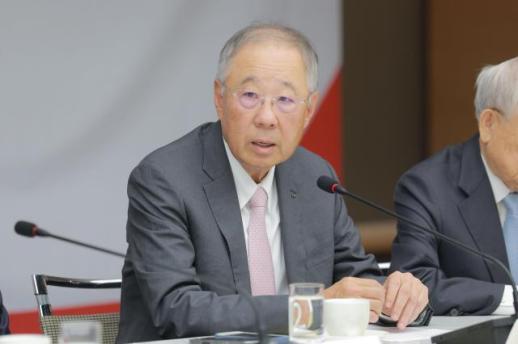 FKI Chairman Ryu Jin Says Two-Thirds of Top 10 Groups’ New Hires Will Be Entry-Level Ryu Jin, chairman of the Federation of Korean Industries, said on the 29th that he would help address youth employment as young people struggle to find jobs. Speaking at the 2026 Korea Shared Growth Job Fair, Ryu said the country’s 10 largest business groups plan to hire a total of 52,000 people this year, up 2,500 from last year. He said about two-thirds of those hires will be entry-level young workers. In congratulatory remarks, Ryu said it is time for the government and companies to act as “one team” to craft solutions for youth employment. “The global job market is being shaken by the AI revolution and industrial restructuring,” he said, adding that new hiring has already fallen sharply in some fields. He said conditions at home are also difficult. “Recent employment indicators show total employment increased, but youth employment fell by about 140,000,” he said, adding that young people’s perceived job conditions remain worsening. Ryu called the joint response by the government and the business community an appropriate step. He said the job fair is the largest ever, with seven business groups, seven government agencies, 15 conglomerate groups and 700 companies taking part, calling it a venue that offers young people practical opportunities. He also pointed to shifting corporate views, saying a survey of the top 500 companies found more than 70% said hiring should be expanded regardless of economic conditions. “The business community will work with the government to build a foundation where young people can pursue their dreams,” Ryu said. “We will keep working to the end for a Korea where young people can smile.”* This article has been translated by AI. 2026-04-29 17:21:00
 -
 GM Korea Union Seeks 30 Million Won Bonus, 149,600-Won Monthly Base Pay Raise The GM Korea branch of the Korean Metal Workers' Union said Tuesday it has finalized its 2026 wage and labor contract demands, calling for a performance bonus of about 30 million won per union member and a 149,600-won increase in monthly base pay. The union said it confirmed the proposal through a recent meeting of interim delegates. It said the bonus was calculated by allocating 15% of 10% of GM Korea's total sales last year, which it put at 12.6 trillion won, to about 6,300 union members and others. In special demands aimed at future growth prospects and job security, the union included assigning production of follow-up models, future vehicles and next-generation engines. It also called for investing more than 50% of retained earnings in South Korea, restoring domestic market share to 10% and diversifying export markets. The proposal also includes launching the Buick Envista in South Korea, a model the company currently produces domestically and exports entirely. The union said it plans to discuss with management measures to ensure and strengthen the sustainability of the service technology center and high-tech center, as well as issues involving nonregular workers.* This article has been translated by AI. 2026-04-29 16:39:51
 -
 South Korea Lawmakers Push Strategic Export Finance Fund to Boost Arms Sales South Korea’s National Assembly began accelerating debate on legislation aimed at closing a financing gap that has hindered defense exports, as competition in large export projects increasingly hinges on bundled financial support. The Assembly’s Fiscal and Economic Planning Committee held a public hearing April 29 at the main Assembly building to discuss the need for the proposed Strategic Export Finance Support Act. The bill, introduced by Democratic Party lawmakers Han Jeong-ae and Ahn Do-geol and others, would establish a Strategic Export Finance Fund to build a system for timely financing in export projects where competition between countries is intense. Speakers said the global defense market has shifted beyond price competition to “financial package” competition, with buyers often demanding technology transfer, offset deals and investment as part of contract terms — burdens difficult for companies to shoulder alone. Korea’s defense firms, despite favorable conditions tied to the Middle East and the Russia-Ukraine war, have struggled to secure policy financing. Data released from the Export-Import Bank of Korea showed defense industry lending accounted for just 4.7% last year, compared with ships at 19.3%, construction plants at 11.1%, autos at 9.9% and electronics at 9.9%. To supplement limited lending, the bill calls for creating the fund through contributions from exporters that receive support such as buyer’s credit. Companies would pay about 1% of the disbursed amount, or up to 5% if linked to export industry cooperation, to help backfill financing shortfalls. Kwon Heon-cheol, a professor of defense economics at Korea National Defense University, said fast-growing defense exports face heavy burdens including offset deals. “Large-scale exports require buyer’s credit and guarantees to be combined, so national-level financial support is needed,” he said. Park Chang-gyun, a research fellow at the Korea Capital Market Institute, said existing policy finance has limits in spreading risk across individual firms, making a separate fund necessary for a stable supply of support. The hearing also cited recent defense exports to Poland as an example of constraints. In a $44 billion project, the Export-Import Bank of Korea and the Korea Trade Insurance Corp. provided about $15 billion, but later faced limited additional capacity, affecting the bidding competitiveness of major Korean defense companies. Some participants urged revisions to avoid overlap with a separate bill introduced by the National Defense Committee to create a defense industry development and export promotion fund. Attorney Park In-yong of law firm Yulchon said he agreed with the purpose of the export finance bill but called for clarifying the relationship and scope of the bills to prevent double charges. Industry representatives also warned that contributions of up to 5% could be burdensome. Ahn Sang-nam, head of the defense promotion division at the Korea Defense Industry Association, said requiring an additional 5% payment on supported amounts could create a double cost burden that small and partner firms may struggle to bear. He urged lowering the contribution rate from 5% to 1% to strengthen competitiveness across the defense supply chain. The Fiscal and Economic Planning Committee is set to hold a full meeting April 30 to decide whether to send the bill to a plenary session. If passed, officials plan to pursue institutional steps with a goal of establishing the fund in September. Committee Chair Lim I-ja said there are concerns that exporters’ burdens could be excessive during the fund-raising process and said the bill needs improvements, including addressing potential overlap with policy finance and fairness issues in profit distribution.* This article has been translated by AI. 2026-04-29 16:34:55
 -
 Hyundai Mobis to Launch Limited Auror x Monami Car Care Special Edition Hyundai Mobis is teaming up with Monami, a widely recognized Korean stationery brand, to pitch a new take on car life through its in-house car care brand Auror. The company said Tuesday it will begin limited sales next month of an “Auror × Monami edition” through online and offline channels, adding Monami collaboration goods to Auror’s interior kit. Hyundai Mobis said the partnership is part of a marketing push to position car care items as lifestyle products and broaden customer touchpoints. Auror is Hyundai Mobis’ own vehicle care brand, featuring practical components and a modern design. The name, which the company said means “fragrance, promise and hope” in Spanish, reflects its aim to add a pleasant scent to vehicles while delivering reliable quality. Hyundai Mobis said it chose Monami to lower barriers to entry for Auror by partnering with a familiar household brand and building broader appeal. The two companies share a simple black-and-white design sensibility and used the key message, “When you need a memo in your car,” to link vehicle care with everyday life. The Auror interior kit includes a cleaner for interior use, a dedicated towel, and a limited-edition pen case and writing set reflecting Monami’s identity. The product will be sold through the official Hyundai Mobis online store. It will also be available during May at Monami’s Starfield Suwon store and its Seongsu store. Hyundai Mobis has recently stepped up accessories marketing centered on its online B2C channels, expanding brand exposure and content promotion online and connecting that effort to offline distribution to diversify brand experiences. “The auto accessories market is evolving beyond function toward a lifestyle focus that combines design and storytelling,” a Hyundai Mobis official said.* This article has been translated by AI. 2026-04-29 11:03:18
 -
 Genesis Magma Racing Finishes Surprise Hypercar Debut at 2026 WEC Imola 6 Hours Genesis said Tuesday that its Genesis Magma Racing team successfully finished its first top-class Hypercar entry at the season-opening 2026 FIA World Endurance Championship (WEC) Imola 6 Hours. Unlike most motorsports, which typically last one to two hours and reward the fastest finish, WEC races emphasize durability, with events commonly run over six hours and sometimes eight or 24 hours. Over races that can last up to 24 hours, cars must withstand heavy loads from high-revving engines, brakes that heat up under repeated stopping, and thermal management demands on hybrid motors and batteries. Each car is shared by three drivers, with six drivers rotating across the team, as they manage changing weather, tire wear and other variables while battling for position. Genesis Magma Racing entered its first event with a mix of veterans and newcomers: Andre Lotterer, Pipo Derani, Daniel Juncadella, Mathys Jaubert, Mathieu Jaminet and Paul-Loup Chatin. Midrace, Lotterer moved up to 11th before pitting. Jaubert then took over and made a clean pass on an Aston Martin. After Derani got in as the third driver, the team briefly climbed as high as ninth. Ferrari driver Nicklas Nielsen, who was chasing Jaubert, expressed surprise over team radio, saying, “I don’t understand why that car is faster than us in the corners.” After six hours, the team’s two hypercars averaged 177.97 kph and 176.23 kph around the 4.909-kilometer Imola circuit, finishing 15th and 17th. Cyril Abiteboul, head of Hyundai Motorsport and team principal of Genesis Magma Racing, said the new entrant focused less on the absolute result and more on reliability and execution. “The most important thing we confirmed this weekend is the solid foundation and potential of our team,” he said. Genesis Magma Racing is scheduled to race next month at the season’s second round, the Spa-Francorchamps 6 Hours in Belgium.* This article has been translated by AI. 2026-04-29 09:12:15