

Journalist

Oh Joo-Seok
farbrother@ajunews.com
-
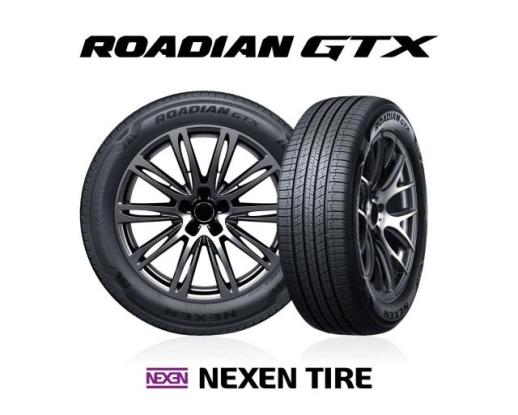 Nexen Tire to Supply OE Tires for 2026 Jeep Cherokee in North America Nexen Tire said Sunday it will supply original equipment tires for the North American launch of the 2026 Jeep Cherokee SUV, a Stellantis brand. The 2026 Cherokee is the brand’s first vehicle to feature a full hybrid system and can travel more than 500 miles (about 800 kilometers) on a single tank of fuel, the company said. The model will be fitted with Nexen’s Roadian GTX, which the company said is designed to balance braking, snow traction and wear performance with low noise and ride comfort. Nexen said the tire maintains stable braking in both summer heat and winter cold, and uses an optimized zigzag tread pattern to spread road pressure and reduce sudden pull for steadier driving. Nexen said the Roadian GTX has also been selected as an OE tire for vehicles including Kia’s EV5 and EV6 and Renault’s Filante, citing those fitments as evidence of its quality and performance for electric and hybrid models. The company said it has expanded cooperation with Stellantis, including Jeep, based on ongoing research and development and quality competitiveness. A Nexen Tire official said supplying OE tires for Jeep’s first hybrid SUV in North America “once again proves our competitiveness in the future mobility market.”* This article has been translated by AI. 2026-04-27 08:47:05
 -
 Peugeot CEO Eyes Korea Growth as Brand Expands Into Larger Electric Concepts "I want to see more Peugeot vehicles on the roads in Korea. That's why we are doing this (Beijing) motor show," Alain Favey, CEO of the Peugeot brand, said. Favey made the remarks April 24 at a briefing with the Korea Automobile Journalists Association on the sidelines of the Beijing Motor Show (Auto China 2026), signaling that Peugeot is open to bringing its large concept cars to South Korea. Peugeot unveiled two large concept vehicles at the show, including one about 8.2 meters (about 26.9 feet) long. The Concept 6 is a sedan and the Concept 8 is a sport utility vehicle. The display underscored Peugeot's push to expand beyond its small-car image into larger models. "The concept cars we revealed today were built with the future in mind," Favey said. "The Korean market has high barriers to entry, but if there is an opportunity, we want to enter." He also raised the possibility of electrified versions. Working with its local partner in China, Dongfeng, Peugeot plans to broaden its powertrain offerings, including electric vehicles, plug-in hybrids and mild hybrids. "These two concept cars can meet the needs of different markets," he said, adding that Peugeot will also introduce two additional EVs. Asked how to introduce the appeal of Peugeot and other French cars to Korean consumers, Favey cited three points: "First is Peugeot's design, second is the joy of driving, and third is meeting the needs of each local market." He said the biggest takeaway from the exhibition was "diversity," while noting that some uniformity was also visible. He said Peugeot aims to stand out with French-based design and an "e-DNA" sensibility. Favey also detailed Peugeot's approach to China, saying the brand will keep "the joy of driving" as a core value while pursuing electrification and differentiated design and technology. "In China, new energy vehicles already account for 64%, so it is important to respond to local customer expectations," he said. He added that Peugeot wants to differentiate itself in design, suspension and driving feel, and will pursue competitiveness by combining smart-solution technology with design.* This article has been translated by AI. 2026-04-26 15:07:30
 -
 Survey: 89% of South Korean firms oppose immediate punishment in safety inspections Most companies say they feel burdened by an “immediate punishment” approach in occupational safety and health inspections, warning that penalties without a chance to correct problems could increase administrative 대응 rather than improvements at worksites. The Korea Employers Federation said on April 26 that in a survey of 216 domestic companies on problems and improvements in the industrial safety and health inspection system, 89% (193 companies) responded negatively to being punished immediately during inspections without an opportunity to fix issues. The most common reason, cited by 38% (74 companies), was concern that inspectors could overuse findings of legal violations to boost performance. The results come as the government moves to expand the number of industrial safety inspectors and shift inspection policy toward immediate punishment, the federation said. Companies also warned that if even minor violations lead to penalties, they may focus on paperwork and other administrative responses instead of reducing workplace hazards. Distrust of inspectors was also widespread. In the survey, 56% (120 companies) said their level of trust in industrial safety inspectors was low. The top reason was “enforcing the law uniformly without understanding the industry,” cited by 41% (49 companies). By company size, 65% of firms with 300 or more employees, 60% of firms with 50 to 299 employees, and 50% of firms with fewer than 50 employees said trust was low. Larger workplaces were more likely to see problems with punishment-centered inspections. On whether the method of selecting inspection targets is appropriate, 53% (115 companies) responded negatively. Among them, 49% said detailed criteria are not disclosed, and 45% said workplace risk levels are not considered. Companies called for a shift in inspection policy. The most common request was “granting an opportunity to correct minor violations,” at 64%, followed by “expanding guidance and consulting focused on improving risk factors,” at 62%. Among companies inspected over the past three years, 49% said the main issues cited were minor violations such as posting material safety data sheets (MSDS) and missing safety signs. The biggest difficulties during inspections were the burden of assigning staff for administrative work such as preparing documents (82%) and the burden of criminal penalties and fines (78%). Lim Woo-taek, head of the federation’s Safety and Health Headquarters, said companies have strong concerns about immediate punishment during inspections and that trust in inspectors is lacking. He said the government should shift inspections toward prevention rather than punishment, including giving companies a chance to correct minor violations, and should strengthen inspectors’ expertise and capabilities.* This article has been translated by AI. 2026-04-26 12:05:37
 -
 Hyundai Motor Group’s Vision Pulse safety campaign wins at The One Show and Spikes Asia Hyundai and Kia said April 26 that their “Vision Pulse technology campaign” won two top prizes at The One Show and a bronze award at Spikes Asia, two major international advertising competitions. At The One Show, the campaign received top honors in the Intellectual Property & Product Design category and the Experimental & Research and Development category. At Spikes Asia, it won bronze in the Innovation category. Vision Pulse is an advanced driving safety technology that uses ultra-wideband, or UWB, signals to detect the location of nearby obstacles in real time to assist drivers. When a vehicle, driver or pedestrian carries a UWB device, the system exchanges signals and issues warnings to both sides if a collision is expected. Because it uses ultra-wideband signals in the gigahertz range, the company said interference is low and diffraction and penetration performance are strong. That allows the system to identify an object’s precise location within about 10 centimeters, within a radius of about 100 meters, even in obstacle-heavy areas such as urban intersections. Hyundai and Kia piloted the technology with kindergarten children and buses as part of a campaign aimed at improving school commute safety, and released a video of the project in January. To make the device easy for children to carry, the companies produced the UWB module as a guardian-character key ring. The key ring also functions as a sleep mood light, designed so children naturally connect it to power at bedtime, enabling charging. Judges at The One Show and Spikes Asia cited the campaign’s cost efficiency and scalability through integration with an existing digital key ecosystem, and its use of technology to address a real-world safety issue. Hyundai Motor Group has also expanded UWB applications to industrial settings. It is running a demonstration project to help prevent collisions between forklifts and workers by applying Vision Pulse to a production line at Kia’s PBV Conversion Center in Hwaseong, Gyeonggi Province, last year. Hyundai Motor said it signed a memorandum of understanding with the Busan Port Authority in October last year and plans to verify the technology through demonstration projects aimed at preventing collisions between industrial mobility equipment and workers at Busan Port terminals and nearby logistics areas. A Hyundai and Kia official said the back-to-back wins at The One Show and Spikes Asia reflected recognition of the companies’ commitment to solving social problems by combining advanced technology with creativity.* This article has been translated by AI. 2026-04-26 10:10:01
 -
 Hyundai Motor posts record first-quarter revenue as profit drops on tariffs, higher costs Hyundai Motor Co. said geopolitical uncertainty and rising costs weighed on its first-quarter results, even as sales in its biggest export market, the United States, held up. The automaker pointed to tariffs, higher raw material prices and currency moves as key drags, and said it plans to lean more on hybrids and other eco-friendly models to regain momentum. In a preliminary earnings filing on Wednesday, Hyundai said first-quarter operating profit on a consolidated basis fell 30.8% from a year earlier to 2.5147 trillion won. Revenue rose 3.4% to 45.9389 trillion won, the highest ever for a first quarter. While sales grew, profitability weakened. Hyundai said the continued burden of a 15% tariff, along with a weaker exchange rate tied to geopolitical risks and higher raw material prices, hit operating profit. With multiple cost pressures at once, operating profit fell by more than 1 trillion won from a year earlier. Lee Seung-jo, head of Hyundai’s planning and finance division, said raw material prices have surged since late last year, creating about a 200 billion won burden on first-quarter results. He said similar cost pressure could continue in the second quarter and that the company is preparing cost-cutting measures. Hyundai sold 976,219 vehicles worldwide in the first quarter, down 2.5% from a year earlier. The company attributed the decline to heightened geopolitical uncertainty that it said drove global auto demand down 7.2%. In the United States, Hyundai sold 243,572 vehicles, up 0.3% from a year earlier. Total overseas sales fell 2.1% to 817,153 vehicles. Domestic sales dropped 4.4% to 159,066 vehicles, which Hyundai said reflected demand tied to waiting lists for new models and production disruptions after a fire at its parts plant in Daejeon affected some lines. Hyundai said sales of electric and hybrid models were strong. The share of eco-friendly vehicles and hybrids in global sales rose to quarterly highs of 24.9% and 17.8%, respectively, as consumer demand shifted toward hybrids amid a slowdown in electric-vehicle growth. Looking ahead, Hyundai said it will continue to improve its product mix by focusing on higher value-added models such as hybrids. It plans to expand its lineup, including a refreshed Grandeur, and to diversify sales channels by strengthening its push in China and other emerging markets. Hyundai also said it will keep expanding its electrified lineup, including new Ioniq models, range-extended electric vehicles and sedans. It plans to deploy its software-defined vehicle (SDV) “face car,” a test vehicle, on some roads starting in the second half of this year.* This article has been translated by AI. 2026-04-23 18:06:05
 -
 Hyundai Rotem Enters Vietnam Rail Market With Ho Chi Minh City Metro Line 2 Deal Hyundai Rotem said it signed a contract on April 23 (local time) with Vietnam’s THACO Group for the Ho Chi Minh City Metro Line 2 project, marking its first entry into Vietnam’s rail market. The deal is worth about 491 billion won. Metro Line 2 is a major rail infrastructure project being developed with a target opening in 2030. The line is planned to span 64 kilometers with 36 stations. Construction began in January, and the project is to be built in three phases. THACO Group, one of Vietnam’s leading conglomerates, is overseeing the Line 2 buildout. Hyundai Rotem will supply driverless electric multiple units for the line. Hyundai Rotem also signed a memorandum of understanding with THACO Group to supply the line’s signaling system, its first overseas supply of an unmanned driving signaling system. The company said it has worked to expand into Vietnam’s rail business since signing a localization agreement last year with THACO Group covering urban rail and high-speed rail rolling stock. Hyundai Rotem said the latest order provides a foothold for broader expansion and could support bids for large projects expected to be tendered, including the North-South high-speed rail project. The North-South high-speed rail project is estimated to total about 100 trillion won, making it Vietnam’s largest infrastructure development to date. "Entering Vietnam’s rail market for the first time, we have broadened our business base and built a meaningful foundation for local cooperation," a Hyundai Rotem official said. "We will work to establish ourselves as a partner contributing to the growth of Vietnam’s rail industry, seek new business opportunities, and help create a solid foundation for the development of Korea’s rail industry as well." Hyundai Rotem said it is also working with more than 500 partner companies to develop overseas markets and support joint expansion, including through a shared-growth fund, joint research and development, and other technical assistance.* This article has been translated by AI. 2026-04-23 16:58:16
 -
 Hyundai Motor Says Raw Material Price Surge Cut Q1 Profit by 200 Billion Won Lee Seung-jo, head of planning and finance at Hyundai Motor Co., said April 23 during a question-and-answer session after the company’s first-quarter earnings release that a sharp rise in raw material prices since late last year reduced first-quarter results by about 200 billion won. He said Hyundai expects the impact of higher material costs in the second quarter to be similar to the first quarter and is preparing cost-cutting measures to offset it. 2026-04-23 14:55:14
 -
Hyundai Motor says supplier fire in Daejeon disrupts some production, seeks alternatives Hyundai Motor Co. said Thursday that a fire at an engine valve parts supplier in Daejeon has caused disruptions to some production. Speaking on a conference call after releasing first-quarter results, the company said it is conducting internal tests to qualify replacement parts and expects operations to gradually normalize starting in April. Hyundai Motor said it will also seek alternative parts in global markets and aims to normalize production through the second half of this year. * This article has been translated by AI. 2026-04-23 14:48:13
-
 Hyundai Motor posts record Q1 revenue of 45.9 trillion won; operating profit falls to 2.51 trillion Hyundai Motor posted weak first-quarter results as U.S. auto tariffs in its largest export market and rising raw material costs weighed on earnings. Hyundai Motor said in a regulatory filing on the 23rd that its first-quarter operating profit on a consolidated basis was provisionally tallied at 2.5147 trillion won, down 30.8% from a year earlier. Revenue rose 3.4% to 45.9389 trillion won, the highest ever for a first quarter. Net profit fell 23.6% to 2.5849 trillion won. Operating margin was 5.5%. The company said operating profit fell by more than 1 trillion won from the same period last year due to U.S. auto tariffs, higher warranty provisions tied to a weaker exchange rate, and softer global demand linked to the Iran war, among other factors. “Amid a global industrial environment with growing uncertainty, difficult market conditions are continuing, including a 7.2% year-on-year decline in demand for the global auto industry,” a Hyundai Motor official said. “However, Hyundai Motor is maintaining a steady sales trend compared with the decline in overall demand by expanding sales of high value-added models such as hybrids.” Hyundai Motor sold 976,219 vehicles worldwide in the January-March 2026 period, down 2.5% from a year earlier. Domestic sales fell 4.4% to 159,066 vehicles, which the company attributed to demand tied to waiting lists for new models. Hyundai Motor said it plans to roll out a large number of new vehicles this year, starting with a facelifted Grandeur. Overseas sales slipped 2.1% to 817,153 vehicles, despite a 0.3% rise in the key U.S. market to 243,572, as overall market conditions deteriorated. Global sales of eco-friendly vehicles, including commercial models, rose 14.2% to 242,612 units in the first quarter, driven by higher EV sales and a strengthened hybrid lineup. EV sales totaled 58,788 units and hybrid sales 173,977. Hyundai Motor said it expects an increasingly hard-to-forecast business environment to persist due to greater macroeconomic uncertainty, rising geopolitical risks and deepening trade conflicts between countries. To navigate those conditions, the company said it will seek new growth momentum centered on major new models launching this year. It plans to pursue both higher sales and improved profitability through key new-model lineups and upgraded versions that bolster brand competitiveness, while also advancing electrification, expanding high value-added models and pursuing region-specific strategies. Under the value-up program announced last year, Hyundai Motor said it will pay a quarterly dividend of 2,500 won, the same as the dividend paid in the year-earlier quarter. “Despite changes in the macro business environment, Hyundai Motor will continue striving to faithfully implement the shareholder return policy it has promised in order to maximize shareholder value,” the official said. * This article has been translated by AI. 2026-04-23 14:23:05
 -
 Hyundai Glovis Q1 2026 Operating Profit Rises 3.9% to 521.5 Billion Won Hyundai Glovis said Wednesday that its first-quarter 2026 operating profit rose 3.9% from a year earlier to 521.5 billion won on a consolidated basis. Revenue increased 8.2% to 7.8127 trillion won, and the operating margin was 6.7%. By business, the logistics segment posted revenue of 2.4902 trillion won and operating profit of 164.0 billion won. Revenue rose 1.3% as domestic shipments of electric vehicles and large models increased, but operating profit fell 17.3% as weaker container freight rates weighed on global logistics growth. In shipping, revenue climbed 15.5% to 1.4522 trillion won and operating profit jumped 40.5% to 192.6 billion won. The company cited an increase in high-freight, non-affiliate volumes, including from Chinese local automakers, and continued cost improvements from more efficient fleet operations. The company said concerns tied to Middle East risks, including potential volume declines and one-off costs from a strait closure, were tempered by growth in non-affiliate volumes such as Chinese vehicle export shipments. Hyundai Glovis said it expects worries over car-carrier volumes from Middle East risks to remain limited given the trend in China-led export growth. In distribution, revenue rose 10.3% to 3.8703 trillion won, while operating profit slipped 1.0% to 164.9 billion won. The company attributed growth to expanded supply volumes of completely knocked down, or CKD, kits to technical-support assembly plants in emerging markets. A Hyundai Glovis official said uncertainty in the global trade environment persisted in the first quarter, but stable operations helped the company post results that exceeded market concerns across all business segments.* This article has been translated by AI. 2026-04-23 13:15:44