


Latest by
-
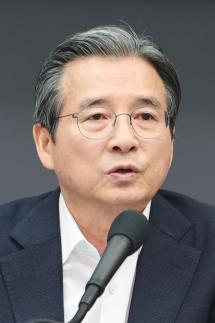 Kim Yong-beom: Semiconductor Cluster Not Moving to Local Areas, Discussions Nearing Conclusion Kim Yong-beom, head of the Presidential Policy Office, stated on June 24 that discussions regarding the establishment of a second semiconductor cluster in the Honam and Chungcheong regions are nearing completion. He indicated that once finalized, a meeting will be arranged for companies and government agencies to explain the plans to the public.During the Kwanhun discussion at the Press Center in Seoul, Kim noted, "Given the current trend, the demand for semiconductors is surging, necessitating an acceleration of previously planned facility constructions."He emphasized the need for local clusters, stating, "Even if we want to build more in the metropolitan area, we face limitations in land, power, and water supply. However, that does not mean we must relocate overseas."Kim clarified that the ongoing construction of the Yongin cluster is not being relocated but rather that a new second cluster will be added. He remarked, "It is absolutely not the case that we will abandon the construction planned for Yongin to move to a different location. We are creating a new cluster."He further explained, "If we wait until everything is completed in Yongin before starting on the next site, it will be too late. Therefore, we are initiating the development project now."Additionally, Kim addressed the issue of excess tax revenue from the semiconductor sector, stating, "While AI can make the nation wealthier, there is no guarantee that all citizens will equally benefit from it. We need social discussions on policies and the use of excess tax revenue that are appropriate for the AI era."He referred to the so-called 'Taiwan Syndrome,' pointing out, "The nation becomes wealthier, but some citizens fall behind in the growth process. Economic indicators may improve, but anxiety about the future does not diminish. This is the issue of K-shaped growth."Kim urged a careful assessment of whether the current semiconductor and AI boom is merely a cyclical economic event or a structural transformation that will elevate South Korea's potential growth trajectory. He posed the question, "Is the semiconductor and AI supercycle we are experiencing a simple economic cycle, or is it the beginning of a structural transition that raises South Korea's potential growth path?"He concluded by advocating for a new approach to national governance that combines multi-year investments, cross-government projects, selective focus, and productive finance, emphasizing the need for bold preemptive investments that can reshape South Korea's industrial landscape and provide a new growth foundation for future generations.* This article has been translated by AI. 2026-06-24 11:00:00
 -
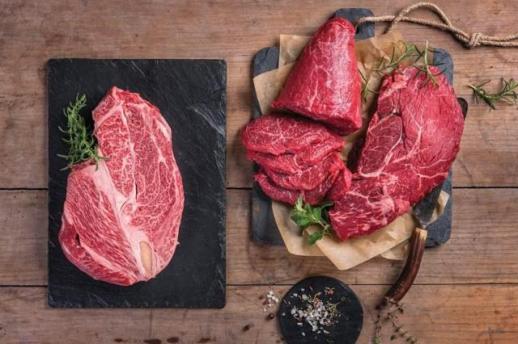 Beef for Family Health: Hanwoo Association Promotes Nutritional Value As interest in dietary management rises, Hanwoo beef is gaining attention as a key ingredient for health across all age groups, from infants to seniors. The Hanwoo Promotion Committee announced on June 24 that it will launch the "Hanwoo Has the Answer" campaign to promote the nutritional value of Hanwoo beef. The campaign aims to introduce the nutritional advantages of Hanwoo beef for health management throughout different life stages and to expand engagement with consumers. The committee plans to share information on how to utilize Hanwoo beef and health tips tailored to various demographics, including infants, pregnant women, young adults, and seniors, through both online and offline channels. Hanwoo beef is recognized as a high-quality protein source that contains all nine essential amino acids, which must be obtained through food. The U.S. Department of Health and Human Services recommends fresh red meat as a food that provides essential nutrients necessary for maintaining health. These nutritional characteristics make Hanwoo beef effective for health management at different life stages. For growing infants, Hanwoo provides essential nutrients like iron and zinc that are crucial for physical development. In fact, Hanwoo is considered a must-have ingredient during weaning, often chosen by parents as "their child's first meat." For infants with developing digestive systems, lean cuts such as tenderloin or round are recommended due to their low fat content and high iron levels. For seniors, Hanwoo beef is suitable as a nourishing food that helps prevent muscle loss and boosts vitality. It contains various nutrients, including vitamin B12 and iron, which support health in older adults. Cuts like shank, brisket, and chuck become tender when cooked for long periods, making them versatile options. This allows seniors, who may hesitate to consume meat due to dental issues, to enjoy easily digestible forms such as braised beef or bone soup without discomfort. The ability to prepare Hanwoo beef in a variety of ways that cater to different culinary preferences and tastes is another strength. Among younger consumers, dishes like sirloin steak, flap meat chop steak, and brisket rolls are becoming trendy options for home parties. To meet the diverse consumer demands segmented by age, the Hanwoo Promotion Committee will operate experiential programs throughout the year. Initially, it will host a "Hanwoo Cooking Class" for pregnant women, introducing practical nutritional recipes. Additionally, it will run nutritional support programs for young adults preparing for independence, alongside online and offline campaigns to raise awareness of the nutritional value and social significance of Hanwoo beef. Dr. Hwang In-cheol, a gynecologist at Seoul Medical Center, stated, "Hanwoo beef can be utilized in various ways to meet the nutritional needs of individuals from childhood to old age, contributing to a healthy diet. I hope people will consume quality protein and essential nutrients through Hanwoo for balanced nutrition."* This article has been translated by AI. 2026-06-24 11:00:00
 -
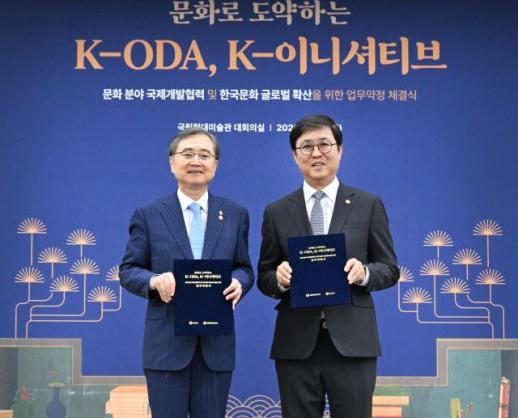 South Korea moves to make culture a larger part of foreign aid SEOUL, June 24 (AJP) - South Korea plans to make culture a larger part of its foreign aid policy, using its experience in the arts and creative industries to support developing countries, the foreign and culture ministries said Tuesday. The Ministry of Foreign Affairs and the Ministry of Culture, Sports and Tourism signed an agreement at the National Museum of Modern and Contemporary Art in Seoul to jointly develop official development assistance projects focused on culture. Under the agreement, the ministries will identify and design new cultural aid projects, share information and coordinate programs involving development cooperation, public diplomacy and international cultural exchange, including the establishment and operation of Korean cultural centers overseas. The agreement forms part of the government's broader "K-Initiative," a policy framework that seeks to apply South Korea's experience in culture, industry, technology and democracy to international challenges while advancing its national interests. The plan comes as the government seeks to broaden an aid portfolio traditionally centered on infrastructure, health, education and public administration. Culture and artificial intelligence were identified as new areas of focus in South Korea's latest five-year development cooperation strategy. Culture Minister Choi Hwi-young said South Korea needed to expand its international role through cultural aid, noting that his ministry's ODA budget accounts for only 0.18 percent of total government aid spending. Foreign Minister Cho Hyun said cultural aid should help developing countries improve access to arts and culture and build their own creative industries. He added that deeper cultural exchange could also strengthen South Korea's international standing. The ministries did not announce specific partner countries, projects or additional funding under the agreement. 2026-06-24 10:56:09
 -
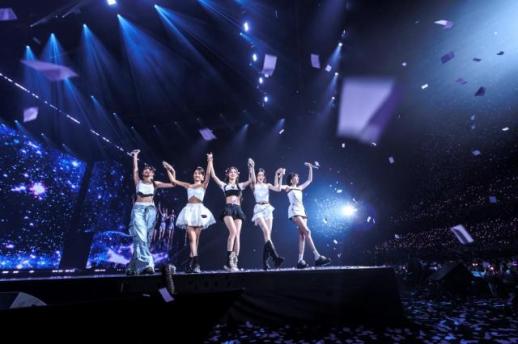 i-dle teams with Latin pop producers for new EP 'We Made' SEOUL, June 24 (AJP) - K-pop girl group i-dle will release its ninth EP, "We Made," on July 6, Cube Entertainment said Wednesday. The group unveiled the six-track album's full track list through its official social media accounts. "Gimme Dat Love," the lead single, is a Latin pop-inspired track produced by Daramola and Samantha Cámara. Daramola has previously worked with Anitta, Becky G and Jason Derulo. Members Yuqi and Soyeon also took part in the album's production. Yuqi wrote "Love Is Pain," while Soyeon contributed lyrics to "Gimme Dat Love" and "Morning" under her producer alias, icebluerabbit. The EP will also include "Mono," featuring British artist skaiwater, which was released in January, and the pre-release single "Crow," unveiled June 15. A separate version of "Mono" will be available exclusively on the physical CD. The album's concept materials, released earlier, featured thermal imaging and X-ray visuals centered on love, instinct and physical sensation. "We Made" will be available on streaming platforms at 6 p.m. (0900 GMT) on July 6. 2026-06-24 10:51:15
 -
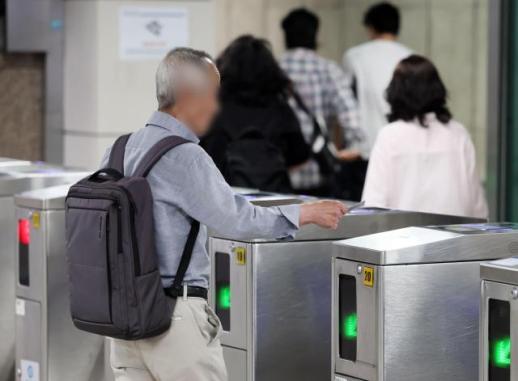 Seoul seeks to raise free subway age to 70 SEOUL, June 24 (AJP) - South Korea's capital is moving to overhaul one of its longest-standing welfare benefits for older citizens, proposing to raise the eligibility age for free subway rides from 65 to 70 as the country grapples with the realities of a superaged society. If approved, the ordinance would authorize the Seoul city government to offer free or discounted bus rides to residents aged 70 and older who live in the city. The city would decide later how many free rides would be provided and who would qualify for the benefit. The ordinance up for a vote on Wednesday does not itself change the eligibility age for free subway rides. Instead, it would provide the legal basis for Seoul's broader transportation reform, with details to be finalized through future legislation and administrative measures. The measure is part of Seoul Mayor Oh Se-hoon's broader effort to reform transportation benefits for South Korea's aging population and was one of his key campaign pledges during this month's local elections. After winning reelection, Oh met with the head of the Seoul Federation of the Korean Senior Citizens Association on June 19 to discuss senior transportation policies. The association welcomed the proposal, saying the change would better reflect fiscal sustainability and South Korea's changing demographics. The proposal reflects growing concerns that South Korea's decades-old senior transportation system no longer matches the country's demographic reality. People aged 65 and older have long been entitled to unlimited free subway rides, a benefit that has remained largely unchanged for nearly 40 years despite rapid population aging and longer life expectancy. City officials say the reform aims to make the system more sustainable while expanding transportation options for older residents. The city is considering limiting free bus rides to 14 trips a month. According to estimates by the Seoul Metropolitan Council, a fully free bus program for all eligible seniors would cost more than 100 billion won ($73 million) annually and approximately 578.9 billion won over five years. Officials said the actual burden would likely be lower if the city adopts a monthly cap on the number of free rides. Any savings generated by raising the eligibility age for free subway rides could also offset part of the cost of the new bus program. The measure is widely expected to pass, as the conservative People Power Party holds a majority in the Seoul Metropolitan Council with 68 of its 106 seats, while also gaining support from senior citizens' groups. The debate mirrors broader social changes in South Korea, where people are living longer and remaining economically active well beyond traditional retirement age. According to the Ministry of Health and Welfare's 2023 survey on older adults, South Koreans now consider the average age at which a person becomes "elderly" to be 71.6 years. Meanwhile, the labor force participation rate among people aged 65 and older rose to 40.7 percent last year from 29.5 percent in 2000. If the ordinance passes, Seoul plans to proceed with further public consultations and budget discussions before deciding when to implement the revised transportation benefits program. 2026-06-24 10:49:51
 -
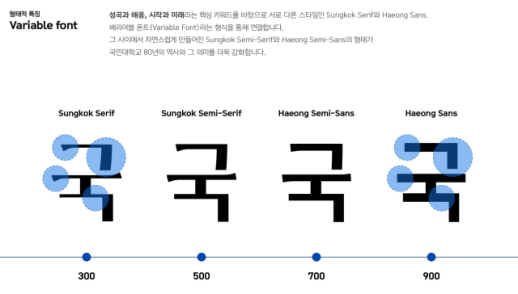 KMU captures 80-year history in free custom fonts SEOUL, June 24 (AJP) - Digital typography acts as the unspoken visual voice of an institution, meaning the subtle shape of a written letter projects an organization's deeper philosophy to anyone reading it. To ensure its eighty-year heritage serves as a living tool for everyday human communication rather than a static monument, a Seoul institution has translated its core identity into two custom digital fonts to be shared with the world, Kookmin University said Wednesday. Conventional corporate fonts force everyday users to choose between two rigid categories: traditional styles with decorative little footings known as serifs, or modern, blocky styles without them. The newly developed typefaces bypass this standard limitation by utilizing a variable font system, allowing a single digital file to transform fluidly between a classic brush-like look and a sharp contemporary layout without requiring users to install dozens of separate style packages. Kookmin University (KMU)'s announcement on June 24 marks the formal public rollout of the visual identity projects tied to the school's upcoming eightieth anniversary. The project, which required roughly one year of research and design, resulted in two distinct font families named "Sungkok" and "Haeong." Each family is engineered to carry a specific half of the institution's historical narrative. Sungkok derives its name from the pen name of Kim Sung-gon, the historic figure who led the university's mid-twentieth-century revival, with letterforms designed to convey traditional institutional roots, sincerity, and a fundamental trust in people. Conversely, Haeong takes its name from Kim Suk-won, Kim Sung-gon's eldest son and the former chairman of SsangYong Group, utilizing a sleek modern aesthetic to represent a spirit of global challenge and technological innovation. Rather than keeping the typefaces as an exclusive institutional asset, KMU released both under a Creative Commons license that permits free public use, provided the original designs remain unmodified. On campus, the fonts will provide a unified look across official anniversary banners, websites, and promotional videos. Outside the gates, the school views the open distribution as a public service, allowing everyday digital writers to utilize the professional-grade typefaces for their own daily work. The human philosophy driving the software was articulated by the academic who led its creation. "This font development was not simply the work of making a new typeface, but a process of organizing the eighty-year history KMU has walked, and the future direction it will move toward, into a single visual language," Professor Park Yoon-jung at the Department of Convergence Design at KMU's Graduate School of Techno Design said. "To naturally capture the meanings held by Sungkok and Haeong within the structure and impression of the typeface from the perspective of the university's spirit and history, we reviewed materials for a long time and refined the draft designs many times," the professor said, adding: "We will continue to develop typefaces that contain the university's history and tradition into cultural assets with public value." The typographic launch anchors a broader institutional strategy titled "KMU VISION 2035: EDGE," an initiative designed to secure a competitive advantage in the higher education sector. The strategy's title operates as an acronym for four stated development pillars -- entrepreneurship, digital transformation, global competence, and environmental, social, and governance standards. The university's leadership emphasized that the typefaces serve as a bridge between the school's heritage and its upcoming decade. "Font development is one of the ten major projects for the eightieth anniversary that looks back on the time KMU has walked and freshly presents the direction to move forward," KMU President Jeong Seung-ryul said. "The development of these unique typefaces will deliver KMU's own identity and vision in a differentiated way and contribute to raising the sense of belonging and pride among our members." Both the Sungkok and Haeong typeface packages are available for free download on the official KMU website. The single-file downloads are formatted to work immediately without requiring the installation of supplementary style packs. 2026-06-24 10:48:28
 -
 Government Uncovers Misuse of Meal Cards for Low-Income Children The government has identified numerous cases of misuse involving meal cards intended to support low-income children at risk of food insecurity, prompting a significant strengthening of management systems. Reports indicate that in some areas, meal cards were used to purchase alcohol and tobacco, and instances were found where parents used the cards instead of their children. On June 24, the Government Coordination Office's Anti-Corruption Task Force, in collaboration with the Ministry of Health and Welfare, released the findings of an investigation into the operation of meal cards for food-insecure children. The investigation revealed that among 17 metropolitan and provincial areas nationwide, 13 reported cases of alcohol and tobacco purchases using meal cards. While convenience stores have technical barriers to prevent such transactions, some general supermarkets lacked adequate restrictions, allowing misuse to occur. Additionally, cases were uncovered where parents retained the meal cards issued to their children, making false transactions up to the daily limit and using the funds for personal purchases. Furthermore, over 14% of all meal cards were used at establishments with little direct relevance to meals, such as private academies, beauty salons, bars, and internet cafes. Transactions made during late-night hours, from 10 p.m. to 6 a.m., accounted for approximately 4.4% of total spending, amounting to 9.3 billion won. The investigation also highlighted poor management practices. Some local governments failed to register card information in the integrated welfare management system, 'Happy e-Um,' or did not properly reflect changes in eligibility, such as the death of a child or admission to a facility. In some cases, parents continued to use meal cards belonging to children who had died or were under protective measures due to abuse. To prevent misuse, the government plans to implement item-specific payment restrictions in general supermarkets and limit transactions at non-food establishments and during late-night hours. Additionally, local governments will be required to register information in the Happy e-Um system, and regular checks will be conducted for changes in eligibility and suspected misuse. To reduce the issue of unspent support funds, the government also plans to improve the convenience of meal card usage by providing notifications of available balances via text messages.* This article has been translated by AI. 2026-06-24 10:48:00
 -
 Vietnam National Soccer Team Begins Preparation for AFF Cup Title Defense The Vietnam national soccer team has officially begun preparations for its title defense at the 2026 ASEAN Football Federation (AFF) Cup. Following the addition of former South Korean national team player Kim Doo-hyun as a coach, the team has also selected several tall players and set-piece specialists to enhance its strength. According to local media, including VnExpress, the Vietnam team, led by coach Kim Sang-sik, started its training camp in preparation for the AFF Cup, with Kim Doo-hyun joining the coaching staff. Kim, who played 62 matches for the national team, participated in the 2004 Athens Olympics and the 2006 FIFA World Cup. He also played for West Bromwich Albion in England and was named the K League MVP in 2006. After transitioning to coaching, Kim gained experience with Jeonbuk Hyundai and China’s Chengdu Rongcheng. In 2024, he will take on the role of head coach at Jeonbuk Hyundai, further expanding his on-field experience. On June 23, he conducted the first training session with 28 players called up in Hanoi. Coach Kim has created a balanced roster that includes veterans, young players, and naturalized players active in the V-League, strengthening the team's depth. The team will train in Hanoi until July 1 before heading to South Korea for a training camp from July 2 to 14. During this period, they will play three friendly matches to assess tactical effectiveness and the players' competitive readiness. Diverse Free Kick Options One of Coach Kim's primary focuses in assembling this team is enhancing set-piece strategies. In modern soccer, set pieces are considered a critical factor in determining match outcomes. Particularly in international competitions where defensive organization is stronger, a single free kick or corner can significantly influence the result. Previously, Nguyen Quang Hai and Hoang Duc were the primary free-kick takers for Vietnam. However, with the addition of Phan Tuan Tai and Nguyen Dinh Bac, the options have greatly expanded. A notable change in this roster is the height of the players. New defender Dinh Quang Khiet stands at 195 cm, making him a standout in the lineup. His rare physical attributes in Southeast Asia are expected to provide an advantage in aerial duels. Additionally, naturalized forwards Suan Sen (186 cm) and Tai Lok (188 cm) will contribute to aerial competition. The defense also features tall players such as Viet Anh (184 cm), Doan Van Hau (186 cm), Thanh Trung (182 cm), and Jui Man (180 cm). Diversifying Scoring Routes Through Set Pieces Coach Kim's set-piece strategy aims to go beyond merely scoring headers. By drawing defenders away, tall players can create opportunities for long-range shots during second-ball situations. As opposing defenses become more concentrated in the penalty area, space opens up behind them. This structure allows for various scoring methods, including direct free kicks, headers, second-ball shots, and finishing in front of the goal. Vietnam plans to refine these set-piece tactics during the training camp in South Korea. As rival teams' defensive organizations continue to improve, Coach Kim views set pieces as a crucial strategy for success. If the new coaching staff, tall players, and those with diverse kicking abilities can work in synergy, Vietnam is expected to enhance its presence as a contender for the AFF Cup title. 2026-06-24 10:48:00
 -
 Is South Korea Prepared for a 4% Interest Rate Era? Recent changes in the bond market indicate a significant shift. Government bond rates are rapidly approaching the 4% mark across all maturities. Despite over 30 trillion won in foreign capital inflows since South Korea's inclusion in the World Government Bond Index (WGBI), the upward trend in interest rates shows no signs of slowing. The market is already discussing a new reality, one that signifies not just a rise in rates but the end of the low-interest era and the beginning of a high-interest new normal. Many still perceive interest rates primarily as a tool for economic adjustment—lowering them during downturns and raising them when inflation rises. However, the ongoing changes are far more structural. The South Korean economy has effectively grown under a low-interest regime for the past two decades. Following the global financial crisis, central banks worldwide injected massive liquidity, which expanded even further after the COVID-19 pandemic. Money was abundant, and interest rates were low. Households increased borrowing, and businesses expanded investments through loans. Asset markets, including real estate and stocks, thrived on this ample liquidity. However, the situation is changing. Factors such as energy price volatility from the Middle East, supply chain restructuring, increased investment in artificial intelligence (AI) infrastructure, and the rise of global protectionism are all contributing to inflationary pressures. There is no longer a guarantee that inflation will remain stable around 2% as it once did. The U.S. Federal Reserve prioritizes inflation control over rate cuts, and the Bank of Korea is likely to maintain a tightening stance. The AI era, in particular, demands more capital than anticipated. Building data centers, semiconductor factories, power grids, and communication infrastructure requires astronomical investments. Consequently, the market will demand more funds, which will inevitably lead to upward pressure on interest rates in the long run. The problem is that the structure of the South Korean economy is still aligned with the low-interest era. Household debt remains among the highest in the world relative to gross domestic product (GDP). Memories of excessive borrowing and investment are still fresh. Even a 1-2 percentage point increase in interest rates can significantly reduce household consumption capacity. Some vulnerable borrowers are already struggling with interest payments, let alone principal repayments. The situation for self-employed individuals is even more dire. Many who survived the COVID-19 pandemic through debt are still burdened with high levels of borrowing. Their revenues have not returned to pre-pandemic levels, while financial costs continue to rise. High interest rates are not just numbers; they are a reality that determines business closures and survival. Businesses are not exempt either. In the past, low interest rates made it easy to secure funding. Now, the costs of issuing corporate bonds are rising, and refinancing burdens are increasing. Small and medium-sized enterprises face pressures to cut back on investments and reduce employment simultaneously. A more significant issue lies with the government. South Korea's fiscal management has also been designed around the premise of low interest rates. National debt has rapidly increased, and demands for welfare and fiscal spending continue to grow. However, as interest rates rise, so do the costs of servicing government bonds. Ultimately, the burden on future generations will only increase. Yet, interest rates cannot be artificially lowered. We remember the excessive liquidity management failures following the 1980s' three-low era, which led to distortions in the real estate and asset markets. Failing to control inflation will result in even greater costs. This is why the Bank of Korea is considering tightening measures. Therefore, what is needed is not to prevent interest rate hikes but to develop strategies to adapt to the high-interest era. Households must reduce their reliance on excessive leverage. The era where asset accumulation through debt was the norm is coming to an end. Businesses should shift their focus from debt-driven management to enhancing productivity and technological competitiveness. The government must also prioritize fiscal soundness and enhancing growth potential over short-term economic stimulus. Above all, a shift in perception is crucial. We have grown too accustomed to cheap money for too long. However, the market is now sending a different message. A 4% government bond rate is not just a number; it signals that the South Korean economy is transitioning to a new order. The high-interest new normal is not a matter of choice; it is a reality that has already begun. What is needed now is not to resent interest rates but to devise new survival strategies that align with the changed environment. The era of low interest rates is ending. Now, the South Korean economy must prepare for an era defined by interest rates. * This article has been translated by AI. 2026-06-24 10:44:00
 -
 Portuguese Drone Company Establishes Production Base in Japan for Asian Exports Portuguese defense drone startup Tekever is set to establish a production base in Japan, marking a significant step in its expansion into the Asian market. According to the Nihon Keizai Shimbun (Nikkei) on June 24, Tekever plans to announce the location of its production facility in Japan within the next few months. Marubeni, a major Japanese trading company, will assist Tekever in developing customers and supporting sales in Japan. This is reportedly the first instance of a foreign defense company setting up a manufacturing base in Japan. The drones produced by Tekever are designed for battlefield intelligence gathering, surveillance, and reconnaissance, and are reported to have no offensive capabilities. They can fly over 2,000 kilometers on a single charge. The drones are expected to be utilized not only for defense equipment but also for maritime security and infrastructure monitoring. One of Tekever's strengths is its extensive real-world flight data accumulated from operations in Ukraine, where it has gathered over 10,000 hours of flight data. This experience has enhanced its jamming resistance capabilities, allowing the drones to continue flying even in environments where GPS or radio communications are disrupted. Ricardo Mendes, CEO of Tekever, told Nikkei, "We will integrate Japanese robotics technology, such as sensors, into our manufacturing process," adding that the company is also considering producing drones using only Japanese components in the future. Tekever aims to use Japan as a hub for exports to Asia. Following the Japanese government's revision of its three principles on defense equipment transfers in April, which eased export regulations, it is expected that various drones produced in Japan will be eligible for export with government approval. Since the onset of the war in Ukraine, the use of low-cost, mass-deployed unmanned drones has become a prevalent tactic, highlighting the growing importance of drone production systems worldwide. However, Japan currently lacks a facility capable of mass-producing drones. The Japanese government plans to revise three security-related documents by the end of this year to include measures for establishing a domestic production base for large-scale drone procurement. Japanese companies are also beginning to invest in this area. Mitsubishi Heavy Industries is advancing the development of defense drones, while Teradron has announced plans to acquire two Ukrainian companies that handle intercept drones.* This article has been translated by AI. 2026-06-24 10:40:00