
Journalist

SHIN JIA
fromjia@ajunews.com
-
 Korea Zinc Develops Technology to Recover Rare Earth Mix From Discarded Products Korea Zinc said March 18 it has developed a technology to recover a rare earth mixture from discarded products. The company described the material as an intermediate product in which 17 rare earth elements are mixed. In advanced and defense industries, the mixture is separated and refined, then converted into oxides for use. Korea Zinc said its technology research institute at the Onsan smelter and its headquarters engineering team developed the process over three years. The method extracts mixed rare earths, including light and heavy rare earth elements, from waste rare earth magnets obtained by dismantling and separating discarded motors. Rare earth magnets, used as energy-conversion components in products such as motors and generators, smartphones, missile sensors and drones, contain large amounts of rare earths. Korea Zinc said it developed a way to recover the rare earth mixture from those magnets. Rare earths are considered essential materials for advanced industries, drawing investment from major countries and companies. Korea Zinc noted that one country holds overwhelming influence across the value chain from mining to production and consumption, raising the risk of supply disruptions and weakened future industrial competitiveness for others. Korea Zinc said it will continue developing technology for commercial production and plans to work with the government, the city of Ulsan and industry associations to build a system to secure stable raw materials. The company said it aims to contribute to greater technological self-reliance, stronger resource security and a more stable global supply chain. "Rare earth production is currently dominated by a few countries, leading to severe supply instability and price volatility, which directly affects the competitiveness of advanced industries not only in Korea but worldwide," a company official said. "Korea Zinc's participation in rare earth production, as the world's leading nonferrous metal smelter and a critical minerals hub, will help improve technological self-reliance and stabilize supply chains."* This article has been translated by AI. 2026-03-18 14:06:16
 -
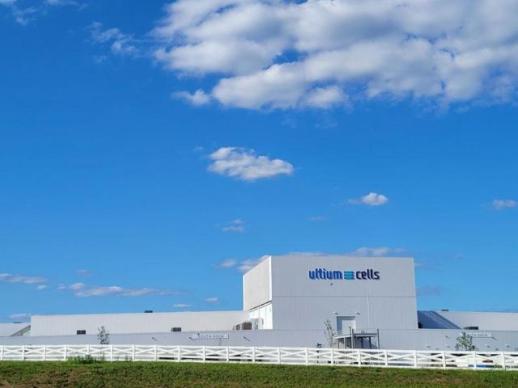 LG Energy Solution to start producing ESS batteries at Tennessee plant SEOUL, March 18 (AJP) - LG Energy Solution (LGES) will begin producing lithium iron phosphate (LFP) battery cells for energy storage systems at its plant in Spring Hill, Tennessee, the battery maker said on Wednesday. Production will be carried out through LGES' joint venture with General Motors, Ultium Cells, with an investment of about US$70 million to convert part of its existing electric-vehicle battery line for ESS production. Mass production is scheduled to start in the second quarter of this year. LGES said the move aims to operate production lines more efficiently as EV sales growth slows, while also protecting jobs. Ultium Cells is currently converting equipment at the plant and training workers to meet ESS production requirements, with 700 staffers who were on temporary leave in January returning. Battery cells produced at the plant will be supplied through LGES' North American unit for ESS, Vertech. LGES said the batteries are expected to be used in projects for energy grid support systems, renewable energy–linked ESS installations, and power infrastructure for artificial intelligence–related data centers. Park In-jae, head of Ultium Cells, said the move marks the plant's first large-scale revamp to evolve into a more diversified battery cell manufacturer. "We will upgrade the production system to meet shifting demand and become a core player and technology leader in the U.S. battery industry," he said. With the latest makeover of its Tennessee plant, LGES now has five ESS production sites across North America. 2026-03-18 09:59:28
 -
 Doosan Enerbility Wins First U.S. Order for Large Combined-Cycle Steam Turbines Doosan Enerbility said it has won a U.S. contract to supply steam turbines for data center power generation, expanding its footprint in the North American electricity market serving AI data centers. The company said March 18 that it recently signed a supply agreement with a U.S. company for two 370-megawatt steam turbines and two generators to provide electricity for data centers. It said this is its first steam turbine supply deal in North America. Doosan Enerbility said the contract demonstrates its ability to deliver combined-cycle solutions that pair gas turbines with steam turbines. In combined-cycle generation, steam turbines use waste heat from gas turbines to produce additional power, improving overall efficiency. The company said AI data centers, which consume large amounts of electricity around the clock, require highly efficient and reliable generation equipment. Doosan Enerbility said it plans to use the order as a springboard to accelerate exports of its combined-cycle model to utility companies and independent power producers in North America. "This order once again confirms that the North American power generation market has strong trust in Doosan's power generation technology," said Son Seung-woo, head of Doosan Enerbility's Power Service BG. "We will further strengthen cooperation with customers in North America and solidify our position as a comprehensive supplier covering both gas turbines and steam turbines."* This article has been translated by AI. 2026-03-18 09:21:34
 -
 LG Energy Solution, GM JV to Start LFP Battery Cell Production for U.S. Energy Storage LG Energy Solution and General Motors’ joint venture, Ultium Cells, will begin producing LFP (lithium iron phosphate) battery cells for energy storage systems at its Spring Hill, Tennessee, plant, the company said. LG Energy Solution said it is investing about $70 million to convert part of an existing electric-vehicle battery line to ESS production, with mass production set to start in the second quarter. Cells made at the Tennessee plant will be supplied through LG Energy Solution’s North American ESS system integration unit, Vertech. The company said the batteries are expected to be used in grid-stabilization projects, renewable energy-linked ESS installations and power infrastructure for AI data centers. LG Energy Solution said the shift is a strategic move to raise line utilization and improve operating efficiency as growth in the EV market slows. It said converting some EV equipment to ESS production could also strengthen job stability. Ultium Cells is converting equipment at the Tennessee plant and retraining workers to meet requirements for ESS-grade LFP cell production. The company said 700 employees who were temporarily laid off in January will return to support line construction and new product output. Park In-jae, head of Ultium Cells, called the move the plant’s first large-scale conversion and said it shows Ultium Cells is evolving into a more diversified battery cell manufacturer. He said the company will upgrade its production system in line with shifts in demand and strengthen its position as a core player and technology leader in the U.S. battery industry. LG Energy Solution said the conversion gives it a total of five ESS production sites in North America. An LG Energy Solution official said the company will seek to solidify its leading position in the North American market after securing what it described as an overwhelming level of production capacity in the ESS business. * This article has been translated by AI. 2026-03-18 08:39:52
 -
 S-OIL, Samsung SDS Launch Integrated IT Outsourcing Partnership S-OIL said Tuesday it held a kickoff event with Samsung SDS to mark the full launch of their integrated ITO (IT outsourcing) project. The event was organized to commemorate the recent completion of S-OIL’s IT infrastructure data center migration and to signal the start of the joint ITO effort. The gathering was held Monday at Samsung SDS’ Sangam data center, with S-OIL CEO Ryu Yeol and Samsung SDS CEO Lee Jun-hee among the executives attending. The companies said they have successfully moved S-OIL’s key IT infrastructure to a Samsung SDS data center. The large-scale migration, the first in about 10 years, allowed S-OIL to reorganize its IT operating environment and strengthen system stability and operational efficiency. The move also laid groundwork for a future shift to a cloud-based IT environment, supporting faster digital transformation. Ryu said the data center migration and the start of the integrated ITO project will be an opportunity to further advance S-OIL’s IT infrastructure operations. “Through cooperation with Samsung SDS, we will strengthen a stable foundation for IT operations and continue to drive digital innovation,” he said. Lee said Samsung SDS will support stable IT service operations through the integrated ITO project and will actively back S-OIL’s transition to a cloud-based IT environment and its digital innovation efforts. S-OIL signed an integrated ITO contract with Samsung SDS last year and selected Samsung SDS as its integrated IT outsourcing provider for three years starting in March 2026. Samsung SDS will provide services across IT operations, including application and IT infrastructure operations, security, IT diagnostics and cloud transition consulting.* This article has been translated by AI. 2026-03-17 13:39:15
 -
 Some South Korea Highway Gas Stations Cap Fuel Purchases Amid Supply Strain Middle East war fallout is deepening concerns about South Korea’s supply of petroleum products, with some gas stations now limiting how much customers can buy. The restrictions follow refiners’ cuts to fuel deliveries to discount stations in cities and at highway rest stops. Industry officials said Sunday that many EX-OIL discount stations on expressways, operated by the Korea Expressway Corp., have begun posting notices capping purchases at 30,000 won per person for gasoline and 100,000 won per person for diesel. A government price cap introduced March 13 has pushed down the national average price at gas stations, but customers are increasingly unable to buy as much fuel as they want. The Korea Expressway Corp. said March 12 it would work with joint-purchasing refiners such as SK Energy and GS Caltex to ensure stable supply. On the ground, however, EX-OIL stations say shortages are worsening. An EX-OIL station official said stations had been receiving contracted joint-purchase volumes from SK Energy and GS Caltex and, when short, signed separate deals with other refiners such as HD Hyundai Oilbank and S-Oil for additional supply. That extra supply has recently been cut off, officials said. Another station official said, “As it has become harder to secure volumes, we can’t sell as much fuel as customers want,” adding that “it’s not easy to keep operating.” The official said one refiner that had provided additional supply sent an email notice saying it “cannot supply oil this month.” Some in the industry say the government’s price cap may have affected the supply structure for highway stations. With profitability squeezed by price controls, refiners may have less incentive to provide volumes beyond joint-purchase contracts, reducing supply to highway stations. If disruption tied to a blockade of the Strait of Hormuz drags on, the purchase limits now seen at some stations could spread across highway stations. Similar limits could also appear at discount stations in cities, not just those tied to major refiner brands. Because it typically takes about a month to ship crude from the Middle East to South Korea, industry officials warned a gap could emerge in Middle Eastern crude arriving from late March or early April. As a result, consumers may be unable to buy as much gasoline and diesel as they want regardless of the price cap. A refining industry official said refiners are struggling to secure supply even for their own branded stations and are therefore reducing volumes sold into the spot market, including to discount stations. The Korea Expressway Corp. said it is discussing with the government and refiners ways to secure additional joint-purchase volumes to stabilize supply. 2026-03-17 05:03:00
 -
 S-Oil Ties for No. 2 in South Korea Gas Station Market Share, Data Show S-Oil has climbed to second place for the first time in nationwide gas station brand share. According to the Korea Petroleum Quality & Distribution Authority on Monday, S-Oil had 2,270 registered gas stations nationwide as of last month, tying for No. 2 with HD Hyundai Oilbank. SK Energy ranked first with 2,645 stations, while GS Caltex was fourth with 1,997. South Korea had 10,646 gas stations in total as of last month. By brand, SK Energy led with a 24.8% share, followed by S-Oil and HD Hyundai Oilbank at 21.3% each, and GS Caltex at 18.8%. S-Oil entered the gas station business in 2000, later than the country’s other major refiners. Industry officials cite support from its largest shareholder, Saudi Arabia’s state oil company Aramco, as a key factor behind its expansion, as it can secure a stable supply of Middle Eastern crude from the world’s largest crude producer. S-Oil’s Middle Eastern crude import share stands at 94%, higher than GS Caltex at 70%, SK Innovation at 65% and HD Hyundai Oilbank at 50%. S-Oil said it plans to broaden its domestic distribution network by expanding support not only for agency-run, company-operated outlets but also for independently operated gas station owners.* This article has been translated by AI. 2026-03-16 11:09:18
 -
 POSCO Future M Wins $1 Billion Artificial Graphite Anode Deal, Its Largest Ever POSCO Future M said on the 16th it has signed a large, long-term supply contract with a global automaker to provide artificial graphite anode materials. The deal is worth about 1.0149 trillion won and covers five years from 2027 through 2032, with an option to extend by mutual agreement. The customer will remain undisclosed until the contract ends, the company said, citing business confidentiality. POSCO Future M said it is the company’s largest anode-materials order since it entered the business in 2011. The company supplies anode materials to South Korean battery makers and to GM, and it previously signed natural graphite anode-materials supply deals worth about 670 billion won with a major Japanese battery maker in July 2025 and with a global automaker in October 2025. The company said the latest contract follows its October natural-graphite agreement as part of a package arrangement, and it plans to seek broader cooperation with the customer in cathode materials and lithium-related businesses. To meet the new order, POSCO Future M has begun a phased expansion of anode-materials capacity. On March 5, it decided to invest about 357 billion won to build an artificial graphite anode-materials plant in Vietnam. The company said the new supply contract secures a customer for the first phase, and it will proceed with a second phase if additional orders are won. POSCO Future M said the Vietnam investment is expected to expand mass-production capacity and enable supplies with improved cost and quality competitiveness.* This article has been translated by AI. 2026-03-16 10:22:29
 -
 L&F Speeds Shift From China With Korea-Made LFP Cathode Materials L&F said Monday it wrapped up a successful showing at InterBattery 2026, South Korea’s largest battery exhibition, held for three days starting March 11, where it presented next-generation cathode material technologies. Under the theme “Leading the Future,” the company unveiled its plan to mass-produce LFP cathode materials — a first in South Korea — along with a strategic product portfolio. L&F organized the exhibit into three zones, highlighting its lineup from high-voltage mid-nickel cathodes to next-generation materials including LMR (lithium manganese-rich), ASSB (for all-solid-state batteries) and SIB (for sodium-ion batteries). It also introduced a circular supply chain strategy focused on sourcing non-Chinese raw materials. The company put the spotlight on what it called the world’s first mass production of ultra-high-nickel cathodes with 95% nickel content and on its capability to mass-produce LFP cathodes domestically, positioning the LFP products as part of a non-China supply strategy. L&F said it plans in 2026 to begin mass production of third-generation LFP cathode materials with a packing density of at least PD 2.50g/cc, and it disclosed development progress on an ultra-high-density LFP product in the PD 2.70g/cc class. L&F said it is accelerating efforts to reduce reliance on China by internalizing precursor technology, an area long dominated by Chinese supply, and by building a Korea-based circular economy supply chain spanning recycling, precursors and cathode production. Through its subsidiary JH Chemical Industry (JHC), it is pursuing a waste-battery recycling business to strengthen its raw-material procurement base. The company said it plans to secure precursor technology through LS L&F Battery Solution (LLBS), a joint venture established with LS Group. L&F said the goal is to build a domestic battery materials value chain from nickel sulfate to precursors and cathodes, and to move ahead in earnest with a non-China supply chain strategy. “InterBattery was a meaningful opportunity to show our accumulated innovation capabilities and our technological competitiveness as a pioneer of Korea-made LFP,” CEO Heo Je-hong said. “Based on LFP cathode materials nearing the country’s first mass production and our world-class high-nickel technology, we will continue to expand our battery materials portfolio.”* This article has been translated by AI. 2026-03-16 10:21:44
 -
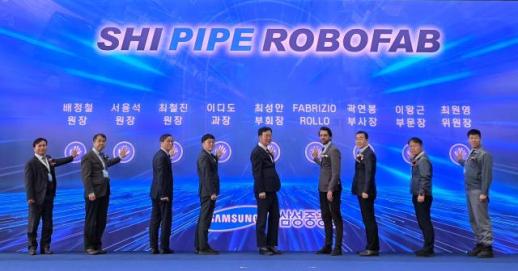 Samsung Heavy Industries Launches Shipbuilding Industry’s First Robotic Pipe Spool Factory Samsung Heavy Industries said March 16 it has begun full operations of what it called the shipbuilding industry’s first automated factory for producing pipe spools, branded “PIPE ROBOFAB.” The completion ceremony was held at the Chilseo industrial complex in Haman, South Gyeongsang Province, with about 70 attendees including Samsung Heavy Industries Vice Chairman and CEO Choi Seong-an, officials from the Ministry of Trade, Industry and Energy, shipowners such as ENI and MISC, and other industry representatives. Piping, often described as a ship’s circulatory system, is produced through a spool-making process in which components such as elbows, tees and flanges are welded and assembled into a single unit based on design drawings. Samsung Heavy Industries said it built a smart management system that integrates the entire workflow — from pipe design to automated logistics, high-precision machining and measurement, alignment and welding — and combined it with vision AI to create an automated production system. The Pipe Robofab facility has a total floor area of 6,500 square meters and can produce about 100,000 pipe spools a year, the company said. It said shifting spool production to advanced robotics is expected to shorten production time while ensuring consistent quality and improving safety. “Pipe Robofab is a site that has innovated the pipe spool process by combining Samsung Heavy Industries’ skilled welding technology with 3X (AX·DX·RX) technologies,” Choi said. “It will be an opportunity to upgrade the manufacturing competitiveness of the shipbuilding industry by one level.” Choi Won-young, chairman of the company’s labor-management council, said AI and automation are “an unavoidable major trend” across industries. He said labor and management will keep communicating to expand jobs as shipbuilding volumes grow, while supporting employment stability for workers and a safer work environment. 2026-03-16 09:45:05