
Journalist

Shin Ji-a
fromjia@ajunews.com
-
 POSCO Future M, S-Oil Added to S&P Global DJBIC World Sustainability Index POSCO Future M and S-Oil have been included in the DJBIC (Dow Jones Best-in-Class) sustainability index, according to industry officials on Tuesday. DJBIC is published annually by S&P Global, one of the world's three major credit rating agencies. It evaluates 2,500 companies worldwide across governance, supply-chain management, environmental performance and human resources development, among other economic, social and environmental factors. The index is used by global investors as a benchmark for responsible investing. POSCO Future M was added to the top-tier DJBIC "World" index, the first company in South Korea's battery materials industry to be included. The company said it received strong marks for systematically carrying out efforts to cut carbon emissions, strengthen supply-chain management, and reinforce safety and health management under ESG criteria. It said it is pursuing expanded renewable energy use, a shift to lower-carbon fuels and process-efficiency improvements, with a goal of achieving decarbonization by 2050. It also said it uses responsible minerals recognized as free of human rights violations, including tungsten and cobalt. The company added that it has strengthened human rights management by establishing a system aligned with international standards, including nondiscrimination and industrial safety guarantees, since February 2025, and by checking and improving potential risks through human rights impact assessments. S-Oil was named a DJBIC World company for the 16th consecutive year, the only refiner in Asia to do so. A company official said S-Oil was selected again based on recognized performance in ESG risk management, stakeholder communication and advanced carbon management. The official said the company is pursuing key sustainability tasks including climate change response, safety and pollutant management, employee capability building and expanded social contributions. The official said the Shaheen project, being pursued with completion targeted this year, is expected to further strengthen the company's sustainability capabilities based on energy efficiency that is superior to that of competitors. The Shaheen project is underway with a target of mechanical completion in June 2026. S&P Global includes the top 10% of companies in its sustainability assessment among the world's 2,500 largest companies by market capitalization in the "World" index. It also includes the top 20% among 600 leading companies by market capitalization in Asia and Oceania in the "Asia Pacific" index, and the top 30% among South Korea's 200 largest companies in the "Korea" index.* This article has been translated by AI. 2026-05-06 14:27:36
 -
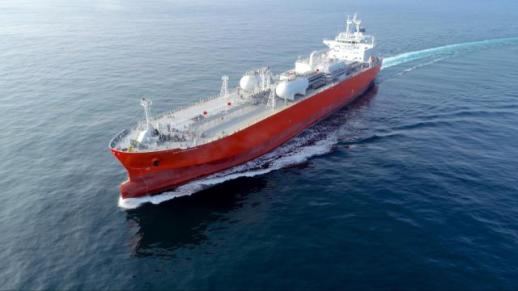 South Korea’s Big 3 Shipbuilders Win $1.1B in Energy Vessel Orders in One Day South Korea’s three major shipbuilders won about 1.5 trillion won ($1.1 billion) in combined orders within a day, reflecting a broader mix of vessel types and customers, industry officials said. Analysts said the deals point to growth beyond ship orders into a wider market for energy transport and storage infrastructure. According to the industry on May 5, HD Korea Shipbuilding & Offshore Engineering, Hanwha Ocean and Samsung Heavy Industries each secured orders a day earlier from shipowners in different regions for energy-related vessels. HD Korea Shipbuilding & Offshore Engineering won an order from KSS Shipping for three very large gas carriers, or VLGCs, worth about 500 billion won. VLGCs, which transport LPG, are seen as a steady-demand segment as global gas trade expands. Hanwha Ocean secured an order worth about 500 billion won from an Africa-based shipowner for three very large ammonia carriers, or VLACs. Ammonia is drawing attention as a next-generation carbon-free fuel, and demand for transport is expected to grow. Samsung Heavy Industries signed a contract worth about 480 billion won with an Asia-based shipowner to build one floating storage and regasification unit, or FSRU. An FSRU stores LNG and converts it back into gas for supply, serving as an offshore terminal that can be built faster than an onshore terminal. It is also widely used as a tool to respond to power supply needs. The latest orders are notable not only for the range of vessel types but also because customers now include Africa, a sign that energy demand is spreading more broadly across regions rather than concentrating on specific fuels or markets, the industry said. With power demand rising alongside the spread of artificial intelligence data centers, demand for LNG-based power generation is increasing, while transport demand for other fuels such as LPG and ammonia is also growing. As a result, shipbuilders are expanding from transport vessels into parts of offshore storage and supply facilities. Clarksons Research said its newbuilding price index, a benchmark for ship prices, has recently climbed above 180 and continues to rise. The trend suggests a seller’s market is becoming entrenched as shipbuilders, backed by solid order backlogs, focus on high value-added vessels. The high per-ship prices in the latest deals have fueled assessments that the three shipbuilders are moving into a phase of higher-quality growth centered on energy-related vessels. “Domestic shipbuilders are widening their order portfolios around high value-added ships,” an industry official said. “After selective ordering strategies were reflected in strong results, we expect the trend of improving profitability to continue.”* This article has been translated by AI. 2026-05-05 18:03:17
 -
 L&F posts 118.9 billion won Q1 operating profit on higher high-nickel shipments L&F said in a regulatory filing on April 30 that it posted first-quarter 2026 revenue of 735.2 billion won and operating profit of 118.9 billion won. Revenue rose 19% from the previous quarter and 102% from a year earlier. Operating profit increased 44% from the prior quarter and swung to a profit from a year earlier. The company attributed the improvement to higher shipments of high-nickel products that lifted utilization, along with higher selling prices and a favorable exchange rate. It also cited the impact of inventory valuation reversals as raw material prices rebounded. L&F said shipments of its high-nickel products set a quarterly record for the third straight quarter, helped by sole supply of its ultra high-nickel products and expanding shipments of a new 46-pi product that began shipping late last year. Overall product shipments in the first quarter rose about 12% from the previous quarter, about double the volume guidance the company presented at the start of the year. CFO Ryu Seung-heon said, "The first quarter clearly showed improved earnings as high-nickel volume growth and higher selling prices appeared at the same time." He added, "In the second quarter, we will continue stable performance improvement based on rising shipments, while diversifying our business portfolio through a two-track NCM+LFP strategy and steadily strengthening our mid- to long-term growth foundation."* This article has been translated by AI. 2026-04-30 17:18:16
 -
 Samsung Heavy Industries Q1 2026 Operating Profit Jumps 122% to 273.1 Billion Won Samsung Heavy Industries said it extended its first-quarter earnings improvement on a larger share of higher-margin vessels. The company on Wednesday reported preliminary first-quarter 2026 results of 2.9023 trillion won ($2.9 trillion won) in revenue and 273.1 billion won in operating profit, according to a regulatory filing. Revenue rose 16% from a year earlier, while operating profit surged 122%. In shipbuilding, a higher proportion of construction for high-margin vessels such as LNG carriers, along with a strategy to diversify global production, supported results, the company said. In offshore operations, revenue also increased as work accelerated on FLNG projects including Malaysia’s ZLNG, Canada’s Cedar and Mozambique’s Coral. On that trend, Samsung Heavy said it expects to meet its annual revenue target of 12.8 trillion won. A company official said revenue is expected to rise further starting in the second quarter as production volumes increase. The official added the company will strengthen a stable profit structure based on an order backlog secured for more than three years.* This article has been translated by AI. 2026-04-30 16:27:46
 -
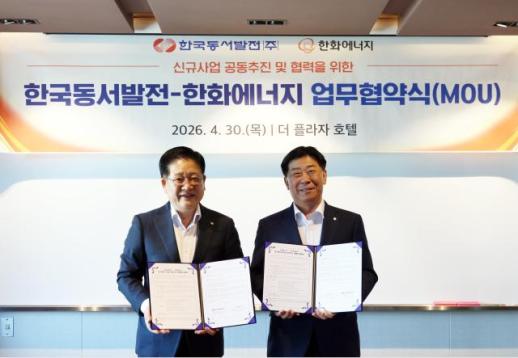 Hanwha Energy, Korea East-West Power Sign MOU on Distributed Power Projects Hanwha Energy Co. and Korea East-West Power Co. said April 30 they signed a memorandum of understanding to jointly cooperate on power development projects, including distributed energy. The agreement is aimed at expanding cooperation in power projects tied to industrial complexes and distributed energy, drawing on both companies’ experience and capabilities in power generation development. Under the MOU, the companies said they plan to work together on power development projects at major domestic industrial complexes and in distributed energy; cooperate on government policy programs such as RE100 industrial complexes and clean hydrogen power generation; identify and attract new energy-intensive demand, including from AI-related advanced industries; and coordinate on permitting for new power projects. They also said they will jointly review ways to build a distributed energy model centered on industrial complexes, based on a structure in which energy is consumed where it is produced. In addition, the companies said they will continue cooperation on energy operations linking renewable energy, distributed power sources and combined heat and power, and on the potential application of low-carbon generation technologies such as hydrogen co-firing. Hanwha Energy will handle project development, including fuel supply, securing demand and sites, and planning business models, the companies said. Korea East-West Power will provide technical support and operational cooperation based on its operating experience and technical capabilities. “This cooperation will serve as an opportunity to lay the groundwork for collaboration on power development projects centered on industrial complexes,” Hanwha Energy CEO Lee Jae-gyu said. “Through cooperation with Korea East-West Power, we will continue to identify new business opportunities.” Korea East-West Power President Kwon Myung-ho said it was meaningful to build a cooperative relationship with Hanwha Energy to develop the distributed energy market. “Based on the two companies’ expertise and experience, we will strengthen competitiveness and continue to identify new opportunities in future energy markets, including distributed energy,” he said.* This article has been translated by AI. 2026-04-30 16:26:36
 -
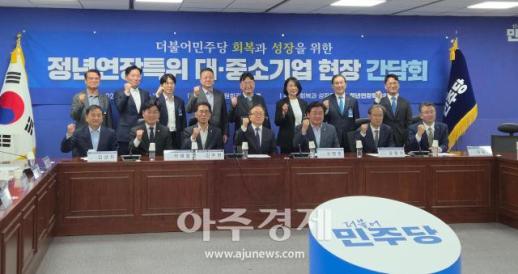 Business groups say raising retirement age to 65 must include wage system overhaul The government is accelerating plans to raise the mandatory retirement age to 65, and business groups are urging that wage adjustments for workers 60 and older be recognized as an exception to age-discrimination rules. The government says it plans to submit legislation in the first half of the year, but no agreement has been reached on wages or employment arrangements. On the 30th, the Democratic Party’s special committee on extending the retirement age held a meeting with business representatives from large and small companies to discuss directions for overhauling wage systems. Business groups say they can accept a higher retirement age, but only if wage systems are restructured. The Korea Employers Federation said it recently interviewed many Japanese companies, where continued employment after age 60 has been established earlier than in South Korea, to review how the policy was introduced and how it operates in practice. The federation is calling for a compromise that allows voluntary implementation reflecting each company’s personnel system. It also wants to ease the added labor-cost burden of keeping older workers by shifting to job- and performance-based pay. A uniform wage cut, it argues, could weaken motivation and reduce productivity, so compensation should be differentiated based on expertise and results. According to the federation, Japan shares the social costs of extending older-worker employment among labor, management and government. Companies employ all applicants, but wages upon rehire are adjusted to about 20% to 30% below previous levels, with the government covering a substantial portion. Japan keeps the legal retirement age at 60 but requires measures to secure employment through 65. Companies choose one of three options: rehiring, extending retirement, or abolishing retirement. Japan has also reduced corporate burdens by allowing changes to work rules deemed socially reasonable without going through labor-management agreement procedures. Nissan Motor, for example, provides differentiated incentives to workers over 60 who deliver performance or have strong technical skills. Lee Dong-geun, vice chairman of the Korea Employers Federation, told Aju Business that because Japan’s industry and employment structure are similar, “the most desirable approach is a company-choice model following Japan’s precedent.” He added that if the retirement age is extended, “the wage system must also be reformed” to address concerns about reduced youth hiring. Shin Chang-hoon, a managing director at Lotte Holdings, said problems tied to seniority-based pay are serious, adding that if flexibility in seniority and employment is secured, extending the retirement age “would not be a big issue.” An industry official said no agreement was reached at the meeting. “It was simply a chance to hear companies’ situations,” the official said, adding that discussions would likely become more substantive after local elections. With labor and management far apart on wage cuts, conflict is expected to continue during the legislative process. Participants included the Korea Employers Federation, the Korea Federation of SMEs, Samsung Global Research, Hyundai Motor, SK Supex Council, LG Electronics and Lotte Holdings.* This article has been translated by AI. 2026-04-30 15:18:19
 -
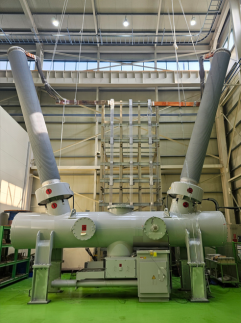 Hyosung Heavy Industries to Showcase AI Data Center Grid Solutions at IEEE PES T&D 2026 Hyosung Heavy Industries will present what it calls a “total solution” for power grids serving artificial intelligence data centers at the largest U.S. transmission and distribution exhibition. The company said Wednesday it will take part in IEEE PES T&D 2026, to be held May 4-7 (local time) in Chicago. The event will be held under the theme “Powering Reliability, Engineering Resilience.” Hyosung Heavy said it will showcase solutions linking today’s grid needs with future demand. Products highlighted include the world’s largest-capacity 800kV 7,000A GCB (gas-insulated circuit breaker); an SST (solid-state transformer) positioned as a core power solution for next-generation data centers; a voltage-source HVDC (high-voltage direct current transmission system) developed with what it said is the first domestically owned technology of its kind; and a STATCOM (static synchronous compensator) aimed at strengthening power stability for data centers and renewable energy. The 800kV 7,000A GCB to be displayed is a U.S. export-focused model developed in March. Hyosung Heavy said design optimization kept it the same size as its existing 5,000A product while enabling stable handling of 7,000A current. The company will also exhibit a submodule of its 22.9kV SST, which it said it developed first in the world and which is designed to significantly improve data center power efficiency. Hyosung Heavy said it plans to maximize competitiveness in established equipment such as extra-high-voltage transformers and circuit breakers as local power demand is expected to surge, while also promoting next-generation technologies including SST and HVDC to reinforce its position as a total-solution provider. “Through this exhibition, we will demonstrate to power-industry stakeholders that Hyosung Heavy Industries is the most reliable partner for building AI power grids,” a company official said. “We will combine the power-infrastructure technology we have accumulated with future-oriented solutions to lead a paradigm shift in the U.S. market.” Meanwhile, IEEE PES T&D is a global exhibition and conference hosted by the Institute of Electrical and Electronics Engineers and held every two years. More than 800 companies from around the world participate to share power-industry trends and solutions. * This article has been translated by AI. 2026-04-30 09:24:19
 -
 SM Group Rolls Out Google Workspace Across Company to Speed AI Shift SM Group said Wednesday it will introduce the cloud-based collaboration platform Google Workspace (GWS) across the company as it pushes an artificial intelligence transformation aimed at strengthening future competitiveness. In the first phase, the group has applied GWS to 38 of its 54 affiliates, building an environment needed for work innovation and integrated operations. The company said the move goes beyond swapping collaboration tools and is intended to support a shift toward a “smart enterprise” that makes decisions and executes work based on data. As part of that effort, it set up an “AI Research Task Force Team” last month under the group’s management support division. The AI research task force will pursue a two-track roadmap tied to the GWS rollout: modernizing infrastructure by moving legacy systems to the cloud and standardizing fragmented work data, while also seeking new business value to deliver measurable gains in efficiency and profitability, the company said. SM Group said it expects visible changes including unified communications and turning information into managed assets. It consolidated communications that had been centered on individual affiliates into an official platform based on a groupwide domain (@smgroup.co.kr). The company said the change will reduce barriers between the group and affiliates and strengthen security so intellectual assets can be protected more systematically. The group also said it will step up adoption of “agentic AI.” Using Gemini Enterprise, it plans to integrate and analyze data in real time from headquarters, worksites and branches, and to reduce routine reporting and compilation work so employees can focus on higher-value tasks. For the AI transformation, SM Group named SM Hi-Plus as the control tower. SM Hi-Plus completed a cloud migration based on Amazon Web Services in December, the company said, improving system stability and security. Building on that, the group plans to run a “Leadership AI Conference,” where executives directly use AI tools to develop business solutions, and to train department-level talent as innovation champions to spread practical AI use across the organization. “GWS is not just a collection of tools, but the starting point of a work ecosystem where AI is connected in real time and organically,” said Ahn Byeong-hyeon, CEO of SM Hi-Plus. He said the group will pursue a strategy that combines broad infrastructure upgrades with agentic AI to improve effectiveness and efficiency and maximize value across SM Group’s businesses, including manufacturing and services, shipping and construction.* This article has been translated by AI. 2026-04-30 09:11:36
 -
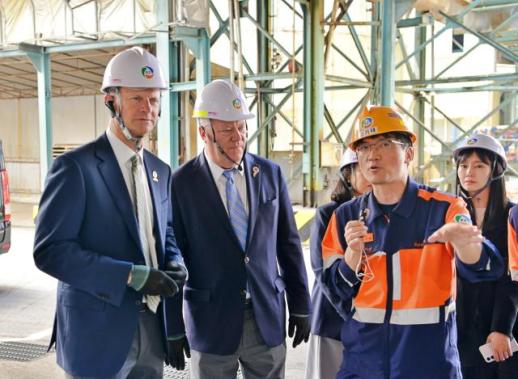 Korea Zinc, Tennessee Step Up Cooperation on U.S. Smelter Project Crucible Korea Zinc said cooperation with the state of Tennessee is accelerating as the company moves ahead with “Project Crucible,” its plan to build an integrated smelter in the United States. The company said Tennessee officials, including Lt. Gov. Stuart McWhorter, visited Korea Zinc’s Onsan smelter on April 28 and discussed ways to strengthen cooperation. Korea Zinc described the Onsan facility as a model for the planned U.S. project. Korea Zinc said the visit was arranged to help state officials better understand smelting operations and to discuss additional cooperation needed to keep Project Crucible on track. McWhorter met with Korea Zinc officials, including Kim Seung-hyeon, vice president and head of the Onsan smelter, to hear about the plant’s technology and its operating approach on environmental management and safety. The two sides also shared the company’s vision for the U.S. integrated smelter, Korea Zinc said. McWhorter said Project Crucible is expected to have a positive impact on the local economy, including job creation, and could also serve as an important opportunity to strengthen the South Korea-U.S. partnership and bolster supply chains for critical minerals to improve economic security. During the meeting, the sides discussed administrative procedures, the project schedule and operating plans needed for smooth execution, Korea Zinc said. McWhorter pledged full administrative support going forward, the company said. In comments to reporters, McWhorter again cited stronger bilateral partnership, economic security and job creation as the project’s core significance, saying it carries added weight because it is being pursued under the leadership of both governments and because stronger critical-mineral supply chains can play a major role in economic security. Asked about environmental and safety concerns raised in Tennessee, McWhorter said Korea Zinc has decades of smelting technology and operating experience. He also said the company’s silver and copper products use 100% recycled feedstock and received certification last year from global certification body SGS. McWhorter said Tennessee is working on infrastructure beyond the smelter itself, including power supply, housing for Korean personnel and training programs for local workers. He said the state holds weekly meetings with Korea Zinc and that permits under the Trump administration would allow the project to move quickly, shortening the timeline from construction to commercial operations. He added that he viewed smooth communication as a major strength in working with Korea Zinc and said he was confident the project would be carried out successfully. During the tour, Tennessee officials reviewed production processes for base metals such as zinc, lead and copper, as well as critical minerals including indium, Korea Zinc said. At a site slated for a new germanium plant, the officials expressed expectations for expanded cooperation between the two sides, the company said. McWhorter said he has held ongoing meetings with Chairman Choi Yoon-beom and other executives and again cited Korea Zinc’s communication as a strength. He said the visit broadened his understanding of the smelting industry and increased his expectations for Project Crucible. He said the state government would look for ways to actively support the project, including securing electricity and helping with administrative procedures, and expressed hope that the effort to build another world-class facility in the United States, like the Onsan smelter, would proceed successfully. Kim said that if the Onsan smelter — which he described as the world’s only facility capable of producing zinc, lead and copper as well as critical minerals — is replicated in the United States, it could become a catalyst for innovation across the smelting industry. He said the U.S. integrated smelter is planned as a smart smelter applying Onsan’s technology along with artificial intelligence and automation, and he expects the technology to be applied back at Onsan as well, creating synergy. Project Crucible is set to begin site preparation work this year and aims for completion in 2029, Korea Zinc said. After completion, the facility is expected to produce zinc, lead and copper first, followed by 13 nonferrous metals including 11 types of critical minerals designated by the U.S. government, such as indium and gallium, as well as semiconductor-grade sulfuric acid.* This article has been translated by AI. 2026-04-29 18:09:37
 -
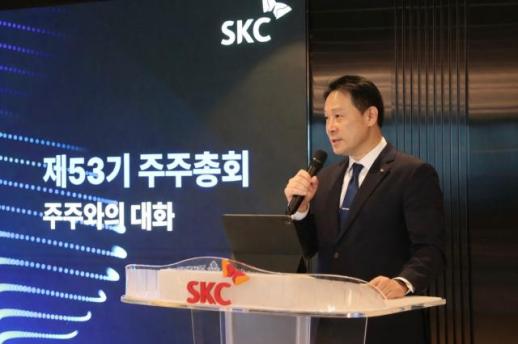 SKC Posts First Positive EBITDA in 10 Quarters as Semiconductor, Chemical Units Rebound SKC said it rebounded on improved results in its semiconductor and chemical businesses. The company said Tuesday that first-quarter consolidated revenue totaled 496.6 billion won, while it posted an operating loss of 28.7 billion won. The loss narrowed sharply from the previous quarter, and earnings before interest, taxes, depreciation and amortization came to 10 billion won, turning positive for the first time in 10 quarters. Kim Jong-woo, who took office in November, got off to a strong start, the company said. Its semiconductor materials unit posted first-quarter revenue of 68.3 billion won and operating profit of 23.6 billion won. The operating margin reached 34.5%, helped by higher sales of high-value test sockets as demand grew for AI data centers. SKC said it was the unit’s best quarterly performance on record. The chemical business also returned to profit, with first-quarter revenue of 270.8 billion won and operating profit of 9.6 billion won, its first profit in 13 quarters. SKC cited a windfall from the war in the Middle East and an expanded sales strategy for high-value propylene glycol. SK Nexilis, the battery materials affiliate led by Kim as CEO, also supported the turnaround, SKC said. The company said it benefited from reshaping its business around North America and the energy storage system market. It also pointed to efforts after Kim’s appointment to clear one-off costs and cut manufacturing costs by expanding operations at its Malaysia plant during the first quarter. SKC said preparations for mass production of semiconductor glass substrates, a future growth driver, are proceeding as planned. It has begun making samples for customer evaluations, aims to complete reliability tests within the year, and plans to diversify applications by reviewing new projects with multiple global big-tech customers in the second quarter. Separately, SKC said its planned 1 trillion won rights offering to fund new businesses and improve its financial structure drew strong internal demand, with employee subscription demand reaching 132% of the amount offered. * This article has been translated by AI. 2026-04-29 18:08:48