
Journalist

Shin Ji-a
fromjia@ajunews.com
-
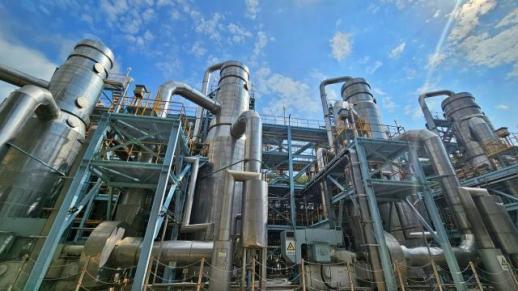 Court Dismisses Damages Suit Against Young Poong Executives Over Environment Ministry Penalty Young Poong said Thursday it welcomed a first-instance court ruling dismissing a damages lawsuit filed against its current and former executives based on an Environment Ministry penalty. In November 2024, the Good Corporate Governance Research Institute and the Citizens’ Coalition for Economic Justice filed the suit, arguing that the executives violated duties under the Commercial Act — including the duty of care and oversight — and caused losses to the company, citing the ministry’s imposition of a penalty. The Seoul Central District Court’s Civil Division 30 rejected the plaintiffs’ claims and dismissed the case in full. The court said the plaintiffs failed to specify concrete illegal acts by Young Poong or its executives. It also found that the penalty alone was insufficient to establish liability for damages and that it was not adequately proven the company suffered actual losses. Young Poong said it has pursued improvements across water, air and soil at its Seokpo smelter since establishing an “environmental improvement innovation plan” in 2019. It said it invested about 540 billion won through the end of last year and plans additional investment. The company also noted it was found not guilty in both the first and second trials in a Water Environment Conservation Act case brought by the Daegu District Prosecutors’ Office in 2022, and the rulings became final after prosecutors did not appeal. The court said at the time it was difficult to conclude the defendants intentionally allowed cadmium to leak, and that they appeared to have worked step by step during their terms to improve smelter facilities and the surrounding environment. A Young Poong official said the ruling again confirmed that some claims the company neglected water pollution or failed to pursue environmental improvements were “groundless speculation.” The official said the company would continue “thorough monitoring and proactive responses” to build a sustainable, eco-friendly workplace for more than 100 years.* This article has been translated by AI. 2026-04-23 14:33:48
 -
 SKC, Hanwha Solutions Face Diverging Risks in Major Stock Offerings SKC and Hanwha Solutions have launched large rights offerings to fund future growth, but uncertainty is rising over whether the deals will succeed as SKC faces a share-price slide and Hanwha Solutions awaits a financial regulator’s review. Industry officials said Tuesday that SKC is pursuing a 1 trillion won offering, but recent volatility has raised concerns that the final offering price could come in lower than expected, reducing proceeds. SKC plans to invest 590 billion won of the funds in its glass substrate business and use 410 billion won to repay debt. The company expects its debt-to-equity ratio to fall to about 142% from 233% after the offering, though the extent of improvement and the pace of investment will depend on how much money is ultimately raised. Some investors worry that a lower issue price would shrink funding and force cuts to investment in future businesses such as glass substrates. SKC shares, which had traded in the 100,000-won range, fell to the 80,000-won range after the offering was announced. The first issue price was set at 70,600 won per share. The company will set a second issue price by applying a 20% discount to the May 11 share price, then finalize the lower of the two as the issue price. Hanwha Solutions’ offering was reduced to 1.8 trillion won from 2.4 trillion won after the Financial Supervisory Service on April 9 requested revisions to its securities registration statement. The company adjusted planned debt repayment to 900 billion won from 1.5 trillion won. The number of new shares also fell to 56 million from 72 million, lowering the dilution rate to 24.6% from 29.5%. Still, uncertainty remains until the regulator completes its review and the schedule is finalized. Hanwha Solutions held an investor relations session for analysts Monday to explain why it says the offering is unavoidable. The company said it has carried out about 3.9 trillion won in balance-sheet improvements through noncore asset sales and equity-like financing, and reiterated that additional self-help measures are limited. Both companies cite future growth as the rationale. SKC plans to expand its semiconductor materials business centered on glass substrates as it accelerates a portfolio shift. Hanwha Solutions aims to ease financial strain amid a weak solar market while pursuing mid- to long-term investments including its U.S. “Solar Hub.” Some investors, however, have criticized the offerings as using shareholder money to pay down company debt. Lee Chang-min, a professor of business administration at Hanyang University, said, “A recurring problem in recent rights offerings by Korean companies is that explanations of the need for funding and reviews of alternatives are not sufficient,” adding, “In particular, it is hard to view positively a structure in which a large portion of the funds is used for debt repayment.”* This article has been translated by AI. 2026-04-23 05:03:27
 -
 SK Group to Turn Off Lights at Major Offices for Earth Day SK Group said it will join an Earth Day lights-out event to underscore the seriousness of the climate crisis and the need to cut carbon emissions. The group said lights at major headquarters buildings of SK Inc. and affiliates including SK Innovation, SK Telecom, SK ecoplant, SK Gas, SK Square, SK Networks and SK Chemicals will be turned off for 10 minutes starting at 8 p.m. on April 22. SK said it is encouraging participation through internal bulletin boards and social media so employees can take part in saving energy in daily life. Separately, SK said it has also been voluntarily switching off nighttime lighting for SK logos attached to the exteriors of key buildings since April 8, including SK Seorin Building, T Tower, Susong Square, Jongno Tower, Samil Building, SK U Tower and Pangyo ECO Hub, as part of broader efforts to conserve energy amid a growing national energy crunch.* This article has been translated by AI. 2026-04-22 15:16:51
 -
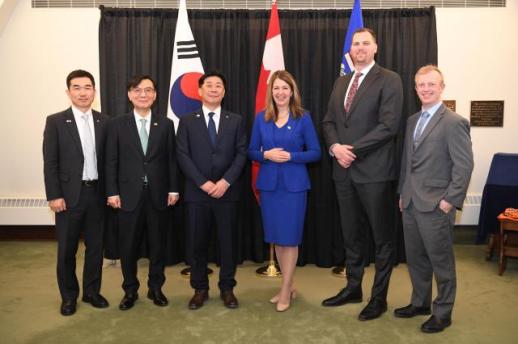 Korea's Hanwha expands partnership with Alberta for submarine bid in Canada SEOUL, April 22 (AJP) -South Korea's Hanwha Group pitching for a $40 billion submarine program in Canada is widening its support base across the North American country to win favor against its European competition. Hanwha Group is expanding cooperation with the Canadian province of Alberta across key industries including energy, defense and shipbuilding as it seeks to broaden local industrial partnerships and economic cooperation tied to Hanwha Ocean’s bid for Canada’s Canadian Patrol Submarine Project, or CPSP. The group signed a memorandum of understanding with the Alberta government Tuesday (local time) at the provincial government building in Edmonton. Attendees included Alberta Premier Danielle Smith, Economic Development and Trade Minister Joseph Schow, South Korean Ambassador to Canada Lim Ki-mo and Hanwha Energy CEO Lee Jae-kyu. The two sides agreed to pursue mid- to long-term investment and build an industrial ecosystem in Alberta beyond individual projects. Hanwha Energy, Hanwha Ocean, Hanwha Aerospace and Hanwha Power will take part, expanding cooperation in oil, liquefied natural gas, hydrogen, carbon capture and storage, and defense and shipbuilding supply chains. Hanwha said the MOU focuses on a low-carbon energy transition, industrial growth and stronger supply-chain stability. In the near term, the sides plan to expand trade in resources such as natural gas. Over the mid to long term, they aim to broaden cooperation to hydrogen- and ammonia-based clean energy and carbon-management infrastructure. Hanwha also said it will support efforts aligned with Canada’s Defense Industrial Strategy, including strengthening domestic industrial capabilities, maintenance and operations capacity, and building a regional defense ecosystem. Alberta is attracting about $6.5 million in investment from the federal government as it grows into a defense manufacturing hub. Smith said, “Alberta is a global business hub, and this agreement with Hanwha Group shows our competitiveness as a destination for international investment.” Lee said, “This MOU has elevated our cooperative relationship with Alberta by another step,” adding, “We will bring together the group’s capabilities to deliver tangible results across a range of areas.” Hanwha has been mounting a groupwide push to win the Canadian submarine project, expanding its outreach beyond inland industrial bases to key maritime hubs. Earlier, Hanwha Ocean CEO Kim Hee-cheol visited Halifax on April 14 and discussed defense and industrial cooperation with officials from Nova Scotia. Halifax is a strategic center of the country’s naval industry. The talks covered defense readiness, maintenance, repair and overhaul (MRO) capabilities, workforce development and industrial infrastructure, as Hanwha Ocean shared its long-term strategy for the project. The local partnership is part of Hanwha Ocean’s strategy to shorten delivery timelines and strengthen localization as it competes with Germany’s ThyssenKrupp Marine Systems (TKMS) in the final stage of the bid. The company has also partnered with five Canadian firms — OSI Maritime Systems, EMCS Industries, Techsol Marine, Jastram Technologies and Curtiss-Wright — to reinforce its local industrial base. Such localization efforts are seen as critical, as Canada places strong emphasis on domestic industrial and economic contributions in major defense procurement programs. Canada’s CPSP involves the procurement of up to 12 diesel-electric submarines of around 3,000 tons. The contract value alone is estimated at $13.5 billion, with the total project size, including 30 years of MRO, potentially reaching $40 billion. A consortium of Hanwha Ocean and HD Hyundai Heavy Industries is competing against Germany’s ThyssenKrupp Marine Systems, with a final decision expected around June. 2026-04-22 09:51:46
 -
Hanwha signs MOU with Alberta to expand energy, defense and shipbuilding cooperation Hanwha Group said it will strengthen cooperation with the government of Alberta across key industries including energy, defense and shipbuilding. The group said April 22 it plans to systematically expand local industrial partnerships and broader economic cooperation, linked to Hanwha Ocean’s bid for Canada’s Canadian Patrol Submarine Project, or CPSP. Hanwha signed the memorandum of understanding April 21 (local time) at the Alberta Legislature Building in Edmonton. Attendees included Alberta Premier Danielle Smith, Minister of Jobs, Economy and Trade Joseph Schow, South Korean Ambassador to Canada Lim Ki-mo and Hanwha Energy CEO Lee Jae-gyu. The two sides agreed to pursue joint, mid- to long-term investment and industrial ecosystem development with Alberta as a base, beyond individual projects. Hanwha Energy, Hanwha Ocean, Hanwha Aerospace and Hanwha Power will take part, expanding cooperation in oil, liquefied natural gas, hydrogen, carbon capture and storage, and defense and shipbuilding supply chains. Hanwha said the MOU focuses on a shift to low-carbon energy, industrial growth and stronger supply-chain stability. In the near term, the sides plan to expand trade in resources such as natural gas. Over the mid to long term, they aim to broaden cooperation to hydrogen- and ammonia-based clean energy and carbon-management infrastructure. Hanwha also said it will support efforts aligned with Canada’s Defence Industrial Strategy, including building independent industrial capabilities, strengthening maintenance and operations capacity, and developing a region-based defense industrial ecosystem. Alberta is attracting about $6.5 million in investment from the federal government as it grows into a defense manufacturing hub. Smith said, “Alberta is a global business hub, and this agreement with Hanwha Group shows our competitiveness as a destination for international investment.” Lee said, “This MOU has elevated our cooperative relationship with Alberta,” adding that the group will “bring together its capabilities to deliver tangible results across a range of fields.” Hanwha said it is mounting a groupwide effort to win the Canadian submarine project. Earlier, Hanwha Ocean CEO Kim Hee-cheol visited Halifax on April 14 and discussed defense and industrial cooperation with officials from Nova Scotia.* This article has been translated by AI. 2026-04-22 09:12:10
-
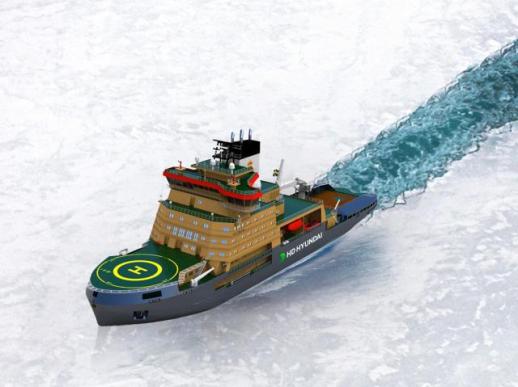 HD Hyundai Heavy Wins First Overseas Icebreaker Order, Eyes Arctic Shipping HD Hyundai Heavy Industries said it has won its first overseas order for a dedicated icebreaker, a milestone it described as establishing a foothold for entering Arctic shipping routes. The company said it signed a contract with the Swedish Maritime Administration to build one icebreaker for $348.9 million (about 514.8 billion won). HD Hyundai Heavy Industries said it was highly rated on price competitiveness, delivery schedule and technology. The vessel is to be delivered in 2029 and will operate in the Baltic Sea, providing icebreaking support as well as fleet operations, towing and ice management. The company said the deal was secured amid competition with major icebreaker-building countries including Finland and Norway, marking the Korean shipbuilding industry’s entry into the global icebreaker market. It also cited public-private cooperation supported by the South Korean Embassy in Sweden and KOTRA’s Stockholm office. Icebreakers are specialized ships designed to open routes through ice-covered waters by crushing and pushing aside sea ice, using reinforced hulls, powerful propulsion and dedicated hull designs. The ordered vessel will be 126 meters long with a displacement of 15,000 tons and will have PC (Polar Class) 4 icebreaking capability, the company said. With an electric propulsion system, it can continuously break through ice about 1 to 1.2 meters thick. Industry officials say commercializing Arctic routes will require not only icebreakers but also merchant ships with icebreaking capability, including LNG carriers and bulk carriers, and they view the order as a foundation for entering related markets. Competition to secure icebreakers is also intensifying globally. The United States passed legislation last year to expand its icebreaker budget by about $9 billion, and together with Canada and Finland formed the “ICE Pact” to pursue construction of 70 to 90 vessels over the next decade. HD Hyundai Heavy Industries said it plans to expand its special-purpose ship business based on its icebreaking technology and will also push to enter global markets for naval vessels and other special-purpose ships that require icebreaking capability. “This icebreaker order shows our business capabilities have been recognized in the global market,” CEO Ju Won-ho said. “Based on our technology and integrated business capabilities, we will expand export markets in the special-purpose ship sector.”* This article has been translated by AI. 2026-04-22 09:09:56
 -
 SK On Moves to Open Tokyo Office to Expand Japan Auto and ESS Business SK On is moving to set up a local office in Japan as it steps up its push into the market. Industry sources said SK On is completing administrative procedures with the aim of opening a Tokyo office by the end of this month. The Japan office would serve as a base to expand cooperation with local automakers, including Nissan, while also exploring opportunities in energy storage systems, or ESS. The company plans to broaden its portfolio beyond EV batteries into ESS and speed up new project orders. It is also known to be discussing EV battery and ESS cooperation plans with multiple Japanese companies. The move comes as the EV market slowdown drags on, with SK On seeking a two-track approach: entering Japan’s conservative auto market while expanding its ESS business. “Using our Japan office as a hub, we will strengthen a faster, closer response system to customer needs and continue profitability-focused growth, including securing new orders,” an SK On official said.* This article has been translated by AI. 2026-04-22 08:21:18
 -
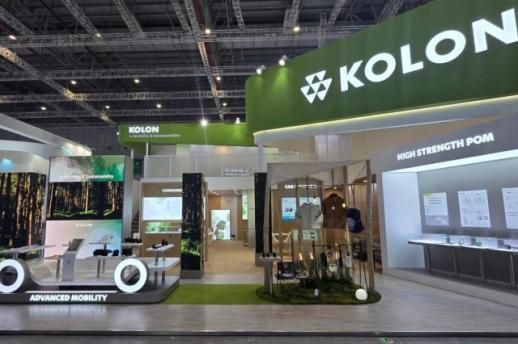 Kolon Industries to Showcase Sustainable Engineering Plastics at Chinaplas 2026 Kolon Industries is showcasing sustainable materials solutions at Asia’s largest chemical industry exhibition. The company said April 21 it is taking part in Chinaplas 2026, being held in Shanghai through April 24. Chinaplas draws about 4,000 companies worldwide and is considered one of the three major global chemical industry exhibitions, along with the U.S. NPE and Germany’s K-SHOW. Under the theme “e-Mobility & Sustainability,” Kolon Industries is exhibiting automotive engineering-plastics parts and high-strength POM (polyoxymethylene). It plans to highlight its sustainability capabilities with eco-friendly products such as PCR (post-consumer recycled) PA (polyamide) made with recycled plastics and bio-based POM. In automotive parts, the company is focusing on engineering plastics for electric vehicles. Its PA materials, citing high rigidity, dimensional stability, heat resistance and color stability, can be used for battery pack housings and charging door modules. Products using high-strength HS POM are also a key display item. The company said HS POM offers at least 10% higher mechanical strength and wear resistance than general POM and is used for auto window motor gears and seat belt parts. A dedicated display zone will be set up around the material. Kolon Industries is also presenting products for medical and consumer applications, including insulin pens, showerhead parts and cosmetic containers, to underscore quality competitiveness that meets global standards. As background, the company said it strengthened its high value-added portfolio by merging its engineering plastics subsidiary, Kolon ENP, into the parent company on April 1. It added engineering plastics to its mobility, specialty and chemical businesses as it accelerates a shift toward becoming a global specialty materials company. “Eco-friendly engineering plastics are an effective solution for building a sustainable industrial ecosystem,” said Jeong Hong-ryeong, head of Kolon Industries’ ENP Business Division. “We will continue to expand our eco-friendly product portfolio based on our technology.”* This article has been translated by AI. 2026-04-21 15:55:04
 -
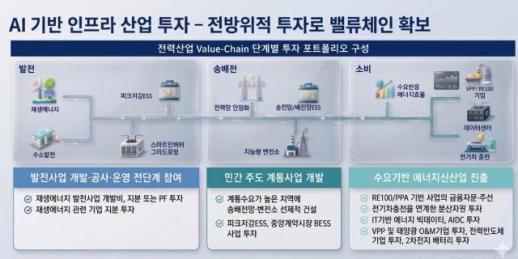 Samchully Asset Management Expands AI Infrastructure Investments in Power, Data Centers and Grids Samchully Asset Management is expanding integrated infrastructure investments across power generation, data centers and electric grids to meet demand in the artificial intelligence era. The firm said on the 21st it is pursuing a strategy that spans renewable power supply, a data center-centered infrastructure value chain, and next-generation grid investments such as CPOs (charging point operators) and VPPs (virtual power plants). To respond to surging electricity demand driven by wider AI adoption, the company said it is focusing on expanding a global renewable energy portfolio. It began in 2020 by forming a 200 billion won renewable-energy blind private equity fund and now manages four infrastructure PEFs totaling 396.1 billion won, along with multiple renewable-energy trust funds. It is investing a total of 1.55 gigawatts in projects in South Korea and in the United States, Australia and France, it said, to build a stable power-supply base. Samchully Asset Management is also accelerating efforts to secure a data center value chain. It said it is pursuing vertical integration, linking power production and supply to data center operations based on its own generation assets. In Yongin, Gyeonggi Province, it is investing to develop a 60-megawatt hyperscale data center and an urban edge data center. The company said it plans to combine external grid connections with its own generation facilities to ensure stable power supply. The firm said it is expanding investments aimed at building future power networks. On the physical side, it plans to build CPO infrastructure that includes electric-vehicle charging stations and energy storage systems. On the operational side, it plans to improve demand forecasting and efficiency through a VPP platform that integrates and manages distributed energy resources. The company said the goal is to optimize supply and demand and generate revenue through electricity sales. Samchully Asset Management said it has built broad investment experience from conventional energy to renewables, positioning itself as an energy-focused asset manager, and has expanded into alternative investments such as corporate finance and real estate. "We are expanding investments into a range of areas including AI-based infrastructure, secondary batteries and power semiconductors, and continuing proactive investment and management across the value chain," the company said. "We will lead investment trends and strengthen the foundation for future growth in a rapidly changing AI era." 2026-04-21 15:54:23
 -
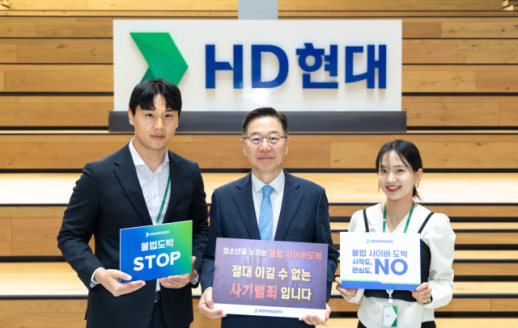 HD Hyundai Oilbank CEO Song Myung-joon Joins Campaign to Prevent Illegal Youth Gambling Song Myung-joon, CEO of HD Hyundai Oilbank, has joined a campaign aimed at preventing illegal gambling among teenagers. HD Hyundai Oilbank said Tuesday that Song took part in a youth cyber gambling prevention campaign Monday with employees at HD Hyundai Global R&D Center (GRC) in Pangyo, Seongnam. The online “Youth Gambling Eradication Relay Campaign,” launched by the Seoul Metropolitan Police Agency, seeks to warn of the dangers of illegal cyber gambling targeting teenagers and to curb its spread. Participants post a photo with the message, “Illegal cyber gambling targeting teenagers is a fraudulent crime you can never beat,” and nominate the next participant. Song joined after being nominated by Kim Sung-hwan, CEO of Korea Investment & Securities, and named Park Yong-geun, CEO of EY Hanyoung, as the next participant. “Youth gambling is an important challenge our society must solve together,” Song said. “We will do our part to help create an environment where the next generation can grow up healthy, free from the temptation of illegal gambling.” 2026-04-21 15:20:47