

Journalist

Shin Jia
fromjia@ajunews.com
-
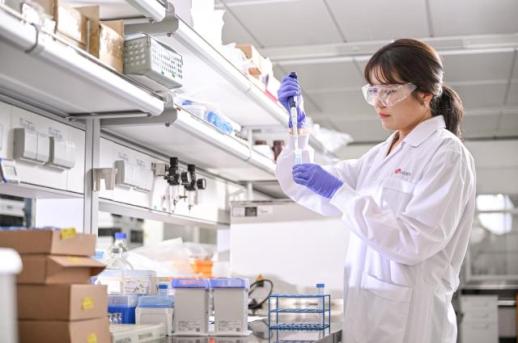 LG Chem Accelerates Future Portfolio Transition with Four Growth Drivers LG Chem announced on May 28 that it is accelerating the restructuring of its future business portfolio centered around four growth drivers: eco-friendly products, battery materials, pharmaceuticals, and high-value specialty businesses. The company aims to triple its revenue from these sectors, which stood at 5.8 trillion won last year, by 2030. In the battery materials sector, LG Chem is enhancing the development of next-generation cathode materials, including high-voltage mid-nickel (HV Mid-Ni), lithium manganese-rich (LMR), and lithium iron phosphate (LFP). The company is also working on sodium-ion battery (SIB) materials while focusing on optimizing its production base in Tennessee, North America, to secure price competitiveness. The company is also pursuing global expansion in its oncology pharmaceuticals business. Clinical trials are underway for treatments targeting head and neck cancers and immuno-oncology therapies, with plans to explore adjacent areas such as women's health and osteoporosis. In the eco-friendly sector, LG Chem is strengthening its low-carbon materials business based on PCR (post-consumer recycled) plastics and bio-based raw materials. The company is accelerating the development of next-generation low-carbon technologies, including biofuels derived from used cooking oil (HVO), sustainable aviation fuel (SAF), dry reforming of methane (DRM), and e-SAF. The specialty business is being restructured around high-performance materials, including high-heat ABS, ultra-high molecular weight SSBR, and high-purity IPA for semiconductors. LG Chem is also aiming to expand its high-value product lineup, targeting PVC for electric vehicle fast-charging cables, aerogels, and SAN for cosmetic containers.* This article has been translated by AI. 2026-05-28 18:02:00
 -
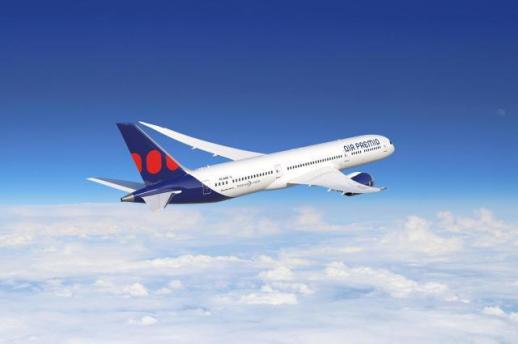 Air Premia Joins Growing Trend of Unpaid Leave Amid Rising Fuel Costs As the ongoing conflict in the Middle East continues to drive up fuel prices, Air Premia, a long-haul low-cost carrier, has announced it will implement unpaid leave for its employees. On May 22, the airline informed its current full-time cabin crew that it would accept applications for unpaid leave. The leave period is set to begin on July 1 and last for one month, with the possibility of extending unpaid leave into August if high fuel prices persist. In its announcement, Air Premia stated, "Due to the prolonged conflict in Iran leading to high fuel prices and exchange rates, we are experiencing numerous flight reductions. Therefore, we will offer voluntary unpaid leave for cabin crew within the limits of available personnel in July." This decision is seen as part of a broader trend among low-cost carriers (LCCs) to reduce operational costs amid rising exchange rates, increasing international oil prices, and a slowdown in travel demand. Previously, Jeju Air, the leading LCC in South Korea, began accepting applications for unpaid leave from cabin crew on May 8. Jin Air has also adjusted the hiring schedule for about 50 prospective cabin crew members to the second half of the year.* This article has been translated by AI. 2026-05-23 20:00:55
 -
 Lotte Energy Materials Sells 90% Stake in Lotte EcoWill to Relson Private Equity 롯데에너지머티리얼즈가 릴슨프라이빗에쿼티와 주식매매계약을 체결하고 롯데에코월 지분 90%를 매각한다고 22일 밝혔다. Lotte Energy Materials announced on May 22 that it has signed a stock purchase agreement with Relson Private Equity to sell a 90% stake in Lotte EcoWill. The company specializes in curtain wall construction, which involves creating a separate glass exterior wall outside concrete walls. Last year, Lotte EcoWill reported approximately 130 billion won in sales and an operating profit of about 12 billion won, with an EBITDA exceeding 10%, indicating strong cash generation capability. Lotte Energy Materials stated, "We decided to proceed with this sale to adjust our business portfolio toward future materials." The company plans to concentrate more on securing the future competitiveness of its core copper foil business. The funds raised from this sale will be utilized for investments in four high-value-added product portfolios: AI circuit foils for data centers, ultra-thin foils for semiconductors, battery foils for energy storage systems (ESS), and battery foils for existing electric vehicle batteries. At its Iksan plant in South Korea, Lotte Energy Materials aims to expand its production capacity for AI circuit foils from the current 3,700 tons to a total of 16,000 tons by 2027. The Malaysian plant will also focus on increasing production of battery foils for ESS, laying the groundwork for a structural turnaround this year. Lotte's chemical division is undergoing a business restructuring to strengthen its core competitiveness. The company is continuing to reorganize its domestic basic materials business and divest unrelated operations while focusing on expanding functional materials and high-value businesses, striving to transition to a business model centered on advanced technology materials. Additionally, Lotte Energy Materials announced last month that it would invest approximately 50 billion won in its Iksan plant, the only domestic production base for circuit foils, to complete the material industry value chain. Despite challenging market conditions due to the electric vehicle sector, the company is making bold investments to secure future competitiveness and restructure its business.* This article has been translated by AI. 2026-05-23 19:09:58
 -
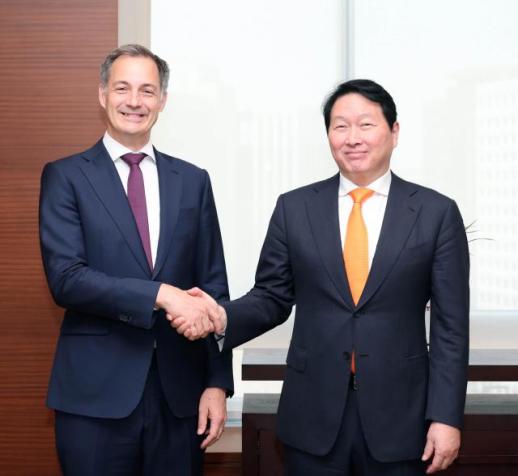 SK Group Chairman Choi Tae-won Meets UNDP President De Croo to Discuss Private Sector Role in Global Development Choi Tae-won, Chairman of the Korea Chamber of Commerce and Industry (KCCI), met with Alexander De Croo, the newly appointed President of the United Nations Development Programme (UNDP), on May 22 at the KCCI headquarters in Seoul. They discussed expanding the role of the private sector in global development cooperation and ways to create social value. The UNDP is a UN agency responsible for planning and managing projects aimed at economic and social development in developing countries. De Croo, who took office in December 2022, previously served as the Prime Minister of Belgium. The meeting included Choi, along with Lee Hyung-hee, Vice Chairman of the Seoul Chamber of Commerce and Industry and SK Group, and De Croo, accompanied by Anne Jupe, Director of the Seoul Policy Center. Choi stated, "The complex global challenges we face today, such as regional extinction, polarization, and climate crises, cannot be solved by governments or international organizations alone. I hope that the KCCI's execution capabilities combined with the UNDP's global network will lead to tangible changes based on a common language of social value." Choi specifically requested UNDP's participation and interest in the upcoming '3rd Korea Social Value Festa' scheduled for September. The Social Value Festa is an event where businesses, governments, international organizations, and civil society come together to seek solutions to social issues and sustainable growth. He suggested, "Let’s co-plan a global session linked to the UNDP strategy to spread awareness." De Croo introduced the UNDP's strategic plan, emphasizing the necessity of collaboration with private enterprises in key areas such as artificial intelligence, digital transformation, climate response, governance, and sustainable finance. He urged Korean companies, including SK, to take a more active interest in the UNDP's various public-private cooperation activities. Choi has consistently discussed ways to link social value with economic growth. In March, he participated in the '2026 Value and Growth Forum,' where he emphasized, "A new growth model is possible only if businesses, governments, and civil society work together."* This article has been translated by AI. 2026-05-23 18:55:33
 -
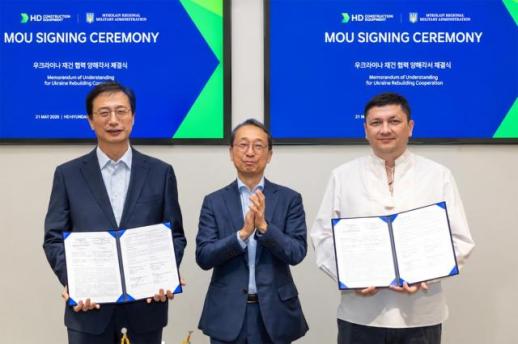 HD Construction Machinery Signs MOU for Ukraine Reconstruction Cooperation HD Hyundai is expanding its cooperation with the Mykolaiv regional government of Ukraine beyond equipment support to establish a long-term collaboration framework for overall reconstruction efforts. On May 22, HD Construction Machinery announced that it signed a memorandum of understanding (MOU) with the Mykolaiv regional government at the HD Hyundai Global R&D Center in Pangyo the previous day. The signing ceremony was attended by key officials, including Mykolaiv Governor Vitaliy Kim, HD Hyundai Vice Chairman Cho Young-cheol, and HD Construction Machinery President Moon Jae-young. This agreement builds on a previous collaboration established in 2023, which focused on the donation of construction equipment and training. Both parties agreed to continue their existing cooperation while expanding their partnership to include equipment supply, the establishment of local training centers, service and maintenance support, financial assistance, and energy infrastructure recovery, thereby creating a comprehensive support model for reconstruction efforts. HD Construction Machinery plans to establish a branch in Kyiv, Ukraine, in 2024 and has strengthened its local cooperation foundation through training programs for government officials, including those from the Ministry of Territorial Development, invited last year. HD Hyundai also aims to develop an integrated reconstruction cooperation model that links its capabilities in construction machinery and energy sectors. Cho Young-cheol, Vice Chairman of HD Hyundai, stated, "We will establish a cooperation system that can contribute practically to Ukraine's reconstruction beyond simple equipment supply, and we will actively support local infrastructure recovery and stabilization using our capabilities in construction machinery and energy sectors." Vitaliy Kim, a fourth-generation Korean and Ukrainian, remarked, "This agreement is an important milestone for the systematic reconstruction of Mykolaiv Oblast and will serve as a key driving force for rebuilding infrastructure, energy, and local communities. I sincerely thank HD Hyundai and South Korea for their ongoing support and the establishment of a long-term partnership." In September of last year, a delegation of Ukrainian government officials visited HD Hyundai's key facilities to secure the technical capabilities necessary for reconstruction and to strengthen cooperation. The delegation, which included officials from the Ministry of Territorial Development, toured the HD Construction Machinery campus in Ulsan, examining excavators and production lines while discussing reconstruction cooperation strategies.* This article has been translated by AI. 2026-05-23 16:51:28
 -
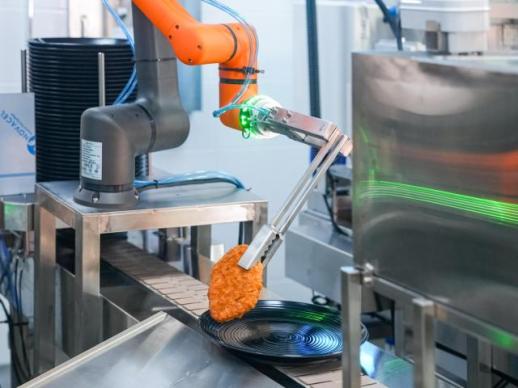 Hanwha Robotics Accelerates Its Entry into the Physical AI Market Hanwha Group is making a bold move into the physical artificial intelligence (AI) market with Hanwha Robotics. As competitors like Doosan Robotics and Rainbow Robotics dominate the domestic collaborative robot sector, Hanwha Robotics aims to leverage synergies with its distribution and service subsidiaries and its AI technology to overcome the challenges of being a latecomer. According to industry sources, Hanwha Robotics is led by Vice President Kim Dong-sun, the third son of Hanwha Group Chairman Kim Seung-yeon, who is overseeing strategic planning and business expansion. Kim plans to broaden the connections between Hanwha Robotics and the group's distribution and service subsidiaries, including Hanwha Galleria, Hanwha Hotels & Resorts, and Hanwha Food Tech, positioning Hanwha Robotics not just as an automation equipment provider but as a key driver of future growth for the group. Established in October 2023 as a spin-off from Hanwha's Momentum division, Hanwha Robotics specializes in collaborative robots designed to work alongside humans in various settings. The company is expanding its applications beyond industrial robots focused on manufacturing to include food and beverage, distribution, and service sectors. Notably, its sommelier and cooking robots exemplify its differentiation in line with Hanwha Group's distribution and food tech initiatives. While competitors Doosan Robotics and Rainbow Robotics have established their presence through market leadership and technological prowess, Hanwha Robotics is focusing on collaboration with group affiliates, leveraging Hanwha Vision's AI technology, and conducting field demonstrations. The ability of Hanwha to transform robotics from a mere future business into a comprehensive automation and service innovation platform for the entire group will be crucial for its competitiveness going forward. Hanwha Robotics emphasizes its practical demonstration capabilities using group affiliates. Locations such as Hanwha Galleria and its hotels and food tech businesses are suitable for deploying service robots. This allows for the accumulation of robot application cases across various environments, including food and beverage, distribution, and hospitality. For instance, Hanwha Robotics' collaborative robots are currently deployed in the production facility of the premium ice cream brand 'Benson,' which operates with only 50-60% of the workforce compared to typical factories, significantly aiding in quality standardization and efficiency improvements. The technological synergy with Hanwha Vision is also noteworthy. For robots to operate more precisely in real-world industrial settings, they must possess the ability to recognize and assess their surroundings beyond simple motion control. By integrating Hanwha Vision's video AI and camera technology, Hanwha Robotics can enhance the sensory and decision-making capabilities of its robots. Hanwha Vision is currently piloting AI cameras that detect anomalies in cooking environments. The key challenge lies in how quickly Hanwha Robotics can close the gap as a latecomer in a fiercely competitive collaborative robot market. Chinese companies are expanding their market share through price competitiveness, while major players like Hyundai Motor Group and Tesla continue to invest heavily in humanoid and physical AI technologies. Analysts suggest that rather than directly competing with these giants, Hanwha Robotics should focus on practical robot solutions that combine field applications with AI technology within the group. However, challenges remain. Since its inception in 2023, Hanwha Robotics has continued to operate at a loss. Last year, the company received approximately 30 billion won in financial support from its parent company, Hanwha Corporation, and Hanwha Hotels & Resorts to mitigate performance deterioration, but it has recently entered a phase of capital erosion. Ultimately, Vice President Kim's ongoing commitment to investment is expected to have a direct impact on the growth of Hanwha Robotics. He envisions utilizing robots as a means to transform customer experiences in the sectors he oversees, including distribution, hospitality, and food tech. An industry insider remarked, "The robotics industry is viewed as a sector with sustainable growth potential. Given the current focus on humanoids, it is crucial for Hanwha Robotics to concentrate its efforts on collaborative and logistics robots, which have high applicability in real-world settings."* This article has been translated by AI. 2026-05-21 21:24:31
 -
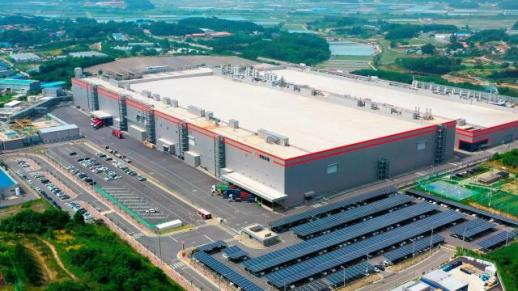 Hanwha Q CELLS to Supply 640,000 Solar Modules for Major Solar Project in Jeollanam-do Hanwha Solutions Q CELLS (hereafter Hanwha Q CELLS) will supply high-efficiency solar cells and modules manufactured in South Korea for a record-breaking 400MW solar power project by Korea Southern Power at a single domestic site. According to industry sources on May 21, Korea Southern Power plans to develop a large-scale solar power plant in the Munnae-myeon area of Haenam-gun, Jeollanam-do. The project aims to complete the solar power plant on approximately 1.4 million pyeong (4.79 km²) of land by June 2028. On May 20, Korea Southern Power selected a preferred bidder for the EPC (engineering, procurement, and construction) contract for this project. Hanwha Q CELLS plans to install about 640,000 solar modules using cells produced domestically. The solar cells and modules supplied for this project will be entirely produced at Hanwha Q CELLS' largest manufacturing facility located in Jincheon, Chungbuk. Yoo Jae-yeol, head of Hanwha Q CELLS' Korea division, stated, "By supplying high-efficiency solar cells and modules made in Korea for this large-scale project, we have an opportunity to demonstrate the technological competitiveness of our solar industry. Especially with the government's policies to expand renewable energy and the ongoing trend to utilize domestically produced products, we expect positive impacts on the restoration of the domestic solar industry ecosystem and increased related investments." He added, "We hope this project will revitalize the solar market, which has been stagnant, and establish a virtuous cycle leading to increased investments and job creation, laying the foundation for the growth of South Korea's renewable energy industry." Meanwhile, Hanwha Q CELLS has launched a solar module recycling initiative called EcoRecycle by Q CELLS in the United States, operating a recycling center near the solar hub in Cartersville, Georgia, capable of processing up to 500,000 discarded modules annually. The company is actively expanding its business both domestically and internationally, providing resource recycling solutions.* This article has been translated by AI. 2026-05-21 19:52:35
 -
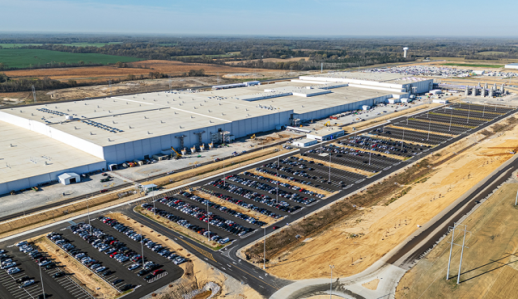 SK On Transitions Tennessee Battery Plant to Independent Operation SK On has completed the restructuring of its battery joint venture, BlueOval SK, with Ford and has transitioned its Tennessee plant to an independent operation. On May 21, SK On announced that it has rebranded the former BlueOval SK Tennessee plant as SK On Tennessee and has entered a phase of sole operation. As a result of this restructuring, SK On will fully own and operate the Tennessee plant, while the two Kentucky plants under BlueOval SK will remain owned and operated by Ford. SK On anticipates that the conclusion of the joint venture will reduce its debt burden by approximately 54 trillion won. Given the current high-interest environment, the company expects to save about $18 million (approximately 27 billion won) annually in interest costs. Additionally, the annual depreciation costs associated with the Kentucky plants, estimated at around 33 billion won, are also expected to decrease. A representative from SK On stated, "This restructuring of the joint venture will strengthen our financial structure and enhance the efficiency of our production operations in the U.S. We aim to actively respond to changes in the North American market based on our newly secured independent production base." In the first quarter of this year, SK On reported revenues of 1.7912 trillion won and an operating loss of 349.2 billion won. However, with the recent acquisition of 284 megawatts (MW) out of a total of 565 MW in the bidding for the second ESS (Energy Storage System) central contract market, combined with the end of the joint venture, the company expects to see improvements in its performance both domestically and internationally.* This article has been translated by AI. 2026-05-21 19:48:24
 -
 SK Chemicals Validates Recycling Suitability of Seven Plastic Materials in Europe SK Chemicals has confirmed the recycling suitability of its plastic (PET) materials in Europe. On May 21, SK Chemicals announced that its copolyester Ecotria Claro and the SkyPet PET product line have been validated for recyclability by Recyclability, a European recycling assessment organization. Recyclability is a non-profit industry consortium established to promote a circular economy for plastics in Europe. It verifies and certifies the recyclability of plastic materials based on assessment protocols and design guidelines. In this evaluation, SK Chemicals obtained a Technical Approval (TA), which verifies whether the materials can be used as recycled feedstock without affecting existing processes when introduced into the PET recycling process. This approval serves as a key indicator for assessing compatibility with recycling processes. With this certification, SK Chemicals has officially recognized the recyclability of a diverse range of polyester products, including copolyesters, PET, recycled materials, and conventional materials. The validated product line consists of seven types, including five copolyester Ecotria Claro products: Ecotria Claro 100, Ecotria Claro 200, Ecotria Claro 300, Ecotria Claro 100 CR50N, and Ecotria Claro 200 CR50N, which received a fully compatible rating for PET recycling without any restrictions. Additionally, two general-purpose plastics from the SkyPet product line, SkyPet BR and SkyPet BR-V, received a conditionally compatible rating based on specific processing conditions. An Jae-hyun, CEO of SK Chemicals, stated, "This verification confirms the recyclability of our materials, which is a crucial part of the complete circular structure we are building. We will continue to accumulate technological expertise in recycling and maintain competitiveness throughout the entire process from raw materials to product development, expanding collaboration with stakeholders, including European customers." Meanwhile, SK Chemicals reported a revenue of 385.7 billion won and an operating profit of 21.2 billion won for the first quarter of this year, as disclosed on May 8. This represents a 14.2% increase in revenue and a 464.3% increase in operating profit compared to the previous quarter.* This article has been translated by AI. 2026-05-21 10:42:00
 -
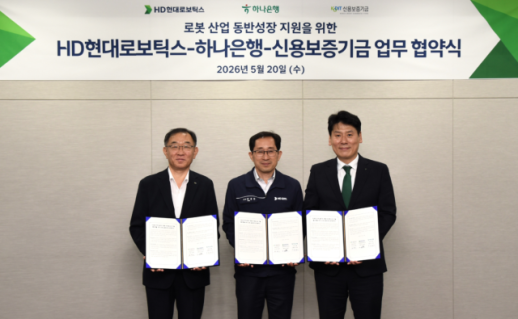 HD Hyundai Robotics Launches $9 Million Cooperative Support Program HD Hyundai Robotics, a subsidiary of HD Hyundai's robotics division, is establishing a cooperative financial support program to assist its partners. On May 21, the company announced that it signed a memorandum of understanding (MOU) with Hana Bank and the Korea Credit Guarantee Fund on May 20 at its headquarters in Daegu. The agreement aims to secure new growth engines for the domestic robotics industry and enhance competitiveness in the global market through collaboration between businesses and financial and public institutions. Under the agreement, HD Hyundai Robotics and Hana Bank will jointly contribute 600 million won (approximately $450,000), while the Korea Credit Guarantee Fund will provide guarantees worth 9 billion won (about $6.75 million) to partner companies in need of loans. The support will be available to domestic mid-sized and small partners engaged in joint production, research and development, and procurement with HD Hyundai Robotics. These companies will benefit from a 100% guarantee rate and fixed guarantee fee rates, significantly easing their financial burden for future business initiatives. A representative from HD Hyundai Robotics stated, "This agreement lays the foundation for financial support, enabling our partners to operate more stably and encouraging research and development (R&D) and investment expansion. We will continue to promote mutual growth with our partners through various support programs." Additionally, HD Hyundai Robotics is accelerating the development of humanoid robots based on physical artificial intelligence (AI) to leverage synergies with HD Hyundai Group's shipbuilding business. The company is collaborating with AI specialists to develop bipedal humanoid robots for shipyard welding and is pushing for the commercialization of automation technologies tailored to shipyard environments. This initiative aims to accelerate the establishment of 'smart shipyards' where robots can replace hazardous and precise tasks.* This article has been translated by AI. 2026-05-21 09:22:20