

Journalist

Shin Jia and Kim Hee-su
fromjia@ajunews.com
-
 Some South Korea Highway Gas Stations Cap Fuel Purchases Amid Supply Strain Middle East war fallout is deepening concerns about South Korea’s supply of petroleum products, with some gas stations now limiting how much customers can buy. The restrictions follow refiners’ cuts to fuel deliveries to discount stations in cities and at highway rest stops. Industry officials said Sunday that many EX-OIL discount stations on expressways, operated by the Korea Expressway Corp., have begun posting notices capping purchases at 30,000 won per person for gasoline and 100,000 won per person for diesel. A government price cap introduced March 13 has pushed down the national average price at gas stations, but customers are increasingly unable to buy as much fuel as they want. The Korea Expressway Corp. said March 12 it would work with joint-purchasing refiners such as SK Energy and GS Caltex to ensure stable supply. On the ground, however, EX-OIL stations say shortages are worsening. An EX-OIL station official said stations had been receiving contracted joint-purchase volumes from SK Energy and GS Caltex and, when short, signed separate deals with other refiners such as HD Hyundai Oilbank and S-Oil for additional supply. That extra supply has recently been cut off, officials said. Another station official said, “As it has become harder to secure volumes, we can’t sell as much fuel as customers want,” adding that “it’s not easy to keep operating.” The official said one refiner that had provided additional supply sent an email notice saying it “cannot supply oil this month.” Some in the industry say the government’s price cap may have affected the supply structure for highway stations. With profitability squeezed by price controls, refiners may have less incentive to provide volumes beyond joint-purchase contracts, reducing supply to highway stations. If disruption tied to a blockade of the Strait of Hormuz drags on, the purchase limits now seen at some stations could spread across highway stations. Similar limits could also appear at discount stations in cities, not just those tied to major refiner brands. Because it typically takes about a month to ship crude from the Middle East to South Korea, industry officials warned a gap could emerge in Middle Eastern crude arriving from late March or early April. As a result, consumers may be unable to buy as much gasoline and diesel as they want regardless of the price cap. A refining industry official said refiners are struggling to secure supply even for their own branded stations and are therefore reducing volumes sold into the spot market, including to discount stations. The Korea Expressway Corp. said it is discussing with the government and refiners ways to secure additional joint-purchase volumes to stabilize supply. 2026-03-17 05:03:00
 -
 S-Oil Ties for No. 2 in South Korea Gas Station Market Share, Data Show S-Oil has climbed to second place for the first time in nationwide gas station brand share. According to the Korea Petroleum Quality & Distribution Authority on Monday, S-Oil had 2,270 registered gas stations nationwide as of last month, tying for No. 2 with HD Hyundai Oilbank. SK Energy ranked first with 2,645 stations, while GS Caltex was fourth with 1,997. South Korea had 10,646 gas stations in total as of last month. By brand, SK Energy led with a 24.8% share, followed by S-Oil and HD Hyundai Oilbank at 21.3% each, and GS Caltex at 18.8%. S-Oil entered the gas station business in 2000, later than the country’s other major refiners. Industry officials cite support from its largest shareholder, Saudi Arabia’s state oil company Aramco, as a key factor behind its expansion, as it can secure a stable supply of Middle Eastern crude from the world’s largest crude producer. S-Oil’s Middle Eastern crude import share stands at 94%, higher than GS Caltex at 70%, SK Innovation at 65% and HD Hyundai Oilbank at 50%. S-Oil said it plans to broaden its domestic distribution network by expanding support not only for agency-run, company-operated outlets but also for independently operated gas station owners.* This article has been translated by AI. 2026-03-16 11:09:18
 -
 POSCO Future M Wins $1 Billion Artificial Graphite Anode Deal, Its Largest Ever POSCO Future M said on the 16th it has signed a large, long-term supply contract with a global automaker to provide artificial graphite anode materials. The deal is worth about 1.0149 trillion won and covers five years from 2027 through 2032, with an option to extend by mutual agreement. The customer will remain undisclosed until the contract ends, the company said, citing business confidentiality. POSCO Future M said it is the company’s largest anode-materials order since it entered the business in 2011. The company supplies anode materials to South Korean battery makers and to GM, and it previously signed natural graphite anode-materials supply deals worth about 670 billion won with a major Japanese battery maker in July 2025 and with a global automaker in October 2025. The company said the latest contract follows its October natural-graphite agreement as part of a package arrangement, and it plans to seek broader cooperation with the customer in cathode materials and lithium-related businesses. To meet the new order, POSCO Future M has begun a phased expansion of anode-materials capacity. On March 5, it decided to invest about 357 billion won to build an artificial graphite anode-materials plant in Vietnam. The company said the new supply contract secures a customer for the first phase, and it will proceed with a second phase if additional orders are won. POSCO Future M said the Vietnam investment is expected to expand mass-production capacity and enable supplies with improved cost and quality competitiveness.* This article has been translated by AI. 2026-03-16 10:22:29
 -
 L&F Speeds Shift From China With Korea-Made LFP Cathode Materials L&F said Monday it wrapped up a successful showing at InterBattery 2026, South Korea’s largest battery exhibition, held for three days starting March 11, where it presented next-generation cathode material technologies. Under the theme “Leading the Future,” the company unveiled its plan to mass-produce LFP cathode materials — a first in South Korea — along with a strategic product portfolio. L&F organized the exhibit into three zones, highlighting its lineup from high-voltage mid-nickel cathodes to next-generation materials including LMR (lithium manganese-rich), ASSB (for all-solid-state batteries) and SIB (for sodium-ion batteries). It also introduced a circular supply chain strategy focused on sourcing non-Chinese raw materials. The company put the spotlight on what it called the world’s first mass production of ultra-high-nickel cathodes with 95% nickel content and on its capability to mass-produce LFP cathodes domestically, positioning the LFP products as part of a non-China supply strategy. L&F said it plans in 2026 to begin mass production of third-generation LFP cathode materials with a packing density of at least PD 2.50g/cc, and it disclosed development progress on an ultra-high-density LFP product in the PD 2.70g/cc class. L&F said it is accelerating efforts to reduce reliance on China by internalizing precursor technology, an area long dominated by Chinese supply, and by building a Korea-based circular economy supply chain spanning recycling, precursors and cathode production. Through its subsidiary JH Chemical Industry (JHC), it is pursuing a waste-battery recycling business to strengthen its raw-material procurement base. The company said it plans to secure precursor technology through LS L&F Battery Solution (LLBS), a joint venture established with LS Group. L&F said the goal is to build a domestic battery materials value chain from nickel sulfate to precursors and cathodes, and to move ahead in earnest with a non-China supply chain strategy. “InterBattery was a meaningful opportunity to show our accumulated innovation capabilities and our technological competitiveness as a pioneer of Korea-made LFP,” CEO Heo Je-hong said. “Based on LFP cathode materials nearing the country’s first mass production and our world-class high-nickel technology, we will continue to expand our battery materials portfolio.”* This article has been translated by AI. 2026-03-16 10:21:44
 -
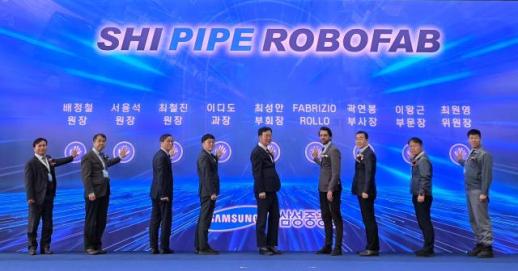 Samsung Heavy Industries Launches Shipbuilding Industry’s First Robotic Pipe Spool Factory Samsung Heavy Industries said March 16 it has begun full operations of what it called the shipbuilding industry’s first automated factory for producing pipe spools, branded “PIPE ROBOFAB.” The completion ceremony was held at the Chilseo industrial complex in Haman, South Gyeongsang Province, with about 70 attendees including Samsung Heavy Industries Vice Chairman and CEO Choi Seong-an, officials from the Ministry of Trade, Industry and Energy, shipowners such as ENI and MISC, and other industry representatives. Piping, often described as a ship’s circulatory system, is produced through a spool-making process in which components such as elbows, tees and flanges are welded and assembled into a single unit based on design drawings. Samsung Heavy Industries said it built a smart management system that integrates the entire workflow — from pipe design to automated logistics, high-precision machining and measurement, alignment and welding — and combined it with vision AI to create an automated production system. The Pipe Robofab facility has a total floor area of 6,500 square meters and can produce about 100,000 pipe spools a year, the company said. It said shifting spool production to advanced robotics is expected to shorten production time while ensuring consistent quality and improving safety. “Pipe Robofab is a site that has innovated the pipe spool process by combining Samsung Heavy Industries’ skilled welding technology with 3X (AX·DX·RX) technologies,” Choi said. “It will be an opportunity to upgrade the manufacturing competitiveness of the shipbuilding industry by one level.” Choi Won-young, chairman of the company’s labor-management council, said AI and automation are “an unavoidable major trend” across industries. He said labor and management will keep communicating to expand jobs as shipbuilding volumes grow, while supporting employment stability for workers and a safer work environment. 2026-03-16 09:45:05
 -
 Hanwha Tech and Life Units Expand AI-Driven Synergies, Pursue New Businesses Hanwha Group’s Tech and Life Solutions units, which are pursuing a corporate split, are stepping up efforts to develop new business models by creating synergies across divisions. The group aims to improve customer convenience, strengthen competitiveness across businesses and secure new revenue by opening new markets. The push is expected to gain momentum as the management drive of Kim Dong-seon, vice president of Hanwha Galleria and Hanwha Vision, combines with artificial intelligence across robotics, food and beverage, and distribution. Hanwha Galleria and Hanwha Vision said on the 16th that, starting with the latest collaboration, they will actively seek “new technologies” and “customized services” that can be used not only in distribution and services but also across a range of industrial sites. Both companies are set to be placed under a new Tech and Life holding company to be launched in the second half of this year, tentatively named Hanwha Machinery & Service Holdings. As a first step, Ourhome, which is expanding in group catering and food-ingredient distribution, will pilot Hanwha Vision’s AI technology at some sites to help prevent safety accidents, manage food hygiene and quality, and ensure smoother supply of ingredients. AI cameras installed in kitchens will check in real time whether cooks comply with dress and hygiene rules as they enter. The cameras will also detect unusual sounds and temperature changes to help prevent accidents such as fires. The companies are also pursuing an “intelligent automatic ordering system” to improve ingredient supply. A “BCR camera” that combines barcode recognition and video capture will automatically register inventory in real time, and the companies plan to develop a “customized SCM solution” in which AI places orders on its own. Hanwha also plans to introduce “customized services” using technology from Hanwha Vision and Hanwha Robotics at Galleria department stores and across hotels and resorts to improve customer convenience. Using AI cameras, the group plans to gauge store congestion and customer preferences to boost operating efficiency and service. It also plans a system that alerts employees immediately when AI cameras detect unusual situations. The companies’ food and beverage units plan to actively use Hanwha Robotics’ collaborative robots, including VINOBOT and cooking robots, in customer service. Once the ongoing corporate split is completed, the two units plan to set up a separate organization to drive new business development through cross-division synergies. New technologies will be applied first at Life unit sites, then expanded into business models aimed at generating outside revenue. A Hanwha official said cross-division synergies are “one of the key indicators” of the blueprint envisioned by Hanwha Machinery & Service Holdings, adding that the group will continue investing in research and development and collaboration to develop technologies that make daily life more convenient and better.* This article has been translated by AI. 2026-03-16 08:39:20
 -
 Hyundai Halts Sales of Some Palisade Models, Plans Recall After U.S. Seat Incident Hyundai Motor Co. said it has identified a safety issue in its large SUV, the All New Palisade, and has temporarily stopped selling certain configurations. The automaker said it plans a voluntary recall for vehicles already sold and will file reports next week with South Korea’s Transport Ministry and the U.S. National Highway Traffic Safety Administration. Hyundai said Saturday that when the second- and third-row power-folding seats operate under certain conditions, the system may fail to detect contact with an occupant or an object. It said sales of vehicles with the affected specification will be suspended for now. Reuters reported that a 2-year-old girl died March 7 in Ohio in an incident involving a Palisade power seat. Hyundai said it will resume sales after improving the seat’s anti-pinch function. The company said it will increase the sensitivity for detecting occupants and objects and restrict the power-folding function to situations when the rear door is open, among other steps to strengthen overall system safety. The recall scope is still being tallied, Hyundai said, and will cover vehicles produced through March 11 this year. It estimated about 57,474 vehicles in South Korea and 74,965 in North America could be affected. The All New Palisade exported about 100,000 vehicles worldwide last year, and 59,506 were sold in South Korea, the company said. Hyundai apologized for the inconvenience and said it will continue to put customer safety first and thoroughly review all issues to improve trust and satisfaction.* This article has been translated by AI. 2026-03-14 11:33:16
 -
 South Korea Routed 10-0 by Dominican Republic in WBC Quarterfinal, Cold-Rule Loss Ends Semifinal Bid South Korea’s run on the World Baseball Classic’s knockout stage ended in the quarterfinals, dashing its hopes of reaching the semifinals for the first time in 17 years. South Korea, managed by Ryu Ji-hyun, lost 10-0 to the Dominican Republic by the mercy rule in seven innings on Saturday (Korea time) at loanDepot park in Miami in the 2026 WBC quarterfinals. Starter Ryu Hyun-jin of the Hanwha Eagles gave up three runs in the second inning. In the third, four South Korean pitchers combined to allow four hits and three walks, leading to four more runs. Trailing 7-0, South Korea surrendered a three-run homer to Austin Wells of the New York Yankees with two outs in the seventh, putting the game out of reach. The tournament uses a mercy-rule format through the quarterfinals: a 15-run lead after five innings or a 10-run lead after seven. At the plate, South Korea was held scoreless on two hits and struck out eight times through five innings against left-hander Cristopher Sanchez of the Philadelphia Phillies, who finished second in last year’s National League Cy Young voting. ▲ World Baseball Classic (WBC) quarterfinal result (14th · loanDepot park, Miami) Korea 000 000 0XX - 0 Dominican Republic 034 000 3XX - 10 <7-inning mercy rule> △ Winning pitcher = Cristopher Sanchez (1-0) △ Losing pitcher = Ryu Hyun-jin (0-1) △ Home runs = Austin Wells, 2 (three-run, 7th · Dominican Republic) 2026-03-14 10:15:00
 -
 HD Hyundai Heavy Industries Moves to Sell Gunsan Shipyard to Ecoprime Marine Pacific Ecoprime Marine Pacific, which has HJ Shipbuilding & Construction as a subsidiary, and HD Hyundai Heavy Industries have signed a memorandum of agreement for the transfer of assets at the Gunsan shipyard. Industry officials said on the 13th that the two companies signed the agreement at Ecoprime Marine Pacific’s headquarters in Yongsan. The assets to be transferred include all tangible assets related to the Gunsan shipyard, including real estate and movable property. The contract amount will be finalized after due diligence, based on a basic asset value set through an appraisal and then confirmed through negotiations between the parties. A final contract is expected to be signed after the due diligence process. HD Hyundai Heavy Industries built the Gunsan shipyard in 2010 on a 1.8 million-square-meter site in the Gunsan National Industrial Complex in North Jeolla Province. Operations were suspended in 2017 as orders fell amid a downturn in the shipbuilding industry. Since 2022, the yard has been partially restarted and has produced ship blocks. The shipyard spans 1.8 million square meters and is equipped with a 1.3 million-metric-ton dock, a 1,650-metric-ton Goliath crane and other facilities. With an annual assembly capacity of 250,000 metric tons, it can build 12 bulk carriers of 180,000 tons each, the company said. Ecoprime Marine Pacific said HD Hyundai Heavy Industries agreed to place orders for its block production at the Gunsan shipyard (tentative name) for the next three years to help revitalize the facility. It also said HD Hyundai Heavy Industries will provide design services, handle raw-material purchasing on its behalf, and support automation and smart-shipyard technologies. An HD Hyundai Heavy Industries official said the asset transfer is expected to make new shipbuilding possible at the Gunsan shipyard. The official added that HD Hyundai Heavy Industries will continue to receive ship blocks at the same level as it does now even after the transfer, calling it a win-win for HD Hyundai Heavy Industries, Ecoprime Marine Pacific and the city of Gunsan.* This article has been translated by AI. 2026-03-13 15:19:10
 -
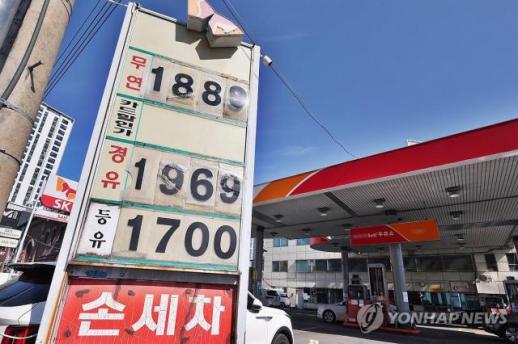 South Korea Fuel Prices Fall After Government Caps Refiners’ Supply Prices South Korea’s average gasoline and diesel prices fell for a third straight day after the government began enforcing a cap on refiners’ supply prices, according to industry data. Domestic pump prices have been easing since peaking on the 10th following the outbreak of war involving the United States and Israel and Iran. As of 9 a.m. on the 13th, the nationwide average gasoline price was 1,883.79 won per liter, down about 15 won from the previous day, the Korea National Oil Corp.’s Opinet price information system said. Diesel averaged 1,911.1 won per liter, down about 21 won. Diesel remained more expensive than gasoline. Prices in Seoul also declined. Average gasoline in the capital fell about 21 won to 1,906.40 won per liter, while diesel dropped about 30 won to 1,905.53 won. The government began the oil price cap system at midnight on the 13th, setting maximum supply prices from refiners at 1,724 won per liter for regular gasoline, 1,713 won for automotive diesel and 1,320 won for kerosene. Premium gasoline, which has a limited consumer base, was excluded. The government said it will reset the caps every two weeks after reviewing the Middle East war and oil price trends. To guard against possible supply shortages after the cap, the government said it will also issue a notice banning hoarding. It plans to step up nationwide monitoring of gas station prices and intensively inspect suspected market-disrupting practices. To compensate refiners for losses caused by the cap, the government said it has prepared a post-settlement system. If refiners incur losses under the cap, it plans to reimburse them quarterly through a “maximum price settlement committee” made up of oil experts, including accounting, legal and academic specialists. Loss estimates calculated by each refiner would be verified by an accounting firm and finalized by the committee. The government noted that when oil prices are falling, refiners could also see periods of profit because of the cap, and said it will conduct detailed post-settlement calculations of profits and losses. The government again stressed the cap is aimed at stabilizing the market rather than imposing artificial price controls. However, controversy has grown after one refiner announced it would apply a post-settlement method for gas stations by splitting calculations into periods before and after the 13th, instead of using a monthly average price. The gas station industry says stations that bought inventory at higher prices before the cap cannot sell it above the now-public supply prices, forcing them to absorb losses. International oil prices, meanwhile, climbed back above $100 a barrel after Ayatollah Seyyed Mojtaba Khamenei declared a hard-line response toward the United States and Israel, including a possible closure of the Strait of Hormuz. On March 12 local time, ICE Futures Europe settled May Brent crude at $100.46 a barrel, up 9.2% from the previous session. On the New York Mercantile Exchange, April WTI settled at $95.73 a barrel, up 9.7%. Analysts have warned that if the Middle East war drags on and high oil prices persist, the impact of the price cap could be reduced. 2026-03-13 10:12:22