
Journalist

Kim Hyun-ah
haha@ajunews.com
-
 Kyochon Chicken Reports Average Franchise Revenue of 780 Million Won with 0% Closure Rate Kyochon F&B, the operator of Kyochon Chicken, announced on May 18 that its franchisees achieved an average revenue of 780 million won last year, with a closure rate of 0% in the first quarter of this year. According to performance data released by Kyochon F&B on May 12, the average revenue for franchises in 2025 was reported at 780 million won, significantly higher than the average revenue of 328 million won for chicken franchises, as per the Fair Trade Commission's statistics. This figure also surpasses the average revenue of the top five companies in the same industry, which stands at 584 million won. The closure rate remains exceptionally low. For the first quarter of this year, the closure rate was recorded at 0.0%, a decrease from the 0.6% reported in the 2025 business report. In comparison, the average closure rate for chicken franchises is 12.0%, while the overall restaurant industry averages 15.8%. The closure rates based on disclosure documents were 0.2% in 2022, 0.7% in 2023, and 2.1% in 2024. The 2024 figure reflects the impact of contract expirations for 20 special stores, including theme parks and resorts. Excluding these, the company maintains a consistent closure rate near 0%, according to company officials. A representative from Kyochon F&B stated, "The high average revenue and low closure rate are results of our focus on enhancing franchise operational stability and profitability. We aim to strengthen franchise competitiveness and expand brand value, targeting an annual revenue of over 800 million won per store by 2028." Meanwhile, Kyochon F&B's consolidated revenue for the first quarter was provisionally reported at 123.4 billion won, with an operating profit of 5.3 billion won. This reflects a 1% decrease in revenue and a 50.6% drop in operating profit compared to the same period last year, impacted by the prolonged avian influenza outbreak and rising costs.* This article has been translated by AI. 2026-05-18 20:52:06
 -
 BBQ Chairman Yoon Hong-geun Receives Korea's Mid-sized Business CEO Award Yoon Hong-geun, Chairman of Genesis BBQ Group, has been awarded the Korea Mid-sized Business CEO Award for his efforts in promoting franchise cooperation and achieving global business success. BBQ announced on May 18 that Yoon received the award at the 2026 Spring Conference of the Korean Management Association, held on May 15 at the Seoul Chamber of Commerce and Industry. The Korea Mid-sized Business CEO Award is presented to exemplary small and medium-sized business leaders who have demonstrated a successful model from startup to growth. Recipients are selected based on evaluations by the Korean Management Association's selection committee, which considers ethical entrepreneurship, management philosophy, industry competitiveness, expansion achievements, transparent management, and social responsibility. Since its founding in 1995, Yoon has been recognized for establishing a cooperative franchise model, pioneering global markets, and fulfilling social responsibilities, thereby guiding the growth of Korea's restaurant franchise industry. BBQ has implemented a structure that involves franchise owners in discussions about brand policies, marketing, and new menu development through its operating and partnership committees. The company has also been praised for standardizing training in cooking, hygiene, and service through its Chicken University, enhancing the competitiveness of the franchise industry. As of May, BBQ has expanded to 57 countries worldwide, leading the globalization of K-Chicken. The company has invested in operational efficiency through an ERP-based management system, its own logistics management system, and smart kitchen technologies, contributing to the stability of franchise operations. Yoon's ongoing community support initiatives, disaster recovery efforts, and assistance for vulnerable groups have also been highlighted as significant achievements. Yoon stated, "This award is a meaningful recognition of BBQ's efforts and growth alongside our family over the past 30 years. We will continue to contribute to creating a sustainable franchise industry ecosystem based on cooperation and innovation."* This article has been translated by AI. 2026-05-18 16:12:00
 -
 Kim Jung-soo Takes Helm at Samyang Foods, Aiming for Second Growth Phase Kim Jung-soo, who spearheaded the success of the Buldak brand, is now focusing on the next growth strategy for Samyang Foods as he steps into the role of chairman. The company, which rose to prominence as a global food enterprise largely due to its Buldak Bokkeumyeon, is now preparing for a second leap forward by establishing local production facilities in China and expanding its global supply chain. On May 17, Samyang Foods reported that its revenue last year reached 2.3517 trillion won. This figure represents more than a 3.5-fold increase compared to the 642 billion won recorded in 2021 when Kim became vice chairman. During the same period, the operating profit margin surged from around 10% to 22%. Given that most food companies struggle to maintain single-digit profit margins amid rising costs and intensified competition, this achievement is remarkable. At the center of this growth is Kim Jung-soo. He drew inspiration for the development of Buldak Bokkeumyeon in 2011 after observing young people relieving stress at a spicy food restaurant in Myeongdong. Despite initial concerns about its spiciness and skepticism, Kim steadfastly promoted the product's identity as a spicy noodle. The subsequent rise of the 'Fire Noodle Challenge' on YouTube helped propel Buldak Bokkeumyeon into a global mega brand. Samyang Foods has ensured that this global trend does not fade into a mere fad. By linking the challenge culture in digital spaces to its marketing strategy, the company has cultivated the Buldak brand into a worldwide fan favorite. This innovative cycle has established a structure where consumer experiences with the product lead to digital content consumption, which in turn stimulates strong product sales. As a result, the Buldak brand is on the verge of surpassing 10 billion units sold, following the achievement of 9 billion units last year. The growth in international markets is evident in the figures. Samyang Foods' overseas sales surged from 93 billion won in 2016 to 1.8838 trillion won last year, nearly a 20-fold increase over nine years. Starting with its first $100 million export award in 2017, the company has consistently broken records, achieving $900 million in exports last year. The share of overseas sales has expanded from 26% to 80% during this period, with exports now reaching over 80 countries. Currently, Samyang Foods accounts for 60% of South Korea's total ramen exports. Samyang Foods is now accelerating investments in large-scale infrastructure to support global demand. A key focus is the establishment of a local production facility in China, the company's largest export market. Construction began in July 2022 in Jiaxing, Zhejiang Province, with the factory expected to be completed in 2027, capable of producing up to 1.13 billion units of Buldak Bokkeumyeon annually. Domestically, the Milyang factories 1 and 2, completed in 2022 and 2025 respectively, support an annual production capacity of up to 1.3 billion units. The company is also considering establishing additional global hubs, including regional offices. Kim is also focusing on shifting the brand's direction. At the 2023 Samyang Round Square Vision Declaration ceremony, he introduced the concept of 'Food for Thought,' emphasizing that food should serve as a medium for presenting ideas and attitudes beyond mere sustenance, aiming to expand the brand into an experience-based food company. Meanwhile, on May 12, Samyang Foods held a board meeting where it resolved to promote Kim Jung-soo to chairman. This marks a promotion approximately five years after he became vice chairman in December 2021. His official start date is June 1. A company representative stated, "This personnel change is part of our efforts to strengthen responsible management for global market expansion and enhancing corporate value."* This article has been translated by AI. 2026-05-17 18:09:00
 -
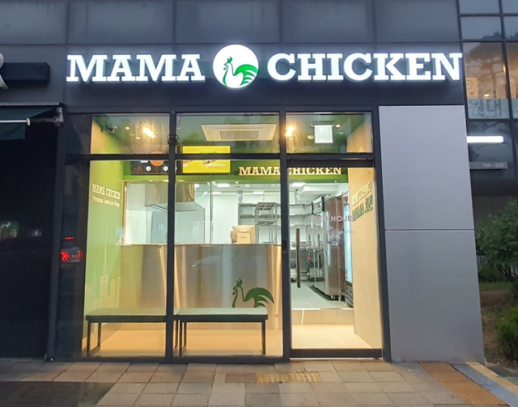 Mama Chicken Shifts Focus to Delivery and Takeout, Expands Franchise Business Mama Chicken, the chicken brand of Korea's Papa John's, is set to expand its franchise business by focusing on delivery and takeout-oriented store models. On May 17, Mama Chicken announced that it will restructure its operating strategy to center around delivery and takeout specialized stores, based on data accumulated from three years of operating company-owned locations. Launched in 2023, Mama Chicken entered the market with an American-style chicken concept, featuring signature items like Cajun fried chicken and buffalo wings. The brand has tested various formats, including restaurant-style and delivery-focused outlets, to assess operational efficiency and customer demand in different markets. In this process, Mama Chicken has noted the shift in the chicken market towards delivery platforms and the growing demand for takeout. With increasing delivery app fees, the company has determined that cooking speed, turnover rates, and quality are directly linked to profitability, prompting a focus on developing new store models. The newly introduced delivery and takeout specialized stores will operate in a small format, designed with optimized workflows and operational systems for takeout orders. The menu composition, cooking methods, and packaging have also been redesigned to enhance order processing efficiency. Some adjustments will be made to the store operation strategy. The Mapo location, which has been run as a casual pub, will close, while the Independence Gate and Korea University locations will continue to operate in formats tailored to their respective market characteristics. A representative from Mama Chicken stated, "The delivery and takeout specialized stores reflect our accumulated operational know-how and will serve as a standardized model for future franchise expansion." According to market research firm Euromonitor, delivery accounted for approximately 35% of the domestic dining market in 2024. This share is expected to grow to 37% by 2029, reaching levels similar to dine-in sales.* This article has been translated by AI. 2026-05-17 17:24:48
 -
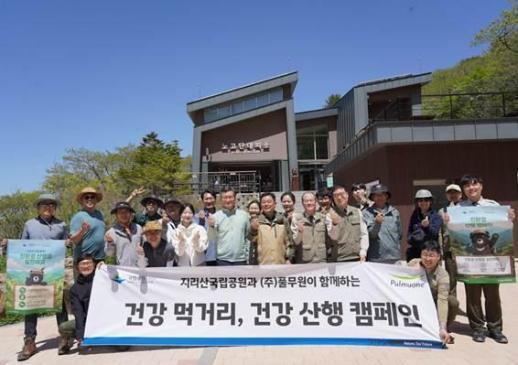 Pulmuone Launches Eco-Friendly Hiking Campaign in Jirisan National Park Pulmuone announced on May 17 that it conducted a 'Healthy Food, Healthy Hiking' campaign in collaboration with the National Park Service at the Nogodan shelter in Jirisan National Park, located in Gurye, South Jeolla Province. The campaign aimed to encourage visitors to practice environmental protection voluntarily and reduce food waste and single-use items during their hikes. Pulmuone has been engaged in ecosystem restoration activities since signing a memorandum of understanding with the National Park Service last year to promote conservation and ESG initiatives in Jirisan National Park. The event on May 15 was attended by Pulmuone's Chief Planning Officer Kim Jong-heon, Eastern Regional Headquarters Director Song Dong-joo of the National Park Service, officials from the Jirisan National Park offices in South Jeolla, North Jeolla, and South Gyeongsang provinces, as well as volunteers. During the event, Pulmuone provided food supplies to employees of the Jirisan National Park office who are dedicated to conservation efforts and distributed summer and winter hats to volunteers. The company also offered food packages made from its products to local residents as a gesture of gratitude. On-site activities included educating visitors on eco-friendly practices such as leaving no trash behind, reducing single-use items, and ensuring safe hiking without alcohol or smoking. Snacks were provided in reusable containers to encourage waste reduction. Pulmuone's hiking club members began their journey at Nogodan and visited four major shelters along the Jirisan trail over a two-day, one-night schedule. They conducted a ceremony displaying signs promoting eco-friendly hiking and 'Leave No Trace' principles, attaching related promotional materials at key hiking points. Kim Jong-heon, Pulmuone's Chief Planning Officer, stated, "We plan to continue various collaborative activities for the sustainable conservation of Jirisan and the promotion of proper hiking culture." According to the National Park Service, a total of 4,440 tons of trash have been collected from national parks across the country in the past five years. Jirisan accounted for the highest amount at 677.55 tons, followed by Bukhansan with 484.86 tons and Hallyeohaesang with 312.26 tons.* This article has been translated by AI. 2026-05-17 17:21:59
 -
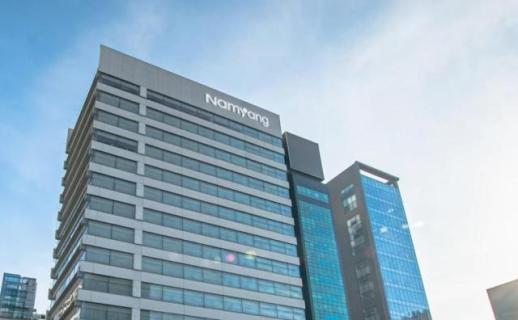 Namyang Dairy Reports Growth in Q1 Revenue and Operating Profit After Five Years of Losses Namyang Dairy has reported increases in both revenue and operating profit for the first quarter of this year, driven by growth in exports and business-to-business (B2B) channels. This marks a continuation of the company's recovery following its return to profitability last year. According to data released on May 17 by the Financial Supervisory Service, Namyang Dairy's consolidated revenue for the first quarter reached 225.2 billion won, a 4.4% increase compared to the same period last year. Operating profit surged to 500 million won, up 572%, while net profit rose to 6.3 billion won, a 419% increase. The net profit includes 8.27 billion won in compensation payments related to embezzlement and breach of trust involving the family of former Chairman Hong Won-sik, which was recorded as other non-operating income. Since transitioning to the Han & Company management structure, Namyang Dairy has focused on restructuring its business and improving operational efficiency. Although this has led to a reduction in scale due to the elimination of low-profit businesses and products, the company successfully returned to profitability last year and has shown simultaneous growth in revenue and operating profit this year. Analysts attribute the performance improvement to the expansion of growth channels centered on exports and B2B. First-quarter export revenue reached 16.4 billion won, an increase of approximately 81% year-on-year. Exports of milk powder, primarily to Cambodia and Vietnam, rose by about 54%, while exports of other products, including coffee and protein items, surged by 136%. Domestically, sales across major channels such as convenience stores, corporate supermarkets, and e-commerce grew steadily. Revenue from the food service (FS) B2B channel also increased by 13% compared to the previous year. The expansion of partnerships with franchise cafes and catering companies, along with diversification of supply items like milk, fermented milk, and cream, contributed to this growth. Among its products, the protein brand 'Takefit' showed remarkable growth, with first-quarter sales increasing by 72% year-on-year. The company attributed this success to its strategy of expanding product lines and overseas sales channels. In the coffee segment, sales of products like 'French Cafe Coffee Mix with Goat Milk Protein' increased by 14% in the first quarter, while processed milk brands 'Chocoemong' and 'Matchaemong' saw a 7% rise in sales. The premium ice cream and coffee brand Baekmidang also continued its growth trend, with first-quarter sales reaching 7.6 billion won, a 44% increase from the same period last year. Operating profit turned around from a 300 million won loss in the first quarter of last year to a profit of 1.2 billion won this year. Namyang Dairy is accelerating its global expansion efforts. Earlier this year, it signed a memorandum of understanding with Vietnamese distributor Phutai Holdings regarding the supply of formula milk, and in April, it secured an additional supply agreement worth 70 billion won over three years during a South Korea-Vietnam economic delegation visit. A company representative stated, "We are continuing to improve profitability through the restructuring of our product portfolio and channel efficiency, and we plan to expand our overseas business focusing on growth products such as milk powder, coffee, and protein."* This article has been translated by AI. 2026-05-17 17:02:00
 -
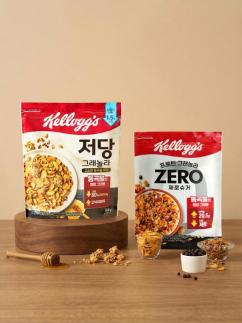 Kellogg Expands Granola Line to Align with 'Pixel Life' Trend Recent trends in the food market show a shift in consumer preferences, leading to changes in how granola products are selected. As health management approaches diversify, there is a growing trend to differentiate between low-sugar and zero-sugar products based on consumption context and goals. According to industry sources, the so-called 'Pixel Life' trend is gaining attention in the consumer market. This trend emphasizes choosing products that align with individual lifestyles and preferences rather than following a single trend. This shift is influencing the strategies of food companies regarding low-sugar and zero-sugar products. The Korea Agro-Fisheries & Food Trade Corporation (aT) reported that the global zero-sugar food and beverage market reached $17.92 billion in 2022 and is projected to grow at an average annual rate of 4% through 2027. Companies are not only launching products with reduced sugar content but are also accelerating the segmentation of products to meet specific consumer needs. Kellogg is responding to this trend by focusing on its granola lineup. Kellogg's 'Low Sugar Granola' maintains a texture and taste centered on whole grains while reducing sugar content, targeting consumers looking for light meal alternatives for breakfast or snacks. The 'Protein Granola Zero Sugar' is designed for those managing their diet or looking for a pre- or post-workout option, featuring enhanced protein content and no added sugars. A Kellogg representative stated, "Recently, consumers tend to distinguish between low-sugar and zero-sugar products within the same granola category based on their situations, such as breakfast, snacks, or pre/post-workout. We plan to continue expanding our variety of options to align with changing consumer lifestyles." The trend toward expanding low-sugar products is evident across the food industry. Daesang has introduced the 'Low Tag' emblem for its low-sugar and low-calorie product line since last year, focusing on sauces and condiments. CJ CheilJedang launched nine low-sugar products under the 'Sugar Light' brand, including bulgogi seasoning, salad dressings, and oyster sauce. Lotte Wellfood is also targeting domestic and international markets with its sugar-free dessert brand 'ZERO.'* This article has been translated by AI. 2026-05-15 02:53:35
 -
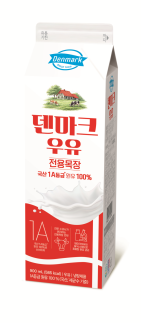 Dongwon F&B Launches 'Denmark Milk' Made from Premium Grade A Milk Dongwon F&B announced on May 14 that it has launched a new product, 'Denmark Milk,' made from premium Grade A milk sourced from its dedicated farms. The new product features only Grade A milk produced at approximately 60 dedicated farms operated by Dongwon F&B. A veterinary management system is in place to oversee the farm environment and the health of the dairy cows, ensuring high milk quality. The company has also strengthened its management system to maintain milk freshness. It has optimized the transportation route from the farms to the factory and ensures that the milk is stored at temperatures below 7 degrees Celsius throughout the production and distribution process. Dongwon F&B conducts milk testing using its own quality control system, the 'NF (Nature Fresh) System.' This involves sensory and physicochemical tests across four stages: upon arrival at the farm and factory, and before and after production, with a total of 14 inspection items. Only milk that meets the standards is used for product manufacturing. A Dongwon F&B representative stated, "We have applied strict standards to every process from milking to quality control and low-temperature distribution. We plan to continue our efforts to deliver the inherent freshness of milk to consumers." The product is available in a 900ml package and is priced at 3,280 won. It will be sold at major supermarkets and discount stores nationwide. Denmark is a dairy brand that was established in 1985 as a joint venture between Korea and Denmark. It currently operates as Dongwon F&B's premium dairy brand, offering a variety of products including milk, fermented milk, and cheese. Recently, there has been a noticeable trend in the milk market prioritizing freshness and quality over price. According to a survey conducted by the Korea Dairy Promotion Committee in November of last year, 57.7% of 3,000 consumers nationwide identified 'freshness' as the most important factor when purchasing milk, while only 13.8% prioritized price.* This article has been translated by AI. 2026-05-15 02:49:12
 -
 Food Industry Faces Challenges Despite Strong First Quarter Sales Major South Korean food companies reported strong performances in the first quarter of this year, driven by growth in their overseas operations. The expansion of global sales amid the K-food craze has allowed these companies to successfully defend against domestic and international uncertainties. However, as the second quarter approaches, concerns are rising due to the prolonged conflict in the Middle East, which is expected to impact raw material and packaging costs, alongside high exchange rates. According to data from the Financial Supervisory Service on May 14, CJ CheilJedang recorded consolidated sales of 7.111 trillion won and an operating profit of 238.1 billion won for the first quarter. Despite a decline of 17.2% in overall operating profit due to poor performance in its bio business, sales from global strategic products, including dumplings, surged to 3.0384 trillion won, with operating profit increasing by 11.2% to 143 billion won compared to the same period last year. Lotte Wellfood saw its operating profit soar by 118.4% to 35.8 billion won, driven by growth in its overseas operations in India and Kazakhstan. Lotte Chilsung Beverage also reported a 91% increase in operating profit to 47.8 billion won, bolstered by strong exports of its Milkis and LetsBe brands. Notably, profitability from overseas subsidiaries in the Philippines, Pakistan, and Myanmar has improved, raising the global segment's share of total sales to 46%. Samyang Foods set a new quarterly record, fueled by the popularity of its Buldak brand. With European sales skyrocketing by 215%, all overseas subsidiaries recorded double-digit growth, leading to first-quarter sales of 714.4 billion won and an operating profit of 177.1 billion won, marking increases of 35% and 32%, respectively. Orion continued its growth trajectory, with first-quarter sales reaching 934.9 billion won, up 16%, and operating profit rising by 27.7% to 169.1 billion won, thanks to strong sales in Russia and China. Nongshim is also expected to report first-quarter sales of 925.7 billion won and operating profit of 60.3 billion won, reflecting improvements of 3.7% and 7.5%, respectively, based on market estimates. These results stem from a combination of aggressive overseas market strategies and rigorous cost-efficiency measures. Major companies have focused on enhancing profitability by streamlining low-margin businesses and increasing their international presence. While concerns about rising costs due to supply chain disruptions from the Middle East have emerged, companies have managed to mitigate the impact on their performance by utilizing existing inventory. However, the effectiveness of this 'holding strategy' may diminish as the second quarter progresses. The ongoing conflict in the Middle East and persistent high exchange rates have driven naphtha prices, a key raw material for packaging, up by more than 70% since the beginning of the year, with packaging costs themselves increasing by 20-30%. Additionally, the won-dollar exchange rate is threatening to breach the 1,500 won mark, exacerbating the burden of imported raw materials and logistics costs. Compounding these challenges, the government's strict price stability measures are limiting companies' flexibility. Chief Presidential Secretary Kang Hoon-sik instructed relevant ministries during a senior secretary meeting on May 11 to prevent excessive price increases under the pretext of rising oil prices, stating, "The war on inflation is just beginning." An industry insider noted, "So far, we have been managing through inventory and cost-cutting measures, but if supply instability from the Middle East continues, we may need to adjust our production strategies for key products. The overall atmosphere in the industry is one of concern over defending profitability."* This article has been translated by AI. 2026-05-15 02:46:15
 -
 Demand for Premium Family Dining Surges During Family Month As Family Month unfolds, the dining industry is witnessing a notable increase in demand for premium family dining experiences. Consumers are increasingly seeking special outings with parents or family members, leading to significant growth in high-end Korean beef dining and family restaurant performance. According to data from Naver Data Lab on May 14, the search volume for the keyword "dining" peaked at 100 on Children's Day, May 5, and recorded 94 on Parents' Day, May 8. This metric reflects the highest search volume during the observation period, normalized to a scale of 100. In fact, Dining Brands Group's premium Korean beef dining brand, Warehouse 43, reported a 152% increase in sales during the Parents' Day holiday from May 8 to 10 compared to the same period last year. The number of customers also rose by 139%. Notably, locations in residential areas with a high proportion of family households, such as Mokdong, Pangyo, and Jamsil, showed remarkable growth. Among the popular menu items were the "Warehouse Special," featuring tenderloin and sirloin, the rare cut "Special Tenderloin," and the "Korean Beef Masterpiece Set" aimed at family customers. The sales share of course menus, including the five-course "Midam" and the seven-course "Four Seasons," also expanded compared to last year. This trend is attributed to the growing demand for premium dining experiences as a way to treat parents. Family restaurants have shown a similar trend. Outback Steakhouse reported approximately a 20% increase in sales during the Golden Holiday period from May 1 to 5 compared to the same time last year. The highest number of visitors was recorded on Children's Day, May 5. The boost in performance is attributed to menu items that enhance the dining experience. The signature "Black Label Sizzling Edition" features steaks served on a 230-degree hot plate, emphasizing sound, aroma, and visual effects. Outback Steakhouse explained that this approach not only focuses on taste but also creates an engaging dining experience that resonates with family customers. The semi-course structure, which includes salad, main dishes, and desserts, is also cited as a factor in its popularity. Industry experts note that dining consumption is shifting from a focus on food alone to an emphasis on the overall experience, making ambiance, presentation, and experiential elements increasingly important. An industry insider stated, "During Family Month, even if there is a price burden, consumers are definitely looking to gift special experiences to their parents or families. The demand for premium dining that includes ambiance, service, and menu composition is continuing to grow."* This article has been translated by AI. 2026-05-14 19:57:14