

Journalist

Han Young-hoon
han@ajunews.com
-
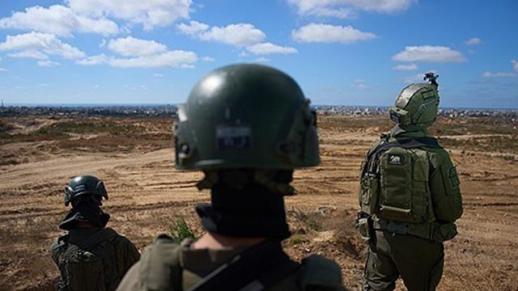 Netanyahu Orders Israeli Forces to Expand Control in Gaza to 70% Benjamin Netanyahu, the Prime Minister of Israel, has instructed the Israeli military to expand its control over the Gaza Strip to 70%. This directive indicates a push beyond the control line established in the ceasefire agreement of October 2025. On May 28, during an event in a West Bank settlement, Netanyahu stated, "We were at 50%, and we moved to 60%. My instruction is to gradually increase our presence in Gaza." He added, "First, let’s aim for 70%. We are pressuring Hamas from all directions." The key issue is the extent of control. According to the October 2025 ceasefire agreement, Israeli forces were to withdraw to a line known as the 'yellow line,' which would leave approximately 53% of the Gaza Strip under Israeli jurisdiction. However, Reuters estimates that Israeli effective control and restricted areas currently cover about 64%. Netanyahu's directive aims to increase this to 70%. Reports indicate that Israel has also adjusted its baseline. Reuters previously reported that Israel moved the concrete blocks marking the yellow line further into Gaza. Netanyahu has framed this action as a measure to pressure Hamas and secure a buffer zone, claiming it is necessary to prevent threats similar to the Hamas attack on southern Israel in October 2023. Palestinian representatives and human rights organizations have criticized this move, arguing it could exacerbate forced displacement and humanitarian crises. If Israel controls 70% of Gaza, the living space for over 2 million residents would shrink to less than one-third of the total area. The ceasefire in Gaza is already under strain. According to Reuters, Israeli airstrikes have continued even after the ceasefire, with Gaza health authorities reporting over 900 deaths due to Israeli attacks. During the same period, Israel reported that four of its soldiers were killed in attacks by armed groups.* This article has been translated by AI. 2026-05-29 06:10:00
 -
 Trump Files $10 Billion Defamation Lawsuit Against WSJ Over Epstein Birthday Letter Donald Trump has filed a new defamation lawsuit against the Wall Street Journal, seeking at least $10 billion over an article related to Jeffrey Epstein. Following the dismissal of a previous case, Trump’s legal team argues that the WSJ published the article despite knowing it could be false. The lawsuit expands the focus beyond whether the letter in question was actually written by Trump to include the WSJ's reporting and publication process. According to Bloomberg, Trump’s team submitted an amended complaint on May 27 in a federal court in Florida. This comes after U.S. District Judge Darren Gales dismissed the original complaint in April, prompting Trump’s team to address the deficiencies identified by the court. In defamation cases involving public figures, “actual malice” refers to a media outlet knowing that the information was false or disregarding its potential falsity. The dispute originated from a July article by the WSJ, which claimed that Trump sent Epstein an obscene birthday letter in 2003. The letter was described as typed and featuring a drawing of a naked woman, with Trump’s signature placed at the bottom. Trump has consistently denied the authenticity of the document. In the amended complaint, Trump’s team targets two WSJ reporters, the publisher Dow Jones, its parent company News Corp, and News Corp Chairman Rupert Murdoch. They allege that these individuals either knew the information was false or published the article without verifying its accuracy. Trump’s attorney, Alejandro Brito, stated, “The defendants recklessly ignored whether the defamatory statements were true at the time of publication or intentionally avoided discovering the truth.” The amended complaint raises significant concerns about the WSJ's reporting process. It questions why the letter was written in the third person, why it was typed, who authored it, and how the publication obtained it. The absence of the letter's image in the article is also cited as evidence of actual malice. Judge Gales previously ruled that Trump’s arguments did not come close to meeting the standard for actual malice. The court noted that the WSJ had sought comment from Trump’s team and relevant officials before publishing the article. However, the court did not determine whether the content constituted defamation or if Trump actually wrote the letter in question. A spokesperson for Trump’s legal team described the amended complaint as a “strong legal response.” He added, “The president will continue to hold accountable those who mislead the American people with fake news and defamation.” The key issue in this case is whether Trump’s team can prove that the WSJ acted with intent or reckless disregard beyond a mere reporting error. If the court finds that the amended complaint still fails to meet the actual malice standard, the legal battle could stall once again at an early stage.* This article has been translated by AI. 2026-05-28 15:52:00
 -
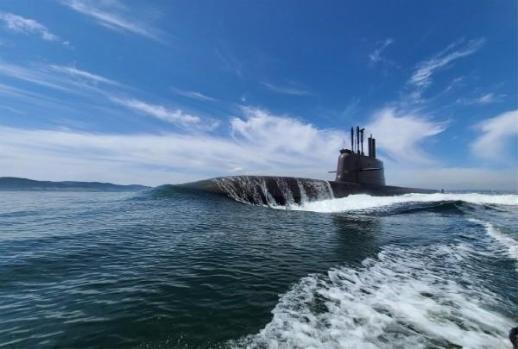 Hanwha Competes for Canadian Submarine Contract with Rocket and Steel Package Hanwha has introduced a "rocket" component in its bid for the Canadian submarine contract. In addition to supplying submarines, the company proposed support for Canadian rocket launches, local production of military vehicles, and steel purchases. This strategy aims to differentiate Hanwha from German competitors by emphasizing job creation and manufacturing benefits in defense contracts. According to Bloomberg on May 28, Hanwha is competing against Germany's ThyssenKrupp Marine Systems for a submarine procurement program that could involve up to 12 vessels. Glen Copeland, CEO of Hanwha Defense Canada, estimated the cost for the 12 submarines at approximately CAD 25 billion (about KRW 26 trillion). He noted that the total project cost, including support and maintenance, could reach between CAD 100 billion and CAD 120 billion (approximately KRW 104 trillion to KRW 125 trillion). Hanwha's differentiation strategy includes a focus on space. Hanwha Aerospace plans to sign a memorandum of understanding (MOU) with Maritime Launch Services, a Canadian spaceport operator. In an interview with Bloomberg, Copeland stated, "We aim to assist Canada in securing its own satellite launch capabilities." Currently, Canada lacks a domestic rocket launch infrastructure, relying on foreign companies like SpaceX for satellite launches. The Canadian government recently decided to develop a commercial spaceport in Nova Scotia, and Hanwha intends to provide the necessary launch technology. Copeland emphasized, "We will invest in rocket technology to expedite Canada's launch capabilities." He added, "This investment will proceed regardless of the outcome of the submarine contract." Hanwha also proposed local contributions, including the production of military vehicles in Canada and purchasing steel products from Algoma Steel in Ontario. This initiative aims to partially offset revenue declines in Canada's steel and manufacturing sectors, which are under pressure from U.S. tariffs. The Canadian government plans to make a decision on the submarine project by the end of June. Prime Minister Mark Carney announced this timeline on May 27. Copeland mentioned, "I have heard that the scoring and evaluation processes are complete, and the proposal is moving to the cabinet stage." He added, "Currently, the likelihood of ordering all 12 submarines appears high." Hanwha is also emphasizing its competitiveness in terms of price and delivery. Copeland stated, "Hanwha's submarines can be delivered faster and at a lower cost than those from ThyssenKrupp Marine Systems." The urgency of the Canadian Navy's need for enhanced capabilities aligns with Hanwha's argument for rapid supply.* This article has been translated by AI. 2026-05-28 15:34:00
 -
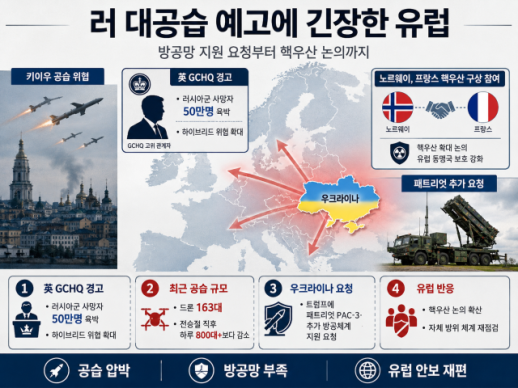 Europe on Edge as Russia Warns of Major Airstrikes Security concerns in Europe are escalating as Russia has warned of a large-scale airstrike targeting Ukraine. Ukraine has requested additional Patriot missile support from the United States, while Norway has agreed to participate in a nuclear umbrella initiative led by France. The military pressure from Russia is prompting discussions about Europe's own defense systems, extending beyond Ukraine's air defense issues. According to Sky News on May 27, Anne Keast-Butler, head of the UK Government Communications Headquarters (GCHQ), stated in a speech at Bletchley Park that "Russian military deaths are nearing 500,000 since the start of the war in Ukraine." She assessed that Russian forces are retreating on the battlefield. However, she emphasized that military losses do not equate to a reduction in risk. Keast-Butler warned that "Russia is expanding its irregular threat activities, including cyberattacks and sabotage, against the UK and Europe," continuously targeting critical infrastructure, democratic processes, supply chains, and public trust. She added, "The risk of miscalculation is higher than I have ever seen." On the battlefield, the possibility of airstrikes targeting Kyiv, Ukraine's capital, has increased. Russia has recently warned foreign diplomats and personnel to "leave Kyiv" in anticipation of large-scale strikes. Ukraine has responded defiantly, urging its allies to stand united. While the scale of attacks has temporarily decreased, tensions remain high. The Ukrainian Air Force reported that as of 6 PM on May 26, Russia launched 163 drones. Although this is a reduction from earlier in the month when over 800 drones and missiles were deployed following a ceasefire on Victory Day, clashes continue in Crimea and along the Russian border. Ukraine is expressing its urgent need for air defense systems. President Volodymyr Zelensky has sent a letter to President Donald Trump requesting additional support, specifically Patriot PAC-3 missiles and other air defense systems. He noted, "We are almost entirely reliant on the United States for ballistic missile defense" and emphasized the need for further assistance to counter Russian missile attacks. Zelensky also called for NATO to expedite its arms supplies. Ukraine believes that the NATO 'Ukraine Priority Support List' (PURL) is not keeping pace with the speed of Russian attacks. PURL is a program through which NATO jointly purchases U.S.-made defense equipment for Ukraine. The security concerns in Europe have also sparked discussions about nuclear deterrence. Norwegian Prime Minister Jonas Gahr Støre announced that Norway would participate in the French-led nuclear umbrella initiative. He cited Russia's large-scale rearmament, including its nuclear capabilities, and its ongoing full-scale war in Europe as the backdrop for this decision. Norway has clarified that it will not deploy nuclear weapons on its territory during peacetime. However, by agreeing to participate in the French nuclear umbrella initiative, Norway, which has long viewed close cooperation with the United States as central to its security, is expanding discussions on European security into the realm of nuclear deterrence.* This article has been translated by AI. 2026-05-28 15:12:00
 -
 May Heatwave Causes Fatalities in Europe and South Asia May's heatwave is leading to fatalities in Europe and South Asia. Before the official start of summer, deaths have been reported in France, India, and Pakistan, while the UK has recorded its highest temperatures for May. There are growing concerns that existing heatwave response systems, designed for July and August, may not be sufficient to mitigate the impact. According to reports from Reuters on May 28, at least seven people have died in France due to heat-related incidents. Among them, five drowned in lakes, rivers, and beaches, while two lost their lives during sporting events. The French government has issued warnings about the risks of heatstroke, dehydration, and accidents during outdoor activities. The UK is also experiencing unusual heat. Temperatures at Kew Gardens in London reached 34.8 degrees Celsius, setting a new record for May. The UK Health Security Agency has issued an amber heat health alert for London and parts of southeastern and eastern England, indicating a significant health risk. In South Asia, the situation is similarly dire. The World Weather Attribution (WWA) reported that at least 37 heat-related deaths have been recorded in India as of mid-May. In Karachi, Pakistan, 10 fatalities have been reported. In Andhra Pradesh, India, there have been 325 suspected cases of heatstroke from early March to mid-May. A significant issue is that the impact of high temperatures is often underreported in official statistics. In addition to heatstroke, there is an increase in cardiovascular issues, dehydration, drowning incidents, and accidents among outdoor workers due to the heat. Analysts suggest that this heatwave should not be viewed as a one-time anomaly. The World Meteorological Organization (WMO) has projected a high likelihood that the global average temperature will exceed 1.5 degrees Celsius above pre-industrial levels within the next five years. This raises alarms that the May heatwave may not be a temporary phenomenon. The heat is also straining infrastructure beyond health services. In India, a surge in demand for cooling has led to record electricity consumption, resulting in nighttime blackouts in some areas. Consequently, experts are calling for an earlier response to heatwaves. They recommend activating heat health alerts in spring and implementing restrictions on outdoor work and support for vulnerable populations sooner.* This article has been translated by AI. 2026-05-28 13:56:00
 -
 Six Chinese Nationals Sentenced to Life for Torturing Korean Student to Death in Cambodia Six Chinese nationals have been sentenced to life in prison for torturing a South Korean student to death in Cambodia. The victim, identified as Park Min-ho, was reportedly lured to the country by a fraudulent job offer and subsequently imprisoned by an online crime syndicate. This incident has highlighted ongoing issues related to Southeast Asian scams targeting foreign job seekers. According to reports from the Associated Press and Reuters, a court in Kampot Province sentenced the six men, aged between 30 and 54, for murder involving torture and aggravated fraud. Park was said to have traveled to Cambodia last year after receiving a false job offer. Once there, he was coerced into participating in criminal activities by the online scam organization and was subjected to severe abuse before his death. His body was discovered in August of the previous year in Kampot. The autopsy report released by South Korean authorities in November indicated that Park died from blunt force trauma due to beating and torture. The Cambodian court found sufficient evidence to convict the six defendants. Southeast Asian online scam operations have been known to attract foreigners with offers of high-paying part-time jobs and overseas employment, only to involve them in voice phishing and investment fraud schemes. Victims often face confinement, threats, and violence during this process. In response to these crimes, Cambodia has intensified its crackdown. The AP reported that the local parliament passed a law in March allowing for life sentences for operators of online scam organizations. Authorities have expelled 18,864 individuals from 33 countries between January 2025 and May of this year, and have prosecuted 1,458 people.* This article has been translated by AI. 2026-05-28 13:42:00
 -
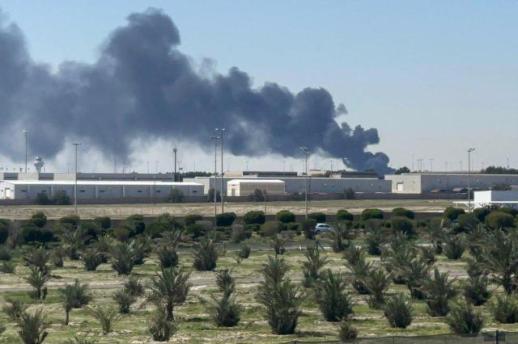 Kuwait's Air Defense System Responds to Missile and Drone Threats Kuwait's air defense system is actively responding to threats from missiles and drones, according to reports. This announcement comes amid claims of additional U.S. airstrikes on Iran and assertions of retaliation from Iran, although the identity of those behind the threats and any potential damage remain unconfirmed. It is also unclear if these events are directly related to Iran's retaliation. On May 28, the Kuwait military stated that its air defense system is intercepting missiles and drones. The military noted that "explosions may be heard" and explained that this is part of the interception operations. Residents have been urged to follow safety guidelines from the relevant authorities. The Kuwait military did not disclose details about the targets, any damage, or the entities involved. No group has claimed responsibility for the incident as of yet. Just before Kuwait's announcement, the United States conducted additional strikes on Iranian military facilities. According to the Associated Press, the U.S. Central Command reported that four Iranian drones posing a threat near the Strait of Hormuz were shot down. U.S. officials also stated that a ground control station in Bandar Abbas was targeted. The Iranian Revolutionary Guard confirmed the airstrikes near Bandar Abbas International Airport, claiming they retaliated against air bases used for U.S. military actions. However, it remains unverified whether the activation of Kuwait's air defense system is directly linked to Iran's retaliation. As tensions in the Gulf region escalate, the situation is compounded by ongoing deadlock in U.S.-Iran negotiations and issues surrounding navigation in the Strait of Hormuz, prompting Kuwait to activate its air defense system.* This article has been translated by AI. 2026-05-28 13:34:00
 -
 Iran's Revolutionary Guard Claims Attack on U.S. Airbase in Response to Airstrikes The Iranian Revolutionary Guard Corps (IRGC) announced that it attacked a U.S. airbase in retaliation for American airstrikes near Bandar Abbas. This response came after the U.S. targeted Iranian facilities, citing drone threats in the Strait of Hormuz. However, the specific target and extent of damage remain unverified. According to Reuters on May 28, the IRGC released a statement through the semi-official Tasnim news agency, claiming, "The U.S. conducted airstrikes near Bandar Abbas airport in southern Iran," and added, "We responded at 4:50 a.m. local time." The IRGC characterized this action as a retaliatory measure. Prior to this, the U.S. had conducted operations targeting Iranian drones near Hormuz. Citing U.S. officials, Reuters reported that American forces shot down four Iranian attack drones that posed a threat to U.S. military and commercial vessels. Additionally, they struck a ground control center in Bandar Abbas that was preparing to launch a fifth drone. The U.S. described the operation as a defensive measure to protect its military and commercial ships. Iran, however, views this as an infringement on its territory and has justified its response. The situation has led to heightened military tensions, with the U.S. framing its actions as defensive and Iran labeling them as retaliatory. The IRGC warned that it would respond more forcefully if further attacks occurred. In its statement, it said, "If aggression is repeated, a more resolute response will follow," adding that the responsibility for escalating tensions lies with the aggressor. The IRGC did not disclose details regarding the means of attack, launch sites, target base names, or the scale of damage. The key takeaway from this announcement is that Iran has officially expressed its intent to retaliate, even as the specifics of the targets and damage remain unclear. This situation further complicates the prospects for resuming navigation through the Strait of Hormuz and any ceasefire negotiations. 2026-05-28 13:24:00
 -
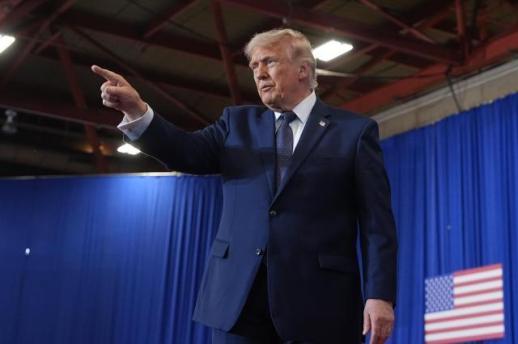 Trump Claims First Impeachment Was a Setup, Shares Fox News Column President Donald Trump has once again questioned the legitimacy of his first impeachment proceedings. He shared a Fox News column that claims the impeachment, based on allegations related to Ukraine in 2019, was politically manipulated. This renewed focus comes in light of recently released documents and a referral for investigation. On May 28, Trump posted on his social media platform, Truth Social, a column titled "Long-Hidden Documents Reveal First Trump Impeachment Was a Complete Fraud." The column, written by Fox News legal analyst Greg Jarrett and published on April 17, argues that there was political bias in the whistleblower complaint and the intelligence oversight process. The controversy centers around a 2019 phone call between Trump and Ukrainian President Volodymyr Zelensky. A whistleblower alleged that Trump pressured Ukraine to investigate former Vice President Joe Biden and his son. Following this complaint, the House of Representatives launched an inquiry, ultimately voting to impeach Trump on charges of abuse of power and obstruction of Congress. The Senate acquitted him in February 2020 on both counts. This latest attack coincides with actions taken by National Intelligence Director Tulsi Gabbard. Gabbard's office released relevant materials last month and referred a criminal investigation to the Justice Department regarding the whistleblower and former intelligence community inspector general Michael Atkinson. Gabbard claimed that political motives influenced the process at the time, which were utilized in the House investigation. However, a referral for investigation does not automatically imply criminal charges. CBS News reported that while Gabbard's office requested an investigation from the Justice Department, it did not specify what charges were being considered. Democrats maintain that the inquiry was based not only on the whistleblower complaint but also on the White House call record, testimonies from administration officials, and congressional investigations.* This article has been translated by AI. 2026-05-28 10:54:00
 -
 Meta Begins Charging for AI Services, Starting at $7.99 per Month Meta has initiated the monetization of its artificial intelligence (AI) services. While a free version of Meta AI will continue to be available, users who heavily utilize image and video generation, as well as advanced reasoning features, will be charged. This move comes as the company seeks to expand its revenue sources amid increasing investment costs. According to reports from The Verge and others on May 27, Meta plans to test its dedicated paid AI products in Singapore, Guatemala, and Bolivia starting next month. The offerings include "Meta One Plus" and "Meta One Premium," priced at $7.99 and $19.99 per month, respectively. The free version will remain accessible, but there will be usage limits on advanced features such as image and video generation and complex question answering. Paid subscribers will have greater access to these functionalities. The company is also expanding its paid offerings for Facebook, Instagram, and WhatsApp. "Facebook Plus" and "Instagram Plus" will cost $3.99 per month, while "WhatsApp Plus" will be available for $2.99 per month. These subscriptions will include extended story exposure times, additional pinned chats, and premium stickers. Additionally, products aimed at creators and businesses are being introduced. The "Meta One Essential" subscription will be priced at $14.99 per month, while "Meta One Advanced" will cost $49.99 per month. These plans will offer features such as verification badges, enhanced search visibility, and the ability to include external links in posts and short videos. This shift towards monetization is closely tied to Meta's increasing investment burdens. According to Reuters, the company raised its capital expenditure forecast for 2026 from an estimated $115 billion to $135 billion to a new range of $125 billion to $145 billion during its first-quarter earnings report. As costs for data centers and computational infrastructure rise rapidly, investors are becoming more sensitive to the timing of returns on these investments.* This article has been translated by AI. 2026-05-28 10:30:22