

Journalist

Han Young-hoon
han@ajunews.com
-
 Trump Delays AI Executive Order, Citing Need to Maintain U.S. Advantage Donald Trump, President of the United States, has postponed the signing of an executive order on artificial intelligence (AI). The order was intended to require companies to consult with the government before releasing advanced AI models, but Trump expressed concerns that it could slow the development of U.S. AI firms. He emphasized the need to maintain American superiority in the ongoing technology competition with China. According to Reuters and Axios, the White House announced on May 21 that the signing ceremony for the AI and cybersecurity executive order, scheduled for that day, would be delayed. The event was expected to include CEOs from major AI companies. Trump told reporters at the White House, "I postponed it because I didn't like some of the content. We are ahead of China and everyone else, and I don't want to do anything that could hinder that advantage." The draft of the executive order reportedly included provisions for companies to consult with the government before unveiling advanced AI models. It also suggested that government agencies could review models up to 90 days before their public release if necessary. Additionally, the order aimed to explore the use of advanced AI models in defending critical infrastructure, such as government systems, banks, and hospitals, against cyber threats. This approach seeks to enhance the defensive capabilities of the government and key facilities while assessing the potential misuse of AI in cyberattacks. This decision indicates that Trump prioritized industrial competitiveness over safety reviews. It suggests a greater emphasis on maintaining momentum in the technology race with China rather than addressing potential risks associated with AI models. The White House has not completely scrapped the executive order. There is a possibility that it will be revised and the signing process will be resumed.* This article has been translated by AI. 2026-05-23 10:27:37
 -
 Eli Lilly's New Obesity Drug Shows 28% Weight Loss in Clinical Trials Eli Lilly's next-generation obesity treatment has demonstrated an average weight loss of over 28% in late-stage clinical trials, surpassing the weight loss rates seen in previous major obesity drug studies, drawing significant market interest. On May 21, Reuters reported that Eli Lilly announced its experimental obesity drug, retatrutide, resulted in an average weight reduction of 28.3% over 80 weeks among participants. The trial focused on obese patients without diabetes and the figure is based on the highest dosage group of 12 mg. According to Eli Lilly, more than 45% of patients in the highest dosage group lost over 30% of their body weight, a reduction comparable to that achieved through obesity surgery. Kenneth Custer, president of Eli Lilly's cardiovascular and metabolic health division, stated, "This level of weight loss is what has been expected from obesity surgery." Retatrutide works by targeting three hormonal pathways related to weight control, including glucagon-like peptide-1 (GLP-1), glucose-dependent insulinotropic polypeptide (GIP), and glucagon receptors. Its broader mechanism of action compared to existing GLP-1 drugs enhances its weight loss effects. The results exceed the weight loss rates reported in previous major obesity treatment trials. Eli Lilly's Zepbound and Novo Nordisk's Wegovy showed approximately 15-20% weight loss in separate studies. Adverse effects were reported at lower rates than in earlier trials. While sensory side effects were a concern in previous studies, the incidence in the highest dosage group for this trial was 12.5%, down from 20.9% in earlier trials. About 11% of patients in the highest dosage group discontinued treatment due to side effects. Eli Lilly aims to launch retatrutide as early as next year, pending regulatory approval. The results from this trial are expected to serve as key data for the approval application to regulatory authorities.* This article has been translated by AI. 2026-05-22 07:19:18
 -
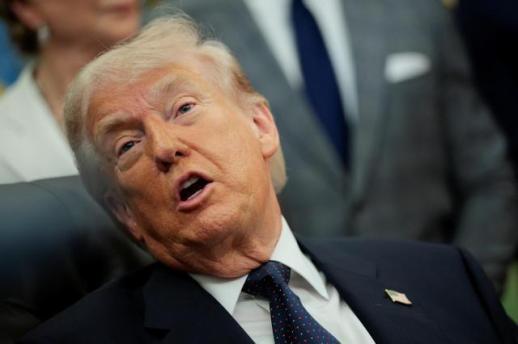 Trump Announces Deployment of 5,000 Additional U.S. Troops to Poland President Donald Trump announced that the United States will deploy an additional 5,000 troops to Poland. This announcement follows confusion surrounding the planned deployment of 4,000 troops to the country. On May 21, Trump stated on his Truth Social platform, "The U.S. will send an additional 5,000 troops to Poland." He cited the election of Karol Nawrocki, the Polish president he supported, as a key factor in this decision. Prior to this announcement, there had been controversy regarding the deployment of the initially planned 4,000 troops, with reports from Reuters and the Associated Press indicating that the Pentagon had canceled the deployment plan. However, U.S. Vice President JD Vance and the Polish government clarified that the troop reduction was merely a temporary delay, not a cancellation. This announcement comes amid ongoing discussions about the realignment of U.S. forces stationed in Europe. The Trump administration has urged NATO member countries to take on a greater role in European defense, with discussions about the potential reduction of U.S. troop levels in Europe. Poland has emerged as a key hub for Eastern European security following Russia's invasion of Ukraine. It serves as a major conduit for military and logistical support to Ukraine and is a critical point on NATO's eastern front. The Polish government has stated that it plans to allocate 4.8% of its GDP to defense spending this year. Trump's announcement is seen as a reaffirmation of the U.S. commitment to Poland's defense amid discussions about the realignment of U.S. forces in Europe. However, details regarding the timing and composition of the troop deployment have yet to be disclosed.* This article has been translated by AI. 2026-05-22 07:07:07
 -
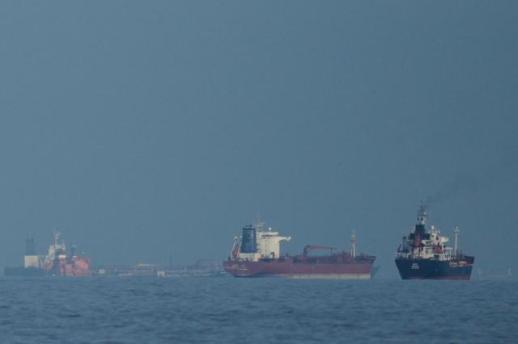 U.S. State Department: Iran's Toll Proposal Would Block Diplomatic Agreement Mark Rubio, U.S. Secretary of State, identified Iran's proposal for a toll in the Strait of Hormuz as a significant obstacle to U.S.-Iran diplomatic negotiations. While some positive signals have emerged in talks between the two nations, the issue of tolls in the Strait has become a critical factor in determining the feasibility of an agreement. On May 21, Reuters reported that Rubio stated in a press conference, "If Iran implements a toll system in the Strait of Hormuz, a diplomatic agreement will become impossible." He emphasized, "No one in the world supports a toll system," adding that imposing such fees is unacceptable and cannot happen. Rubio characterized Iran's toll proposal as a "threat to the world" and "completely illegal," arguing that charging commercial vessels for passage through the Strait undermines international navigation norms. The Strait of Hormuz is a vital corridor for global oil transportation. Iran has leveraged its control over the Strait as a bargaining chip in negotiations, while the U.S. views the imposition of tolls or passage permits for vessels as actions that disrupt international maritime order. Rubio's remarks indicate that the U.S. considers the toll issue not merely a secondary concern in nuclear negotiations but a condition for any agreement. However, Rubio left some room for negotiation with Iran. He noted, "There are good signals in talks with Iran," but added, "I don't want to be overly optimistic." He assessed that the Iranian regime is somewhat divided and stated, "We need to watch the developments over the next few days."* This article has been translated by AI. 2026-05-22 07:00:00
 -
 Pope Leo XIV Calls for Return to Diplomatic Dialogue, Criticizes Military Reliance Pope Leo XIV has urged the international community to return to diplomatic dialogue. He emphasized the need to revive bilateral, regional, and multilateral diplomatic channels amid a reliance on military force in international relations. On May 21, according to Vatican News, Pope Leo XIV met with the newly appointed non-resident ambassadors to the Holy See from eight countries: Sierra Leone, Bangladesh, Yemen, Rwanda, Namibia, Mauritius, Chad, and Sri Lanka. During the meeting, he stated, "There is an urgent need to return to diplomacy that promotes dialogue and consensus." The Pope pointed out the contradiction in the international community's pursuit of peace through military means. He stressed that peace should not be a condition of domination but should be built through dialogue and mutual understanding. He added, "Diplomacy should not be limited to bilateral relations but must extend to regional discussions and multilateral cooperation." Pope Leo XIV also highlighted the role of international organizations. He remarked that "international organizations are crucial tools for conflict resolution and promoting cooperation," and called for increased representation and effectiveness. He warned that if countries prioritize only their individual interests, it will be difficult to create a just international order, emphasizing that a willingness to reconcile interests for the common good should be the starting point of diplomacy.* This article has been translated by AI. 2026-05-22 06:51:47
 -
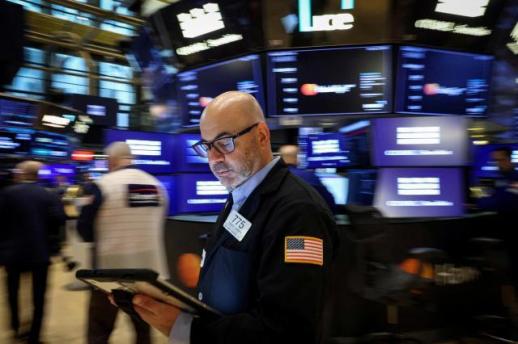 Dow Jones Hits Record High as Oil Prices Drop The three major U.S. stock indices rose together as expectations for peace negotiations between the U.S. and Iran led to a drop in international oil prices, easing energy cost pressures and boosting investor sentiment. The Dow Jones Industrial Average closed at a record high. On May 21, the Dow gained 276.31 points, or 0.55%, finishing at 50,285.66. The Standard & Poor's 500 index rose 12.75 points, or 0.17%, to close at 7,445.72, while the Nasdaq Composite increased by 22.74 points, or 0.09%, ending at 26,293.10. Market attention focused on the geopolitical situation in the Middle East and oil price trends. According to Reuters, optimism surrounding progress in U.S.-Iran peace negotiations supported investor sentiment. Brent crude oil prices briefly rose to around $109 per barrel but later fell below $103. As concerns over soaring oil prices eased, the stock market rebounded. However, the gains were limited. Key issues such as Iran's uranium export and navigation management in the Strait of Hormuz remain unresolved, leaving uncertainty in the negotiations. Investors are wary that a resurgence in oil prices could increase inflationary pressures and corporate costs. In individual stocks, Nvidia fell despite strong earnings and an $80 billion stock buyback plan. High market expectations and concerns over intensified competition in the semiconductor sector weighed on its stock price. Walmart also showed weakness, reflecting a conservative outlook due to cost pressures from high oil prices. Economic indicators somewhat alleviated fears of a slowdown. New claims for unemployment benefits in the U.S. decreased, and manufacturing metrics showed signs of improvement. While the resilience of the economy was confirmed, inflation and oil price variables remain, tempering expectations for interest rate cuts from the Federal Reserve.* This article has been translated by AI. 2026-05-22 06:42:55
 -
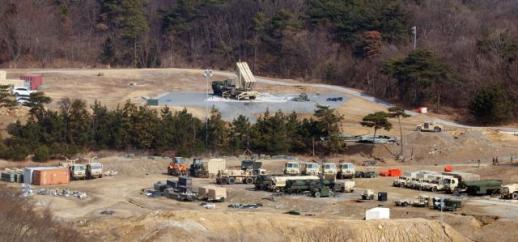 U.S. Uses Half of THAAD Missiles for Israeli Defense, Raising Security Concerns in Asia The United States has reportedly expended a significant portion of its advanced interceptors in defense of Israel against Iranian missile attacks. Approximately half of the U.S. stockpile of THAAD (Terminal High Altitude Area Defense) interceptors has been used. This depletion of missile defense resources is raising security concerns among Asian allies, including South Korea and Japan. According to the Washington Post on May 21, the U.S. launched over 200 THAAD interceptors to bolster Israel's defense, which accounts for nearly half of the Pentagon's total inventory. Additionally, U.S. Navy vessels stationed in the eastern Mediterranean fired more than 100 SM-3 and SM-6 interceptors. Israel's usage was lower than that of the U.S., with the country firing fewer than 100 Arrow interceptors and about 90 David's Sling interceptors. A U.S. administration official noted, "The U.S. fired approximately 120 more interceptors than Israel and intercepted twice as many Iranian missiles." The concern now lies with the remaining stockpile. Kelly Grieco, a senior fellow at the Stimson Center, estimates that the U.S. has about 200 THAAD interceptors left. There are also concerns that production lines may struggle to keep pace with demand. The large-scale depletion of advanced interceptors in the Middle East could weaken U.S. military readiness in other regions. This anxiety has spread to Asian allies such as South Korea and Japan. The Washington Post reported, "The shortage of U.S. interceptors is heightening tensions for Asian allies like South Korea and Japan." Both countries rely on U.S. military deterrence and missile defense support to counter threats from North Korea and China. If hostilities resume, the burden on the U.S. could increase further. The Washington Post noted, "The Israeli military has temporarily excluded some missile defense batteries for maintenance, which could increase the burden on the U.S. if hostilities resume." The U.S. Department of Defense and Israel have refuted interpretations suggesting that the burden has fallen disproportionately on one side. The Pentagon stated that the ballistic missile defense system is just one part of a multi-layered integrated air defense network. Both countries have coordinated various assets, including fighter jets and drone defense systems. The Israeli Embassy in Washington also emphasized that operations between the two nations have been coordinated at the highest levels.* This article has been translated by AI. 2026-05-22 06:36:57
 -
 Putin Introduces Plan to Export Iranian Uranium to Russia in Meeting with Xi Jinping Russian President Vladimir Putin introduced a plan to export enriched uranium from Iran to Russia during an informal meeting with Chinese President Xi Jinping. This proposal comes as U.S. President Donald Trump has stated that he will not allow Iran to retain high-enriched uranium. According to the TASS news agency on May 20, Kremlin spokesman Dmitry Peskov briefed reporters on the discussions between Putin and Xi. Peskov noted that Xi explained to Putin details regarding Trump’s recent visit to China, and the issue of Iran was also discussed. Peskov stated that Putin described the plan for transferring Iran's enriched uranium to Russia, calling it a proposal that could be accepted if both Iran and the U.S. deem it appropriate. Russia has indicated that the acceptance of this plan is contingent upon the judgments of the U.S. and Iran. This proposal arises amid ongoing negotiations where the export of Iran's enriched uranium has become a key issue. Recently, Trump responded negatively to a question about whether Iran could continue to hold high-enriched uranium in future agreements, stating, "No." He also expressed intentions to destroy the uranium after its export. In contrast, Iran maintains a firm stance against exporting its uranium. Reuters reported that two senior Iranian sources indicated that Supreme Leader Ayatollah Ali Khamenei has instructed that low-enriched uranium should not be sent abroad. Iran believes that exporting high-enriched uranium could make it more vulnerable to potential attacks from the U.S. and Israel. The contentious issue revolves around Iran's stockpile of 60% enriched uranium, which significantly exceeds the level needed for civilian nuclear fuel and approaches the 90% enrichment required for nuclear weapons. Russia had previously proposed transferring Iran's enriched uranium to its territory last month, but the U.S. rejected the idea. Peskov also criticized the U.S. regarding the situation in Cuba during the same briefing. He stated, "The U.S. blockade of Cuba has devastating effects on the general population," adding that military posturing only worsens the situation for the Cuban people. Peskov expressed opposition to the indictment of former Cuban National Assembly President Raul Castro, stating, "We oppose the U.S. approach of pressuring other countries' leaderships," and declared that pressure on Cuba is unacceptable.* This article has been translated by AI. 2026-05-22 06:28:49
 -
 Trump Rejects Iran's Stance on Enriched Uranium Export As Iran's Supreme Leader has established a policy against exporting enriched uranium, President Donald Trump has firmly rejected this stance. Trump stated that Iran cannot retain enriched uranium in any future agreements, making the issue of nuclear material export a central point of contention in upcoming negotiations between the U.S. and Iran. On May 21, during a press briefing at the White House, Trump responded to a question regarding whether Iran could keep enriched uranium in future agreements. He said, "No. We will export it." Trump added, "We neither need nor want that uranium," and indicated that the material would likely be destroyed after export. He emphasized, "We will not allow Iran to keep it in any form," and reiterated, "I will not let Iran have nuclear weapons." These comments followed a strong statement from Iranian officials. According to Reuters, two senior Iranian sources reported that Ayatollah Ali Khamenei, Iran's Supreme Leader, issued a directive prohibiting the export of weapons-grade uranium. Iran believes that exporting enriched uranium could make it more vulnerable to potential attacks from the U.S. and Israel. The key issue revolves around Iran's stockpile of enriched uranium, particularly the 60% enriched variety. This level of enrichment significantly exceeds that required for civilian nuclear fuel and is close to the 90% enrichment needed for nuclear weapons. The International Atomic Energy Agency (IAEA) estimated that prior to the U.S. and Israel's attacks on Iranian nuclear facilities last year, Iran possessed approximately 441 kilograms of 60% enriched uranium. The current amount remains unclear. While Iran denies any intention of developing nuclear weapons, the U.S. and Israel view the export of enriched uranium as a critical condition for any future agreements. As Iran maintains its stance against export, and Trump rejects this position, the gap between the two sides has widened. On the same day, Trump also expressed opposition to tolls in the Strait of Hormuz, stating, "We do not accept tolls; the Strait of Hormuz is an international waterway."* This article has been translated by AI. 2026-05-22 06:23:49
 -
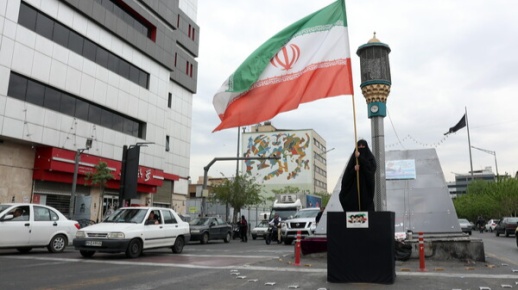 Iran's Internet Shutdown Hits Economy, Leaving Over 1 Million Jobless The ongoing internet shutdown in Iran, now in its third month, is exacerbating the country's already strained economy, which has been affected by war and sanctions. More than 1 million people have lost their jobs as online sales, international transactions, and remote work have come to a standstill. According to the Wall Street Journal on May 20, Iran's internet connectivity has remained at just 1-2% of its total capacity in recent weeks, a stark decline from 90-100% before anti-government protests erupted last year. Alp Toker, founder of the internet monitoring group NetBlocks, described the situation as “the most extensive and prolonged shutdown in modern internet history.” The Iranian government began imposing access restrictions on January 8, eased them on January 23, but then tightened them again after the U.S. and Israel launched attacks against Iran on February 28. The impact is particularly severe for businesses and freelancers. Merchants who relied on international clients have lost contact, while online retailers have lost both orders and marketing channels. Software developers and freelancers are also struggling to continue their remote work. The employment crisis could worsen. Mohammad Reza Farzanegan, a Middle East economic expert at Philipps-Marburg University in Germany, estimates that around 10 million jobs are directly or indirectly linked to Iran's digital economy. He noted that large-scale connectivity restrictions diminish productivity and weaken business confidence. The Iranian government defends the measures as necessary due to wartime conditions. Iran's Minister of Communications, Sattar Hashemi, stated earlier this month through state media that the internet restrictions are a response to the war situation. However, the government is also expanding selective access systems alongside the full shutdown. The so-called 'Internet Pro' system allows some users to regain limited access. The state-owned Iran Mobile Communications Company has been providing partial internet access and international IP connectivity through 'white SIM cards' since March. Experts warn that these restrictions could leave a lasting burden on Iran's economy even after the conflict ends, as countries with potentially restricted internet access are viewed as high-risk markets for investment and trade.* This article has been translated by AI. 2026-05-21 21:12:00