

Journalist

Han Ji-hyun
hanji@ajunews.com
-
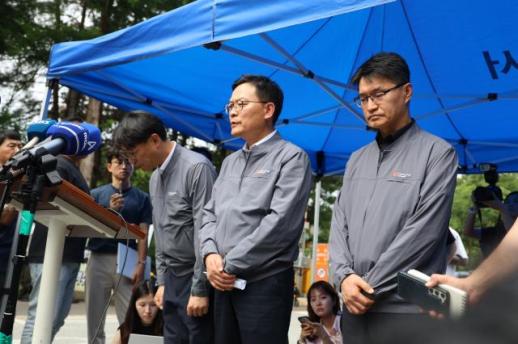 Hanwha Aerospace Faces Scrutiny Under Serious Accident Punishment Act Hanwha Aerospace's Daejeon facility is under scrutiny to determine if it will be the first in the defense industry to be subject to the Serious Accident Punishment Act. While many experts believe that applying the law, which holds management accountable for safety violations leading to fatalities, is unlikely due to the nature of the defense sector, there are calls for strict penalties given that the facility has recorded 13 fatalities from major accidents over the past decade. Despite a significant increase in performance during the ongoing defense supercycle, safety-related investments at Hanwha Aerospace have reportedly accounted for only 0.03% of total revenue. On June 2, the Daejeon Police Agency, the National Forensic Service, the Ministry of Employment and Labor, and the Korea Occupational Safety and Health Agency began a joint investigation into the cause of the explosion that occurred at Hanwha's Daejeon facility. This facility is crucial for developing missile propulsion systems and tactical guided weapons, including the multiple launch rocket system Cheonmu and the long-range surface-to-air missile L-SAM. Hanwha stated that the explosion occurred during a cleaning process involving tools contaminated with gunpowder. Under the Serious Accident Punishment Act, if a workplace safety violation results in a fatality, management can face penalties. Business owners or responsible executives can be sentenced to over a year in prison or fined up to 1 billion won, while corporations can be fined up to 5 billion won. The recent incident, which resulted in five deaths during a safety-related cleaning process, presents a challenging situation for the company. Hanwha Aerospace has previously experienced explosion incidents in 2018 (five fatalities) and 2019 (three fatalities). The key issue is whether the company fulfilled its safety management obligations. Currently, investigations are underway regarding the allocation of safety management personnel, budget planning, execution, and procedures. If it is proven that safety incidents occurred due to pressure to increase production amid rising export volumes, the top management could face serious repercussions. Hanwha Aerospace operates under a dual leadership structure, with Vice Chairman Kim Dong-kwan, the son of Chairman Kim Seung-yeon, overseeing business strategy, while CEO Son Jae-il manages operations. According to Hanwha Aerospace's 2025 Sustainability Management Report, the safety and health investment budget for 2024 was 3.5 billion won, representing only 0.03% of total revenue (11.24 trillion won). This marks a 51.4% decrease from the 7.2 billion won allocated for safety in 2023, raising concerns about a possible safety complacency. A company representative stated, "Safety and health investments are only recorded under 'safety,' and the actual expenditure includes various items such as explosion-proof facilities, automation of hazardous processes, and replacement of aging equipment, so the total is much higher. The Daejeon facility is in the process of implementing measures to minimize accidents through automation and the unmanned operation of hazardous processes." Meanwhile, CEO Son Jae-il emphasized in a message to employees that the management team will take this incident as a painful lesson to create a safer working environment and strengthen the organization.* This article has been translated by AI. 2026-06-03 05:03:00
 -
 Dongyang, a Unit of Eugene Group, Announces 719 Billion Won Stock Buyback and Cancellation Dongyang, a subsidiary of Eugene Group, is taking steps to enhance its corporate value through a significant stock buyback and consolidation. On June 2, Dongyang held a board meeting and resolved to cancel a total of 24,611,979 shares, including 24,439,999 common shares and 171,980 preferred shares. The cancellation amounts to approximately 719 billion won based on book value, representing 10.26% of the total issued shares. This cancellation is expected to provide shareholder returns, as it involves a permanent buyback that will not re-enter the market. With the reduction in the number of issued shares, the value per share could increase based on the same corporate value and profits. A 10.26% decrease in the total number of shares could lead to an approximate 11% improvement in per-share metrics. Dongyang aims to clarify the direction of its stock buyback and continues to review its capital policy with a focus on maximizing shareholder value. In addition to the stock cancellation, the company plans to implement a 2-for-1 stock consolidation. This measure is intended to reduce the number of issued shares and normalize the trading price per share, thereby alleviating undervaluation perceptions and enhancing market confidence. The final decision will be made at an extraordinary shareholders' meeting scheduled for June 22. A Dongyang representative stated, "This stock cancellation demonstrates the company's strong commitment to enhancing shareholder value. By permanently canceling more than 10% of the total issued shares and consolidating stocks, we aim to increase the predictability of our capital policy and strengthen our investor relations activities to ensure that our corporate value is properly recognized in the market." * This article has been translated by AI. 2026-06-02 14:57:00
 -
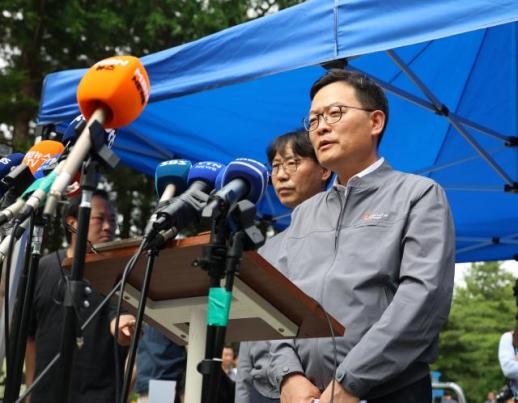 Hanwha Aerospace CEO Calls for Comprehensive Safety Review After Explosion Son Jae-il, CEO of Hanwha Aerospace, stated that the company must emerge from the recent explosion at its Daejeon plant, which resulted in seven casualties, as a significantly safer organization. In a message posted on the company’s internal bulletin board on June 2, Son emphasized the need for a robust safety system that goes beyond mere formalities. He urged employees to actively participate in company-wide safety improvement efforts to prevent future incidents. Regarding the investigation into the cause of the explosion, Son requested employees to engage cooperatively in the inquiry, stating, "We will take this opportunity to thoroughly reassess our safety systems from the ground up." He also committed to cooperating fully with relevant authorities during the investigation. Son expressed his commitment to supporting the victims' families, saying, "We will not neglect our support for the bereaved families, and I sincerely wish for the swift recovery of the injured. The company will spare no effort in providing assistance." He acknowledged the challenging times ahead, urging employees to perform their roles to the best of their abilities. Son concluded by stating that the management team would learn from this painful lesson to create a safer work environment and strengthen the organization to overcome this crisis. Earlier, at 10:59 a.m. on June 1, an explosion occurred in the cleaning process area of Building 56 at the Hanwha Aerospace Daejeon plant, resulting in the deaths of five workers. The company reported that the explosion happened during the cleaning of tools used for manufacturing propulsion systems, which were contaminated with gunpowder. Police and fire authorities are currently investigating the incident and conducting a joint examination.* This article has been translated by AI. 2026-06-02 13:36:00
 -
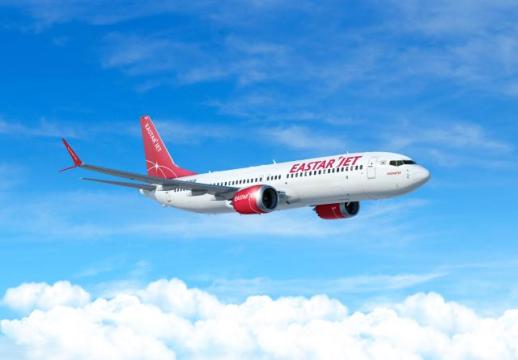 Eastar Jet Reports Over 1 Million Foreign Passengers, Half from Greater China Eastar Jet announced on June 2 that it surpassed 1 million foreign passengers last year, primarily on its Greater China routes. According to the airline industry, Eastar Jet recorded approximately 1.02 million foreign passengers in the previous year, with around 500,000 of them traveling on Greater China routes, accounting for half of all foreign passengers. In the first quarter of this year, 130,000 of the approximately 300,000 foreign customers also utilized Greater China routes. The proportion of foreign passengers on the Taipei-Songshan route has steadily increased from 57% in 2024 to 67% in 2025, reaching 69% in the first quarter of this year. Similarly, the Incheon-Zhengzhou route grew from 55% to 73% during the same period. The Incheon-Hong Kong route, which launched in March, is maintaining a passenger share of around 90%. Among domestic routes, demand for travel to Jeju is the highest. The foreign passenger share on the Jeju-Taipei route has consistently risen, reaching 86% in 2024, 94% in 2025, and 96% in the first quarter of this year. The Jeju-Shanghai route recorded a foreign passenger share of 98% in the first quarter. The number of foreign tourists visiting Busan is also on the rise. The foreign passenger share on the Busan-Taipei route increased from 79% in January to 86% in February and 92% in March this year. To strengthen its presence in the local market, Eastar Jet is deploying experienced sales staff as local branch managers and expanding its network with travel agencies and corporations. The airline is also actively scheduling night flights to enhance convenience for local customers. An Eastar Jet official stated, "We will continue to attract foreign passengers through localized strategies for each country and strengthen our route competitiveness by expanding local demand, contributing to the revitalization of the domestic tourism industry."* This article has been translated by AI. 2026-06-02 10:21:00
 -
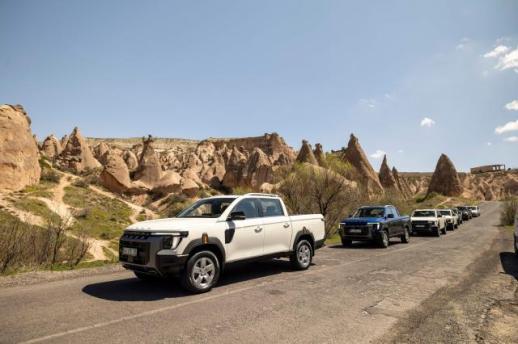 KGM's MUSSO Surpasses 10,000 Sales, Leading Pickup Market with 86% Share KG Mobility (KGM) announced on June 2 that its traditional pickup truck, the MUSSO, has surpassed 10,000 cumulative sales just five months after its launch. Since its release in January, the MUSSO has sold 6,642 units in the domestic market and 4,896 units internationally, totaling 10,538 units globally by the end of May. This achievement reflects robust domestic growth and strong export performance, with the MUSSO exceeding the 10,000 sales mark before the first half of the year has concluded, indicating positive market reception. The domestic pickup market has become increasingly competitive due to the launch of new models by rival companies. From January to May, KGM sold a total of 10,360 units, including 3,718 MUSSO EVs and 6,642 MUSSO trucks, capturing over 86% of the market share and maintaining its position as the leading pickup brand. In May alone, the MUSSO brand sold 1,892 units in the domestic market, comprising 1,137 MUSSO trucks and 755 MUSSO EVs, achieving an impressive 88.3% market share. The success of the MUSSO is attributed to its diverse options and appealing features tailored to customer needs. KGM offers a multi-powertrain lineup, including gasoline, diesel, and electric models, allowing customers to choose based on their driving environment and purpose. The MUSSO's design emphasizes both rugged pickup aesthetics for off-road driving and a more urban-friendly grand style. KGM is also accelerating its global market expansion. The company recently completed a successful launch in Turkey, a strategic location, and is continuing to diversify its export channels with launch events in various countries. A KGM representative stated, "The MUSSO is an iconic model that has led the history and expansion of pickup trucks in South Korea. Surpassing 10,000 cumulative sales in just five months is a testament to our competitiveness in both the domestic market and global strategic markets." The representative added, "We will continue to introduce a diverse lineup under the MUSSO brand, aligning with the strong demand for leisure and the trend toward eco-friendly electrification, showcasing the strength of K-pickups on the global stage."* This article has been translated by AI. 2026-06-02 10:06:00
 -
 Samsung's Performance Bonuses Could Increase Severance Pay by Sixfold Samsung Electronics and its labor union have agreed to a performance bonus system that will allocate more than 10% of business performance as bonuses, including a special management performance bonus based on 10.5% of the semiconductor division's (DS) business performance, to be maintained for the next decade. While the company has specified conditions for bonus payments, such as achieving an operating profit of 200 trillion won in the DS division, concerns remain that these bonuses could be included in the average wage used to calculate severance pay, potentially increasing the company's severance obligations by more than eightfold, which could negatively impact the South Korean economy. According to industry sources on May 21, the special management performance bonuses agreed upon by Samsung and its union are not expected to be included in the regular wage calculations. The Supreme Court's full bench ruling in 2024 stated that for bonuses to be considered part of regular wages, they must meet criteria of regularity, uniformity, and fixity. The general consensus is that this agreement does not satisfy all three conditions. Specific conditions outlined in the agreement, such as achieving 200 trillion won in operating profit in the DS division from 2026 to 2028 and 100 trillion won annually from 2029 to 2035, along with unspecified minimum payment amounts and the variability of the total fund based on 10.5% of business performance, do not qualify as 'value of labor' according to recent court rulings on regular wages. Despite the expectation that the special management performance bonuses will not be included in regular wages, there are concerns that they could still be factored into average wages in the future. Severance pay is calculated by multiplying the average wage over the last three months before retirement by the length of service. If bonuses amounting to several hundred million won are included in the average wage, the severance pay burden on companies could increase significantly. Recently, the Supreme Court ruled that if bonuses are predetermined based on individual employee standards and exhibit a degree of 'fixity,' they should be considered in the calculation of average wages for severance pay. If Samsung's promised separate bonuses are perceived as predetermined wages, they could indeed be included in average wages. A legal expert noted, "If this agreement is explicitly stated in the collective bargaining agreement and operates for ten years, the court may interpret that the payment obligation has been institutionally confirmed beyond mere practice. In this case, there could be an increase in lawsuits from retirees claiming average wages." A simulation conducted by Aju Economic Research based on the performance bonuses calculated under the Samsung Electronics labor agreement indicates that the average severance pay per employee could increase sixfold compared to current levels. Assuming an average annual salary of 100 million won and one year of service, the severance pay per employee, currently at 8.2 million won, could rise to 56.7 million won, reflecting a 592% increase when factoring in the special management performance bonuses. When converted into severance pay based on years of service, the severance pay for employees at the assistant manager and manager level with five years of service would increase from 41 million won to 283.5 million won when including bonuses. For employees with ten years of service (senior manager and department head level), severance pay would rise from 82 million won to 567 million won, and for those with twenty years of service (senior managers and executives), it would increase from 164 million won to 1.134 billion won. Last year, Samsung Electronics had 78,000 employees in the DS division, with an average length of service of 12 years. This implies that Samsung could face an additional severance pay burden of 582 million won per employee. The total severance pay liability could increase from approximately 8 trillion won to 45 trillion won, a 463% rise. While the likelihood of this scenario materializing is low, given the court's ruling and the assumption of all employees leaving, it raises concerns within the business community about potential legal disputes in the future. Looking ahead, a key issue will be the extent to which the conditions for performance bonuses are linked to labor outcomes. An industry source commented, "The specific conditions proposed by Samsung, such as achieving 200 trillion won in annual operating profit in the DS division, are dependent on external factors like the AI semiconductor big cycle and surging memory prices, rather than labor outcomes. If bonuses are paid under such circumstances, the connection to labor compensation may be diluted, making it less likely to be included in average wages."* This article has been translated by AI. 2026-05-21 20:06:35
 -
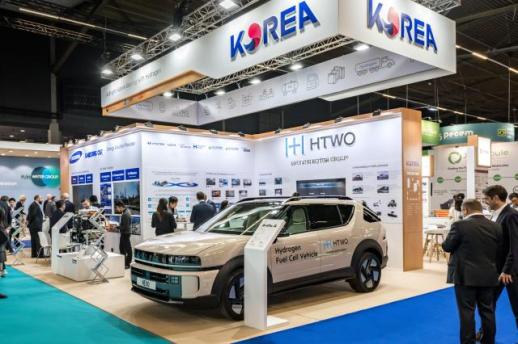 Hyundai Motor Group Highlights Hydrogen Ecosystem at World Hydrogen Summit 2026 Hyundai Motor Group announced on May 21 that it participated in the World Hydrogen Summit 2026, held from May 19 to 21 at the AHOY Convention Center in Rotterdam, Netherlands. Now in its seventh year, the World Hydrogen Summit is the largest global hydrogen industry exhibition, focusing on key issues related to hydrogen, including mobility, production, infrastructure, regulation, and investment. The event is divided into a summit and an exhibition. More than 10,000 attendees, including government officials from over 100 countries and representatives from more than 500 participating companies, shared diverse opinions during the event. Hyundai Motor Group set up a booth in the Korean Pavilion centered around its hydrogen brand and business platform, HTWO, showcasing a hydrogen fuel cell system mock-up and the all-new NEXO vehicle. The all-new NEXO, launched in the European market this year, features a 150 kW motor capable of accelerating from 0 to 100 km/h in 7.8 seconds. It can travel up to 720 km on a single charge based on domestic standards, making it Hyundai's next-generation hydrogen electric vehicle. Hyundai Motor Group also participated in discussions at the summit, engaging with global partners, including those from Europe, to explore sustainable hydrogen ecosystem development and share activation strategies through proven solutions. During the discussions, Hyundai Motor Group emphasized that hydrogen is increasingly recognized not just as a means of decarbonization but also as an energy source to mitigate risks in the global energy supply chain. The group stressed the need for consistent policies and the establishment of global standards alongside technological development to accelerate the hydrogen ecosystem. Additionally, as a founding member and co-chair of the Hydrogen Council, Hyundai Motor Group participated in the IHTF meeting, which took place on May 20 during the World Hydrogen Summit 2026. The IHTF roundtable, attended by officials from over 20 countries, discussed the growing importance of energy security and the need for practical and forward-looking hydrogen strategies to enhance collaboration between industry and government in response to these challenges. A Hyundai Motor Group representative stated, "The World Hydrogen Summit is significant as it seeks to explore the direction of hydrogen ecosystem development and discuss actual investment possibilities. We will strive to foster a sustainable hydrogen infrastructure in line with the accelerating hydrogen ecosystem that is gaining attention in the global energy market."* This article has been translated by AI. 2026-05-21 10:34:45
 -
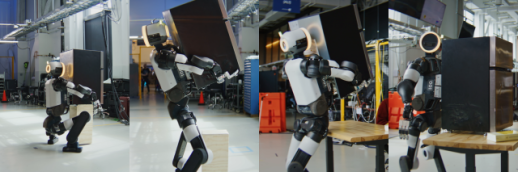 Boston Dynamics' Atlas Robot Successfully Moves 23kg Refrigerator Boston Dynamics' humanoid robot, Atlas, has demonstrated its ability to lift and move a heavy refrigerator. As the company prepares for the robot's deployment at Hyundai Motor Group's new factory in Georgia in 2028, Atlas has showcased both its full-body control capabilities and its ability to handle external objects. In a video released on May 19 on Boston Dynamics' YouTube channel, Atlas is seen bending its knees slightly to lift a 23kg (50lb) refrigerator. While carrying the refrigerator, it maintained its balance as it moved to a table behind it, then executed a 180-degree turn to safely place the refrigerator on the table. Performing this task requires advanced full-body control technology that allows the robot to maintain a balanced posture while lifting objects of varying sizes and weights. This marks a significant milestone, indicating that Atlas is moving beyond laboratory demonstrations to operate in more variable industrial environments. A Boston Dynamics representative stated, "The ability to estimate its state using sensors in the absence of external information and to integrate a continuous series of movements, as shown in the video, proves that Atlas can perform high-level tasks in real industrial settings. Atlas quickly learned these movements through large-scale simulation-based reinforcement learning and implemented them in real environments within weeks." Atlas has successfully transported not only the 23kg refrigerator but also a refrigerator weighing up to 45kg (100lb). The successful movements highlight Atlas's high performance and compatibility as a developmental model. For instance, the actuators used in Atlas are standardized into two types, and both arms and legs are designed with the same structure to facilitate easy parts replacement. This approach is expected to enhance cost efficiency based on economies of scale. Boston Dynamics also released behind-the-scenes training footage of Atlas, showcasing the robot performing a 360-degree turn while lifting one leg and executing backflips. The ability to control the upper and lower body separately requires advanced control technology that minimizes interference between joints while maintaining movement continuity. Movements like handstands and backflips are crucial for assessing Atlas's flexibility and balance, as well as for teaching it how to recover from slips or falls. Meanwhile, Hyundai Motor Group announced its vision at CES 2026 in January, stating its goal to expand robotics in everyday life and industry to drive human progress. The company plans to strengthen strategic partnerships with leading global AI firms and collaborate with Google DeepMind to accelerate the development of future humanoid technologies.* This article has been translated by AI. 2026-05-19 11:39:00
 -
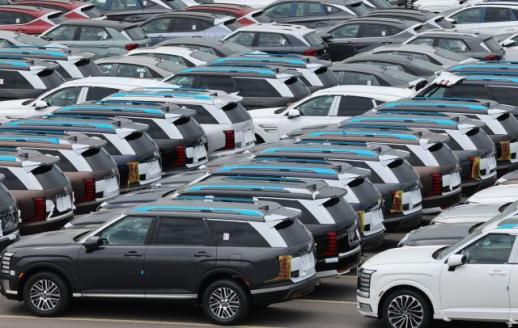 Automakers under pressure to hike prices amid spiraling manufacturing costs SEOUL, May 19 (AJP) - Rising prices for car parts and other key materials, including batteries and semiconductors, coupled with the weak won, are adding to pressure on automakers to raise vehicle prices. With price hikes expected to accelerate in the second half of this year, concerns are also growing that demand could weaken if South Korea's temporary tax breaks for car buyers expire at the end of the year. According to industry insiders on Tuesday, prices for key materials and components used in electric vehicles (EVs) including lithium, aluminum, copper and semiconductors, have surged, prompting a series of price hikes by global automakers. Chinese automaker BYD already raised prices by more than 2,000 yuan for additional driver convenience features on some models in its Dynasty, Ocean and Formula Leopard lineups late last month. Xiaomi also recently raised prices across all trims of its SU7 series by 4,000 yuan, while fellow Chinese EV makers NIO and XPeng plan to increase prices for their major models in the second quarter. Battery materials, which account for about 30 percent to 50 percent of EV production costs, have risen especially sharply. According to market research firm Fastmarkets, lithium, a key material for lithium iron phosphate (LFP) batteries used in budget EVs, was priced at US$25.15 per kilogram as of last week, up 212 percent from an average of $8.1 in June last year. Nickel, another key material used in nickel-cobalt-manganese (NMC) batteries, rose 28.4 percent to $19,017 per metric ton from $14,879 at the end of last year. Higher memory chip prices are also driving up costs. Prices for high-performance automotive DDR and storage memory chips have surged 70 percent to 100 percent since the end of last year. "Major chipmakers such as Samsung Electronics and SK hynix are prioritizing semiconductor shipments for artificial intelligence (AI) servers for global big tech companies over automotive chips, which offer lower margins and require more rigorous certification processes, worsening overall supply instability," said an industry insider. "Despite surging demand driven by the rise of autonomous driving, supply remains insufficient, pushing prices sharply higher," he added. Price increases are becoming more visible in the domestic market. Tesla recently raised prices on some Model Y lines by 4 million won (US$2,700) to 5 million won, following increases in the U.S. Its midsize electric SUV Model Y Long Range AWD rose 4 million won to 63.99 million won from 59.99 million won. German automaker BMW is also expected to raise prices for some models next month. The increase is likely to be around 1 percent and could affect the 5 Series, X6, i4 and i5. If temporary tax breaks for EV buyers expire at the end of this year, consumers will have to pay more to buy vehicles, which could weaken demand overall. "Automakers may expand promotions such as zero-interest financing and other discounts, but rapidly rising manufacturing costs are leaving little room for price cuts," another industry insider said. 2026-05-19 09:40:28
 -
Rising Costs and End of Tax Cuts Signal Upcoming Car Price Increases The automotive industry is facing increasing pressure to raise prices due to soaring raw material costs, including batteries and semiconductors, compounded by high exchange rates. As signs of significant price adjustments emerge for the second half of the year, concerns are growing over a potential decline in demand with the expiration of individual consumption tax cuts at the end of the year. ◆ Global Car Prices Rise Amid Raw Material Costs According to industry sources on May 18, the prices of key components for electric vehicles, such as lithium, aluminum, copper, and semiconductors, have surged, prompting price increases across the global automotive sector. BYD raised the prices of optional advanced driver-assistance systems (ADAS) for several models, including the Dynasty, Ocean, and Formula Leopard, by over 2,000 yuan last month. Xiaomi also increased the prices of all models in its new SU7 series by 4,000 yuan. Companies like Weilai and Xiaopeng plan to raise prices for major models in the second quarter. The rise in battery raw material prices is particularly steep. Batteries account for 30% to 50% of the production cost of electric vehicles. According to market research firm Fastmarkets, the price of lithium, a key material for lithium iron phosphate (LFP) batteries used in budget electric vehicles, has risen to $25.15 per kilogram as of May 13, a 212% increase compared to the average of $8.10 in June of last year. The price of nickel, a core raw material for nickel-cobalt-manganese (NCM) batteries, has also increased by 28.4%, reaching $19,016.50 per ton, up from $14,879 at the end of last year. Additionally, prices for high-performance DDR and storage memory semiconductors used in cars have risen by 70% to 100% compared to the end of last year. An industry insider noted, "As semiconductor companies like Samsung Electronics and SK Hynix focus on producing chips for big tech AI servers, the supply of vehicle memory, which has lower margins and stricter certification requirements, is becoming increasingly unstable. Demand for semiconductors is rising due to developments in software-defined vehicles and autonomous driving, but supply shortages are causing prices to skyrocket." ◆ Price Increases Expected in the Korean Market Starting in June In South Korea, the trend of price increases is becoming evident. Tesla recently raised prices for some Model Y variants by 4 million to 5 million won, following increases in the U.S. The price of the Model Y Long Range AWD rose from 59.99 million won to 63.99 million won, an increase of 4 million won, while the Model 3 Performance and Model Y Long Body each saw a 5 million won increase. BMW Korea plans to raise prices for some models starting in June, with increases expected to be around 1%. Models likely to be affected include the 5 Series, X6, and electric models such as the i4 and i5. A BMW Korea representative stated, "As the high exchange rate becomes entrenched, our ability to absorb exchange rate burdens is diminishing. We will finalize specific models, timing, and extent of the increases based on domestic conditions." If the individual consumption tax cuts expire on December 31, consumer prices are expected to rise further. With car price increases coupled with higher tax burdens, demand is likely to weaken. An industry representative commented, "While we will increase our own promotions, such as interest-free financing and option discounts, the rapid rise in vehicle manufacturing costs limits our ability to offer significant discounts."* This article has been translated by AI. 2026-05-19 05:03:00