
Journalist

Han Ji-yeon
hanji@ajunews.com
-
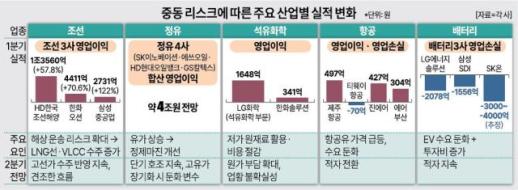 Middle East Conflict Impacts Industries: Shipbuilding and Refining Thrive, Aviation and Battery Sectors Struggle Although the U.S. and Iran have entered negotiations to end hostilities, the domestic industrial sector is expected to feel the impact starting in the second quarter. Industries are experiencing mixed fortunes, with some benefiting while others face challenges. The blockade of the Strait of Hormuz has led to unprecedented logistics disruptions, benefiting the shipbuilding and refining sectors, while the aviation and battery industries are likely to see declines in performance. ◆ Shipbuilding and Refining Benefit from Crisis According to industry reports, shipbuilding has shown the most significant growth due to the Middle East conflict. The blockade has caused a surge in demand for alternative vessels, leading to a substantial increase in high-value ship orders. HD Hyundai's intermediate holding company, HD Korea Shipbuilding & Marine Engineering, reported a 57.8% increase in operating profit for the first quarter, reaching 1.356 trillion won, the highest quarterly profit since its establishment in 2019. Revenue also rose by 20.2% to 8.1409 trillion won, with net profit increasing by 86.6% to 1.1414 trillion won. Hanwha Ocean also saw a 70.6% increase in operating profit to 441.1 billion won, driven by high-value orders for liquefied natural gas (LNG) carriers. Samsung Heavy Industries reported a 16% increase in revenue to 2.9023 trillion won and a 122% rise in operating profit to 273.1 billion won, attributed to increased construction of high-profit vessels amid rising maritime logistics risks. The refining sector has also benefited from sustained high oil prices due to the conflict, improving refining margins as oil product prices rise. Analysts estimate that the combined operating profit of South Korea's four major refiners could reach around 4 trillion won in the first quarter. The petrochemical industry has managed to defend its profits despite soaring raw material costs, leveraging existing low-cost materials to improve performance. LG Chem reported an operating profit of 164.8 billion won in its petrochemical division for the first quarter, while Hanwha Solutions' chemical sector turned a profit of 34.1 billion won, recovering from a loss of 91.2 billion won in the same period last year. Lotte Chemical is also expected to report a profit. ◆ Airlines and Battery Sector Face Challenges Airlines are expected to shift from a brief profit period in the first quarter to significant losses starting in the second quarter. Jeju Air reported an operating profit of 49.7 billion won in the first quarter, but a loss is anticipated in the second quarter. T'way Air's operating loss is expected to widen from 7 billion won in the first quarter to 132 billion won in the second quarter. Jin Air, which posted an operating profit of 42.7 billion won in the first quarter, is projected to incur a loss of 53 billion won in the second quarter. Air Busan is also expected to shift from a profit of 30.4 billion won in the first quarter to a loss of 8 billion won in the second quarter. An airline official stated, "The war has caused international oil prices to soar, directly impacting the cost of aviation fuel, which is based on Dubai crude prices. Aviation fuel is difficult to store in large quantities due to its high risk of deterioration, and refiners are passing on cost increases from the blockade to aviation fuel margins, leading to ongoing losses for airlines since April." The battery sector is also experiencing a downturn. Rising energy prices and prolonged high interest rates due to the conflict have dampened electric vehicle demand, resulting in losses for all three major battery companies. LG Energy Solution reported an operating loss of 207.8 billion won in the first quarter, while Samsung SDI recorded a loss of 155.6 billion won, and SK On is expected to face losses between 300 billion and 400 billion won.* This article has been translated by AI. 2026-05-08 05:03:34
 -
 Tesla extends lead over BMW to top imported car market for third consecutive month SEOUL, May 7 (AJP) - American electric vehicle maker Tesla continued its dominance in South Korea's imported car market in April, selling more than 10,000 vehicles to retain the top spot for a third consecutive month after overtaking Germany's BMW for the first time in February. According to the Korea Automobile Importers & Distributors Association (KAIDA), Tesla led with 13,190 registrations, followed by BMW with 6,658 and Mercedes-Benz with 4,796. China's BYD ranked fourth with 2,023 registrations, while Sweden's Volvo placed fifth with 1,105. Lexus (1,079), Audi (918), Toyota (829), Mini (696) and Porsche (679) rounded out the top 10. Among April's best-selling models were Tesla's Model Y Premium with 9,328 units, and the Model 3 Premium Long Range with 1,481 units. The number of registered foreign passenger vehicles stood at 33,993 in April, up 58.1 percent from 21,495 a year earlier and 0.1 percent from 33,970 in March, bringing the cumulative total for the first four months of this year to 116,113, up 41.3 percent from 82,152 in the same period last year. Electric vehicles accounted for more than half of the total with 18,319 units, followed by hybrids with 12,777, gasoline vehicles with 2,734 and diesel vehicles with 163. Individuals purchased 22,089 units, compared with 11,904 bought by companies. Among individual motorists, those in Gyeonggi Province led with 7,427 units, followed by Seoul with 4,075 and Incheon with 1,732. For corporate purchases, the country's second-largest city of Busan led with 3,798, followed by Incheon with 3,458 and South Gyeongsang Province, which includes several industrial cities, with 2,067. "With some ups and downs among brands, sales remain steady due to strong sales of electric vehicles along with new releases by some automakers," said KAIDA's vice chairman Jeong Yun-young. 2026-05-07 15:17:28
 -
Tesla Tops South Korea’s Imported-Car Sales in April as Market Jumps 58% Tesla again led South Korea’s imported-car market in April, topping 10,000 monthly sales and extending its lead for a third straight month after first surpassing BMW in February. The Korea Automobile Importers & Distributors Association said April registrations of imported passenger cars rose 58.1% from a year earlier to 33,993 units, up from 21,495. That was 0.1% higher than March’s 33,970. Cumulative registrations through April reached 116,113 units, up 41.3% from 82,152 a year earlier. By brand, Tesla ranked No. 1 with 13,190 registrations. Best-selling models included the Model Y Premium (9,328) and the Model 3 Premium Long Range (1,481). BMW followed with 6,658, then Mercedes-Benz with 4,796, BYD with 2,023 and Volvo with 1,105. Lexus (1,079), Audi (918), Toyota (829), Mini (696) and Porsche (679) rounded out the top 10. By engine displacement, vehicles under 2,000cc accounted for 9,087 registrations (26.7%), followed by 2,000cc to under 3,000cc with 5,565 (16.4%), 3,000cc to under 4,000cc with 544 (1.6%) and 4,000cc or more with 478 (1.4%). By fuel type, electric vehicles led with 18,319 registrations (53.9%), followed by hybrids with 12,777 (37.6%), gasoline with 2,734 (8.0%) and diesel with 163 (0.5%). Individuals bought 22,089 vehicles (65.0%), while corporate buyers accounted for 11,904 (35.0%). Among individual purchases, Gyeonggi led with 7,427 registrations (33.6%), followed by Seoul with 4,075 (18.4%) and Incheon with 1,732 (7.8%). For corporate purchases, Busan ranked first with 3,798 (31.9%), followed by Incheon with 3,458 (29.0%) and South Gyeongsang with 2,067 (17.4%). KAIDA Vice Chairman Jeong Yun-young said April registrations held near the previous month’s level despite mixed brand performance, supported by strong EV sales and new-model launches by some brands.* This article has been translated by AI. 2026-05-07 14:06:17
-
 Hyundai Motor Group wage talks begin as unions seek 30% profit bonus, AI job protections Hyundai Motor and Kia are moving into full-scale 2026 wage and collective bargaining talks, with both unions pressing for a performance bonus equal to 30% of last year’s earnings and measures to protect jobs as artificial intelligence is introduced. The talks come as automakers face pressure from the Middle East war and U.S.-driven tariff impacts, and as global rivals intensify productivity competition. Industry officials have warned that conceding to union demands could weaken Hyundai’s competitiveness. According to the business community on Tuesday, Hyundai Motor management and labor held an opening meeting at 10 a.m. at the company’s Ulsan plant to set bargaining direction and a schedule. About 60 people attended, including Hyundai Motor representative Choi Young-il, Korean Metal Workers’ Union Chairman Park Sang-man and Hyundai Motor union branch chief Lee Jong-cheol. A central issue is the size of the performance bonus. The Hyundai Motor union is seeking 30% of last year’s net profit, while the Kia union is seeking 30% of operating profit. That is higher than demands by unions at Samsung Electronics and SK hynix, which have called for bonuses equal to 15% and 10% of operating profit, respectively. Hyundai Motor’s net profit last year was 10.3648 trillion won. A simple estimate puts a 30% bonus at more than 3 trillion won. If the union proposal were fully reflected, employees could receive about 60 million won each, exceeding last year’s 40 million to 50 million won level (a 450% bonus plus a one-time payment of 15.8 million won). The company is also grappling with falling productivity at domestic plants. Last year, Hyundai Motor’s Ulsan plant recorded an HPV — hours per vehicle — of 28 hours, about 60% of the U.S. plant’s 18 hours. HPV measures labor time needed to build one vehicle and is a key productivity indicator. Rivals including Toyota Group at 16 hours, GM at 20 hours and Tesla at 10 hours all posted better HPV figures than Hyundai Motor. Other union demands could further complicate negotiations, including a full monthly salary system, raising bonuses from 750% to 800%, shorter working hours without increased work intensity, and extending the retirement age linked to the start of National Pension benefits, up to 65. The Hyundai Motor union’s conditions tied to rebuilding Plant 1 are also seen as a potential flash point. The union is seeking job guarantees and what it calls fair transfers across all plants. Kia’s union, which is expected to hold its own opening meeting soon, is also calling for mandatory consultation with the union when introducing new technologies such as AI and robots. With the union seeking to discuss wages, working hours, retirement age, employment, new technology, and facility investment as a broad “package deal,” concerns are growing that this year’s talks could be more difficult.* This article has been translated by AI. 2026-05-06 18:03:16
 -
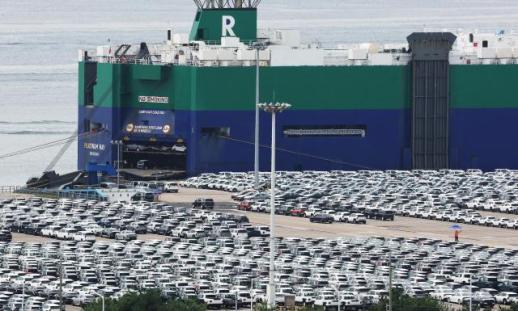 Korea’s 5 Automakers Sell 666,248 Vehicles in April, Down 3.3% on Middle East Uncertainty Uncertainty tied to the war in the Middle East clouded South Korea’s auto exports in April, producing mixed results among the country’s five automakers. Hyundai Motor and Renault Korea posted year-on-year declines amid a gap in new-model launches and weaker exports, while Kia, KG Mobility (KGM) and GM Korea reported gains on steady demand for popular models and more diversified export markets. Industry data released Sunday showed combined global sales by Hyundai, Kia, KGM, GM Korea and Renault Korea totaled 666,248 vehicles in April, down 3.3% from a year earlier. Domestic sales fell 8.8% to 117,314, while overseas sales slipped 2.1% to 548,483. Hyundai sold 325,589 vehicles worldwide in April, down 8% from a year earlier. Domestic sales dropped 19.9% to 54,051, and overseas sales fell 5.1% to 271,538. A Hyundai official said sales weakened as parts supply disruptions at suppliers reduced production of key models such as the Palisade and G80, while demand built up ahead of new-model launches. The official said Hyundai plans to expand sales by rolling out a series of competitive new models this year, starting with a Grandeur facelift. Kia reported global sales of 277,188 vehicles, up 1%. Overseas sales edged down 0.7% to 221,692, but domestic sales rose 7.9% to 55,045, driving overall growth. A Kia official said sales in Arab and Middle Eastern markets fell somewhat due to geopolitical risks, but strong demand in Korea and in overseas regions outside the Middle East supported growth. The official said Kia will seek to sustain momentum with eco-friendly vehicles, including electric and hybrid SUVs. KGM sold 9,512 vehicles in April, up 6.5% from a year earlier, led by export growth. Domestic sales fell 4.6% to 3,382, while exports rose 13.8% to 6,130. Among export models, Musso topped 6,000 units for the first time in four months, since December 2025, when it sold 7,000. A KGM official said exports are recovering, with April sales up 6.5% year-on-year and up 4.7% on a cumulative basis. The official said Musso has been well received at home and drew favorable reviews at a global launch event last month, and KGM plans to expand launches by country and strengthen cooperation with local dealers to increase volumes. GM Korea sold 47,760 vehicles in April, up 14.7% from a year earlier. Domestic sales were 811 and exports were 46,949. It was the company’s third month this year with sales above 40,000 vehicles, following January and March. Renault Korea sold 6,199 vehicles in April, down 40.5% from a year earlier. Domestic sales fell 23.4% to 4,025, and exports dropped 58% to 2,174. A Renault Korea official said sales declined as economic uncertainty persisted, including higher oil prices linked to the Middle East war. The official said the company will increase customer promotions starting in May, citing the proven competitiveness of its HEV E-Tech models. * This article has been translated by AI. 2026-05-04 17:18:36
 -
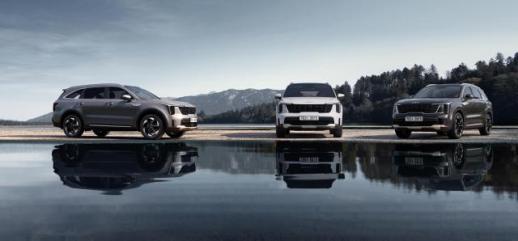 Kia April Global Sales Rise 1% to 277,188 Despite Uncertainty Kia said Sunday that its global vehicle sales in April rose 1% from a year earlier to 277,188 units. Sales in South Korea climbed 7.9% to 55,045, while overseas sales slipped 0.7% to 221,692. Special-purpose vehicle sales totaled 451. The Sportage was Kia’s top-selling model worldwide in April, with 51,458 sold. It was followed by the Seltos with 28,377 and the Sorento with 22,843. In South Korea, the Sorento led sales with 12,078 units. Passenger-car sales totaled 13,441, led by the Ray with 4,877, the K5 with 2,366 and the K8 with 1,461. Recreational vehicle sales totaled 35,877, including the Sorento, the Carnival with 4,995, the Sportage with 4,972 and the EV3 with 3,898. Commercial vehicle sales totaled 5,727, including the PV5 with 2,262 and the Bongo III with 3,335. Overseas, the Sportage was the best-selling model with 46,486 units, followed by the Seltos with 24,797 and the K4 with 18,654. Kia sold 451 special-purpose vehicles, including 63 in South Korea and 388 overseas. A Kia official said sales in Arab and Middle Eastern markets fell somewhat due to geopolitical risks in the region, but strong demand in South Korea and overseas markets outside the Middle East supported overall growth. The official said Kia will seek to sustain momentum with eco-friendly vehicles, including electric vehicles and hybrid SUVs.* This article has been translated by AI. 2026-05-04 16:45:18
 -
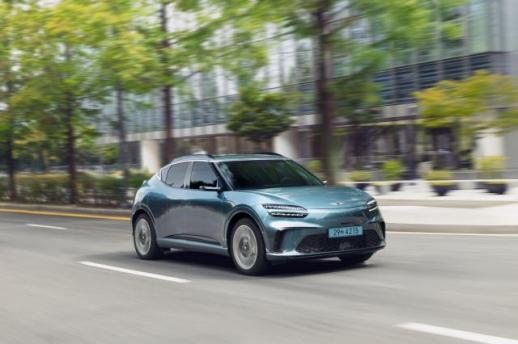 Hyundai Motor April Global Sales Fall 8% to 325,589 Vehicles Hyundai Motor said Sunday that its global vehicle sales in April totaled 325,589 units, down 8% from a year earlier. Domestic sales fell 19.9% to 54,051 vehicles, while overseas sales slipped 5.1% to 271,538, the company said. In South Korea, Hyundai sold 18,326 sedans, including 6,622 Grandeurs, 5,754 Sonatas and 5,475 Avantes. Sales of recreational vehicles totaled 19,284, led by the Santa Fe at 3,902, the Tucson at 3,858, the Palisade at 3,422, the Kona at 2,559 and the Casper at 1,142. The Porter sold 4,843 units and the Staria 3,039. Sales of mid- to large-size buses and trucks totaled 1,562, Hyundai said. Genesis, the company’s luxury brand, sold 6,868 vehicles, including 2,523 G80s, 2,068 GV70s and 1,693 GV80s. A Hyundai official said April sales were hurt by disruptions in parts supplies from partner companies, which reduced production of key models such as the Palisade and G80, and by demand from customers waiting for new models. The official said Hyundai plans to expand sales by rolling out a large number of new models this year, starting with a facelifted Grandeur.* This article has been translated by AI. 2026-05-04 16:26:26
 -
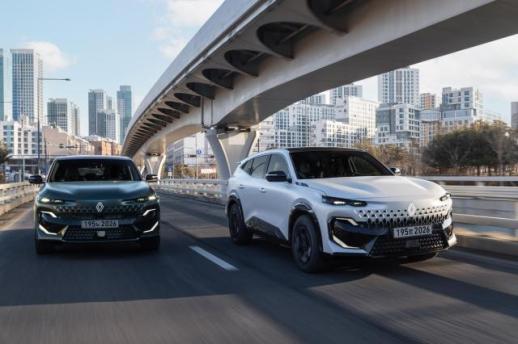 Renault Korea April Sales Drop 40.5% as Exports Slump on Global Uncertainty Renault Korea said Sunday that its total April sales fell 40.5% from a year earlier to 6,199 vehicles, as exports slumped amid worsening international conditions. Domestic sales dropped 23.4% to 4,025 units, while exports plunged 58% to 2,174, the company said. Cumulative sales for January through April totaled 22,820 vehicles, down 20.2% from the same period a year earlier. Hybrids accounted for 3,527 units of April domestic sales, or 87.6% of the total. The FILANTE HEV and Grand Koleos HEV sold 2,139 and 1,337 units, respectively, representing 100% and 86.3% of their model sales. Arkana HEV sales totaled 1,337 units, or 15.2% of overall domestic sales. A Renault Korea official said April results weakened as economic uncertainty persisted, citing higher oil prices linked to the recent war in the Middle East. The official said the company will expand customer promotions starting in May, pointing to the proven competitiveness of its HEV E-Tech models. In April exports, the Grand Koleos posted 894 units, the Arkana 260 and the Polestar 4 1,020, the company said. Another company official said external uncertainty remains but Renault Korea will work to avoid disruptions in export volumes by optimizing production and shipping schedules.* This article has been translated by AI. 2026-05-04 16:15:00
 -
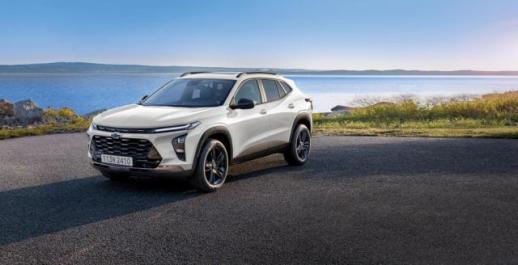 GM Korea April Sales Rise 14.7% to 47,760 Vehicles on Strong Exports GM Korea said Sunday it sold 47,760 vehicles in April, up 14.7% from a year earlier. Domestic sales totaled 811 vehicles, while exports reached 46,949. The company said April marked the third time this year it posted monthly sales above 40,000 vehicles, following January and March. Exports of the Chevrolet Trax Crossover, including derivative models, rose 12.7% from a year earlier to 31,239 units. Exports of the Chevrolet Trailblazer, including derivative models, increased 24.7% to 15,710 units. GM Korea said cumulative sales of the two models have topped 2 million since launch, helping position the operation as a global hub for small SUVs under the Chevrolet brand. The company said it handles the full process for the models — planning, design, engineering and production. Last year, the two models sold a combined 422,792 units in the U.S., accounting for about 43% of the small-SUV segment, it said. Gustavo Colossi, vice president of sales, service and marketing at GM Korea, said the Trax Crossover and Trailblazer are “continuing meaningful results in global markets,” citing their competitiveness and the 2 million cumulative-sales milestone. He said the company will keep working to provide a satisfactory service experience as customers at home and abroad show trust in GM’s products and brand. GM Korea said it will offer various financing programs and provide cash and fuel-cost support in May for customers who buy the Trax Crossover, Trailblazer or the American premium pickup truck Sierra. Chevrolet also said it will run a “Chevrolet Homecoming Festival” for Family Month. Customers who own older Chevrolet models — Spark, Matiz, Damas or Labo — and buy a Trax Crossover or Trailblazer will receive 1 million won in cash support. The company will also provide 300,000 won in cash to customers with a minor or a family member age 65 or older, to small-car owners, and to customers who have owned an aging diesel vehicle for at least five years.* This article has been translated by AI. 2026-05-04 16:00:20
 -
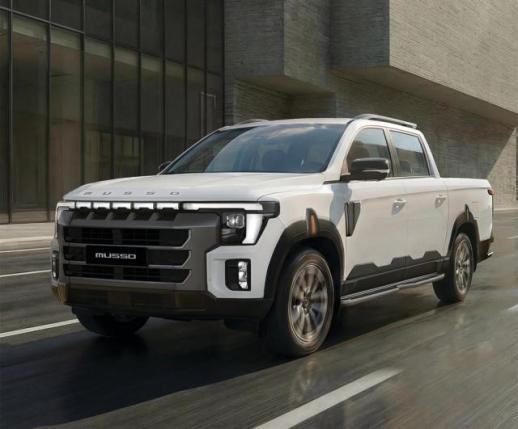 KGM April Sales Rise 6.5% on Strong Exports, Led by Musso KG Mobility, or KGM, said Monday its April sales totaled 9,512 vehicles, up 6.5% from a year earlier, as exports climbed. Domestic sales fell 4.6% to 3,382 vehicles, while exports rose 13.8% to 6,130. KGM said Musso export sales increased, pushing monthly exports above 6,000 for the first time in four months since December, when exports reached 7,000 vehicles. Cumulative sales through April rose 4.7% from the same period a year earlier. By model, the Musso, which began its global market launch last month, sold 1,336 vehicles, and the Torres EVX sold 1,830, helping drive the increase. KGM said it is stepping up efforts to expand volumes by building on export momentum and strengthening its response in the domestic market. On April 28 and 29, KGM invited overseas dealers and reporters from 31 countries to Turkiye, its largest export market, for the Musso global launch and test-drive events. In Germany, it held a launch and test-drive event for the Actyon Hybrid in early April. In March, KGM Chairman Kwak Jae-sun met with its Vietnam KD partner, Kim Long Motors, to inspect production sites and discuss detailed cooperation plans. In South Korea, KGM said it is conducting marketing activities to strengthen brand communication and expand customer engagement, including hosting “KGM Tuning Festival Season 2” and serving as an official sponsor of the “2026 UCI MTB World Series.” A KGM official said exports are recovering and that April sales rose 6.5% from a year earlier, with cumulative sales up 4.7%. The official said the Musso has been well received in South Korea and at last month’s global launch events, and KGM plans to expand rollouts by country and deepen cooperation with local dealers to further increase sales.* This article has been translated by AI. 2026-05-04 15:51:17