


Latest by
-
 Hanwha Galleria Acquires Sunhwa Building for 213.5 Billion Won Hanwha Galleria announced on June 24 that it has signed a memorandum of understanding (MOU) to acquire the Sunhwa Building and six other parcels of land located at 89 Seosomun-ro, Jung-gu, Seoul, from Hanyang Academy and two other parties.According to the Financial Supervisory Service's electronic disclosure system, the planned acquisition amount is 213.5 billion won, which represents 10.6% of the company's total consolidated assets as of the end of last year. The MOU grants Hanwha Galleria the exclusive negotiation rights for the purchase of the building and land.The company believes that the asset's central location in Seoul enhances its future utilization potential. Hanwha Galleria is currently exploring various options for the property, including securing office space. Due diligence is underway, with plans to finalize the contract in the second half of the year.However, the company clarified that while it has secured exclusive negotiation rights through the MOU, no specific details have been finalized yet. Further announcements will be made once the specifics are determined.In related news, Hanwha Galleria reported a consolidated revenue of 126.1 billion won for the first quarter of this year, a decrease of 2.4% compared to the same period last year. Conversely, operating profit surged to 12.3 billion won, marking a 550.8% increase during the same timeframe.* This article has been translated by AI. 2026-06-24 20:32:00
 -
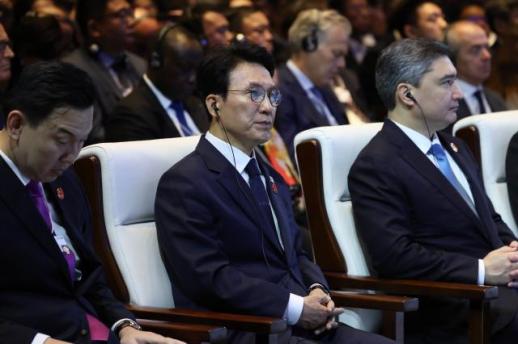 Prime Minister Kim Min-seok Aims for Global AI Leadership Prime Minister Kim Min-seok announced on June 24 that South Korea aims to become a global leader in artificial intelligence (AI). He expressed a desire for the country to achieve top status in the physical AI sector, particularly when combined with manufacturing capabilities. According to Yonhap News Agency, Kim made these remarks during a special speech at the Summer World Economic Forum (WEF) held at the Dalian International Convention Center in China. He noted, "South Korea has traditional manufacturing strengths that can be leveraged in the physical AI field." Kim assessed that South Korea is facing simultaneous demands for an AI transformation and an energy transition. He emphasized that "AI cannot be completed with algorithms alone," stating that the country must develop infrastructure, including semiconductors, data centers, communication networks, and power grids, as well as AI applications and security systems. He highlighted South Korea's unique strengths in these areas. Regarding the social disparities arising from the AI transition, Kim pointed out that South Korean semiconductor companies have recently seen significant profits, raising the question of how to distribute these gains. He acknowledged that there are currently no clear answers and that this is an ongoing concern. He added, "I believe it is our policy obligation to experiment with linking the outcomes of AI transformation to basic income, providing various insights to the international community regarding its advantages and disadvantages." In conclusion, Kim stated, "South Korea aims to expand global cooperation for innovation and create an environment where businesses, investors, and researchers can grow together, contributing to human prosperity through AI. When your bold challenges combine with Korea's capabilities, large-scale innovation and prosperity will follow."* This article has been translated by AI. 2026-06-24 20:16:00
 -
 Shin Hae-sun at the Tom Ford Beauty Taormina Orange photo call SEOUL, June 24 (AJP) - Actress Shin Hae-sun poses at the Tom Ford Beauty Taormina Orange launch photo call. 2026-06-24 20:15:36
 -
 Jihyo at the Tom Ford Beauty Taormina Orange photo call SEOUL, June 24 (AJP) - TWICE member Jihyo poses at the Tom Ford Beauty Taormina Orange launch photo call. 2026-06-24 20:14:20
 -
 Wi Ha-joon at the Tom Ford Beauty Taormina Orange photo call SEOUL, June 24 (AJP) - Actor Wi Ha-jun poses at the Tom Ford Beauty Taormina Orange launch photo call. 2026-06-24 20:12:09
 -
 Lee Soo-hyuk at the Tom Ford Beauty Taormina Orange photo call SEOUL, June 24 (AJP) - Actor Lee Soo-hyuk poses at the Tom Ford Beauty Taormina Orange launch photo call. 2026-06-24 20:09:16
 -
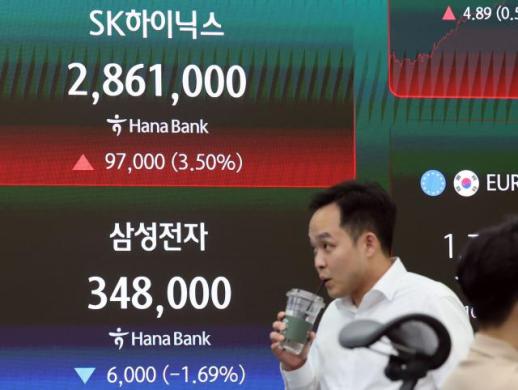 SK Hynix Plans Nasdaq ADR Listing, Aiming for Trading to Begin on July 10 SK Hynix is moving forward with plans to list its American Depositary Receipts (ADR) on the Nasdaq, targeting a launch date of July 10. On June 24, SK Hynix announced that it would disclose details regarding the ADR listing following a board resolution and plans to submit a securities registration statement to the Korea Exchange. The company also intends to file a registration statement with the U.S. Securities and Exchange Commission (SEC) in line with the local market opening. The ADR is set to debut on the Nasdaq on July 10. According to the provisional schedule outlined in the securities registration statement, the registration will take effect on July 6, initiating the formal public offering process alongside the submission of the investment prospectus. SK Hynix plans to begin the demand forecast for institutional investors on July 6, which will inform the final offering price set for July 10 (July 9 U.S. time). The company aims to finalize underwriting agreements on the same day. During this period, it will conduct a roadshow targeting global institutional investors across the U.S., Europe, and Asia. Once all preparations are complete, the ADR will officially list on the Nasdaq and commence trading on July 10 (U.S. time). The expected date for payment of the offering proceeds is July 14. However, the SEC's review process for the listing is still ongoing. The disclosed schedule is provisional and may change based on the approval timelines of regulatory bodies in both Korea and the U.S. SK Hynix noted that the effectiveness of the securities registration statement in Korea and the U.S. will indicate the completion of the SEC review. The confirmed ADR listing date will be the next business day after the issuance conditions are finalized. To facilitate this listing, SK Hynix plans to issue new shares amounting to a maximum of 17.79 million, representing approximately 2.5% of its total outstanding shares. Based on the previous day's closing price, this issuance could be valued at around 45.45 trillion won. However, the company clarified that the exact number of shares to be issued will depend on market conditions and the results of the demand forecast, and is not yet finalized. Additionally, SK Hynix intends to use the funds raised from this listing for construction and facility investments related to its first-phase semiconductor cluster in Yongin, as well as for the Cheongju P&T7 advanced packaging fab and machinery.* This article has been translated by AI. 2026-06-24 19:40:00
 -
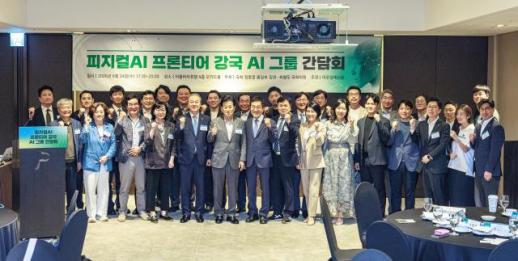 South Korea Aims to Become a Leader in Physical AI Experts from the South Korean government, academia, major conglomerates, and startups gathered to discuss the future of the artificial intelligence (AI) industry and collaboration strategies. The 'Physical AI Frontier' meeting, hosted by Minister of Unification Jeong Dong-young and Rep. Choi Hyung-do, took place on June 24 at The Plaza Hotel in Seoul. The event aimed to outline South Korea's future strategies regarding AI industry policies and legislative directions in the era of physical AI. Attendees included political figures and representatives from companies such as SK Telecom, LG, Doosan Robotics, and NC AI. In his opening remarks, Minister Jeong stated, "Over the past year, physical AI has become a key topic in global technological competition. The government and the National Assembly must support the efforts of large corporations and startups to establish South Korea as the world's leading hub for physical AI." He further noted that at the 2024 forum, the need for securing graphics processing units (GPUs) and focusing on physical AI, as well as the passage of a fundamental AI law, were discussed. "Since then, the speed of policy implementation has increased with GPU budget allocations and exemptions from preliminary feasibility studies. I hope the companies and startups gathered here can grow into global Korean tech giants, with Jeonju, Gimje, and Saemangeum as their base," he emphasized. Rep. Choi Hyung-do remarked, "Physical AI is a bipartisan national project, and I will work in the National Assembly to help achieve our goal of becoming one of the top three AI nations through physical AI." Kwak Young-gil, chairman of Aju News Corporation, stated, "AI must integrate both intelligence and physical capabilities. In the era of physical AI, South Korea can gain a competitive edge by combining semiconductors and energy resources. Saemangeum is an ideal location for building AI data centers and physical AI infrastructure due to its land availability, permitting conditions, and renewable energy potential." He also urged the government to facilitate research and development funding and infrastructure to allow companies to commercialize freely. Shin Hyung-sik, the chair of the transition committee for the Jeonbuk Special Self-Governing Province, expressed, "Physical AI could become a new cash cow for Jeonbuk and South Korea. Just as semiconductors elevated Korea to developed nation status, physical AI will position Korea as a leading advanced country. We will do our utmost to ensure Jeonbuk leads in future industries." Following this, Yang Oh-bong, president of Jeonbuk National University, delivered a special lecture on 'The Era of Physical AI and South Korea's Future Strategy.' Jeonbuk National University established a 'Physical AI Demonstration Lab' in January, serving as a starting point and hub for manufacturing innovation in physical AI. The lab aims to enhance capabilities in smart processes and autonomous driving, where AI directly controls and demonstrates in industrial settings. The university is advancing plans for living labs, proof of concept (PoC) facilities, heterogeneous robot collaboration software, and testbed construction. Ultimately, the goal is to establish a foundation for AI dark factories that enable automation and intelligence in manufacturing. President Yang stated, "If generative AI is like an AI with a voice, then physical AI encompasses the brain and limbs. As a manufacturing powerhouse, South Korea must focus on manufacturing AI and AI dark factories." He added, "The physical AI market is expected to grow to tens of trillions of dollars, making swift decision-making and talent acquisition crucial. The key to success will be how well we cultivate and secure talent that understands robotics, AI, and manufacturing together." Yang also mentioned that Jeonbuk National University has completed the development of PoC facilities and software within four months and has implemented heterogeneous robot collaboration and process operation systems. "We aim to establish AI dark factory demonstration infrastructure based on seven zones and 30 units in the future," he said. He concluded, "Jeonbuk National University has already secured a significant portion of the necessary space, allowing us to start projects simultaneously this year. We hope companies will leverage the infrastructure of Jeonbuk National University and Jeonbuk to engage in physical AI demonstrations and commercialization." 2026-06-24 19:12:00
 -
 SK hynix takes fight with Samsung to Wall Street via $33 billion ADR issue *Updated with additional information SEOUL, June 24 (AJP) -SK hynix is launching a roughly $33 billion public offering tied to a Nasdaq listing of American Depositary Receipts (ADRs), a move that could globalize its shareholder base and intensify its competition with home rival Samsung Electronics beyond memory chips and into the battle for global capital. In a regulatory filing after the Seoul market closed Wednesday, the company said its board approved a plan to list ADRs on the Nasdaq Global Select Market, with subscription and payment scheduled for July 10 and July 14, respectively. The offering is estimated at 45.45 trillion won ($32.8 billion), based on a maximum issuance of 17.79 million new common shares and Tuesday's closing price of 2.555 million won per share. The conversion ratio is set at one ADR for every 0.1 common share. The final offering price and aggregate deal size will be determined through a global bookbuilding process with institutional investors. SK hynix shares rose 4 percent in after-hours trading after closing Wednesday at 2.58 million won. Samsung Electronics also climbed 9.19 percent after ending the regular session 9.84 percent higher at 349,500 won. The chipmaker said all proceeds raised in the U.S. capital market will be allocated to facilities and infrastructure expansion. The move comes as the longtime No. 2 player in DRAM has overtaken Samsung Electronics in market value at home earlier this week, propelled by its dominance in high-bandwidth memory (HBM) chips that power nearly all AI accelerators produced by Nvidia and other major chip designers. The stock-friendly announcement follows Samsung Electronics' unveiling of a $65 billion buyback program on Wednesday to bolster shareholder returns and support employee compensation that helped to reclaim its No. 1 rank on the KOSPI the chipmaker surrendered for two earlier days to SK hynix. An ADR listing could fundamentally broaden SK hynix's investor base. Currently, many overseas investors gain exposure to the company through Korea-focused funds such as the iShares MSCI South Korea ETF, which face concentration limits on individual holdings. A Nasdaq presence would allow SK hynix to be purchased directly by a far broader universe of investors, including semiconductor exchange-traded funds, AI-focused portfolios and global growth funds that currently have limited access to Korean equities. Analysts have also raised the possibility of eventual inclusion in the Philadelphia Semiconductor Index, one of the world's most closely watched semiconductor benchmarks. If HBM established SK hynix's AI credentials, an ADR listing could globalize its shareholder base. The company would no longer compete merely as a Korean stock, but increasingly alongside global semiconductor leaders for international capital. Launched in 1993, the Philadelphia Semiconductor Index tracks the 30 largest U.S.-listed semiconductor companies. Once anchored by industrial giants such as Intel and Texas Instruments, the AI era has reshaped its composition. Today, heavyweight constituents include Nvidia, Advanced Micro Devices, Broadcom, Taiwan Semiconductor Manufacturing Co. and ASML. SK hynix said the fresh capital will finance construction of the first fabrication plant at the Yongin Semiconductor Cluster, as well as building, equipment and related expenses for the P&T7 advanced packaging fab in Cheongju. Part of the proceeds will also be used to procure extreme ultraviolet lithography equipment and related manufacturing infrastructure, key to next-generation semiconductor production. The joint bookrunners for the international offering are BofA Securities, Citigroup Global Markets, Goldman Sachs and J.P. Morgan Securities. Citibank will serve as the depositary bank, while the Korea Securities Depository will act as custodian for the underlying local shares. The move formalizes a series of regulatory clarification filings that have been tracked since late 2025 regarding the chipmaker's potential U.S. listing. Company officials said the disclosed dates and financial figures remain tentative and could change depending on the outcome of the upcoming global bookbuilding process. The new fundraising scheme arrives as HBM race intensifies on home turf. Samsung Electronics earlier this week announced it has shipped roughly $1 billion worth of sixth-generation HBM4 chips over the past four months since mass production began in February. SK hynix has also said it has shipped out HBM4 to its clients. SK hynix currently commands roughly 50 to 55 percent of the HBM market, while Samsung Electronics holds around 35 to 40 percent. 2026-06-24 18:51:06
 -
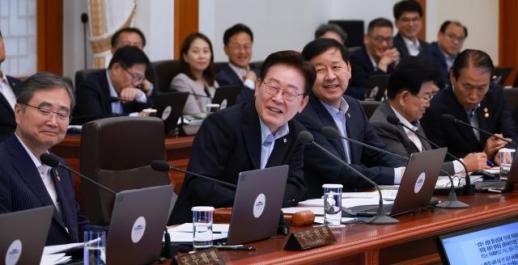 Speculation Grows Over Cabinet Reshuffle Ahead of Lee Administration's Second Term As the Lee administration prepares for its second-term cabinet formation, speculation is rife regarding personnel changes within the economic ministries. The appointment of Han Seong-sook as a candidate, coinciding with Prime Minister Kim Min-seok's bid for party leadership, has set the stage for potential shifts in key economic positions, including the Deputy Prime Minister for Economy. According to sources in the government and political circles on June 24, the presidential office is reviewing personnel adjustments to boost governance momentum in the second year of its term following local elections. This reshuffle is seen as a significant step in establishing a "second-term governance system" through the reallocation of ministerial roles. The economic ministries are directly impacted by this personnel flow. With major issues such as managing economic recovery, fiscal operations, industrial transitions, agricultural reforms, and labor matters at stake, there is discussion of a "partial reassignment" that balances policy continuity with renewal, rather than a complete overhaul. Deputy Prime Minister and Minister of Economy and Finance Koo Yun-cheol has led the economic team, addressing key issues like economic response, budget and tax management, and inflation control. While recent improvements in macroeconomic indicators, such as a rebound in growth rates and a strong stock market, are seen as achievements, challenges remain, including high interest rates, high exchange rates, inflation pressures, and rising national bond yields. There are simultaneous discussions about Koo's retention and potential reassignment. Given the numerous pressing issues, including the direction of economic policy for the second half of the year, tax reforms for the upcoming year, and management of the national bond market, some analysts predict a preference for continuity. However, there are also speculations that a change in the Deputy Prime Minister position could occur as part of a broader restructuring of the economic team. In relation to the next economic team, the future of Minister of Trade, Industry and Energy Kim Jeong-kwan is also a variable. Once considered a candidate for Deputy Prime Minister, recent sentiment has shifted towards retaining him. With numerous challenges facing the ministry, including energy supply responses due to conflicts in the Middle East, managing export recovery, U.S. trade pressures, and restructuring supply chains in advanced industries, maintaining the current leadership appears likely. The appointment of the Chief of the Office for Government Policy Coordination is also intertwined with personnel changes in the economic ministries. This position is responsible for monitoring the implementation of national tasks across ministries and coordinating policies. Candidates such as Lim Gi-geun, Vice Minister of the Ministry of Strategy and Finance, and Lee Hyung-il, First Vice Minister of the Ministry of Economy and Finance, have been mentioned. Recently, there has been a trend favoring candidates with experience in budget and national task management. There is also interest in whether Minister of Agriculture, Food and Rural Affairs Song Mi-ryung, appointed during the previous administration, will be retained. While her retention is being discussed, there is speculation about the possibility of a political figure entering the cabinet. Potential candidates include Democratic Party lawmakers Oh Gi-koo and Yoon Jun-byeong. Oh, who chairs the National Assembly's Agriculture, Food, Rural Affairs, Oceans and Fisheries Committee, is recognized for his knowledge of agricultural issues and legislative processes, while Yoon is noted for his proactive stance on structural reform topics such as agricultural cooperative law reform and land surveys. The Ministry of Climate, Energy and Environment and the Ministry of Employment and Labor are also among the departments that could see changes. Initially, there were rumors about Minister Kim Sung-hwan returning to his party, but recent sentiment leans towards his retention. Given that the ministry is directly responsible for implementing the president's climate and energy transition plans, adjustments at the deputy minister level are considered more likely than a ministerial change. The Ministry of Labor has not yet shown clear signs of a potential change. This is due to the politically sensitive nature of issues such as retirement age extension, working hours, and labor relations. A political insider noted, "The second-term cabinet is likely to reshape the governance framework for national tasks. Given the importance of policy continuity in the economic ministries, it is expected that there will be discussions about partial ministerial changes or retention rather than a complete overhaul."* This article has been translated by AI. 2026-06-24 18:20:00