

Journalist

Jinkyu, Myung
hisunny20@ajunews.com
-
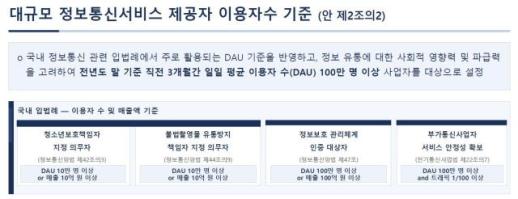 Combatting Fake News: Platforms with 1 Million Users and 100,000 YouTubers Targeted The Broadcasting and Media Commission (BMC) has unveiled a revised enforcement decree of the Information and Communications Network Act aimed at curbing the illegal distribution of false information. The key points of the revision include targeting platforms with an average daily user count (DAU) of over 1 million and specifying criteria for increased damages applicable to creators with over 100,000 subscribers. On May 21, the BMC held a discussion on the revised enforcement decree at the Broadcasting Hall in Mokdong, Seoul, focusing on systematic responses to false information. A major point of contention is the definition of a "large-scale information service provider." The BMC has set the threshold for regulation at platforms with a DAU of over 1 million in the past three months. Shin Young-kyu, head of the BMC's Broadcasting and Telecommunications User Policy Bureau, explained, "We chose DAU over monthly active users (MAU) due to its social impact and existing legislative precedents." The regulation will apply to social networking services (SNS), online communities, video-sharing platforms, and open markets that facilitate information exchange among users. Shin noted, "Private conversations, such as KakaoTalk group chats, are not included, but open chat rooms are subject to regulation." The criteria for increased damages will also be limited to revenue-generating information publishers with a certain level of influence. The enforcement decree defines those who earn income from delivering facts and opinions through advertisements or sponsorships and have posted information at least three times in the last three months. For SNS creators, including those on YouTube and Instagram, the threshold is set at 100,000 subscribers and a minimum of 100,000 views in the previous three months based on content virality standards. Additionally, the role of the "Transparency Center," which is being promoted as a key support organization for responding to false information, was also a significant topic of discussion. The BMC plans to operate the Transparency Center as a hub connecting the government, platforms, and fact-checking organizations. In line with the revised Information and Communications Network Act, the government will not directly assess the authenticity of posts or decide on their removal. Instead, the focus will be on supporting private fact-checking and platform self-regulation both technically and administratively. The Transparency Center will also analyze "transparency reports." The BMC intends to review the number of reports and processing cases published by platforms, as well as the outcomes of appeals, to evaluate the effectiveness of responses to false information. The BMC plans to gather public feedback on the legislative proposal until May 27, followed by regulatory review and committee approval in early to mid-June, with a goal of obtaining Cabinet approval by the end of June.* This article has been translated by AI. 2026-05-21 19:43:23
 -
 Implementation of AI Basic Law to Facilitate Public AI Adoption and Research The Ministry of Science and ICT (MSIT) is preparing to implement the revised "Basic Law on the Advancement of Artificial Intelligence and the Establishment of Trust" (AI Basic Law) in July, focusing on refining subordinate regulations. The aim is to strengthen the institutional foundation for fostering the AI industry by expanding the adoption of AI in the public sector, supporting vulnerable groups, and establishing AI research institutes. On May 21, the MSIT announced that it has prepared a draft of the "AI Basic Law Enforcement Decree" and will begin the legislative notice process. The enforcement decree is set to take effect alongside the revised AI Basic Law on July 21. Key provisions of the revised AI Basic Law include: the establishment of a National AI Strategy Committee, promotion of AI adoption and utilization in the public sector, legal basis for the establishment and operation of AI research institutes, support for accessibility and costs for vulnerable groups, encouragement of AI startups, support for AI professionals, and provision of public data for training purposes. The draft enforcement decree specifies the scope of vulnerable groups, which now includes not only individuals with disabilities, the elderly, basic livelihood recipients, and those in the near-poverty level, but also women with career interruptions, job seekers, employees of small and medium-sized enterprises outside the capital region, and agricultural and fishing workers. This measure addresses the potential for high-cost, high-performance AI services to create new social disparities. The decree also defines the range of AI products and services prioritized in the public procurement market. Products and services verified for AI technology application by the Korea Artificial Intelligence Promotion Association and those separately announced by the MSIT will be included. The Korea Telecommunications Technology Association (TTA) will conduct the technical review. Support for the costs of using AI products and services has been expanded. In addition to vulnerable groups such as individuals with disabilities, the elderly, and job seekers, support will also be available for talented individuals from universities in non-capital regions and those in science and engineering fields, within budget limits. Procedures for utilizing venture investment funds to promote AI startups are also included in the enforcement decree. Heads of central administrative agencies can request the Korea Venture Investment Corporation to establish investment plans for the AI industry after consulting with the Ministry of SMEs and Startups. The criteria for establishing and operating AI research institutes have been clarified. Various entities, including universities and companies, can establish AI research institutes with the permission of the MSIT, and the decree specifies the requirements for establishment and national support. Following the legislative notice, the MSIT plans to finalize the enforcement decree through regulatory and legal reviews, cabinet meetings, and government council discussions. Kim Kyung-man, head of the AI Policy Division at the MSIT, stated, "The implementation of the revised law is expected to further strengthen the legal support for the expansion of AI utilization and the development of the industry. We will actively support the advancement of the AI industry through the expansion of AI products and services in the public procurement market and the establishment of AI research institutes." Meanwhile, South Korea's AI Basic Law passed the National Assembly in December 2024. The AI Basic Law came into effect on January 22 of this year, making South Korea the second country in the world to enact such legislation after the European Union. Under the AI Basic Law, the Minister of Science and ICT is required to establish a basic AI plan every three years. Notably, sectors that significantly impact citizens' lives, such as healthcare, autonomous driving, and investment services, are classified as high-impact AI and are subject to additional responsibilities for operators. * This article has been translated by AI. 2026-05-21 13:49:59
 -
 KT Establishes Privacy Protection Advisory Committee with External Experts KT announced on May 21 that it will establish a "Privacy Protection Advisory Committee" to address changes in the privacy management landscape resulting from advancements in artificial intelligence (AI) technology and the expansion of data-driven services. The committee aims to strengthen governance focused on proactive privacy management. It seeks to establish privacy protection standards and measures that align with customer expectations, ensuring objectivity and reliability. To achieve this, KT has invited privacy protection experts from various fields, including policy and law, technology and security, industry and services, and ethics and user protection, to serve as advisory committee members. The company plans to continue expanding the committee in the future. Committee members include Yeom Heung-yeol (Professor Emeritus, Soonchunhyang University), Lee Hee-jung (Professor, Korea University Law School), Ryu Jae-cheol (Professor, Chungnam National University Department of Computer Convergence), Son Ki-wook (Professor, Seoul National University of Science and Technology Department of Computer Engineering), Shim Sang-hyun (Secretary General, Korea CPO Forum), and Kim Kyung-ha (CEO, J&Security). The committee will provide advice on enhancing compliance and accountability as data processors, ensuring the safety of personal information and the appropriateness of data usage, and improving systems to prevent and mitigate personal data breaches. KT plans to launch the committee within this month and begin full operations. KT CEO Park Yoon-young will attend the launch ceremony to present certificates to the advisory members and discuss the direction for enhancing the privacy protection system. Kim Chang-o, KT's Chief Privacy Officer, stated, "In the AI era, securing customer trust in privacy protection is as crucial as the innovation in data utilization. We will work closely with external experts to establish a global-level privacy protection system and create a trustworthy data environment for our customers." Meanwhile, LG Uplus established an "Information Security Advisory Committee" composed of external experts in the cybersecurity field in 2023. SK Telecom is receiving advice from the Information Security Innovation Special Committee established by the SK Group last year.* This article has been translated by AI. 2026-05-21 09:24:55
 -
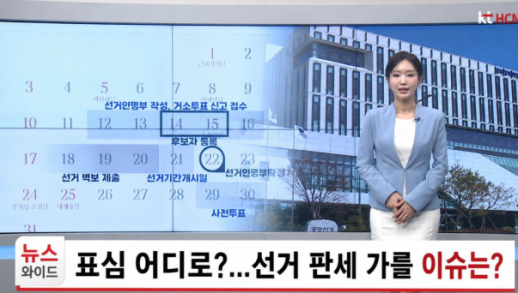 KT HCN to Broadcast Ulleung County Mayor Candidate Debate KT HCN announced it will broadcast a debate featuring candidates for the Ulleung County mayoral election on May 26 at 8 p.m. on its local channel. The debate will allow candidates to express their positions on local issues, key pledges, and governance direction. The company aims to provide Ulleung County voters with an opportunity to evaluate the candidates ahead of the June 3 local elections. Due to the island's geographical isolation, travel conditions can vary based on weather and ferry operations, making it difficult for national election broadcasts to adequately cover local issues and candidates. KT HCN plans to deliver the debate live from Ulleung Island, ensuring that residents receive timely information relevant to their daily lives. The company emphasized that this broadcast reflects its commitment to fulfilling its public service obligations as a cable TV provider, continuing to deliver essential information to the community despite challenging business conditions. Choi Kwang-cheol, CEO of KT HCN, stated, "Since 2018, KT HCN has been broadcasting Ulleung County mayoral candidate debates live to enhance election information accessibility for island voters. We are preparing this broadcast to allow Ulleung voters to directly compare the candidates' policies and visions in this local election." He added, "We will continue to ensure that necessary election information is delivered equitably to island communities, fulfilling our public role as a cable TV provider." Candidates for the Ulleung County mayor include Jeong Seong-hwan from the Democratic Party, Kim Byeong-su from the People Power Party, independent candidates Nam Han-gwon and Nam Jin-bok.* This article has been translated by AI. 2026-05-21 08:22:28
 -
 South Korea to Join OpenAI's Trust-Based Cyber Access Initiative The South Korean government is moving forward with its participation in OpenAI's global AI security collaboration framework known as Trust-Based Cyber Access (TAC). Next week, discussions will take place at OpenAI's headquarters to finalize the scope and operational details of TAC participation. According to industry sources on May 19, the Ministry of Science and ICT plans to meet with OpenAI next week to clarify the direction of TAC cooperation. A senior official from the ministry stated, "While nothing is finalized, we have reached a broad consensus, and specific details will be discussed in a meeting with Jason Kwon, OpenAI's Chief Strategy Officer, next week." During a workshop on OpenAI security held the previous day, both public and private sectors largely agreed on the necessity of TAC collaboration. A ministry official noted, "This workshop was initiated at OpenAI's request, and we view it positively." Participants in TAC will be granted limited access to OpenAI's security-focused AI models. Currently, global security firms such as CrowdStrike, Palo Alto Networks, Cloudflare, Fortinet, Akamai, and Zscaler are involved in TAC, integrating and utilizing OpenAI models within their security systems. The government's push for TAC cooperation is seen as a response to the evolving international AI security landscape. According to the Software Policy Research Institute, the White House is intensifying efforts to manage AI and cybersecurity as part of its national security strategy. There is a clear trend toward protecting AI models, data centers, and security systems as core assets. The U.S. is also working on building AI-based threat detection and defense systems, expanding high-security AI data centers, internalizing AI security, and establishing a framework for sharing information on AI vulnerabilities. Experts have positively assessed the potential of TAC collaboration to enhance South Korea's capabilities in responding to cyber threats. Eom Heung-yeol, a professor at Soonchunhyang University, stated, "By sharing information with OpenAI, we can secure vulnerability data and patch methods, which could help block AI-based attack codes and improve security response systems." However, he cautioned against creating a separate organization for addressing new threats, suggesting that it would be more practical to enhance the existing Cyber Threat Information Analysis and Sharing (C-TAS) system operated by the Korea Internet & Security Agency (KISA). Meanwhile, the government is also in discussions to participate in an AI-based security cooperation program called Project Glasswing with Anthropic. However, given that there are no national-level participation examples and that the only overseas research institute involved is the UK AI Safety Research Institute, actual collaboration may prove challenging.* This article has been translated by AI. 2026-05-19 16:52:12
 -
 KT Implements Quantum-Resistant Security System for Defense KT announced on May 19 that it will apply quantum-resistant encryption (PQC) to key defense systems as part of the "2026 Quantum-Resistant Encryption Pilot Transition Support Project" organized by the Ministry of Science and ICT and the Korea Internet & Security Agency (KISA). The company is conducting a PQC demonstration project in collaboration with the Ministry of National Defense and the Army Information and Communications School, forming a consortium with Daeyoung S-Tech and ESI. In this project, KT will implement quantum-resistant encryption modules across critical infrastructure segments, including the smart unit platform (edge) to user PCs, CCTV to network video recorders (NVR), drones to ground control systems (GCS), and 5G routers to core networks. The performance and applicability of these systems will be validated in real battlefield environments. The smart unit platform is a crucial area for PQC transition, as it integrates equipment from different manufacturers and multi-layered network structures. KT plans to apply and validate quantum-resistant encryption throughout the entire lifecycle of defense data from end to end. Based on the verification results and operational experience gained from this project, KT aims to expand the application of quantum-resistant encryption beyond defense to public and private sectors. The company will also continue to develop next-generation security service models that meet global security standards. Jeon Myung-jun, Executive Vice President of KT's Enterprise Services Division, stated, "By carrying out pilot projects in the defense sector, we will enhance the reliability of South Korea's communication and security technologies and lead the establishment of a secure AX environment." Meanwhile, according to global market research firm IQT, the global quantum technology market is expected to grow to 135.8885 trillion won by 2030, with quantum cryptography projected to achieve an average annual growth rate of 59%.* This article has been translated by AI. 2026-05-19 11:36:24
 -
 Musk Loses Lawsuit Against OpenAI as Anthropic Acquires Stainless A U.S. jury has dismissed Elon Musk's lawsuit against OpenAI. At the same time, competitor Anthropic has acquired the AI development infrastructure company Stainless to strengthen its API and agent ecosystem. "Lawsuit filing deadline has passed"… Musk loses against OpenAI According to reports from TechCrunch and other outlets on May 19, a jury in a California federal court ruled in favor of the defendants in Musk's lawsuit against Sam Altman, Greg Brockman, OpenAI, and Microsoft on May 18. The jury unanimously determined that "the deadline for filing the lawsuit had already passed." Musk had claimed that the co-founders of OpenAI transitioned the nonprofit research organization into a for-profit entity to pursue private interests. He accused OpenAI of "stealing from charity" and pointed out that Microsoft was deeply involved in the commercialization process. During the trial, testimonies regarding the background of OpenAI's organizational transition and key figures in Silicon Valley were presented, but the main focus was on the legal statute of limitations. OpenAI argued that the damages Musk claimed had occurred before 2021, asserting that the lawsuit itself was time-barred, a position the jury accepted. Judge Yvonne Gonzalez Rogers stated immediately after the verdict that "there was sufficient evidence to support the jury's decision." Industry observers noted that this ruling significantly alleviated major legal uncertainties that could have impacted OpenAI's restructuring or initial public offering (IPO). OpenAI criticized Musk's claims as "unfounded post hoc assertions," stating they were merely attempts to disrupt a competitor. Microsoft also affirmed its commitment to continue AI collaboration for individuals and businesses worldwide. Musk promptly expressed his intention to appeal. He wrote on his X (formerly Twitter) account, "It is clear that Altman and Brockman used the charity to pursue personal gain, and I will appeal to the Ninth Circuit Court of Appeals to protect the U.S. donation and charity system." Anthropic acquires Stainless… internalizing SDK infrastructure On the same day, AI company Anthropic officially announced its acquisition of the developer tools startup Stainless. While the specific acquisition amount was not disclosed, reports suggest the deal exceeds $300 million (approximately 410 billion won). Founded in 2022, Stainless has gained attention for its technology that automatically generates and manages software development kits (SDKs) for various programming languages, including Python, Java, Go, and TypeScript, based on API specifications. Major AI companies, including OpenAI and Google, have reportedly utilized this solution. A key advantage is its ability to automatically maintain and update SDKs required for AI agents to connect with external services. This capability reduces repetitive SDK management tasks, enhancing development efficiency and establishing itself as a core infrastructure in the AI API ecosystem. Following the acquisition, Anthropic plans to gradually phase out the hosting products operated by Stainless. Industry analysts view this as effectively internalizing a critical development infrastructure previously used by competitors. Anthropic explained, "We have been building official SDKs using Stainless technology since the early API operational phase." Alex Lattre, founder of Stainless, also noted, "Seeing the results produced by developers in the Claude ecosystem made collaboration between our companies a natural choice."* This article has been translated by AI. 2026-05-19 11:22:25
 -
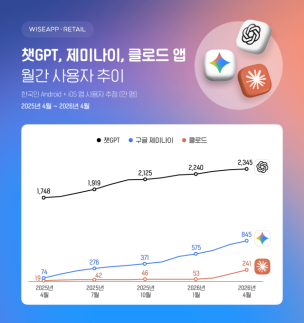 ChatGPT Ranked as Most Used AI App in South Korea in April, with Higher Female User Base Last month, ChatGPT emerged as the most widely used generative AI app among South Koreans, followed by Gemini and Claude. According to data from WiseApp and Retail, a market and competitor analysis solution based on real-time app and payment data, ChatGPT recorded 23.45 million monthly active users (MAU) in April. Gemini had 8.45 million users, while Claude reached 2.41 million. Among these, Claude experienced the most significant growth compared to the same month last year, with a user growth rate of 1148%. Gemini followed with a 1034% increase, and ChatGPT saw a 34% rise. A comparison of the gender distribution among the three apps revealed that ChatGPT had a higher proportion of female users. In contrast, Gemini and Claude had a higher percentage of male users, with Claude having the highest male user ratio at 62.1%. In terms of age demographics, ChatGPT was most popular among users in their 40s, while Gemini and Claude attracted a larger share of users in their 20s. ChatGPT is a generative AI chatbot service developed by OpenAI, launched on November 30, 2022. Claude is a large language model (LLM) developed by Anthropic, and Gemini is Google's LLM, both of which were released in March 2023.* This article has been translated by AI. 2026-05-19 10:37:29
 -
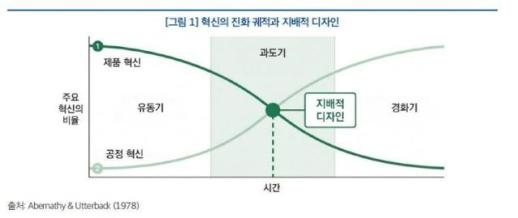 AI Dominance Driven by Infrastructure Competition: GPU, HBM, and Power are Key Factors The generative artificial intelligence (AI) industry has not yet fully matured, and it is currently in a transitional phase just before the emergence of a 'dominant design.' As transformer-based large language models (LLMs) rapidly converge to become the de facto standard, the competition for securing graphics processing units (GPUs), high-bandwidth memory (HBM), and power infrastructure is becoming increasingly important. On May 19, the Software Policy Research Institute (SPRI) released a report titled "Software-Centric Society," which assessed the current state of the AI industry as entering a transitional phase in the late fluid period. The term 'dominant design' refers to a phenomenon where a specific technological structure becomes the market standard, altering the competitive landscape of the industry. The report cites the Ford Model T in the automotive industry and the Apple iPhone in the smartphone market as prime examples. Once a particular design establishes itself as the industry standard, the focus of competition shifts from new features to production efficiency and ecosystem competition. The report indicates that the structure of transformer-based LLMs is converging to become the de facto standard in the AI industry. It states, "Almost all major AI companies have adopted transformer-based large language model structures," noting that the industry is currently converging on a specific design at the architectural level. However, it has not yet reached an official standardization phase. There is currently no official API or architectural specifications from international organizations such as the Organization for Economic Cooperation and Development (OECD), the International Organization for Standardization (ISO), or the International Telecommunication Union (ITU), and the revenue models of AI companies have not yet stabilized. In fact, the report highlights that Anthropic spent approximately $4.1 billion solely on research and development computing costs in 2025. The report particularly identifies infrastructure bottlenecks as a key variable in the competition within the AI industry. Currently, HBM supply is concentrated among a few companies, including SK Hynix, Samsung Electronics, and Micron, while systems based on NVIDIA's H100 and H200 have effectively become the standard for AI computing. Power supply issues are also emerging as a critical factor. A single AI training cluster requires hundreds of megawatts (MW) to gigawatts (GW) of power, making transmission capacity, cooling facilities, and power supply capabilities significant constraints on model expansion. The report predicts, "The future dominant design will likely be influenced not only by the excellence of model design but also by the accessibility of infrastructure resources." Furthermore, the report forecasts that if computing efficiency, official standardization, infrastructure supply stabilization, and revenue model stabilization occur simultaneously within the next 2 to 3 years, the transformer-based AI model paradigm is likely to establish itself as the dominant design across the industry.* This article has been translated by AI. 2026-05-19 09:03:35
 -
 Telecom Companies Shift Focus to Power Business The rise of generative artificial intelligence (AI) has led to a significant increase in power demand for AI data centers (AIDC), prompting the three major telecom companies in South Korea to expand their power-related businesses. On May 18, the telecom giants announced their entry into the renewable energy resale market following their AIDC initiatives. They are utilizing AI technology to operate smart grids and virtual power plants, while also developing and testing intelligent power grid solutions. SK Telecom (SKT) has proactively pursued renewable energy procurement at the group level. In 2023, SKT signed a direct power purchase agreement (PPA) with SK E&S and eight subsidiaries of the SK Group for an annual supply of 537 gigawatt-hours (GWh). This agreement will provide solar-based renewable energy to major business sites and data centers for the next 20 years, starting this year. While SKT does not sell electricity directly, it is exporting a value chain that combines global data centers with generated power, leveraging its infrastructure and operational expertise in the domestic market. LG Uplus is also focusing on long-term renewable energy procurement. In January, LG Uplus signed a PPA with GS Construction to receive power generated from a solar power plant in Taean, South Chungcheong Province, for approximately 20 years, with an annual supply of about 17 GWh. The company aims to enhance its energy response capabilities, including for AIDC. Additionally, LG Uplus is working on a project to create a virtual power plant by connecting small-scale renewable energy facilities across the country through the cloud. It is also supplying IoT lines for a net-zero project to transition the energy needs of LG Group subsidiaries to eco-friendly renewable energy and for smart grid systems. KT, which has received government approval as a 'renewable energy electricity supplier,' is engaged in a direct power trading contract (PPA) business to sell its procured renewable energy directly to companies. Recently, KT signed a memorandum of understanding with Tokyo Electron Korea to promote a direct PPA, planning to supply renewable energy to its Hwaseong office starting in September. Initially, it will supply 15 megawatts (MW) of renewable energy, with plans to expand to 50 MW in the future. As the AIDC market continues to grow rapidly, the actions of the three telecom companies are expected to accelerate. According to the Korea Energy Economics Institute (KEEI), domestic data center power consumption is projected to rise from 5 terawatt-hours (TWh) in 2023 to 31.6 TWh by 2040, and 65.4 TWh by 2060. The explosive demand for power is increasing the role of the telecom companies. Solar and wind energy generation varies with time and weather conditions, which limits stable power supply. This highlights the need for hybrid power structures that combine energy storage systems (ESS) and LNG generation, along with smart grids and AI power management systems. Kim Cheol-hyun, a researcher at KEEI, stated, "Due to the intermittency and uncertainty of renewable energy, it is difficult to rely solely on it for data center power. A mixed power structure that combines the existing power grid with renewable energy and battery energy storage systems (BESS), along with intelligent supply technologies for efficient distribution, is necessary."* This article has been translated by AI. 2026-05-18 19:10:06