

Journalist

Jinkyu, Myung
hisunny20@ajunews.com
-
 South Korea Hosts Workshop with OpenAI on Cybersecurity Collaboration The South Korean government held a practical workshop with global artificial intelligence (AI) company OpenAI to discuss cybersecurity collaboration and the Trusted AI Cybersecurity Program (TAC). On May 18, the Ministry of Science and ICT (MSIT) announced that it explored AI-based cybersecurity cooperation with various agencies, including the Ministry of Foreign Affairs, the National Intelligence Service, the Financial Services Commission, the National AI Strategy Committee, the AI Safety Research Institute (AISI), the Korea Internet & Security Agency (KISA), and the Financial Security Institute. The workshop was organized for Shasha Baker, OpenAI's Head of National Security Policy, to explain the TAC program to South Korean government officials. MSIT requested OpenAI to share information and collaborate on addressing AI security threats. Both parties agreed to continue active discussions on the application of AI models in the cybersecurity field following this meeting. Baker stated, "To effectively respond to cyber threats in the AI era, close public-private cooperation is essential. When the government, businesses, infrastructure operators, research institutions, and AI companies collaborate based on a shared sense of responsibility, we can safely utilize AI and enhance cyber resilience." Choi Woo-hyuk, Director of the Information Security Network Policy Office at MSIT, noted, "Through this workshop and meeting, there was a consensus that AI should be a weapon for defense rather than an attacker, and that close cooperation between the public and private sectors is necessary to address AI security threats. We will continue to enhance domestic AI security capabilities through active collaboration and practical discussions with global AI companies." Meanwhile, MSIT held a meeting with Anthropic on May 11 to discuss Anthropic's 'Mythos' access rights, AI stability policies, and the AI Basic Act.* This article has been translated by AI. 2026-05-18 19:00:00
 -
 Ministry of Science and ICT Showcases K-AI Applications Across Industries The Ministry of Science and ICT is accelerating the disclosure of applications for its proprietary AI foundation model to promote its use in various industries. Domestic AI models are being integrated into real services across sectors such as law, gaming, cosmetics, translation, and education, marking a significant step in building the 'K-AI ecosystem'. On May 18, the ministry unveiled examples of the K-AI ecosystem centered around companies participating in the proprietary AI foundation model initiative. Upstage's proprietary AI model, 'Solar Open', is being utilized in the legal AI service 'Super Lawyer' in collaboration with the legal tech firm Law & Company. Super Lawyer supports essential tasks for lawyers, including case law searches, legal reviews, and document drafting, aiming to enhance efficiency and productivity in complex legal work. Krafton showcased its use of SK Telecom's proprietary AI model 'A.X K1' to improve the Korean communication capabilities of in-game characters in 'PUBG'. The company explained that it is enhancing data sophistication to boost the communication quality of the Ally model within the game. Kim Hyun-seung, head of AI application research at Krafton, stated, "The gameplay of PUBG Ally is collaborative and proactive, unlike traditional NPCs. We are leveraging SKT A.X K1, which excels in understanding Korean language and cultural context, to improve the quality of Korean dialogue for PUBG Ally." Cheon Seong-jun, technical project manager for SKT's Omnimodal Foundation Model team, expressed hope that the collaboration would support more natural and immersive AI interactions in the gaming environment. An example of AI-driven cosmetic ingredient development was also presented. LG AI Research's AI model 'ExaOne Discovery' has learned from extensive molecular structure and chemical reaction data, reducing the time required for cosmetic ingredient development from 22 months to just one day. The Ministry of SMEs and Startups and the Korea Startup Promotion Agency are building an ecosystem that enables startups to leverage AI for commercialization based on a proprietary AI model developed by NC AI, facilitating the development of AI solutions tailored to businesses and industrial settings. Additionally, on May 11, the Ministry of Science and ICT revealed more K-AI application cases. Notable examples included LG Uplus's lifestyle AI agent 'Exio' utilizing LG AI Research's 'ExaOne', Flitto's translation AI service based on Upstage's 'Solar Open', SKT's vehicle AI agent 'A.X Auto', and Motif Technologies' AI math learning service 'Qanda'.* This article has been translated by AI. 2026-05-18 12:00:57
 -
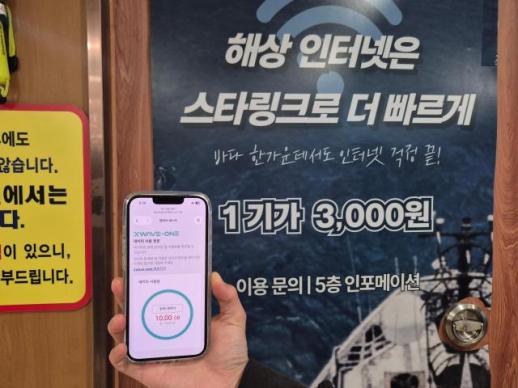 KT SAT Introduces Starlink Internet on Ulleungdo Cruise Ship "It feels like the internet is faster on the ship than at home." On May 12, aboard the New Sea Dao Pearl, a large passenger ferry traveling between Pohang and Ulleungdo, a video call was made via KakaoTalk with a friend on land. The call maintained high quality without interruptions or audio delays for about 40 minutes, using approximately 1GB of data with no noticeable drop in speed. The onboard communication environment exceeded simple web browsing and video calls, proving suitable for actual development work. Using OpenAI's Codex, a so-called 'Vibe coding' method was employed to implement a news keyword AI agent, completing a task that took about 10 minutes on land in approximately 16 minutes onboard. Generative AI-based coding was successfully performed while the ferry was in motion. According to the Korea Intelligent Information Society Agency (NIA), the download speed in the cruise cabin reached 181.34 megabits per second (Mbps), nearly identical to the corridor measurement of 180.68 Mbps. Historically, internet access on large passenger ferries was limited. Existing geostationary satellite services offered maximum speeds of around 2 Mbps, making even simple message sending difficult for over 1,000 passengers. However, with KT SAT's introduction of Starlink's low Earth orbit satellite service, the onboard communication environment has significantly improved. George Hoon, head of KT SAT's Global and Marine Customer Service Solutions Task Force, stated, "In the past, it was challenging to send even a single message when many passengers were onboard. By combining Starlink with our own solutions, we have made it possible to achieve internet conditions comparable to those on land while at sea." KT SAT has also applied its proprietary solution, 'XWAVE-ONE.' This solution adds features such as network separation for passengers, crew, and operational networks, which were difficult to implement with Starlink alone. Hoon explained, "Starlink does not have the necessary network separation or billing functions for ship operations, so we needed to develop a solution. XWAVE-ONE allows for the separation of passenger and operational networks and enables usage management, making it a ship-specific solution." One of the most notable services is KT's table order service, 'HiOrder,' installed in each cabin. Passengers can order drinks, snacks, and even local specialties from Ulleungdo through the cabin screen. This has enabled onboard commerce services while establishing a stable high-speed Wi-Fi environment within the moving vessel. To achieve this, KT SAT also conducted a separate design process for wireless access points (AP) tailored to the cruise ship's internal structure. Lee Bong-ha, a member of KT SAT's Global and Marine Customer Team, emphasized, "Our staff measured and adjusted the AP locations by going directly into the cabins and restrooms to ensure stable communication quality even when the door is closed and inside the restroom." This service not only improves cruise internet access but also expands revenue models for shipping companies. According to KT, the service currently generates an average additional net profit of over 1.5 million won per day based on operational standards. In the future, KT aims to establish a total of 150 HiOrder units on the Ulleungdo cruise, targeting related revenue of over 10 million won. KT SAT is currently in discussions with overseas shipping companies based on the XWAVE-ONE solution. Hoon noted, "There are not many cases of combining network separation, authentication, and billing systems with Starlink-based ship networks, and we are receiving inquiries from overseas shipping companies regarding this matter." 2026-05-17 15:39:37
 -
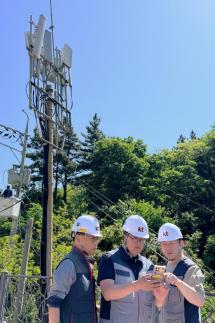 KT Ensures Reliable Communication Services on Ulleungdo Island On May 12, a passenger ferry departed from Pohang around midnight and arrived approximately six hours later at Ulleungdo, South Korea's easternmost island, located about 208 kilometers from the mainland. Despite its isolation risks during severe weather, Ulleungdo maintains a communication network with stability comparable to that of the mainland. According to KT, approximately 3,800 of the 5,500 households on Ulleungdo subscribe to internet services, while over 4,200 households use IPTV services. Yoon Chang-ho, head of the Pohang Operations Team at KT's Daegu-Gyeongbuk Access Operations Center, stated, "KT is the only telecom provider on Ulleungdo offering internet service at speeds of up to 10 gigabits per second (10Gbps). Beyond standard commercial services, we also play a crucial role in the national disaster communication network for the Ulleungdo and Dokdo regions." ◇KT Builds Unique Microwave Backup Network to Ensure Connectivity The backbone of Ulleungdo's communication network is its redundancy structure. The island is connected to the mainland via an undersea fiber optic cable, which poses a risk of total communication disruption during typhoons or underwater accidents. In response, KT has established a microwave (MW) backup network, the only one among South Korea's major telecom companies, connecting the mainland to Ulleungdo. This network aims to maintain essential national communication and internet services in the event of an undersea cable failure. The Gamulgyo relay station, located in Ulleung-eup, serves as a key point in the maritime communication network connecting Ulleungdo and Dokdo. One side of the station faces Mount Hambak in Gangwon Province, while the other faces Dokdo. The top of the tower is equipped with long-range maritime coverage LTE antennas, and 5G equipment is installed in the middle section. Through this communication network, KT provides reliable services not only to the residents of Ulleungdo but also to distant fishing vessels. Currently, nine KT staff members, including two dedicated employees and seven from the group, are stationed on the island to handle outages and maintenance. Kim Won-hun, deputy head of the Pohang Operations Team, noted, "We are actively installing base stations in the highlands of Ulleungdo to improve overall communication quality." ◇Communication Support Extends to Jukdo and Dokdo Coast Guard KT's communication support for island regions also extends to Jukdo, a small island near Ulleungdo, and Dokdo. Currently, Jukdo is home to a single family. KT has established a customized communication support system that converts LTE signals to provide internet services for the residents. As a result, residents of Jukdo can access internet and 5G smartphone services. Lee Chang-ha, head of the Dongdaegu Engineering Team at KT's Daegu-Gyeongbuk Access Operations Center, explained, "Given the challenging environment for installing fiber optic cables, we have adopted a method to convert LTE signals for internet service. We regularly check the quality status and monitor for any outages." Dokdo also saw its communication network established by KT in November 2018, making it the first provider on the island. Since then, continuous equipment upgrades have enabled wireless transmission speeds of up to 1 gigabit per second (Gbps). ◇Engineers Work to Restore Internet Amid Heavy Snow Maintaining and managing the communication network on Ulleungdo goes beyond simple facility maintenance. Due to the island's unique characteristics, which include frequent severe weather and isolation risks, the safety and daily lives of residents are at stake. Jeong Hyun-yong, from KT Service's Southern Daegu Headquarters, shared his experience of restoring communication equipment during heavy snowfall while working on Ulleungdo. He recounted, "At that time, over 1.2 meters of snow had accumulated, blocking the entrance to residents' homes. The outdoor internet lines were also severed, so I had to clear the snow and restore the communication facilities on-site." He added, "I worked for about an hour, digging through the snow to ensure residents' safety. Such situations are common on Ulleungdo." During winter, severe weather can disrupt ferry services, making it difficult to procure communication materials. In these cases, on-site engineers temporarily install personal equipment or office devices to support internet and TV access for elderly residents. Kwon Dae-hyun, from KT Service's Southern Daegu Headquarters, emphasized, "In Ulleungdo, communication is not just a convenience; it often relates directly to safety. Our most important role is to ensure that residents can live without inconvenience." 2026-05-17 15:28:33
 -
 SK Square Reports Record Q1 Operating Profit of 8.28 Trillion Won SK Square achieved its highest quarterly performance to date, driven by profits from its stake in SK Hynix and improved profitability across its portfolio companies. On May 14, SK Square reported consolidated revenues of 3 trillion won, operating profit of 8.28 trillion won, and net profit of 8.37 trillion won for the first quarter of 2026. Compared to the same period last year, operating profit surged by 400%, while net profit increased by 419%. The company attributed its performance improvement to the expanded equity method gains from SK Hynix and the profitability-focused management strategies of its portfolio companies. Key corporate valuation indicators also showed improvement. SK Square recently ranked third in market capitalization on the KOSPI, with a market cap of approximately 157 trillion won as of the close on May 13. This represents a nearly 15-fold increase from about 10.6 trillion won in early January last year and a three-fold increase from around 51.8 trillion won in early January this year. The company's core value-up indicator, the net asset value (NAV) discount rate, continued to improve. As of May 13, SK Square's NAV discount rate was 46.6%, down from 65.7% at the end of 2024 and 51.5% at the end of 2025. A lower NAV discount rate indicates that the market values the company more highly compared to the value of its assets. The price-to-book ratio (PBR) was approximately 4.3 times as of May 13. The return on equity (ROE) stood at 55.1% as of the end of March, exceeding the company's stated cost of equity (COE) target of 15-20%. To enhance corporate value, SK Square is expanding its shareholder return policy. The company plans to implement a total of 310 billion won in shareholder returns from this year through early next year. Last year, it repurchased 200 billion won worth of its own shares and is considering a larger return policy this year. Since 2023, the company has been conducting annual share buybacks and retirements. The company is also continuing to restructure its investment portfolio. In January, SK Square sold its digital advertising firm, InCross, to SK Networks. Additionally, it has invested in seven AI and semiconductor companies in the U.S. and Japan through its overseas investment firm, TGC Square. Looking ahead, the company plans to focus on new investments and portfolio rebalancing centered around AI bottleneck resolution technologies and the semiconductor value chain. Kim Jeong-kyu, CEO of SK Square, stated, "We will enhance communication with shareholders and focus on increasing corporate value. We will continue to pursue innovations based on AI and new investments in the AI and semiconductor sectors." Meanwhile, SK Telecom (SKT) held an extraordinary shareholders' meeting on October 12, 2021, where it approved the spin-off into the surviving entity SKT and the investment firm SK Square. Both companies officially launched on November 1 of the same year. * This article has been translated by AI. 2026-05-15 02:37:16
 -
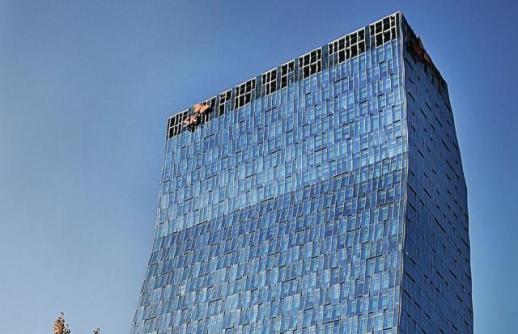 SKT and Defense Ministry Collaborate on Defense AI Initiatives The Defense Ministry and SK Telecom (SKT) have joined forces to promote defense artificial intelligence (AI). On May 14, the Defense Ministry, SKT, and the Ministry of Science and ICT signed a memorandum of understanding (MOU) at SKT's headquarters in Euljiro, Seoul, to utilize the ministry's independent AI foundation model in the defense sector. The event was attended by Kim Myung-guk, head of SKT's Industrial AI Division, and Jeon Jun-beom, director of the Defense AI Planning Bureau. The agreement aims to foster collaboration in several areas, including the development and demonstration of defense-specific AI models based on the independent AI foundation model, the collection and provision of open data in the defense sector, and support for GPU utilization linked to national AI projects. This MOU is part of the Ministry of Science and ICT's ongoing independent AI foundation model project, which seeks to accelerate digital transformation in the defense sector. This marks the first time the independent AI foundation model will be applied in defense. Earlier in January, SKT's elite team advanced to the second phase of the independent AI foundation model project with the launch of 'A.X K1,' a super-large AI model exceeding 50 billion parameters. SKT plans to lead the development of defense-specific AI models leveraging its capabilities in large language model (LLM) development and GPU-as-a-Service (GPUaaS) infrastructure. To efficiently operate large AI models, SKT will apply lightweight technology to A.X K1 and K2 and further train them with defense data to create AI models optimized for defense environments. The Defense Ministry will provide SKT with GPU resources secured through the Ministry of Science and ICT's 'National AI Project' in the second quarter of this year. SKT will utilize these resources to develop and demonstrate high-performance AI models and strengthen collaborative frameworks based on national research and development (R&D) infrastructure. Director Jeon stated, "This agreement will enable the rapid development and demonstration of defense-specific AI models based on the independent AI foundation model, marking a significant step forward for defense AI. We will continue to expand collaboration with the private sector." Choi Dong-won, director of AI Infrastructure Policy at the Ministry of Science and ICT, remarked, "This collaboration will be a crucial opportunity for our independent AI technology to be actively utilized in defense. We aim to create a virtuous cycle that revitalizes the domestic AI ecosystem." Kim added, "We will continue to expand AI utilization in sectors where data sovereignty and security are critical, such as finance, manufacturing, healthcare, and public services, to enhance K-AI competitiveness." Meanwhile, the Ministry of Science and ICT plans to conduct the second phase evaluation of the independent AI foundation model project around early August. This evaluation will focus not only on technical capabilities but also on the scalability and applicability of the technology in real-world industrial settings. The elite teams advancing to the second phase include SKT, LG AI Research Institute, Upstage, and Motif Technologies.* This article has been translated by AI. 2026-05-14 19:11:40
 -
 CJ ENM Vice Chair Im Mi-kyung: K-Content Connects Beyond Korean Culture Im Mi-kyung, Vice Chair of CJ ENM, discussed the growth of the Korean content industry and its global expansion strategy in the CNN documentary "K-Everything." He highlighted the importance of "authentic storytelling" as a key factor in the global spread of Korean culture, stating, "It is crucial not just to promote Korean culture but to connect people worldwide through stories." According to CJ ENM, Im shared these insights during the broadcast of "K-Everything" on May 9, where he addressed the global competitiveness of Korean content and the future vision of the cultural industry. He added, "I hope our experiences and journey can serve as a possibility and inspiration for others." CNN's original series "K-Everything" is a four-part program that explores the evolution of K-culture into a global phenomenon. The documentary identifies CJ's pioneering role in the cultural business as a driving force behind the growth of K-content, covering various sectors including film, drama, and music. Particularly, it emphasizes Im's role as a leader in establishing K-culture as a sustainable global industry. In the documentary, Im reflected on the investment by DreamWorks in 1995, recalling his grandfather, Lee Byung-chul, who often said, "A nation can only gain true competitiveness when the power of culture combines with industry and economic strength." He further noted, "I learned that the entertainment industry is about developing intangible assets into sustainable industries and businesses, and it is vital to build infrastructure and a creative ecosystem that allows creators and artists to continue their storytelling and creative activities." The broadcast also highlighted the journey of CJ's support and investment in films, from Park Chan-wook's "Oldboy," which won the Jury Prize at the Cannes Film Festival in 2004, to Bong Joon-ho's "Parasite," which won four Academy Awards in 2020. When "Parasite" won the Academy Award for Best Picture, Im expressed gratitude to the audience, saying, "What I really want to say is thank you to the viewers who love Korean films. Thank you for cherishing our films and sharing your opinions generously." In the documentary, Im stated, "I realized that our storytelling can resonate with people around the world, beyond Asia." Over the past 30 years, Im has led the globalization of the Korean cultural industry. His contributions have been recognized with several awards, including the Academy Museum Pillar Award in 2022, the International Emmy Directorate Award in 2022, the Gold Crown Cultural Medal in 2023, the Abu Dhabi Festival Award in 2024, the Global Citizen Award in 2024, and the Ellis Island Medal of Honor in 2025.* This article has been translated by AI. 2026-05-14 16:51:37
 -
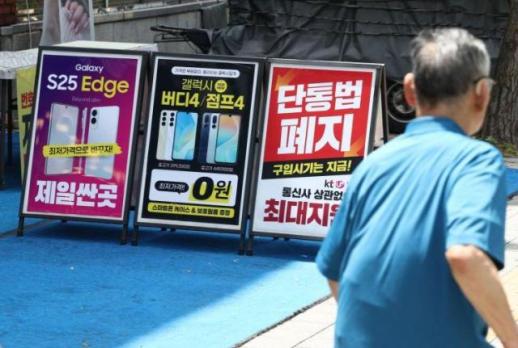 South Korea's National Assembly Proposes New Subsidy Regulations for High-Cost Plans The National Assembly of South Korea is moving forward with a proposal to limit the disparity in subsidies for different telecommunications rate plans. This initiative comes in response to concerns that subsidies have become concentrated on high-cost plans since the repeal of the Device Subsidy Law. The telecommunications industry has expressed opposition, arguing that this marks a return to previous regulations just nine months after the law was abolished. According to the National Assembly's legislative information system, a group of ten lawmakers, including Lee Hoon-ki from the Democratic Party, submitted a bill to amend the Telecommunications Business Act on May 12. The proposed amendment highlights that since the repeal of the Device Subsidy Law, subsidies from the three major telecom companies—SK Telecom, KT, and LG Uplus—have been disproportionately directed toward high-cost plan users, while support for low-cost plan users has been insufficient. The amendment stipulates that if the difference in subsidies between rate plans exceeds a threshold set by presidential decree, it will be classified as discriminatory distribution. This aims to prevent the practice of providing higher subsidies to high-cost plan users. Additionally, it would require telecom companies to clearly explain the subsidy amounts and conditions for each rate plan when selling devices alongside service contracts. Industry representatives have labeled the bill a return to the era of the Device Subsidy Law. They argue that since the law was repealed, competition among telecom companies for subsidies has increased, allowing consumers to purchase devices at lower prices. They contend that reintroducing limits on subsidy disparities would negate these benefits. A telecom industry official stated, "The government abolished the Device Subsidy Law to stimulate competition among the three telecom companies, but now they are seeking to impose restrictions again, which shows a lack of clear policy direction." The Device Subsidy Law was introduced in 2014 to address excessive competition among telecom companies and discrimination against users. It regulated subsidies through a system of public support and caps on additional subsidies, but faced criticism for limiting market competition and reducing consumer benefits. In 2024, the National Assembly passed a bill to repeal the law, which was officially abolished in July of the same year. Concerns have also been raised about potential reverse discrimination against high-cost plan users. If subsidies for low- and mid-cost plans are increased, it could lead to a reduction in support for high-cost plan users. An industry representative noted, "If we limit the benefits for high-cost plan users, who already pay more, it could create a situation where they receive fewer benefits despite higher payments." There is a growing belief that this amendment may lead to a decline in market competition rather than enhance consumer protection. Consumers may feel burdened by the high costs of purchasing expensive smartphones, and the restriction on subsidy disparities could diminish marketing competition among the three telecom companies. An industry official remarked, "The original intent of repealing the Device Subsidy Law was to expand subsidy competition to reduce consumer telecom costs and stimulate market competition. It is disappointing to see the government and National Assembly moving toward re-intervening in market pricing."* This article has been translated by AI. 2026-05-14 15:01:59
 -
 Surge in Semiconductor and Computer Exports Driven by AI Demand Boosts April ICT Exports Exports of semiconductors and computers surged in April, driven by increased demand for artificial intelligence (AI), resulting in a record increase in information and communication technology (ICT) exports. According to the Ministry of Science and ICT and the Ministry of Trade, Industry and Energy, April's ICT exports reached $42.71 billion, a 125.9% increase compared to the same month last year. This marks the second consecutive month of exports exceeding $40 billion, achieving the highest growth rate on record. Imports also rose, totaling $16.16 billion, a 33.3% increase from the previous year. The trade balance recorded a surplus of $26.55 billion. Leading the exports in April were semiconductors and computers and related devices. Semiconductor exports soared to $31.91 billion, up 173.3% year-on-year. This growth was fueled by increased investments in AI servers, leading to a sustained demand for memory and rising fixed prices, marking the first time exports exceeded $30 billion for two consecutive months. Computer and related device exports were driven by solid-state drive (SSD) sales, which totaled $4.26 billion, a staggering 430% increase from the previous year. The demand for storage devices based on AI server semiconductors contributed significantly to this growth. The Ministry of Science and ICT noted, "For the first time, SSD exports surpassed $4 billion, achieving the highest performance ever recorded." Mobile phone exports also increased by 14% year-on-year, reaching $1.36 billion, supported by robust demand for high-end products and a rise in the export of high-value components. Telecommunication equipment exports rose by 9.9% to $220 million, bolstered by increased shipments of components to Vietnam and wired communication equipment to Japan, leading to a rebound in overall exports after three months. In contrast, display exports fell by 5.3% to $1.44 billion, attributed to rising semiconductor prices and increased cost burdens, which dampened demand from upstream companies. Exports of semiconductors and mobile phones increased across various regions. Exports to China reached $16.77 billion, a 132.1% increase from the previous year. Exports to the United States surged by 294.2% to $7.9 billion, while Vietnam saw an 89.3% growth to $5.77 billion. Taiwan's exports rose by 89.4% to $4.54 billion, the European Union increased by 58.4% to $1.78 billion, India by 86.5% to $950 million, and Japan by 42.5% to $450 million. The ICT export and import statistics are compiled to respond swiftly to changes in the global market. They serve as foundational data for analyzing the export competitiveness and import dependency of the domestic ICT industry.* This article has been translated by AI. 2026-05-14 12:20:19
 -
 KT Prohibits External Directors from Exercising Influence, Revises Ethics Code KT announced that its board of directors held a meeting on May 12, where they approved revisions to the board's ethics code and updates to the external director delegation contracts. The revised ethics code for external directors now includes a provision stating that "external directors shall not exercise influence that undermines fairness or independence regarding the company's personnel, business, or investment matters." External directors will be required to complete a "self-assessment checklist for external director ethics compliance" every six months to ensure adherence to the ethics code. KT aims to strengthen its compliance and ethics-focused board management system through this initiative. The external director delegation contracts have also been updated. The revised contracts specify that external directors must comply with relevant regulations, including laws, the company's articles of incorporation, the corporate governance charter, and the external director ethics code. Additionally, if violations of related regulations or breaches of independence and ethics are recognized, the board may take actions such as issuing warnings, recommending non-participation in board and committee votes, or suggesting resignation through board resolutions. Kim Yong-heon, chair of KT's board of directors, stated, "With the launch of the new board, we are implementing system improvements to enhance compliance with laws and the ethical consciousness of individual directors, thereby establishing a more responsible board management system. We will contribute to the sustainable growth of the company and the enhancement of corporate value through continuous improvements in governance." Meanwhile, KT's board previously amended regulations to expand the management autonomy of the CEO last month.* This article has been translated by AI. 2026-05-14 12:13:26