

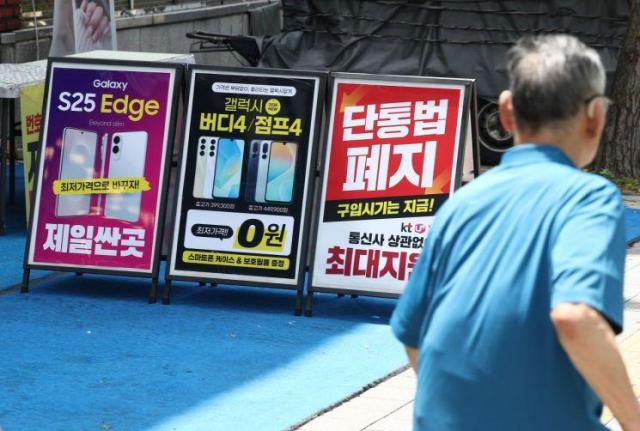
The National Assembly of South Korea is moving forward with a proposal to limit the disparity in subsidies for different telecommunications rate plans. This initiative comes in response to concerns that subsidies have become concentrated on high-cost plans since the repeal of the Device Subsidy Law. The telecommunications industry has expressed opposition, arguing that this marks a return to previous regulations just nine months after the law was abolished.
According to the National Assembly's legislative information system, a group of ten lawmakers, including Lee Hoon-ki from the Democratic Party, submitted a bill to amend the Telecommunications Business Act on May 12.
The proposed amendment highlights that since the repeal of the Device Subsidy Law, subsidies from the three major telecom companies—SK Telecom, KT, and LG Uplus—have been disproportionately directed toward high-cost plan users, while support for low-cost plan users has been insufficient.
The amendment stipulates that if the difference in subsidies between rate plans exceeds a threshold set by presidential decree, it will be classified as discriminatory distribution. This aims to prevent the practice of providing higher subsidies to high-cost plan users. Additionally, it would require telecom companies to clearly explain the subsidy amounts and conditions for each rate plan when selling devices alongside service contracts.
Industry representatives have labeled the bill a return to the era of the Device Subsidy Law. They argue that since the law was repealed, competition among telecom companies for subsidies has increased, allowing consumers to purchase devices at lower prices. They contend that reintroducing limits on subsidy disparities would negate these benefits.
A telecom industry official stated, "The government abolished the Device Subsidy Law to stimulate competition among the three telecom companies, but now they are seeking to impose restrictions again, which shows a lack of clear policy direction."
The Device Subsidy Law was introduced in 2014 to address excessive competition among telecom companies and discrimination against users. It regulated subsidies through a system of public support and caps on additional subsidies, but faced criticism for limiting market competition and reducing consumer benefits. In 2024, the National Assembly passed a bill to repeal the law, which was officially abolished in July of the same year.
Concerns have also been raised about potential reverse discrimination against high-cost plan users. If subsidies for low- and mid-cost plans are increased, it could lead to a reduction in support for high-cost plan users. An industry representative noted, "If we limit the benefits for high-cost plan users, who already pay more, it could create a situation where they receive fewer benefits despite higher payments."
There is a growing belief that this amendment may lead to a decline in market competition rather than enhance consumer protection. Consumers may feel burdened by the high costs of purchasing expensive smartphones, and the restriction on subsidy disparities could diminish marketing competition among the three telecom companies.
An industry official remarked, "The original intent of repealing the Device Subsidy Law was to expand subsidy competition to reduce consumer telecom costs and stimulate market competition. It is disappointing to see the government and National Assembly moving toward re-intervening in market pricing."
* This article has been translated by AI.
Copyright ⓒ Aju Press All rights reserved.