


Latest by
-
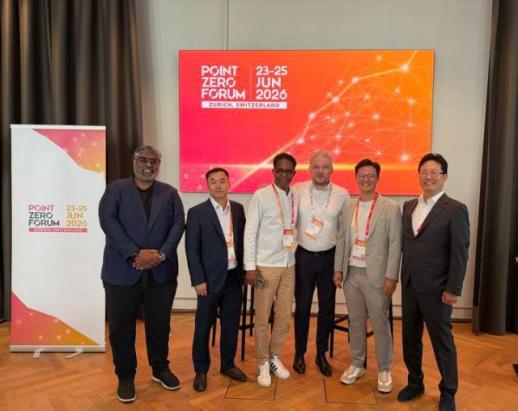 K-Bank Joins EU Stablecoin Project 'Pangaea' K-Bank announced on June 25 that it will participate in the 'Pangaea' stablecoin collaboration project, jointly pursued by South Korean and European banks.Pangaea aims to research and validate a next-generation international remittance model, involving domestic banks, the EU-based stablecoin issuance entity Kivalis, the global financial messaging network SWIFT, and the blockchain interoperability technology firm Chainlink.The project is exploring direct connections between South Korea's won stablecoin and Europe's euro stablecoin. Previously, K-Bank participated in the 'Project Pax,' a technology validation initiative for stablecoin remittances between South Korea and Japan.This year, K-Bank has strengthened its partnerships by signing memorandums of understanding with various entities, including ChangeR in the United Arab Emirates, Kasikorn Bank in Thailand, and the blockchain company Ripple. The bank plans to refine its service model through technology validation (PoC) with its partners and gradually expand its market applications.* This article has been translated by AI. 2026-06-25 09:24:00
 -
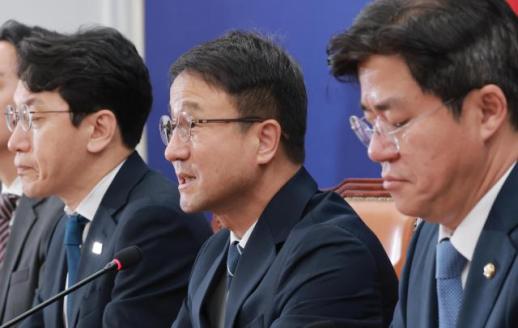 Han Byeong-do: Party Convention Should Foster Unity, Not Rivalry Han Byeong-do, the acting leader of the Democratic Party, emphasized that the upcoming party convention on August 17 should focus on unity rather than rivalry. He stated, "The reason for competition is not to bring each other down, but to create a strong, unified front." His comments come amid rising factional tensions within the party as the convention approaches. During a policy coordination meeting at the National Assembly on June 25, Han remarked, "This convention, which will elect a new leadership, should be a celebration for the people, where the dignity of competition and the value of harmony coexist." He further noted, "The Democratic Party has always been strongest when it has come together after being apart, from the late Kim Dae-jung and Roh Moo-hyun to former President Moon Jae-in and now President Lee Jae-myung." Han stressed the importance of mutual respect among party members, saying, "Even if we compete fiercely, we must respect each other's commitment to the public and party members. We must meet as one team at the end of this competition." He also clarified that the convention is not merely a contest to determine a winner, but an opportunity for the Democratic Party to demonstrate its responsibility as a governing party to the public. Meanwhile, Han took over as acting leader following the resignation announcement of lawmaker Jeong Cheong-rae the previous day. This has led to speculation about Jeong's bid for re-election, with potential challengers including lawmakers Song Young-gil and Kim Min-seok.* This article has been translated by AI. 2026-06-25 09:24:00
 -
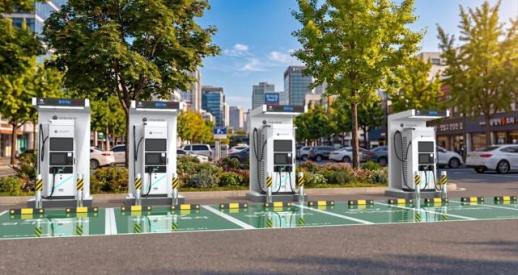 Chaevi Wins Contracts for Public Fast Charging Stations from Government and Seoul Chaevi, a domestic operator of electric vehicle fast charging infrastructure, has secured contracts for public fast charger installation projects from both the government and the Seoul Metropolitan Government. On June 25, Chaevi announced that it has been awarded the "2026 Electric Vehicle Public Fast Charger Manufacturing and Purchasing Project" by the Korea Environmental Corporation, under the Ministry of Climate, Energy and Environment, as well as the "2026 Seoul Public Electric Vehicle Charging Facility Manufacturing and Purchasing Project" promoted by the Seoul Energy Corporation. In the project with the Korea Environmental Corporation, Chaevi has been selected as the contractor for the Yeongnam region, which includes Busan, Daegu, Ulsan, Gyeongnam, and Gyeongbuk. This project will see the installation of 136 standalone chargers with a capacity of 100 kW and 113 simultaneous chargers with a capacity of 200 kW along major travel routes nationwide. For the Seoul project, Chaevi plans to establish 12 dual fast chargers with capacities of 100 kW and 200 kW, along with eight canopies at public facilities in Seoul by December of this year. Through these two projects, Chaevi will manufacture, deliver, and install a total of over 260 public fast chargers. The government aims to expand public charging infrastructure, targeting the installation of over 1.23 million electric vehicle chargers, including 145,000 fast chargers, by 2030. Chaevi intends to use this contract win to further expand its public charging infrastructure development and operation business. Chaevi CEO Choi Young-hoon stated, "This project selection is a recognition of our charger manufacturing technology and our capabilities in building and operating public charging infrastructure. The experience and data we have accumulated from directly operating chargers have become our unique competitive advantage in product development." Meanwhile, Chaevi reported a revenue of 20.7 billion won in the first quarter of this year, marking a 21% increase compared to the previous year. Notably, the charging service sector generated 13.9 billion won in revenue, continuing its growth trend. The company recorded an operating loss of 9.7 billion won, reducing its deficit compared to the previous year's loss of 10.5 billion won.* This article has been translated by AI. 2026-06-25 09:24:00
 -
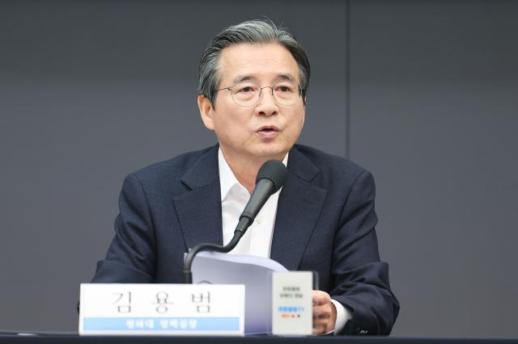 Korea's K-New Deal Academy to Expand Participation to 8,200 Next Year Kim Yong-beom, head of the Presidential Policy Office, announced plans on June 25 to significantly expand participation in the government’s youth job training initiative, the K-New Deal Academy, next year.In a Facebook post, Kim expressed regret that this year's program, launched under a supplementary budget, did not allow for sufficient scaling due to its short design and implementation period. He stated, "We will provide more opportunities for young people in the future."The K-New Deal Academy allows companies to operate training programs tailored to their specific fields while receiving government support for costs. This initiative, aimed at unemployed youth, was first implemented this year through a supplementary budget.A total of 107 companies applied to participate, and after a review process, 72 academy programs from 53 companies, including SK Hynix, KT, LG, and Lotte, were selected. Approximately 8,200 young people are expected to participate in this initiative.Kim noted, "The participation of more companies than expected in a program initiated to address the 'resting' youth issue has revealed new possibilities for solving youth employment challenges." He added that next year, the program will broaden its scope to include not only large corporations but also public institutions and foreign companies, aiming to create a more extensive ecosystem involving many businesses and young people.He also diagnosed that the rise of artificial intelligence (AI) is raising the barriers to employment for young people. "While AI creates new opportunities, it also raises the entry barriers for youth," Kim said, explaining that companies seek talent ready for immediate deployment, while young people struggle to gain experience.Kim emphasized that the K-New Deal Academy serves as a starting point for young people to gain their first experiences and as a platform for companies to discover and nurture future talent. He described it as an experiment to create a new employment ecosystem where both youth and companies can grow together.He remarked that many of the selected academies will operate outside the capital region, calling it a valuable seed for balanced national development.Kim concluded, "Experience is the greatest competitive advantage for youth, and people are the most important investment for companies. I hope the potential of youth translates into corporate growth, and that corporate investment leads to new opportunities for youth, creating a virtuous cycle that becomes South Korea's new competitive edge."* This article has been translated by AI. 2026-06-25 09:24:00
 -
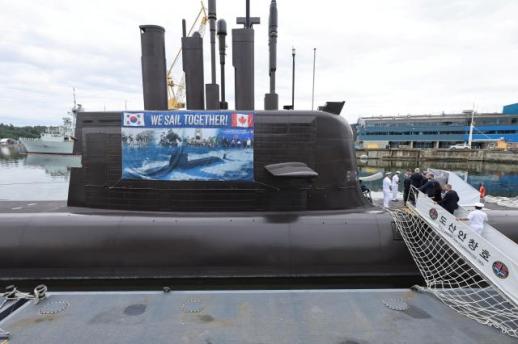 Canada Pressures South Korea and Germany for Investment Ahead of Submarine Deal Canada is exerting pressure on South Korea and Germany for additional investments as it prepares for a major submarine acquisition program, which could involve up to 12 vessels, Bloomberg reported on June 24. According to the report, the cabinet of Canadian Prime Minister Mark Carney is demanding that both South Korea and Germany propose additional investments that would benefit Canadian industries, including automotive and steel sectors. This submarine deal is estimated to be worth up to CAD 100 billion (approximately USD 108 billion) when factoring in decades of operational and maintenance costs. Hanwha Ocean of South Korea and Thyssenkrupp Marine Systems (TKMS) of Germany are competing for the contract. Both companies have submitted comprehensive proposals that include not only submarine capabilities but also long-term industrial cooperation with Canada. Hanwha is highlighting its ability to deliver the KSS-III submarines quickly, having recently showcased one of its operational vessels in Victoria Harbor, British Columbia, at the end of May. The company has proposed delivering four submarines by 2035. In contrast, TKMS is focusing on its developing 212CD-class submarines, emphasizing interoperability with NATO allies and strategic ties with Europe. German Defense Minister Boris Pistorius recently visited Ottawa, conveying that the future of the Canadian Navy depends on close defense cooperation with Europe. Canada's urgency in acquiring new submarines stems from concerns over its aging naval capabilities. Despite having one of the longest coastlines in the world, spanning three oceans (Pacific, Atlantic, and Arctic), Canada reportedly has only one operational submarine. Additionally, increased Arctic activities by Russia and China have led the U.S. to urge Canada to expand its Arctic defense responsibilities. Military assessments are closely contested. Canadian Navy Commander Angus Topshee praised the submarine designs from both South Korea and Germany, noting that the KSS-III's larger hull and vertical missile launch capabilities are significant advantages, while the 212CD-class is recognized for its stealth performance. The Canadian government is considering not only military performance but also economic impacts as key factors in its decision-making process. Canadian Industry Minister Mélanie Joly has publicly stated, "We want automotive plants." In response, Hanwha has proposed producing armored vehicles in Canada if it secures the submarine contract. The company is also collaborating with Algoma Steel on material supply and has agreed to work with Babcock Canada on training and maintenance. TKMS is pursuing supply chain cooperation with Canadian critical mineral firm E3 Lithium and plans to involve Canadian companies like CAE and Sysmex in fleet support. Both companies have also proposed partnerships with Canadian artificial intelligence firm Cohere and initiatives linked to independent space launch capabilities. Bloomberg noted that this decision represents a choice for Canada between strengthening ties with Asian economic powers and its long-standing NATO allies. The outcome of this selection could impact Canada's military capabilities, industrial base, and alliances for decades. David Perry, a senior fellow at the Canadian Global Affairs Institute, described the submarine project as a matter of solidifying economic, strategic, and political partnerships for the next 75 years. Roland Paris, a professor of international relations at the University of Ottawa, stated that restoring diplomatic relations with the losing bidder will be a priority. Philip Lagasse, an assistant professor at Carleton University, assessed that if South Korea wins the submarine contract, it would bolster its position as a major submarine exporter. Conversely, he noted that Germany has already established itself as a key submarine producer linked to NATO, suggesting that its commercial gains may be limited.* This article has been translated by AI. 2026-06-25 09:20:00
 -
 Warning Issued Over Illegal Car Loans with Interest Rates Up to 229% As reports of a new form of illegal lending using installment or leased vehicles as collateral increase, financial authorities are urging caution. These loans often involve excessive interest rates disguised as parking and travel fees.According to the Financial Supervisory Service (FSS), there were 12 reports of illegal car loans from January to June this year, with a significant surge of 9 cases occurring in May and June alone.Victims reported loan amounts ranging from 2.5 million to 30 million won, with interest rates reaching as high as 229% annually. This figure includes various additional costs, such as upfront fees and parking charges, which are counted as interest.Among the victims, those in their 30s accounted for half of the cases, with 6 individuals affected. There were also 2 victims in their 60s and 1 each in their 20s, 40s, and 50s. Most victims, 9 out of 12, reside in the metropolitan area.The primary method employed by these lenders involves taking possession of the borrower's vehicle as collateral and then charging exorbitant fees under the pretext of parking, travel, and commission costs, exceeding legal interest limits. Some cases have also involved threats to operate the collateralized vehicle without permission or to inform financing companies during the collection process.The FSS emphasized that any fees charged by lenders related to loans, regardless of their designation as parking or travel fees, are considered interest. They also noted that registered lenders cannot charge more than 20% annually, and any interest exceeding 60% could render both the principal and interest invalid.Particularly, caution is advised when using leased or financed vehicles as collateral, as this is often not permissible. Providing a leased vehicle as collateral could lead to embezzlement charges, while transferring a financed vehicle without the lender's consent could result in charges of obstructing the exercise of rights.The FSS urged anyone suspecting illegal car loans or similar forms of illicit lending to report to the FSS or law enforcement to prevent potential victimization. They also highlighted that victims of illegal lending can access a one-stop comprehensive support system for assistance.* This article has been translated by AI. 2026-06-25 09:20:00
 -
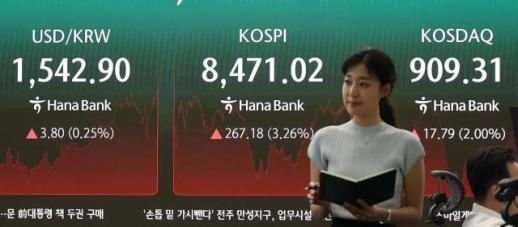 Strong Dollar Continues as Won-Dollar Exchange Rate Rises to 1540s As the market awaits the release of U.S. inflation data, the won-dollar exchange rate is showing an upward trend. On June 25, in the Seoul foreign exchange market, the exchange rate for the Korean won against the U.S. dollar was trading at 1547.9 won as of 9:15 a.m. The rate opened at 1543.0 won, up 1.2 won from the previous trading day, and has continued to rise. Overnight, U.S. semiconductor company Micron Technology reported earnings that significantly exceeded market expectations. Its quarterly revenue surpassed $40 billion for the first time, with a gross profit margin nearing 85%. Following the earnings announcement, the company's stock rose by more than 10% in after-hours trading. Micron's strong performance also led to a rebound in Nasdaq futures, which had been weak the previous day. Optimism about the artificial intelligence (AI) semiconductor sector has improved investor sentiment, particularly for domestic semiconductor stocks. However, caution ahead of the release of the U.S. Personal Consumption Expenditures (PCE) price index is contributing to the rise in the exchange rate. The PCE is the inflation measure most closely monitored by the Federal Reserve, and the market is closely watching for signs of potential further interest rate hikes later this year. The dollar index remained above 101.6, marking its highest level since May of last year. This strength is attributed to concerns over the Fed's hawkish monetary policy and a preference for safe-haven assets. Min Kyung-won, an economist at Woori Bank, stated, "With the recent strong semiconductor exports and active dollar selling by exporters, some of the accumulated offshore long positions are being unwound. Additionally, concerns about the foreign exchange authorities' market stabilization measures are limiting the upper range of the exchange rate."* This article has been translated by AI. 2026-06-25 09:20:00
 -
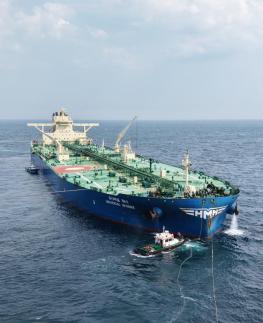 HMM Heavy Cargo Ship Escapes Hormuz Strait, All Vessels Except One Depart As the United States and Iran reached a prior agreement and the Hormuz Strait reopened partially, HMM's container ships, oil tankers, and heavy cargo vessels have begun to return to Korea over the past two days. According to the Ministry of Oceans and Fisheries and the shipping industry on June 23, HMM's heavy cargo ship Narae received permission to transit from the Iranian Persian Gulf Shipping Authority (PGSA) and is now heading to its next destination, the Port of Singapore. Specialized in transporting transformers and plant materials needed for engineering, procurement, and construction (EPC), Narae was stranded in the Hormuz Strait for about four months due to the U.S.-Iran conflict after delivering products to the Middle East. Narae's sister ship, HMM Namoo, was also involved in an incident where it was reportedly struck by an object believed to be an Iranian missile. On the previous day, HMM's large container ship Daon and the very large crude carrier (VLCC) Universal Glory also received PGSA transit permission and exited the strait. Daon is set to dock at the Port of Sohar in Oman to load and unload cargo before continuing to several ports in East Asia, ultimately arriving at Busan. The Winner, carrying 2 million barrels of Saudi Arabian crude oil, is expected to arrive at Yeosu Port in mid-July to deliver the oil to GS Caltex. Following the exit of four Korean vessels from the Hormuz Strait the previous day, five more ships escaped on June 25, reducing the number of Korean vessels remaining in the strait to 13. All HMM ships, except for Namoo, which is undergoing repairs in Dubai, have successfully left the strait.* This article has been translated by AI. 2026-06-25 09:12:00
 -
 Micron's Strong Performance Boosts AI Semiconductor Stocks; SK Hynix Up 10%, Samsung Electronics Up 5% SK Hynix and Samsung Electronics are showing strong gains in early trading on June 25, following a surprising earnings report from U.S. chipmaker Micron. According to the Korea Exchange, as of 9:05 a.m., SK Hynix shares rose by 265,000 won (10.27%) to 2,845,000 won. Samsung Electronics also saw an increase of 16,500 won (4.85%), reaching 357,000 won. Micron reported a revenue of $41.46 billion and an adjusted earnings per share (EPS) of $25.11 for the third quarter of the 2026 fiscal year (March to May). Following the earnings announcement, Micron's stock surged in after-hours trading, reflecting a double-digit increase. This rise is attributed to sustained demand for high-bandwidth memory (HBM) and server DRAM, driven by expanded investments in AI data centers, alleviating concerns about the market outlook. Investors view Micron's performance as a leading indicator for the global memory market. Analysts suggest that SK Hynix, which leads the HBM market, and Samsung Electronics, which is expanding its next-generation HBM4 supply, are expected to benefit directly from this positive trend. Additionally, the ongoing process for SK Hynix's listing of American Depositary Receipts (ADRs) on the Nasdaq is boosting investor sentiment. The company plans to conduct demand forecasting and roadshows for global institutional investors ahead of its ADR listing targeted for July 10. * This article has been translated by AI. 2026-06-25 09:12:00
 -
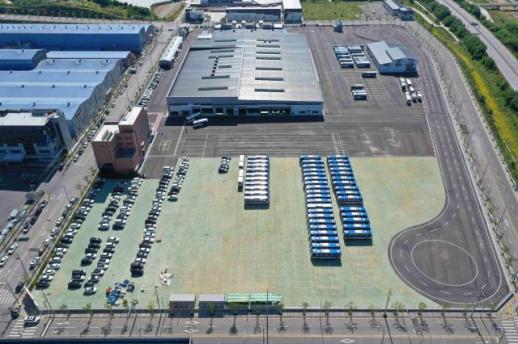 Woojin Industrial Systems launches development of 420 km low-floor electric coach SEOUL, June 25 (AJP) - Woojin Industrial Systems, a South Korean maker of rail vehicles and electric buses, said it had begun work on a 10.1 billion won ($6.54 million) state-funded project to develop an eco-friendly low-floor electric coach designed for passengers with reduced mobility. The project, announced Thursday by Woojin, draws support from a national research and development scheme run by the Ministry of Trade, Industry and Resources, the Korea Institute for Advancement of Technology and the Gyeongbuk Regional Institute of Industrial Advancement, aimed at nurturing regional innovation clusters. Formally titled the development of a 420 km-class low-floor electric bus applying high-safety core components for the transport-vulnerable, the effort runs through 2030 and centers on three pillars: an AI-based battery pack, an 800-volt silicon-carbide power module and a wide-area low-floor platform. Woojin said it would adopt a homegrown universal design with sharply improved wheelchair access, paired with a high-safety system fitted with cybersecurity technology, to close gaps in transport welfare. Localizing core parts is another central goal. South Korea's green public transport has long leaned heavily on imports from China and elsewhere, and the company aims to achieve technological self-reliance across the future-vehicle supply chain by bringing batteries and power modules in-house. "This national R&D project carries the significance of guaranteeing mobility rights for the transport-vulnerable and building a model of regional shared growth," a company official said, adding that Woojin would seek to lead technological innovation in the eco-friendly commercial vehicle field and present a successful regional standard. 2026-06-25 09:07:54